Blog

White House hawks have no answers

2nd February 2019

PompeoBolton

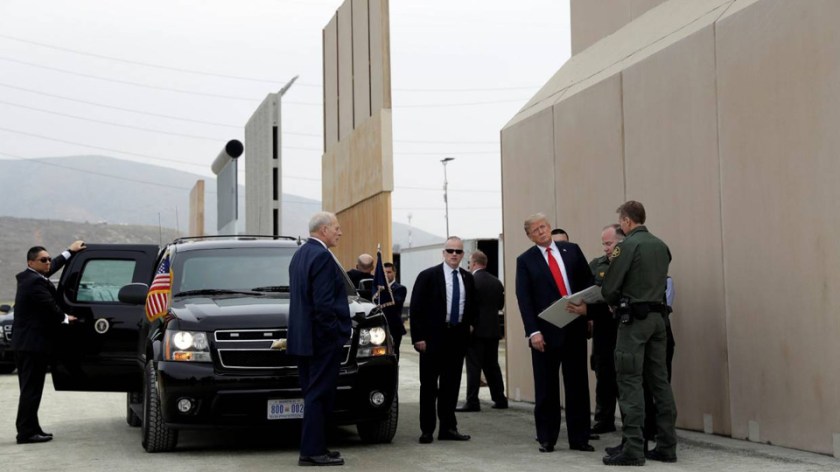
White House hawks – Mike Pompeo and John Bolton

With US intervention back on the international agenda in Venezuela, White House hawks, Secretary of State, Mike Pompeo, and National Security Adviser, John Bolton, have not taken their eye off US long term ambitions in the Middle East.

US Secretary of State, Mike Pompeo, managed to squeeze in a tour which took in eight Middle East countries in the space of a week last month, summing up his mission in a speech in the Egyptian capital, Cairo, as

“The need to counter the greatest threat of all in the Middle East, the Iranian regime and its campaigns of terrorism and destruction.”

Pompeo’s aim has been to build a coalition of the willing in the Middle East with the ostensible aim of rolling back Iranian influence in the region, for which can be read, asserting US dominance wherever possible.

While the United States has clear allegiances with both Saudi Arabia and Israel in the region its influence elsewhere has been diminished due to its history of military and economic intervention.    The Iranian regime is an easy target because of its history of opposition to the United States, its support amongst the Shia Muslims in the region, in opposition to Sunni led Saudi Arabia, and its adventurous foreign policy which the US can characterise as a threat.

Pompeo’s message appears to have been well received among Sunni Arab leaders, with Jordanian Foreign Minister, Ayman Safadi, saying in a news conference with Pompeo in Amman,

“We all have problems with Iran’s expansionist policies in the region.  All Arab countries, and I think the United States too, would want healthy relations based on the principle of non-intervention in the internal affairs of the other, and respecting the sovereignty of other countries.”

In Cairo, Pompeo said that Egypt, Oman, Kuwait and Jordan had been “instrumental in thwarting Iran’s efforts to evade sanctions,” adding that Bahrain was working to combat Iran’s “illicit maritime activities” in the region.

Quite how close this is to a unified Arab coalition against Iran, the long term goal of the US, is hard to gauge and Pompeo may have been offered warm words in friendly capitals just to make sure military and economic aid keeps flowing.

The Pentagon are certainly concerned that US leverage may be on the wane, due to the recent announcement that troops will be pulled out of Syria, and concern has been expressed that the hawkish position taken by John Bolton could precipitate a conflict when US influence is at a low ebb.

Bolton directed the National Security Council to ask the Pentagon last year to provide the White House with military options to strike Iran. Since Bolton took on his role in April, he has intensified the administration’s policy of isolating and pressuring Iran, being instrumental in persuading President Donald Trump to withdraw from the nuclear deal last year.

The twin offensive was continued when Pompeo was interviewed via video link to delegates to the World Economic Forum in Davos recently, where he stated,

“…the threat from the Islamic Republic of Iran is very real. You mentioned Yemen. You mentioned Syria. I think you talked about the challenges of Lebanese Hizballah in Lebanon. It’s still the case that Iran is striving to reduce Iraqi freedom, sovereignty, and independence. Those are places where Iran is truly the malign actor, and it’s why we’re so happy that the coalition that we’ve built out…. is so central to creating the stability that the people of the Middle East so richly deserve.”

The recent intervention by the United States in Venezuela has seen both Pompeo and Bolton leading the charge in the misinformation campaign against the legitimate government of Nicolás Maduro and flying the flag for greater US interference in the affairs of Venezuela.

The government of Iran by no means enjoys the popular support that the Maduro government does but the future of Iran should be in the hands of its people.  The human rights record of the Iranian regime and its suppression of political and trade union rights has been widely condemned.  That does not mean that the answer to the situation in Iran lies with the hawks in the White House, far from it, and the Iranian people continue to deserve our support in their struggle for peace, human rights and democracy.


Stop US interference in Venezuela

27th January 2019

maduro

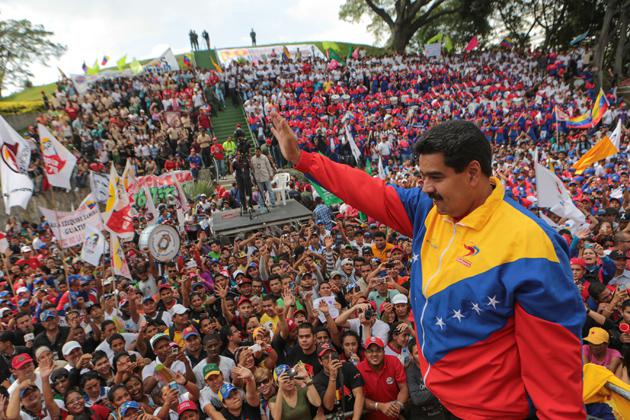
Venezuelan president, Nicolás Maduro, under pressure from a US backed coup

The creeping coup d’etat against the government of Venezuela took a new turn this week when minor right wing senator, Juan Guaidó, declared himself interim president.  The move was immediately backed by right wing allies in the United States, Brazil, Argentina and Canada in what has clearly been a co-ordinated move to intensify the interference in the internal affairs of Venezuela.

CIA backed opposition groups have been active within the country since the death of former president Hugo Chavez in 2013, resulting in a steady flow of economic and civil disruption.  The clear aim has been to reverse the progressive gains of the Chavez years by undermining his successor, Nicolás Maduro, in an attempt to make Venezuela safe once again for international capital.

US foreign policy has been left in the hands of administration hawks such as Secretary of State, Mike Pompeo, and National Security Adviser, John Bolton, who have spearheaded the disinformation campaign against the Venezuelan government.

Pompeo has called for the Organisation of American States (OAS) to side with the opposition in an attempt to isolate Maduro stating, without a hint of irony,

“All OAS member states must align themselves with democracy and respect for the rule of law.”

Bolton has hinted at US action to undermine the revenues of the Venezuelan government stating,

“We think consistent with our recognition of Juan Guaidó as the constitutional interim president of Venezuela that those revenues should go tot the legitimate government.  It’s very complicated we’re looking at a lot of different things we have to do, but that’s in the process.”

As a state which has maintained an illegal economic blockade against the island of Cuba for almost 60 years, the threats by the United States against Venezuela should not be taken lightly.

A resolution discussed by the OAS calling for the recognition of Guaidó passes over its founding Charter and was endorsed by only 16 of the 34 members of the body. It was firmly rejected by Nicaragua, Antigua and Barbuda, Saint Vincent and the Grenadines, Bolivia, El Salvador and Dominica, while Mexico recognised the right of the Venezuelan people to choose their political system without external pressure.

The representative of Venezuela, Asbina Ixchel Marín, declared,

“In Venezuela, a coup took place, promoted by a group of countries that claim to justify it here in the OAS. It is a violation of the rules of international law. This session is an outrage to the OAS Charter, the Constitution of Venezuela and our people. We reject your call and no act that occurs here will be valid. ”

US action in Venezuela has not yet had the unequivocal backing of European nations but it appears to be only a question of time.   UK Foreign Secretary, Jeremy Hunt, has echoed positions taken in Germany, France and Spain that the coup d’etat government would be recognised if Venezuelan president, Nicolás Maduro, did not call elections in eight days.  Pedalling the US line that the 2018 elections which endorsed Maduro as president were “deeply flawed”, in spite of being recognised as transparent by a range of international observers, the UK action is in danger of adding to chaos in Venezuela.

So far the military have continued to back the legitimate president, Nicolás Maduro, with defence minister Vladimir Padrino stating that the coup attempt risked bringing “chaos and anarchy” to the country, going on to state,

“I have to alert the people of Venezuela to the severe danger that this represents to our integrity and national sovereignty.”

Given the recent history of US military interventions in Afghanistan, Libya, Iraq and Syria there is a growing fear that this option will not be off the table for the US in Venezuela.  John Bolton, in particular, has been particularly hawkish in his attitude towards Iran, calling openly for military intervention.  He is unlikely to be less strident in his approach to Venezuela.

The US has always been keen to ensure that it own so called ‘backyard’ is safe for US capital, hence the fact that Cuba remains a thorn in its side.  It is no surprise that the coup attempt in Venezuela follows closely upon the election of right wing Donald Trump supporter, Jair Bolsonaro, in Brazil.

Unless checked now, US interference across South America, either through economic pressure or direct military intervention is only likely to increase.  That is an issue not just for the people of South America but for progressive people across the world.

All Washed Up

20th January 2019

may washed(2)

Washed up UK Premier, Theresa May

UK Prime Minister, Theresa May, has nowhere left to go.  Politically she is all washed up. On Tuesday night she suffered the biggest Parliamentary defeat of any Prime Minister in history, when her Brexit deal was lost by a margin of 230 votes.  A day later she won a vote of confidence in her government by a margin of 19 votes.  What do these seemingly contradictory votes tell us?

Essentially May is a hostage to the Democratic Unionist Party (DUP) thugs in Northern Ireland and the so called European Reform Group (ERG) in her own party, led by the Member for the eighteenth century, Jacob Rees-Mogg.  Both groups are dead against May’s Brexit deal, along with many other MPs, but could not bring themselves to vote down the government itself, as they have vested interests in preventing a General Election which could hand the keys of 10, Downing St to Jeremy Corbyn.

Both groups know that a Corbyn led government would re-open negotiations with the EU, something the EU would have to accept on the basis of the government having a new mandate, and seek to negotiate a Brexit in the interest of the people of the UK, not the banks, corporations and the City of London.

This is exactly why Labour leader Jeremy Corbyn rejected the offer of talks extended by Theresa May as a stunt.  May, having failed to negotiate a deal in the so called ‘national interest’ over a two year period, had the temerity to suggest that it was the duty of opposition leaders to meet with her to find a solution to the Brexit impasse.  Corbyn has made it clear that he will only meet if the prospect of a no-deal Brexit is off the table.  May will not make that promise for fear of alienating the DUP and ERG.

Ironically, those leaders from the Liberal Democrats, Green Party, Plaid Cymru and Scottish Nationalists, who have met with May, have demanded that taking no-deal off the table is a condition of any progress.  Only Corbyn was brave enough to make it a condition of talking to May in the first place, hence the usual vitriol from the right wing press about Corbyn not acting in the national interest.

The national interest for Corbyn is not the interests of the banks, corporations and City of London but the interests of ordinary people, for whom the EU has been a disaster for most of the 40 years of UK membership, and certainly over the past ten years of enforced austerity.

As ever though the Labour leader is having to walk a fine line.  There is a cohort within the Labour Party still believing that remain is the best solution and that the EU is the greatest political protection for peace and workers rights.  Others have threatened resignations if there is a second referendum. as they see that as a betrayal of the first vote and the expressed majority desire to leave the EU.

As Corbyn has consistently argued, the only real way out of the impasse is a General Election which gives a new government the mandate to negotiate with the EU.  In the short term that would require a suspension of Article 50 and an extension of any transition period before departure.  That election would need to be fought on the basis of Labour being clear that it will negotiate a Brexit deal; that the EU does not act, or allow a UK government to act, in the best interests of its people; and that the election itself would be a genuine people’s vote, as opposed to the spurious demand from some in the political centre.

In short it is not a campaign for a so called people’s vote that is required but a clear articulation of the need for a people’s departure from the EU.  Any other solution, usually characterised as bringing together a divided nation, is merely fudge.  The nation is divided over Brexit, the challenge is to takes sides and raise the standard for a people’s leave, that puts to bed the delusion that the EU is an expression of internationalism and defender of workers’ rights once and for all.


The Second Vote Delusion

13th January 2019                                                    

pro eu protest

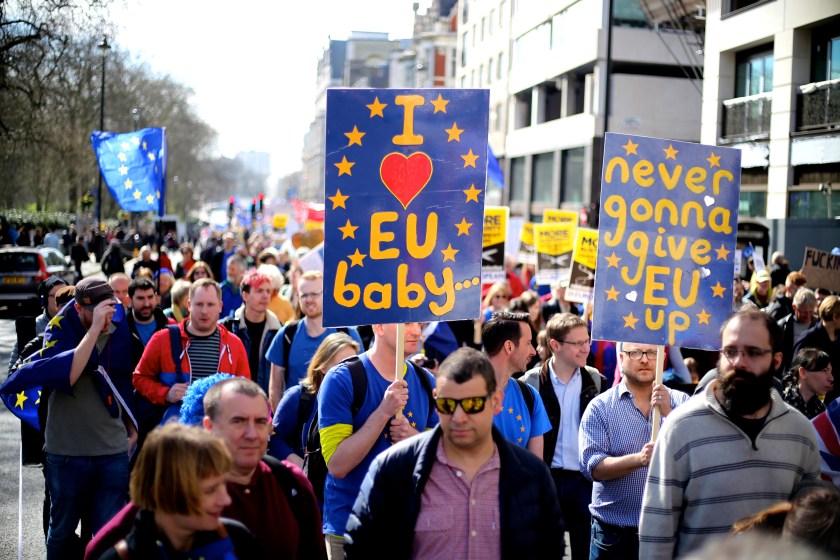
Pro EU demonstrations – London March 2018

The British political establishment are increasingly mobilising for a second referendum in order to break what they describe as the impasse over Brexit.  General opinion appears to suggest that little public change has taken place since the 2016 referendum and the outcome could be exactly the same.  The real driver behind the second referendum call is not a desire for democracy, the cloak in which it is draped, but a desire to get a ‘remain’ outcome and thereby halt the UK’s departure from the European Union.

The craven pro EU Liberal Democrats back the second referendum, as do the Green Party, much of the liberal media and increasing sections of the anti-Corbyn Parliamentary Labour Party.   Tony Blair has periodically been wheeled out by the media to trumpet his call for a centrist alliance, possibly even a new centre party, anything to dilute the influence of a left leaning Labour Party under Jeremy Corbyn.

The problem for Corbyn over the coming weeks is that he will not be able to rely upon the support of his Parliamentary colleagues in his effort to expose the failure of the government and bring about a general election.  Theresa May, it is widely expected, will lose the Parliamentary vote on her Brexit deal on Tuesday.  It is now widely expected that Jeremy Corbyn will follow that defeat with a call for a vote of no confidence in the government, on the basis that the call being made any later would not allow for an election before the UK leaves the EU on 29th March 2019.

However, Corbyn will not win a vote of no confidence in the government because the DUP, unless things change in the next couple of days, will not back such a move, Tory MPs are equally unlikely to defect in favour of a general election, which could see them losing their seats, and the Parliamentary Labour Party is not a body of support which can be relied upon.

So, May loses the Brexit vote and Corbyn does not succeed in winning a vote of no confidence in the government; where to go?

The pressure for May to resign will increase from inside her own party, especially if she loses heavily.  However, trading one Tory for another is ultimately neither here nor there.  Apart from the hard core Little Englander right wing, of the Jacob Rees-Mogg variety, the Tories are predominantly pro-EU.  They can see the EU for what it is, the continuation of Thatcherism by other means, and they have been desperate since the outcome of the referendum to find a way back to a remain position and to revoke Article 50.

More serious than internal Tory strife will be the pressure from within Labour for Corbyn to back the call for a second referendum.  Angela Smith, Labour MP for Penistone and Stocksbridge for example has said,

“The time for prevarication is over.  If May’s deal fails we have to test the will of the House and if we fail, we must consider all options including campaigning for a second referendum as this is party policy.”

Quite what the question would be in a second referendum however is not clear.  London Labour Mayor, Sadiq Khan, is leading the push for a second referendum and seems to be even more deluded about its likely outcome saying,

“A public vote would not only allow us to move beyond the current stalemate but would actually start the desperately needed process of healing the deep divisions that have opened up within our society.”

Khan has not been living in the real world if he really believes the ‘deep divisions’ within our society only emerged as a result of the referendum.  He is even further removed if he thinks the outcome of a second vote is a solution.  What if ‘leave’ wins again? What if there is a small margin in favour of ‘remain’?

Khan is keen to suggest that “the EU has been a force for good for generations – boosting our living standards, strengthening workers’ rights and acting as the greatest movement for peace and democracy the world has ever seen.” (The Observer 13th January 2019)

How far those on universal credit, or austerity driven zero hours contracts feel the boost in living standards, might be something for Khan to contemplate.  The same considerations apply to workers’ rights, which have been progressively eroded over the whole period of EU membership, with increasing constraints on trade union activity and membership.  As for peace and democracy, the migrant crisis is just one example of the EU siding with US policy in the Middle East, to support interventions which have resulted in the deaths and displacement of millions.

Given the current alignment of political forces, and the overwhelming desire of the UK political establishment, a second referendum may well be on the cards.  Just don’t expect it to provide any magic solutions.


Resistance to reactionary Bolsonaro

6th January 2019

lula

The largest economies in both North and South America are now under the control of deranged right wing, anti-people populists, avowedly anti-socialist, anti trade union, anti climate change, anti abortion and generally anti  progress in the interest of ordinary people, of any kind.  The United States has already suffered two years of the presidency of Donald Trump.  Some mitigation, in the form of Democrat control of the House of Representatives, may be in prospect but that has yet to be tested.

This month saw the inauguration of Jair Bolsonaro as the president of Brazil.  Bolsonaro’s election is the culmination of a creeping right wing coup in Brazil which began with the demonisation and imprisonment of Workers Party president Lula de Silva, followed by the impeachment of his successor Dilma Rouseff on trumped up corruption charges.

The main ‘crimes’ of these Workers Party presidents had been to enact policies which began the shift in the distribution of wealth, away from the banks and corporations in Brazil, and towards the poor and disenfranchised. Following the ongoing example of the Cuban revolution, the Chavez government’s transformation of Venezuela, the progressive polices adopted by Rafael Correa in Ecuador and Evo Morales in Bolivia, the long term ‘loss’ of Brazil to the international corporations was too much to contemplate.

In his swearing in address Bolsonaro promised to help Brazil free itself from “corruption, criminality and economic responsibility and economic submission.” For Bolsonaro this translates into plans to allow commercial mining and farming on protected indigenous reserves.  Little wonder that the powerful agribusiness sector in Brazil, for whom he has promised “less bureaucracy”, have given him its backing.

Bolsonaro has already ditched plans to host a key UN climate conference next year and has appointed a foreign minister, Ernesto Araújo, who regards climate change as a Marxist plot.

Bolsonaro’s social agenda takes little working out from his promise that,

“We have a unique opportunity before us to reconstruct our country and rescue the hope of our compatriots.  We are going to unite the people, rescue the family, respect religions and our Judeo-Christian tradition, combat genre ideology, conserving our values.”

His appointment of anti abortion evangelical preacher, Damares Alves, to head a new ministry overseeing families, women, human rights and indigenous communities reinforces the reactionary nature of Bolsonaro’s programme.

The link between Trump and Bolsonaro is by no means fanciful with Trump heralding Bolsonaro’s “great inauguration speech” and the Brazilian president responding that,

“I truly appreciate your words of encouragement.  Together, under God’s protection, we shall bring prosperity and progress to our people.”

On his first day in office Bolsonaro immediately reduced the proposed increase in the minimum wage, an adjustment which will immediately impact upon 48 million workers in Brazil.

Bolsonaro has expressed support for the military dictatorship which ran Brazil from 1964 – 1985.  His vice-president is retired army general, Hamilton Mourão.

The Workers Party continue to lead resistance to the Bolsonaro government and, through the Popular Committee for the Defence of Lula and Democracy, the ongoing campaign against the imprisonment of former president Lula and the impeachment of Dilma Rousseff.  Progressive Brazil is in for a long struggle.

http://www.pt.org.br/artigos/


Stupid People

23rd December 2018

stupid people

Corbyn – exposing Tory hypocrisy; May – continues to blag her way through 

If Labour Leader, Jeremy Corbyn, had called Theresa May a “stupid woman” there is every chance that he would have apologised.  There is much less of a chance that he would have stood up in front of the House of Commons, not to mention the world’s media, to lie through his teeth and claim he said “stupid people”, if he did not say that.  Corbyn has been true to his word and political ideals for nearly 40 years as an MP.  It seems bizarre that he would lie over this.

Corbyn has admitted to losing his temper, faced with a wall of jeering Tory MPs at Prime Minister’s Question Time, stating,

“I was extremely angry: the last point I’d made was, they’d suddenly found £4bn to prepare for no deal. £4bn.  At the same time police officers have lost their jobs: 100,000 vacancies in the NHS, a housing crisis; a homeless man dies on the steps of Westminster; and she and the Conservative Party turned the whole thing into some pantomime joke.  I was extremely angry.”

With 100 days to go before the UK leaves the European Union on 29th March, Corbyn quite rightly points out that the Tories have had two years in which to come up with a negotiated settlement, have spent most of that time arguing amongst themselves, and the deal that Theresa May has finally come up with has not yet been in front of the House of Commons for a vote.

The political establishment in the UK has been hoist by its own petard, following the 2016 referendum, with the country voting to leave when the establishment desire has always been to remain.  The struggle since them has been one of attempting to reconcile this irreconcilable dichotomy and so far no clear solution has emerged.

May’s Brexit deal is as close as the establishment can get to delivering on the Brexit vote, by notionally exiting the EU but doing so on terms that effectively keep the UK tied into EU rules, but without a voice in determining them.  Corbyn has quite rightly denounced this as a ludicrous position.  Labour remain committed to pushing for a General Election, in order to clear the way for a new negotiation with the EU, and a new political and trading relationship.

Factions within Labour, pushing for a so called People’s Vote, have criticised Corbyn for not rejecting Brexit on the basis that life outside the EU would be worse than being on the inside.  Whether the 4,751 rough sleepers in the UK, a figure which has doubled since 2010, would agree is a moot point.  The gilets jaunes in France might also take a different view; the 25% of young people unemployed in Spain might not concur; the thousands of public sector workers in Greece losing their jobs in the latest ‘bailout’ might see things differently.

The so-called ‘meaningful vote’ in the House of Commons will now follow further debate, scheduled to begin on 9th January 2019, after which the final push for an agreed deal or a General Election will begin in earnest.

Protesters press for change in Iran

15th December 2018

Iran protests

 Protests continue to engulf Iran

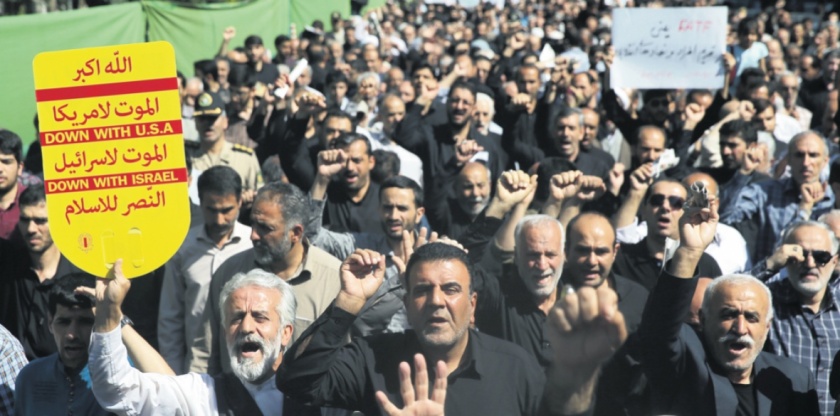
A wave of protests has gripped Iran throughout 2018 since demonstrations engulfed 85 cities across the country last January.  The protests are engaging the low paid, underemployed and disenfranchised, through to industrial workers in the steel and sugar industries and professional workers such as teachers.  There is no strand of Iranian society which has not been touched by the protests.  The regime is struggling to contain nationwide discontent. 

At the beginning of November teachers went on strike for two consecutive days across 27 major cities in Iran. The action was the second round of strikes since mid-October, aimed at putting pressure upon the government to carry out educational reforms and end mismanagement. The teachers’ action is also protesting against low wages and the violations of the educational rights of students and minorities.

Teachers are also demanding the release of imprisoned teacher trade unionists, an end to indiscriminate investigations and the ongoing arrests of union activists.

The protests by teachers have been supported by students who are increasingly recognising that the circumstances of their educators will impact upon their learning and future job opportunities.  Support has included student protesters at Tehran University, holding pictures of imprisoned teachers, interrupting a speech being delivered by Iranian President Hassan Rouhani.  The fact that students and teachers are feeling sufficiently emboldened to take action, which would have been unheard of just a few years ago in Iran, underlines the extent of the growing crisis inside the country.

Unrest has also been long running in the steel industry in Iran.  Workers at the Iran National Steel Industry Group (INSIG), in Ahwaz, have gone on strike numerous times in recent months to demand overdue wages. In June, many workers were rounded up by security forces and freed only when other workers launched protests.

As well as their immediate economic demands, steel workers are increasingly linking their situation to corruption at the highest levels of the Islamic Republic and articulating demands for political change.  This reflects many of the slogans echoed by teachers and students, adding to the growing sense of a crisis of political legitimacy in the country.

The same pattern is evident at the Haft Tapeh sugar cane facility, where workers went on ten continuous days of strike action in November, in protest at months of unpaid wages.  The political nature of the dispute was reflected in the chanting of slogans such as “hail to the workers, down with the dictator.”

The response of the Islamic Republic’s Supreme Leader, Ayatollah Ali Khamenei, to nationwide unrest among the millions of ordinary workers is that there is a “foreign plot” to overthrow the regime.

Since the US pulled out from the Iran nuclear deal in May and re-instituted two sets of sanctions targeting the Islamic Republic’s economy, the currency in Iran has been nosediving, affecting the value of wages and impacting upon the purchasing power of ordinary Iranians.

The deepening of sanctions by the United States, which came into play on 5th November, will only exacerbate this situation. The ability of Iran to trade on international markets is being restricted to the point where the US is effectively implementing a trade embargo.

There can be no doubt about the anti-people credentials of the Iranian regime.  For over 40 years the Islamic Republic has been to the forefront in its abuse, arrest and torture of the political opposition, trade unionists, women’s organisations and in suppressing student protests.  The regime in Iran is only matched in its vicious response to internal criticism by the United States’ key allies in the region, Israel and Saudi Arabia.

However, the sanctions imposed by the United States are not about acting in the interests of the Iranian people and freeing them from an oppressive regime.  The US sanctions are entirely about the power balance in the Middle East, with the US seeking to impose its will and maximise control of the region’s resources.

Ironically, the path being pursued by Trump was initiated under President Obama, as part of the United States’ New Middle East Plan, to reassert influence and bolster resource control in the region.  Obama’s version of the Plan resulted in the nuclear deal in 2015 and a more nuanced approach to containing the perceived threat of Iran to the regional power balance.

Not surprisingly, for Trump there are no such niceties.  To all intents and purposes, the gloves are off and the New Middle East Plan mark 2 is simply to bring Iran to its knees, whatever the cost to the prospects for peace in the region or to the plight of the people of Iran.

The worst case scenario, a military strike on Iran, is something many in the US administration have not taken off the table.  Western foreign policy, specifically that of the United States, is currently treading a very fine line from which one slip could plunge the region into war.

It is vital however, that whatever form change in Iran takes, it is based on the will of the Iranian people, not the will of external forces.  Solidarity with the people of Iran in their struggle for peace, human rights and democracy is more vital now than ever.

A democratic Iran would still face the threat of political sanctions and the ongoing danger of military intervention, by the US or one of its proxies in the region, but would nevertheless be a huge step forward for democracy in the Middle East.


Bringing down the EU house

8th December 2018

Paris-protests

 Protests continue in the French capital, Paris

In advance of nationwide gilets jaunes (yellow vest) protests the French state made 280 arrests this weekend.  Over 89,000 police have been deployed across the country, 8,000 on the streets of Paris alone, backed up by heavy duty VBRG armoured vehicles, as the Macron government desperately tries to get a grip on the fast moving insurrectionary mood in the country.  Having been elected only 18 months ago, as a ‘new force’ in French politics, the En Marche movement of which Macron is head is in danger of splintering into several pieces.

The reasons for this are clear.  Macron was never more than old wine in new bottles.  Representing the interests of the French bourgeoisie in a smart suit could fool some of the people some of the time but was never going to fool all of the people all of the time.  The recent fuel duty increase proposals, withdrawn due to popular pressure, would have hit those least able to pay the hardest.

This follows on from Macron’s programme of tax breaks for the rich, attacks upon social welfare programmes, the attempt to extend the working week and the furore caused over the attack on public sector pensions.  The inept socialist government of Francois Hollande created a political void into which Macron was able to step.  Faced with the choice of a Macron presidency or one headed by far right demagogue, Marine le Pen, in the presidential run off French voters were faced with little choice.

Under these circumstances however it was always going to be only a matter of time before the superficiality of the Macron programme was exposed and the French people had to look for new solutions.  The spontaneous protests have no clear programme or leadership at present other than being united around regarding Macron as being a puppet of the French political elite, with no idea of how the less well off live.

However, if protests are sustained beyond this week it will be essential for a Left platform to be articulated which can capture the mood of the protesting French working class.  Without unity around a progressive set of demands the danger is that the Front National of Marine le Pen will step into the void, with the usual easy targets of immigrants and refugees in their sights.

The protests in France are the latest manifestation of popular discontent across Europe, which has accelerated since the bank bailouts of 2008 saw Europe wide austerity programmes imposed by EU governments, to pay for the bankers gambling debts.  Discontent has been manifest in the Podemos movement in Spain, the Five Star movement in Italy, the election of nationalist governments in Poland and Hungary, the rise of the far right AfD in Germany and the vote to leave the EU in the UK.

That the austerity programme has coincided with a migration crisis, as refugees flee NATO led interventions in Afghanistan, Iraq, Libya and Syria, has added to the self-inflicted pressures face by European governments.

As a political project the EU has been a spent force, dissociated from the interests of the peoples of Europe, for some time.  The acceleration of the protests in France may be the start of the final act in the EU’s demise.  If that is the case, the debate over Brexit in the UK will pale into the background as the EU is plunged into existential crisis.

There are alternatives.  The French Communist Party (PCF) for example has a programme for a people’s Europe stating,

“Today, everything is done to make us believe that we should make a choice between an increasingly liberal European integration or nationalist disintegration. In France for example, Emmanuel Macron tries to reduce the political debate of the European elections between “pro” and “anti” EU. But there is an alternative: that of a Europe of peoples and nations, free sovereigns and associates, turned towards social and ecological development. The communist project is that of a break with the current EU and a refoundation of its objectives, missions and institutions. In other words, a Europe of the Human first and no longer of finance.”

It may not be fully formed in every detail but such an objective would certainly be a start and give the peoples of Europe some hope that, whatever institutions were established to coordinate real solidarity across the continent, they would be ones which would be working for them, not against them.


Take a chance on May? No Thanks!

26th November 2018

CorbynCBI(3)

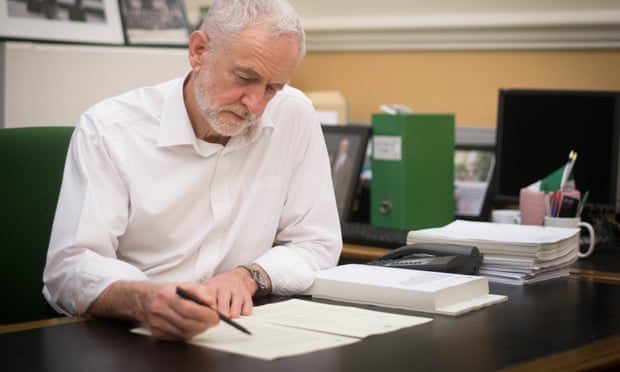
 Jeremy Corbyn outlines a Labour Brexit at the CBI last week

UK Prime Minister, Theresa May, follows her party conference Dancing Queen embarrassment with another Abba themed pitch today, as she appeals to the British public and the House of Commons to take a chance on me.  The Brexit deal negotiated over the last two years with the EU is, May tells us, the best possible deal.  It is a rare moment of concurrence with President of the European Commission, Jean-Claude Juncker, also desperate to get a deal concluded, who has made it clear that this is the only deal on the table.

It took leaders of the EU 27 states less than an hour to sign off on the deal and the mood music suggests that there is little if any room for manoeuvre as far as the rest of Europe is concerned.  For May, in a premiership which has been defined entirely by Brexit, it is a case of this deal or no deal at all.  She clearly sees the endgame in terms of her time as both PM and Tory Party leader and has decided that she will stand or fall on the ground she has marked out.

The deal will go before the House of Commons this side of Xmas.  All of the politics and Parliamentary arithmetic at the moment suggests that it will not be passed.  The fascist bully boys of the DUP, whom May has leaned upon to prop up her government, have branded the deal “pitiful and pathetic”.  They are unhappy about Northern Ireland being treated differently from the rest of the UK due to its land border with the Republic of Ireland but are essentially scared that the deal opens the way to a United Ireland by the back door.

May herself has vowed to defend the fiction of the so called United Kingdom, a defence of the historic partition of Ireland, but the DUP do not regard this as enough assurance.  The pro-Brexit European Reform Group, led by the anti-charismatic Jacob Rees-Mogg, are equally concerned by the defence of the union issue, as well as the timescale on any transition period, and would rather see a no deal scenario with the UK reverting to World Trade Organisation (WTO) rules than a deal which gave the EU any say beyond 29th March 2019.

The much vaunted challenge to May, which Rees-Mogg and his plotters have trailed for months has still failed to materialise, betraying either a lack of nerve or a lack of numbers in their ranks.  While it seems likely that they could muster the 48 ‘letters’ needed to trigger a leadership contest, the 150+ votes needed to oust May seem less likely to be forthcoming.   Without a clear leader, who could command majority support even amongst Tories, the pro Brexit faction are worried about handing the keys of No 10 to Jeremy Corbyn.

In his speech to the CBI recently, Corbyn set out the key elements of what he has described as Labour’s “sensible” approach to the Brexit issue.

Instead of the temporary customs arrangement May has signed up to as a backstop, to prevent a hard border in Ireland, Corbyn has underlined Labour’s backing for a permanent customs union.

Corbyn has been quite emphatic that,

“This is a bad deal for the country. It is the result of a miserable failure of negotiation that leaves us with the worst of all worlds. It gives us less say over our future, and puts jobs and living standards at risk.

“That is why Labour will oppose this deal in parliament. We will work with others to block a no deal outcome, and ensure that Labour’s alternative plan for a sensible deal to bring the country together is on the table.”

Corbyn has also stressed the need for workers’ rights and environmental standards to be protected to prevent a “race to the bottom”, a live issue given that EU membership has seen a proliferation of low paid jobs and zero hours contracts across the UK.

Corbyn has also called for “a strong single market relationship that allows British business continued access to European markets for both goods and services – while also ensuring we have the powers to support our public services and industry and transform the economy in all our regions and nations.”

With the Commons vote now confirmed for 11th December the ground is likely to move quickly.  Support for Brexit within Labour’s ranks is by no means solid, with a cohort led by Chuka Umunna seeking to press for a second referendum, rather than accepting the result of the first.  A lack of discipline in Labour ranks could certainly complicate the Parliamentary arithmetic in the short term and even jeopardise the chances of a Labour government being elected.

There are those in Labour ranks who would rather see a pro Remain Tory government than a pro Brexit Labour, such is their lack of class awareness.  Now is the time for Labour to hold firm to its present position, defeat the shambles which is the May government, then from a position of strength in government, negotiate a Brexit deal which works for the people of Britain, not just its banks and corporations.