US pandemic response – profits before people

12th April 2020

COVID-TrumpDonald Trump – seeking re-election at any cost

The withdrawal of Senator Bernie Sanders from the race for the Democratic nomination to contest the US election in November is a blow to the chances of any major progressive input into the campaign.  Sanders has said he will let his name stay on the ballot paper in states which have yet to declare, in order to keep some pressure upon Joe Biden to acknowledge some progressive policies, but the nomination itself now looks to be Biden’s for the taking.

As a contest Trump vs. Biden looks set to only go one way, with Biden’s appeal to the Democratic base being little more than the calculation that he is less likely to frighten off the establishment and by implication moderate voters, than self styled democratic socialist, Sanders.

Given that US political nominations are largely down to bankrolling the way to a nomination, there has been talk of Biden being gazumped by New York Governor, Andrew Cuomo, for example, whose straight talking approach to the COVID-19 crisis has been compared favourably in some quarters to the bumbling mendacity of President Trump.

The mounting body count and mass graves being prepared in New York state may take some of the shine off Cuomo’s prospects, although to date he has not declared any intention of standing.  It is clear though that the most the Democrats are hoping for is a stop Trump candidate and at present Biden is the best they can agree upon.

However, the galloping COVID-19 crisis may yet dent Trump’s prospects in November, with the US now heading to the top of the world league for deaths related to the virus, and unemployment rising rapidly.  Last week alone saw 6.6m Americans lose their jobs.

The early inaction of the Trump administration has come under scrutiny this week with evidence that Trump was warned of the impact of the virus in January but did not act quickly enough, instead making statements downplaying the virus and comparing it to the common flu. Trump was backed in his assertions by his allies at Fox News who rushed to his defence, accusing the media of “scaring people unnecessarily” and trying to “bludgeon Trump with this new hoax.”

In seeking to apportion blame for the impact of the virus, upon US lives and the economy, Trump this week hit out at the World Health Organisation (WHO), accusing WHO of having “called it wrong” and being “China-centric”.

Trump went on to vow that he would put “a very powerful hold” on his government’s funding of the WHO, before backtracking and insisting that a freeze was only under consideration.

The facts remain that the WHO declared COVID-19 a public health emergency on 30th January, nearly a month before Trump tweeted: “The Coronavirus is very much under control in the USA”, and proclaimed: “One day – it’s like a miracle – it will disappear.” He eventually declared a national emergency on 13th March.

While clearly mishandling action to halt the spread of the virus at home, Trump still finds time to direct fire at those attempting to tackle the pandemic internationally.  However, US efforts to characterise Cuban medical teams as “agents of communist indoctrination” has taken a blow, as Cuban doctors have flown off on new missions to battle COVID-19 in at least 14 countries, including Italy and the tiny principality of Andorra on the Spanish-French border.

In the city of Crema in the Lombardy region of northern Italy, 52 Cuban doctors and nurses set up a field hospital with 32 beds equipped with oxygen and three ICU beds.

“This is a strongly symbolic moment because the Crema hospital has been going through an extremely complicated situation from the start,” Lombardy’s top social welfare official, Giulio Gallera, said, “The number of patients who have filled and continue to fill the emergency room and departments has truly put the medical personnel to a hard test.”

The Trump administration has sought to cut off income to Havana as part of a long-term tightening of sanctions and continues to discourage countries from contracting Cuban medical workers.

Cuba currently has about 37,000 medical workers in 67 countries, most in longstanding missions. Some doctors have been sent as part of free aid missions, but many countries pay the government directly for their services. In some other cases, international health bodies have paid.

Pressure in the United States from the Wall Street business lobby could yet see social distancing restrictions lifted far sooner than the WHO would deem safe.  While the National Council for Occupational Safety and Health (NACOSH) is opposing such a move the bankers appear to be backed by the Centre for Disease Control (CDC) in the US.

Recent CDC guidance on 9th April, states that essential “critical infrastructure workers” could go back on the job as long as they were pre-symptomatic or asymptomatic, even if they had been exposed to a virus victim within the prior 48 hours. The push to get everyone back to work, regardless of the danger, was stressed by Trump again recently, when he put forward the notion that the country should be ready for this by the end of the month.

Profits before people is unlikely to turn up anywhere as a campaign election slogan but that is precisely what Trump’s policies in relation to the pandemic amount to.  That is how things stand in the world’s richest and most powerful nation.

Meanwhile, 90 miles off the Florida coast a small island, against which the US maintains a 60 year long illegal economic blockade, continues to show that there is another way.


No billionaires, no living in a box

5th April 2020

Starmer

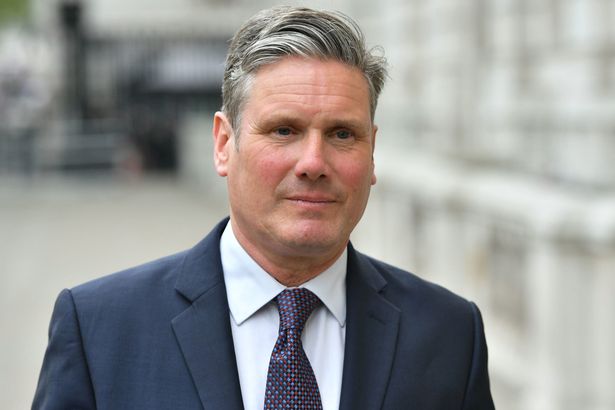
Kier Starmer changing the balance of power, or just getting Labour back into office?

Backing illegal US wars, buying in to the Trident deterrent illusion, not saying boo to the bankers and the fat cats in the City of London.  Is this what we can expect from a Kier Starmer leadership of the Labour Party?  A return to the pre-Jeremy Corbyn days of electability at all costs, rather than mapping out the changes needed to the society we live in, which allows billionaires to thrive while others live in cardboard boxes on the street?

The intensity of the media and establishment onslaught against Corbyn was precisely because the policies Labour advocated under his leadership were a challenge to the established order and were gaining increasing popularity.  The 2019 election result would not tell that story because by then the ruling class in the UK had ensured that anything associated with Corbyn was regarded by sufficient sections of the public as toxic. Defeat at the polls was almost a foregone conclusion.

Inevitably, following the election of a new leader, there is talk of unity, all sections of the party pulling together, getting behind the new man and giving him the chance of being elected.  A similar response to Jeremy Corbyn after the relative success of the 2017 election would have been welcome but, as ever with Labour, it is the Left who will compromise for unity, with the Right crying foul if the membership elect anyone with remotely radical credentials.

Starmer will get a honeymoon period with the press, not least due to the national emergency situation the country faces, and his declaration to work with Boris Johnson “in the national interest” to fight COVID-19.  Not even the Daily Mail will hold that against him.

Is Kier Starmer the man to challenge the balance of power, or just to get Labour elected back into office on a safe programme?  The real test will come when the current emergency is over, when the opportunity to draw conclusions and map a way forward for Labour in a changed world is presented.  The necessity of planning, co-operation and the mobilisation of the nation’s resources in a national effort is evident for all to see at the moment.  It could be argued that this should be the new normal, rather than the spectrum of inequality, from billionaires to cardboard boxes.

It has certainly become evident to many just how important, undervalued and underpaid the nation’s public sector workforce is in the present system.  Those workers deemed ‘business critical’ in the present crisis are not running social media, speculating on the stock exchange or building careers in advertising.  They are nurses, doctors, refuse collectors, care workers, social workers and local government staff, all mobilised to defend the vulnerable and provide a vital lifeline for the most socially isolated.

Co-operation is only possible under capitalism when circumstances dictate that there is no alternative.  Hence the constant war time analogies in relation to the present pandemic situation.

Even then, such co-operation goes against the free market grain of the current government and the desires of the private sector to pursue huge wealth.  Calls by the trade unions for the government to intervene in order to mobilise idle factories, to engage in the socially useful production of vital personal protective equipment for the NHS, have been slow to translate into action.

Starmer has taken the opportunity to level some criticism at the government, suggesting in a Sunday Times article that there have been “serious mistakes” in tackling the COVID-19 crisis, including the failure to provide enough protective equipment for frontline workers and delays over testing.  This is relatively safe ground and not out of step with the view of many epidemiologists.

The government target, announced this week by Health Secretary, Matt Hancock, of increasing testing ten fold to 100,000 tests a day by the end of April, is widely seen as ambitious, if not necessarily achievable.

There continues to be disagreement on the way forward.  Mark Woolhouse, at Edinburgh University, has suggested three strategies for dealing with the epidemic,

“Once lockdown has driven down the virus to low enough levels in the community we can go back to chasing down individual cases.  At the same time we build more ICU capacity in the NHS so that we can relax the lockdown without the health service being overwhelmed.  And thirdly we place new emphasis in shielding the vulnerable.”

John Edmunds, at the London School of Hygiene and Tropical Medicine, has said that the lockdown policy needs to continue for many months, stating,

“Testing on its own will not stop this epidemic.”

The test for Labour, and Starmer in particular in his new role, will be to articulate a vision of society beyond the crisis, which resonates with the experience of ordinary people.  That will mean having to challenge some sacred cows, such as spending billions on Trident when the NHS is in crisis; giving the City of London free rein to gamble with pension funds; addressing the homelessness crisis when billionaire properties stand empty; and tackling the shortfalls and unequal distribution of funding across local government.

In short, it may have to be a programme the like of which the Labour Left, and Jeremy Corbyn, would approve.  Let’s see how long the press honeymoon with Starmer lasts if we get to that point.

UK Lockdown set to tighten

29th March 2020

Powis

Prof. Stephen Powis – urging against complacency

With the UK lockdown fully underway, and the further tightening of measures in prospect, the critical issue to address is the testing of health workers for COVID-19.  The NHS has had to deal with the crisis at a point when 10% of posts are vacant and many services sustained through the use of agency staff.  As a result of the crisis sickness levels in the NHS are already high, resulting in a shortage of medical staff, with many others self isolating with suspected symptoms.  Others are worried that they may be infected without showing symptoms, posing a potential risk to patients, colleagues and families. Widespread testing of NHS staff would help protect patients as well as allowing staff to return to the frontline faster.

The urgency of this strategy was underlined yesterday by national medical director of NHS England, Prof. Stephen Powis, at the daily Downing St press conference, that the UK “will have done very well” if deaths are kept below 20,000 in the current pandemic.  Given that deaths in the UK have just passed the 1,000 mark that represents only 5% of the potential death toll, even in a best case scenario.

At a cost of nearly £6m the government has taken the controversial decision to write to every UK household this week, in the form of a personal letter from Prime Minister, Boris Johnson, urging everyone to observe the lockdown measures currently in place, while reinforcing the social distancing and hand washing messages.

Debate has already started as to whether the letter is the best use of resources given the TV, radio and social media coverage of the stay home, save lives message.  Evidence suggests that in most instances behavioural change is taking place, with social distancing now being the norm in supermarket queues.  Amongst the minority where there is active resistance to the government measures people are unlikely to be persuaded by a letter from the Prime Minister.

The outpouring of public support for health workers, in the clap for carers initiative on Thursday and the rush of over 500,000 volunteers to provide support, has demonstrated the willingness of huge sections of the population to play their part in tackling the COVID-19 crisis.  This was swiftly followed by the embarrassment of Boris Johnson, testing positive with mild symptoms, Health Secretary, Matt Hancock, having to go into self isolation and Chief Medical Officer, Chris Whitty, temporarily withdrawing from the public stage for the same reasons.

Substitutes have had to deliver recent Downing St daily press briefings, with appropriate social distancing being observed, and reporters asking questions via video link.

With week one of the lockdown over there is every expectation that the coming seven days will see pressure upon the NHS increase significantly.  Of the 6,300 COVID-19 patients in hospital, as of last Friday, at least half are in London alone, which is expected to be the worst hit part of the UK over the next ten days.  Privately, many involved in local resilience are expressing the view that London is, to all intents and purposes ‘lost’, and measures to contain the virus have effectively been too little, too late.

While government measures to help the employed and self-employed during the week were welcomed, the period of uncertainty leading up to the announcements meant that many continued to travel to work on crowded tube trains and buses.  Without any certainty about income people felt they were being forced to choose between going to work and taking their chances with the virus.

Similar scenarios are playing out across major conurbations across the world, with New York and Tokyo continuing to report significant increases in cases and Mexico announcing a nationwide one month lockdown in an effort to contain the spread of the virus.

In the UK, ‘field hospital’ arrangements have been set up in London, with 4,000 additional beds, with Birmingham and Manchester expected to follow.  NHS guidance suggests that staff from across hospitals including non-nurses such as care assistants, therapists and pharmacists may be drafted in to assist with the care of patients, with intensive care nurses overseeing teams of carers across several patients.   Guidance also suggests that staff volunteering to work in field hospitals may need to be prepared “to live-in for the period the field hospital is open.”

In the context of a lack of high grade masks and inadequate levels of personal protective equipment, in an already under resourced NHS, capacity is soon going to be stretched beyond any reasonable limits.

Under resourcing and the creeping privatisation of the NHS have been starkly exposed by the present pandemic.  The symptoms though have been presenting for a long time.  The drama of current events is increasingly confirming that the long term cure for health provision in the UK is only possible with the planning, investment and organisation necessary under socialism.


Whatever it takes?

20th March 2020

BorisBriefing

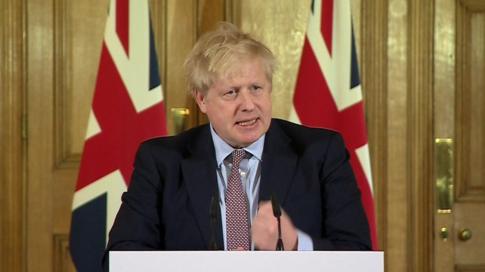
Boris Johnson – a little less bluster, a little more action?

The COVID-19 coronavirus crisis is throwing up significant contradictions for capitalism.  In a system built upon competition, the only way to defeat COVID-19 is through co-operation.  In a system which prides itself upon being dedicated to the free market and privatisation, the only answer to COVID-19 is centralised control and state intervention.  In a system in which companies in the FTSE100 are happy to rake off enormous profits when times are good, they are desperate for a government bail out when times get tough.

Having been elected on the ‘Get Brexit Done’ mantra the Tories are now running with ‘Whatever it takes’ as the slogan in their efforts to tackle COVID-19.  Rishi Sunak, newly installed Chancellor of the Exchequer, last week revealed a budget that sought to provide a bail out for business, but expects workers at the sharp end to settle for little more than half a loaf, as the economic consequences of COVID-19 begin to bite.

Capitalism inevitably sheds labour in times of crisis but is in danger of shedding more labour even more quickly than the system can cope with, plunging into worldwide recession as a consequence.

In spite of this, Parliamentarians and the press alike are being are being very polite.  It is a national crisis and we must all pull together to get through, it’s no good indulging in a blame game, after all, who could have seen his coming?

Short term memory is a wonderful thing.  Bird flu? SARS anyone?  It was only a question of time before another viral attack was unleashed upon the world and building capacity to resist should have been a priority for some time now.

The reality is somewhat different.  Ten years of Tory enforced austerity has not only weakened the capacity of the NHS to deal with the medical consequences of the virus but has severely undermined the community infrastructure necessary to help support people through the crisis.

Local government services already at breaking point have limited capacity to adjust.  The zero-hour contract, low pay, gig economy, beloved of so many of the companies Sunak will bail out, gives millions of workers no security or protection at such a critical time.  Many will turn to local services for support and find that these too have been eroded over the past decade.

UK Prime Minister, Boris Johnson, has donned his populist cloak and claimed that, unlike the 2008 financial crash when the banks were bailed out, this time the people will be bailed out and not suffer unduly.  During the course of the same press briefing (19th March), Johnson also claimed that if we all pull together it will be possible to ‘turn the tide’ on COVID-19 within 12 weeks.

This seems to fly in the face of the assumptions made by the Imperial College London (ICL) report upon which the government is now making its planning assumptions.  The ICL report suggests that the mitigation approach, initially adopted by the government, would result in “hundreds of thousands of deaths” and overwhelm NHS intensive care units.  ICL models suggested 250,000 deaths in Britain based upon experience to date in the UK and Italy.

More effective, according to the ICL report is a strategy it terms suppression, now adopted by the government, which aims to reverse the epidemic growth altogether by reducing case numbers and keeping them down.  ICL suggest that,

“A minimum policy for effective suppression is therefore population wide social distancing combined with home isolation of cases and school and university closures.”

ICL claim that suppression policies would need to stay in place for at least five months and claim that, to avoid a spike when suppression is eased, restrictions in some form may need to be in place until an effective vaccine is available, which could be up to 18 months.

This is a far cry from the blustery optimism of Johnson’s turning the tide in 12 weeks rhetoric.

The UK has a total capacity of 5,000 intensive care unit beds in surge capacity mode.   In Italy, deaths increased when beds hit capacity and critical care was not available.  Estimates suggest that nearly 5% of people with COVID-19 will need to be hospitalised, a figure which increases into the older age range.  An estimated 70% of the over 80s who require hospitalisation will be likely to need critical care.

While the Tories cannot quite be accused of acting like Mexican president, Andres Manuel Lopez Obrador, who thinks he can defeat COVID-19 with lucky charms, including Catholic scapulars and a US 2 dollar bill, they still need to take more urgent action more quickly.

As ever, it is the poor and the elderly who are most at threat.  As ever, these people are the most reliant on public services which the Tories have consistently undermined.  As ever, these are the sections of the population which rely most on the NHS.

COVID-19 knows no boundaries, either of geography or class, but it is inevitably the case that those with the least resilience, both medically and financially, are at the sharp end of the social spectrum.  They will need more support than a few long terms loans to private business will provide.  They will need sick pay and their wages and housing costs covered in order to get through the crisis.

Whether the system can really be turned around to support the poor, the elderly and the unemployed, rather than the banks, the rich and the City of London, remains to be seen.  Johnson’s daily 5pm press briefings will continue to be monitored with interest.


COVID-19…Chinese whispers

9th March 2020

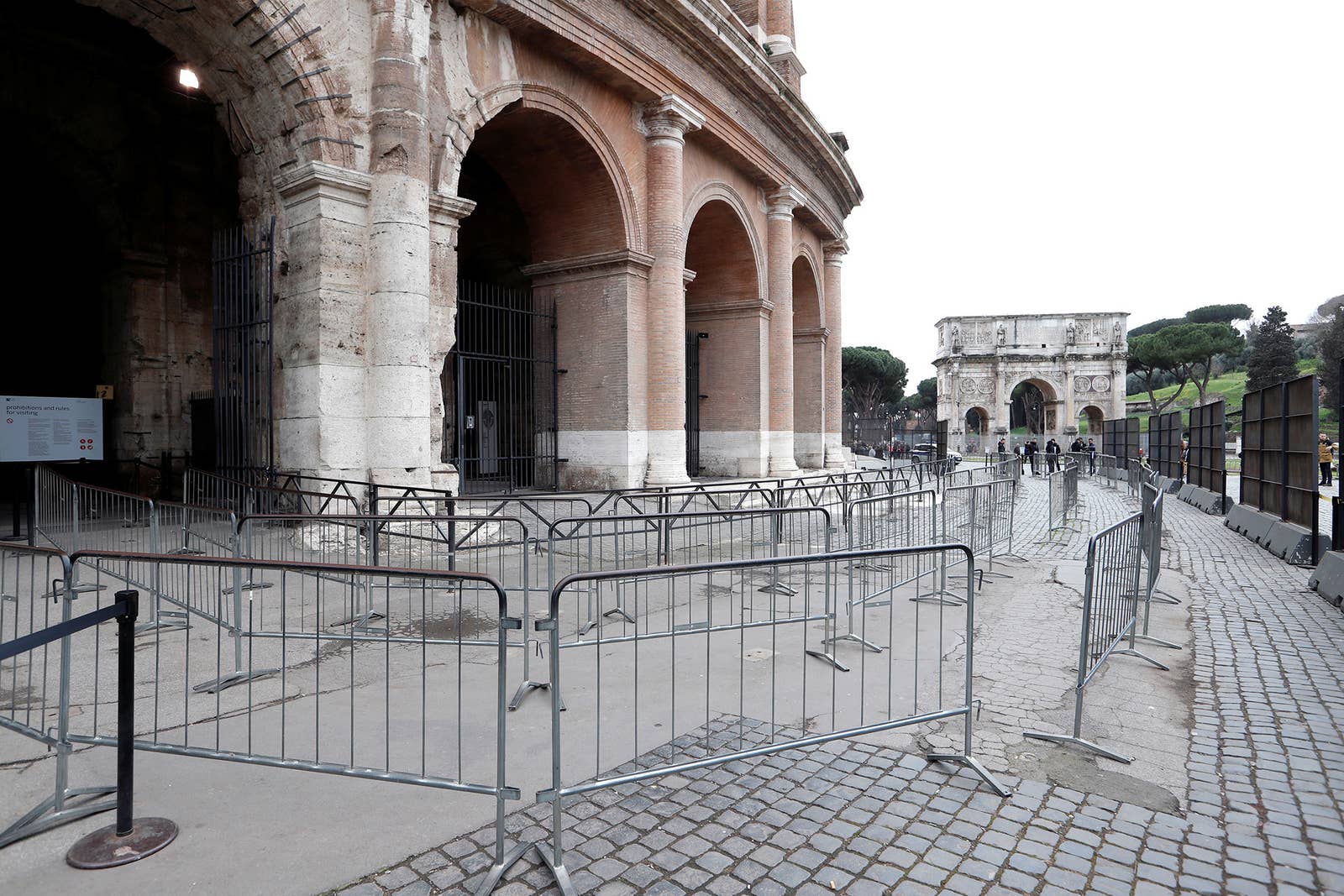
No queues at the Colosseum in Rome as COVID-19 hits tourism

Recent World Health Organisation (WHO) praise for the way in which the Chinese authorities have contained the coronavirus, COVID-19, outbreak has been tempered by those suggesting that, in world economic terms, China is too big to criticise, even for the WHO.  Routine anti-Chinese positions are not new to the Western media but attempting to undermine the WHO will not encourage public confidence in how the epidemic is being handled.

WHO representatives reported back recently on a joint WHO-China mission on COVID-19 after which epidemiologists were impressed by the ‘differentiated approach’ taken in China towards different situations, including sporadic cases, clusters of cases and community transmission.

The WHO recognition of the response measures in China has led EU representatives to express the desire to maintain close communication, in order to draw upon Chinese experience.

The WHO Regional Office for Europe stated that,

“We are encouraged by the continued decline in cases in China.  We remain concerned about the increasing signs of transmission outside China.  International cooperation between nations, sharing experience and best practice, has been, and will continue to be, crucial to managing this outbreak.”

EU health ministries have agreed to develop a co-ordinated approach to prevention and protection of people at risk, including coherent containment measures, as well as advice regarding travel to and from risk areas.

Uncertainty about how to contain the virus is having an impact upon tourism, travel and economic activity worldwide.  Stock markets opening in the City of London today (9th March) saw an initial fall in the value of shares on the FTSE 100 of 9%, the third biggest single day’s fall in history and the biggest since the financial crash of 2008, an indication of the impact which COVID-19 is having upon the world economy.

The impact of measures taken to combat COVID-19 in China is significant precisely because of its position in global trade.  China alone accounts for almost a quarter of global manufacturing, one quarter of global automotive production and a high percentage of parts for the automotive, steel, plastics and high-tech telecoms industries for Western manufacturers, all of which rely on just in time production processes, now grinding to a halt as goods stockpile in Chinese ports.

Almost inevitably, given the origin of the virus in China, conspiracy theories about COVID-19 are gaining a grip.  This is especially true in the United States, where anti-Chinese sentiment is barely beneath the surface in certain political circles and the demonisation of China may be seen to have some political advantage, especially in a presidential election year.

The most persistent rumour, repeated by many from right wing radio host, Rush Limbaugh, to former Donald Trump strategist and infamous right wing commentator, Steve Bannon, claims that the virus originated in a laboratory in the Wuhan Institute of Virology.

However, a significant group of experts studying the virus have claimed recently in The Lancet that the virus originated in wildlife.  Scientists who have sequenced the genome of the virus have identified it as 96% the same as viruses that circulate in bats.  The first cluster of cases in China had ties to a live animal market in Wuhan, where seafood and other wildlife were sold as food, leading infectious disease researchers, writing in the New England Journal of Medicine, to state that the evidence,

“…implicates a bat-origin virus infecting unidentified animal species sold in China’s live-animal markets.”

From there the virus made the leap to humans where it has been spreading ever since.

Another conspiracy theory, that the virus was a bio-weapon gone wrong is also dismissed by microbiologists, in part due to the unusual biochemical features of the virus and also because, as a weapon, it is not very efficient.  There are far deadlier pathogens which, if weaponised, could have a much more significant impact than COVID-19.

There is consensus however that live animal markets are a potential source of further viruses being generated, as there is the opportunity for transmission between animals and from them to humans.  If any criticism is to fall with the Chinese it is their approach to public health, which allows this potential for transmission in live animal markets.

China is not the only country in which such practice exists.  However, given its role as a global economic superpower, home to nearly 20% of the population of the planet, it does have some responsibility to stamp out practices which can impact adversely on public health both nationally and internationally.

It is positive that the WHO has praised the Chinese for their action in dealing with the outbreak, in spite of some of the criticism it has received for doing so, but action so far is only dealing with the symptoms.  For the Chinese, and others who allow unregulated live animal sales, the pressure now is to bring all of their economic and political influence to address the cause of COVID-19.


Experts fear coronavirus cover up in Iran

2nd March 2020

As the coronavirus outbreak continues to spread, there is growing evidence of an increasing impact in Iran.  It is feared that sanctions imposed by the US may have weakened the capacity of the country’s medical sector to cope.  Jane Green reports.

Iran subway

Coronavirus in Iran – may be worse than officially reported

Since first announcing the presence of coronavirus COVID-19 recently, Iran has reported a total of 388 cases and 34 deaths, a far higher fatality rate than seen elsewhere.  It is widely suspected that the official tally vastly underestimates the true number of cases.  Iran has the highest number of coronavirus cases outside of China.

A senior medical doctor at the Masih Daneshvari hospital in Tehran, the country’s top pulmonary public hospital and the main facility overseeing coronavirus patients was keen to retain his anonymity but stated,

“We think that this virus has been in Iran for the past three to four weeks and has circulated throughout the country. Right now in Iran we are facing a coronavirus epidemic.”

Medical teams are concerned that they do not have the means to test effectively or to screen potential cases.  Testing kits were not available in Iran until last week due to the sanctions imposed upon the regime by the US.

Medical workers are also concerned that their equipment is badly outdated, a situation made worse by the US sanctions, although the US administration says “humanitarian and medical needs” are exempt from sanctions.  Nevertheless, many European companies fear doing business in Iran for fear of retribution from the US.

In addition, sanctions on Iranian banks make it difficult to carry out financial transactions with Europe.  It can take three times longer to make a simple banking transaction with Europe under the newly imposed sanctions.

Ventilators and medicines are also in short supply as the scarcity of US dollars limits purchasing power.  While the government has imposed some restrictions on holy sites and called off some Friday prayer services, President Rouhani has said there are no plans to quarantine entire cities hit by the virus.

Due to the shortage of surgical masks and hand sanitiser in shops, public health experts say Iran could become the hub of a major outbreak across the Middle East, especially given its porous borders with unstable countries at war or in turmoil.

Studies by Human Rights Watch and other groups last year found the country’s health care sector was severely affected under the latest round of US sanctions, putting cancer and other patients in danger, without access to life-saving medicine.

Iran’s reported mortality rate for coronavirus, at just under nine percent, surpasses the rate for other countries by a wide margin. Earlier this week, it was 16 percent. China’s reported mortality rate is currently at 3.5 percent. In South Korea, 13 patients have died out of 1,766 cases, for a reported mortality rate of slightly less than 1 percent.

Precise figures for Iran however, are difficult to come by.  The head of the Medical Science University in Qom, Mohammad Reza Ghadir, a city in which there has been a significant number of confirmed cases, said on state television that the Health Ministry had banned releasing figures on the outbreak in the city.

Asked how many people had been placed in quarantine, Ghadir said, “The Health Ministry has told us not to announce any new statistics.”

The lack of clear reporting from Iran has prompted experts to raise concerns over whether there has been an official cover-up of the scale of the epidemic, and whether the country will be able to contain the deadly disease.

The response of the leadership of the regime has not inspired confidence, with the country’s supreme leader, Ayatollah Ali Khamenei, playing down the outbreak, accusing Tehran’s enemies of playing up “negative propaganda” over the coronavirus threat, to undermine recent Parliamentary elections.

The lack of concern shown by the regime is underlined by the fact that nine flights by Mahan Air, the Islamic Revolutionary Guard Corps controlled airline, were made without any official permit to China, for the transportation of passengers and freight in the two weeks prior to the Iranian government’s acknowledgement of the presence of coronavirus inside Iran.

This was despite a rule having been made by the Iranian government supposedly suspending all flights between Iran and China. The passengers of these flights were not subject to quarantine or any control whatsoever upon their return to Iran.

However, given the growing international concerns and the prospect of the World Health Organisation (WHO) declaring a coronavirus pandemic, there have been growing calls upon the US to ease its restrictions on humanitarian trade with Iran, which would allow China and other Tehran-friendly countries, including Russia, to provide medical and humanitarian aid to the Islamic Republic before the disease escalates into a greater crisis in the region.

Dr. Mike Ryan, executive director of the World Health Organization’s emergencies programme, told reporters last week that the virus “came unseen and undetected into Iran, so the extent of infection may be broader than what we may be seeing.”

If the situation in Iran continues to deteriorate the US will come under mounting international pressure to remove some of its sanctions to allow humanitarian aid.  Gal Luft, co-director of the Institute for the Analysis of Global Security in Washington, said last week,

“The Trump administration will face a moral dilemma: whether to remove some of the pressure on Iran or face international condemnation for putting millions at risk.”

Luft also expressed concern that, as fears of a global pandemic grew and countries stockpiled face masks and other medical equipment, it could be hard for other nations to help Iran effectively.

In an ironic twist State media said last week that a member of the Iranian Parliament, Mamoud Sadeghi, and the country’s deputy health minister, Iraj Harirchi, who lead a task force battling the virus, had tested positive. The news came a day after Harirchi appeared at a news conference looking feverish, reaching for tissues to wipe his brow. He wore no mask as the ministry spokesman standing next to him expressed confidence about the government’s response to the crisis.

Health ministry spokesman Kianush Jahanpur called on Iranians to avoid “unnecessary trips inside the country”, while Iran’s neighbours have closed their borders. The UAE, Kuwait, Bahrain, Lebanon, Afghanistan, Pakistan and Estonia in northern Europe all recorded new cases of the virus in people travelling from Iran.

Globally, more than 80,000 people in nearly 50 countries have been infected with the coronavirus. Nearly 2,800 have died, the majority in China’s Hubei province.

This article first appeared in the Morning Star (02/03/20)

For more information visit www.codir.net


Pledges and priorities

23rd February 2020

palestine-psc-demo.-jpgPro-Palestine but against antisemitism – perfectly compatible

Voting for the Labour Party leadership will get underway this week, with the top job now narrowed down to three candidates; Kier Starmer, Lisa Nandy and Rebecca Long Bailey.  To some extent all three are compromised, by supporting the Ten Pledges to End the Antisemitism Crisis diktat, by the Board of Deputies of British Jews, which seeks to impose external controls on how the Labour Party addresses allegations of antisemitism, stating that,

“An independent provider should be used to process all complaints, to eradicate any risk of partisanship and factionalism.”

The pledges include handing responsibility for training on antisemitism to one group in the Jewish community, the Jewish Labour Movement, and for Labour to,

“…engage with the Jewish community via its main representative groups, and not through fringe organisations and individuals.”

This latter being code for the Board of Deputies or groups it approves as being ‘representative.’

This presumably excludes Jewish Voice for Labour, for example, which has supported a rejection of the Ten Pledges by the leadership candidates.

Even Rebecca Long Bailey, the most progressive of the leadership candidates, has fallen victim to the antisemitism smear campaign, suggesting in Jewish News that,

“Unfortunately, some people who regard themselves as anti-racist may nevertheless, when talking about the legacy of colonialism or the distribution of power within our capitalist society, use some of the negative stereotypical ideas or images that have become embedded within our culture over time.”

Long Bailey could have more usefully made the point that conflating criticism of the Israeli government’s failure to respect UN resolutions and international law with antisemitism, is the most dangerous of the “negative stereotypical ideas or images” being systematically embedded within our culture.

In the Deputy Leadership race only Richard Burgon and Dawn Butler have not agreed to the demands of the Ten Pledges, a position which has brought on predictable vitriol from the Board of Deputies and its mouthpiece the Jewish Chronicle, which quoted Board president Marie van der Zyl saying it “beggars belief” that Shadow Justice Secretary Richard Burgon and Shadow Equalities Minister Dawn Butler had withheld their endorsement.

Butler, in a statement as to why she would not sign the Ten Pledges made clear,

“If I thought that signing these 10 pledges would help solve the problem, I would do it. It would no doubt be the easy thing for me to do and I know the attention not doing so will bring. I endure racism on a daily basis. I know what it feels like. I have dedicated my career and life to doing just that, including in my current role as Shadow Secretary of State for Women and Equalities.

That’s how I know that the easy route is not always the best route and I must do what I think is best. I fear that signing the pledges without further discussion will result in no positive change and I fear it will just be a token gesture.”

Her full statement is here:-

https://www.dawnbutler.org.uk/news/statement-regarding-the-ten-pledges-for-labour-leadership-and-deputy-leadership-candidates-by-the-board-of-deputies-of-british-jews/

The Ten Pledges from the Board of Deputies has received far greater profile that the Ten Key Pledges to Support Muslim Communities, released by the Muslim Council of Britain (MCB) during the General Election campaign, and to which all leadership candidates have also signed up.

More information is here:-

https://mcb.org.uk/press-releases/all-labour-leadership-candidates-sign-up-to-mcbs-ten-key-pledges/

It is interesting to note pledge 10 on the subject of Ethical Foreign Policy which states,

“Support a binding recognition of Palestine as an independent and sovereign state, and address human rights abuses abroad, including in Kashmir, Xinjiang and Myanmar.”

The Board of Deputies will no doubt have a view on the Palestinian question.  It will be interesting to see how much time the successful candidate devotes to this MCB pledge, compared to those in the Board of Deputies set of pledges.  There can be little doubt which will receive the most scrutiny from the media and which organisation has the strongest lobby, both inside and outside of the Labour Party.

One thing is certain, real leadership will come from the candidate who is not only vociferous in their condemnation of antisemitism but who calls out racism in any form. That will mean being prepared to make the case for the rights of Palestinians, in accordance with international law, however strong the pressure may be not to do so.


The Centre Cannot Hold

15th February 2020

MLD

Sinn Féin break the mould in the Irish general election

The Left in Britain should take heart from the outcome of the recent General Election in Ireland, where Sinn Féin broke the stranglehold of the centre right consensus in Irish government, in the form of Fianna Fáil and Fine Gael, which have dominated the political life of Ireland for eight decades.

Sinn Féin leader, Mary Lou McDonald, has set about the task of attempting to form a People’s Government with the support of smaller parties and independents in the Irish Parliament.  It may take time to put together such a coalition but the fact that Sinn Féin are even in such a position is a huge leap forward.

In a statement on the election outcome the Communist Party of Ireland (CPI) made the following assessment,

“This election result has grown on the rejection of EU-imposed austerity and the polices that give priority to the needs of capital, of the rich and powerful, at the expense of workers, policies promoted by all the establishment parties, including the Labour Party, and the establishment media. It follows from the mass struggles on water, housing, health, Repeal the 8th, and marriage equality.

The election only confirmed that housing, health, pensions and child care were central questions that have had a great impact on the working class.”

However, as the CPI go on to warn, Sinn Féin must remain vigilant against the efforts of the Irish establishment to incorporate them into the system and blunt the demands which have propelled them into such a strong position.  A coalition with one of the establishment parties could very well lead to a watering down of the programme on which Sinn Féin were elected.  As the CPI go on to state,

“In the next few weeks we will witness the behind-the-scenes negotiations and back-room deals being pulled together to see which combination of parties will form the next Government. The opportunism of the Labour Party, Social Democrats and Green Party will make them very amenable to forming or supporting a Government with Fianna Fáil.

While Irish communists welcome these progressive developments, we are mindful of the history of class struggles and the fight for national independence and sovereignty, of how easily the demands and the energy of working people have been smothered in the past, promoting the blind faith that the electoral system alone can deliver real or lasting change.”

In the words of Irish poet WB Yeats , “the centre cannot hold.”

The election in Ireland does illustrate that Left policies can prove popular, as the Labour Party in Britain demonstrated in the 2017 General Election.  The contest for the leadership of the Labour Party has now been narrowed to three candidates, with Emily Thornberry failing to make the cut for the final ballot.

Kier Starmer remains the clear front runner, based upon Constituency Labour Party and trade union nominations, with Rebecca Long Bailey and Lisa Nandy also in the frame.  The election now goes to one member, one vote with all 500,000 Labour Party members eligible to make their choice.

Only Long Bailey has presented a platform which is consistent with the progressive positions Labour has developed over the past four years under Jeremy Corbyn.  Her demonisation by the media is in proportion to her support for left wing policies and every effort is being made, by both the media establishment and the establishment within the Labour Party, to undermine her position.

Starmer has recognised that he will not win without some left wing support and has made conciliatory noises, suggesting that Corbyn’s leadership and policies had some merit, and that the baby should not be thrown out with the bath water.  This is rich coming from him as Starmer was one of the key architects of Labour’s defeat, in arguing to ditch the policy of support for the referendum outcome, while lending weight to the so-called People’s Vote campaign.

Lisa Nandy is the current darling of the soft left and is likely to garner votes from those determined to see a woman leader but not brave enough to vote Long Bailey.

Whatever the outcome of the Labour leadership election the successful candidate can be sure of a media vilification campaign, if not on the scale of that directed at Corbyn, at least sufficient to pose questions about their leadership competence and economic credentials.  Even Starmer, the safety first candidate, will not escape this.

Nor can the centre hold in Britain any more than it can in Ireland. Whoever lands the Labour Party job can be sure that they will face a Prime Minister whose primary objective over the next five years is to secure a further five years in office.  The effective sacking of Chancellor, Sajid Javid, heralds a move to centralise economic decision making in the hands of No.10 and a determination by Boris Johnson to increase public spending on infrastructure projects, the green light for HS2 being just the start.

It is Johnson’s calculation that such spending will not only prove popular but will boost the economy, at least sufficiently, to gain him a second term.  However, it will take more than fast trains to turn around some of the structural issues of poverty, which have been compounded by ten years of austerity and biting welfare reforms.  It is ironic that HS2 will not even reach those Northern seats that Johnson has characterised as ‘lending’ him their votes.  It may not be long before many voters realise they have been short changed.

Johnson has been equally determined not to raise taxes, leaving him in the position of fuelling his spending plans through increased borrowing, albeit at favourable interest rates, or breaking the tax pledge.

In Britain, as in Ireland, it is hard to see how things will not, at some point fall apart.


Trump acquittal?

9th February 2020

Acquitted

Trump – basks in his impeachment acquittal

“Trump Acquitted” screamed the headline in The Washington Post, held aloft by the self promoting, narcissist currently occupying the White House at his press conference on Friday.

“Best headline I’ve ever had in The Washington Post”, quipped a delighted Trump, barely able to conceal his joy at the outcome of the impeachment trial, which will surely go down in US history as one of the greatest constitutional debacles ever.

The move to impeach Trump was set in train last August when the President was accused of putting pressure upon the President of Ukraine, to dig dirt on the son of Democratic presidential hopeful, Joe Biden, or say goodbye to US aid and political support.  Trump is alleged to have held back millions of dollars of military aid to Ukraine and promised a White House meeting with Ukraine’s president, as bargaining chips.  This forms the basis of the first charge against Trump.

The second charge against Trump is that, after the White House refused to allow staff to testify at the first impeachment hearings last year, Trump was effectively obstructing Congress.

An investigation in the House of Representatives from October to December resulted in a vote to impeach Trump, which led to the case being passed on to the Senate.  While the House of Representatives is controlled by the Democrats, the Republicans control the Senate, giving Trump a distinct advantage once the trial got underway in January.

The Republican majority rejected moves by the Democrats to allow new witnesses and documents to be brought into the trial hearings, rendering them virtually meaningless and the outcome a foregone conclusion.  In the final analysis only one Republican Senator, Mitt Romney, broke ranks and Trump got his acquittal.

The news came at the end of a week when the Democrats had initially failed to declare a winner in the Iowa caucuses, the first step on the road to finding an opposition candidate to Trump for November’s presidential election.  On Tuesday, Trump delivered his State of the Union speech, which was greeted with thunderous applause by Republican Senators and compelled House Speaker, Nancy Pelosi, to rip up her copy of his speech, as Trump basked in the applause.

While Pelosi’s protest may have made for dramatic TV it will not have moved the Democrats any closer to laying a glove on Trump in November.  Iowa eventually announced that little known small town Mayor, Paul Buttigieg, had nosed slightly ahead of veteran firebrand Bernie Sanders in the caucuses.  There is a long way to go however.

The main talking point in the Democrat race has been the position of former New York mayor, the billionaire Michael Bloomberg, allegedly keeping his powder dry till the bigger states, especially California, come into play in the Democrat selection process on so-called Super Tuesday on 3rd March.

Bloomberg’s response to anyone concerned about a rich Democrat trying to buy the race to defeat a rich Republican is typically robust,

“Someone said, Are you spending too much money? And I said, I’m spending money to get rid of Donald Trump. And the guy said, Spend more.”

On the one hand, the impeachment debacle and the Democrat primary race would appear to sum up the hopeless state of US politics, certainly as reported by the mainstream media.  Alternatively, the Communist Party USA (CPUSA) has a more hopeful perspective, noting that,

“…the strength and stability of any government rests not so much on the accumulation of power at the top but the degree of support below among the governed. With a split ruling class at the “commanding heights of big capital”; hard public support hovering around one-third; and a widespread, well-organized opposition in the labor, civil rights, women’s, Latino, LGBTQ, and youth movements—Trump is in big trouble.”

As the CPUSA acknowledge though, that opposition still needs to be galvanised in a way that can mount an effective challenge to Trump in November and that,

“…much depends on the ability of the various components of the people’s movements to forge greater unity around issues as the primaries play out. As recent events reveal, this is not a given. All of us have to keep our eyes on the prize. Defeating Trump….is central to social progress.”

The response to Trump’s State of the Union address from the CPUSA can be found here:-

https://www.cpusa.org/article/cp-replies-to-trumps-state-of-the-union/

It offers the hope of an alternative USA in which the people are truly empowered and elections cannot be bought, by Republican narcissists or Democrat billionaires.

As the media coverage builds towards the election in November, and the focus in the short term sharpens on the Democrat primaries, it is worth remembering that a bigger alternative is possible.  There are millions in the USA committed to fighting for that alternative.  They deserve our support and solidarity.


No regrets

1st February 2020

jigsaw

UK departure a step towards solving the EU puzzle

In the past forty seven years the UK has seen the Winter of Discontent and the collapse of the Labour government; the Thatcher government, incorporating the rundown of manufacturing industry, the erosion of trade union rights,  the destruction of Council housing, the dismantling of comprehensive education, the Miner’s Strike and poll tax demonstrations; the Blair/Brown years with the illegal war on Iraq, troops in Afghanistan and the banking crisis of 2008, paving the way for more Tory austerity, the consequences of which we are still living through.

All of this has occurred while the UK has been a member of the EU.  Membership has done nothing to stop any of this and the EU has actively colluded in much of the economic deregulation, free movement of cheap labour and flexibility for capital, upon which the EU depends.

Those who regard the EU as the greatest deliverer of peace, progress and prosperity the world has known tend to forget Iraq, Afghanistan, Libya and Syria or the migrant crises which have followed being tied to adventurist US foreign policy.  They tend to forget the conditions imposed upon nations such as Ireland, Greece and Portugal as part of so called ‘bail out’ packages, when their economies have been bled dry by the stronger EU states.

In economic terms growth in the UK economy has collapsed from 2% a year on average to 0.5% a year.  The growth trend across mainland Europe is not much better, having fallen from a 4% per year to a 1% average.  As Larry Elliott, economics editor for The Guardian has pointed out,

“Europe has world class companies but none of them were set up within the past 30 years.  There is no equivalent of Facebook, Amazon or Google: the reason the UK has turned to Huawei to build its 5G mobile network is because the Chinese company is ahead of Europe’s rivals: Nokia and Ericsson.”

There is no economic miracle waiting to happen across Europe that the UK will be missing out on by leaving.

Of course, UK departure does not guarantee economic nirvana either.  The fact that growth rates are tanking in both the EU and UK is not to do with EU membership but with the general crisis faced by capitalism.  The EU is only one means by which the ruling classes across Europe attempt to manage this crisis in their own interests.  In large measure that means the stronger economies, of Germany and France, managing the EU market in their interests.

However, the German economy only just avoided going in to recession in the last economic quarter.  Discontent continues to simmer in the annexed East Germany where opportunities since ‘unification’ remain slim and a two tier system in terms of access to education, economic and political opportunity effectively operates.  The rise of right wing populists Alternativ fur Deutschland (AfD) is in part a reflection of this.

France has been beset by street demonstrations over the past year, through the gilets jeunes.  The recent pressure to reverse proposed attacks on the working week and pensions has seen thousands more pour onto the streets in protest, with a high level of mobilisation through French trade unions, especially the CGT, and a leading role played by the French Communist Party (PCF).

The British ruling class has always been split over the EU and this has been reflected in the struggle within the Tory Party over the past fifty years.  For the moment, those seeing that their interests are best served inside the EU have lost their grip and the Little Englander faction is on the march.

For socialists the EU has not brought any benefits and the social democratic gains of the post war period have been steadily eroded, without the EU affording any protection.  The EU, friend or foe, is essentially a distraction from the main issue.  That is that capitalism itself is the main enemy and the ruling class, however it chooses to organise, inside or outside an economic and political union or not, will never act in the interest of the working class.

Leaving the EU is a momentous occasion and an historic step.  However, it will not result in the ‘freedoms’ the right wing imagine, or be the calamity imagined by hand wringing liberals.  In many respects it is simply a continuation of the ongoing class struggle by other means and on slightly different terrain.

For workers in the UK the enemy should be a bit clearer.  We need to make sure that our focus is sharper and that the real needs of ordinary people can be articulated and delivered, freed from the shackles of the monetarist restrictions imposed by the EU.  That will not mean arguing a case to return to the EU, as Labour leadership candidate Kier Starmer is advocating, but putting the case for a forward looking, truly internationalist, socialist Britain.

The people of the UK need to move forward, with no regrets about leaving the EU, but looking forward to a true internationalism, based upon the union of the peoples of Europe, not a union of the banks and corporations which exploit them.