

17th August 2026
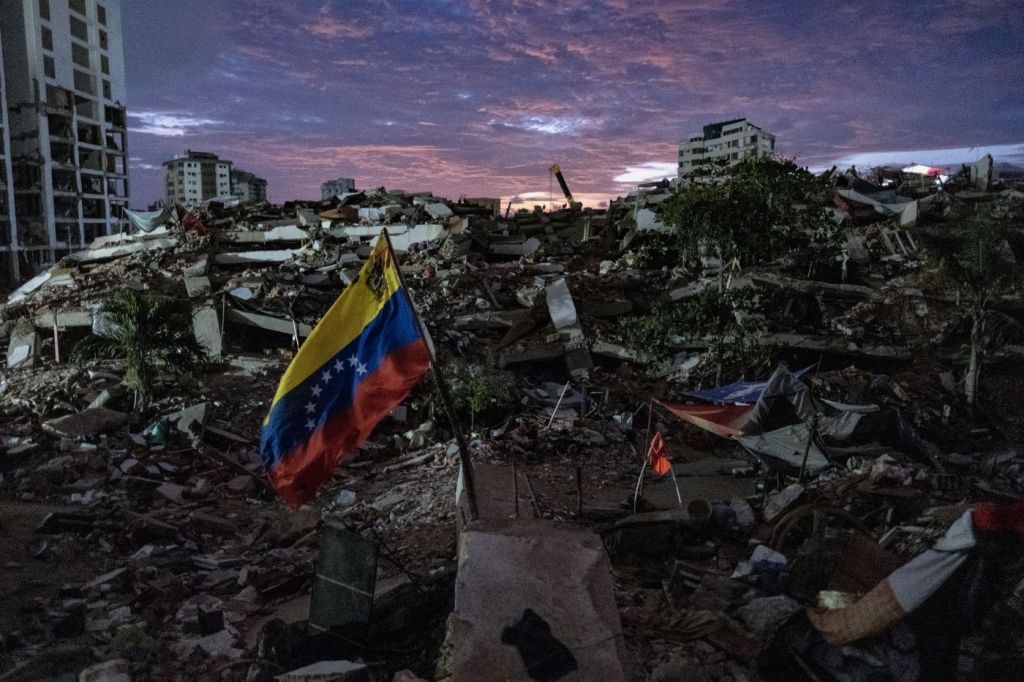
Reconstruction following June’s devastating earthquakes hampered by sanctions
It is not always the news headlines that tell the real story. The kidnapping of Venezuelan President Nicolas Maduro and his wife Cilia Flores by the United States in January this year was, without doubt, an act of international terrorism contravening international law.
The kidnapping had been preceded by US action against Venezuelan ships in international waters, under the spurious rationale of tackling drugs gangs, resulting in over 100 deaths. The new Monroe Doctrine of US President Donald Trump was in action, with Latin and South America clearly seen as the backyard of the US and an area to be compelled to bend to the will of the United States.
Much of this activity is also a precursor to increased US action against Cuba. The economic stranglehold which the US has exercised for over 60 years gets little media coverage and generates little outrage amongst US NATO allies who fear economic repercussions if they contradict the US. However, it is clear that US Secretary of State, Marco Rubio, sees the kidnapping of Maduro as a prelude to action against Cuba and Donald Trump has urged Cuba to “make a deal or face the consequences.”
The earthquakes in Venezuela in June this year placed a further spotlight upon the country and a degree of humanitarian reporting was evident in the Western press. However, reporting on the tragedy was often accompanied by an interview with an opposition politician or spokesperson criticising the response of the Venezuelan government. The opportunities taken by the Western media to criticise Venezuela were an outrage in the context of the tragic death toll arising from the natural disaster.
None of the media reports put in context the fact that the Venezuelan people have been struggling under a myriad of economic sanctions imposed by the US over a 25 year period, or that the Bank of England is still withholding 31 tonnes of gold bars currently worth about $4.6 billion which Venezuela, through its Central Bank of Venezuela, had deposited there. This is in spite of the fact that there have been repeated calls to return the assets to Venezuela.
Also, as reported by the Venezuela Solidarity Campaign,
“Of additional significance more recently is that the International Monetary Fund (IMF) announced in April 2026 that formal relations with Venezuela had been re-established. This move reverses the decision the IMF took in 2019 when it followed US orders by stripping the country of its Special Drawing Rights, a system created by the IMF to “provide liquidity to global economies and offer additional reserves to member countries in times of crisis.” In doing so, at the onset of the COVID-19 pandemic, the IMF stopped Venezuela from accessing $5 billion to which it was entitled, amidst the severe hardship caused by the virus. Venezuela is currently seeking for these assets to be sent to the country.”
Most recent reports suggest that more than 3,800 people have died in Venezuela’s 24 June double earthquake, with 16,700 injured. A medical crisis is ongoing for thousands of survivors, with an estimated 17,800 homeless.
The economic squeeze of US sanctions and Britain holding onto gold reserve assets is making the job of reconstruction and support for families even more difficult. The United Nations estimates that the post-earthquake reconstruction of Venezuela will cost in the region of $37 billion, 33 percent of current GDP.
At the same time the prospect of international corporations profiting from the Venezuelan energy reserves, the world’s largest, have taken a step closer. BP is to partner with two oil firms, that have close links to the Trump administration, to develop the Loran gas field. The BP licence is for the phase 2 development, Shell already having secured a licence for the first phase development. These projects are in response to the call of Donald Trump for foreign oil companies to invest “at least $100bn” to tap into Venezuela’s oil resources.
The current Venezuelan government, like its President, is being held hostage by the United States and forced to open up its assets to international capital. At the same time Venezuela is being prevented from selling oil to Cuba, as part of its solidarity with that country, as this runs counter to US plans for the region.
The Venezuela Solidarity Campaign (VSC) https://www.venezuelasolidarity.co.uk/ is co-ordinating action to put pressure upon the British government to return Venezuela’s gold reserves to aid the reconstruction effort. Both VSC and Cuba Solidarity Campaign https://cuba-solidarity.org.uk/ continue to call for an end to illegal US actions and sanctions against both countries.
As US imperialism makes every effort to reassert global domination there must be every effort to resist. The Labour and peace movements in Britain can play a vital part in showing solidarity with those in the frontline of that struggle.

