New world order realignment underway

17th February 2024

Taiwan under President Tsai Ing-wen is being heavily armed by the US

The concept of the ‘new world order’, as coined by US President, George Bush, in January 1991 was an attempt to shape the post Cold War era in the image of the United States, following the defeat of the Soviet Union.  The phrase emerged in a speech Bush made announcing the launch of Operation Desert Storm, following the Iraqi intervention in Kuwait which precipitated the first Gulf War.  It was quickly seized upon by US neo-cons, in particular, as short hand for US imperialism’s desire to play the role of global policeman, justifying military intervention wherever and whenever deemed necessary.

With the strategic counter balance to US expansionism, which the Soviet Union represented having been taken away, the only acceptable interpretation of the world for the US was one it dominated.  The so called Monroe doctrine, where the US since the 19th century saw Latin and South America as its ‘backyard’ in which to intervene as it wished, had now gone global.

While the US has undoubtedly flexed its economic and military muscle in a series of scenarios since 1991, things have not always gone according to plan.  Overt and covert activity in the Middle East, previously aimed at curtailing Soviet influence, translated into attempting to stem the tide of Islamic fundamentalism resulting in the calamity of the Taliban and al-Qaeda. The origins of both can be traced back to CIA funded covert operations.  In addition, the adventurist foreign policy pursued by the Iranian dictatorship, to fund a network of resistance across the region, including Hamas, Hezbollah and the Houthis, is a direct response to the failures of US Middle East policy.

The disastrous invasion of Iraq in 2003, under the fictional pretext of identifying weapons of mass destruction, undoubtedly made the US and its NATO allies more enemies than friends in the Middle East.  The intervention in Libya has resulted in an ongoing civil war between rival factions; the retreat from Afghanistan has left the population at the mercy of the medieval Taliban; while the covert intervention to try and unseat Bashir al-Assad in Syria has more than backfired, with unsuccessful military action leading to the reality of a major refugee crisis for Western Europe.

The US still has too much military and economic might for these scenarios to be described as US imperialism’s death throes but there are increasing indications that the world order is changing and those changes are not to the liking of the US and its NATO allies. The most obvious of these is in relation to China. 

While China has no military designs other than to defend its own territory, anti-Chinese rhetoric has been growing amongst Western politicians and media in recent years.  Much of this is in response to the exponential growth in China’s economic power and its increasing influence with developing nations.  Investments made on the basis of joint co-operation, collaboration and mutual trust are a far cry from the asset stripping and plundering which characterises the economic relationship of the West with the developing world.

Nations of the Global South increasingly see trade and investment with China as a more productive and sustainable option than dealing with Western backed corporations.  Such successes are as a result of China’s Belt and Road Initiative (BRI), launched 10 years ago, with the aim of creating a network of mutually supportive economic relationships, not based upon exploitation and not based upon the expropriation of one state’s assets by another. 

BRI is inspired by the concept of the Silk Road, established during the Han Dynasty 2,000 years ago, an ancient network of trade routes that connected China to the Mediterranean via Eurasia for centuries. The aim of BRI is to connect Asia with Africa and Europe via land and maritime networks along six corridors.

That such a strategy is a threat to the dominance of US economic imperialism, there can be no doubt, hence the increasingly vitriolic rhetoric aimed at painting China, as an economic danger, but also a military threat.  Much of this rhetoric focuses upon the relationship of China to Taiwan, recognised in international law as Chinese territory, but increasingly used by the West as leverage with which to ‘justify’ its designs on restraining China’s economic growth.  The US has been increasing its supply of weapons to Taiwan underlining the potential of the island being a bridgehead into direct conflict with China.

The concept of a Chinese ‘threat’ also lies behind the justification of the US and its NATO allies to increase military expenditure and add to the level of Western military presence in South East Asia generally.

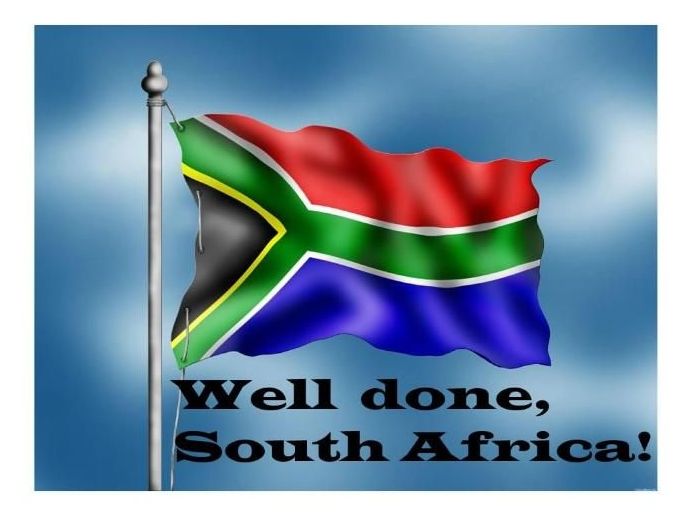
There is also concern in Western capitals that China plays a key role in the BRICS (Brazil, Russia, India, China, South Africa) group, which is increasingly attracting the attention of nations of the Global South, looking to find ways to break with the US led global order.

While the BRICS countries are by no means a homogeneous group in terms of their political outlook the initiative remains an important one.  The stranglehold of imperialist designed institutions such as the International Monetary Fund (IMF) and World Bank, both of which are US dominated and controlled, has tied developing nations to Western economies in ways which have thwarted, rather than encouraged, their economic independence.

The tools of the imperialist banking sector are there precisely to generate dependence and keep former colonial nations within a neo-colonial orbit.  The deployment of Western corporations, infrastructure and technology only serves to reinforce those dependencies over the long term.  Inevitably there is often a military pay off too, with arms contracts being tied into economic support and the stationing of military bases and US hardware as part of the deal.

The fact that the concept of “de-dollarisation” is even on the agenda of developing nations, and that there is an emerging investment network which it does not control, is of concern to the US. Also, there can be no doubt that much of the current US provocation towards China stems from the fear that the unipolarity it has enjoyed, since the defeat of the Soviet Union, is not only being questioned but is being actively challenged.  

Israel is not above the law

28th January 2024

Supporters of a free Palestine demonstrate outside The Hague

The measures outlined by the International Court of Justice (ICJ), which has ruled that Israel’s actions in Gaza are plausibly genocidal, must be welcomed by all who support the cause of Palestinian liberation.

The ruling is a landmark in the search for justice for the Palestinian people.  The ICJ decision will be relayed to the United Nations Security Council for consideration.  The ruling orders Israel to prevent acts of genocide against Palestinians and to do more to help civilians, who are currently suffering under daily bombardment by the Israeli Defence Force (IDF).  However, the ICJ stopped short of ordering a ceasefire as requested by the plaintiff South Africa.

Although the ruling contained no binding order upon Israel to stop the war in Gaza it is nevertheless a legal setback for Israel. The Palestinian Foreign Ministry said the decision was a welcome reminder that “no state is above the law”.

The ruling not only obliges Israel to stop all acts which are plausibly genocidal but equally obliges all states to cease funding and facilitating Israel’s military offensive in Gaza.  The measures, all backed by at least 15 judges, also required Israel to ensure the preservation of evidence of alleged genocide and report to the court within a month.

In coming to its decision the ICJ did not have to find whether Israel had committed genocide, which will be determined at a later date, but only that its acts were capable of falling within the convention, which defines the war crime as “acts committed with intent to destroy, in whole or in part, a national, ethnical, racial or religious group”.

Nevertheless, the United States made its position clear ahead of the judgement, describing South Africa’s case at the ICJ as “meritless, counterproductive, completely without any basis in fact whatsoever.”

Israeli Prime Minister, Benjamin Netanyahu, proclaimed in response to the ICJ ruling,

“Israel’s commitment to international law is unwavering. Equally unwavering is our sacred commitment to continue to defend our country and defend our people. Like every country, Israel has an inherent right to defend itself,” he said. “The vile attempt to deny Israel this fundamental right is blatant discrimination against the Jewish state, and it was justly rejected.”

As ever the scared right to self defence is, for Netanyahu, one which applies to Israel but not to the Palestinians, whom Israel has been oppressing in the West Bank and Gaza for decades.  The mantra that ‘Israel has the right to defend itself ‘ is increasingly seen as  a right wing trope for justifying the Israeli regime treating Palestinians with impunity.

Solidarity organisations across the world have called upon all states to commit to upholding the ICJ decision to protect the rights, including the fundamental right to life of Palestinians in Gaza.  The death of over 25,000 people, over 70% of whom are women and children according to the United Nations, cannot be justified by the IDF as a response to the actions of Hamas on 7 October 2023.

Such a disproportionate response, having been condemned by the ICJ, must now be condemned by the entire international community and every effort made towards supporting the call for an immediate ceasefire, a negotiated solution to end Israeli action and free hostages held by Hamas.

Most importantly the resolutions of the United Nations on the need for a two state solution, realising the right of the Palestinian people to self-determination and the establishment of a Palestinian state within agreed international borders, must be acted upon by all member states.

The ICJ ruling is to be welcomed as a vital step towards the realisation of the need to stop the current genocide in Gaza and take the first steps towards the establishment of an independent state for the people of Palestine.

However, the ongoing commitment of the United States and Britain to arm Israel, not take the Israeli government to task for its flouting of international law and to be, at best, lukewarm about the necessity of a Palestinian state, remain significant barriers to progress.  In the short term the failure of either state to recognise the need to support the call for a ceasefire, in spite of the mounting death toll, is scandalous.

The fact that this shame is cross party, with the Labour leadership in Britian continuing to back the government’s position, including being in favour of air strikes against Yemen, adds urgency to the need to campaign for a change in British foreign policy.

As the Jewish diaspora gather to mark Holocaust Memorial Day over this weekend many are rightly appalled by the action of the IDF and the religious zealots around Benjamin Netanyahu in Gaza.  Opposition to the religious fundamentalists in the Israeli regime is growing both inside and outside Israel, many in the Jewish community increasingly regard the actions of Netanyahu and his war cabinet as not being carried out in their name.

The working class movement in Britain and across the world needs to stand in solidarity with those opposing religious fundamentalism in Israel, just as they support those opposing the theocratic dictatorship in Iran and religious zealotry in Saudi Arabia.  The fate of the people of Palestine and the people of Israel may depend upon it. 

All change but no difference?

7th January 2024

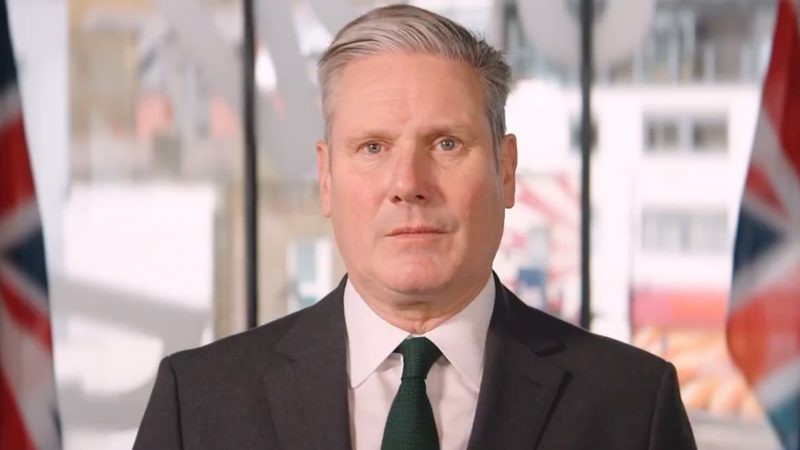
Labour leader Kier Starmer – “credible hope” his best offer to date

Elections will dominate the political narrative on both sides of the Atlantic in 2024.  In the United States the Presidential election scheduled for 5 November is already being dominated by the prospect of another run by the narcissist, Donald Trump, with many predicting a victory over Joe Biden a distinct possibility if Trump wins the Republican nomination.

At present two states, Colorado and Maine, have disqualified Trump from the Republican ballot on the grounds of inciting insurrection.  Whether such a judgement will pass the test with the Supreme Court, where it is currently heading, remains to be seen.  However, should Trump clear these hurdles he is a racing certainty to be the Republican nominee based on current polling estimates.

That does not make a Trump second term a certainty by any means but it does raise it as a distinct possibility.  Such constraints as there were during Trump’s first term would undoubtedly be swept aside as the team around Trump are already making clear.  The independence of the judiciary and decisions on who does and does not get prosecuted are already in Trump’s sights.  This would raise the prospect of Trump being able to pardon himself and his cronies, as well as launching investigations into his enemies.

Trump’s take on whether he planned to rule as a dictator when asked by Fox News was telling,

“Except for day one”, he said, “After that, I’m not a dictator.”

Which begs the question as to how long ‘day one’ will last.

Trump’s take on foreign policy has been famously myopic.  Fears within the US political establishment centre around Trump abandoning NATO and, for some Democrats, cutting off the weapons supply to Ukraine.  However, there is nothing to suggest that Trump would not remain gung ho in relation to US attitudes towards China, Iran or the wider Middle East, with support for Israel not likely to be up for discussion.

Biden has actively embraced the role of the US as the world’s policeman, ready to intervene whenever or wherever perceived US ‘interests’ are at stake.  While Trump’s rhetoric may sound different, to keep on board his home crowd, the forces which shape the wider objectives of US imperialism will not be so easily persuaded to change course.

Democracy US style has always been an illusion, being based on the bankrolling of candidates by private individuals and corporations seeking to gain the most influence.  A Biden/Trump face off in November will be no different.  However, while a Trump return to the White House would signal a further shift to the right in the political centre of gravity in the US, would wider policy objectives for US imperialism change fundamentally?.

November is still a long way off and a lot can happen in US politics over the months till then.  Writing off Trump being back in the White House in January 2025 though is not something which should be contemplated yet.

In Britain lame duck Prime Minister, Rishi Sunak, has indicated that a General Election will not take place until the second half of the year.  The timing of the election is up to Sunak however, so the option of a snap May election cannot be ruled out, depending upon how Sunak and his cohorts see the political landscape as shaping.  With a first draft of the Covid19 Inquiry report being promised by the summer for example, Sunak may want to cut and run before Tory failings during the pandemic become too exposed.

So far Sunak has pinned his hopes on achieving the five pledges he made last year being, halving inflation; stopping the boats; growing the economy; cutting NHS waiting lists; and reducing the national debt.

While inflation has reduced, prices remain high and continue to be a burden for many working class families. Also, a multiplicity of factors contribute to the inflation figures, of which government action is only one.  Most factors are beyond immediate government control.  Attacks on merchant shipping in the Red Sea, which may force trade to take longer routes and push up the price of goods, being a case in point.

Sunak’s desire to ‘stop the boats’, the Tories jingoistic excuse for a comprehensive policy on migration, continues to be mired in controversy, not least the forcible repatriation to Rwanda scheme, which has so far cost £240 million without a plane taking off.

The economy is in such a parlous state, due to years of Tory austerity and underinvestment, that growth is flatlining and Britain is on the brink of being declared officially in recession.  NHS waiting lists are exacerbated by the government’s refusal to negotiate seriously with junior doctors, who have effectively been forced into further industrial action in pursuit of their pay claim.  While the Tories and right wing media do their best to blame cancelled operations and waiting lists on the doctors action the government’s intransigence is widely seen as the real source.

As for reducing the national debt, this hit its highest level of 2023 in November, the latest month for which data is available, at 97.5% of gross domestic product (GDP).  This is expected to rise to 97.9% by the end of the financial year in March.

All of which should leave the Labour Party shooting into an open goal and hitting the back of the net with a series of clear policies for change.  So far however the Labour leadership’s position has been hedged by uncertainty and a lack of clear commitments.

The £28bn per year pledge to invest in green technologies has been diluted to a desire to hit that target in the second half of a Parliament, hardly transformational change.  The promise to abolish university fees has become one to make student fees fairer and more “progressive”.  Any tax cuts for working class people are dependant upon economic growth and there are no plans to increase the taxes upon the rich.

On the subject of the junior doctors action, when pressed as to whether he would make a higher offer Starmer responded with,

“I don’t want these strikes to go ahead.”

Hardly a recognition of the justified action of NHS staff in the face of government intransigence.

As the election approaches Labour’s position will have to become clearer.  The fear for many on the Left and in working class communities is that the clarity will not be coupled with a sharpened attack on the underlying inequities which are endemic to capitalism and the need for transformational change in favour of working class communities.   The best Kier Starmer could offer in his recent New Year speech was “credible hope”, hardly a fiery rallying cry!

On both sides of the Atlantic this year elections may bring about the appearance of change but there is little sign that they will make a huge difference.