Iranian elections – regime legitimacy rocked

17th March 2024

Protests continue across Iran

Parliamentary elections in Iran, earlier this month, have rocked the regime due to the obvious level of disaffection amongst the general population reflected in the all time low turnout. Even before the elections themselves the government had gerrymandered the process through the rigorous vetting of candidates in order to make sure the outcome was safe for the regime.

The extent of disqualification of candidates was such that even former President, Hassan Rouhani, a former beneficiary of such back room manoeuvres, was moved to protest.  The fact that such a loyal servant of the regime saw fit to raise objections on this occasion is significant.

Other key personalities such as Mostafa Tajzadeh, a former Deputy Minister of Interior Affairs, imprisoned in Evin prison for criticising the leadership and holding them responsible for political, social and economic crises in the country, confirmed that he would not vote in the election.  

 “I will not vote to endorse corruption,” said Tajzadeh in a letter he wrote from Evin Prison.  Tajzadeh, had previously applied to run for president, but his candidacy was rejected. He was jailed in October 2022 and sentenced to five years in prison on charges of “conspiring against security and spreading lies and propaganda against the regime.”

Tajzadeh criticised current Supreme Leader, Ali Khamenei, for ignoring Iran’s dire realities and the people’s protests, urging Iranians to boycott the elections.  He stressed Iran’s need for comprehensive development, accusing Khamenei of hindering reforms while lacking the wisdom to lead effectively.

“The majority of Iranians have decided to ignore the Supreme Leader and his propaganda machine, refusing to participate in the elections as a protest against the dire situation in the country,” wrote Tajzadeh.  He also condemned the parliament’s ineffectiveness, citing its diminished powers and exclusion of independent voices.

The elections were regarded as invalid by all progressive forces, pro-reform forces generally and even certain groups of the fundamentalist forces were not happy to support the election. Significant calls by trade unions and pensioners groups, civic society advocates and supporters of human rights reform were routinely ignored by the regime. 

While the regime in Iran did its utmost to urge voters to go to the polls, surveys showing that most voters did not intend to take part were proven correct.  A recent poll conducted by Iran’s state television found that more than half of respondents were indifferent to the elections. The elections were the first since protest swept the nation following the death of Iranian Kurd, Mahsa Amini, after her arrest for allegedly violating the strict dress code for women.

The Women, Life, Freedom protests, which surged throughout the country following the state murder of Amini has undoubtedly been a key factor in undermining what little legitimacy the regime may have possessed, especially in the eyes of women voters.

Turnout was clearly low due to voter apathy and the desire to send a message to Iran’s theocracy.  Amongst prominent Iranians pushing for a boycott, were imprisoned Nobel Peace Prize laureate Narges Mohammadi.

Official figures put the election turnout at 41% but this is widely regarded as being an exaggeration by independent observers.  However, even this official figure makes the turnout the lowest since the 1979 revolution in Iran. In Tehran province, voter turnout was about 24%, another record low, underlining declining public interest in legitimising the Iranian state.  The number of invalid or blank ballots is estimated to have been as high as 400,000 in Tehran alone, showing the extent of deliberate protest.

The reality for many in Iran is that economic hardship is an overriding factor as the Islamic Republic suffers under punishing international sanctions and rapid inflation. At Tehran’s storied Grand Bazaar, many shoppers simply wander the warren of aisles without buying anything, as prices have skyrocketed in recent years.   In an oil rich country of over 85 million people, annual inflation is close to 50 percent, consumer prices remain high and Iranian currency is in virtual freefall.

Iran has suffered under crippling US sanctions since Washington’s unilateral withdrawal in 2018 from a landmark deal that had promised sanctions relief in return for curbs on Iran’s nuclear programme. The sanctions have sharply reduced Iran’s oil revenues and further restricted trade, helping to harden the decades-old enmity with the United States and Israel. 

The regime’s manipulation of the process, and the inability of any candidates from opposition or reform groups in Iran to stand, means that conservative politicians will dominate Iran’s parliament, maintaining their hold on the Islamic Consultative Assembly.

With Presidential elections scheduled for 2025 in Iran the regime will clearly be concerned by the level of disaffection and dissent shown in the Parliamentary election results.  Previous presidential elections have been carefully manipulated to ensure the safest outcome for the regime and have resulted in widespread protest as a consequence. 

Given the growing scale of protest activity in Iran since September 2022, with the death of Mahsa Amini, there is every likelihood that the presidential contest next year will spark further dissent.  The traditional response of the regime has been to crack down hard on such displays of opposition.  Whether it will be able to sustain such tactics in 2025, as the Iranian people continue to question the legitimacy of the regime, remains to be seen. 

Iran – regime negligent in the face of COVID-19

19th April 2020

Tehran shoppersShoppers in Iran last week – smart distancing?
The Committee for the Defence of the Iranian People’s Rights (CODIR) has accused the Iranian regime of gross irresponsibility and negligence in its approach to the COVID-19 pandemic in Iran.  While there were widespread indications that the virus had reached Iran in January, the regime refused to acknowledge its presence or take any measures to prevent its spread.

CODIR cites as evidence of the Iranian regime’s negligence the fact that the regime wanted mass participation in the celebrations marking the 41st anniversary of the 1979 Revolution on 11th February, as well as encouraging a high turnout for the parliamentary elections, that took place on the 20th February.

The regime’s policy towards the COVID-19 pandemic has proven costly.  The regime only announced the first two coronavirus deaths on the afternoon of polling day when the election was already well underway. By then the virus had taken hold throughout the country.

As of 17th April, according to the regime’s official figures, there were 80,868 cases of the virus resulting in 5,031 deaths.  However, the World Health Organisation (WHO) has expressed doubts about these figures, given the size of the population in Iran (85 million) and the lateness with which any controls were introduced.

The recent announcement by the regime that Iranians should return to work will only exacerbate this situation and is likely to result in a more rapid spread of the pandemic.  In response to criticism of the policy, President Rouhani has stated that he would rather see 2 million die than 30 million hungry out on the streets.

Rouhani has urged people to use private cars after there were crowded buses on the first day of the relaxed rules last weekend, while the metro has called for “smart distancing”, although what this means in practice is not clear.

Iran’s medical system organisation expressed concern, saying smart distancing “was being introduced without considering the scientific and executive justifications for the project, or the threat that the past efforts of all people, officials and medical staff will be wasted”.

Surveys cited by the government showed that a third of people are experiencing financial problems.  Ali Rabiei, Rouhani’s spokesman, has said that the Covid-19 crisis has affected 3.3 million official employees through dismissal, suspension or reduction of wages, with a further 4 million self-employed also feeling its impact.

While the country’s under resourced and over stretched health sector struggles to deal with the pandemic, the sanctions imposed upon the regime by the United States have not only stayed in place but have been expanded.

The US is refusing to spare Iranian people from the negative impact of the sanctions, which affect the availability and provision of food and medicine while destroying the economic fabric of the country.  The United Nations and leading European powers including Britain, France and Germany have officially called on the US to remove the sanctions in order for a humanitarian relief effort to take place to help the beleaguered country’s people.

The US however continues to block a $5bn emergency loan application to the IMF by Iran to help tackle the COVID-19 crisis.

Against this background the fate of political prisoners is also cause for particular concern.  Prisoners are kept in overcrowded and unsanitary conditions and are subject to routine mistreatment.  Since early-February there have been continual calls for the release of political prisoners or for them to at least be granted temporary leave.

Just before the Iranian New Year on 20th March, the regime grudgingly assented to the release of thousands of prisoners.  However, those political prisoners with a sentence of longer than 5 years were excluded from the release.

The regime is refusing to support the call for the provision of a safe environment for emergency work to be carried out and is not providing guarantees for workplaces that decide to stop production owing to the pandemic.  This means that workers are coerced into going to their workplaces, despite the dangers, rather than being left jobless, destitute and hungry.

The combination of the ineptitude of the Iranian regime and the vengeful action of the US, in intensifying sanctions, is putting the lives of many ordinary Iranians at risk.  Both must be opposed; both must be stopped.


Experts fear coronavirus cover up in Iran

2nd March 2020

As the coronavirus outbreak continues to spread, there is growing evidence of an increasing impact in Iran.  It is feared that sanctions imposed by the US may have weakened the capacity of the country’s medical sector to cope.  Jane Green reports.

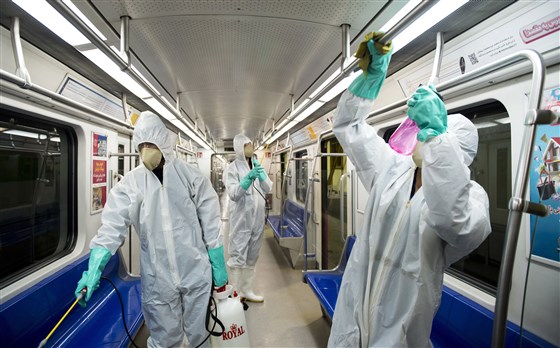
Iran subway

Coronavirus in Iran – may be worse than officially reported

Since first announcing the presence of coronavirus COVID-19 recently, Iran has reported a total of 388 cases and 34 deaths, a far higher fatality rate than seen elsewhere.  It is widely suspected that the official tally vastly underestimates the true number of cases.  Iran has the highest number of coronavirus cases outside of China.

A senior medical doctor at the Masih Daneshvari hospital in Tehran, the country’s top pulmonary public hospital and the main facility overseeing coronavirus patients was keen to retain his anonymity but stated,

“We think that this virus has been in Iran for the past three to four weeks and has circulated throughout the country. Right now in Iran we are facing a coronavirus epidemic.”

Medical teams are concerned that they do not have the means to test effectively or to screen potential cases.  Testing kits were not available in Iran until last week due to the sanctions imposed upon the regime by the US.

Medical workers are also concerned that their equipment is badly outdated, a situation made worse by the US sanctions, although the US administration says “humanitarian and medical needs” are exempt from sanctions.  Nevertheless, many European companies fear doing business in Iran for fear of retribution from the US.

In addition, sanctions on Iranian banks make it difficult to carry out financial transactions with Europe.  It can take three times longer to make a simple banking transaction with Europe under the newly imposed sanctions.

Ventilators and medicines are also in short supply as the scarcity of US dollars limits purchasing power.  While the government has imposed some restrictions on holy sites and called off some Friday prayer services, President Rouhani has said there are no plans to quarantine entire cities hit by the virus.

Due to the shortage of surgical masks and hand sanitiser in shops, public health experts say Iran could become the hub of a major outbreak across the Middle East, especially given its porous borders with unstable countries at war or in turmoil.

Studies by Human Rights Watch and other groups last year found the country’s health care sector was severely affected under the latest round of US sanctions, putting cancer and other patients in danger, without access to life-saving medicine.

Iran’s reported mortality rate for coronavirus, at just under nine percent, surpasses the rate for other countries by a wide margin. Earlier this week, it was 16 percent. China’s reported mortality rate is currently at 3.5 percent. In South Korea, 13 patients have died out of 1,766 cases, for a reported mortality rate of slightly less than 1 percent.

Precise figures for Iran however, are difficult to come by.  The head of the Medical Science University in Qom, Mohammad Reza Ghadir, a city in which there has been a significant number of confirmed cases, said on state television that the Health Ministry had banned releasing figures on the outbreak in the city.

Asked how many people had been placed in quarantine, Ghadir said, “The Health Ministry has told us not to announce any new statistics.”

The lack of clear reporting from Iran has prompted experts to raise concerns over whether there has been an official cover-up of the scale of the epidemic, and whether the country will be able to contain the deadly disease.

The response of the leadership of the regime has not inspired confidence, with the country’s supreme leader, Ayatollah Ali Khamenei, playing down the outbreak, accusing Tehran’s enemies of playing up “negative propaganda” over the coronavirus threat, to undermine recent Parliamentary elections.

The lack of concern shown by the regime is underlined by the fact that nine flights by Mahan Air, the Islamic Revolutionary Guard Corps controlled airline, were made without any official permit to China, for the transportation of passengers and freight in the two weeks prior to the Iranian government’s acknowledgement of the presence of coronavirus inside Iran.

This was despite a rule having been made by the Iranian government supposedly suspending all flights between Iran and China. The passengers of these flights were not subject to quarantine or any control whatsoever upon their return to Iran.

However, given the growing international concerns and the prospect of the World Health Organisation (WHO) declaring a coronavirus pandemic, there have been growing calls upon the US to ease its restrictions on humanitarian trade with Iran, which would allow China and other Tehran-friendly countries, including Russia, to provide medical and humanitarian aid to the Islamic Republic before the disease escalates into a greater crisis in the region.

Dr. Mike Ryan, executive director of the World Health Organization’s emergencies programme, told reporters last week that the virus “came unseen and undetected into Iran, so the extent of infection may be broader than what we may be seeing.”

If the situation in Iran continues to deteriorate the US will come under mounting international pressure to remove some of its sanctions to allow humanitarian aid.  Gal Luft, co-director of the Institute for the Analysis of Global Security in Washington, said last week,

“The Trump administration will face a moral dilemma: whether to remove some of the pressure on Iran or face international condemnation for putting millions at risk.”

Luft also expressed concern that, as fears of a global pandemic grew and countries stockpiled face masks and other medical equipment, it could be hard for other nations to help Iran effectively.

In an ironic twist State media said last week that a member of the Iranian Parliament, Mamoud Sadeghi, and the country’s deputy health minister, Iraj Harirchi, who lead a task force battling the virus, had tested positive. The news came a day after Harirchi appeared at a news conference looking feverish, reaching for tissues to wipe his brow. He wore no mask as the ministry spokesman standing next to him expressed confidence about the government’s response to the crisis.

Health ministry spokesman Kianush Jahanpur called on Iranians to avoid “unnecessary trips inside the country”, while Iran’s neighbours have closed their borders. The UAE, Kuwait, Bahrain, Lebanon, Afghanistan, Pakistan and Estonia in northern Europe all recorded new cases of the virus in people travelling from Iran.

Globally, more than 80,000 people in nearly 50 countries have been infected with the coronavirus. Nearly 2,800 have died, the majority in China’s Hubei province.

This article first appeared in the Morning Star (02/03/20)

For more information visit www.codir.net


Pressure builds on Iranian dictatorship

12th January 2020

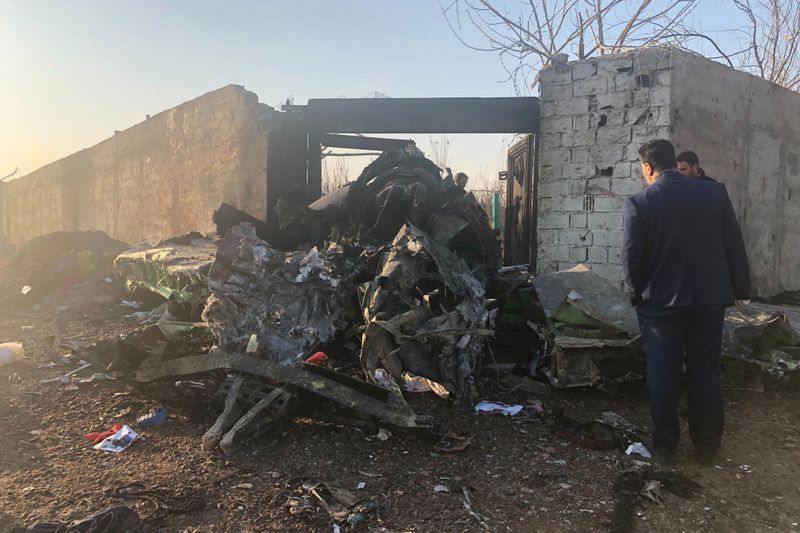
Plane crashDebris from the Ukranian plane crash just outside Tehran

The death toll following the assassination, by the United States, of Islamic Revolution Guard Corps (IRGC) commander, General Qasem Souleimani, currently runs at over two hundred, with over 60 civilians being crushed in scenes of grief at Souleimani’s funeral and 176 deaths in the shooting down of the Ukranian civilian airliner, which the Iranian regime has admitted was a tragic mistake.

Neither of these events would have taken place without the assassination of Souleimani and both are examples of the unintended consequences which can follow on from significant political and military decisions, taken outside the norms of international law.

Souleimani, was the loyal servant of a theocratic dictatorship, unpopular with its own people, as recent demonstrations in November 2019 against corruption and political cronyism across Iran illustrate.  The Iranian regime will never admit it but his assassination came at a time when uniting the country against a foreign enemy could have been a useful distraction from domestic pressures.

While the regime may have been hoping that the death of Souleimani would provide a distraction, the shooting down of the Ukranian passenger aircraft, with significant loss of life, has refocussed the Iranian people upon the incompetence of the regime.

Over the weekend massive demonstrations have taken place in Tehran and other key cities, in protest against the IRGC forces shooting down the plane killing 176 passengers, 82 of them Iranian, on their way to Europe and North America.  The Iranian authorities had for three days falsely claimed technical difficulties as the cause of the crash.  However, early on Saturday morning they announced that an IRGC air defence system had shot down the airliner minutes after leaving Tehran international airport.   Protesters have been demanding the regime’s resignation, including that of Supreme Leader, Ayotollah Ali Khamenei.

While political assassination as a tool of foreign policy is not a new tactic for the US, the assassination of Souleimani still came as a shock to the Iranian regime and a blow to its adventurist foreign policy in the Middle East.  With responsibility for the IRGC Quds Force, in charge of overseas operations, Souleimani was instrumental in extending Iranian influence throughout the region, across Iraq, into Syria and in Lebanon and Yemen.  His military and tactical acumen is widely credited with having turned around the prospect of a Western led victory in the war of intervention in Syria.

The assassination of Souleimani followed a sequence of events going back to the 27th December, when an Iranian backed Shia militia attacked an Iraqi military base, killing a US contractor.  Reports from the US indicate that Secretary of State, Mike Pompeo, suggested the killing of Souleimani at that point but the tactic was rejected in favour of air strikes against the militia responsible for the attack.

The air strikes led militia supporters to attack the Green Zone in Baghdad’s diplomatic quarter, overrunning the gated US embassy compound, before Iraqi forces arrived to break up the intrusion.  It would seem that the event was sufficient for Pompeo to win over Trump to his viewpoint and Souleimani’s fate was sealed.

The political balance in the region, already precarious, has become even more volatile since Souleimani’s death.

Iran is using the opportunity to call for the complete withdrawal of US troops from the region, a demand echoed by the Iraqi Parliament, but one with which the US is unlikely to comply.  An estimated 5,500 US troops are in Iraq and the US is in negotiations with NATO about an increased non-US NATO contribution.   This is added to the fact that the United States has moved 14,000 additional troops to the Gulf region in the past year.

The volatility of US foreign policy, the ideological objectives of Saudi Arabia and Israel, and the geopolitical ambitions of Russia, do not lend themselves to any degree of regional certainty.  Added to that the increasingly unstable position of the theocratic dictatorship in Iran, under intense pressure from its own people for democratic change, will continue to be a major factor for instability in the regional balance.  Resistance to US troops in Iraq continues to be an issue, political instability in Lebanon continues and the ability of the Syrian people to recover from seven years of war will, no doubt, continue to be tested.

Much of this uncertainty is also due to the pressure for democratic change coming from the people of countries suffering under dictatorships of one form or another, such as Saudi Arabia and Iran, or suffering under US occupation or influence such as in Iraq.

The Middle East remains a complex web of alliances in which there is no obvious or easy route to navigate.  However, solidarity with the people of the Middle East, in their efforts to reshape their nations and the region in their interests, rather than those of Western corporations or the military industrial complex, will be more vital than ever in the coming period.


Trump shoot to kill outrage

3rd January 2020

Soleimani  

Qasem Soleimani – assassinated by US airstrike

The assassination of Iranian General Qasem Soleimani, on the order of US President Donald Trump, marks a massive escalation in the undeclared war on Iran, which has been waged virtually from the moment Trump took office.

Soleimani was killed by an air strike on Baghdad airport early on Friday.  As the leader of the Quds Force, an elite unit of the powerful Iranian Revolutionary Guards Corps (IRGC), Soleimani was widely regarded as second only to Iran’s Supreme Leader Ayatollah Ali Khamenei, in the pecking order in the Islamic Republic’s hierarchy.

Khamenei has said that “severe revenge awaits the criminals” behind the attack and three days of national mourning have been announced.  Iranian Foreign Minister Javad Zarif has called the attack an “act of international terrorism”, going on to say that,

“The US bears responsibility for all consequences of its rogue adventurism.”

Condemnation has come from Iraqi Prime Minister, Adel Abdul Mahdi, who described the killing as a “dangerous escalation” and from Russia where Vladimir Putin warned that the assassination would “seriously aggravate the situation in the region”.

US Secretary of State, Mike Pompeo stated that the strike was “lawful” and that it “saved lives”.

In the UK Labour leader, Jeremy Corbyn, issued the following statement,

“The US assassination of Qasem Soleimani is an extremely serious and dangerous escalation of conflict with global significance.  We urge restraint on the part of both Iran and the US and we call for an end to the belligerent actions and rhetoric coming from the US.”

The Stop the War Coalition have called a protest outside Downing Street for Saturday, 4th January at 2pm.

In the wider context of the ongoing interventionist war against the government of Bashar al-Assad in Syria, and the fact that the United States has moved 14,000 additional troops to the Gulf region in the past year, there is every potential for wider conflagration.

A wave of protest has been sweeping the Middle East in recent months, with demonstrations against unpopular regimes unfolding in Iran, Iraq and the Lebanon.  The protests have resistance to government corruption, mass unemployment and plunging living standards in common.  All three regimes have reacted with increased violence and repression.

In Iraq at least 400 people are reported to have died since protesters took to the streets in early October.  Amnesty International estimate that at least 208 people have died in nationwide protests in Iran since protests erupted in October.  The true figure could be much higher.  Protests against new taxes in Lebanon brought hundreds of thousands onto the streets and forced the resignation of Prime Minister, Saad Hariri.

While the protests across the region have been the result of internal repression and government incompetence, key players have been maximising their efforts to link the protests to wider regional tensions.  The Intelligence Ministry in Tehran for example claimed to have arrested eight “CIA operatives” accused of inciting riots.

Iranian Revolutionary Guards Corps (IRGC) chief commander, General Hossein Salami, suggested that the riots were conducted by “thugs” with the backing of the US, Israel and Saudi Arabia.  Salami went on to link the protests to the US policy of “maximum pressure” against Tehran, following the US withdrawal from the 2015 nuclear deal with Iran last year.  Iranian Supreme Leader, Ali Khamenei, has talked of a “dangerous conspiracy” implicating the US, Israel and Saudi Arabia.

The US, on the other hand, has characterised the protests in Iraq and Lebanon as part of a region wide insurgency against Iranian power.

At least 7,000 people have reportedly been arrested in 28 of Iran’s 31 provinces since mass protests broke out on 15th November, prompting UN High Commissioner for Human Rights, Michelle Bachelet, to state that she is “extremely concerned about their physical treatment, violations of their right to due process, and the possibility that a significant number of them may be charged with offences that carry the death penalty, in addition to the conditions under which they are held.”

While protests continue to sweep Iran, underlining the unpopularity of the Islamic Republic, the regime continues to try and bolster its position and circumvent US sanctions.  Excluded from the US international interbank payment system, SWIFT, Tehran is looking to link with alternative systems in China and Russia.

Oil sales continue, primarily to Syria and China in order to generate income for the regime, prompting Khamenei to state recently that,

“The US policy of maximum pressure has failed.  The Americans presumed that they can force Iran to make concessions and bring it to its knees by focussing on maximum pressure, especially in the area of economy, but they have troubled themselves.”

In countering the US “maximum pressure” approach Iran has upped the ante by participating in joint naval drills with Russia and China in the Indian Ocean in late December.

However, the assassination of Soleimani gives the whole “maximum pressure” policy a dangerous new twist.

The danger of external intervention in Iran is one which has been in the wings for some years.  With the Iranian regime itself increasingly under pressure the possibility of a major strike, in a desperate attempt to divert attention from its domestic problems, should not be ruled out.  Soleimani’s assassination may just give the clergy in Iran the excuse they need.  Such an outcome would be disastrous, not only for the region, but for world peace.

Trump may have ordered the killing of Soleimani in order to look tough at home in an election year but there is every danger that, this time, the international consequences may far outweigh any perceived domestic benefits.