Reporting by the BBC on current conflicts demonstrates the bias of the corporation and the extent to which, in spite of its regular emphasis upon impartiality, the BBC is anything but when it comes to its international coverage.
The Russian incursion into Ukraine in February 2022 was undertaken in order to protect communities who had expressed a wish to become part of Russia, but had suffered at the hands of Ukrainian forces since 2014, resulting in 14,000 deaths. The Minsk Accords, signed in 2015 to halt the fighting, were later admitted by Western governments to be a mere ploy to give Ukraine time to re-arm.
The Russian intervention is nevertheless unfailingly referred to by the BBC as a full scale invasion and the wider context, including the CIA backed coup in Ukraine in 2014, conveniently overlooked.
Even after the intervention by Russia, a peace agreement mediated by Turkey in March 2022 was on the brink of being signed by Ukraine, until the United States persuaded then British Prime Minister, Boris Johnson, to deliver the message to President Zelensky that the “collective West” would not support the agreement.
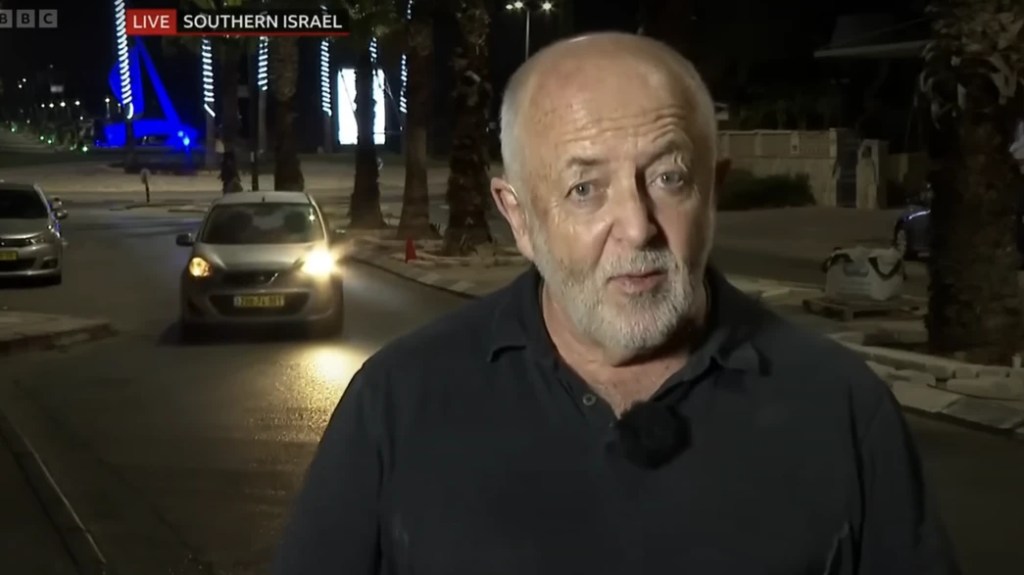
In an item given widespread coverage by the BBC in the last couple of days, Khalil al-Hayya, the deputy leader of Hamas, was interviewed by BBC international editor Jeremy Bowen. On each occasion al-Hayya was introduced as someone whose views may be abhorrent to many. Bowen was asked to justify why the interview had taken place and why al-Hayya should be given air time.
Bowen dutifully trotted out the BBC line on impartiality and the need to hear all sides in a crisis situation. All very well, but the briefings by Israeli Defence Force (IDF) representatives, committing genocide in Gaza, killing medical teams in the West Bank and currently invading neighbouring Lebanon are not given the same caveat, even though many will find both their views and their actions abhorrent.
It is also noteworthy that the invasion of Lebanon by the IDF is described by the BBC as an ‘incursion’, a characterisation they may struggle to hold onto as the death toll inevitably mounts.
The BBC attempts to protect the illusion of impartiality in other ways too. John Simpson is regularly given his own half hour, titled Unspun World, in which Simpson interviews various BBC correspondents who invariably give a particular spin on events in the part of the world that are covering. The title is not meant to be ironic.
Then there is the BBC Verified branding. Presumably it is the BBC themselves who are undertaking the verification, which is a bit like the police investigating themselves or students marking their own homework. Are they really trying to kid us that a new logo is a guarantee of impartiality and objectivity?
How the Tories can continue to bleat on about the BBC being run by ‘Lefties’ and not toeing the line on issues is laughable. Apart from the odd moment of mild criticism the BBC knows quite clearly on which side its bread is buttered. Sadly it is not the side of investigative journalism, truth and objectivity.
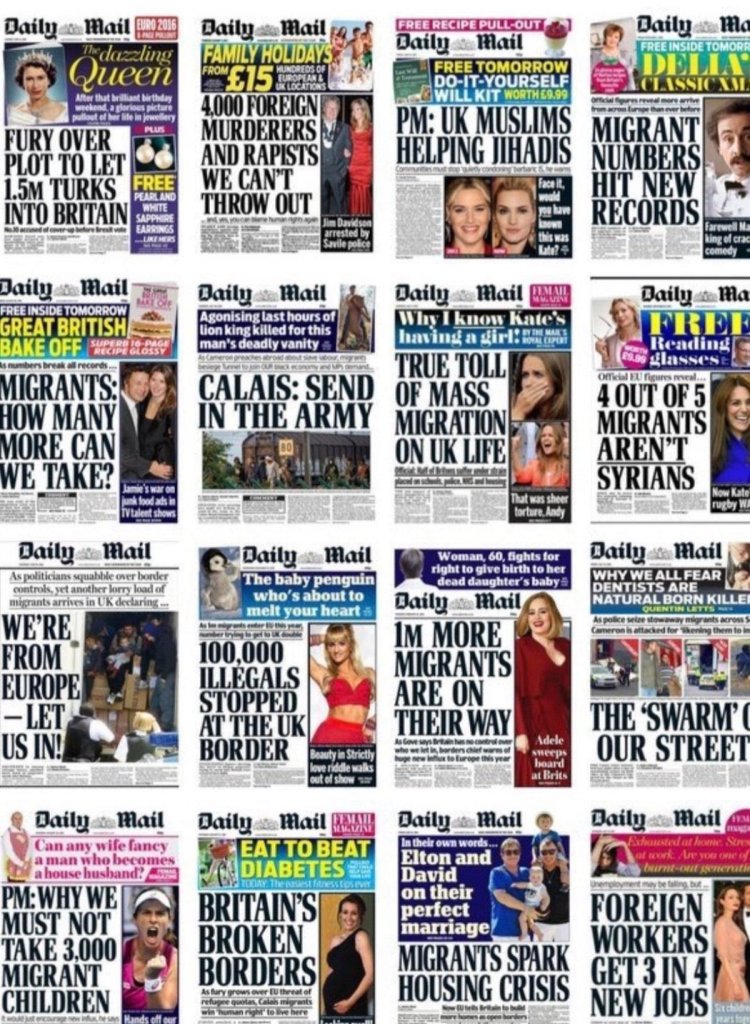
Daily Mail headlines fuel the anti asylum seeker narrative
Demonstrations across Britain this week, deemed anti-immigration protests by the media but actually pro-racism mob violence, have been met with stalwart resistance from local communities determined to resist fascist attacks. This has ranged from a 3,000 strong turnout in Newcastle upon Tyne’s West End to defend a centre for asylum seekers, to the City Centre clean up in Sunderland following a night of vandalism and looting. Similar actions have been reported from across the country.
Such shows of working class community solidarity are vital to quashing the misinformation spread by the far Right that Britain has an ‘immigration problem’. Such language and provocations are the natural territory of the far Right but the collusion of much of the mainstream media, including the BBC, in regarding immigration as a problem to be solved gives the claims of extremists more credibility in the eyes of the most gullible.
Coventry South MP, Zarah Sultana, recently posted on X a montage of Daily Mail headlines which fuelled the anti-asylum seeker narrative. Sultana also suffered hostile questioning on ITV’s Good Morning Britain this week, from presenters Ed Balls and Kate Garraway, for suggesting that the violence over the past week should be called out as Islamophobic.
Balls in particular was quick to defend Home Secretary, Yvette Cooper (his wife), and Labour leader Kier Starmer for acknowledging that the violence was fuelled by racism but refused to accept that they should call it out as Islamophobic. To her credit Sultana stood her ground and has come out of the encounter with more credit than either Balls or Garraway.
While the Labour government has been quick to point the finger at social media and mobilise the state apparatus of the police and the courts there has not been any recognition, from the Front Bench at least, that these measures are only dealing with the symptoms and not the cause. There is no argument about jailing fascist thugs or addressing any of the shortcomings of the Online Safety Bill. However, at root the issues of poverty, disaffection, and a sense of disconnection from a hugely unequal society are the causes which need to be tackled.
Those at the sharp end of the impact of capitalism and its endemic crises are the most likely to fall prey to the easy solutions presented by the demagogues of the far Right and the so-called populist rhetoric of the likes of Reform MP, Nigel Farage. It is no coincidence that the worst violence has been seen in areas of the greatest poverty, or that the previous Tory government placed asylum seekers in hotels in these areas.
Preventing a repeat of the scenes which have taken place over the past week will require robust action to tackle poverty, low wages and exploitation. It will require massive attention to the housing issues faced by many working class communities. It will require greater investment in the local government services which many working class communities rely upon. It will require a stronger approach to tackling wealth inequality and how resources are distributed across society.
It will require Labour politicians to be seen on the frontline with threatened communities showing their active support. It will also require Labour to reject the narrative that immigration is a problem to be solved and turn that round to make it clear that a major problem to be solved in Britain today is racism.
Divide and rule has always been a key tool of ruling class strategy and the recent activity across Britain has shown how some sections of working class communities can be persuaded by the far Right, while others will stand firm in the face of fascist violence.
Any strategy which is to ultimately succeed however has to be based upon a recognition of the class interests of those communities most threatened and that solidarity between black and white working class communities is the only way forward. In short it will require a strategy which not only deals with the symptoms but begins to tackle the causes of racist violence in Britan today.
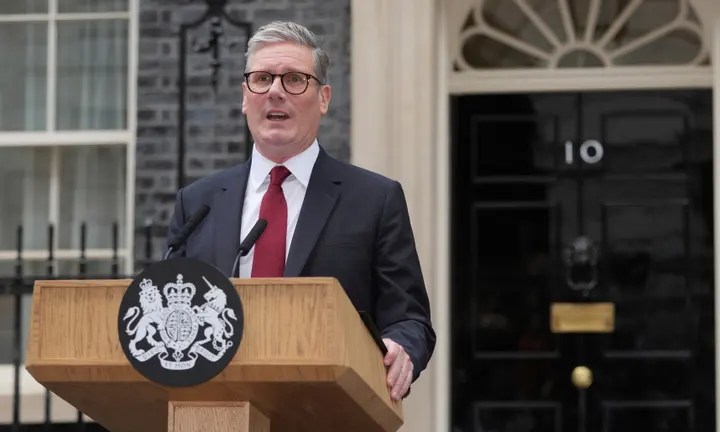
The keys to the door – Kier Starmer about to enter 10, Downing St
Having smuggled the metaphorical Ming vase across the threshold of 10, Downing St, Kier Starmer and his team need to decide whether its fragility is worth preserving or whether they just smash it and take advantage of their massive 170 seat majority to effect real change. Given the character of Starmer and his team the prospect is that the vase will sit quietly on the mantelpiece ready to be dusted off in 2029.
The scale of the Labour majority may give the illusion that the politics of Starmer and the Labour leadership have swept the country and that they expect to be hoist aloft on the shoulders of the people. The reality is not so clear cut.
Interviewed on Radio Four today architect of New Labour, right wing Labour henchman Peter (now Lord) Mandelson, described the Labour victory as ‘efficient’. Mandelson pointed out that Labour did not just stack up votes in safe constituencies but managed to gain seats in more marginal areas too. However, much of this was as a result of Reform splitting the Tory vote in some areas with the Lib Dems taking votes from the Tories in others. The collapse of the fractured and fractious SNP in Scotland was also a contributory factor.
The national turnout was low at 60% with Labour only gaining 35% of the votes across the country, slightly up on the 33% achieved under Jeremy Corbyn’s leadership in 2019 but well down on the 40% share Corbyn achieved in the 2017 General Election. Jeremy Corbyn retaining his seat as an Independent in Islington North was a small victory for the Left and the election of four other Independents on the back of Labour’s weak position on Israeli genocide in Gaza signalled to Starmer that there will be more progressive voices of dissent in the House of Commons.
The single word which characterised Labour’s campaign and was the title of its manifesto was Change. Starmer spent much of the campaign not just emphasising the word change in the context of change for the country but change in the context of the Labour Party itself. The purge of many on the Left, over recent years, is certainly testament to Starmer’s efforts at internal change. This was characterised by the imposition of Starmer friendly candidates in many constituencies, ensuring a House of Commons that will be largely compliant and reliant on the largesse of the leader.
The reality of the next five years is going to be one in which the adjective ‘superficial’ could precede the change mantra which is Starmer’s watchword. The pledge of Starmer to ‘unite the country’, in his first speech outside Downing Street, presupposes that the country can be united, Irish Republicans and Scottish Nationalists will disagree, or that the interests of conflicting classes can be harmonised. There is no evidence that Labour will do anything to stop the rich getting richer or that they will fundamentally challenge the causes of poverty which are endemic to capitalism as a system.
For the working class however, there is no doubt that getting the Tories out of government is a step forward. A Labour government at least gives the possibility of more progressive policies with the prospect of influence from the Left, from the trade union movement and from mass extra parliamentary action, potentially shifting Labour in a more positive direction.
Once the flurry of excitement about the Tory meltdown subsides the job of ensuring Labour is more focused on the issues in towns and backstreets, rather than the City of London, must be a priority. The rise of so-called populism, in the form of the Reform vote, offering the illusion of easy answers to complex problems, will need to be tackled in working class communities.
The importance of the need for real change, socialist change, as the only answer to really address the needs of working class communities will need to be articulated. There is certainly no sense that the Labour leadership under Starmer will do this but until it is part of Labour campaigning, simply repeating the mantra ‘change’ will not be enough to make it happen.
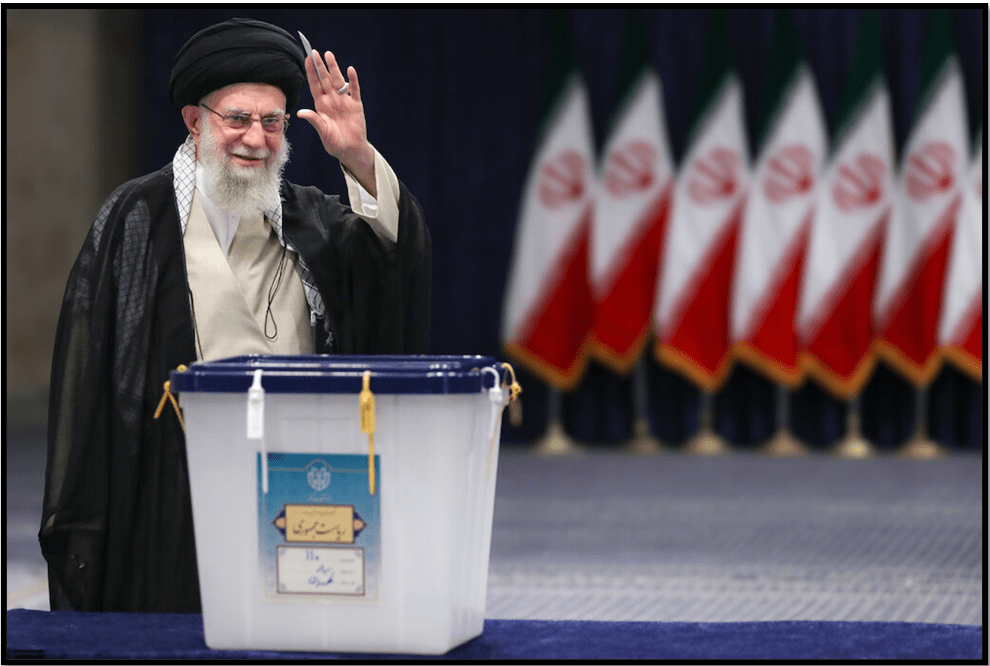
‘Supreme Leader’ Khamenei votes in Iran’s election sham
The Presidential election in Iran, following the death in a helicopter crash of President Raisi in May, has borne all the hallmarks of manipulation by the theocratic dictatorship under the Islamic Republic’s Supreme Leader, Ayotollah Ali Khamenei.
The death of Raisi, along with the ongoing wave of protests against inflation, poverty and corruption across Iran, have wrongfooted the regime. While the hardline Raisi maintained his position through the force of the Islamic Revolutionary Guard Corps (IRGC) and his close relationship with Khamenei, popular support was always at a low ebb.
The response of the regime, in an election where all candidates are closely vetted by the Guardian Council, was to come up with a ‘safe’ candidate to add to the ballot paper, in order to appease so called moderates within the regime, and to head off any further protests from excluded opposition parties, trade unions, women and youth groups.
To that end the inclusion of 69 year old former Health Minister, Masoud Pezeshkian, in the list of candidates approved by the regime was a calculated and deliberate tactic, in order to create a superficial and cosmetic change, without affecting the power structure based on the theory of “political Islam”.
The reformist faction within the regime urged public participation in the election and encouraged people to vote for Pezeshkian. Their rationale is that the prospect of “building trust with the regime” is one which has more chance if a less hardline candidate occupies the presidency. However, such tactics have proven to have failed in the past, with so called reformist candidates such as Muhammad Khatami (1997-2005) and Hassan Rouhani (2013-2021) failing to make any significant difference to the theocratic power structure which underpins the Islamic Republic.
Decades of experience with reformist movements, including the Green Movement for political and cultural openness and the teachers, workers, and retirees movements for better wages, livelihoods, and working and living conditions, have shown that hoping for the possibility of reform within the ruling structure is unrealistic. The emergence of the Women, Life, Freedom movement, in response to the murder in detention of Mahsa Amini in September 2022, has been the latest expression of this desire for structural, rather than cosmetic, change in Iran.
In spite of the efforts of the regime’s public relations machine in the lead up to the poll last Friday, desperate to increase participation in the election given the less than 50% turnout in recent votes, only 40% of voters turned out. The depth of opposition supporting the boycott of candidates was widespread, further undermining the regime’s claims that the elections demonstrate democratic legitimacy.
A run off vote with the two highest polling candidates, Pezeshkian and Saeed Jalili will be held on 5th July. However, with ultimate control over foreign and military policy remaining in the hands of the Supreme Leader the role of President in Iran can often be little more than ceremonial.
There is certainly no chance of either candidate challenging the corruption which is an endemic part of Iran’s economy, addressing the increasingly adventurist foreign policy in the Middle East, reflected in support for Hamas and Hezbollah, or addressing the lack of political and social rights of the Iranian people.
The scale of discontent within the country is underlined by the reports from the Union of Metalworkers and Mechanics of Iran (UMMI) that outsourced project workers in the country’s refineries, oil and gas installations and power plants have walked out in protest at their wages and conditions of service. The workers are demanding a change in shift patterns including a ‘14 days on, 14 days off’ rotation for oil and gas workers and to “de-casualise” workers’ contracts.
An estimated 3,000 workers joined the strike on the first day and the ongoing action may well inform attitudes towards the Presidential election. More recent reports suggest that the number of companies and workplaces affected by the action now stands at 80, involving at least 18,000 striking workers.
The scale of the suppression of political, democratic and human rights in Iran continues to be widespread an is an endemic feature of the regime. Activists across the spectrum of the protest movements in Iran do not see either of the presidential election candidates having a plan to respond to their real democratic and just demands. Even if this were the case, the theocratic structure would not allow for the opportunity to realise the implementation of democratic reforms.
Activists across the progressive opposition in Iran, who continue to advance democratic demands, continue to call for a country wide boycott of the election, in order to show that neither candidate represents the will or the aspirations of the Iranian people.
Progressive activists in Iran will continue to call for the development and deepening of the protest movements, seeking greater co-operation which can lead to the integration and convergence of different sectors.
Such a development will allow the true voice of the Iranian people to come through, not simply an echo manipulated through a sham election process.
It’s a deal – Zelensky and Biden, partners in crime
The recently signed 10 year security pact, agreed between the United States and Ukraine marks a further ramping up of NATO’s proxy war against Russia. The deal, signed on the sidelines of the G7 summit in Italy last week, aims to commit future US administrations to support Ukraine, even if former President Donald Trump wins November’s election. The G7 nations also agreed to a $50 billion loan for Ukraine backed by profits from frozen Russian assets. US President, Joe Biden, asserted that the G7’s message to Russian President, Vladimir Putin, is “You cannot wait us out. You cannot divide us.”
The deal is widely seen as a step towards NATO membership for Ukraine and a further move towards the encirclement of Russia by NATO nations. Ukrainian President, Volodymyr Zelensky, has been pushing for full NATO member ship for some time. NATO regards any attack launched on one of its 32 members as an attack on all, under its Article Five clause, so membership is seen as a trump card by Ukraine in pressurising Russia.
Even without NATO membership the deal contains some clauses which point to potential US intervention in the current conflict. For example, in the event of an armed attack or threat of such against Ukraine, top US and Ukrainian officials will meet within 24 hours to consult on a response and determine what additional defence needs are required for Ukraine. Under the agreement, the United States restates its support for Ukraine’s defence of its sovereignty and territorial integrity. The agreement also outlines plans to develop Ukraine’s own defence industry and expand its military.
The text of the deal allows the two countries to share intelligence, hold training and military education programmes and combined military exercises, which will clearly be a provocation to Russia. The deal also asserts that Ukraine needs a “significant” military force and sustained investments in its defence industrial base, consistent with NATO standards. All of which is tantamount to a blank cheque for the US military industrial complex to make massive profits from the arrangement.
The deal also comes against the backdrop of Biden having recently shifted US policy against allowing Ukraine to use American weapons for attacks inside Russia, in effect permitting Kyiv to fire long-range US missiles against Russian targets near the Ukrainian city of Kharkiv.
In the press conference convened to announce the deal Biden said arrangements were being made to provide Ukraine with five Patriot missile defence systems, saying: “Everything we have is going to Ukraine until its needs are met.” Biden also added that his administration is “intensifying” its pressure on Moscow, including by warning banks earlier this week that they risk US sanctions should they do business with Russia.
The agreement between the US and Ukraine is the 16th such bilateral agreement Ukraine has now reached. As an executive order, it could be undone by a Trump administration, should Joe Biden fail to win the US election in November. However, the intention of the current US administration is that the accumulation of agreements collectively adds up to a form of security assurance that, although short of full NATO membership, will strengthen the hand of the military alliance in its provocations against Russia.
A unilateral so called, Global Peace Summit, takes place in Switzerland this weekend (15/16 June), initiated by Ukraine, to which Russia is not invited. The summit is little more than a vanity project initiated by President Zelensky in an attempt to galvanise international support around his right wing nationalist agenda. US President, Joe Biden, will not attend, sending Vice President Kamala Harris. China will not attend, as the Chinese Foreign Ministry has said it believes a peace conference should involve both Russia and Ukraine. Under half of the 193 United Nations member countries are planning to attend.
Russia remains keen to build upon a draft peace agreement negotiated in the early days of the war that included provisions for Ukraine’s neutral status and put limits on its armed forces. Ukraine continues to focus upon a 10 point plan drafted by Zelensky in 2022, which focuses upon the withdrawal of Russian troops and denial of the legitimacy of Crimea being part of Russia.
Mark Cancian, senior adviser for the International Security Programme at the Centre for Strategic and International Studies, said he expects many attendees to remain neutral on the war.
“Zelensky will want to turn the conference into an anti-Russian coalition,” he said. “However, some of the attendees may want to explore end states that are short of what Ukraine wants — for example, some sort of in-place cease-fire.”
While the summit is unlikely to achieve anything significant, without the participation of Russia or China, the signing of the 10 year deal between the US and Ukraine will ensure that the NATO strategy of encircling and provoking Russia remains in place and that the suffering of both the Russian and the Ukrainian people continues.
Peace proposals put forward by both Russia and China have been rejected out of hand by the West, which continues to increase the militarisation of Ukraine and pour weapons into the conflict, adding fuel to an already raging regional fire and increasing the threat of global war.
On the buses – but will Labour commitments short change?
While the political boomerang that is Nigel Farage, newly re-installed as leader of the Reform Party, wants the looming General Election to be about immigration, that will not be the major issue concerning working class people in Britain. Farage has for many years now pedalled his own xenophobic agenda and, while he has succeeded in fooling some of the people, some of the time, he will not fool all of the people all of the time.
Net migration into the UK is running at around 650,000, hardly a massive issue for a nation with a 65 million population and a responsibility to those it has forced to become migrants due to its complicity in bombing Afghanistan, Syria, Libya and Iraq in recent years. The least the British government can do is to give those displaced due to imperialist wars a place of shelter.
The real issue underlying everything facing the British electorate is, as ever, the economy. Capitalism is not a system designed to help, support or alleviate the suffering of the working class. It is a system based upon the exploitation of that class by a property and land owning autocracy, fronted by the Church of England and the Monarchy. Its representation in Parliament is ostensibly through the Conservative Party, although the occasional safe Labour administration is allowed to slip through the net, while the Tories untangle themselves from a political mess of their own making, or have simply been in government so long that people desire a change. The current point finds the Tories under pressure for both reasons, hence the likelihood of a Labour government on 5th July.
In which case, what will Labour do about the economy? The Labour leadership is absolutely committed to capitalism, so that will not change. The Labour leadership is committed to renewing Britain’s weapons of mass destruction, in the form of the Trident nuclear submarine programme, so less scope for spending on desperately needed schools and hospitals.
Labour’s manifesto will commit to the creation of GB Energy, a publicly owned green power company. It will commit to 40,000 more NHS appointments per week and the recruitment of 6,500 new teachers to shore up the flagging education workforce. It will even contain a commitment to recognising a Palestinian state, as part of the peace process.
Yet as positive as these pledges sound, there is still no real commitment to invest in order to grow the economy or address the issues of job insecurity faced by working class families. Sharon Graham, general secretary of UNITE, one of Labour’s biggest trade union backers, has said that she cannot endorse the document as the union has reservations about Labour’s position on hire and fire practices and zero hours contracts.
Shadow Chancellor, Rachel Reeves, has been the standard bearer of economic caution, promising not to spend more than the economy can allegedly afford and not to boost public spending. The reality is however that to address the needs of working class people, in order to improve their lives, public spending is essential.
A recent report by the Resolution Foundation think tank suggests that the next government will have to make £19 billion of annual cuts to unprotected departments by 2028-29 if budgets are to be sustained without new tax rises. Both the Tories and Labour are committed to military spending increasing to 2.5% of GDP, an area both will protect, while local government, the deliverer of key services to help working class families survive is afforded no such protection.
There are ways to raise additional funds, quite apart from not buying weapons of mass destruction in the first place. A wealth tax of 1% to 2% on those with assets of more than £10 million, just 0.04% of the population, would raise £22 billion annually. That would pay for 75% of the entire social care bill for a year. In 2020 the Wealth Commission recommended a one off wealth tax for five years, which could raise a tidy £260 billion. Recent YouGov polling suggests that 78% of people support an annual wealth tax on the super rich. Clearly not a vote loser!
No one is expecting a Labour government led by Kier Starmer, Angela Rayner and Rachel Reeves to make a call to build the barricades and tear down the capitalist system. However, it is disingenuous of all three to suggest that there is not money there to support working class people and to make their lives more bearable.
Electing a Labour government on 4th July remains a necessity but, with a majority which could be nothing short of monumental, that government ought to be firmer in its commitment to challenging the clear inequities in the system and putting in place policies to challenge them. Such a small step would make a minor dent in the edifice of capitalism but could make a huge difference to the lives of many working class families. Pressure must remain upon the Labour leadership to be more radical and to see getting the keys to 10, Downing St as the beginning of an ambition for real change, not the conclusion.
All eyes on Rafah – Palestinians survey the damage done by an Israeli strike
As the Israeli Defence Force (IDF) assault on the civilian population of Rafah continues, under the thinly veiled excuse of rooting out Hamas fighters, behind the scenes discussions are ongoing to reshape the map of the Middle East.
The prospect of an historic pact between the United States and Saudi Arabia is gathering momentum with the carrot of access to the latest US military technology being dangled before the Arab dictatorship.
The deal could be part of a package to extend US influence in the Middle East by including a pathway to diplomatic ties with Israel. The quid pro quo would be that the Israelis halt the genocide in Gaza.
Negotiations between Washington and Riyadh have accelerated recently, with some reports that a deal could be reached within weeks.
An agreement would undoubtedly aim to reshape the Middle East in favour of the United States, reinforcing the ongoing support for its long term regional proxy, Israel, while bolstering influence in the Arab world by increasing weapons sales to the Saudi dictatorship. The US is keen to strengthen its position in the region, which it sees as being threatened by Iran and China.
The rumoured pact is thought to offer Saudi Arabia access to advanced US weapons that were previously off-limits. The dictatorship would then agree to limit Chinese technology from the nation’s most sensitive networks in exchange for major US investments in artificial intelligence and quantum-computing, as well as getting American assistance to build its civilian nuclear programme.
The conclusion of a US and Saudi Arabia agreement would, it is suggested, be followed by forcing Israeli Prime Minister Benjamin Netanyahu to make a choice. Netanyahu would be offered the opportunity to join the deal, which would entail formal diplomatic ties with Saudi Arabia for the first time. Israel would also be offered more investment and regional integration. The challenge for Netanyahu would be to end the slaughter in Gaza and agree to a pathway for Palestinian statehood.
In such a scenario Netanyahu would clearly face the ire of the right wing religious fundamentalists who currently prop up his government and are determined not to see an independent Palestine. However, a pact with the US and Saudi Arabia could also be seen by Netanyahu as a counter to Iran’s growing influence in the region and a potential restraint on attacks by Iran backed militias such as Hezbollah.
With a US election only months away President Joe Biden is desperate for a foreign policy breakthrough and the issue of Gaza has proven divisive amongst Democrats domestically. Student protests on university campuses across the US have exposed a fault line between those calling for a harder line to be taken with the Israelis over the action in Gaza and those more inclined to back the apartheid regime at all costs.
The thousands killed by the Israelis in Gaza are widely seen as a disproportionate response to the attacks by Hamas on 7th October 2023 and the recent vote by the United Nations General Assembly, to increase the status of the Palestinian state, although dismissed by Israel, has added to the international pressure for a lasting ceasefire. Subsequent recognition of Palestine by Ireland, Spain and Norway has increased the pressure upon the apartheid Israeli regime.
“We have done intense work together over the last months,” U.S. Secretary of State Antony Blinken claimed recently, while in Saudi Arabia. “The work that Saudi Arabia and the United States have been doing together in terms of our own agreements, I think, is potentially very close to completion.” Saudi Foreign Minister Faisal bin Farhan has also said that an agreement was “very, very close.”
However, while Blinken and Biden may be making positive noises about a deal there is scepticism, not only from the right wing in Israel, but also in the US. Republicans are unlikely to countenance a deal which does not give Israel sufficient guarantees, in particular Saudi recognition of Israel, even of it does mean an increase in arms sales to the Saudi dictatorship.
For their part the Saudis are keen to get as strong a deal with the US as possible, the aim being a formal defence pact which would bring the US military into play should the dictatorship be attacked.
While Saudi Arabia and Iran have been moving to normalise relations recently, with the signing of a deal in March 2023, the two Islamic dictatorships remain wary of one gaining more influence than the other in the region. For the Saudis, a defence deal with the United States needs to be sufficiently robust to send a message to Tehran without alienating the Iranians. For Riyadh to decide to openly bolster its security cooperation with Washington the reward would have to be worth the risk. In effect, Saudi Arabia seeks a defence pact with the United States that is credible enough in the eyes of both friends and foes.
The escalating violence in Gaza and Israeli intransigence on the question of a two state solution for Palestine is likely to undermine previous US diplomatic initiatives such as the Abraham Accords, signed in 2020, which established diplomatic relations between Israel and the United Arab Emirates, Bahrain and Morocco.
While hailed by the US as a means to encourage Israel to take positive steps toward ending its occupation and annexation of Palestinian territory, the real premise of the Accords was to prove that the Palestinian issue was no longer an obstacle for Israel’s relationships in the region, as Arab states dropped their demand for a Palestinian state as a condition to normalising ties with Israel.
Far from curbing Israeli abuses the Accords have emboldened successive Israeli governments to further ignore Palestinian rights. In the first year after the Accords, settler violence dramatically increased in the West Bank. Following the election of Israel’s most right-wing government in history in 2022, cabinet ministers openly called for the annexation of the West Bank and announced massive settlement expansions.
The United States does not have a great diplomatic track record in the Middle East, putting its own imperialist interests ahead of those of the people of the region. There is little indication that current initiatives will see different results.
Rishi Sunak in Belfast this week – life jacket essential!
The decision by British Prime Minister, Rishi Sunak, to call a General Election for 4th July has been greeted with bemusement, not least within his own Party. The merest hint of economic good news, that prices continue to rise but by 2.3% rather than the double figures of a year ago, seemed to be enough to fire the starting gun for the campaign trail.
However, given the predictions of the International Monetary Fund (IMF) and the Organisation for Economic Co-operation and Development (OECD), neither of which hold out much hope for growth in the British economy over the next year, July may be Sunak’s best, if still slim, hope.
The OECD see growth at 0.4% this year with the IMF suggesting 0.7%. The IMF went on to suggest that the government’s sums for the next five years would see a £30 billion gap between what it proposed to spend and the amount it expected to raise in revenue. True to form the IMF suggested that the government would need to increase borrowing, raise taxes or cut public spending to meet these targets. With Chancellor Jeremy Hunt ruling out more borrowing, proposing to cut taxes, that just leaves another assault on public services in prospect if the Tories did pull off the minor miracle of re-election.
While Sunak pores over economic spreadsheets and concerns himself with the opinion of the Financial Times readership, the outlook in the real world is quite different. Quite apart from the catastrophe of 14 years of Tory government, with the damage inflicted upon public services and working class communities, there is the fact that since the calamity of the Liz Truss mini-budget alone shop prices are 20% higher than they were in 2021. For families eking out a living on the margins, forced to make the dreaded choice of whether to heat or eat, these figures have a massive impact. Inflation reducing to 2.3% will make little difference.
The first few days of campaigning have reinforced the sense that Sunak is out of touch with the real world. His initial announcement outside 10, Downing St in a torrent of rain, was to a serenade of Things Can Only Get Better, quite audible in the background. As the rain poured and the music blared, Sunak did not look like a man with any grip on his destiny.
The week has continued with a visit to the Titanic museum in Belfast, prompting a journalistic wit to ask if Sunak was the captain of a sinking ship. One senior Tory has been quoted as saying,
“It’s quite staggering that we’ve managed to call a snap election that took ourselves by surprise.”
Not exactly a vote of confidence. Former leadership candidates, Andrea Leadsom and Michael Gove have announced that they will not be standing for re-election. Gove is misleadingly described as a ‘big beast’ in the Tory ranks, though the only jungle creature he shares traits with is of the distinctly reptilian variety.
The latest Tory attempt at a vote winning campaign wheeze has been the announcement to bring back National Service, compelling all 18 year olds to serve a year in the armed forces or be engaged in some form of community service. Clearly Tory focus groups have not included anyone in the youth demographic, for whom this suggestion will have all of the buoyancy of a lead balloon. No doubt young people will already be mobilising to resist the call up. Another five weeks of this and Labour’s strategy of saying as little as possible will begin to look astute!
The Guardian columnist, Marina Hyde, has characterised the approach of Kier Starmer as being like “watching a very buttoned up man try not to have an accident.” It is certainly true that the Labour leadership could be more adventurous and that the commitment to supporting working class communities and trade union rights could be more robust. The six point plan announced by Kier Starmer is very much a dilution of the platform upon which he was elected leader and has been countered by the Left in the form of the Socialist Correspondent, which has suggested the following 6 steps towards peace and socialism:-
A vote for Labour will be essential in order to get the Tories out. A Labour government led by Kier Starmer however, will need to be kept under constant pressure not to succumb to the demands of the City of London and big business, not to make working class communities pay for the failings of the capitalist system and to begin the process of real, not just superficial, change in the interests of the working class.
The next five weeks will be crucial in ensuring the election of a Labour government; the following five years will be even more crucial, in ensuring that a government serving the interests of the working class emerges.
Much of the presentation of political debate in Britain, by political parties and the news media, is couched as theatre. Clashes at Prime Minister’s Questions in the House of Commons are regularly reported in dramatic terms. Head to head television debates at election times pit candidates against one another with billings worthy of heavyweight boxing title fights. Personalities, rather than policies become the stuff of tabloid headlines as the popularity of TV soap opera is translated into political drama.
Presentation has become as important as content for those seeking the keys to 10, Downing St. With a General Election just months away the respective teams of Kier Starmer and Rishi Sunak are developing their communications plans and public relations strategies with a vengeance, in the hope of getting their man more media time, more positive coverage and more votes when it comes to the crunch of an actual election.
This week’s set piece from Kier Starmer was the presentation of Labour’s six point plan, an event which could not have been more theatrical. With a team of Shadow Cabinet colleagues behind him and an audience in front Starmer, in rolled up shirt sleeves, no jacket or tie, was presenting as a man who just wanted to get on with the job and get things done. TV cameras and news media were there of course to capture the key moments and translate them into the headlines such dramatic presentation was deemed to warrant.
The six points were emblazoned above Starmer,
Crackdown on anti-social behaviour
Launch a new Border Security Command
Deliver economic stability
Set up Great British Energy
Cut NHS waiting times
Recruit 6,500 new teachers
All very rehearsed and choreographed, no doubt tested through focus groups and with a certain type of Labour activist, but does this list represent the concerns of working class communities, where parents may be working two jobs to pay the bills, where the cost of childcare may mean the difference between taking a job or not, where Carer’s Allowance is being clawed back if earnings creep a penny over the princely sum of £151 per week?
Apparently, Kier Starmer does not mind being compared to former Labour Prime Minister, Tony Blair, because Blair was a three times General Election winner, and who would not want that comparison? Which gives away Starmer’s philosophy entirely. Winning elections only matters if changes are made as a result of election victories, the winning in itself is unimportant otherwise.
Blair’s three election victories did not result in reversing the anti trade union laws of the Thatcher years. They did not abolish the right to buy which has seen the run down of Council housing stock and the decline of affordable homes. They did not reverse the privatisation of water and energy companies and prevent private shareholders from reaping vast dividend payouts while bills soared. They did not reverse the break up of the comprehensive education system, abolish university fees or impose greater regulation upon the City of London, to prevent the gambling, greed and speculation which led to the 2008 financial crash.
The Blair/Brown years of Labour government did not see a reversal of the damage done by the Thatcher/Major Tory governments but a consolidation of the errors, an acceptance of neoliberal economics and the cult of the individual as being of key importance, rather than the collective wellbeing of the community.
There is nothing in the six points outlined by Starmer that Rishi Sunak would not sign up to or disagree with. There is nothing which suggests a challenge to the status quo or any shift in the balance of power from the entitled few to the downtrodden many. Starmer describes the plan as Labour’s first steps on a mission towards change but after 15 years of Tory imposed austerity working class communities are crying out for giant strides not baby steps.
Is it possible to be a mere shadow of something which does not have substance? If so, Starmer fits the bill as being a mere shadow of Tony Blair who, in spite of his election victories, did nothing to improve the lives of working class communities. Starmer is set on the same course, in danger of taking working class votes for granted, an election victory for granted and hoping that a programme which does nothing to scare the King’s horses will be enough to get him there.
It is said that history may at first play out as tragedy but repeats itself as farce. The Blair/Brown Labour governments tragically let down the working class, keeping capitalism safe for the ruling class and the return of the Tories in 2010. While voting Labour at the General Election will be necessary, after so many years of Tory austerity, we must resist the danger of a Keir Starmer government keeping the seats at the Cabinet table warm for the return of the Tories in five years time.
Mass extra Parliamentary action to compel a Labour government to act in the interests of the working class and to develop a manifesto for real change is vital in the run up to the General Election and beyond. Without it we will have a Tory-lite, Blair-lite episode from Labour and it may matter little who wins an election in five years time.
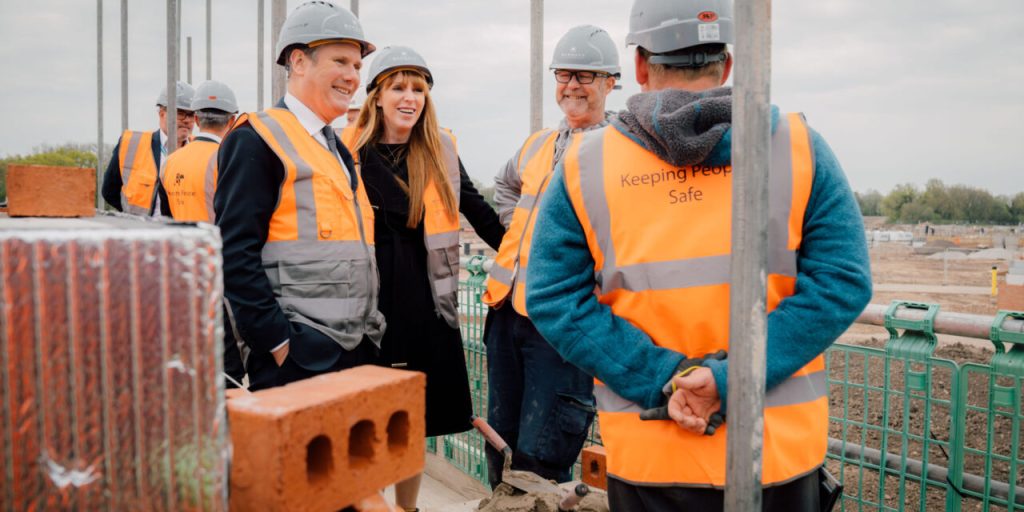
Labour leaders Kier Starmer and Angela Rayner – is housing policy radical enough?
The insidious ‘right to buy’ policy was one of the mainstays of the Thatcher government in the 1980’s. The policy was not sold as the privatisation of Council housing as a means to enrich private landlords or to inflate house prices, generating lifelong debt for many. That would have been too honest, too direct for the Tories.
Instead, the policy was sold as a chance to get on the housing ladder, an opportunity for home ownership, the golden ambition promoted as part of the philosophy of the individual above all, as the Tories marched onward in their determination to dismantle any semblance of post war social provision in housing, education and health.
The impact of the policy has been to increase uncertainty for working class families as Council stock diminishes, private rents increase and mortgages soar. As a consequence homelessness and poverty have spiralled.
Figures published by the Department for Levelling Up, Housing and Communities (DLUHC) at the end of last month showed a sharp rise in the number of children living in temporary accommodation.
There were 145,800 children in temporary accommodation as of the end of December last year, up by a fifth on 20 years ago when records for this measure began, and up 15% on the same period in 2022.
Michael Gove, the DLUHC Secretary of State has admitted that “for years now we have not been building enough homes” and that the Government has missed the supply target of at least 300,000 new homes per year. However, building homes only addresses part of the problem, making those homes affordable and secure for working class families is the real challenge.
Recent Freedom of Information requests, sent by the New Economics Foundation (NEF), found that 41% of all council homes sold under the right to buy scheme are now being let on the private market.
The research also found that the number of homes bought under right to buy and now in the private sector has risen by 3.2 percentage points since 2014/15. This means that around 109,000 more former council homes are now being let privately.
The New Economics Foundation (NEF) has called for a ‘suite of powers’ over housing policy to be devolved from Westminster to local authorities, which would give councillors the “ability to make decisions regarding the future of their council housing stock and give them greater control over the tenure balance of homes in their area”.
Insecurity in the private sector is supposedly being addressed with reforms to the private rented sector. Gove has insisted that the long-promised plan to end tenants being forced from their homes under section 21 notices will take “a matter of months”, but could not give an exact timetable.
With housing security being such a key issue for working class families and with a General Election looming it would be timely for the Labour Party to have a radical approach to housing and look to repeal the right to buy legislation in order to give Council’s more control over housing stock.
Labour does have a plan for housing, which focuses on building on brownfield sites and on poor quality and ugly areas of the Green Belt, which it has redesignated the Grey Belt. Affordable homes are mentioned, in the context of new developments having to target at least 50% affordable housing when land is released. Which sounds fine but a target is not an obligation and housing can quite quickly become unaffordable, when it is on the private market, or it can get sucked into the private rented sector.
As with many policy commitments the Labour leadership position on housing is kept vague in an attempt to avoid any direct criticism. Meanwhile, Homeless Link, the national membership charity for frontline homelessness organisations, criticised the UK government for not uplifting funding to match rising inflation. The group found there were 39% fewer accommodation providers and 26% fewer bed spaces for people experiencing homelessness in England in 2021 compared to 2010 with funding cited as one of the main reasons for the decline.
Abolishing the right to buy would be a massive step towards a policy which could make housing truly affordable for working class families. Labour need to prioritise giving working class families the right to a home, over the Tory philosophy of the right to buy.




 Avanti Populo