Kickstart or stalling?

4th February 2025

Reeves on economic growth – kickstart or cold start?

British Prime Minister, Keir Starmer, and Chancellor, Rachel Reeves, are in danger of having to eat humble pie when it comes to their ability to deliver on the promise of economic growth.  The mission of the present government has been made clear, economic growth, but simply repeating the mantra does not deliver the desired outcome. 

The keynote speech on the subject by Reeves  last week has only succeeded in re-opening the 20 year long debate about a third runway at Heathrow Airport; whether or not this will actually deliver growth anyway; how it will help Britain meet its net zero carbon targets; and why so much emphasis on investment in the South East when the rest of the country is crying out for economic support.  The aspiration to turn the corridor between Oxford and Cambridge into Britain’s Silicon Valley just reinforced this point.

Reeves claims that 60% of the benefits of a third runway at Heathrow will be felt in areas other than London and the South East, though without giving details as to precisely how.  The geographic distribution of investment may in any case be an academic point as the accumulation of wealth in the hands of a small minority, rather than ownership and production being in the hands of the people, will ensure the maintenance of Britain’s class system.  The working class are not going to be the ultimate beneficiaries, whether in John O’Groats, Land’s End or anywhere in between.

Socialism, or any aspiration towards it, is not on the agenda of this government, in common with all previous Labour governments, so tweaks to how capitalism functions is the best that they hope to deliver.  Even in those terms however, Reeves does not seem to have won any allies.

What used to be regarded as the environmental lobby but is actually articulating the interests of many in saving the planet, has been up in arms about the third runway proposal, as well as the possibility of the government consenting to the Rosebank development, Britain’s biggest untapped oilfield. 

The project is being led by Norwegian company, Equinor, and having had a consent application rejected in Scotland recently they are  expected to return with  a further proposal later in the year, claiming that “Rosebank is critical for the UK’s economic growth”, a euphemism for Rosebank being critical for Equinor’s profits and its shareholder’s dividends.

There are potential routes to economic growth, even in the short term, within the straitjacket of capitalist economics.  Investment in renewable energy technology would be an option that would both promote growth and contribute to net zero carbon targets.  Diverting spending away from the cost of weapons of mass destruction and nuclear submarines would free up resources, which could begin to address the crumbling schools and hospital infrastructure.  Investment in renewing the health and education systems would in itself help promote economic growth.

A renewal of the national rail network, charging point infrastructure to encourage the take up of electric vehicles, more resources for the creative industries, proper financing of local government, all of these things would contribute to economic growth, as well as providing the platform for arguing that public, and ultimately the people’s, ownership and control is the key to lasting economic change.

Sadly Starmer, Reeves and the Labour Cabinet have no such vision and remain trapped within the confines thinking that reform within capitalism is a sufficient goal.  Clearly it is no such thing, as working class families continue to grapple with rising water and energy costs, rising food costs, rising housing costs and deteriorating local services.  That was never going to be reversed in six months but a roadmap towards it could have been outlined and a vision fought for.

As it stands the demagogues of the far right are making up ground in Britain and across Europe; Zelensky in Ukraine, Meloni in Italy, Le Pen in France, Alternative fur Deutschland in Germany, to name a few. 

It is not impossible to see Reform UK taking seats off both Labour and the Tories at the next General Election  and shifting the political landscape in Britain even further to the right.   A YouGov poll published in The Times today (4th February) puts Reform on 25%, Labour on 24% and the Tories further behind on 21%.  While Britain is still a long way from a General Election if this trend continues Labour’s dream of a second term could easily be wiped out.

A response to such polling figures should be to mount a robust challenge to the politics of Reform and the Tories.  However, too many in the Labour Movement are afraid of being accused of being “woke”, a term that has become a pejorative in the hands of the right wing media to demonise anyone with progressive ideas or left wing politics.  The fact is that anyone not woke is, by definition, asleep and that will usually come with being bigoted, xenophobic, homophobic and in denial of the climate emergency.

Capitalism as a system, designed to serve the interests of the rich and powerful, cannot be modified in the interests of the working class, it must be overthrown.  The more the Left pussyfoots around this reality the more emboldened the right wing will be to push their simple answers to complex solutions.  This is the message the Labour and peace movements in Britain need to grasp and campaign upon, before the world is reshaped entirely in the image of Donald Trump or Elon Musk.   These are the people who must be stopped.  Theirs are the ideas that must be quashed.

Warning signs – First week of Trump 2.0 spells out dangers

22nd January 2025

Mass opposition to Trump underway in the USA

At the victory rally held in advance of his official inauguration, US President Donald Trump vowed to get rid of the “radical Left woke” which he saw as dominating American life and culture.  For Trump the term encompasses a whole range of progressive policies and positions that working class organisations have fought for and won over many years but Trump and his cronies see as an impediment to the realisation of their particular version of the American Dream, to make the rich even richer.

In less than a week Trump has signed orders to withdraw from the Paris climate agreement; withdrawn the US from the World Health Organisation (WHO); declared a national emergency on the US/Mexico border, in order to not only halt migration into the US, but initiate the biggest mass deportations in US history; declared that children of migrants, born in the US, will no longer be deemed to have automatic rights to US citizenship, contrary to the 14th amendment of the US constitution; and granted pardons to nearly 1600 of his followers who stormed the Capitol building in January 2021, in spite of them having been convicted following due process in US courts.

Trump has also issued an executive order calling for an end to what he describes as “dangerous, demeaning and immoral”, diversity, equity and inclusion schemes, putting all staff overseeing such programmes on paid leave with immediate effect.  Consistent with this approach Trump has declared that in relation to gender in the US there, ”will be two sexes, male and female”, clearly a swipe at the transgender and LGBT communities.

In the US the People’s World noted that Trump has also “ended the Biden administrations Justice40 initiative, which set a policy that 40% of the benefits of federal investment must go to disadvantaged communities and repealed an executive order setting up a national goal for electric cars to make up half of new cars and truck sales by 2030.”

Flying in the face of all of the evidence that the planet faces a climate emergency, Trump’s response has been, ‘drill baby, drill’, and a promise of more permissions for oil and gas exploration to be granted.  Tariffs on imported goods from Canada and Mexico it has been suggested could be at 25% while a trade war with China, imposing tariffs on Chinese goods is in Trump’s sights, with a 10% tariff likely to be imposed as early as next week.  The mobilisation of the US military in the South China Sea and the possibility of Taiwan being a provocation for military action against China cannot be ruled out.

While Trump has already made belligerent noises in relation to Greenland and Panama, allegedly in the interests of economic and military security, some form of action against Iran is also a likely scenario, either directly or through proxy Israel, and there is almost certain to be an even greater intensification of the illegal blockade against Cuba.  Newly sworn in Secretary of State, Marco Rubio, is known for his vicious anti-Cuban views.

While there is a degree of naivety amongst some on the Left that Trump can only serve one term and sense will prevail in 2028, there is no indication that the Democrats have either a strategy for winning back working class votes or a credible candidate to front a campaign.  There is also the possibility that the constitutional constraint on Presidents only serving two terms could be overturned and a Trump Presidency extended into the 2030’s.

In any event, based upon the first week in office it is clear that there is no room for complacency.  Progressive trade union, women’s and civil rights groups, along with the Communist Party USA, are organising resistance at local, state and national levels to challenge Trump every step of the way, opposing both domestic policy and the imperialist designs of the US across the world.  

Supporting these efforts will become increasingly important as Trump’s term progresses.  That will include putting pressure upon the British government not to kowtow to the agenda of racism, imperialism and the threat of war which Trump’s second term will undoubtedly herald.  Trade unions, the Labour Party and progressive campaigns such as Stop the War and CND must ensure that mass extra Parliamentary action is used effectively to press for an independent British foreign policy, free of US diktat, leaving NATO and reducing military spending.   

The noxious smell of Musk

12th January 2025

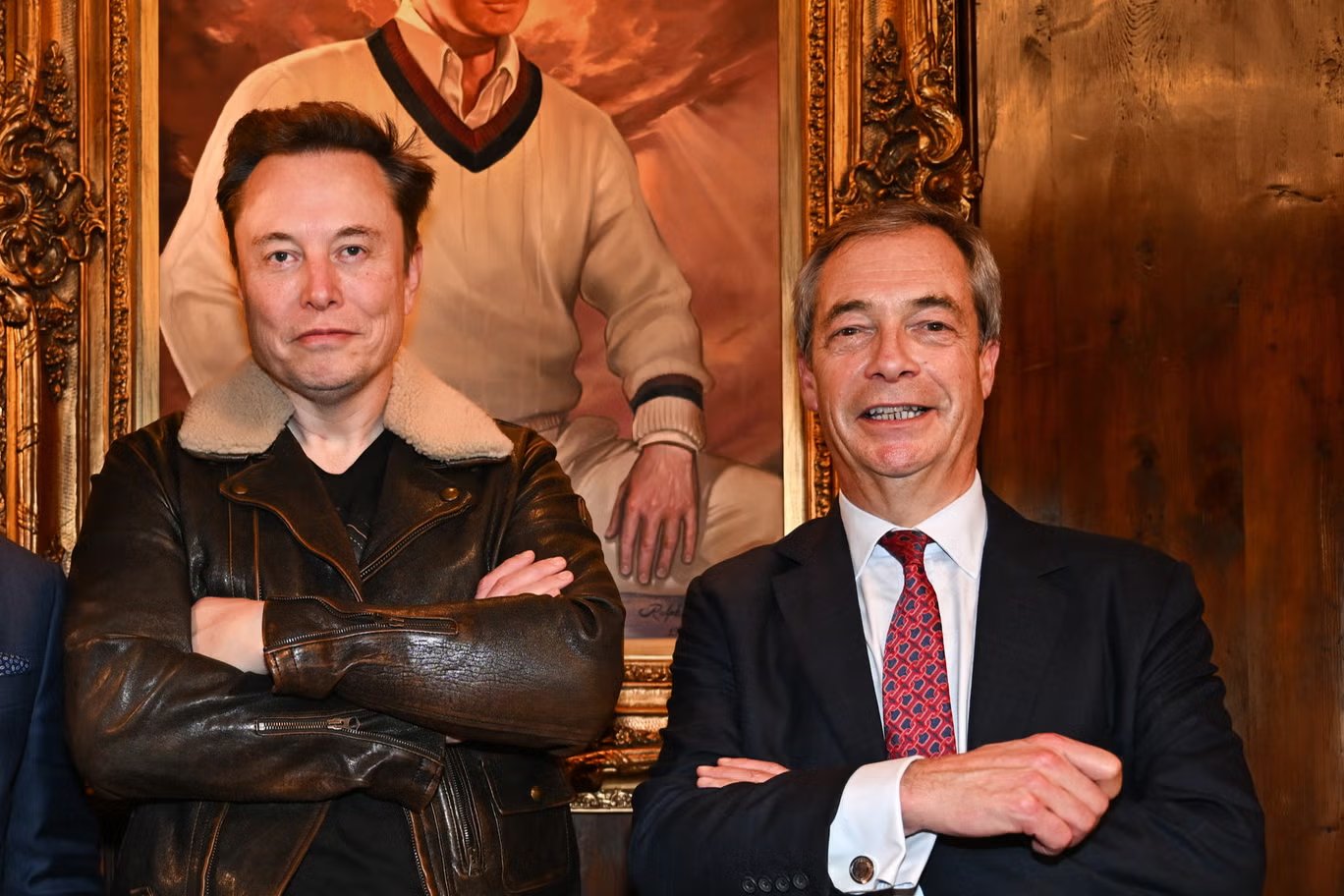
Musk and Farage – potential partners in crime

The whiff of musk which followed Donald Trump around the campaign trail in his bid to return to the White House in the United States has become an acrid and pervasive smell.  Worse still, the odour has been caught on the Atlantic winds and made its way across the ocean to become a stench in danger of immobilising further the political life of Britain.

The world’s richest man, Elon Musk, has an estimated worth of US$421 billion.  Not content with a role gifted by Donald Trump to run a Department of Government Efficiency, effectively Trump outsourcing cuts in public services, Musk has recently been intervening in British politics on the subject of grooming gangs, which has stirred considerable controversy, and his on again off again threat to fund Nigel Farage’s Reform Party to the tune of $100 million.

Since acquiring the media platform formerly known as Twitter, now X, in October 2022, Musk has diluted verification measures on the site and, according to a wide range of campaign groups, has overseen a growth in racist hate speech, homophobic slurs and antisemitic comments on the platform.  In November 2023, the Centre for Countering Digital Hate released a new report claiming 98% of misinformation, antisemitism, Islamophobia, and other hate speech, in relation to the Israeli genocide in Palestine, remained on X after 7 days of reporting, generating over 24 million views. 

To say that Musk has significant power and influence would be an understatement.  That this influence is being used in an attempt to distort the political landscape in Britain, consistent with the distortions already evident in the US, would be hard to deny.

The recent controversy around grooming gangs, repeated in a wave of social media posts, including some amplified by Musk, allege that a 2008 Home Office document advised police not to intervene in child grooming cases because victims had “made an informed choice about their sexual behaviour”.

The unfounded claim about a Home Office circular to police stems from an interview Nazir Afzal, former Crown Prosecution Service chief prosecutor for North West England, gave to the BBC on 19 October 2018. He now admits that he had not seen any such circular himself, despite apparently stating its existence as fact.

In a statement to the BBC, the Home Office said it had never instructed police not to go after grooming gangs:

“There has never been any truth in the existence of a Home Office circular telling police forces that grooming gangs should not be prosecuted, or that their victims were making a choice, and it is now clear that the specific circular which was being referred to does absolutely no such thing.”

However, none of this has gained traction on X, though Musk’s suggestions that Keir Starmer failed to prosecute gangs and that Home Office minister Jess Phillips “deserves to be in prison”, as well as being described by Musk as  a “rape genocide apologist”, have gained widespread coverage.

The Child Sexual Abuse Inquiry, which published its findings in 2022, makes clear that  “abuse must be pursued and challenged everywhere with no fear or favour”.  Professor Alexis Jay, who led that inquiry, has said that she felt “frustrated” that none of its 20 recommendations to tackle abuse had been implemented more than two years later.

However, none of this makes it an issue for Elon Musk, and his intervention has only accelerated disinformation around this issue.  The far right have pounced upon the issue of child sexual exploitation (CSE) to suggest that grooming is predominantly an issue of race or religion, citing the fact of men of Pakistani heritage being involved in cases in Rochdale, Rotherham and Telford.  However, Home Office research published in 2020 draws no such conclusion, in fact stating that “Research has found that group-based CSE offenders are most commonly White.” (Group-based Child Sexual Exploitation Characteristics of Offending – December 2020)

Clearly the Tories, who have also jumped on this bandwagon, failed to do anything about the Jay Inquiry when in office.  In fact Tory leader Kemi Badenoch opted this week to try and stop Labour’s Bill aimed at protecting children.  Labour have the opportunity to consider and implement the Jay recommendations.  This must be a priority as a minimum in relation to this issue.

To add to the looming disinformation wars Meta boss, Mark Zuckerberg, announced this week that the third party fact checking network set up in 2016, in relation to Facebook and Instagram is to be dismantled, accusing them of being “politically biased”.  How effective the network has been is open to debate but the fact that Zuckerberg sees fit to jettison it, just as Donald Trump calls in the removers for his return to the White House and Elon Musk decides on the arrangement of furniture, is further cause for concern.

Zuckerberg has stated that he will,

“work with President Trump to push back on governments around the world that are going after American companies and pushing to censor more.”

Lies, deceit and disinformation are an endemic part of the capitalist system and core to its functioning to discredit the Left and any opposition.  The smear campaigns run against Jeremy Corbyn as Labour leader may yet come back to haunt Starmer as the world wide bastions of right wing authoritarianism mobilise around Trump’s return to the White House.

Labour may have been seen as a safer pair of hands than the Tories in the short term as far as British capital was concerned but US imperialism may not see things the same way.  Toying with funding for Farage sends just such a signal.

We have already heard threats against, Greenland, Panama and the desire for Canada to become the 51st US state coming from the President Elect.  Some of this may be bluster but may equally be laying the ground for the looming conflict with China, which the US is keen to engineer.  If that does happen there could be many innocent victims but there is a guarantee that for Trump and his international media cronies, truth will certainly be one of them.

US election – Resistance is vital

7th November 2024

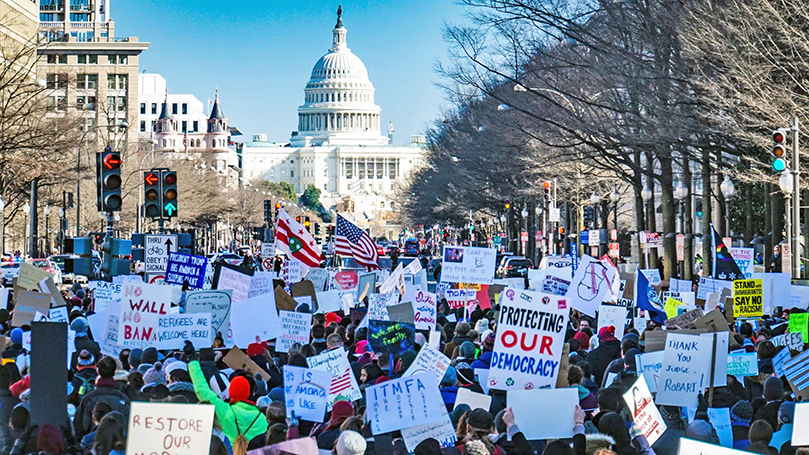
Demonstrations will continue to oppose the reactionary policies of President Trump

The election of a new President in the United States is always a moment of international significance, given the role the US plays in world politics.  The Presidential election of 2024 has been described as the most consequential in a generation and there is no doubt that the re-election of Donald Trump will have profound repercussions both in the US and internationally.

Trump’s first term appointments of reactionary judges to the Supreme Court has already led to the reversal of Roe v Wade and the attack on reproductive rights in the US.  While each State can at the moment determine its own position there is no guarantee that Trump will not introduce nationwide anti-abortion legislation, under pressure from the hardline Christian evangelist lobby.

The belligerent stand taken by Trump in relation to the Black Lives Matter Movement also does not augur well for progress in the discrimination and treatment of the Black and Latino communities in the US.  While the media are making much out of the increase in Trump’s vote share amongst these communities, over the more socially liberal Kamala Harris, work is still needed to analyse the pattern of voting and the impact of many who stayed at home.

As a long standing advocate of gun laws being as relaxed as possible, US citizens cannot look forward to any action to restrain the gun lobby in the US, led by the fanatical National Rifle Association (NRA).  The consequence of lack of control over gun law in the US  saw nearly 43,000 people die from gun related violence in 2023 and any hope for that number to drop significantly under Trump is slim.

Trump has the backing of a shady grouping around the Make America Great Again (MAGA) campaign, called Project 2025: The Presidential Transition Project.

The blurb on their website states it’s mission:

“ It is not enough for conservatives to win elections. If we are going to rescue the country from the grip of the radical Left, we need both a governing agenda and the right people in place, ready to carry this agenda out on Day One of the next conservative Administration.

This is the goal of the 2025 Presidential Transition Project. The project will build on four pillars that will, collectively, pave the way for an effective conservative Administration.”

Trump has also called for thousands of federal employees to be fired and to be replaced by workers who are appropriately vetted on the basis of their ideological belief in the limited role of federal government and personal loyalty to him, stating,

“I will require every federal employee to pass a new civil service test, demonstrating an understanding of our constitutional limited government.”

Tax cuts for the rich and cuts in public services for the rest are likely to be the reality of Trump’s policies.

On the world stage the US military industrial complex will be looking forward to continued profits as Trump will undoubtedly continue promoting the sales of US weapons and technology worldwide.

In relation to the ongoing Israeli action in the Middle East, in Gaza, the West Bank, Lebanon and Iran, Trump has made clear his unswerving support for Benjamin Netanyahu and the ongoing incursions by the Israel Defence Force (IDF), resulting in thousands of deaths over the past year.  Trump’s election victory was greeted enthusiastically by Netanyahu and his supporters in Tel Aviv.

In his first term as President, Trump tore up the Joint Comprehensive Plan of Action (JCPOA) in relation to Iran, which constrained Iran’s nuclear programme in exchange for a relaxation of sanctions.  Given Trump’s belligerent tone towards Iran, allied with his support for Israel, there is a clear danger of escalation of the conflict in the Middle East.  

In relation to Ukraine Trump has been more ambivalent but the strategic objectives of the US and NATO, in encircling Russia in order to contain its influence, remain real.  However any settlement regarding Ukraine is arrived at in the short term, this wider objective will remain.

In the Indo-Pacific the military built up to counter the so called ‘threat’ of China continues, with ongoing economic and military support for Taiwan being key, along with the threat to peace in the region posed by the AUKUS alliance of the US, UK and Australia.

Any moves towards rapprochement with Cuba, mild as they were under the Obama administration, were ditched during Trump’s first term.  Cuba was added to the US state sponsors of terrorism list.  To the shame of the Biden administration this position was not reversed and the ongoing illegal blockade against Cuba, imposed by the US, will continue under a new Trump Presidency.

The ongoing CIA campaign to undermine progress in Venezuela, a long running effort to install a US friendly regime in that country, is unlikely to change under Trump,  while a clampdown upon migration from Latin America in general will reinforce the jingoism which has been a hallmark of Trump’s policies.  Trump has vowed to oversee the largest mass deportation in US history for example and has repeatedly stated that immigrants are “poisoning the blood” of the country.

The Trump administration may not be characterised as fascist yet but Trump does have form.   According to John Kelly, former White House Chief of Staff, during a 2018 trip to Paris to commemorate the end of World War I, Trump told him that Hitler “did a lot of good things.”

Much of the United States will be waking up to the hangover of a second Trump administration.  The broad anti-MAGA coalition will continue to mobilise against the reactionary legislation Trump is bound to introduce. The Communist Party USA is calling for a renewed resistance movement to build the anti-fascist front that has been developing over recent years.  Resistance is not only possible but vital, for the people of the US and the world.

Creative Health – Wake up the nation

23rd October 2024

Health Secretary, Wes Streeting – big plans for the NHS but will they be big enough?

With only one week to go until the first budget from Labour Chancellor, Rachel Reeves, there has been much speculation about what it will include, in relation to both spending cuts and investment to allegedly boost the economy, usually a euphemism for increasing coprorate profits.  As part of the pre-budget media management Health Secretary, Wes Streeting, has shared a vision for the NHS, or at least initiated a “national conversation”, with a 10 year plan for the NHS to be published next year.

As well as digitisation of patient records, controversial with many, the government is proposing neighbourhood health centres where patients will be able to see family doctors, district nurses, care workers, physiotherapists, health visitors and mental health specialists, all locally and under the same roof.

There will also be shift in focus, from sickness to prevention, with the aim of shortening the amount of time people spend chronically unwell and preventing ill-health. There are also plans to provide  smart watches for people with diabetes or high blood pressure, so they can monitor their own health at home.

Some of these measures may have benefits but while smart watches to monitor conditions could address the symptoms it will not get to the root causes of economic disadvantage and poverty, which result in poor diet and cheap food choices, which many working class families are forced into. 

At the same time, in a contradictory move, the government has approved the trial of an anti-obesity drug aimed at getting “those who are most likely to return to the labour market” back into work.  The trial, based in Manchester, will involve 3,000 people in a five year study of the “non-clinical outcomes” of treatment to see if it encourages a return to the workplace.

The trial effectively treats people according to “their economic value, rather than primarily based on their needs and their health needs”, according to obesity researcher at Cambridge University, Dr Dolly van Tulleken.  The emphasis of this approach is once again to blame the individual, rather than to highlight failures in the system which, due to lack of financial resources, limits options for many working class families and exacerbates health inequalities.

Quite apart from the ethics of such an approach it is nothing more than a sop to Big Pharma, always keen to explore drug based solutions, when a huge evidence base for the benefits of alternative approaches to preventative health care already exists.  

The National Centre for Creative Health (NCCH) was established following the All Party Parliamentary Group on Arts and Health report, Creative Health, published in 2017.  A subsequent commission, established by the NCCH and chaired by Baroness Lola Young, published its Creative Health Review in 2023 to update the findings of the original APPG report, in the light of the Covid-19 pandemic.

While a commission made up of the great and the good from the worlds of health and culture was never going to come up with a set of revolutionary demands, it has nevertheless highlighted flaws in the existing health and social care arrangements, which could be addressed to benefit working class communities if resources are made available.

The review set out a number of recommendations to government, primarily,

  • the development of a cross-departmental Creative Health Strategy, driven by the Prime Minister, co-ordinated by the Cabinet Office and supported through ministerial commitment to ensure the integration of creative health across all relevant policies. Such an approach will facilitate the establishment of sustainable cross-sectoral partnerships across regions and systems, modelled by national policy.
  • The long-term value of investing in creative health must be recognised and appropriate resources should be allocated by HM Treasury to support the Creative Health Strategy.
  • Lived experience experts should be integral to the development of the Creative Health Strategy.

While these demands in themselves are relatively limited they are still a challenge to the conservative approach to health and social care taken by both the Tories and Labour in government.

Creative Health is defined as creative approaches and activities which have benefits for health and wellbeing. Activities include visual and performing arts, crafts, film, literature, cooking and creative activities in nature, such as gardening; approaches may involve creative and innovative ways to approach health and care services, co-production, education and workforce development.

Creative Health can be applied in homes, communities, cultural institutions, heritage sites and healthcare settings. Creative Health can contribute to the prevention of ill-health, promotion of healthy behaviours, management of long-term conditions, and treatment and recovery across the life course.

The Creative Health agenda is not just about tinkering with the NHS system and social care at the edges, it is about a wholesale reform of the approach to healthcare, which emphasises active community engagement in a range of creative activities.  In study after study, both nationally and internationally, these have been proven to have positive impacts.  The key to success however is that activity must be effectively funded at a community level and this has been systematically reduced by successive governments.

The squeezing out of arts activities in state schools, as part of the national education curriculum, will have a long term impact upon the ability of those other than the wealthiest to access creative resources.  Grassroots arts activity is under threat across the country as venues and community facilities close due to the rising costs of stock  and utilities.  Local government arts budgets have been cut to the bone with arts, museum and library facilities continually under threat.  Yet these very services are integral to the physical and mental health and wellbeing of local communities and should be at the core of any proposals which have prevention at their heart.

The Tories cut funding to the Arts Council England by 30% when elected in 2010 as part of the austerity agenda, claiming that support could be found by unlocking the potential in philanthropy. That ship has yet to come in to dock.  The Office for National Statistics in a report in 2022 showed that while more than 16% of creative workers born between 1953 and 1962 were from working class backgrounds, that figure had fallen to 8% four decades later.

The number of students taking arts GCSEs has fallen by 40% since 2010 and the number of drama teachers in English secondary schools is down by 22% since 2011.

Such figures demonstrate the lack of value placed upon the creative sector, in spite of it being a huge income generator for the economy, over £108 billion in 2021, but also the failure to recognise the essential role creativity can play in reducing the burden upon the NHS as part of an integrated Creative Health approach.

The “national conversation” Wes Streeting has initiated needs to highlight these facts and the next 10 Year Plan for the NHS needs to have Creative Health and the real needs of working class communities at its heart.  In addition, investment in the cultural sector, both through Arts Council England and the local government sector needs to be restored as a priority and the basis of arts education in the national curriculum reviewed.

Creative Health is unlikely to get much airtime in Rachel Reeves’ budget next week but if it is not taken seriously, as part of a wider package of investment in and reform of health and social care, the long term health of the nation, and the government, will be in doubt.

https://ncch.org.uk/creative-health-review

Blatant Biased Content (BBC)

4th October 2024

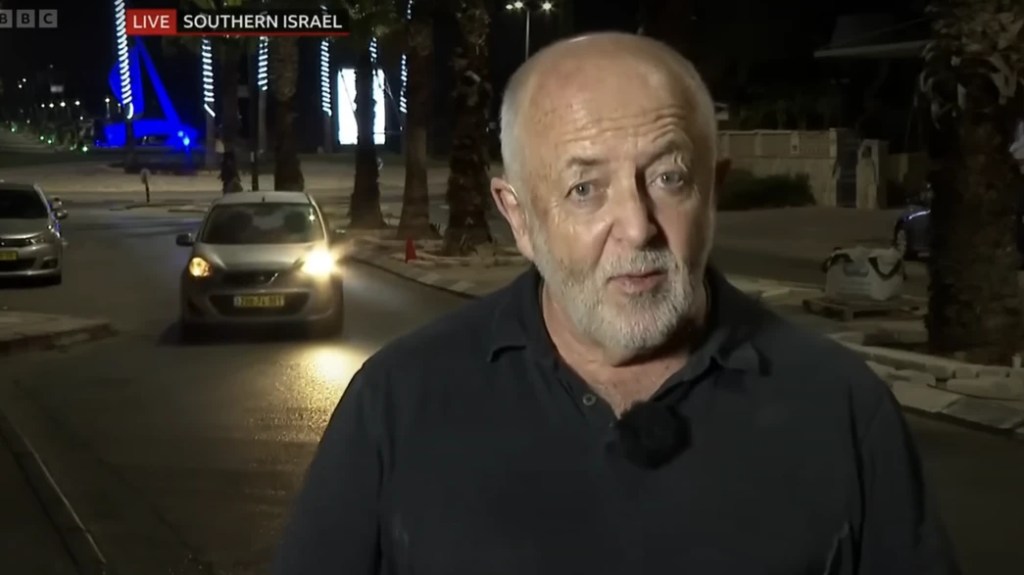
BBC International Editor, Jeremy Bowen

Reporting by the BBC on current conflicts demonstrates the bias of the corporation and the extent to which, in spite of its regular emphasis upon impartiality, the BBC is anything but  when it comes to its international coverage.

The Russian incursion into Ukraine in February 2022 was undertaken in order to protect communities who had expressed a wish to become part of Russia, but had suffered at the hands of Ukrainian forces since 2014, resulting in 14,000 deaths.  The Minsk Accords, signed in 2015 to  halt the fighting, were later admitted by Western governments to be a mere ploy to give Ukraine time to re-arm.

The Russian intervention is nevertheless unfailingly referred to by the BBC as a full scale invasion and the wider context, including the CIA backed coup in Ukraine in 2014, conveniently overlooked.

Even after the intervention by Russia, a peace agreement mediated by Turkey in March 2022 was on the brink of being signed by Ukraine, until the United States persuaded then British Prime Minister, Boris Johnson, to deliver the message to President Zelensky that the “collective West” would not support the agreement.

In an item given widespread coverage by the BBC in the last couple of days, Khalil al-Hayya, the deputy leader of Hamas, was interviewed by BBC international editor Jeremy Bowen.  On each occasion al-Hayya was introduced as someone whose views may be abhorrent to many.  Bowen was asked to justify why the interview had taken place and why al-Hayya should be given air time.

Bowen dutifully trotted out the BBC line on impartiality and the need to hear all sides in a crisis situation.  All very well, but the briefings by Israeli Defence Force (IDF) representatives, committing genocide in Gaza, killing medical teams in the West Bank and currently invading neighbouring Lebanon are not given the same caveat, even though many will find both their views and their actions abhorrent.

It is also noteworthy that the invasion of Lebanon by the IDF is described by the BBC as an ‘incursion’, a characterisation they may struggle to hold onto as the death toll inevitably mounts.

The BBC attempts to protect the illusion of impartiality in other ways too.  John Simpson is regularly given his own half hour, titled Unspun World, in which Simpson interviews various BBC correspondents who invariably give a particular spin on events in the part of the world that are covering.  The title is not meant to be ironic.

Then there is the BBC Verified branding.  Presumably it is the BBC themselves who are undertaking the verification, which is a bit like the police investigating themselves or students marking their own homework.  Are they really trying to kid us that a new logo is a guarantee of impartiality and objectivity?

How the Tories can continue to bleat on about the BBC being run by ‘Lefties’ and not toeing the line on issues is laughable.  Apart from the odd moment of mild criticism the BBC knows quite clearly on which side its bread is buttered.  Sadly it is not the side of investigative journalism, truth and objectivity.

Turning Points

29th September 2024

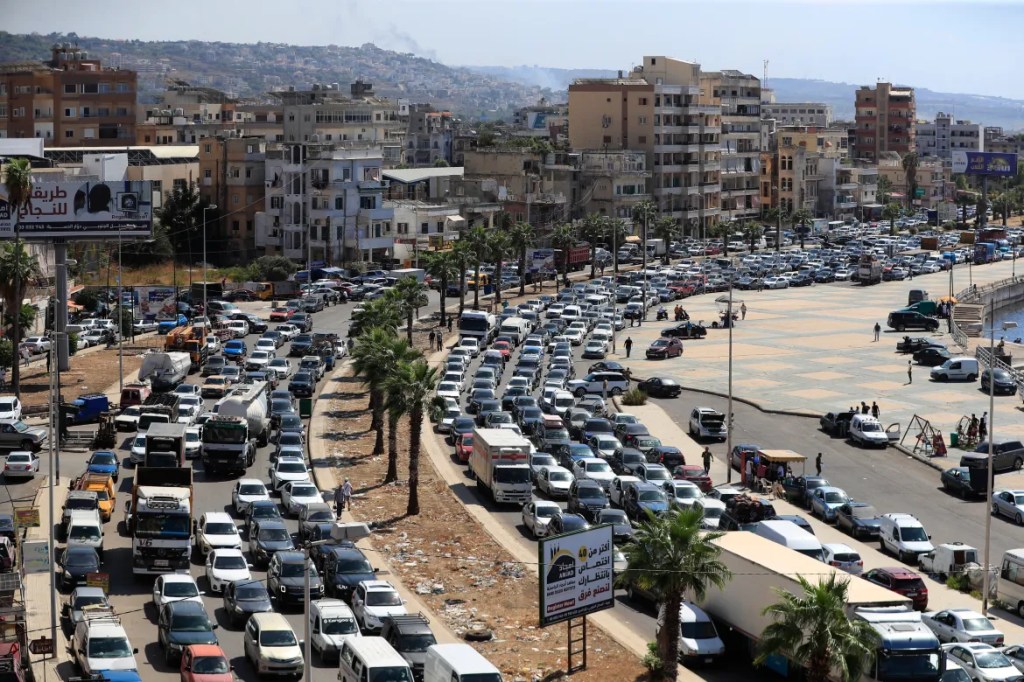
Thousands flee Lebanon to escape Israeli air strikes

The assassination of Hezbollah leader, Hassan Nasrallah, has been described by Israeli Prime Minister, Benjamin Netanyahu, as a ’turning point’, describing Nasrallah as “the axis of the axis, the central engine of Iran’s axis of evil”.

The killing and the ongoing bombing of civilian areas of Beirut may well prove to be a turning point but not necessarily in the way that Netanyahu means.  Iran’s leader, Ayatollah Ali Khamenei has called for five days of mourning following Nasrallah’s death and vowed that his ”blood will not go unavenged.”

Lebanon’s Health Ministry has estimated that 800 are dead so far as a result of the actions of the Israeli Defence Force (IDF), while 50,000 people are estimated to have fled to Syria and an estimate 1 million are displaced, many having to sleep on the streets.

The bombings follow on from the indiscriminate attacks, not denied by the Israelis, upon Lebanese citizens by planting explosives in electronic communication devices, which killed 37 and injured thousands.  This action has been widely condemned as a war crime precisely due to its indiscriminate nature. 

While the IDF claim that the current bombing campaign consists of precision strikes, the reduction to rubble of buildings in clearly civilian areas gives the lie to this claim, costing the lives of non-combatant women and children  in the process.

The latest strikes have even seen surprise expressed by the United States, Israel’s staunchest ally, with President Joe Biden claiming that the US had no prior knowledge of the attacks.  Efforts by US Secretary of State, Antony Blinken, to engage Israel in the search for a diplomatic solution have so far abjectly failed.

It is becoming increasingly clear that the Israeli government, under the leadership of Benjamin Netanyahu, is out of control and driven by its own religious fundamentalist agenda.  Devastating strikes on Beirut followed on almost immediately from Netanyahu’s widely boycotted speech at the UN General Assembly in New York and flew in the face of widespread calls for a negotiated settlement and ceasefire to be discussed.

Israel’s contempt for the will of the international community, as articulated by the UN, has been evident for decades in its illegal treatment of the Palestinian people and their just demand for national self determination  and a fully sovereign state of their own.  It is evident in its recent action in Gaza and the West Bank and is becoming  more flagrant in its attacks upon the Lebanese capital.

Such actions increase the threat of widening the conflagration in the region, with escalation beyond the Middle East into a global war within the realms of possibility.

With the presidential election in the United States looming Netanyahu is clearly taking advantage of the hiatus this represents to press home his fundamentalist agenda, to the detriment of the people of the region and in spite of the opposition from many of his own citizens.   Parliamentary elections in Israel are not scheduled until October 2026 and Netanyahu is gambling that he can hold together his right wing fundamentalist coalition at least that long, to present himself as a victor in the fight against both Hamas and Hezbollah.

The fate of the Palestinian people and the people of the Middle East generally should not rest upon the political survival and opportunism of one man.

Pressure upon Israel to come to the negotiating table must be increased through concrete actions.  The British government must immediately cease all arms sales to Israel.   Trade union and cultural organisations should support the Boycott, Disinvestment and Sanctions (BDS) campaign to isolate Israel internationally, until it is prepared to negotiate meaningfully on a way forward.  

The US, as Israel’s major ally, must take a stronger line in bringing the IDF to heel and opening the way for negotiations.  The turning point in the current conflict has to be to turn back.  The coming days could well be crucial in determining the future of the Middle East  and whether or not the world is plunged into a wider conflict.

Racism – a real problem in Britain today

10th August 2024

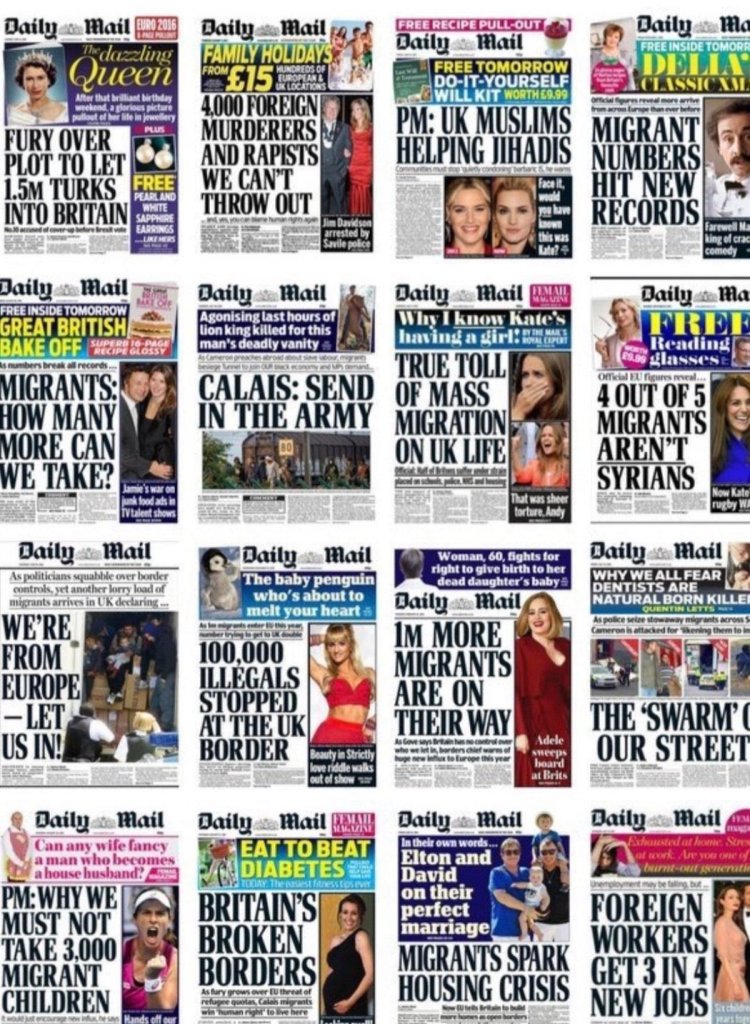
Daily Mail headlines fuel the anti asylum seeker narrative

Demonstrations across Britain this week, deemed anti-immigration protests by the media but actually pro-racism mob violence, have been met with stalwart resistance from local communities determined to resist fascist attacks.   This has ranged from a 3,000 strong turnout in Newcastle upon Tyne’s West End to defend a centre for asylum seekers, to the City Centre clean up in Sunderland following a night of vandalism and looting. Similar actions have been reported from across the country.

Such shows of working class community solidarity are vital to quashing the misinformation spread by the far Right that Britain has an ‘immigration problem’.  Such language and provocations are the natural territory of the far Right but the collusion of much of the mainstream media, including the BBC, in regarding immigration as a problem to be solved gives the claims of extremists more credibility in the eyes of the most gullible.

Coventry South MP, Zarah Sultana, recently posted on X a montage of Daily Mail headlines which fuelled the anti-asylum seeker narrative.  Sultana also suffered hostile questioning on ITV’s Good Morning Britain this week, from presenters Ed Balls and Kate Garraway, for suggesting that the violence over the past week should be called out as Islamophobic.

Balls in particular was quick to defend Home Secretary, Yvette Cooper (his wife), and Labour leader Kier Starmer for acknowledging that the violence was fuelled by racism but refused to accept that they should call it out as Islamophobic.  To her credit Sultana stood her ground and has come out of the encounter with more credit than either Balls or Garraway.

While the Labour government has been quick to point the finger at social media and mobilise the state apparatus of the police and the courts there has not been any recognition, from the Front Bench at least, that these measures are only dealing with the symptoms and not the cause.  There is no argument about jailing fascist thugs or addressing any of the shortcomings of the Online Safety Bill.  However, at root the issues of poverty, disaffection, and a sense of disconnection from a hugely unequal society are the causes which need to be tackled.   

Those at the sharp end of the impact of capitalism and its endemic crises are the most likely to fall prey to the easy solutions presented by the demagogues of the far Right and the so-called populist rhetoric of the likes of Reform MP, Nigel Farage.  It is no coincidence that the worst violence has been seen in areas of the greatest poverty, or that the previous Tory government placed asylum seekers in hotels in these areas. 

Preventing a repeat of the scenes which have taken place over the past week will require robust action to tackle poverty, low wages and exploitation.  It will require massive attention to the housing issues faced by many working class communities.  It will require greater investment in the local government services which many working class communities rely upon.  It will require a stronger approach to tackling wealth inequality and how resources are distributed across society.

It will require Labour politicians to be seen on the frontline with threatened communities showing their active support.  It will also require Labour to reject the narrative that immigration is a problem to be solved and turn that round to make it clear that a major problem to be solved in Britain today is racism.

Divide and rule has always been a key tool of ruling class strategy and the recent activity across Britain has shown how some sections of working class communities can be persuaded by the far Right, while others will stand firm in the face of fascist violence.

Any strategy which is to ultimately succeed however has to be based upon a recognition of the class interests of those communities most threatened and that solidarity between black and white working class communities is the only way forward.  In short it will require a strategy which not only deals with the symptoms but begins to tackle the causes of racist violence in Britan today.  

Iranian election sham will not fool the people

30th June 2024

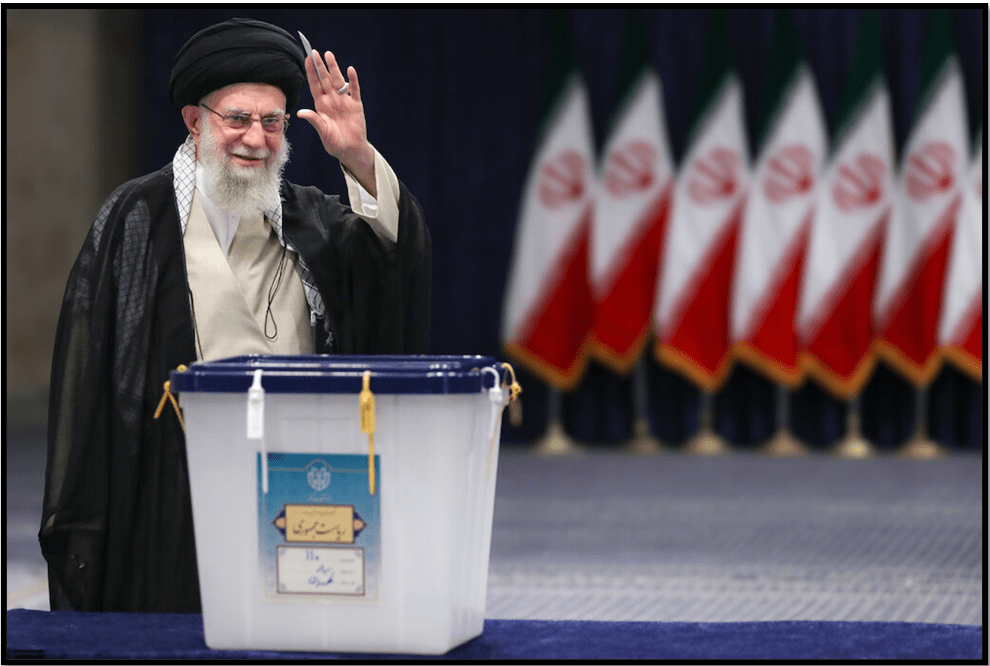
‘Supreme Leader’ Khamenei votes in Iran’s election sham

The Presidential election in Iran, following the death in a helicopter crash of President Raisi in May, has borne all the hallmarks of manipulation by the theocratic dictatorship under the Islamic Republic’s Supreme Leader, Ayotollah Ali Khamenei.

The death of Raisi, along with the ongoing wave of protests against inflation, poverty and corruption across Iran, have wrongfooted the regime.  While the hardline Raisi maintained his position through the force of the Islamic Revolutionary Guard Corps (IRGC) and his close relationship with Khamenei, popular support was always at a low ebb.

The response of the regime, in an election where all candidates are closely vetted by the Guardian Council, was to come up with a ‘safe’ candidate to add to the ballot paper, in order to appease so called moderates within the regime, and to head off any further protests from excluded opposition parties, trade unions, women and youth groups. 

To that end the inclusion of 69 year old former Health Minister, Masoud Pezeshkian, in the list of candidates approved by the regime was a calculated and deliberate tactic, in order to create a superficial and cosmetic change, without affecting the power structure based on the theory of “political Islam”.

The reformist faction within the regime urged public participation in the election and encouraged people to vote for Pezeshkian.  Their rationale is that the prospect of “building trust with the regime” is one which has more chance if a less hardline candidate occupies the presidency.  However, such tactics have proven to have failed in the past, with so called reformist candidates such as Muhammad Khatami (1997-2005) and Hassan Rouhani (2013-2021) failing to make any significant difference to the theocratic power structure which underpins the Islamic Republic.

Decades of experience with reformist movements, including the Green Movement for political and cultural openness and the teachers, workers, and retirees movements for better wages, livelihoods, and working and living conditions, have shown that hoping for the possibility of reform within the ruling structure is unrealistic. The emergence of the Women, Life, Freedom movement, in response to the murder in detention of Mahsa Amini in September 2022, has been the latest expression of this desire for structural, rather than cosmetic, change in Iran.

In spite of the efforts of the regime’s public relations machine in the lead up to the poll last Friday, desperate to increase participation in the election given the less than 50% turnout in recent votes, only 40% of voters turned out.  The depth of opposition supporting the boycott of candidates was widespread, further undermining the regime’s claims that the elections demonstrate democratic legitimacy. 

A run off vote with the two highest polling candidates, Pezeshkian and Saeed Jalili will be held on 5th July. However, with ultimate control over foreign and military policy remaining in the hands of the Supreme Leader the role of President in Iran can often be little more than ceremonial.

There is certainly no chance of either candidate challenging the corruption which is an endemic part of Iran’s economy, addressing the increasingly adventurist foreign policy in the Middle East, reflected in support for Hamas and Hezbollah, or addressing the lack of political and social rights of the Iranian people.

The scale of discontent within the country is underlined by the reports from the Union of Metalworkers and Mechanics of Iran (UMMI) that outsourced project workers in the country’s refineries, oil and gas installations and power plants have walked out in protest at their wages and conditions of service.  The workers are demanding a change in shift patterns including a ‘14 days on, 14 days off’ rotation for oil and gas workers and to “de-casualise” workers’ contracts.

An estimated 3,000 workers joined the strike on the first day and the ongoing action may well inform attitudes towards the Presidential election.  More recent reports suggest that the number of companies and workplaces affected by the action now stands at 80, involving at least 18,000 striking workers.

The scale of the suppression of political, democratic and human rights in Iran continues to be widespread an is an endemic feature of the regime.  Activists across the spectrum of the protest movements in Iran do not see either of the presidential election candidates having a plan to respond to their real democratic and just demands.  Even if this were the case, the theocratic structure would not allow for the opportunity to realise the implementation of democratic reforms.

Activists across the progressive opposition in Iran, who continue to advance democratic demands, continue to call for a country wide boycott of the election, in order to show that neither candidate represents the will or the aspirations of the Iranian people.

Progressive activists in Iran will continue to call for the development and deepening of the protest movements, seeking greater co-operation which can lead to the integration and convergence of different sectors.

Such a development will allow the true voice of the Iranian people to come through, not simply an echo manipulated through a sham election process.

Water No Get Enemy*

28th April 2024

Sewage discharge into British rivers, an ongoing scandal

The scandal of water privatisation continues to outrage the public while having little impact on the policies of Britain’s major political parties.  There is no doubt that water, along with the energy industries should be in public ownership, to ensure that they meet the needs of the people rather than the profits of shareholders, but neither the Tories nor the Labour leadership are committing to it.

The Tory position is no surprise.  As the perpetrators of the deconstruction of the welfare state, comprehensive education, Council housing and much of the country’s manufacturing base, the Tories have demonstrated over many decades their commitment to the interests of the rich few rather than the working class.

Privatised in 1989 the water industries have borrowed £64 billion, paid out £78 billion to shareholders, failed to build the necessary infrastructure to meet the needs of a growing 21st century economy and been under the control of a wide range of foreign investors with no interest in the needs of the British people. 

Current foreign owners of the various regional water companies in Britain, totalling 72% of the industry, include the Chinese government, investment authorities in Qatar and Abu Dhabi, the Hong Kong based Li Ka-shing and Malaysian, Francis Yeoh.  The state of rivers in England and Northern Ireland is such that the most recent report by the Rivers Trust does not rate any of them as being of “good overall” status.

Yet water companies continue to assert that the ratio of sewage that they treat, compared to the untreated sewage that pours into rivers and the sea, is improving.  In reality, this is not the case.  The sleight of hand performed by water companies is called “flow trimming”.  This is a practice whereby sewage is diverted into rivers upstream of water treatment works.  So, less sewage is entering the works, resulting in companies claiming to treat a higher proportion of it.

While the patchwork of private investors walk off with fat dividends the price is being paid by the public, who not only suffer from the poor environmental consequences, but also foot the bill in higher costs.  The recent high profile debacle of Thames Water is a case in point.  Given the massive mismanagement and fleecing of Thames by the private sector there is even talk of temporary nationalisation by the Tories to bail the company out.  Not only will this require the government to take on board the company’s £18 billion debt but Thames continue to plan for a payout to shareholders and raise customers bills by 40% in the coming year.

The estimated water loss in the area covered by Thames Water is 600 million litres per day, almost a quarter of all the water it supplies.

Public policy elsewhere in Europe demonstrates that the British model is by no means accepted as universal, even within other capitalist economies, and a more people oriented approach can prevail.   In 2010, Paris re-municipalised its water service from the hands of private companies including Veolia and SUEZ to create the public company Eau de Paris. The performance of Eau de Paris has made a significant difference.  The price of water has been cut by 8 per cent and a new citizens’ commission was formed to enhance transparency and democratic governance. The new public utility created an active policy of water affordability for poorer households, migrants, and homeless people and increased the number of public water fountains. 

Water use in Ireland is free up to a certain quantity and funded through general taxation. When Ireland’s creditors pushed for an end to this policy amid the Eurozone crisis and the introduction of water charges in 2014, the move was met with strong resistance, including large demonstrations, a non-payment campaign, and civil disobedience in the active blocking of the installation of water meters. These tactics eventually led to the suspension of water charges in 2016.

The fact that most Italian water remains in public ownership is largely due to the 2011 referendum at which more than 55 per cent of voters opposed the attempts at water privatisation that were also part of the larger austerity agenda that followed the financial crisis.

The consequences of the failure to address water quality go far and wide.  Apart from the increase in direct bills there is the increased risk of disease from polluted water ways, potentially putting more pressure upon the NHS to deal with water borne infections.  The accumulation of sewage into the sea has an impact upon marine life, while land based flora and fauna are threatened by the pollution of rivers upstream, to “flow trim” the regulation of sewage treatment.

That all of this is easily preventable, with the element of private profit eliminated and public good as the priority, should be a gift to a campaigning Labour Party leadership as the General Election looms.  However, the fear of being accused of being ’woke’ is immobilising the Starmer leadership on this issue, in the same way that it will not address the question of energy nationalisation, and has diluted its approach to investment in green technologies to develop a progressive twenty first century economy.   

Ultimately the solution to the question of how water resources are allocated and used is a socialist one, where the economy is structured upon the needs of the people, not the profits of private investors and shareholders.  However, Britain has been particularly badly served by successive governments adopting an essentially neo-liberal approach to resources which should be under public control.

Evidence from elsewhere in Europe demonstrates that mass public pressure can bring about change.  As the Tories look towards meltdown in local elections this week, and Labour look set to win a General Election later in the year, it is time to seize the moment and compel the Labour leadership to take a clear stand on this, amongst many other questions, which impact directly upon the lives of working class voters.

*with credit to Nigerian musician and activist Fela Kuti for the title.  Check out more here https://www.youtube.com/watch?v=xviLDFqMznQ