Iran – peace will give the Iranian people a chance

8th December 2025

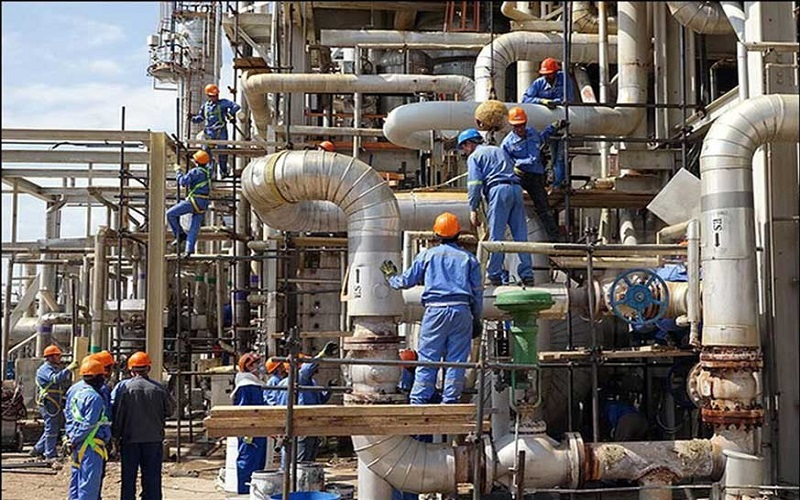
Oil workers in Iran – part of a growing wave of workers taking industrial action

The emergence of the Islamic Republic of Iran, following the revolution which overthrew the Shah in 1979, and its persistence as a focus for the development of political Islam has increasingly been seen as a threat by Israel. The United States has been equally concerned with the turn of events following 1979 and was instrumental in encouraging the attack upon Iran by Iraq in 1980, which led to the Iran-Iraq war raging from 1980-1988.

The war did not dislodge the Iranian dictatorship but encouraged the intensification of the arrest, torture and execution of dissident voices inside Iran and a consolidation of its control of the state by the medieval theocracy.  The fragile alliance with Iraq, having served its purpose soon saw the US perform a volte face, eventually resulting in the downfall of former ally Saddam Hussein and the fragmentation of Iraq as a functioning state following the invasion of 2003.

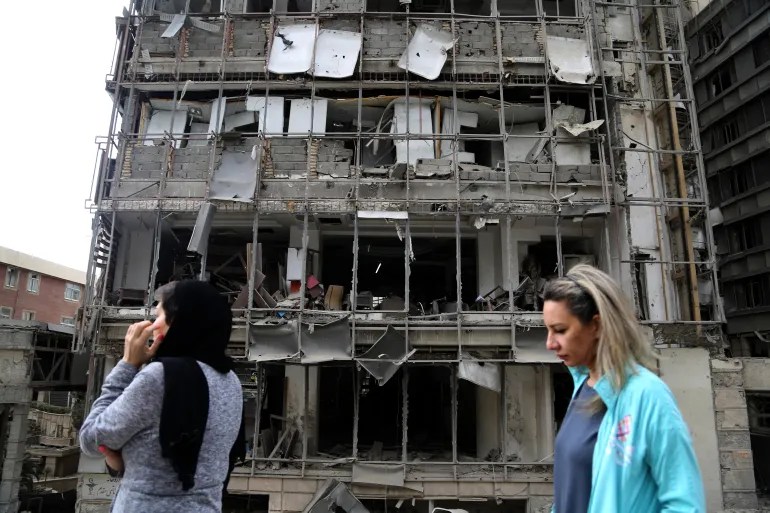
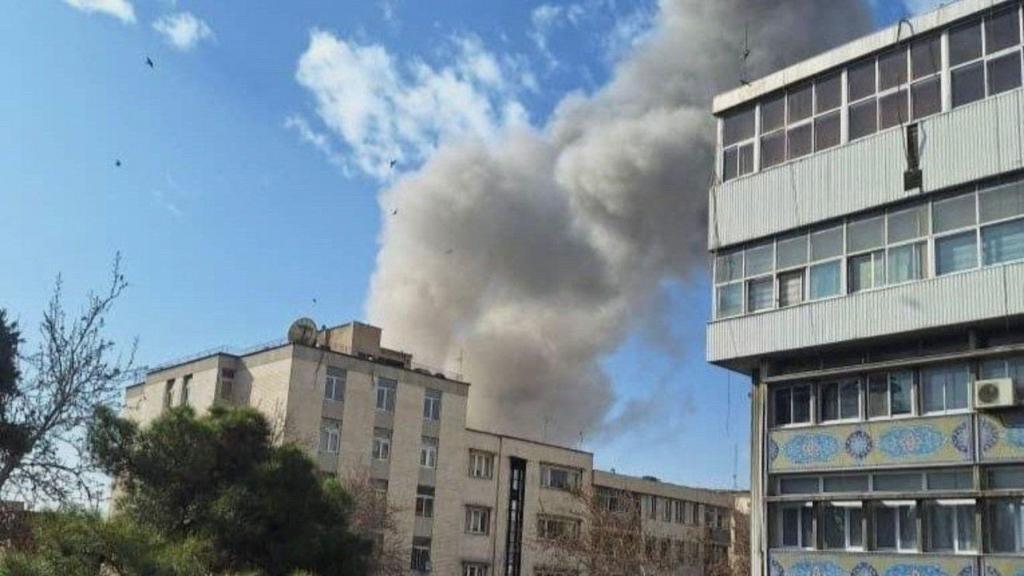
It is against this background that the legitimate fears of the Iranian people of further military action must be viewed.  Since the attack upon Iran in June the regime in the Islamic Republic is reported to have significantly increased missile production with a view to generating enough capability to overwhelm Israeli missile defences. Inside Iranian ruling circles the threat of renewed conflict is widely considered high, with some officials and experts suggesting that another war is “only a matter of time”.

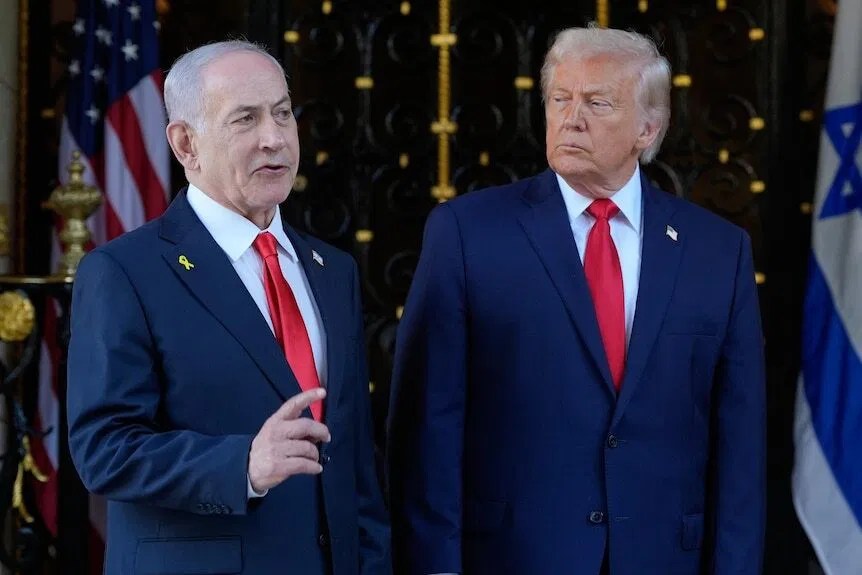
Such thinking is fuelled, not only by the desire of the regime to increase its defence capability, but also by reports from reliable Israeli sources that Israel aims to topple the existing regime in Tehran by the end of the term of US President Donald Trump in 2029. Israeli security sources indicate that Israel is preparing to respond “much more aggressively” and for hostilities to last longer than the June conflict.

The religious zealots in the Israeli government view  Iran as an existential threat and, in spite of the degrading of the network of Iran’s proxies in the Middle East notably Hamas and Hezbollah, the ultimate goal remains the elimination of the regime in Iran itself. Iran’s continued enrichment of uranium and increase in missile production are seen as sufficient justification for such an approach.

The current situation is exacerbated by the diplomatic impasse which has existed since the June attacks with efforts to resume nuclear talks between the US and Iran floundering, removing a key channel for de-escalation.

The threat of war, likely to be launched by Israel with the backing of the United States, is clearly the most urgent and pressing issue facing the Iranian people. Wider escalation across the Middle East, which could follow, would be disastrous not only for the people of Iran but would bring closer the prospect of worldwide conflict, given the geo-political significance of Iran for both Russia and China.

In parallel, the debate over access to nuclear facilities attacked in the June assault by the United States continues, with the International Atomic Energy Agency (IAEA) recently passing a resolution requesting access to sites in Fordo and Natanz, which were hit in the strikes.  Iran’s resistance to further inspections of these sites, though it has allowed access to others, is fuelled by the reluctance of the IAEA to condemn the June attacks.

In response to the IAEA resolution Iranian ambassador to the IAEA, Reza Najafi, told reporters that,  “I’m afraid the resolution will have its own consequences”. Asked what those were, he said, “We will announce the consequences later.”

Recent pronouncements from the United States suggest that President Donald Trump may be willing to break the current diplomatic impasse, claiming that Tehran is seeking a diplomatic resolution with Washington, which has sought the dismantlement of its nuclear programme.

“I am totally open to it, and we’re talking to them,” Trump said.

“And we start a process. But it would be a nice thing to have a deal with Iran. And we could have done it before the war, but that didn’t work out. And something will happen there, I think.”

The actions of the US in giving Israel the green light to attack Iran when negotiations were ongoing, and the subsequent US role in attacking nuclear sites, make it difficult to take Trump’s words at face value.  There is no doubt that a section of the corrupt leadership in Tehran realises that its survival depends upon some rapprochement with the West, while more hardline factions are reluctant to engage in anything they would regard as compromise.

Perhaps the only certainty in the current situation is that the main losers are the Iranian people who, as well as the threat of external intervention, are also having to struggle with the impact of international sanctions, endemic corruption within the state and widespread economic mismanagement.

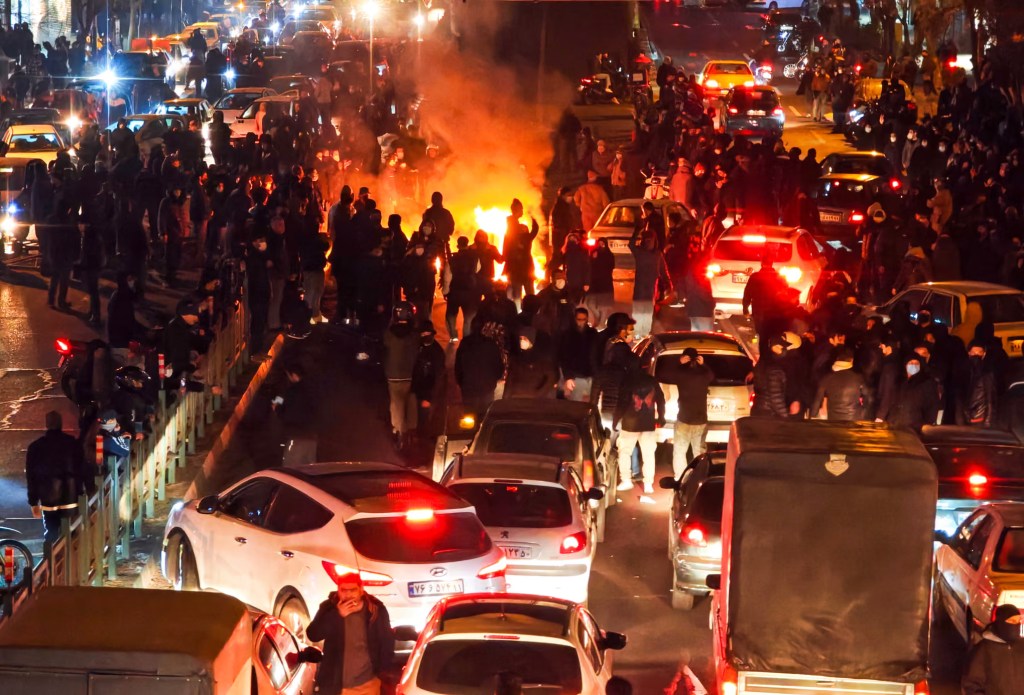
The response of Iranian workers to the collapsing political and economic environment they face has been to increase their demand for recognition, fair pay and employment rights. Strike action in the oil industry, the transport sector, the public sector and amongst pensioners has demonstrated the extent of internal resistance to the policies of the regime.

The regime continues to respond with the arrest, imprisonment and torture of trade union, cultural and academic activists, underlining its inability to fulfil the needs of its people and resort only to force to maintain its position.

The future of Iran ultimately must lie with its people and their resistance to the theocratic dictatorship, opposition to the pressures of external intervention and the demands for a non-aligned democratic Iran. Opposing war against Iran is the first step in this process and one which should be a priority for international solidarity work in the coming year.  Only peace will give the people of Iran the chance they deserve.

The full text of this article appears in Liberation Journal, Winter 2025

https://liberationorg.co.uk/journal-2/

Iran: No to foreign intervention

22nd June 2025

War room: US imperialists Vance and Trump endanger world peace

The bombing of Iranian nuclear sites by the United States overnight (21 June) is a flagrant breach of international law and a further indication of the designs of US imperialism to re-shape the map of the Middle East.

Following the unprovoked attack upon Iran by Israel last week, US President, Donald Trump, called for Iran’s “unconditional surrender”, while preparing to give the green light for overt military intervention by the United States.  That order has now been enacted and Trump, in spite of his America first and no foreign intervention rhetoric, has acted like every US President before him.  Though without Congressional approval for such action impeachment may be an issue Trump has to face, his action having made the danger of a world war significantly higher than at any time in the past.

The US had already been covertly assisting the Israeli assault by providing back up for its Iron Dome missile defence system, designed to intercept any Iranian missiles fired towards Israel in response.

That the United States has added to the unprovoked Israeli military intervention in Iran,  is an international scandal.  Israel has a decades long record of flouting international conventions and dismissing United Nations resolutions but, to be backed so overtly in doing so, by its major ally and arms supplier, takes the threat to world peace which US and Israeli actions represent, to a new level.

In addition, it is widely known that Israel has a nuclear capability though, in line with its official policy of “nuclear ambiguity”, it refuses to confirm or deny the existence of a nuclear arsenal.  The possibility of the use of nuclear weapons by Israel, given the religious fundamentalist nature of its leadership, cannot be ruled out.

Just as there can be no justification for the Israeli genocide in Gaza, the attacks upon Iran have no legal or moral basis.  They do however, have a clear political objective and that is one which has been asserted more prominently in the past few days; regime change.

In line with the wishes of the Iranian people as expressed in their opposition to the dictatorship of the former Shah in 1979 and, as increasingly expressed in their opposition to the theocratic dictatorship today,  change in Iran is vital to secure peace, democracy and social justice for the people of Iran.

However, the regime change which Trump in the White House or Netanyahu in Tel Aviv are seeking is not for a progressive and democratic Iran.  On the contrary, support for Monarchist opposition in the form of Reza Pahlavi, son of the former Shah based in the United States, is given greater prominence by Western politicians and media.

Netanyahu’s call for Iranians to rise up against the present regime in Iran have been echoed by Pahlavi, who met Netanyahu on a visit to Israel in 2023.  The likelihood of Pahlavi being able to mobilise mass popular support inside Iran is slim however, given his distance from the country and the perception of many Iranians that he is collaborating with the aggressor Israel.

Any return to Iran for Pahlavi would need the significant backing of US or Israeli military forces to suppress the opposition which such a reactionary move would provoke.  The danger of Iran becoming a state dismembered by Western imperialism, such as has been the case with Iraq, Libya, Afghanistan and Syria would be all too real in such a scenario.

An alternative for the West could be backing the Mujahedin-e Khalq (MEK), an exiled group that enjoys support in the US from hawks such as veteran Republican John Bolton. During the 1980s, the MEK backed Iraq in its war with Iran, and the Islamic regime often accuses it of collaborating with Israel.  Like Pahlavi, the MEK does not enjoy popular support inside Iran and would require significant external backing  in order to maintain any grip on power.

The US and Israeli cover story for their actions against Iran, to halt the nuclear programme, simply do not hold water.  Recent years have seen increasingly popular opposition movements inside Iran.  Millions protested disputed elections in 2009 in what became known as the Green Movement.   In 2022, the Women, Life, Freedom Movement mobilised millions across Iranian cities, calling for an end to supreme leader Ayatollah Ali Khamenei’s rule following the death of 22-year-old Mahsa Amini in police custody after she was arrested for allegedly not properly wearing her hijab. 

Workers in the transport, oil, public services and teaching sectors have taken action to improve wages and conditions in spite of trade unions being effectively outlawed in Iran.  These are the potential movers of regime change that Trump and Netanyahu do not want to see.  Those who are opposed to the theocratic dictatorship but equally do not want to see Iran’s future shaped by the outside interests of Israel or US imperialism.

Change in Iran has been coming for a long time but it must be change for the people, by the people, not change shaped by foreign intervention and an imperialist agenda, imposed upon the people of Iran.   

Developments in Syria

5th December 2024

A statement from Liberation

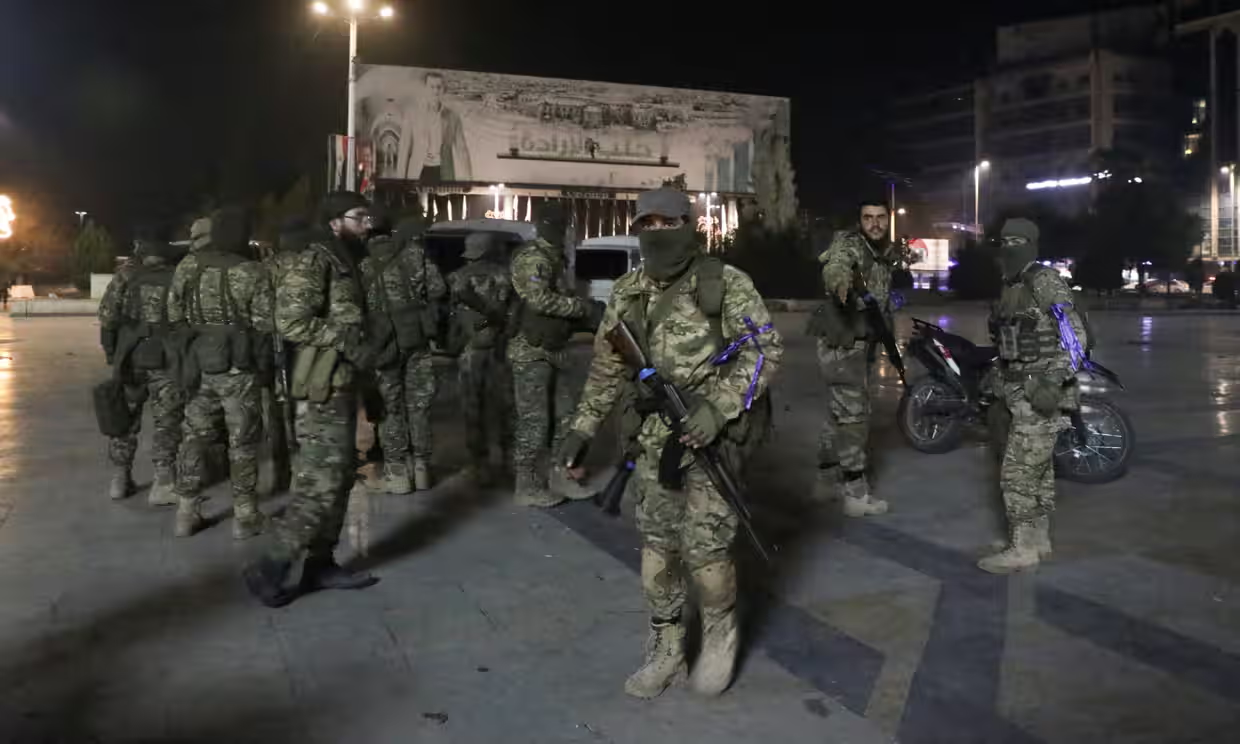
Islamist forces in Aleppo

The capture of Aleppo by Islamist paramilitary forces has taken many across the Middle East and around the world by surprise and signifies once more the destabilisation of Syria as well as the rapidly deteriorating situation in the wider region, opening the door to further external intervention and a catastrophic war.

Liberation has received information from progressive forces inside Syria, critical of the Assad regime, but also opposed to outside intervention and the fragmentation of the country.

The progressive opposition in Syria have articulated a number of key points regarding the present situation with a call for negotiation on the basis of UN Security Council resolutions being central to their position.

Firstly, they have made clear that the currently in place “de-escalation” zones, despite their importance in stemming further bloodshed from the Syrian civil war, are not a sustainable solution over the longer term. Their function was to stop the bloodshed in order to move towards dialogue and negotiations to reach a real political solution that would reunite the Syrian people and the entire sovereign territory of Syria through the implementation of UN Security Council Resolution 2254. A real politically driven transition towards a new political, economic, and social system ultimately determined by the Syrian people is the desired outcome.

Secondly, the progressive opposition recognise that, over the past 13 years, Syria has endured cycles of extreme violence and destruction throughout the country, which the implementation of de-escalation agreements and zones brought to a halt. This led to a state of near-complete ceasefire by mid-2019, essentially a freezing of the conflict. After that, the economic phase of attrition began, both from at home as well as abroad. Thus, international sanctions served to deepen and exacerbate the brutal neoliberal economic policies overseen by the Syrian government. This led to a worsening of the Syrian tragedy and laid the foundations for the fall of Aleppo and the events currently being witnessed in the country.

The progressive opposition in Syria states: “The renewal of the cycle of violence and battles means that a political solution is more necessary today than ever before, and more possible than ever before. None of the sides concerned with sitting at the negotiating table can claim the ability to achieve a crushing victory that will destroy the other side, and this has been tried for many years at the expense of the blood and suffering of the Syrian people.”

Liberation is also very concerned regarding the implications of the events of the past week in Syria for the further destabilisation of the wider Middle East, including the prospects for what would be a catastrophic regional war – with global implications – were it to break out. We believe the developments in Syria have not taken place in a void removed from the events since last October, not least the apparent drastic weakening, if not dismantling, of the so-called “axis of resistance” forces’ capabilities – and, by extension, those of the Islamic Republic regime in Iran in the region – over more recent months. The cynical exploitation of, if not outright malign interference in, these developments by governments such as Israel and Türkiye, serve only to make a desperate and deteriorating security situation in the region as well as wider fallout much worse. Indeed, we note the comment made earlier today by Iraqi prime minister, Mohammed Shia’ Al Sudani in which he stated that his country will not remain just a “spectator” to the events unfolding in neighbouring Syria.

Liberation supports the calls for a comprehensive and binding political solution to the crisis in Syria, and one free of any kind of military intervention from outside forces or other infringement upon the country’s sovereignty. Thus, we add our voice to the growing call for the urgent implementation of UN Security Council resolution 2254 and a resolution to the crisis in Syria firmly grounded and based upon the will of the Syrian people, not the forces of outside intervention.

Turning Points

29th September 2024

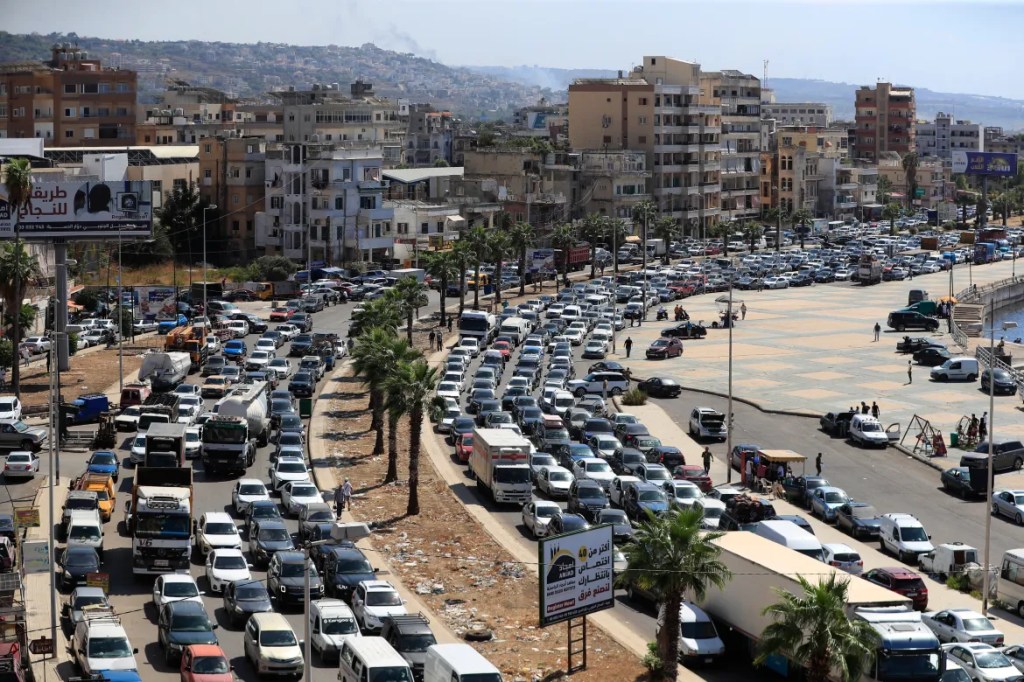
Thousands flee Lebanon to escape Israeli air strikes

The assassination of Hezbollah leader, Hassan Nasrallah, has been described by Israeli Prime Minister, Benjamin Netanyahu, as a ’turning point’, describing Nasrallah as “the axis of the axis, the central engine of Iran’s axis of evil”.

The killing and the ongoing bombing of civilian areas of Beirut may well prove to be a turning point but not necessarily in the way that Netanyahu means.  Iran’s leader, Ayatollah Ali Khamenei has called for five days of mourning following Nasrallah’s death and vowed that his ”blood will not go unavenged.”

Lebanon’s Health Ministry has estimated that 800 are dead so far as a result of the actions of the Israeli Defence Force (IDF), while 50,000 people are estimated to have fled to Syria and an estimate 1 million are displaced, many having to sleep on the streets.

The bombings follow on from the indiscriminate attacks, not denied by the Israelis, upon Lebanese citizens by planting explosives in electronic communication devices, which killed 37 and injured thousands.  This action has been widely condemned as a war crime precisely due to its indiscriminate nature. 

While the IDF claim that the current bombing campaign consists of precision strikes, the reduction to rubble of buildings in clearly civilian areas gives the lie to this claim, costing the lives of non-combatant women and children  in the process.

The latest strikes have even seen surprise expressed by the United States, Israel’s staunchest ally, with President Joe Biden claiming that the US had no prior knowledge of the attacks.  Efforts by US Secretary of State, Antony Blinken, to engage Israel in the search for a diplomatic solution have so far abjectly failed.

It is becoming increasingly clear that the Israeli government, under the leadership of Benjamin Netanyahu, is out of control and driven by its own religious fundamentalist agenda.  Devastating strikes on Beirut followed on almost immediately from Netanyahu’s widely boycotted speech at the UN General Assembly in New York and flew in the face of widespread calls for a negotiated settlement and ceasefire to be discussed.

Israel’s contempt for the will of the international community, as articulated by the UN, has been evident for decades in its illegal treatment of the Palestinian people and their just demand for national self determination  and a fully sovereign state of their own.  It is evident in its recent action in Gaza and the West Bank and is becoming  more flagrant in its attacks upon the Lebanese capital.

Such actions increase the threat of widening the conflagration in the region, with escalation beyond the Middle East into a global war within the realms of possibility.

With the presidential election in the United States looming Netanyahu is clearly taking advantage of the hiatus this represents to press home his fundamentalist agenda, to the detriment of the people of the region and in spite of the opposition from many of his own citizens.   Parliamentary elections in Israel are not scheduled until October 2026 and Netanyahu is gambling that he can hold together his right wing fundamentalist coalition at least that long, to present himself as a victor in the fight against both Hamas and Hezbollah.

The fate of the Palestinian people and the people of the Middle East generally should not rest upon the political survival and opportunism of one man.

Pressure upon Israel to come to the negotiating table must be increased through concrete actions.  The British government must immediately cease all arms sales to Israel.   Trade union and cultural organisations should support the Boycott, Disinvestment and Sanctions (BDS) campaign to isolate Israel internationally, until it is prepared to negotiate meaningfully on a way forward.  

The US, as Israel’s major ally, must take a stronger line in bringing the IDF to heel and opening the way for negotiations.  The turning point in the current conflict has to be to turn back.  The coming days could well be crucial in determining the future of the Middle East  and whether or not the world is plunged into a wider conflict.

Israeli assassins escalate conflict

1st August 2024

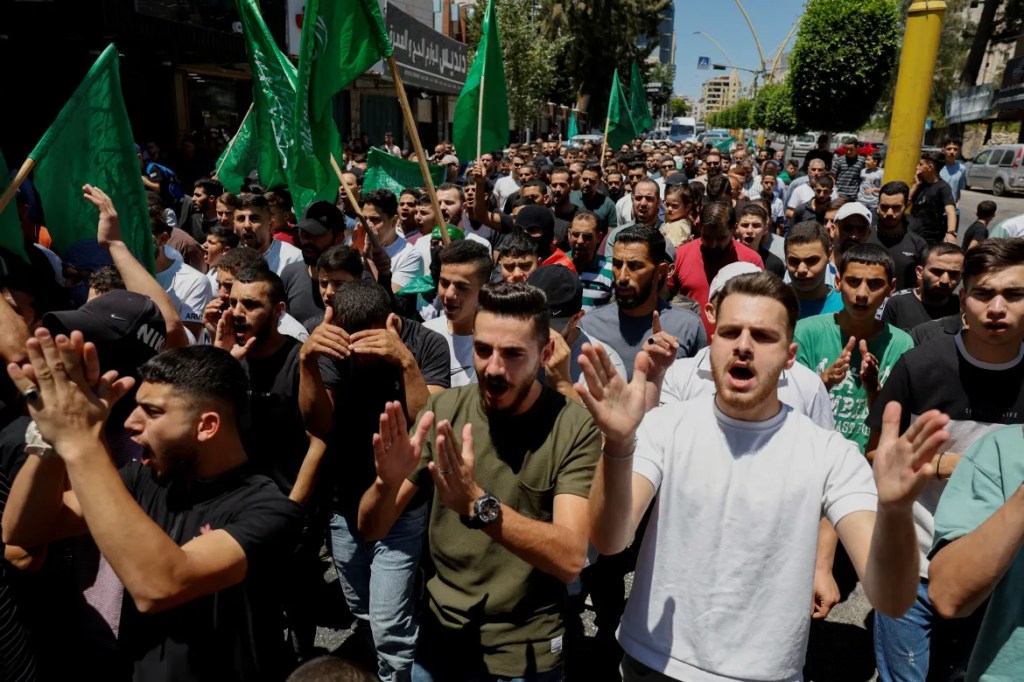
Palestinians in Hebron in the occupied West Bank protest against the assassination of Hamas political leader Ismail Haniyeh.

The assassination of Hamas leader Ismail Haniyeh, in Tehran two days ago, is a major escalation in the growing conflict in the Middle East.  While Israel has not claimed responsibility for the killing there can be little doubt that the nature and precision of the operation has the fingerprints of Mossad all over it.  That the killing took place just after the inauguration of a new Iranian president, Massoud Pezeshkian, and in the heart of Tehran itself will have been designed to cause maximum embarrassment to the Iranian regime.

The assassination also appears to be designed to torpedo the peace talks in relation to Gaza, as Haniyeh was the leading Hamas negotiator.  As the Qatari Prime Minister, a key player in the peace mediation process pointed out, “Political assassinations and continued targeting of civilians in Gaza while talks continue leads us to ask, how can mediation succeed when one party assassinates the negotiator on the other side? Peace needs serious partners.”

Israel is the most well armed and efficient military state in the Middle East, massively supported by the United States and to a lesser extent by Britain.  It has a clandestine nuclear weapons capability, rarely mentioned in the media but real all the same.  It has a government propped up by right wing religious fundamentalists, every bit as zealous in their mistaken belief in their own supremacy as the theocrats who have been murdering their way across Iran for over forty years.  That the response of the international community to assassination in a foreign capital has been little more than mild rebuke is nothing short of a scandal.

The killing of Haniyeh comes shortly after Israel claimed to have killed a senior military commander of Hezbollah in Beirut.  There can be no doubt that this has exacerbated the crisis in the region, bringing it to the brink of an extremely dangerous and widespread military conflict.

The response from the theocratic dictatorship in Iran was predictable.  Supreme Leader, Ayatollah Ali Khamenei, stated that Israel “by assassinating Ismail Haniyeh, has paved the way for a severe punishment” adding that “we consider it our duty to avenge his blood, shed in the territory of the Islamic Republic of Iran.”

The world awaits the consequences of the adventurist action of the Israelis.  There can be little doubt however that Iran will galvanise it’s so called Axis of Resistance, through Hamas, Hezbollah and Houthis to strike back in some way shape or form.  This is unlikely to be a mere symbolic action, as with the pre-warned missile strikes on Israel in April, responding to another Israeli act of international terror, when sixteen people were killed in the Iranian embassy in Damascus in Syria.   

While hitting an embassy is technically still a strike on domestic territory it does not carry the symbolism of a strike in the heart of Tehran.

The US government has taken its usual line in defence of Israel expressing “ignorance” about the assassination and “not being involved” in it, yet at the same time warning that it would defend Israel if it were attacked.  Suspicions have been raised that the attack, coming so close to the recent visit of Israeli Prime Minister Netanyahu to the United States, will have been given the green light by the US.  Any evidence to suggest that would certainly put the US back in the dock in the eyes of the international community as being complicit in acts of terror and actively escalating conflict in the region.

The corruption at the heart of the Iranian regime was further exposed recently in the report of the United Nations Special Rapporteur on atrocity crimes committed in Iran in the 1980’s, following the hijacking of the national democratic revolution by the Islamic theocracy.

In his analysis of the first decade of the Islamic Republic, following the 1979 revolution Special Rapporteur, Javaid Rehman, details the summary, arbitrary and extra-judicial executions of thousands of political opponents of the regime, amounting to the crimes against humanity of murder and extermination.  Significantly for the current regime and its apologists Rehman concludes that,

“…those with criminal responsibility for these grave and most serious violations of human rights and crimes under international law remain in power and control; the international community has been unable or unwilling to hold these individuals accountable.”

The assassination of Ismail Haniyeh in Tehran has raised serious questions about the state of Iran’s security apparatus, this not being the first time that Israeli security forces have been able to easily carry out terrorist operations on Iranian soil. This assassination highlights the extensive infiltration of imperialist intelligence agencies into Iran’s security apparatus.

The corruption at the heart of the Iranian regime is only matched by the religious fundamentalist cabal currently running the Israeli government.  Opposition in both countries is either actively suppressed or given little media exposure, though under both regimes there is significant internal opposition to their respective government’s actions.

For there to be any prospect of heading off the imperialist drive to war in the Middle East the peace movements in both Iran and Israel, as well as in the imperialist centres of the US, Britain and the EU need to grow stronger and voice their opposition to the growing conflict.  The Labour government in Britain needs to be pressured to adopt an independent foreign policy, not dependent upon the diktats of the US, or the pressures of its military proxy NATO.

Labour needs to take a stand which puts peace before conflict escalation and the interests of the people of the Middle East before those of imperialism.  That will only be possible through mass extra parliamentary action and through the peace and labour movements making those demands.   Labour should not be allowed to settle for carrying on the foreign policy positions of the Tories, as has happened in the past.  Given current developments the need for an independent peace oriented stand is greater than ever.

Iranian election sham will not fool the people

30th June 2024

‘Supreme Leader’ Khamenei votes in Iran’s election sham

The Presidential election in Iran, following the death in a helicopter crash of President Raisi in May, has borne all the hallmarks of manipulation by the theocratic dictatorship under the Islamic Republic’s Supreme Leader, Ayotollah Ali Khamenei.

The death of Raisi, along with the ongoing wave of protests against inflation, poverty and corruption across Iran, have wrongfooted the regime.  While the hardline Raisi maintained his position through the force of the Islamic Revolutionary Guard Corps (IRGC) and his close relationship with Khamenei, popular support was always at a low ebb.

The response of the regime, in an election where all candidates are closely vetted by the Guardian Council, was to come up with a ‘safe’ candidate to add to the ballot paper, in order to appease so called moderates within the regime, and to head off any further protests from excluded opposition parties, trade unions, women and youth groups. 

To that end the inclusion of 69 year old former Health Minister, Masoud Pezeshkian, in the list of candidates approved by the regime was a calculated and deliberate tactic, in order to create a superficial and cosmetic change, without affecting the power structure based on the theory of “political Islam”.

The reformist faction within the regime urged public participation in the election and encouraged people to vote for Pezeshkian.  Their rationale is that the prospect of “building trust with the regime” is one which has more chance if a less hardline candidate occupies the presidency.  However, such tactics have proven to have failed in the past, with so called reformist candidates such as Muhammad Khatami (1997-2005) and Hassan Rouhani (2013-2021) failing to make any significant difference to the theocratic power structure which underpins the Islamic Republic.

Decades of experience with reformist movements, including the Green Movement for political and cultural openness and the teachers, workers, and retirees movements for better wages, livelihoods, and working and living conditions, have shown that hoping for the possibility of reform within the ruling structure is unrealistic. The emergence of the Women, Life, Freedom movement, in response to the murder in detention of Mahsa Amini in September 2022, has been the latest expression of this desire for structural, rather than cosmetic, change in Iran.

In spite of the efforts of the regime’s public relations machine in the lead up to the poll last Friday, desperate to increase participation in the election given the less than 50% turnout in recent votes, only 40% of voters turned out.  The depth of opposition supporting the boycott of candidates was widespread, further undermining the regime’s claims that the elections demonstrate democratic legitimacy. 

A run off vote with the two highest polling candidates, Pezeshkian and Saeed Jalili will be held on 5th July. However, with ultimate control over foreign and military policy remaining in the hands of the Supreme Leader the role of President in Iran can often be little more than ceremonial.

There is certainly no chance of either candidate challenging the corruption which is an endemic part of Iran’s economy, addressing the increasingly adventurist foreign policy in the Middle East, reflected in support for Hamas and Hezbollah, or addressing the lack of political and social rights of the Iranian people.

The scale of discontent within the country is underlined by the reports from the Union of Metalworkers and Mechanics of Iran (UMMI) that outsourced project workers in the country’s refineries, oil and gas installations and power plants have walked out in protest at their wages and conditions of service.  The workers are demanding a change in shift patterns including a ‘14 days on, 14 days off’ rotation for oil and gas workers and to “de-casualise” workers’ contracts.

An estimated 3,000 workers joined the strike on the first day and the ongoing action may well inform attitudes towards the Presidential election.  More recent reports suggest that the number of companies and workplaces affected by the action now stands at 80, involving at least 18,000 striking workers.

The scale of the suppression of political, democratic and human rights in Iran continues to be widespread an is an endemic feature of the regime.  Activists across the spectrum of the protest movements in Iran do not see either of the presidential election candidates having a plan to respond to their real democratic and just demands.  Even if this were the case, the theocratic structure would not allow for the opportunity to realise the implementation of democratic reforms.

Activists across the progressive opposition in Iran, who continue to advance democratic demands, continue to call for a country wide boycott of the election, in order to show that neither candidate represents the will or the aspirations of the Iranian people.

Progressive activists in Iran will continue to call for the development and deepening of the protest movements, seeking greater co-operation which can lead to the integration and convergence of different sectors.

Such a development will allow the true voice of the Iranian people to come through, not simply an echo manipulated through a sham election process.

US/Saudi pact a prospect?

31st May 2024

All eyes on Rafah – Palestinians survey the damage done by an Israeli strike

As the Israeli Defence Force (IDF) assault on the civilian population of Rafah continues, under the thinly veiled excuse of rooting out Hamas fighters, behind the scenes discussions are ongoing to reshape the map of the Middle East.

The prospect of an historic pact between the United States and Saudi Arabia is gathering momentum with the carrot of access to the latest US military technology being dangled before the Arab dictatorship.

The deal could be part of a package to extend US influence in the Middle East by including a pathway to diplomatic ties with Israel.  The quid pro quo would be that the Israelis halt the genocide in Gaza.

Negotiations between Washington and Riyadh have accelerated recently, with some reports that a deal could be reached within weeks. 

An agreement would undoubtedly aim to reshape the Middle East in favour of the United States, reinforcing the ongoing support for its long term regional proxy, Israel, while bolstering influence in the Arab world by increasing weapons sales to the Saudi dictatorship.  The US is keen to strengthen its position in the region, which it sees as being threatened by Iran and China.

The rumoured pact is thought to offer Saudi Arabia access to advanced US weapons that were previously off-limits. The dictatorship would then agree to limit Chinese technology from the nation’s most sensitive networks in exchange for major US investments in artificial intelligence and quantum-computing, as well as getting American assistance to build its civilian nuclear programme.

The conclusion of a US and Saudi Arabia agreement would, it is suggested, be followed by forcing Israeli Prime Minister Benjamin Netanyahu to make a choice.  Netanyahu would be offered the opportunity to join the deal, which would entail formal diplomatic ties with Saudi Arabia for the first time.  Israel would also be offered more investment and regional integration. The challenge for Netanyahu would be to end the slaughter in Gaza and agree to a pathway for Palestinian statehood.

In such a scenario Netanyahu would clearly face the ire of the right wing religious fundamentalists who currently prop up his government and are determined not to see an independent Palestine.  However, a pact with the US and Saudi Arabia could also be seen by Netanyahu as a counter to Iran’s growing influence in the region and a potential restraint on attacks by Iran backed militias such as Hezbollah.

With a US election only months away President Joe Biden is desperate for a foreign policy breakthrough and the issue of Gaza has proven divisive amongst Democrats domestically.  Student protests on university campuses across the US have exposed a fault line between those calling for a harder line to be taken with the Israelis over the action in Gaza and those more inclined to back the apartheid regime at all costs.

The thousands killed by the Israelis in Gaza are widely seen as a disproportionate response to the attacks by Hamas on 7th October 2023 and the recent vote by the United Nations General Assembly, to increase the status of the Palestinian state, although dismissed by Israel, has added to the international pressure for a lasting ceasefire.  Subsequent recognition of Palestine by Ireland, Spain and Norway has increased the pressure upon the apartheid Israeli regime.

“We have done intense work together over the last months,” U.S. Secretary of State Antony Blinken claimed recently, while in Saudi Arabia. “The work that Saudi Arabia and the United States have been doing together in terms of our own agreements, I think, is potentially very close to completion.”  Saudi Foreign Minister Faisal bin Farhan has also said that an agreement was “very, very close.”

However, while Blinken and Biden may be making positive noises about a deal there is scepticism, not only from the right wing in Israel, but also in the US.  Republicans are unlikely to countenance a deal which does not give Israel sufficient guarantees, in particular Saudi recognition of Israel, even of it does mean an increase in arms sales to the Saudi dictatorship.

For their part the Saudis are keen to get as strong a deal with the US as possible, the aim being a formal defence pact which would bring the US military into play should the dictatorship be attacked.

While Saudi Arabia and Iran have been moving to normalise relations recently, with the signing of a deal in March 2023, the two Islamic dictatorships remain wary of one gaining more influence than the other in the region. For the Saudis, a defence deal with the United States needs to be sufficiently robust to send a message to Tehran without alienating the Iranians. For Riyadh to decide to openly bolster its security cooperation with Washington the reward would have to be worth the risk. In effect, Saudi Arabia seeks a defence pact with the United States that is credible enough in the eyes of both friends and foes.

The escalating violence in Gaza and Israeli intransigence on the question of a two state solution for Palestine is likely to undermine previous US diplomatic initiatives such as the Abraham Accords, signed in 2020, which established diplomatic relations between Israel and the United Arab Emirates, Bahrain and Morocco. 

While hailed by the US as a means to encourage Israel to take positive steps toward ending its occupation and annexation of Palestinian territory, the real premise of the Accords was to prove that the Palestinian issue was no longer an obstacle for Israel’s relationships in the region, as Arab states dropped their demand for a Palestinian state as a condition to normalising ties with Israel.

Far from curbing Israeli abuses the Accords have emboldened successive Israeli governments to further ignore Palestinian rights. In the first year after the Accords, settler violence dramatically increased in the West Bank. Following the election of Israel’s most right-wing government in history in 2022, cabinet ministers openly called for the annexation of the West Bank and announced massive settlement expansions. 

The United States does not have a great diplomatic track record in the Middle East, putting its own imperialist interests ahead of those of the people of the region.  There is little indication that current initiatives will see different results.

Cultural terrorism crackdown in Iran

6th May 2024

Death sentence – Iranian rapper Toomaj Salehi

Engulfed in political, social, and economic crises, as well as rampant corruption, the Iranian dictatorship has accelerated its crackdown on the women and youth of Iran.  The regime is attempting to demonstrate to its remaining loyal supporters its unwavering commitment to its outdated and medieval beliefs.  In addition, the regime is seeking to divert public attention away from its economic failures, endemic corruption, growing social ills, and the environmental destruction caused by its wasteful missile programmes, all of which have blatantly squandered hundreds of millions of dollars of public funds.

Confirmed reports from Iran tell of a calculated attempt by the regime to drive women and youth away from protests in the streets, main throughfares, and city centres.

The recent crackdown by the security forces on women is taking place against the backdrop of a failing economy and widespread public discontent. The Iranian dictatorial regime, which has failed to overcome the deep economic crisis it has created, is presiding over a relentless rise in the cost of living. The majority of the population is being crushed under the weight of meagre wages, at the same time as the price of basic goods, food items and rents is skyrocketing.

Protests by workers, teachers, pensioners, nurses, students, young people, and women across Iran reflect the dire economic situation and deep-seated opposition towards the continuing rule of the theocratic regime.

Jailed Iranian Nobel Peace Prize Winner, Narges Mohammadi urged Iranians to protest against “full-scale war against women” after authorities intensified their crackdown obliging women to obey the country’s Islamic dress code. 

The recent crackdown on women in Iran is a direct consequence of the decree by Ali Khamene’i, the regime’s Supreme Religious Leader.  Khamene’i’s aim is to return the country to how it was before the murder in custody of Mahsa Amini in September 2022 and the massive “Woman! Life! Freedom!” protests which followed. Since then, the majority of women in Iran have chosen to shed their hijab in a show of defiance against the misogynistic regime and public assertion of their rights.

As part of the regime’s current crackdown a death sentence has been passed upon underground Iranian rapper Toomaj Salehi, an act described as cultural terrorism by the Committee for the Defence of the Iranian People’s Rights (CODIR).  Calling for the unjust sentence to be quashed CODIR General Secretary, Gawain Little, voiced the organisation’s ongoing concern at the lack of freedom of expression in the Islamic Republic.

“Iran is a country with a significant youth population and popular artists like Toomaj Salehi are increasingly expressing the discontent that many young people feel about the theocratic dictatorship”, said Mr Little.  “To sentence an artist to death, charged with ‘corruption on earth’, for nothing more than speaking out against the government is nothing short of cultural terrorism.”   

Salehi, aged34, had gained widespread popularity with the youth of Iran, due to the challenging content of his lyrics, which addressed issues such as ethnic discrimination, child labour, human rights violations and protest activity.

Salehi was originally imprisoned for taking part in a peaceful protest, a verdict initially overturned by Iran’s Supreme Court before being reversed by a lower court in a bizarre manipulation of Iran’s judicial system.

The lower court, a branch of the Islamic Revolutionary Court in Isfahan, regarded the decision of the Supreme Court as ‘guidance’, before proceeding to confirm Salehi’s imprisonment and impose a death sentence upon him.  The court alleged that Salehi had aided rebellion, committed assembly and collusion against the state, propaganda against the state and incited riots. 

Salehi was originally arrested in October 2022 for participating in the countrywide Women, Life, Freedom movement protests, sparked by the murder in detention of Mahsa Amini the previous month.  In July 2023 Salehi was handed a prison sentence of 18 year and 3 months for the original ‘corruption on earth’ charge.

While his case was referred to the lower court in Isfahan he was granted bail on 18 November 2023 only to be arrested less than two weeks later, on 30 November, for speaking out against the torture he endured while imprisoned.  Salehi’s lawyers have vowed that they will appeal but without massive international pressure the regime is unlikely to change its stance.

With the regime’s actions, popular resistance has not dwindled in the least, and the solidarity demonstrated by the public, and support extended to those arrested, including efforts to secure their release, is growing markedly. All evidence points to the fact that the current resistance, together with popular support for women, is set to significantly broaden in scope.

The Committee for the Defence of Iranian People Rights (CODIR) strongly condemns the brutal assault on Iran’s brave and resilient women and calls on trade unions to protest the actions of the ruling regime in Iran.

CODIR believes that only through the concerted and widespread efforts of women’s rights organizations, human rights defenders, and the mobilization of public opinion around the world, expressing solidarity with the struggle of Iranian women and supporting their cause, can this oppressive regime be forced to retreat.

CODIR has also called for the international community to intervene, through the United Nations, to call for the release of all political prisoners and the dropping of charges against Toomaj Salehi. 

More info at www.codir.net

More Casualties in a Series of Israeli Attacks Across Gaza

(report from the Communist Party of Israel)

Israeli occupation forces continued their airstrikes and artillery shelling across the Gaza Strip on Friday, April 5, resulting in numerous casualties among Palestinian its 182nd day in a row. In a preliminary toll, the ongoing Israeli onslaught on Gaza since October 7 of last year has resulted in 33,037 documented Palestinian fatalities, mostly children and women, while the number of injuries has reached 75,668. 

Grieving Palestinian father Ashraf Abu Daraa bids a farewell for his two kids and pregnant wife who were killed last night in an Israeli airstrike targeting their home in Rafah (Photo: WAFA)

WAFA correspondents reported that Israeli artillery shelling targeted the central and western parts of Khan Yunis province, as well as the eastern part of Rafah city in southern Gaza.  Additionally, a fierce airstrike hit the vicinity of Sheikh Zayed City in northern Gaza, while several areas in the central governorate of the Strip were subjected to Israeli artillery fire.

Simultaneously, local sources reported that Israeli warplanes targeted Tal al-Hawa west of Gaza before midnight, while artillery and aerial bombardments hit the southwestern and southeastern neighborhoods of Khan Yunis city, and the eastern part of Al-Maghazi refugee camp in central Gaza. Earlier, Israeli artillery fire targeted the Qleibo and Sheikh Zayed areas in Beit Hanoun in the northern Gaza Strip, coinciding with the ongoing destruction of residential homes in central and western Khan Yunis by the occupation forces.

According UN reports, since October 7 and as of April 1, 428 Palestinians, including 110 children, have been killed by Israeli forces across the occupied West Bank, including occupied East Jerusalem, of whom 131 were killed since the start of 2024. In addition, nine were killed by Israeli settlers and three by either Israeli forces or settlers. Four additional Palestinians from the West Bank have been killed while perpetrating attacks in Israel. During the same period, some 4,760 Palestinians have been injured, including at least 739 children, the majority by Israeli forces. According to the Palestinian Prisoners Club, 11 Palestinians have additionally died in Israeli prisons since 7 October 2023, mainly due to reported medical negligence or abuse.  

Related: https://maki.org.il/en/?p=31724

Iranian elections – regime legitimacy rocked

17th March 2024

Protests continue across Iran

Parliamentary elections in Iran, earlier this month, have rocked the regime due to the obvious level of disaffection amongst the general population reflected in the all time low turnout. Even before the elections themselves the government had gerrymandered the process through the rigorous vetting of candidates in order to make sure the outcome was safe for the regime.

The extent of disqualification of candidates was such that even former President, Hassan Rouhani, a former beneficiary of such back room manoeuvres, was moved to protest.  The fact that such a loyal servant of the regime saw fit to raise objections on this occasion is significant.

Other key personalities such as Mostafa Tajzadeh, a former Deputy Minister of Interior Affairs, imprisoned in Evin prison for criticising the leadership and holding them responsible for political, social and economic crises in the country, confirmed that he would not vote in the election.  

 “I will not vote to endorse corruption,” said Tajzadeh in a letter he wrote from Evin Prison.  Tajzadeh, had previously applied to run for president, but his candidacy was rejected. He was jailed in October 2022 and sentenced to five years in prison on charges of “conspiring against security and spreading lies and propaganda against the regime.”

Tajzadeh criticised current Supreme Leader, Ali Khamenei, for ignoring Iran’s dire realities and the people’s protests, urging Iranians to boycott the elections.  He stressed Iran’s need for comprehensive development, accusing Khamenei of hindering reforms while lacking the wisdom to lead effectively.

“The majority of Iranians have decided to ignore the Supreme Leader and his propaganda machine, refusing to participate in the elections as a protest against the dire situation in the country,” wrote Tajzadeh.  He also condemned the parliament’s ineffectiveness, citing its diminished powers and exclusion of independent voices.

The elections were regarded as invalid by all progressive forces, pro-reform forces generally and even certain groups of the fundamentalist forces were not happy to support the election. Significant calls by trade unions and pensioners groups, civic society advocates and supporters of human rights reform were routinely ignored by the regime. 

While the regime in Iran did its utmost to urge voters to go to the polls, surveys showing that most voters did not intend to take part were proven correct.  A recent poll conducted by Iran’s state television found that more than half of respondents were indifferent to the elections. The elections were the first since protest swept the nation following the death of Iranian Kurd, Mahsa Amini, after her arrest for allegedly violating the strict dress code for women.

The Women, Life, Freedom protests, which surged throughout the country following the state murder of Amini has undoubtedly been a key factor in undermining what little legitimacy the regime may have possessed, especially in the eyes of women voters.

Turnout was clearly low due to voter apathy and the desire to send a message to Iran’s theocracy.  Amongst prominent Iranians pushing for a boycott, were imprisoned Nobel Peace Prize laureate Narges Mohammadi.

Official figures put the election turnout at 41% but this is widely regarded as being an exaggeration by independent observers.  However, even this official figure makes the turnout the lowest since the 1979 revolution in Iran. In Tehran province, voter turnout was about 24%, another record low, underlining declining public interest in legitimising the Iranian state.  The number of invalid or blank ballots is estimated to have been as high as 400,000 in Tehran alone, showing the extent of deliberate protest.

The reality for many in Iran is that economic hardship is an overriding factor as the Islamic Republic suffers under punishing international sanctions and rapid inflation. At Tehran’s storied Grand Bazaar, many shoppers simply wander the warren of aisles without buying anything, as prices have skyrocketed in recent years.   In an oil rich country of over 85 million people, annual inflation is close to 50 percent, consumer prices remain high and Iranian currency is in virtual freefall.

Iran has suffered under crippling US sanctions since Washington’s unilateral withdrawal in 2018 from a landmark deal that had promised sanctions relief in return for curbs on Iran’s nuclear programme. The sanctions have sharply reduced Iran’s oil revenues and further restricted trade, helping to harden the decades-old enmity with the United States and Israel. 

The regime’s manipulation of the process, and the inability of any candidates from opposition or reform groups in Iran to stand, means that conservative politicians will dominate Iran’s parliament, maintaining their hold on the Islamic Consultative Assembly.

With Presidential elections scheduled for 2025 in Iran the regime will clearly be concerned by the level of disaffection and dissent shown in the Parliamentary election results.  Previous presidential elections have been carefully manipulated to ensure the safest outcome for the regime and have resulted in widespread protest as a consequence. 

Given the growing scale of protest activity in Iran since September 2022, with the death of Mahsa Amini, there is every likelihood that the presidential contest next year will spark further dissent.  The traditional response of the regime has been to crack down hard on such displays of opposition.  Whether it will be able to sustain such tactics in 2025, as the Iranian people continue to question the legitimacy of the regime, remains to be seen.