Iran – peace will give the Iranian people a chance

8th December 2025

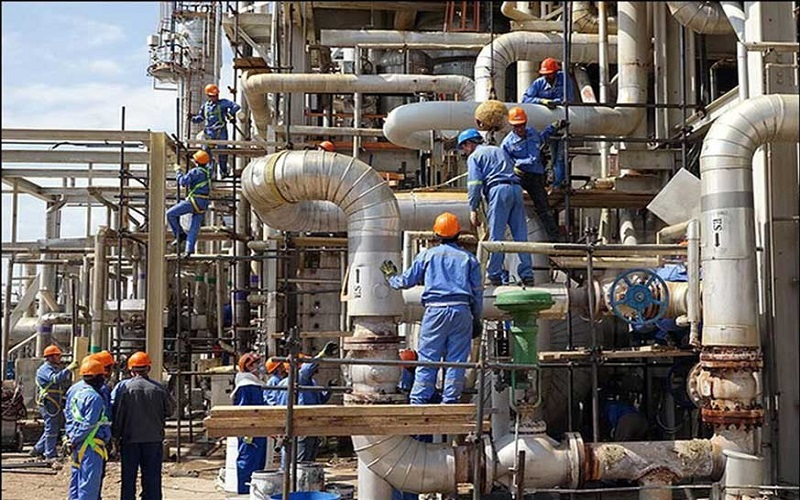
Oil workers in Iran – part of a growing wave of workers taking industrial action

The emergence of the Islamic Republic of Iran, following the revolution which overthrew the Shah in 1979, and its persistence as a focus for the development of political Islam has increasingly been seen as a threat by Israel. The United States has been equally concerned with the turn of events following 1979 and was instrumental in encouraging the attack upon Iran by Iraq in 1980, which led to the Iran-Iraq war raging from 1980-1988.

The war did not dislodge the Iranian dictatorship but encouraged the intensification of the arrest, torture and execution of dissident voices inside Iran and a consolidation of its control of the state by the medieval theocracy.  The fragile alliance with Iraq, having served its purpose soon saw the US perform a volte face, eventually resulting in the downfall of former ally Saddam Hussein and the fragmentation of Iraq as a functioning state following the invasion of 2003.

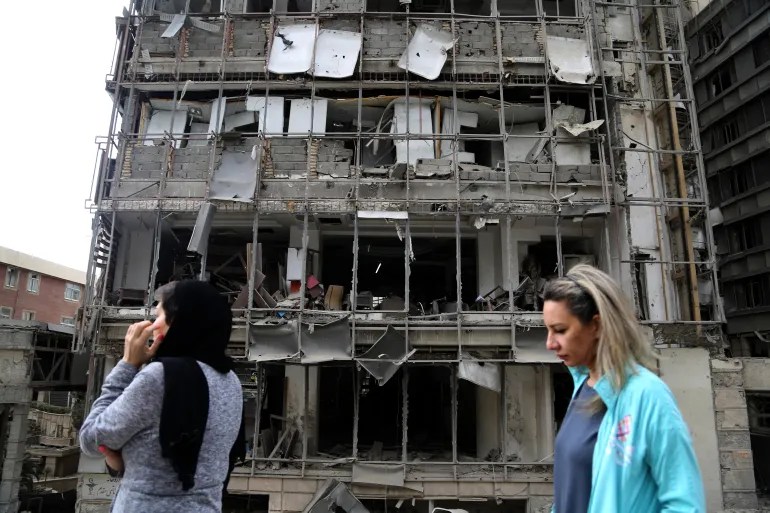
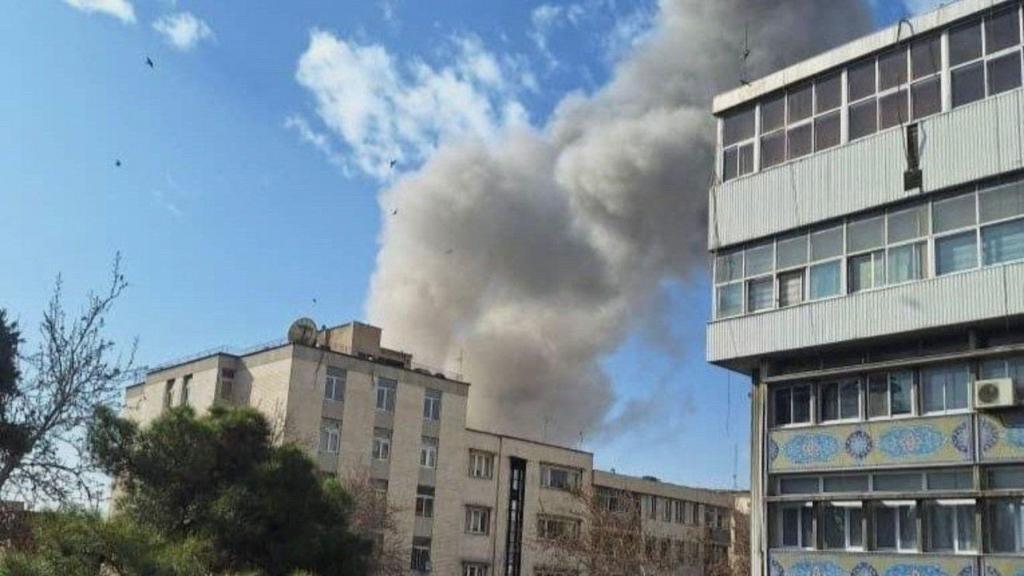
It is against this background that the legitimate fears of the Iranian people of further military action must be viewed.  Since the attack upon Iran in June the regime in the Islamic Republic is reported to have significantly increased missile production with a view to generating enough capability to overwhelm Israeli missile defences. Inside Iranian ruling circles the threat of renewed conflict is widely considered high, with some officials and experts suggesting that another war is “only a matter of time”.

Such thinking is fuelled, not only by the desire of the regime to increase its defence capability, but also by reports from reliable Israeli sources that Israel aims to topple the existing regime in Tehran by the end of the term of US President Donald Trump in 2029. Israeli security sources indicate that Israel is preparing to respond “much more aggressively” and for hostilities to last longer than the June conflict.

The religious zealots in the Israeli government view  Iran as an existential threat and, in spite of the degrading of the network of Iran’s proxies in the Middle East notably Hamas and Hezbollah, the ultimate goal remains the elimination of the regime in Iran itself. Iran’s continued enrichment of uranium and increase in missile production are seen as sufficient justification for such an approach.

The current situation is exacerbated by the diplomatic impasse which has existed since the June attacks with efforts to resume nuclear talks between the US and Iran floundering, removing a key channel for de-escalation.

The threat of war, likely to be launched by Israel with the backing of the United States, is clearly the most urgent and pressing issue facing the Iranian people. Wider escalation across the Middle East, which could follow, would be disastrous not only for the people of Iran but would bring closer the prospect of worldwide conflict, given the geo-political significance of Iran for both Russia and China.

In parallel, the debate over access to nuclear facilities attacked in the June assault by the United States continues, with the International Atomic Energy Agency (IAEA) recently passing a resolution requesting access to sites in Fordo and Natanz, which were hit in the strikes.  Iran’s resistance to further inspections of these sites, though it has allowed access to others, is fuelled by the reluctance of the IAEA to condemn the June attacks.

In response to the IAEA resolution Iranian ambassador to the IAEA, Reza Najafi, told reporters that,  “I’m afraid the resolution will have its own consequences”. Asked what those were, he said, “We will announce the consequences later.”

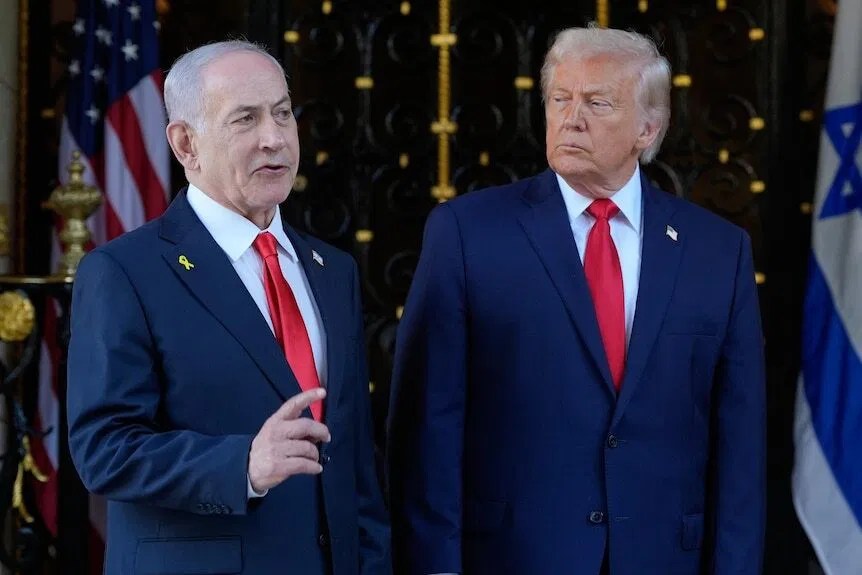
Recent pronouncements from the United States suggest that President Donald Trump may be willing to break the current diplomatic impasse, claiming that Tehran is seeking a diplomatic resolution with Washington, which has sought the dismantlement of its nuclear programme.

“I am totally open to it, and we’re talking to them,” Trump said.

“And we start a process. But it would be a nice thing to have a deal with Iran. And we could have done it before the war, but that didn’t work out. And something will happen there, I think.”

The actions of the US in giving Israel the green light to attack Iran when negotiations were ongoing, and the subsequent US role in attacking nuclear sites, make it difficult to take Trump’s words at face value.  There is no doubt that a section of the corrupt leadership in Tehran realises that its survival depends upon some rapprochement with the West, while more hardline factions are reluctant to engage in anything they would regard as compromise.

Perhaps the only certainty in the current situation is that the main losers are the Iranian people who, as well as the threat of external intervention, are also having to struggle with the impact of international sanctions, endemic corruption within the state and widespread economic mismanagement.

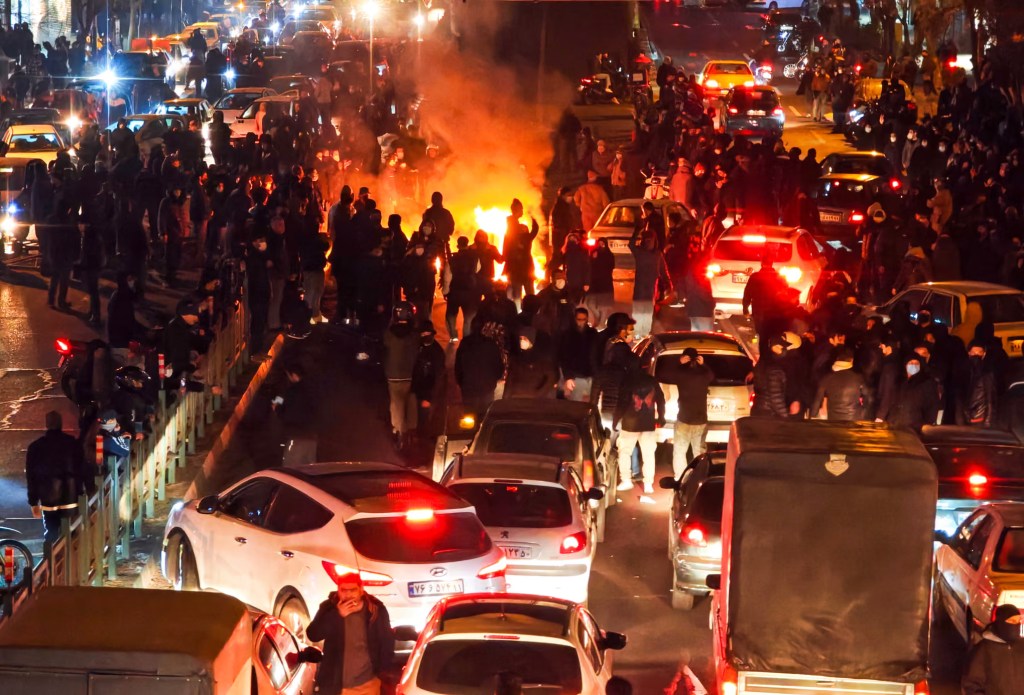
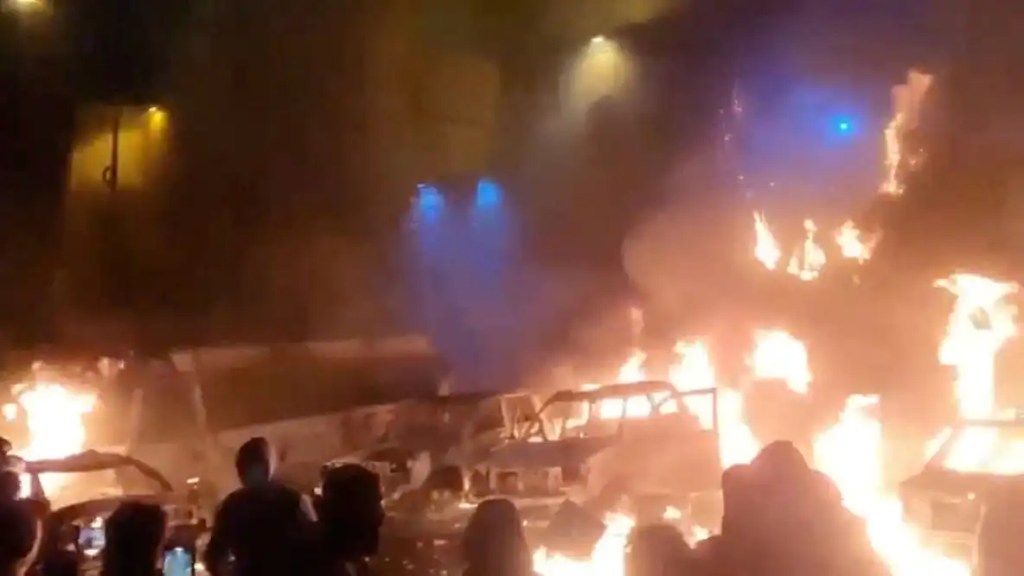
The response of Iranian workers to the collapsing political and economic environment they face has been to increase their demand for recognition, fair pay and employment rights. Strike action in the oil industry, the transport sector, the public sector and amongst pensioners has demonstrated the extent of internal resistance to the policies of the regime.

The regime continues to respond with the arrest, imprisonment and torture of trade union, cultural and academic activists, underlining its inability to fulfil the needs of its people and resort only to force to maintain its position.

The future of Iran ultimately must lie with its people and their resistance to the theocratic dictatorship, opposition to the pressures of external intervention and the demands for a non-aligned democratic Iran. Opposing war against Iran is the first step in this process and one which should be a priority for international solidarity work in the coming year.  Only peace will give the people of Iran the chance they deserve.

The full text of this article appears in Liberation Journal, Winter 2025

https://liberationorg.co.uk/journal-2/

Stop Arming Israel

12th July 2025

The persistence of the genocide carried out on behalf of the Israeli government by the Israeli Defence Force (IDF) continues at a staggering level.  The IDF show no remorse for the killing of innocent civilians, 15 of whom died queueing to access food this week.  The IDF claim to have been targeting a Hamas ‘terrorist’ so the loss of civilian life was simply collateral damage. 

This weekend has seen a further 50 deaths including 10 at a water collection point which saw 6 children killed. This follows the killing of 110 people on Saturday including 34 at a food collection point in Rafah. Since 7th October 2023 the IDF has killed at least 57,882 people and wounded 138,095, according to Gaza’s Health Ministry.

According to the United Nations an estimated 800 Palestinians, many children, have died while seeking food at the so called Gaza Humanitarian Foundation (GHF) distribution points.  The GHF is run by the United States, using American mercenaries, and backed by Israel.  GHF has four distribution points, compared to the 400 previously operated by the UN, which Israel will no longer permit to operate.

Random killing was also the approach applied by the IDF in the recent Israeli bombing of Iran, which resulted in the assassination of a number of leading figures in the Iranian armed forces as well as key nuclear scientists.  Western media reports played down the fact that in many instances it was not only the military and scientific targets who were murdered but many of their families, innocent of any ‘crime’ as deemed by the Israelis.

Such atrocities are often mis-reported, under reported or not reported at all by the media, keen to play down the extent of Israel’s flouting of international law but also uncomfortable covering any British government complicity in the genocide.

Palestinian deaths certainly don’t warrant the attention any criticism of the IDF does for the British media.  Punk rap act Bob Vylan became the all round media villain recently when his Glastonbury set included him chanting “Death to the IDF”.  The Mail on Sunday saw fit the following day to go with the banner headline “NOW ARREST PUNK BAND WHO LED ‘DEATH TO ISRAELIS’ CHANTS AT GLASTONBURY”. 

The bandwagon rolled on into Monday with the Sun, Daily Mail, Daily Telegraph and the Daily Express weighing in and Kier Starmer proclaiming the comments “appalling hate speech”, stronger language than he uses when mentioning IDF atrocities.

Quite apart from the inaccuracy of the original Mail on Sunday headline, the claim made by the paper, that this was “antisemitic chanting”, was simply not true.  The IDF, being the military wing of the Israeli state, does not represent all Israelis, any more than the government of Benjamin Netanyahu, which continues to face internal criticism for its policy and actions in relation to Gaza and the West Bank.  Criticism of the IDF or the Israeli government is not antisemitic, it is a perfectly legitimate political stand to take in the face of their ongoing actions against the Palestinian population.

That Kier Starmer, as Prime Minister and Leader of the Labour Party, should join in such baying for blood along with the right wing media is a disgrace.  Starmer and the government’s complicity in crimes against the Palestinian people is underlined by the Campaign Against the Arms Trade (CAAT) which, in relation to British arms sales to Israel,

“…estimates that between October 2023 and May 2024, over 100 new licences were issued, with a total estimated value of at least £100 million in military equipment since October 7th, 2023. These sales include components for F-35 combat aircraft, which CAAT estimates account for approximately 15% of the value of each F-35 and are used in ongoing conflicts, including those in Gaza.”

The government defends its position by claiming that  “no evidence has been seen that Israel is deliberately targeting civilian women or children”. It further claims that “there is also evidence of Israel making efforts to limit incidental harm to civilians”.

The actual evidence, coming back from the UN, Médecins Sans Frontieres and Palestinian people themselves suggests that the British government is either being extremely naïve, or is simply lying.

The latest Israeli proposal, to create a concentration camp for Palestinians on the ruins of Rafah in the south of Gaza, would be a further crime against humanity.

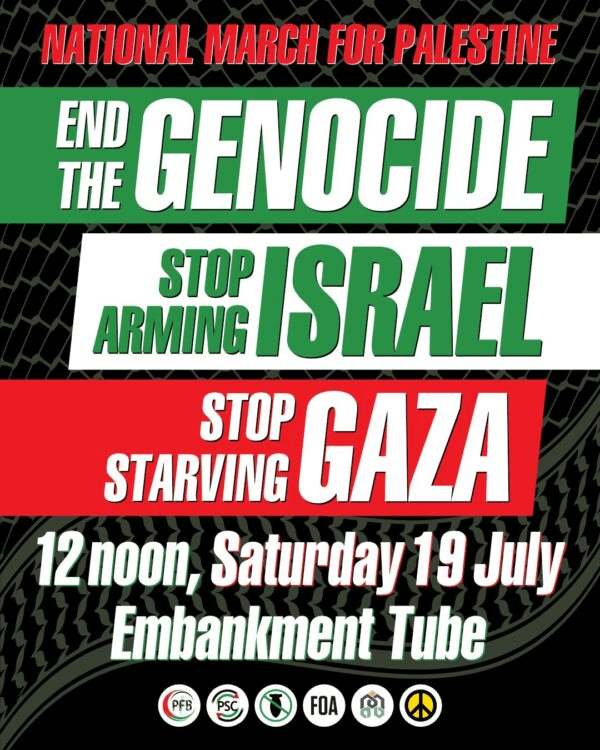
The latest National March for Palestine, organised by Palestine Solidarity Campaign and its allies takes place on 19 July in London.  The pressure on the British government to stop arming Israel and stop the starvation in Gaza must continue.

Iran: No to foreign intervention

22nd June 2025

War room: US imperialists Vance and Trump endanger world peace

The bombing of Iranian nuclear sites by the United States overnight (21 June) is a flagrant breach of international law and a further indication of the designs of US imperialism to re-shape the map of the Middle East.

Following the unprovoked attack upon Iran by Israel last week, US President, Donald Trump, called for Iran’s “unconditional surrender”, while preparing to give the green light for overt military intervention by the United States.  That order has now been enacted and Trump, in spite of his America first and no foreign intervention rhetoric, has acted like every US President before him.  Though without Congressional approval for such action impeachment may be an issue Trump has to face, his action having made the danger of a world war significantly higher than at any time in the past.

The US had already been covertly assisting the Israeli assault by providing back up for its Iron Dome missile defence system, designed to intercept any Iranian missiles fired towards Israel in response.

That the United States has added to the unprovoked Israeli military intervention in Iran,  is an international scandal.  Israel has a decades long record of flouting international conventions and dismissing United Nations resolutions but, to be backed so overtly in doing so, by its major ally and arms supplier, takes the threat to world peace which US and Israeli actions represent, to a new level.

In addition, it is widely known that Israel has a nuclear capability though, in line with its official policy of “nuclear ambiguity”, it refuses to confirm or deny the existence of a nuclear arsenal.  The possibility of the use of nuclear weapons by Israel, given the religious fundamentalist nature of its leadership, cannot be ruled out.

Just as there can be no justification for the Israeli genocide in Gaza, the attacks upon Iran have no legal or moral basis.  They do however, have a clear political objective and that is one which has been asserted more prominently in the past few days; regime change.

In line with the wishes of the Iranian people as expressed in their opposition to the dictatorship of the former Shah in 1979 and, as increasingly expressed in their opposition to the theocratic dictatorship today,  change in Iran is vital to secure peace, democracy and social justice for the people of Iran.

However, the regime change which Trump in the White House or Netanyahu in Tel Aviv are seeking is not for a progressive and democratic Iran.  On the contrary, support for Monarchist opposition in the form of Reza Pahlavi, son of the former Shah based in the United States, is given greater prominence by Western politicians and media.

Netanyahu’s call for Iranians to rise up against the present regime in Iran have been echoed by Pahlavi, who met Netanyahu on a visit to Israel in 2023.  The likelihood of Pahlavi being able to mobilise mass popular support inside Iran is slim however, given his distance from the country and the perception of many Iranians that he is collaborating with the aggressor Israel.

Any return to Iran for Pahlavi would need the significant backing of US or Israeli military forces to suppress the opposition which such a reactionary move would provoke.  The danger of Iran becoming a state dismembered by Western imperialism, such as has been the case with Iraq, Libya, Afghanistan and Syria would be all too real in such a scenario.

An alternative for the West could be backing the Mujahedin-e Khalq (MEK), an exiled group that enjoys support in the US from hawks such as veteran Republican John Bolton. During the 1980s, the MEK backed Iraq in its war with Iran, and the Islamic regime often accuses it of collaborating with Israel.  Like Pahlavi, the MEK does not enjoy popular support inside Iran and would require significant external backing  in order to maintain any grip on power.

The US and Israeli cover story for their actions against Iran, to halt the nuclear programme, simply do not hold water.  Recent years have seen increasingly popular opposition movements inside Iran.  Millions protested disputed elections in 2009 in what became known as the Green Movement.   In 2022, the Women, Life, Freedom Movement mobilised millions across Iranian cities, calling for an end to supreme leader Ayatollah Ali Khamenei’s rule following the death of 22-year-old Mahsa Amini in police custody after she was arrested for allegedly not properly wearing her hijab. 

Workers in the transport, oil, public services and teaching sectors have taken action to improve wages and conditions in spite of trade unions being effectively outlawed in Iran.  These are the potential movers of regime change that Trump and Netanyahu do not want to see.  Those who are opposed to the theocratic dictatorship but equally do not want to see Iran’s future shaped by the outside interests of Israel or US imperialism.

Change in Iran has been coming for a long time but it must be change for the people, by the people, not change shaped by foreign intervention and an imperialist agenda, imposed upon the people of Iran.   

US and Israel complicit in war crimes

5th June 2025

Out on a limb – the US once again vetoes a ceasefire in Gaza at the United Nations

The so-called Gaza Humanitarian Foundation (GHF) is nothing more than a trojan horse created by the United States and Israel to facilitate the ethnic cleansing of Palestinians from Gaza.  The BBC and international media continue to report on its activities as if it had some credibility when in reality it has none.

Established two weeks ago, the GHF was set up to bypass the work of the United Nations and other international aid agencies, who have tried and tested methods of delivering international aid through well established local networks.

The Israelis claim that aid through these routes is being hi-jacked by Hamas and is not reaching the people who need it.  They have produced no evidence whatsoever to back up such claims.  The GHF, which is not run by experienced aid workers, but is staffed by private US security agencies, lacks local knowledge, local networks and has only four centres from which aid can be accessed.

The UN and international aid agencies have 400 sites across Gaza from which aid could be accessed should the Israeli military allow.  The GHF have a limited number of sites in the south of Gaza, where the Israelis are attempting to drive the Palestinian population, and they are only accessible by civilians going through known combat zones.  Nearly one hundred civilians have been killed by Israeli troops and hundreds more wounded in the past two weeks, attempting to access aid at GHF hubs.

The hubs are located in Israeli military zones, where journalists have no access.

To reach the sites in Rafah, Palestinians must walk for miles along a designated route where GHF says the Israeli military keeps security. In statements to the public, GHF has warned people to stay on the road, saying leaving it “represents a great danger.”

Distribution usually starts at 5 a.m. each day but thousands of Palestinians start walking hours earlier, desperate not to miss out on food. That means large crowds passing by Israeli troops in the dark.

Israel admitted on Tuesday for the first time that its forces shot at Palestinians. In a statement, the Israel Defence Forces (IDF) said troops fired shots near a food distribution complex after noticing “a number of suspects moving towards them”.

This was the third time civilians had been killed by the IDF in three days.

Mirjana Spoljaric, the president of the International Committee of the Red Cross (ICRC), told the BBC on Wednesday that conditions in Gaza had become “worse than hell on earth” and that states are not doing enough to end the war, end the suffering of Palestinians and secure the release of Israeli hostages.

The recent killings has resulted in at least one of the GHF hubs being closed temporarily.

That Israel is pursuing a policy of starvation, ethnic cleansing and genocide in Gaza, in addition to approving more illegal West Bank settlements, is clear to the world.  The British government’s continued complicity in the war crimes carried out by the Israeli regime was challenged in the House of Commons this week, in a Bill presented by Independent MP, Jeremy Corbyn, calling for a public inquiry into Britain’s “military, economic, or political co-operation with Israel since October 2023.”  The Bill was endorsed but has little chance of being translated into action without government backing.

This week the United States, for the fifth time, vetoed a United Nations Security Council resolution calling for an “immediate, unconditional and permanent ceasefire” in Gaza.  All other 14 countries on the security council voted in favour, including Russia, China, France and Britain.  The resolution also called for the “immediate and unconditional lifting of all restrictions on the entry of humanitarian aid into Gaza and its safe and unhindered distribution at scale, including by the UN and humanitarian partners”.

US secretary of state Marco Rubio said in a statement after the vote,

“The United States will continue to stand with Israel at the UN.”

Israel’s Minister of Foreign Affairs, Gideon Saar, thanked the US “for standing shoulder to shoulder with Israel and vetoing this one-sided resolution in the UN Security Council.”

Both countries are clearly guilty of direct engagement and active support for war crimes and international pressure must continue to be brought to bear, in order to bring them to justice for their actions.

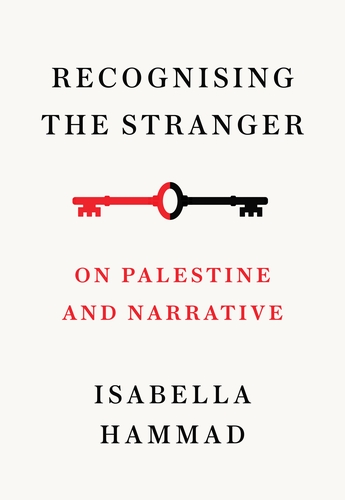
Recognising the Stranger

On Palestine and Narrative  

by Isabella Hammad

Book Review

A sense of timing and an eye for synchronicity are common concepts deployed by authors in the construction of  a narrative.  On 28 September 2023 the British-Palestinian novelist, Isabella Hammad, gave the Edward W Said Memorial Lecture at Columbia University, now published as Recognising the Stranger: On Palestine and Narrative.

Hammad could not have foreseen that only a week later, on 7 October 2023, the Qassam Brigades of Hamas would, in response to the ongoing Israeli occupation and blockade of Gaza, launch a military attack upon Israeli military bases and kibbutzim.  The attack resulted in over 1,000 deaths and the taking of over 200 hostages, to be held until the 5,000 Palestinian political prisoners held in Israeli jails were released.

Hammad’s lecture would have been relevant and a percipient insight into the situation of the Palestinian people had the events of 7 October and their aftermath, not have happened.  However, given the Israeli response to the Hamas attack, Hammad’s lecture and subsequent Afterword: On Gaza, written in January 2024, take on added relevance.

In her original lecture Hammad is concerned with considering turning points, ostensibly in literature but also in the personal and political spheres.  Those points in a fictional narrative when characters have moments of recognition, when an aspect of the plot, which may have been clear to the reader, is revealed to the characters and what has been, up until then, a mystery falls into place.

Hammad suggests that in the personal and political spheres the concept of a turning point is “a human construction, something we identify in retrospect” (p.2) but that the moment in which we now live “feels like one of chronic ‘crisis’” (p.2).

Hammad explores the role and function of the novel in the contemporary world, competing against the wide range of other ‘entertainments’ on offer, yet still powerful and relevant enough to find a mass audience and speak to the need for narrative, storytelling and a search for meaning.

Hammad links the concept of turning points in literature to those in real life through the example of writers visiting the Palestine Festival of Literature and experiencing for themselves the reality of life for the Palestinian people under Israeli occupation.

“They visited Hebron, and saw the soldiers patrolling, guarding settlers;  they visited the destroyed town of al-Lydd; they navigated checkpoints; they travelled through Jerusalem and crossed in and out of the West Bank; they listened to statistics of killings and imprisonments and night time raids and asked careful questions.”  (p.21)

Hammad goes on to analyse the wider international debate regarding the position of the Palestinian people, the incremental retreat from insistence upon a two state solution, with Palestinians having a right to their own state, while the international community in the Global North, largely accept and reinforce the state propaganda and Zionist supremacist ideology of the Israeli regime.

Hammad does recognise that there is a shift in awareness amongst many ordinary people across the world, including amongst Israelis, a recognition that Palestinians have human rights.  She cites what co-founder of the Boycott, Disinvestment and Sanctions (BDS) movement, Omar Barghouti, calls an aha moment,

“…talking specifically about the moment when an Israeli realises, in a turning point of action, that a Palestinian is a human being, just like him or her.” (p.25)

While Hammad’s lecture inevitably focuses upon the work of Edward Said, as a prominent Palestinian intellectual, his literary criticism and her own practice as a writer, she does not shy away from exploring the reality of the stateless position in which Palestinians are forced to exist and the implications of this for their culture.

In her Afterword: On Gaza Hammad is clear that the action of 7 October in itself represents a turning point, comparing it to “an incredibly violent jailbreak” and asserting that,

“It also signified a paradigm shift: it showed that a system in which one population  is afforded rights that the other population is denied will be safe for neither.” (p.61)

Hammad robustly condemns the Israeli response to 7 October stating starkly that,

“Ten thousand dead children is not self defence.” (p.62)

A figure which has escalated significantly in the year since her afterword was written.  Hammad condemns the extent to which the Western powers, the United States in particular, have supplied Israel with weapons to continue the bombardment of Gaza and the role of the US in vetoing ceasefire arrangements.  This position may have changed for the moment but there is no guarantee that Israel will maintain it.

As Hammad states, as she moves towards a conclusion,

“The possibilities faced by the Israeli state for at least twenty years have been: maintain apartheid and forfeit the claim to being a democracy; return to the pre-1967 state borders and allow for the creation of a Palestinian state; break down the system of apartheid and enfranchise the Palestinians in a one-state reality; or conduct large scale ethnic cleansing.  They are choosing the last option.” (p.75)

Just over a year since that Afterword was written, it is clear that this is precisely the path that the Israeli regime has taken and that solidarity with the Palestinian people is more vital now than ever.

Isabella Hammad is the award winning author of ‘The Parisian’ and ‘Enter Ghost’.  In 2023, she was included as one of Granta’s Best of Young British Novelists.

Towers of Ivory and Steel

13th February 2025

Review by Steve Bishop

Maya Wind’s detailed and incisive study, Towers of Ivory and Steel, charts the role of Israeli universities in systematically denying Palestinian freedom.  It should be a wake up call for any British university engaged in collaboration with Israeli counterparts, urging them to address distortions of academic practice and acknowledge the internationally recognised rights of Palestinians to equality of access to education.

British universities will not see themselves as colluding in the settler colonialism of the apartheid Israeli state.  They will rationalise any joint work as being on a purely academic basis, not part of a systemic exclusion of Palestinians from access to intellectual expression and freedom.

Maya Wind’s analysis debunks such liberalism and demonstrates how the Israeli university system is an embedded part of the apartheid state of Israel, actively supporting the settler colonial narrative of Zionist supremacy, and denying any Palestinian historical agency in land they have farmed, worked and lived on for generations.

Since October 2023 the world has once again seen the sheer scale of Israeli brutality towards the Palestinian population through the genocide in Gaza, backed by support from the United States, Britain and the European Union, culminating in the proposal of US President Donald Trump to ethnically cleanse Gaza of Palestinians.

This is the undeniably savage side of the Israeli Defence Force (IDF), the consequences of its actions filling news broadcasts around the world.  However, as Wind demonstrates, behind the smokescreen of liberalism in Israel’s universities there lies an ongoing and pervasive denial of access for Palestinians, a denial of study of their history, suppression of any student activism and an active collusion with the Israeli military and state by the university authorities.

In disciplines which under any circumstances should require objectivity and academic rigour, Wind shows how Palestinian dimensions are excluded.  Archaeological excavations led by Israeli academics at a site in Susiya, for example, revealed evidence of a synagogue and a mosque, illustrating both Jewish and Muslim heritage, yet as Wind notes,

“Ruins of a mosque were also found on the very same site as the synagogue, yet these were swiftly erased from the historical record; there is no mention of them in the official documentation or at the site itself.”  (p.26)

Wind demonstrates how legal studies are skewed to justify the actions of the IDF and the Israeli government in the international arena, “constructing interpretations that justify Israeli state and military policies” (p.40) while routinely processing arrested Palestinians under the Israeli military court system, rather than a civilian legal process.

In the field of Middle East Studies, Israeli universities actively collaborate with the state and the military, to reinforce a particular version of history.  The forced exclusion of over 700,000 Palestinians from their land, in the Nakba in 1948, is not covered for example.  As Wind indicates,

“What began as repression of academic research on the Nakba and Israel’s founding has since expanded into public scrutiny of syllibi addressing Israel’s military occupation and apartheid and, most recently, into a broader purge of any critical discourse on the military and the racial violence of the Israeli state.” (p128)

Any attempt by Palestinian students to commemorate the events of 1948 are violently shut down.  Such actions are facilitated by having uniformed soldiers on campus, as part of their training in military and intelligence work.  This presence is inevitably intimidating for the few Palestinian students tolerated at Israeli universities and reinforces the close links between university hierarchies and the military.

Wind provides detailed evidence of how Palestinian students are subject to arrest, incarceration, and torture for engaging in what would be regarded in most parts of the world as routine student activism.  For the Israeli state any degree of activism or expression of support for Palestinian statehood is treated with suspicion.

Launched in 2004 the Palestinian Campaign for the Academic and Cultural Boycott of Israel (PACBI) has worked to raise awareness of the role of Israeli universities in the repression of Palestinians and to call on “international scholars to initiate a boycott of Israeli academic institutions”. 

Closely allied is the Boycott, Disinvestment and Sanctions (BDS) Campaign launched in 2005 to exert pressure on Israel to meet its obligations under international law to, “first, end the colonization of Arab lands and dismantle the military occupation and the wall; second, recognise the right to full equality of Palestinian citizens of Israel; and third, respect and promote the right of Palestinian refugees to return.” (p.5)

Maya Wind is clear that support for the PACBI and BDS campaigns is a necessary step on the road to justice for the Palestinian people.  The research and analysis provided in Towers of Ivory and Steel is an important contribution to moving forward on that journey.

Developments in Syria

5th December 2024

A statement from Liberation

Islamist forces in Aleppo

The capture of Aleppo by Islamist paramilitary forces has taken many across the Middle East and around the world by surprise and signifies once more the destabilisation of Syria as well as the rapidly deteriorating situation in the wider region, opening the door to further external intervention and a catastrophic war.

Liberation has received information from progressive forces inside Syria, critical of the Assad regime, but also opposed to outside intervention and the fragmentation of the country.

The progressive opposition in Syria have articulated a number of key points regarding the present situation with a call for negotiation on the basis of UN Security Council resolutions being central to their position.

Firstly, they have made clear that the currently in place “de-escalation” zones, despite their importance in stemming further bloodshed from the Syrian civil war, are not a sustainable solution over the longer term. Their function was to stop the bloodshed in order to move towards dialogue and negotiations to reach a real political solution that would reunite the Syrian people and the entire sovereign territory of Syria through the implementation of UN Security Council Resolution 2254. A real politically driven transition towards a new political, economic, and social system ultimately determined by the Syrian people is the desired outcome.

Secondly, the progressive opposition recognise that, over the past 13 years, Syria has endured cycles of extreme violence and destruction throughout the country, which the implementation of de-escalation agreements and zones brought to a halt. This led to a state of near-complete ceasefire by mid-2019, essentially a freezing of the conflict. After that, the economic phase of attrition began, both from at home as well as abroad. Thus, international sanctions served to deepen and exacerbate the brutal neoliberal economic policies overseen by the Syrian government. This led to a worsening of the Syrian tragedy and laid the foundations for the fall of Aleppo and the events currently being witnessed in the country.

The progressive opposition in Syria states: “The renewal of the cycle of violence and battles means that a political solution is more necessary today than ever before, and more possible than ever before. None of the sides concerned with sitting at the negotiating table can claim the ability to achieve a crushing victory that will destroy the other side, and this has been tried for many years at the expense of the blood and suffering of the Syrian people.”

Liberation is also very concerned regarding the implications of the events of the past week in Syria for the further destabilisation of the wider Middle East, including the prospects for what would be a catastrophic regional war – with global implications – were it to break out. We believe the developments in Syria have not taken place in a void removed from the events since last October, not least the apparent drastic weakening, if not dismantling, of the so-called “axis of resistance” forces’ capabilities – and, by extension, those of the Islamic Republic regime in Iran in the region – over more recent months. The cynical exploitation of, if not outright malign interference in, these developments by governments such as Israel and Türkiye, serve only to make a desperate and deteriorating security situation in the region as well as wider fallout much worse. Indeed, we note the comment made earlier today by Iraqi prime minister, Mohammed Shia’ Al Sudani in which he stated that his country will not remain just a “spectator” to the events unfolding in neighbouring Syria.

Liberation supports the calls for a comprehensive and binding political solution to the crisis in Syria, and one free of any kind of military intervention from outside forces or other infringement upon the country’s sovereignty. Thus, we add our voice to the growing call for the urgent implementation of UN Security Council resolution 2254 and a resolution to the crisis in Syria firmly grounded and based upon the will of the Syrian people, not the forces of outside intervention.

Peace the Middle East priority

12th October 2024

A Palestinian girl carries a child through the rubble of houses destroyed by Israeli bombardment in Gaza City 

The extent to which Israel is prepared to go it alone in a threatened strike against Iran was made clear this week in reported discussions between the Israelis and the United States.  US President, Joe Biden, and Israeli Prime Minister, Benjamin Netanyahu, discussed issues relating to Israel’s expected provocation against Iran in their first call in over a month last week.  The White House has said that Biden emphasised the need for “a diplomatic arrangement” to allow Israeli and Lebanese civilians displaced by fighting to return to their homes; urged Israel to minimise civilian casualties in airstrikes against Beirut; and discussed “the urgent need to renew diplomacy” on achieving a cease-fire in Gaza.

Clearly Biden’s words have had little impact with the Israeli Defence Force (IDF) carrying out its heaviest bombing raids so far on Thursday night, just over 24 hours after the Biden/Netanyahu conversation.  The strikes included attacks upon United Nations peacekeeping positions, reinforcing the rogue status of Israel in the Middle East.

It is apparent that the US is frustrated by being repeatedly caught off guard by Israel’s military actions in Gaza and Lebanon, but appears incapable of summoning the political will to head off further escalation.  There was some hope that the US would learn more about what Israel was contemplating when Israeli Defence Minister, Yoav Gallant, and US Defence Secretary, Lloyd Austin, were scheduled to meet at the Pentagon last week.  However, Netanyahu blocked Gallant from going to the US as Israel continued planning its Iran operation.  As it stands the US claims not to know either the timing of the strike or what Israel might target.

It is known that Army Gen. Erik Kurilla, who heads US Central Command, with responsibility for US military operations in the Middle East, has met with Gallant and top Israeli military commanders, to warn against striking Iran’s nuclear sites or oil facilities.

Gallant is widely seen in the West as the Israeli leader most responsive to the US concerns about Israel’s prosecution of the war in Gaza, especially regarding increasing humanitarian aid and creating a plan for postwar governance.   However, it is evident that Netanyahu’s desire to cling to office, and take advantage of the hiatus which the pre-election period in the US represents, outweighs any wider strategic concerns for him and the religious fundamentalist backers in his government.

US failure to act decisively is frustrating the international community as it is clearly the major supplier of arms to the IDF.   Israel, can only continue to prosecute the wars it has initiated on multiple fronts, because of its dependence on the US military. Over the past year, it has not only relied on supplies of American munitions, but benefited from US help in shooting down missiles and drones, as well as the rapid deployment of American naval and air forces to deter more substantial Iranian attacks.

In turn the US has had to modify its strategic priorities, which were focussed on ramping up conflicts with China and Russia, to adapt. Struggling to head off an all-out Middle East war, the Pentagon has deployed two aircraft carrier battle groups to the region for much of the year.

Against this background the threat of further escalation once the IDF attack Iran is significant, for the region, for world peace and for the people of Iran themselves.

Inside Iran the theocratic leadership of the Islamic Republic is walking a political tightrope having seen its adventurist foreign policy in the region at least temporarily crushed, following the overkill of the Israeli response to the Hamas attack of the 7th October last year.  Leaders of Hamas and Hezbollah have been assassinated, key targets have been hit, disrupting operations, and the Israelis have even reached into Tehran itself to undermine the Islamic dictatorship’s reliability on its own security apparatus.

Evidence in both Gaza and Lebanon would suggest that the Israelis are not inclined towards acting with restraint, as the death toll on both fronts mounts, along with the increasing unrest in the occupied West Bank.  Iran’s response to the strikes against Hezbollah in Lebanon have so far not inflicted significant damage upon the IDF but have been sufficient to give the Israelis justification, in their eyes, to strike back.

It is clear from the evidence of the past year, the years of illegal Israeli occupation of Gaza and the West Bank and the repeated incursions into Lebanon by the IDF over the years, that there is not a military solution to the issues in the Middle East.  The only solution can be a diplomatic one, starting with the right of the Palestinian people to self determination and a state of their own.

The failure of the international community, primarily the United States and Britain, to enforce United Nations resolutions, which would compel Israel to negotiate, and to continue to supply weapons to sustain the IDF, are the key drivers of the current situation.  Until peace is at the top of the strategic objectives of all players the people of Gaza, Lebanon and Iran, will continue to suffer.

Blatant Biased Content (BBC)

4th October 2024

BBC International Editor, Jeremy Bowen

Reporting by the BBC on current conflicts demonstrates the bias of the corporation and the extent to which, in spite of its regular emphasis upon impartiality, the BBC is anything but  when it comes to its international coverage.

The Russian incursion into Ukraine in February 2022 was undertaken in order to protect communities who had expressed a wish to become part of Russia, but had suffered at the hands of Ukrainian forces since 2014, resulting in 14,000 deaths.  The Minsk Accords, signed in 2015 to  halt the fighting, were later admitted by Western governments to be a mere ploy to give Ukraine time to re-arm.

The Russian intervention is nevertheless unfailingly referred to by the BBC as a full scale invasion and the wider context, including the CIA backed coup in Ukraine in 2014, conveniently overlooked.

Even after the intervention by Russia, a peace agreement mediated by Turkey in March 2022 was on the brink of being signed by Ukraine, until the United States persuaded then British Prime Minister, Boris Johnson, to deliver the message to President Zelensky that the “collective West” would not support the agreement.

In an item given widespread coverage by the BBC in the last couple of days, Khalil al-Hayya, the deputy leader of Hamas, was interviewed by BBC international editor Jeremy Bowen.  On each occasion al-Hayya was introduced as someone whose views may be abhorrent to many.  Bowen was asked to justify why the interview had taken place and why al-Hayya should be given air time.

Bowen dutifully trotted out the BBC line on impartiality and the need to hear all sides in a crisis situation.  All very well, but the briefings by Israeli Defence Force (IDF) representatives, committing genocide in Gaza, killing medical teams in the West Bank and currently invading neighbouring Lebanon are not given the same caveat, even though many will find both their views and their actions abhorrent.

It is also noteworthy that the invasion of Lebanon by the IDF is described by the BBC as an ‘incursion’, a characterisation they may struggle to hold onto as the death toll inevitably mounts.

The BBC attempts to protect the illusion of impartiality in other ways too.  John Simpson is regularly given his own half hour, titled Unspun World, in which Simpson interviews various BBC correspondents who invariably give a particular spin on events in the part of the world that are covering.  The title is not meant to be ironic.

Then there is the BBC Verified branding.  Presumably it is the BBC themselves who are undertaking the verification, which is a bit like the police investigating themselves or students marking their own homework.  Are they really trying to kid us that a new logo is a guarantee of impartiality and objectivity?

How the Tories can continue to bleat on about the BBC being run by ‘Lefties’ and not toeing the line on issues is laughable.  Apart from the odd moment of mild criticism the BBC knows quite clearly on which side its bread is buttered.  Sadly it is not the side of investigative journalism, truth and objectivity.

Turning Points

29th September 2024

Thousands flee Lebanon to escape Israeli air strikes

The assassination of Hezbollah leader, Hassan Nasrallah, has been described by Israeli Prime Minister, Benjamin Netanyahu, as a ’turning point’, describing Nasrallah as “the axis of the axis, the central engine of Iran’s axis of evil”.

The killing and the ongoing bombing of civilian areas of Beirut may well prove to be a turning point but not necessarily in the way that Netanyahu means.  Iran’s leader, Ayatollah Ali Khamenei has called for five days of mourning following Nasrallah’s death and vowed that his ”blood will not go unavenged.”

Lebanon’s Health Ministry has estimated that 800 are dead so far as a result of the actions of the Israeli Defence Force (IDF), while 50,000 people are estimated to have fled to Syria and an estimate 1 million are displaced, many having to sleep on the streets.

The bombings follow on from the indiscriminate attacks, not denied by the Israelis, upon Lebanese citizens by planting explosives in electronic communication devices, which killed 37 and injured thousands.  This action has been widely condemned as a war crime precisely due to its indiscriminate nature. 

While the IDF claim that the current bombing campaign consists of precision strikes, the reduction to rubble of buildings in clearly civilian areas gives the lie to this claim, costing the lives of non-combatant women and children  in the process.

The latest strikes have even seen surprise expressed by the United States, Israel’s staunchest ally, with President Joe Biden claiming that the US had no prior knowledge of the attacks.  Efforts by US Secretary of State, Antony Blinken, to engage Israel in the search for a diplomatic solution have so far abjectly failed.

It is becoming increasingly clear that the Israeli government, under the leadership of Benjamin Netanyahu, is out of control and driven by its own religious fundamentalist agenda.  Devastating strikes on Beirut followed on almost immediately from Netanyahu’s widely boycotted speech at the UN General Assembly in New York and flew in the face of widespread calls for a negotiated settlement and ceasefire to be discussed.

Israel’s contempt for the will of the international community, as articulated by the UN, has been evident for decades in its illegal treatment of the Palestinian people and their just demand for national self determination  and a fully sovereign state of their own.  It is evident in its recent action in Gaza and the West Bank and is becoming  more flagrant in its attacks upon the Lebanese capital.

Such actions increase the threat of widening the conflagration in the region, with escalation beyond the Middle East into a global war within the realms of possibility.

With the presidential election in the United States looming Netanyahu is clearly taking advantage of the hiatus this represents to press home his fundamentalist agenda, to the detriment of the people of the region and in spite of the opposition from many of his own citizens.   Parliamentary elections in Israel are not scheduled until October 2026 and Netanyahu is gambling that he can hold together his right wing fundamentalist coalition at least that long, to present himself as a victor in the fight against both Hamas and Hezbollah.

The fate of the Palestinian people and the people of the Middle East generally should not rest upon the political survival and opportunism of one man.

Pressure upon Israel to come to the negotiating table must be increased through concrete actions.  The British government must immediately cease all arms sales to Israel.   Trade union and cultural organisations should support the Boycott, Disinvestment and Sanctions (BDS) campaign to isolate Israel internationally, until it is prepared to negotiate meaningfully on a way forward.  

The US, as Israel’s major ally, must take a stronger line in bringing the IDF to heel and opening the way for negotiations.  The turning point in the current conflict has to be to turn back.  The coming days could well be crucial in determining the future of the Middle East  and whether or not the world is plunged into a wider conflict.