Recognising the Stranger

On Palestine and Narrative  

by Isabella Hammad

Book Review
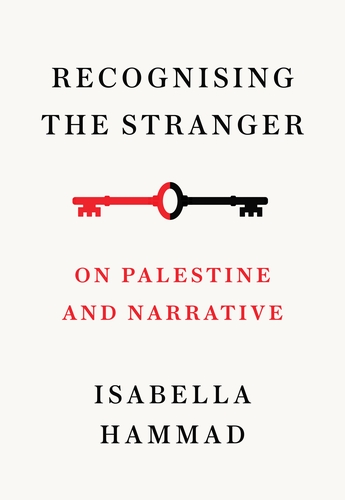
A sense of timing and an eye for synchronicity are common concepts deployed by authors in the construction of  a narrative.  On 28 September 2023 the British-Palestinian novelist, Isabella Hammad, gave the Edward W Said Memorial Lecture at Columbia University, now published as Recognising the Stranger: On Palestine and Narrative.

Hammad could not have foreseen that only a week later, on 7 October 2023, the Qassam Brigades of Hamas would, in response to the ongoing Israeli occupation and blockade of Gaza, launch a military attack upon Israeli military bases and kibbutzim.  The attack resulted in over 1,000 deaths and the taking of over 200 hostages, to be held until the 5,000 Palestinian political prisoners held in Israeli jails were released.

Hammad’s lecture would have been relevant and a percipient insight into the situation of the Palestinian people had the events of 7 October and their aftermath, not have happened.  However, given the Israeli response to the Hamas attack, Hammad’s lecture and subsequent Afterword: On Gaza, written in January 2024, take on added relevance.

In her original lecture Hammad is concerned with considering turning points, ostensibly in literature but also in the personal and political spheres.  Those points in a fictional narrative when characters have moments of recognition, when an aspect of the plot, which may have been clear to the reader, is revealed to the characters and what has been, up until then, a mystery falls into place.

Hammad suggests that in the personal and political spheres the concept of a turning point is “a human construction, something we identify in retrospect” (p.2) but that the moment in which we now live “feels like one of chronic ‘crisis’” (p.2).

Hammad explores the role and function of the novel in the contemporary world, competing against the wide range of other ‘entertainments’ on offer, yet still powerful and relevant enough to find a mass audience and speak to the need for narrative, storytelling and a search for meaning.

Hammad links the concept of turning points in literature to those in real life through the example of writers visiting the Palestine Festival of Literature and experiencing for themselves the reality of life for the Palestinian people under Israeli occupation.

“They visited Hebron, and saw the soldiers patrolling, guarding settlers;  they visited the destroyed town of al-Lydd; they navigated checkpoints; they travelled through Jerusalem and crossed in and out of the West Bank; they listened to statistics of killings and imprisonments and night time raids and asked careful questions.”  (p.21)

Hammad goes on to analyse the wider international debate regarding the position of the Palestinian people, the incremental retreat from insistence upon a two state solution, with Palestinians having a right to their own state, while the international community in the Global North, largely accept and reinforce the state propaganda and Zionist supremacist ideology of the Israeli regime.

Hammad does recognise that there is a shift in awareness amongst many ordinary people across the world, including amongst Israelis, a recognition that Palestinians have human rights.  She cites what co-founder of the Boycott, Disinvestment and Sanctions (BDS) movement, Omar Barghouti, calls an aha moment,

“…talking specifically about the moment when an Israeli realises, in a turning point of action, that a Palestinian is a human being, just like him or her.” (p.25)

While Hammad’s lecture inevitably focuses upon the work of Edward Said, as a prominent Palestinian intellectual, his literary criticism and her own practice as a writer, she does not shy away from exploring the reality of the stateless position in which Palestinians are forced to exist and the implications of this for their culture.

In her Afterword: On Gaza Hammad is clear that the action of 7 October in itself represents a turning point, comparing it to “an incredibly violent jailbreak” and asserting that,

“It also signified a paradigm shift: it showed that a system in which one population  is afforded rights that the other population is denied will be safe for neither.” (p.61)

Hammad robustly condemns the Israeli response to 7 October stating starkly that,

“Ten thousand dead children is not self defence.” (p.62)

A figure which has escalated significantly in the year since her afterword was written.  Hammad condemns the extent to which the Western powers, the United States in particular, have supplied Israel with weapons to continue the bombardment of Gaza and the role of the US in vetoing ceasefire arrangements.  This position may have changed for the moment but there is no guarantee that Israel will maintain it.

As Hammad states, as she moves towards a conclusion,

“The possibilities faced by the Israeli state for at least twenty years have been: maintain apartheid and forfeit the claim to being a democracy; return to the pre-1967 state borders and allow for the creation of a Palestinian state; break down the system of apartheid and enfranchise the Palestinians in a one-state reality; or conduct large scale ethnic cleansing.  They are choosing the last option.” (p.75)

Just over a year since that Afterword was written, it is clear that this is precisely the path that the Israeli regime has taken and that solidarity with the Palestinian people is more vital now than ever.

Isabella Hammad is the award winning author of ‘The Parisian’ and ‘Enter Ghost’.  In 2023, she was included as one of Granta’s Best of Young British Novelists.

Cultural terrorism crackdown in Iran

6th May 2024

Death sentence – Iranian rapper Toomaj Salehi

Engulfed in political, social, and economic crises, as well as rampant corruption, the Iranian dictatorship has accelerated its crackdown on the women and youth of Iran.  The regime is attempting to demonstrate to its remaining loyal supporters its unwavering commitment to its outdated and medieval beliefs.  In addition, the regime is seeking to divert public attention away from its economic failures, endemic corruption, growing social ills, and the environmental destruction caused by its wasteful missile programmes, all of which have blatantly squandered hundreds of millions of dollars of public funds.

Confirmed reports from Iran tell of a calculated attempt by the regime to drive women and youth away from protests in the streets, main throughfares, and city centres.

The recent crackdown by the security forces on women is taking place against the backdrop of a failing economy and widespread public discontent. The Iranian dictatorial regime, which has failed to overcome the deep economic crisis it has created, is presiding over a relentless rise in the cost of living. The majority of the population is being crushed under the weight of meagre wages, at the same time as the price of basic goods, food items and rents is skyrocketing.

Protests by workers, teachers, pensioners, nurses, students, young people, and women across Iran reflect the dire economic situation and deep-seated opposition towards the continuing rule of the theocratic regime.

Jailed Iranian Nobel Peace Prize Winner, Narges Mohammadi urged Iranians to protest against “full-scale war against women” after authorities intensified their crackdown obliging women to obey the country’s Islamic dress code. 

The recent crackdown on women in Iran is a direct consequence of the decree by Ali Khamene’i, the regime’s Supreme Religious Leader.  Khamene’i’s aim is to return the country to how it was before the murder in custody of Mahsa Amini in September 2022 and the massive “Woman! Life! Freedom!” protests which followed. Since then, the majority of women in Iran have chosen to shed their hijab in a show of defiance against the misogynistic regime and public assertion of their rights.

As part of the regime’s current crackdown a death sentence has been passed upon underground Iranian rapper Toomaj Salehi, an act described as cultural terrorism by the Committee for the Defence of the Iranian People’s Rights (CODIR).  Calling for the unjust sentence to be quashed CODIR General Secretary, Gawain Little, voiced the organisation’s ongoing concern at the lack of freedom of expression in the Islamic Republic.

“Iran is a country with a significant youth population and popular artists like Toomaj Salehi are increasingly expressing the discontent that many young people feel about the theocratic dictatorship”, said Mr Little.  “To sentence an artist to death, charged with ‘corruption on earth’, for nothing more than speaking out against the government is nothing short of cultural terrorism.”   

Salehi, aged34, had gained widespread popularity with the youth of Iran, due to the challenging content of his lyrics, which addressed issues such as ethnic discrimination, child labour, human rights violations and protest activity.

Salehi was originally imprisoned for taking part in a peaceful protest, a verdict initially overturned by Iran’s Supreme Court before being reversed by a lower court in a bizarre manipulation of Iran’s judicial system.

The lower court, a branch of the Islamic Revolutionary Court in Isfahan, regarded the decision of the Supreme Court as ‘guidance’, before proceeding to confirm Salehi’s imprisonment and impose a death sentence upon him.  The court alleged that Salehi had aided rebellion, committed assembly and collusion against the state, propaganda against the state and incited riots. 

Salehi was originally arrested in October 2022 for participating in the countrywide Women, Life, Freedom movement protests, sparked by the murder in detention of Mahsa Amini the previous month.  In July 2023 Salehi was handed a prison sentence of 18 year and 3 months for the original ‘corruption on earth’ charge.

While his case was referred to the lower court in Isfahan he was granted bail on 18 November 2023 only to be arrested less than two weeks later, on 30 November, for speaking out against the torture he endured while imprisoned.  Salehi’s lawyers have vowed that they will appeal but without massive international pressure the regime is unlikely to change its stance.

With the regime’s actions, popular resistance has not dwindled in the least, and the solidarity demonstrated by the public, and support extended to those arrested, including efforts to secure their release, is growing markedly. All evidence points to the fact that the current resistance, together with popular support for women, is set to significantly broaden in scope.

The Committee for the Defence of Iranian People Rights (CODIR) strongly condemns the brutal assault on Iran’s brave and resilient women and calls on trade unions to protest the actions of the ruling regime in Iran.

CODIR believes that only through the concerted and widespread efforts of women’s rights organizations, human rights defenders, and the mobilization of public opinion around the world, expressing solidarity with the struggle of Iranian women and supporting their cause, can this oppressive regime be forced to retreat.

CODIR has also called for the international community to intervene, through the United Nations, to call for the release of all political prisoners and the dropping of charges against Toomaj Salehi. 

More info at www.codir.net

Iranian elections – regime legitimacy rocked

17th March 2024

Protests continue across Iran

Parliamentary elections in Iran, earlier this month, have rocked the regime due to the obvious level of disaffection amongst the general population reflected in the all time low turnout. Even before the elections themselves the government had gerrymandered the process through the rigorous vetting of candidates in order to make sure the outcome was safe for the regime.

The extent of disqualification of candidates was such that even former President, Hassan Rouhani, a former beneficiary of such back room manoeuvres, was moved to protest.  The fact that such a loyal servant of the regime saw fit to raise objections on this occasion is significant.

Other key personalities such as Mostafa Tajzadeh, a former Deputy Minister of Interior Affairs, imprisoned in Evin prison for criticising the leadership and holding them responsible for political, social and economic crises in the country, confirmed that he would not vote in the election.  

 “I will not vote to endorse corruption,” said Tajzadeh in a letter he wrote from Evin Prison.  Tajzadeh, had previously applied to run for president, but his candidacy was rejected. He was jailed in October 2022 and sentenced to five years in prison on charges of “conspiring against security and spreading lies and propaganda against the regime.”

Tajzadeh criticised current Supreme Leader, Ali Khamenei, for ignoring Iran’s dire realities and the people’s protests, urging Iranians to boycott the elections.  He stressed Iran’s need for comprehensive development, accusing Khamenei of hindering reforms while lacking the wisdom to lead effectively.

“The majority of Iranians have decided to ignore the Supreme Leader and his propaganda machine, refusing to participate in the elections as a protest against the dire situation in the country,” wrote Tajzadeh.  He also condemned the parliament’s ineffectiveness, citing its diminished powers and exclusion of independent voices.

The elections were regarded as invalid by all progressive forces, pro-reform forces generally and even certain groups of the fundamentalist forces were not happy to support the election. Significant calls by trade unions and pensioners groups, civic society advocates and supporters of human rights reform were routinely ignored by the regime. 

While the regime in Iran did its utmost to urge voters to go to the polls, surveys showing that most voters did not intend to take part were proven correct.  A recent poll conducted by Iran’s state television found that more than half of respondents were indifferent to the elections. The elections were the first since protest swept the nation following the death of Iranian Kurd, Mahsa Amini, after her arrest for allegedly violating the strict dress code for women.

The Women, Life, Freedom protests, which surged throughout the country following the state murder of Amini has undoubtedly been a key factor in undermining what little legitimacy the regime may have possessed, especially in the eyes of women voters.

Turnout was clearly low due to voter apathy and the desire to send a message to Iran’s theocracy.  Amongst prominent Iranians pushing for a boycott, were imprisoned Nobel Peace Prize laureate Narges Mohammadi.

Official figures put the election turnout at 41% but this is widely regarded as being an exaggeration by independent observers.  However, even this official figure makes the turnout the lowest since the 1979 revolution in Iran. In Tehran province, voter turnout was about 24%, another record low, underlining declining public interest in legitimising the Iranian state.  The number of invalid or blank ballots is estimated to have been as high as 400,000 in Tehran alone, showing the extent of deliberate protest.

The reality for many in Iran is that economic hardship is an overriding factor as the Islamic Republic suffers under punishing international sanctions and rapid inflation. At Tehran’s storied Grand Bazaar, many shoppers simply wander the warren of aisles without buying anything, as prices have skyrocketed in recent years.   In an oil rich country of over 85 million people, annual inflation is close to 50 percent, consumer prices remain high and Iranian currency is in virtual freefall.

Iran has suffered under crippling US sanctions since Washington’s unilateral withdrawal in 2018 from a landmark deal that had promised sanctions relief in return for curbs on Iran’s nuclear programme. The sanctions have sharply reduced Iran’s oil revenues and further restricted trade, helping to harden the decades-old enmity with the United States and Israel. 

The regime’s manipulation of the process, and the inability of any candidates from opposition or reform groups in Iran to stand, means that conservative politicians will dominate Iran’s parliament, maintaining their hold on the Islamic Consultative Assembly.

With Presidential elections scheduled for 2025 in Iran the regime will clearly be concerned by the level of disaffection and dissent shown in the Parliamentary election results.  Previous presidential elections have been carefully manipulated to ensure the safest outcome for the regime and have resulted in widespread protest as a consequence. 

Given the growing scale of protest activity in Iran since September 2022, with the death of Mahsa Amini, there is every likelihood that the presidential contest next year will spark further dissent.  The traditional response of the regime has been to crack down hard on such displays of opposition.  Whether it will be able to sustain such tactics in 2025, as the Iranian people continue to question the legitimacy of the regime, remains to be seen. 

Israel is not above the law

28th January 2024

Supporters of a free Palestine demonstrate outside The Hague

The measures outlined by the International Court of Justice (ICJ), which has ruled that Israel’s actions in Gaza are plausibly genocidal, must be welcomed by all who support the cause of Palestinian liberation.

The ruling is a landmark in the search for justice for the Palestinian people.  The ICJ decision will be relayed to the United Nations Security Council for consideration.  The ruling orders Israel to prevent acts of genocide against Palestinians and to do more to help civilians, who are currently suffering under daily bombardment by the Israeli Defence Force (IDF).  However, the ICJ stopped short of ordering a ceasefire as requested by the plaintiff South Africa.

Although the ruling contained no binding order upon Israel to stop the war in Gaza it is nevertheless a legal setback for Israel. The Palestinian Foreign Ministry said the decision was a welcome reminder that “no state is above the law”.

The ruling not only obliges Israel to stop all acts which are plausibly genocidal but equally obliges all states to cease funding and facilitating Israel’s military offensive in Gaza.  The measures, all backed by at least 15 judges, also required Israel to ensure the preservation of evidence of alleged genocide and report to the court within a month.

In coming to its decision the ICJ did not have to find whether Israel had committed genocide, which will be determined at a later date, but only that its acts were capable of falling within the convention, which defines the war crime as “acts committed with intent to destroy, in whole or in part, a national, ethnical, racial or religious group”.

Nevertheless, the United States made its position clear ahead of the judgement, describing South Africa’s case at the ICJ as “meritless, counterproductive, completely without any basis in fact whatsoever.”

Israeli Prime Minister, Benjamin Netanyahu, proclaimed in response to the ICJ ruling,

“Israel’s commitment to international law is unwavering. Equally unwavering is our sacred commitment to continue to defend our country and defend our people. Like every country, Israel has an inherent right to defend itself,” he said. “The vile attempt to deny Israel this fundamental right is blatant discrimination against the Jewish state, and it was justly rejected.”

As ever the scared right to self defence is, for Netanyahu, one which applies to Israel but not to the Palestinians, whom Israel has been oppressing in the West Bank and Gaza for decades.  The mantra that ‘Israel has the right to defend itself ‘ is increasingly seen as  a right wing trope for justifying the Israeli regime treating Palestinians with impunity.

Solidarity organisations across the world have called upon all states to commit to upholding the ICJ decision to protect the rights, including the fundamental right to life of Palestinians in Gaza.  The death of over 25,000 people, over 70% of whom are women and children according to the United Nations, cannot be justified by the IDF as a response to the actions of Hamas on 7 October 2023.

Such a disproportionate response, having been condemned by the ICJ, must now be condemned by the entire international community and every effort made towards supporting the call for an immediate ceasefire, a negotiated solution to end Israeli action and free hostages held by Hamas.

Most importantly the resolutions of the United Nations on the need for a two state solution, realising the right of the Palestinian people to self-determination and the establishment of a Palestinian state within agreed international borders, must be acted upon by all member states.

The ICJ ruling is to be welcomed as a vital step towards the realisation of the need to stop the current genocide in Gaza and take the first steps towards the establishment of an independent state for the people of Palestine.

However, the ongoing commitment of the United States and Britain to arm Israel, not take the Israeli government to task for its flouting of international law and to be, at best, lukewarm about the necessity of a Palestinian state, remain significant barriers to progress.  In the short term the failure of either state to recognise the need to support the call for a ceasefire, in spite of the mounting death toll, is scandalous.

The fact that this shame is cross party, with the Labour leadership in Britian continuing to back the government’s position, including being in favour of air strikes against Yemen, adds urgency to the need to campaign for a change in British foreign policy.

As the Jewish diaspora gather to mark Holocaust Memorial Day over this weekend many are rightly appalled by the action of the IDF and the religious zealots around Benjamin Netanyahu in Gaza.  Opposition to the religious fundamentalists in the Israeli regime is growing both inside and outside Israel, many in the Jewish community increasingly regard the actions of Netanyahu and his war cabinet as not being carried out in their name.

The working class movement in Britain and across the world needs to stand in solidarity with those opposing religious fundamentalism in Israel, just as they support those opposing the theocratic dictatorship in Iran and religious zealotry in Saudi Arabia.  The fate of the people of Palestine and the people of Israel may depend upon it.