Stuck in the middle

28th January 2018

maytrump(2)

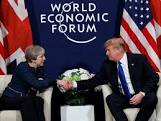
May joins the Trump roadshow in Davos

If there is a sound that Theresa May cannot escape, it is the sound of sharpening knives.  Since her failed bid to increase her Parliamentary majority at the General Election last June, the Prime Minister has been living on borrowed time.  The swamp that is Brexit is likely to swallow May’s brief premiership and, with any luck, large sections of the Tory Party with it, at least for the time being.

Following this week’s World Economic Forum in Davos, where May was reduced to playing a bit part in the Donald Trump roadshow, a ‘keynote’ speech on Brexit has been postponed, as war on the Tory backbenches and amongst her Cabinet colleagues once against spills across the press, social media and our TV screens.

The week began with a Cabinet meeting at which leading Tory opportunist and alleged Brexiteer, Boris Johnson, Foreign Secretary last time anyone looked, trumpeted his desire to spend an additional £5bn on the NHS.  Few would doubt the need for such spend, not least Health Secretary Jeremy Hunt who may yet pontificate on the Middle East situation next week, or Labour Leader Jeremy Corbyn, who has consistently called for the NHS to be at the top of the political and funding agenda.  As Corbyn made clear at Prime Minister’s Questions in the House of Commons recently,

“The Conservatives tax cuts for the super-rich and big business are being paid for by longer waiting lists, ambulance delays, staff shortages and cuts to social care.”

That Johnson trailed his views on the health service ahead of the Cabinet discussion clearly illustrates a breakdown in any sense of collective responsibility but also a growing contempt for May’s leadership amongst key members of her Cabinet.

Chancellor Phillip Hammond, in a hamfisted attempt to shore up the government’s position, suggested this week that being outside the EU would look and feel very much like being on the inside.  This sort of snivelling toadyism brought an instant rebuke from 18th century man and pretender to the Tory leadership, Jacob Rees-Mogg, who accused Hammond of working to turn the UK into a vassal state.

Rees-Mogg is the darling of the turn back the clock Leave.EU campaign and is likely to gain more media attention in the coming week as the House of Lords debate the EU withdrawal bill.  Media reports this weekend that May has three months to shape up or be shipped out will mean that the various pretenders will take every opportunity to get airplay.

Add to the mix claims that current opinion polls suggest there is growing feeling in the country for a second referendum on the terms of Brexit, with even Nigel Farage pitching in, desperate for publicity over something, and the future for May looks bleak.  She will be damned if she does and damned if she does not.  A Prime Minister stuck in the middle.

The alternative, increasingly looking like a government in waiting, is the Labour Party under Jeremy Corbyn, pressing on the key issues of the NHS, housing, welfare reform and lack of investment in the public sector and infrastructure.  While the Tories tear themselves apart over Brexit, Labour are committing to providing 8,000 homes for the homeless by taking over properties deliberately left empty.

Where the priorities of ordinary people lie, and who can deliver for them, is becoming increasingly clear.

Absurd on every level

20th January 2018

trump-shutdown-explainer

 US President Donald Trump – the absurdity of shutdown

The absurdities of capitalism seem to be manifest in a myriad of different ways at the moment.  From the government shutdown in the United States, to the inability of the Germans to form a government due to the rise of the far right, and the recent UK poll suggesting that more 18 – 24 year olds see big business as a bigger threat than communism.  This is not why the Cold War was won, exclaim disillusioned liberals the world over!

One year into the Presidency of Donald Trump and the US Senate cannot agree a budget.  The self styled great ‘deal maker’ in the White House is on the brink of seeing the wheels of administration stop.  In all normal circumstances this would be characterised as an embarrassment for the President.  For Trump, there appears to be no such thing.

The fact that many federal government employees may be on unpaid ‘leave’ from Monday, that government services will cease to function, does not appear to be of major concern to Trump. His response has been to blame Democrats who are attempting to mitigate some of the worst excesses of Trumps’ immigration policies.  The Democrats are demanding protection from deportation for 700,000 illegal immigrants who entered the United States as children.

The Republicans are looking for more border security, funding to build the wall along the border with Mexico and more spending for the military.

For Trump this is a case of the Democrats being “far more concerned with illegal immigrants than they are with our great military or safety at our dangerous southern border”.

This particular absurdity is not one confined to having a “very stable genius” as President, although it will not help. The last government shutdown, under Barack Obama in 2013, lasted 16 days and resulted in around 850,000 employees being off work each day, at a cost of $2bn in lost productivity to the economy.

The US budget must be approved by 1st October which is the start of the federal financial year.  Congress often fail to meet this deadline and negotiations continue well into the new year, with the previous year’s funding to federal agencies extended on a temporary basis.

With Congress failing to agree an extension that would have maintained government funding through to 16th February, it means many federal agencies effectively close for business as of 00:01 Saturday (05:01 GMT).

Still, we know the US is off beam, thank goodness for Europe eh?

That would be the Europe of Emmanuel Macron in France, most famous for “on the other hand” being his most used phrase, due to his inability to take a position on most things.

That would be the Europe of strong economic German stability, immobilised by the rise of the far right Alternativ fur Deutschland, modern days Nazis holding the balance of power and the country to ransom, while that famous economy and quite possibly the EU with it, burns.

While the Germans struggle to form a government there is every chance that Italy will find itself in the same position with elections there, on 4th March, likely to see the far right hold the balance of power.   A coalition which includes Silvio Berlusconi’s Forza Italia, the notorious right wing Northern League and the fascist Brothers of Italy is at present leading the polls.

The collapse of construction and services conglomerate, Carillion, in the UK has resulted in the absurdity of Prime Minister Theresa May claiming that she will be on the side of workers betrayed by their greedy bosses in future if another major company was to go under.  Needless to say such ‘meddling’ will alarm Tory backers in the City of London, as well as hardliners within her own Cabinet, so the chances of May getting to the point of delivery are slim.

It is almost embarrassing to point out the absurdity of a Tory Prime Minister railing against a policy which has been a central plank of Tory ideology for over 40 years, just because it has been exposed as being unfair but, worse still, unpopular!

Much more plausible is the position taken by Labour Leader, Jeremy Corbyn, consistent with his long standing opposition to the “dogma of privatisation”, who has pledged that Labour will halt the “outsourcing racket” which the Carillion collapse has helped expose.

As Corbyn quite rightly stated,

“Theresa May exposed the failure of the outsource first ideology at prime minister’s questions when she said the government was ‘a customer’ not ‘the manager’ of Carillion.  I’m sorry but if these are public contracts we should be the manager and not have a middleman like Carillion creaming off the profits.”

So it should come as no surprise when Fiona Lali, president of the Marxist Society at the School of Oriental and African Studies in London, defended the Soviet Union in a Radio 4 interview this week.  The interview was on the back of a ComRes poll last week which showed that 9% of 18-24 year olds thought communists were “the most dangerous in the world today” while 24% thought it was “big business”.

While the apologists for capitalism trot out the hoary old reds under the beds propaganda whenever their interests are threatened, it is becoming increasingly clear that such tactics do not work.

For most young people the Cold War is history, while the day to day absurdities of capitalism are all too real on a daily basis.  Whether that is the absurdity of Donald Trump, the resurgent right wing across Europe, or the crime of private companies making profits from public projects, it does not paint a very convincing picture.

It is little wonder that young people are looking for an alternative.  It is vital that Marxism is the alternative they recognise if the future is to hold out real hope for them.


Public need, not private greed

14th January 2018

Carillion

Carillion are on the point of collapse and the government may have to bail them out.  It’s the current UK headline news.  So what?  Who are Carillion, why should we care about them and why should the government be considering propping them up?  All good questions, which go to the heart of how public services in the UK are financed and supported.

Any notion we have of Carillion is probably that they are something to do with construction, their name appears on the billboards surrounding major capital works and their adverts feature men in hard hats.  Yet like many companies in the capitalist market place, Carillion has branched out beyond its initial base of expertise and embraced areas in which, quite simply, money can be made from the public sector.

Carillion employs 20,000 staff in the UK alone and is one of the government’s biggest contractors.  A large number of those staff, 8,000 in fact, work in Carillion’s healthcare division, providing facilities management to the NHS.  In practice this means engineering teams carrying out 200,000 maintenance tasks on 1m square metres of NHS space.  It means Carillion having responsibility for 200 operating theatres with 300 critical care beds and 11,500 in-patient beds.  It prepares 18,500 patient meals per day.  Carillion’s NHS helpdesks manage more than 1.5m calls each year.

Carillion is the love child of construction companies Tarmac, Wimpey, Mowlem and Alfred McAlpine, private sector construction companies brought together to get fat on private finance initiative (pfi) contracts, dished out by successive governments keen to divert financial risk and appear economically astute.

The collapse of Carillion’s market value from an estimated £2bn to a mere £61m on Friday, with share prices down from 300p two years ago to 14.2p last week, suggests that the economic astuteness of the pfi process may be flawed.  It may even give cause to reflect on who thought a bunch of road builders were suited to manage sections of the NHS, not to mention prison contracts and Ministry of Defence work.

Ironically it is the building projects which are at present causing Carillion’s downfall.  Three major pfi schemes are overdue and over budget, these being the £350m Midland Metropolitan hospital in Birmingham, the £335m Royal Liverpool University hospital, and the £745m Aberdeen bypass.  These at least you would think a bunch of road builders would be able to manage but it appears not!  Certainly, it does not inspire confidence in your next NHS patient meal.

Main lenders to Carillion, previously keen to cash in on the profits are Barclays, HSBC and Santander UK, all now looking likely to pull out as they are exposed to huge potential losses.  The options under consideration include a debt for equity swap, basically the government stepping in to guarantee loans, thereby shielding lenders from losses in the event of a collapse.  The capitalist free market is truly a wonderful thing!

Professor Karel Williams, a bit of an expert in these matters from Manchester University, sums it up nicely when he says,

“The whole rational for PPP (public private partnership) – where Carillion has been a big player in the UK – is that, notionally, you transfer risk to the company that takes the contract.  But, fundamentally, the limit of that risk is the balance sheet of the outsourcing company.  If you move beyond that it becomes a crisis for the government.”

This means that in practice the inefficiencies of the private sector are covered up through the use of public funding, so the public, in effect, get hit twice.  Firstly, by the private sector syphoning off resourcing from vital services, such as the NHS, in order to pay their shareholders dividends.  Secondly, by the government having to use more public money to bail out those services when the private sector is in danger of going belly up.

Is it a scam?  Of course it is!  You can bet that not many NHS nurses or hospital porters will have shares in Carillion in order to have profited from dividend pay outs in previous years.  On the other hand, a large part of the £1.5bn Carillion debt is a £590m pension deficit.  Will the government honour that as well as protecting the pockets of the shareholders and the banks?  Keep an ear out for the news in the next few days, lets see where that one goes.

So called public private partnerships have many flaws.  The most basic one is that they are not a partnership of equals.  The public sector rarely, if ever, benefit and the shareholders either reap dividends during the good times or get protection from the government when things go wrong.  The answer is to cut the private sector out of the equation, make sure key national infrastructure projects and service delivery are publicly resourced, publicly managed and publicly accountable.

Public need should not be fuelling private greed.  Public services are there for people, not for profit.  It’s an age-old adage on the Left, let’s get back to making it count.


Protests expose shaky foundations of Islamic Republic

2nd January 2018 

iran-protestors-clash-police

Recent protests across Iran have brought the Islamic Republic once more into the international spotlight.  Jane Green, from the Committee for the Defence of the Iranian People’s Rights (CODIR), assesses the current situation.

The rising tide of dissatisfaction amongst the people of Iran has burst its banks for the first time since 2009 on a large scale, resulting in a wave of demonstrations across the country against the theocratic dictatorship of the Islamic Republic.  The events of recent days, which have escalated from small scale protests against food shortages and price rises, are rapidly becoming more generalised protests against the lack of freedom and democratic rights, which has been characteristic of the Islamic Republic for the past four decades.

The latest proclamation from the regime’s Revolutionary Guards, that protesters will feel the “iron fist” if demonstrations continue, is symptomatic of the regime’s inability to meet the needs of its people and characteristically resort to the use of brute force in order to maintain its grip on power.  Two protestors have already died from gunshot wounds.

According to official figures unemployment is running at 12.4% in Iran, up 1.4% on the previous year.  Even this figure however masks a much deeper malaise within the Iranian economy, with workers pay being delayed or withheld for months, short time and temporary contracts being widespread and the imprisonment of trade union and opposition activists commonplace.

President Hassan Rouhani, elected for a second term just last May, promised greater security and a growing economy following the 5+1 nuclear deal agreed in 2015, where the West promised to withdraw sanctions in exchange for restrictions on the Iranian nuclear energy programme.  The limitations of the deal have been further emphasised however by the imposition of unilateral financial sanctions by the United States, making it virtually impossible for the Iranians to trade in the international oil market.

What little scope the deal may have given the regime in Iran to expand the economy has been effectively strangled at birth.  What little benefit the economy gains from international trade goes into the coffers of the theocratic elite or the Revolutionary Guards, rather than the pockets of the ordinary people of Iran.  Official figures show youth unemployment running at 40% in a nation where over 50% of the population are aged under 30 years old. Iranian authorities have acknowledged that more than 5 million graduates in the country are unemployed.  One BBC Persian investigation has found that on average Iranians have become 15% poorer in the past 10 years.

It is little wonder then that the youth of Iran, alongside the working class, are in the forefront of the current wave of protests.  They are not only protesting about the state of things at present but also against the lack of future opportunities.

The last nationwide protests in 2009 focussed upon the ‘stolen election’, the second term won by hardliner Mahmoud Ahmadinejad, in an election which many regarded as having been rigged in his favour to keep any hint of reform at bay.  The Rouhani presidency has attempted to give the gloss of reform to its programme and elements in the West have been persuaded that the regime is one that the West could do business with, while ignoring its ongoing appalling record on human rights.

Recent protests however have focussed not only upon the economic incompetence of the regime but the widespread corruption at its heart.  The thinly veiled ‘promise’ of reform from Rouhani has been stripped bare with the consequences now being seen on the streets. The feeling of demonstrators was summed up by one protestor from the city of Rasht who was quoted over the weekend as saying,

“Everyone is fed up with the situation, from the young to the old.  Every year thousands of students graduate, but there are no jobs for them.  Fathers are also exhausted because they don’t earn enough to provide for their family.”

Opposition forces within Iran have made it clear that the experience of the last two decades has proved that the Iranian people are rapidly moving away from the strategy of making a choice between bad and worse.  They are no longer willing to submit to the manipulation of their demands by the regime and the pro-regime reformists such as Rouhani.  At the forefront of opposition voices the Tudeh Party of Iran (TPI) in particular, has stressed that,

“The majority of the people of the homeland today want to put an end to the despotic theocratic regime; to end the oppression and injustice; and bring about the establishment of freedom and social justice. These demands can only be achieved through a joint struggle of all the national and freedom-loving forces without foreign intervention.”

The issue of foreign intervention is a significant one, with the United States, Saudi Arabia and Israel all watching developments closely to assess whether they can gain any advantage from the current protests.  It is widely known that all three would welcome regime change in Iran but change in favour of a regime more compliant with their objective to dominate the Middle East, rather than one which would be to the benefit of the Iranian people.

Any foreign intervention would be disastrous for the people of Iran, the chance of a transition to democracy and for the Iranian economy.  Calls for any military intervention or for the restoration of the monarchy, which have emanated from some quarters, and are given prominence by Western media outlets, should not be taken seriously and must be resisted.

CODIR has called for solidarity with the Iranian people’s demands for peace, human and democratic rights and social justice.  CODIR further calls for the release of all political prisoners.   In particular, trade union leaders such as Reza Shahabi of the Tehran Vahed Bus Workers Trade Union and Ismail Andi, General Secretary of Iran’s Teachers’s Trade Association, should be raised internationally. This would be a meaningful contribution from Western public opinion.

The current protests are evidence that the Islamic Republic is built upon shaky foundations.  Only the people of Iran themselves can bring the house down and rebuild it in a style which will reflect their needs and their legitimate demands for peace, social justice and democracy.

www.codir.net

How to Kill Cuba

1st January 2018

Fidel

The start of the year always marks the anniversary of the Cuban revolution, which took place on 1st January 1959, so we are now marking its 59th year.  In that time the Cuban people have thwarted attempted invasions by the United States, numerous attempts to assassinate former president Fidel Castro and, for over 50 years, sustained a remarkable level of development in defiance of the illegal blockade imposed by the United States.

The achievements of the Cuban people speak for themselves.  However, this poem by British poet Adrian Mitchell (1932 – 2008) seems like a fitting tribute and an appropriate way to begin 2018.


How to Kill Cuba

You must burn the people first,

Then the grass and trees, then the stones.

You must cut the island out of all the maps,

The history books, out of the old newspapers,

Even the newspapers which hated Cuba,

And burn all these, and burn

The paintings, poems and photographs and films

And when you have burnt all these

You must bury the ashes

You must guard the grave

And even then

Cuba will only be dead like Che Guevara

Technically dead, that’s all,

Technically dead.

Adrian Mitchell

Another budget shambles looms

19th November 2017

Hammond

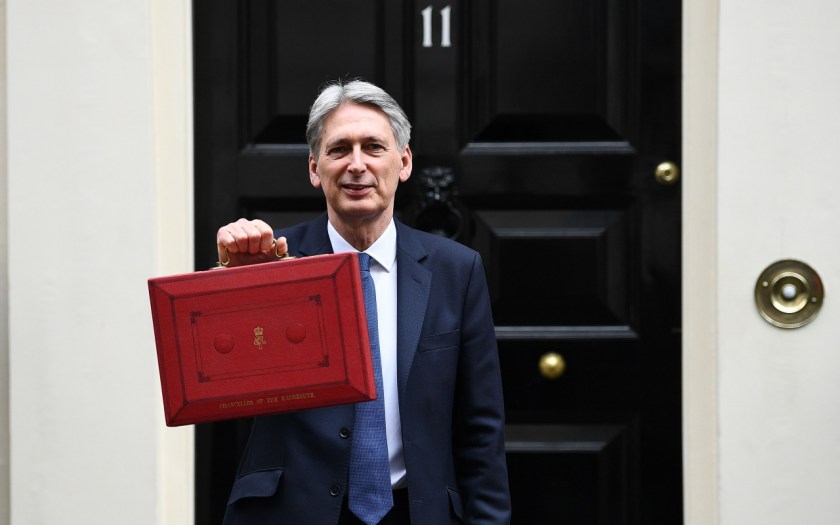
Chancellor Philip Hammond – skating on thin ice

This Wednesday (22nd November) brings another Tory budget.  No doubt it will be as devoid of ideas or purpose as the many that have preceded it over the past decade.  The only real purpose behind the George Osborne budgets in the ‘coalition’ years was to ensure that the austerity policies cushioned the rich, while making the poor the scapegoats for the gambling debts of the bankers, which led to the financial crash.  No amount of sugar coating can lead to any other conclusion.

George Osborne did at least have a constituency within his own party supporting him.  He also had the backing of his Prime Minister, David Cameron.  It appears that current UK Chancellor, Philip Hammond, has neither of these things.  He is barracked by the Brexiteers who regard him as too lightweight to deliver on their aims to get tough with the EU.  On the other hand, the Tory Remainers do not regard him as having enough clout to fight their corner in Cabinet and back him only in so far as any replacement may be worse.

It is widely believed that, had she not called an election which reduced her majority and therefore her room to manoeuvre, Theresa May would have sacked Hammond in a post-election re-shuffle.  To suggest that the Chancellor is skating on thin ice is to put it mildly.

Then again, the Tories are collectively skating on ideological thin ice.  The Eurosceptic faction having succeeded in getting Brexit through, the major impact upon the Tories appears to be to have split them in two.  If the referendum outcome itself was evenly balanced, the impact of the outcome has put internal relations in the Tory party on a knife edge.

Boris Johnson is the most obvious indicator of internal dissatisfaction, with regular missives in the Tory press outlining his position on Brexit, part of a naked power play for the leadership.  Jeremy Hunt has been openly critical of investment levels in the NHS while Business Secretary, Sajid Javid, has committed something close to heresy in Tory circles by calling for more investment in public sector housing.

The antics of former International Development Secretary, Priti Patel, on a so-called holiday in Israel hardly meet the convention of collective Cabinet responsibility.  Michael Gove, it is said, has been stepping well beyond his brief as Environment Secretary at recent Cabinet meetings and making economic pronouncements, in a thinly veiled pitch for Hammond’s job.  Former Defence Secretary, Michael Fallon, has recently seen a career characterised by selling arms to dictators and supporting NATO intervention in the Middle East, collapse in even greater ignominy.

Nothing Hammond says on Wednesday will put this particular iteration of Humpty Dumpty back together again.

The Labour Party may not be a paragon of unity.  Factionalising against Jeremy Corbyn has gone on ever since he was elected leader and will no doubt continue once he gets the keys to 10, Downing St.  However, the momentum following the election is clearly with Corbyn.  Even the dullest of Labour MPs can see that and will toe the line if only to keep their own jobs.

For the budget on Wednesday Labour Shadow Chancellor, John McDonnell, is calling for an emergency budget for public services, a budget which will put the needs of the many before those of the few, the poor before the needs of the rich.

There are five core demands at the heart of Labour’s alternative budget:

  • Pause and fix universal credit
  • Lift the public sector pay cap
  • Infrastructure spending to boost the economy
  • Support for public services in health, education and local government
  • A large scale housebuilding programme

It is hardly a programme for revolution but it is the basis from which an alternative  economic strategy can be delivered.  Even within the constraints of 21st century capitalism, it is a programme which could at least begin to change the emphasis of economic thinking.  It is certainly the basis upon which Labour could credibly build an election victory.  With the Tories in complete disarray, that opportunity cannot come too soon.


Boris Johnson should go

12th November 2017

Today Labour Leader, Jeremy Corbyn, in an opinion piece for The Observer, called for the sacking of the UK Foreign Secretary, Boris Johnson.   His argument is reproduced in full below.

 Boris

Beyond a joke – UK Foreign Secretary, Boris Johnson

Theresa May should never have appointed someone as Britain’s top diplomat who had accused Barack Obama of being anti-British because he’s “part-Kenyan”, and notoriously wrote about “flag-waving piccaninnies”.

Now, after 16 months of the foreign secretary damaging Britain’s standing in the world, she should sack him.

With shocking callousness, Boris Johnson caused outrage last month by declaring that the Libyan city of Sirte could become “the next Dubai” once they “clear the dead bodies away”.

Making jokes about people killed in a civil war, (in which the Conservative-led government intervened militarily and which has made us less safe), is breathtakingly crass and was rightly condemned by Tory MPs as well as Libyan leaders.

His colonial throwback take on the world is completely out of step with the reality of our diverse and modern country and the views of our people. We should embrace the 21st century, not hanker after the 19th.

In his first conference speech as foreign secretary, Johnson referred to Africa, a continent of more than 50 states as “that country”. He claimed that life expectancy in Africa “has risen astonishingly” as it “has entered the global economic system”. Sadly, life expectancy has not risen astonishingly across the continent in the last 30 years and has fallen in several countries.

Britain’s top diplomat needs to be a leader in cultural sensitivity, but he repeatedly lets our country down.

He thought a Sikh gurdwara the appropriate place to discuss Indian whisky tariffs. Johnson was forced to apologise when it was pointed out that alcohol is prohibited in Sikhism.

Advertisement

On an official trip to Myanmar, Johnson was captured on film embarrassing his hosts by reciting a colonial era poem in a sacred Buddhist site. Britain’s ambassador Andrew Patrick was forced to intervene to tell him it was inappropriate. Once again, Johnson showed his nostalgia for a brutal imperial past.

Johnson has not learned how to be diplomatic or represent our country.

And now we have the heartbreaking case of Nazanin Zaghari-Ratcliffe, whose future liberty is under threat because of Johnson’s serial bungling. The foreign secretary should have the decency to say clearly and unequivocally that he was wrong and do everything possible to make sure she isn’t punished for his cavalier mistake.

With growing tensions on the Korean peninsula, we need serious diplomacy and nuclear armed states to re-engage with the process of meaningful multilateral disarmament. Johnson has failed to provide it, ducking our international obligations under the nuclear non-proliferation treaty.

We’ve put up with him embarrassing and undermining our country through his incompetence and putting our citizens at risk for long enough. It’s time for Boris Johnson to go.


UN votes 191-2 to end US blockade

5th November 2017

IMG_20171020_142654

At the United Nations General Assembly on 1st November 2017, the world voted with Cuba in support of a resolution calling for an end to the 55 year old US blockade of the island.

The final vote, 191 to 2, saw the United States isolated, as only it and Israel voted against all 191 other member states. Although the vote is non-binding it sends a clear message to the United States government that it stands alone when it comes to its policy of blockade

In 2016, the US historically abstained for the first time after 24 years of voting against the resolution. In her speech to the UN, Nikki Haley, the US ambassador told the organisation said that they were reversing this decision since the US people had spoken by electing a new president (Trump) who supported the blockade.

She described the debate on the blockade at the United Nations as “political theatre” and said the US delegation was voting to continue the blockade out of solidarity with the Cuban people. Josefina Vidal, Cuba’s chief negotiator in talks with the US, branded these comments as disrespectful to the United Nations and an insult to Cuba.

Nikki Haley’s comments also contradict US public opinion which is in favour of normalising relations with Cuba and ending the blockade. On Tuesday 31 October a group of democratic senators urged Trump by letter to abstain from the vote again. “Our failed embargo against Cuba has been repeatedly and publicly condemned by the international community as ineffective and harmful to the people of Cuba,” the senators wrote. “The longer we maintain this outdated Cold War policy the more our international regional credibility suffers.”

Opening his speech to the UN, Bruno Rodriguez, Cuban Foreign Secretary, condemned the “offensive and interfering” statement made by Nikki Haley.

He described the blockade as “a flagrant, systematic and massive violation of the human rights of all Cubans.” “It can be described as an act of genocide”, and “an obstacle to the humanitarian support that Cuba offers to 81 countries of the global South,” he said.

Country representatives from across the globe spoke in support of the Cuban resolution, praising the country for the international solidarity that it provided to many poor nations in the form of medical brigades and training, despite the effects of the blockade on its own economy. They also lamented the deteriorating relations between the US and Cuba following the election of Donald Trump and called on the US to return to the path of respectful relations with the island.

In response to the vote, CSC director, Rob Miller said:

“This is a cynical move by the US government. The Trump administration, in its desperation to appease right-wing politicians, is systematically destroying the last two years of progress in diplomatic relations between the two countries.

“At a time when the island needs materials and equipment to aid its recovery from Hurricane Irma, the US policy appears more vicious than ever. It is vitally important to maintain the international campaign against the US blockade so that the US government receives a clear message that the rest of the world supports the Cuban people in their call to end this cruel and archaic policy.”

 
Continue reading “UN votes 191-2 to end US blockade”

Venezuela votes for progress

30th October 2017

Maduro

Venezuelan President Nicolás Maduro

Little media coverage over the past week has been devoted to the outcome of the recent regional elections in Venezuela.  Given how much energy was devoted to the build up to the elections this should be something of a surprise.  It is not though, is it?  Why not?  Because the Venezuelan people did not vote the way in which the United States, the UK and the European Union wanted.

Every effort was made to persuade them.  Right wings groups organised anti-government violence in the weeks leading up to the poll, resulting in 100 deaths.  International media in the West gave the impression of lawlessness and chaos throughout the country.  From the coverage afforded the elections in the West it was evident that President Maduro had little or no chance and was on the brink of being swept from office.

In fact, the United Socialist Party of Venezuela (PSUV) won 18 of the 23 governorships up for election.  The opposition lost all three governorships won in 2012.  Overall participation rates were at 61%, up from 54% five years ago, although a disbelieving New York Times asserted that “turnout appeared to be lower” while the international Reuters agency claimed that voters had been forced to turnout at gunpoint!

Opposition to the newly formed Constituent Assembly did not stop 8 million turning out to vote on the 30th July, giving the government a further significant boost.  For the regional elections held in October the opposition combined their street violence with an exhortation to “vote against the dictatorship”.  Inevitably, given the outcome the only course left for the opposition was to claim that the results were “fraudulent”.

The claims of fraud have no substance and are not upheld by international observers.  Even some defeated opposition candidates have had to concede that the claims have no substance.

In typical fashion, supporting a US leaning opposition, the Trump administration backed the overthrow of the Maduro government, by whatever means.  Having failed to do so by a democratic route the fear is now that the US will resort to increased sanctions against Venezuela or even follow up on Trump’s threat of military intervention.

With clear support from the poor and working class sections of the population, it is crucial that the PSUV maintain momentum in advance of the presidential elections next year.  It would be remarkable if the economic war waged by the US and its allies was not stepped up in the coming months and more remarkable still if there is any let up in the anti-government media campaign.

Like Cuba, with whom the Venezuelan government have close relations, the emphasis of the PSUV has been on investing in the needs of the people through education and healthcare.  With the assistance and solidarity of Cuban medicals teams Venezuela achieved nationwide health coverage for its people in April this year, a major success for a developing nation.

Following the recent elections Cuban President Raúl Castro sent a message of solidarity to the government of Venezuela, stating,

“I congratulate you for the results of the state elections. Venezuela has given another great lesson in peace, democratic vocation, courage, and dignity.

The legacy of Chávez is alive. He and Fidel would be very proud of this victory.

You can always count on the support and solidarity of Cuba.”

Sentiments we should all echo and endorse.


Dialogue of the deaf

22nd October 2017

Puigdemont

Carles Puigdemont – a leader for the people?

The current situation in Spain has been described as a “dialogue of the deaf” by the Communist Party of Spain (PCE) as Catalan president, Carles Puigdemont, and Spanish Prime Minister, Mariano Rajoy, look set to go head to head over the question of the legitimacy of the current claim for independence for Catalonia.

Following an emergency Cabinet, Rajoy has invoked article 155 of the Spanish constitution in order to “restore the rule of law, coexistence and the economic recovery and to ensure that elections could be held in normal circumstances.”  This clears the way, pending endorsement by the Spanish senate, to direct rule from Madrid, with the powers of the existing Catalan government being assumed by the relevant ministries in Madrid.

Rajoy has claimed that the intervention will not be a permanent one but is based upon relieving from their duties those who have acted outside of the constitution.  On this basis the prime minister claims that fresh elections in Catalonia will be called within six months.

The mobilisation in Catalonia, which focussed upon the referendum of 1st October this year was a clear expression of frustration that the Spanish state has refused to negotiate seriously to address the concerns of a strand of nationalism in Catalonia.  However, while the pro-independence vote was overwhelmingly in favour, it was only on the basis of a 43%turnout.  It is not clear that independence has majority support across Catalonia.

The reaction of the Popular Party government to the referendum, attempting to stop people voting, arresting nationalist leaders and invoking the Spanish monarchy to condemn the referendum, while failing to oppose state violence from the Guardia Civil, has been widely condemned.  However, as the PCE point out “that cannot legitimise a Unilateral Declaration of Independence (UDI) as if it had been a Referendum held in normal conditions.”

There are question marks over the motivations behind the current nationalist push.  The Morning Star (10th October 2017) noted that,

“Puigdemont has dedicated his political life to Catalan nationalism, always showing far more enthusiasm for keeping wealth in the hands of Catalonia’s landowners and business classes than for sharing any of it with the workers and families of either Catalonia or the rest of Spain.”

There is also the apparent decline in support for Catalan independence from a high of 50% in recent years to around 41% a couple of weeks ago.  The confrontational approach taken by the Spanish government may yet buoy those figures.  The almost half a million strong pro-independence demonstration in Barcelona at the weekend suggests that there remains a substantial body of opinion in favour.

The PCE have made it clear that they do not support the actions of the Spanish state and have called upon Rajoy to, “abandon the repression, stop using the Prosecutor’s Office as the armed wing of the Government to promote the imprisonment of social leaders and admit that it is necessary to change the constitutional framework to respond to the need to guarantee by law social, democratic rights and allow the different peoples of the Spanish State to decide freely and democratically their future.”

The inflexibility of both Puigdemont and Rajoy is in danger of pushing Spain to the brink of major civil unrest with neither side offering anything which would improve the lot of the ordinary Spanish people.  While nationalism is often seen as the standard bearer of progress, with the plucky little David standing up against the bureaucratic Goliath, it can more often be the standard bearer of a new ruling class looking to carve out their own niche.

In the UK the example of Scotland is salutary.  While the Scottish Nationalist Party struck a radical pose in opposition to weak Labour Party leadership, they are exposed as little more than diluted liberals at best when set alongside the more radical option of Labour under Jeremy Corbyn.  It will be interesting to see how far their vote dwindles at the next General Election.

In Spain the PCE continue to call for a federal Spain based on social rights for all and solidarity between the peoples, with the right of national self-determination guaranteed in the constitution.  That also means ditching the reactionary monarchy and returning Spain to being a republic.  How much of such a programme either Puigdemont or Rajoy support would be a measure of how much their posturing is in support of their people or their own class interests.