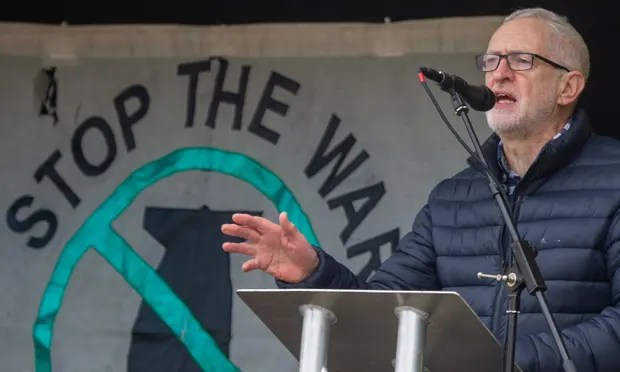
Stopping the War the first priority

25th February 2023

The first anniversary of the Russian intervention in Ukraine has seen a propaganda frenzy in the British media extolling the supposed virtues of the Ukrainian government. Ukrainian President, Volodymyr Zelensky, was afforded a prime time TV interview with the BBC’s imperialist apologist, John Simpson, to mark the anniversary of the war and was given a characteristically easy ride.

While the British media coverage continued its focus upon the demonisation of Russia, and Prime Minister Rishi Sunak called for more arms to be poured into the conflict, China was proposing a 12 point peace plan as a basis for ending the war.

Earlier in the week the US Secretary of State, Anthony Blinken, had suggested, without evidence, that China was considering supplying weapons and ammunition to Russia.  The assertion was repeated throughout the week in US and British media with the suggestion that such action by China would be adding fuel to the conflict.  The millions of dollars worth of weapons poured into Ukraine by NATO clearly not adding any fuel in the media’s eyes!

The Chinese plan was met with characteristic scepticism by the leader of the imperialist world, with US President Joe Biden commenting,

“Putin’s applauding it, so how could it be any good? I’ve seen nothing in the plan that would indicate that there is something that would be beneficial to anyone other than Russia.”

As Left wing German MP, Sevim Dağdelen, stated at an international conference in Havana in January,“those who seek war send weapons; those who seek peace send diplomats”.  It is clear on which side of that assertion, Joe Biden stands. 

The history behind the war in Ukraine is given little media coverage in the West but is important to an understanding of the reasons for the present conflict. The war is the direct consequence of NATO’s eastward expansion after the end of the Cold War.  The expansion of NATO, to effectively encircle Russia, positioning increasing numbers of troops and weapons close to Russia’s borders, was clearly seen as a threat by Russia to its own security. In this respect, the accession of Ukraine or Georgia to NATO were unmistakably seen as red lines.  The demands for both EU and NATO membership from the current government of Ukraine are only serving to exacerbate this situation.

The failure of the Ukrainian government to adhere to the Minsk accords, agreed in 2014, effectively extended an ongoing conflict in the predominantly Russian speaking Donbas region of Ukraine, which saw 14,000 casualties in seven years.

A key factor driving the war in Ukraine is the desire of the United States to preserve its global dominance in the face of the rising economic power of China in particular.  The US has endeavoured, since the end of the Cold War, to prevent the creation of a common security system in Europe that includes Russia. The resultant war is partly due to the inability of Europe and the EU to act independently of the United States and to develop a policy in line with the interests of the people of Europe as a whole, including Russia, aimed at peace, stability and prosperity.

Across Europe, the war is having profound economic consequences.  The militarisation which follows from the mobilisation against Russia is creating widespread economic misery, energy price rises and increased daily living costs for working people across the continent.  While the low paid, unemployed and refugees fleeing persecution are in despair, at trying to meet the rocketing cost of energy and food, the shareholders of energy companies continue to rub their hands in glee, reaping billions in windfall profits.

A compelling argument has been made that the US, with Norwegian complicity, blew up the Nord Stream pipeline, cutting off supplies of Russian natural gas to Europe and increasing European dependence upon US imported liquefied natural gas imports. https://seymourhersh.substack.com/p/how-america-took-out-the-nord-stream

The war is also having an increasing impact on the poorer countries of the Global South. Rising food and energy prices, the spread of hunger and poverty and the stifling of economic development in these already vulnerable parts of the world are the devastating consequences. Given the global impact of the war and the way in which the so-called “rules-based international order” propagated by the West has lost credibility, it is understandable that many states in Africa, Latin America and Asia have refused to take sides in the war in Ukraine.

Many nations in the Global South are clear that NATO and its allies are behaving hypocritically by asserting that the Russian attack on Ukraine marks an unparalleled violation of international law. NATO is seen as sidestepping its own history of illegal wars, involving crimes against human rights, the bombardments of civil infrastructure, extrajudicial executions and the selective application of international law. 

None of this has strengthened the credibility of the West in relation to Ukraine in the Global South, as demonstrated in the recent United Nations vote, when many abstained from supporting a Western backed motion condemning the Russian intervention.

Given the impact of the war on the Ukrainian people, and those in many other parts of the world, along with the real danger of nuclear war, ending the conflict must be a priority. The forces for peace and social justice across the world are this weekend organising widespread protests, focussing their appeals for a ceasefire and a diplomatic solution that will bring an end to the war.

The Western strategy of seeking to defeat Russia militarily by providing Ukraine with increasing supplies of heavy armaments is dangerous and irresponsible. Russia is a nuclear power and is not prepared to give up its existential interests. The arms supplies are prolonging the war and creating a risk of escalation to a third world war.

Like all wars, the war in Ukraine must be ended through negotiation. It will not be possible to arrive at a peaceful solution by unilaterally blaming Russia for its actions, while not addressing the issues of ongoing NATO enlargement and the need for Ukrainian neutrality.

The first anniversary of the conflict in Ukraine should be a time, not for an escalation of the conflict but for peace to prevail, for the sake of all of the peoples of Europe and the world.

Beyond the present conflict the issue for the Left across Europe must be to raise the question of the dissolution of the aggressive military alliance, NATO, and the establishment of a new security architecture across the continent, which is not aimed at intervening to support or initiate aggressive actions.  While the Russian intervention in Ukraine is difficult to justify the overwhelming response of the Western powers and their military wing NATO cannot go unchecked.

Without taking on this challenge the prospects for a negotiated settlement of the present conflict, or of preventing any future outbreaks, are greatly diminished.  

Latest twist in the fight for Labour’s future

18th February 2023

Jeremy Corbyn – victim of a witch-hunt of the Left by Kier Starmer

It may not say ‘New Labour’ on the label but Kier Starmer’s retreat from anything resembling socialism, to a European Social Democratic model for the Labour Party, took another step forward this week.  Starmer made it clear that former leader, Jeremy Corbyn, would not be allowed to stand as a Labour candidate at the next General Election.

Starmer left no room for equivocation in relation to his opinion stating,

 “Let me be very clear, Jeremy Corbyn will not stand at the next General Election as a Labour Party candidate.  The party is unrecognisable from 2019 and it will never go back.  If you don’t like that, if you don’t like the changes we’ve made, I say the door is open and you can leave.”

Quite how Starmer’s view aligns with the actual selection rules for Constituency Labour Party branches is another matter, although the right wing in Labour have historically found ways of imposing candidates on branches in the past, through a variety of arm twisting methods.

Corbyn was expelled from the Parliamentary Labour Party in 2020 for suggesting that the findings of the Equalities and Human Rights Commission (EHRC) investigation into anti-semitism in the Labour Party had been grossly exaggerated.  There is little doubt that the EHRC investigation was part of the orchestrated right wing and media campaign to smear Corbyn in the run up to the 2019 General Election, paving the way for the ill fated victory of the Tories under Boris Johnson.

More important for the ruling class than putting Johnson in No10 however was ensuring that Corbyn was kept out and a programme which could begin to challenge the entrenched interests of capitalist corporations and the City of London would not see the light of day.

As a willing puppet, Starmer was complicit in the smearing of Corbyn and the subsequent backtracking on the policy agenda for change, which had been initiated under Corbyn’s leadership, and was reflected in the 2017 and 2019 election manifestos.

The prospect of a mass popular base developing, around policies which would begin to challenge the power of capital, through nationalisation of key sectors such as energy, rail and mail; investing in the development of green technology; and tackling the inequities in the tax system for wealthy individuals and companies, was a step too far for British capitalists to tolerate.

Though the proposals of Labour under Corbyn would only begin to make a dint in the power of capital in Britain, the fact that they were leading people to question the system itself, question the reasons for the scandalous rise in billionaires while others lived in poverty or on the street, was enough to worry the ruling class.

The ever willing state run media, through the BBC, enthusiastically echoed the positions adopted by those expressing concern in the ‘national interest’, about the prospect of a Corbyn led Labour government.  Starmer weighed in as a vocal supporter of the so called People’s Vote campaign, pressing for a second referendum on Brexit, in contradiction to Labour’s declared policy of honouring the 2016 referendum outcome.

The anti-semitism campaign was the reactionary’s coup de grace, effectively accusing a lifelong anti-racism campaigner of racism and citing his support for the Palestinian people as evidence!

Starmer clearly wants to put the issue of Corbyn’s candidacy to bed well ahead of the next General Election and send a signal to the Left that the coup d’etat he helped engineer has been successful.  However, he may find that things are not so straightforward.  Quite apart from the Labour Party rule book issue there is that of natural justice.  Added to that is the potential for fightback from within the Labour Party, by Left activists and trade unions, keen to see policies which will address the needs of working class communities.

Any Left wing leader behaving in as high handed a fashion as Starmer would be branded Stalinist by a baying media.  Starmer will no doubt escape that fate but the inconsistency of a former Director of Public Prosecutions not being able to stick by his own party’s rules will be noted by many.

Distancing himself from Corbyn sends out a signal from Starmer to the ruling class that he has done their bidding and is making Labour safe for capital.  The ruling class have certainly obliged in boosting his electoral chances by handing him a Tory Party in a state of disarray.  In similar circumstances, in 1945, 1964, 1974 and 1997 the Tories have resorted to their tried and tested approach; retreat, regroup and return.  In spite of their own internal difficulties there is every likelihood that they will look to do the same again, seeing Starmer and his front bench playing no more important a role than keeping their seats warm.

As things stand, Starmer is likely to get the keys to 10, Downing St in less than two years.  The price paid though will have been a massive one and Labour’s commitment to real change quite possibly diluted beyond recognition, at least in the short term.  Fighting for the right of Jeremy Corbyn to stand as a Labour candidate is not a case of fighting past battles.  It is a fight for Labour’s future.

The mass extra parliamentary action which has developed in the current strike wave, challenging the government’s economic narrative that there is no money, or that wage rises fuel inflation, has kept the issue of challenging capitalism as a system on the agenda.

Organised working class resistance to attacks upon terms and conditions will erupt, whovever hold the keys to Downing St, but harnessing that energy into a political force for change remains the real challenge. That will require a focus upon the strengthening, not just of the Labour Party as a Parliamentary vehicle, but the whole Labour Movement as an expression of dissatisfaction with the class basis of British society.

Starmer may think that he is moving towards making Labour safe for capital but capitalism will never ensure the safety of the working class. The struggle to move beyond captalism and towards a socialist society, which can truly meet the needs of the people, rather than simply deliver profits to the billionaire few, will continue whether Starmer likes it or not.

The door is open. If he doesn’t like it, he can leave.

Iran – danger of outside intervention escalates

11th February 2023

Tehran – protests continue in the Iranian capital

Today (11th February) marks the 44th anniversary of the revolution in Iran. The developing situation in Iran at present, and the international response to it, underlines the danger of widespread war in the Middle East as the struggle for political control in the region unfolds.

The stolen 2009 election, which saw the return for a second term of populist Islamist Mahmoud Ahmadinejad, resulted in widespread protest on the streets of Iranian cities and gave birth to the so-called Green Movement, which demanded reform within the Iranian political system.  Mir Hossein Mousavi, the popular candidate who on all accounts had been considered as winner refused to accept the result and the mass protest of millions overwhelmed Iran for almost 8 months.  Mousavi has lived under house arrest till now. 

Last week Mousavi called for a peaceful political transition from the current Islamic Republic to a democratic secular model based on the continued and legitimate demands of the people of Iran.  Strikes and protests have been engulfing the country since 2017, as workers demand improvements in pay and conditions, along with meaningful trade union recognition.

There were mass uprisings in January 2018 and November 2019, and again last year, with various important ‎economic triggers, for example, the three-fold increase in the price of fuel.  There have been ‎labour strikes, teachers’ strikes, as well as numerous protest rallies held by ‎pensioners, nurses, and others.  Therefore, the factors behind the current uprising were already present and waiting for the spark which would ignite the fire. 

That spark came with the news of Mahsa Amini’s killing on 16 September 2022.  Street protests were a feature of Iranian life long before the murder in custody of Mahsa Amini but have intensified since then.  The momentum has the potential to pose a real existential threat to the Islamic regime.

Latest statistics from human rights organisations estimate that at least 500 people, including 70 minors, are known to have been killed.  Hundreds more have been injured and maimed during the current wave of unrest. More than 20,000 people have been arrested in connection with the protests during the same period.

The Iranian government has recently announced a pardon for those involved in the protests.  However, those who are deemed to qualify for a pardon are expected to admit that they were wrong to engage in protest action and commit to not engaging in such action in the future.  

So far, four of the detained protesters have been executed, in December and early January. More than 100 other detainees have been sentenced to death and are at imminent risk of execution. Fortunately, in the last five weeks, none of the detained protesters are reported to have been executed. This is mainly due to the international outcry that followed the last executions, along with protests and appeals from around the world for a halt to the other death sentences being carried out.  It is clear that the Islamic Republic dictatorship is feeling the heat and pressure in this respect, at least for now.

The executions follow a tragically familiar pattern in Iran where the accused have no access to lawyers or family members and are subject to horrific beatings and torture throughout their detention. “Confessions”, which are then publicly broadcasted via regime media, are routinely extracted through torture and have no real evidential value.

Instability inside Iran is attracting significant external interest as the enemies of the regime begin to mobilise in anticipation of its collapse.  On the one hand there is the increasing threat of military intervention from Israel.  At the end of January an Iranian military installation in Isfahan came under drone attack.

Reports of the impact of the attack are conflicting.  Iranian state media claim that the drones were destroyed, with limited impact upon the complex at Isfahan.   The Wall St. Journal describes the attack as “the work of Israel”, while the Jerusalem Post suggests that the drone strike had been a “tremendous success.”

Whatever the truth of these reports there is consensus that an attack took place, an indication that the scope for foreign intervention in Iran is being tested, the consequences of which could lead to wider conflagration in the region.

Just days before the drone attack, the Israeli President, Isaac Herzog, had called for NATO to confront “Iranian threats” and urged member countries to toughen their approach against the Iranian regime.

According to Euronews, after meeting with the NATO Secretary General, Jens Stoltenberg, Herzog stated: “The illusion of distance does not stand anymore. NATO should take the strongest possible stance against the Iranian regime in the form of imposing economic, legal, and political sanctions, as well as adopting a credible approach to militarily deterring this regime.”

Also circling are supporters of Monarchy, endorsing exiled Reza Pahlavi, son of Mohammad Reza Pahlavi, the last Shah of Iran, suggesting that Monarchy could be the way to “lead a transition” when the Islamic Republic falls.  While there is no evidence for popular support for a return to Monarchy within Iran, there is every possibility that a dictatorship compliant with Western interests may be deemed an option, if foreign intervention is stepped up to accelerate regime change. 

The demands of the current popular protests are for peace, democracy and social justice.  Neither foreign intervention, Monarchy, or a combination of both, will deliver these demands for the Iranian people. 

The drone attacks on the military complex in Isfahan must be condemned, as such dangerous military adventures pose a threat to the Iranian people, the Middle East, and the Persian Gulf region.  All progressive and freedom-advocating forces in the region and around the world must raise their voices in protest against these policies.  The genuine protests and demands of the Iranian people must be supported and the future of Iran must be entirely in their hands.

Further information at www.codir.net

Prepayment, pushback and profits

4th February 2023

Energy companies – continue to pile on the profits

The means by which the working class in Britain are persecuted are many and varied.  Poor housing, increasingly limited educational opportunities, limited apprenticeships for skilled work, low pay, zero hours contracts, limited trade union rights, the list goes on.  Add to this the so called cost of living crisis (in reality a crisis of profits for capitalism), in particular relating to energy bills, and life for many of the poorest in our communities is little more than miserable.

In such circumstances it is no surprise that some may fall behind on bills as they try to square the heating or eating circle, forced to make impossible choices in order to stay warm, maintain good health and survive to the end of another week. 

Into this mix add the practice of energy firms forcibly installing prepayment meters, resulting in many vulnerable families being at risk of having their power cut off, if they cannot afford to top up.   Prepayment meters are generally more expensive, meaning that the scam perpetrated by the energy companies does not just put vulnerable families at risk it helps ramp up their already obscene profits.

The energy watchdog, Ofgem, having finally woken up to the practice of forced installation, has asked the energy firms to review how they deal with customers who fall behind on their bills.  The public furore over the practice has forced the energy firms to step back and most have now said that they will suspend all prepayment warrant activity, the polite euphemism for breaking into people’s homes, “at least until the end of winter.”

British Gas, one of the main perpetrators of the breaking and entering scam, have attempted to blag their way out of their responsibility by claiming that, “It’s not how we do business.”  This may be a thinly veiled effort to shift the blame onto the bailiffs they employ to break doors on their behalf but there is certainly no indication that British Gas are returning any excess profits accrued as a result of their nefarious actions.  It is very much how they have been doing business and may continue to be the case after “the end of the winter.”

Like a bankrobber counting the loot from his latest heist, ending forced entry is the least the energy firms can do, though it sounds a lot like saying, we have fleeced you enough for now but we will be back….

As robbery goes the energy firms could easily teach the average safe cracker a thing or two.  Shell this week announced profits of £32.2 billion for 2022, the highest in its 115 year history!   The company is valued at £168bn but lobbied hard against a windfall tax on the basis that it would hinder energy investments.  The reality of how Shell spends its profits is quite different however. 

The think tank Common Wealth has found that in the final quarter of last year Shell invested £871 million in exploring hydrogen and carbon capture and storage.  Shareholder dividends for the same period totalled £5 billion while marketing cost the company a cool £1.6 billion.  Apparently, shareholders will also benefit from a £3.2bn share buy back scheme. 

This is hardly the action of a company committed to forging ahead in pursuit of renewable energy sources.  On the contrary, a complaint has been filed in the US accusing Shell of including investments in gas under the label of renewables.

While the Tories did, under pressure, introduce a form of windfall tax on the profits of energy companies, calls for this to be made tougher are growing.   There is no indication at present that the Tories will relent with Prime Minister, Rishi Sunak, more content to applaud Shell’s “substantive investments here in the UK.”

Nor is the government prepared to tighten the law when it comes to constraining the issuing of prepay warrants and the forced installation of meters, stating through an unnamed spokesman that,

“The independent regulator Ofgem operates the licensing regime for energy suppliers.  They have the power to fine suppliers who do not comply with their licence conditions.”

In effect the government is confirming its complicity in attacks upon the most vulnerable families, while doing its utmost to protect the methods of those prepared to maximise their profits by any means, at anyone’s expense.

The current strike wave is a clear demonstration that resistance to the Tories is growing and that their actions are clearly based on protecting the interests of their own class, rather than some spurious notion of the ‘national interest’. 

Linking organised trade union action to community resistance will be vital to taking the struggle against the Tories to a new level in the political arena.  That will require a commitment that the energy companies must be nationalised, in order to serve the interests of the many, not the few wealthy shareholders, as at present. That would be a real commitment to the national interest. Labour need to wake up to the need to take the lead on this issue or they may well be left behind.

Empty

28th January 2023

Nothing in the tank – Chancellor Jeremy Hunt fails to enthuse even his own supporters

Britain’s Tory Chancellor, Jeremy Hunt, claims to have a plan for economic growth.  As he and his political predecessors have presided over the active de-industrialisation of Britain for over 40 years this news was not greeted by thousands pouring onto the streets, to await words of wisdom from the Chancellor.  Thousands have continued to swell the ranks of picket lines however, protesting the case for better pay, terms and conditions.

Undeterred by the evidence of political chaos and the sounds of the crumbling economic edifice all around him, Hunt pressed on regardless.  He was at least conscious of the dangers of making any pronouncements in a public sector building, so retreated to the safety of the City of London, choosing the headquarters of the financial data and news service Bloomberg.  No nasty picket lines there and no one worrying about their next meal, their wait for a hip operation or how they were going to pay the energy bills.

Scene set, what did the wisdom of Jeremy Hunt consist of?  Well, in typical soundbite fashion, Hunt explained that he wanted to focus on ‘the four Es’; enterprise, education, employment and everywhere.

On the issue of enterprise Hunt was keen to see Britain as a leader in digital technology.  Hunt failed to account for the fact that the tech world is united in its criticism of the scale and speed of Britain’s broadband infrastructure, which is becoming more of an impediment than an aid to progress.  The failure of Britishvolt this week to establish the electric battery manufacturing plant in Blyth in Northumberland, also sent out something of a negative signal.  When asked about this during the week the Prime Minister, Rishi Sunak, denied it was lack of government support which undermined the project but a failure of the private sector to cough up enough cash.  

Enterprise, looked wobbly and its prospects were not enhanced by reliance on private companies, BT Openreach and the National Grid, to modernise the technology and electricity infrastructure.   Hunt is clearly relying on the misplaced Tory mantra that the private sector is the engine of the economy.   In reality it is public sector investment, planned and sustained, without which the private sector cannot function, that is the engine of economic growth, even in capitalist terms.

As the party which has done all in its power to dismantle the comprehensive education sector, and continues to champion tax payer subsidised public school education for the privileged few, hopes were not riding high for the second E from the Chancellor; education.

The recent autumn budget did see an injection of £2.3 billion for the schools budget but, far from this being a boost for greater educational opportunity or training pupils for jobs in a bright high tech future, it just about saved them from having to go onto the streets to busk and beg for pencils!   With seven days of strike action by teachers coming up throughout February, in protest at real terms cuts in teachers’ pay, and a struggle to recruit and retain in the profession, Hunt seemed to be out of touch with the realities once again in his second E.

Third E; employment.  The outcome of a confident booming economy where well educated and well trained young people get well paid jobs with prospects of promotion and advancement.  Such an approach would go against the Tory economic model of the past forty years and nothing Hunt said indicated that this would change.  The low pay, zero hours contract, anti trades union, gig economy does not appear to give Hunt any cause for sleepless nights.  Nothing in Hunt’s plan appeared to suggest that there were any issues to address here. 

With even workers at Amazon centres going on strike this week, it is obvious that the bubble is beginning to burst in a sector which has traditionally relied on poor terms and conditions being compensated for by relatively higher pay than low paid public service jobs.  The derisory 50p an hour pay increase offered to Amazon staff contrasted sharply enough with the billions the company made in profits to see GMB membership soar in the past week.

Finally, Hunt moved on the E number four; everywhere.  The government’s failure to give up on the redundant concept of ‘levelling up’ is abject.  The last round of so called levelling up funds saw 60% land in London and the South East; £19m go to the well heeled constituency of one Rishi Sunak MP, Richmond in North Yorkshire; with a few scraps left over to try and shore up so called red wall seats for the Tories, in advance of the looming General Election.  Continuing to labour under the levelling up delusion Hunt nevertheless claimed that the programme would ensure all parts of the UK would benefit from “making Britain one of the most prosperous places in Europe.”

As the world’s sixth largest economy it should not have escaped Hunt’s notice that Britain is already quite prosperous.  The problem, for the majority, is the uneven and inequitable distribution of that prosperity with the number of billionaires increasing at the same time as more people end up homeless and sleeping on the streets.  

In economic terms Hunt and his boss Rishi Sunak behave with the mentality of a couple of barrow boys flogging knockoff kit at a street market.  Shift as much gear as you can, as quick as you can, then do a runner before the cops turn up.  It is no way to run a modern economy, even a capitalist one.

A planned approach to production, investment based on the needs of the people, not the profit margins of private companies, and a socialist approach to economic planning, are the ultimate solution.  These are not approaches which fit the mindset of the Tories and sadly continue to be too taxing for the limited imaginations of those running the Labour Party at present.  The Tories are beyond redemption as dyed in the wool defenders of capitalism.  The hope remains that with pressure and persuasion Labour can change.

The final word on Hunt’s plan for growth however goes to the Institute of Directors, a traditionally reliable true blue Tory supporting institution, who described the content of the Chancellor’s speech with a fifth E; empty.

US malign machinations fuel conflicts

21st January 2023

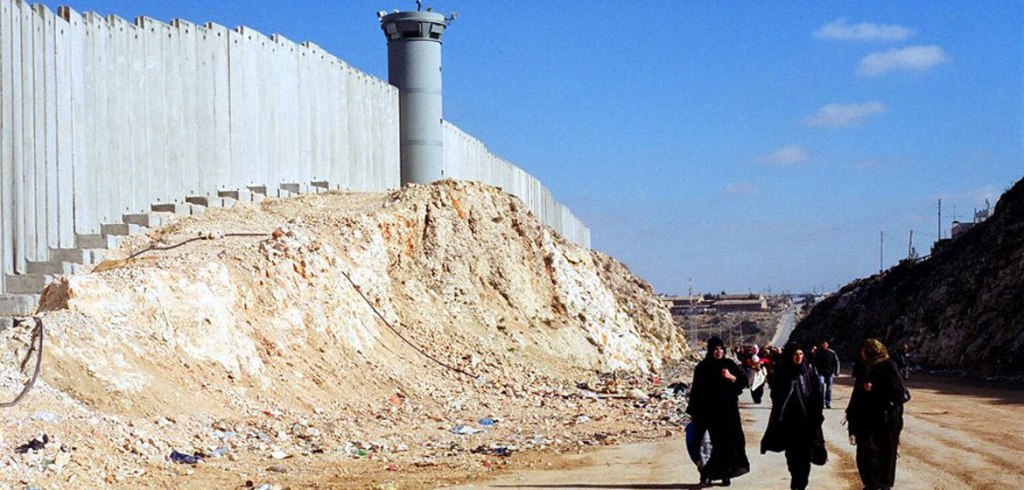
The illegal Israeli wall on the West Bank part of the land grab from Palestinians

Fifty nations, either part of or allied to the NATO military alliance, have been meeting in Germany to decide how much more weaponry they can pour in the conflict in Ukraine.  High on the agenda is how many German built Leopard 2 tanks can be channelled to the right wing nationalist Ukrainian government to extend the war with Russia. 

The meeting did not end in agreement, with Germany reluctant to send more tanks, or grant export licences for other countries to do so, unless the United States committed to sending more of its own tank weaponry.

As a result of NATO’s expansion over the past thirty years, extending its reach ever closer to the borders of Russia year by year, there are thousands of Leopard 2 tanks across Europe.  In spite of the recent failure to reach agreement, there is every likelihood is that they will be mobilised for action in the not too distant future.  With the first anniversary of the Russian intervention looming on 24th February, there can be no doubt that the Ukrainian public relations machine, fronted by President Zelensky, will shift up a gear to pressurise NATO members.

In the meantime, Leopard tanks or not, there is no shortage of weaponry pouring into Ukraine.   The United States, already world leaders in fuelling the conflict, have promised a further $2.5bn in weaponry to prolong the war.  In addition, Britain has committed a further 14 Challenger 2 tanks, while Poland is threatening to go against the Germans and export a similar number of Leopard 2 tanks anyway.  

In spite of this firepower heading their way the Ukrainian pitch is for 300 tanks, necessary they claim, to resist a Russian Spring offensive.  Any talk of peace or a negotiated settlement appears to have evaporated in the frenzy to supply more arms to Ukraine and the increasing tendency for NATO to fall behind the line, articulated by Zelensky, that nothing short of military victory over Russia will be an acceptable outcome.

The Western allies have long contested Russia’s claim to the Crimea, as well as that of the largely Russian speaking Donbas region of Ukraine.   Any chance of reverting back to the Minsk agreements, negotiated with German arbitration in 2014, seems to have been torn up.  While that deal appeared to have a settlement in place, around the largely Russian speaking Donbas, Ukraine never stuck to the deal and thousands have died as a consequence.  This fact was not big news in the West and the Ukrainians, including the neo-Nazi Azov battalion, were given free reign to carry on with their civil conflict in the Donbas region. 

The Western response to Russian intervention in Ukraine contrasts sharply with the response of the Western world to the Israeli treatment of the Palestinians.   In spite of United Nations resolutions calling for a two state solution in Palestine the illegal occupation of the West Bank, Gaza and Golan Heights by the Israeli military has continued, without any significant challenge from the West, since 1967, nearly 60 years.

Following elections in November, the Israeli Parliament in December swore in what is widely acknowledged to be the country’s most far-right, religiously conservative government in history.   The coalition sees the return of Benjamin Netanyahu as Prime Minister.  Netanyahu, who was prime minister between 1996 and 1999, and then between 2009 and 2021, has said that an end to the “Arab-Israeli conflict” would be his top priority, as well as stopping Iran’s nuclear programme and building up Israel’s military capacity.

The new government includes far-right leaders who have been given top posts, such as Religious Zionism leader Bezalel Smotrich, and Jewish Power leader Itamar Ben-Gvir, who previously expressed support for Baruch Goldstein, a Jewish Israeli man who killed 29 Palestinians in a shooting at Hebron’s Ibrahimi Mosque in 1994. The result is a coalition that has explicitly called settlement expansion in the occupied West Bank, its top priority, in spite of such settlement being illegal under international law.

Even before the new right wing coalition takes office the United Nations estimates that  Palestinians have already faced their deadliest year since 2006, after Israel’s outgoing government launched an offensive in Gaza in August, as well as near-daily raids in the West Bank that have led to dozens of killings and arrests.

UN Middle East envoy, Tor Wennesland, told the Security Council in December that more than 150 Palestinians and over 20 Israelis have been killed in the West Bank and Israel in 2022, the highest number of deaths in years.

The UN envoy also said Israeli settlement expansion in the occupied West Bank, including East Jerusalem, remains deeply concerning. The number of housing units advanced in occupied East Jerusalem more than tripled: from 900 in 2021 to 3,100 in 2022.  

“I also remain deeply concerned by the continued demolitions and seizures of Palestinian structures,” said Mr. Wennesland.   “I am alarmed, in particular, by the demolition of a donor-funded school in Masafer Yatta and the stated intention of Israeli authorities to demolish additional structures in the herding communities of that area, which would have a significant humanitarian toll, if implemented.” 

He called on Israel to cease advancement of all settlement activities as well as the demolition of Palestinian-owned property, and to prevent possible displacement and evictions. In calling for an end to the conflict the UN envoy stressed that,

“There is no substitute for a legitimate political process that will resolve the core issues driving the conflict.”  

The same message could equally be applied to the conflict in Ukraine.

Not surprisingly there is no international contact group considering how many tanks can be provided to the Palestinians to defend themselves against Israeli aggression and to uphold international law.

On the contrary, the United States is by far the biggest exporter of arms to Israel. Between 2009-2020, more than 70 percent of the arms Israel bought came from the US. Between 2013-2017, the US delivered $4.9bn (£3.3bn) in arms to Israel.

Under a security assistance agreement spanning 2019-2028, the US has agreed, subject to congressional approval, to give Israel $3.8bn annually in foreign military financing, most of which it has to spend on US-made weapons.

Conflict resolution is clearly not part of the political lexicon of US imperialism.  Whether it is the right wing nationalist zealots in Ukraine, or the right wing religious zealots in Israel, US imperialism is in the thick of fuelling conflict, war and misery for thousands across the globe. 

Anti-war and anti-arms trade activism must continue on all fronts, to combat the malign impact of US machinations. Exposing the role of the US and its allies in fuelling conflicts is the first step on the road to finding solutions based upon peace and mutually agreed boundaries, before escalation goes too far.

Defining ‘our culture’

14th January 2023

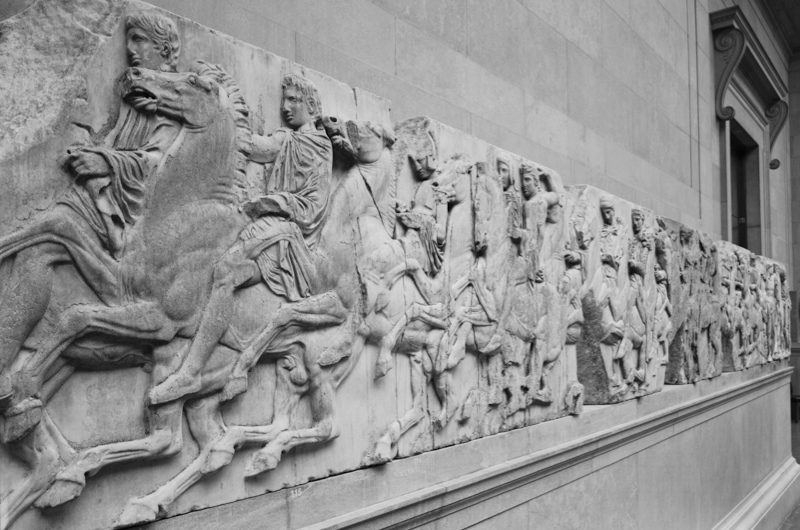
Parthenon Sculptures – not part of ‘our culture’

British Secretary’s of State for Culture rarely make the headlines and the previously unknown and largely anonymous incumbent, Michelle Donelan, has stayed true to form until this week.  What has brought Ms Donelan into the spotlight is the question of the Parthenon Sculptures, known by many to date as the Elgin Marbles.

The sculptures have been in the ‘ownership’ of the British museum since 1816 having been removed between 1801 and 1812 from the Parthenon in Athens, then part of the Ottoman Empire, by British diplomat and soldier, Lord Elgin.  The claim by Elgin that he had permission to take the sculptures is hotly contested.   That they are historical artefacts of significance to Greece, dating back to the 5th century BC, is not disputed.

It should be no surprise that the Greeks have a long standing claim for the sculptures to be returned to Greece, where they rightly belong.  Successive British governments have disputed the Greek claim, on the basis of backing Lord Elgin’s assertion that they were legitimately acquired, and are therefore legally in the ownership of the British Museum.

In an interview with the BBC Culture and Media Editor, Katie Razzall, this week Michelle Donelan went to great lengths to defend the current position.  Donelan claimed that the sculptures “belong here in the UK” and that sending the sculptures to Greece would be a “dangerous road to go down”, going further to suggest that such a move would “open the gateway to the question of the entire contents of our museums.”

Perhaps most significantly Donelan claimed that “it is important that we stand up and protect our culture”.  When being interviewed by news anchor, Sophie Rayworth, about her interview with the Culture Secretary, Katie Razzall picked up on this point in defence of Donelan, suggesting that she ‘mis-spoke’, as the sculptures are clearly part of Greek culture.

As a piece of challenging journalism this is poor in the extreme.  Razzall did not challenge the ‘our culture’ comment in the interview but compounded the error by subsequently going out of her way to leap to Donelan’s defence.

While this underlines much of what we already know about the supine journalism of the BBC it also confirms what we know about the Tory definition of culture.  The culture that Donelan refers to is clearly that of the British ruling class, who have robbed, pillaged and enslaved huge areas of the globe in order to enrich a select few, maintain a privileged aristocracy, and claim any loot they could lay their hands on for personal gain.

The Parthenon Sculptures are part of a long list of artefacts claimed by the ruling class as part of ‘our culture’ including tombs robbed in Egypt, the bronzes from Benin and jewellery from across the world.  Most famous in this regard is the Koh-i-noor diamond, sitting at the centre of the British Monarch’s crown but effectively swindled from the Indian Sikh community by British Imperialism’s 19th century advanced guard, in the form of the East India Company.

The British working class have on various occasions been press ganged, dragooned or duped into engaging in ruling class wars of adventure or plunder.  The frontline in the armed forces are inevitably drawn from the working class, who also bear the brunt of the casualties in any conflict, from the two World Wars of the 20th century to more recent occupations in Iraq and Afghanistan.

That does not mean that such actions are either in the interests of the working class or widely supported amongst the population, though the ruling class mouthpieces of the Mail, Express, Telegraph and The Sun do their best to persuade us otherwise. 

Working class culture is founded on collective action resulting in the formation of trade unions, the Labour Party and a whole range of educational, welfare and community based organisations.  Which is not to say that elements of sexism, racism and jingoism are not present in working class communities, infected by the prevailing orthodoxy within capitalism. 

The difference is that progress to change society in a positive direction comes from working class struggle and collective action.  Such action is always resisted by the ruling class until they are compelled to make concessions.  Any concessions that are made are as quickly eroded when working class organisations are weakened or lacking militant leadership.  

This is not what Donelan is referring to when she talks about ‘our culture’.  On the contrary this is precisely the culture that she and her class want to suppress, in favour of a definition of culture which is distinct from the concerns of working class communities, has a rarefied  boundary and is essentially the preserve of an educated elite.

 Working class culture does emerge however, in the form of writers, artists and musicians who articulate the realities of lives for the underprivileged and oppressed, the victims of capitalism who can only peer in at the window of the world of culture, as defined by Donelan, but who continue to generate their own cultural space in which to survive.

The fate of the Parthenon Sculptures may not be to the forefront for those struggling in the streets of Bolton or Belfast.  Whether they go back to Greece or stay in the British Museum is not going to put food on the table or pay the energy bill.  In the long term however, how we interpret history has a profound effect on the present and is key to shaping the future.  Reclaiming that history for those who have struggled to improve the world, rather than make a personal fortune from it, is a vital first step.

Tackling the people’s priorities

7th January 2023

Starmer and Sunak – New Year face off

In his New Year speech this week British Prime Minister, Rishi Sunak, promised to deliver on the “people’s priorities”.  Needless to say he has fallen at the first hurdle by virtue of still being in office at the end of the week.  The people’s number one priority is clearly to be rid of the self serving, tin eared government he leads but Sunak either missed or ignored that particular priority.

Sunak spotted that NHS waiting times are too long, not news to the rest of the population but as head of the government he is, at least in theory, in a position to do something about it.  Sunak offered nothing.  He did not even offer an apology for the years of failure under successive Tory governments, which has precipitated a health and social care crisis due to the austerity imposed on local government and the privatisation of the care sector, resulting in the obscenity of care for the elderly being run for profit.

In the NHS itself morale is so low that vacancies are running at 132,139 out of a workforce of 1.2 million.  Vacancies amongst nurses alone is at 46,828 the highest on record.  The strike action currently being undertaken by nurses and ambulance workers may soon be joined by junior doctors, who begin to ballot on Monday (9th January), with the prospect of three consecutive days of walkout in March.

It is now widely understood that a major source of pressure upon the NHS is the inability of hospitals to discharge otherwise medically healthy patients, if they need a social care package, as the pressure in that sector is so great due to funding cuts. 

By 2040 it is estimated that the number of those aged 85+ years old will have doubled.  Unless that age cohort are all living miraculously fit and healthy lives the pressure for social care will increase exponentially.  Not only that but the surviving children of this age group will themselves be in their 50’s and 60’s, hardly in a position to easily provide informal care and in danger of having to make demands upon the care system themselves.

The situation is further exacerbated by the impact of Tory austerity cuts upon the arts, museums, libraries and sports services run by local authorities, all proven to be major contributors to maintaining physical and mental health and wellbeing, but increasingly under pressure.

Still, as one of Sunak’s big announcements was to make maths learning compulsory to the age of 18, the younger generation should be well positioned to count the cost of Tory errors.

Rather than seeking to address the source of the current wave of disputes, due to poor pay and conditions, rampant inflation and the cost of living crisis, Sunak plans new anti-strike legislation, first flagged by Liz Truss, to enforce “minimum service levels” in key public sector areas including the NHS and schools.  To suggest that this has drawn a furious reaction from unions is an understatement, as pay awards for the current year continue to be off the government’s agenda for discussion with the unions.

Sharon Graham, the general secretary of the Unite union, said: “Yet again, Rishi Sunak abdicates his responsibility as a leader. Whatever the latest scheme the government comes up with to attack us, unions will continue to defend workers.”

It is clear that the “people’s priorities” that Sunak is trying to address are not the people on the frontline delivering the jobs and services on which the public depend.  As is always the case with the Tories the only “people” being prioritised are the company bosses and shareholders, making a handsome profit for doing little but shelling out donations to the Tory Party in the hope of making it onto the next honours list.

Labour leader, Kier Starmer, also dipped his toes in the waters of a New Year speech this week, edging forward with characteristic caution in spite of Labour’s 20 point opinion poll lead.  Starmer did at least promise to repeal any new anti-trade union legislation Sunak may bring in but did not address that already on the statute books.  He continued to take the market reassuring line of “fiscal responsibility”, promising no big state cheque book and only to spend what is raised.

Quite what this will mean for the massive investment required to renew Britain’s ailing infrastructure, address the pay deficit in the public sector and tackle the inequities in the tax system remains to be seen.  Starmer also promised more devolution, proclaiming “a new way of governing” which would take power out of the hands of Westminster and give it to the regions.  It has a populist appeal but the realities on the ground rarely match the rhetoric.

The much discussed North East England devolution deal, recently agreed, promises £4.2 billion over 30 years.  While this has got a lot of politicians in the region excited what is being promised barely repays what has been robbed from working class communities over many years in the first place.  Secretary of State, Michael Gove, regards the deal as another victory for the so called levelling up programme. 

The reality is however that, under capitalism, the playing field will never be level and the Tories, as the political representatives of their class, will always act in the interests of that class.  Any real levelling up will only happen when the working class is represented by a political movement capable of doing the same in its interest.

New Year’s resolution

1st January 2023

2023 – not such a party for all

However much alcohol they may have consumed the night before, the reality is that for millions of working class people the biggest hangover they will wake up to on New Year’s Day is a financial one.  The fact that they are in this situation, together with millions of others, is scant compensation when the bills continue to roll in and the choice between heating and eating is a very real one.

It’s New Year’s Day why the pessimism, surely this is the time for a bit of optimism, a bit of hope, the turning of a new page as we head into 2023?

It is true that for some the prospects in 2023 do seem brighter than for others, certainly if 2022 is anything to go by.  Estate agents Knight Frank have just published research looking at the sale of “super prime country houses.”   In total 168 homes outside London were sold for more than £5m in the year end to October, the highest number since 2007, the year before the financial crash.

The reason for this? It would appear, according to Knight Frank, that the boom in country mansion sales was as a result of “wealth creation” during and after the Covid pandemic.  This, it would seem, led to a rise in the number of “ultra high net worth” (UHNW) individuals, defined as having a fortune of more than $50 million, now at a record 218,200 level.  

Investment bank Credit Suisse confirm the Knight Frank findings, stating that the world’s richest people benefitted from “almost an explosion of wealth” during the recovery from the pandemic.  Credit Suisse add that the number of people in the UHNW bracket has increased by more than 50% in the past two years. 

For Knight Frank and Credit Suisse the concept of wealth creation appears simply to mean that more people got richer, not that they actually did anything to create this wealth, other than to exploit the labour of others.  In effect, on the back of the hard work done by millions in shops, factories, offices, schools and hospitals, to keep people safe and the economy functioning throughout the pandemic, those who were already remarkably rich, and extremely safe financially, have lined their pockets even further.

It is possible that some of those benefitting from this boom in wealth for the few work in the banking sector.  According to the European Banking Authority there are 3,519 bankers working in Britain who earn more than 1 million (£880,000) a year.  This is seven times higher than Germany, which has the second highest number of €1 million a year bankers in Europe.  

The government appear not to be concerned about inflation when it comes to the eye watering earnings and pay increases in the banking sector or for those profiting lucratively from the pandemic.  For the government inflation only appears to be a threat if wage demands are coming from postal workers, nurses, rail workers, border staff, junior doctors or local government employees.

Of course, this is the economics of setting the rules in order to make sure you win the game, although even many capitalist economists disagree with the assertion that increased wages for low paid workers fuels inflation.  Given that these are the workers on whom economic demand depends, as they are the people who go out and buy goods and services, being able to afford to spend on these things is more likely to aid economic recovery than hamper it. 

As it stands the headline rate of pay for all workers last year, excluding bonuses, reached 6.1% but when adjusted for inflation pay for all workers fell by 2.7%, underlining the impact of the cost of living crisis for many.   According to a recent Which? survey in the run up to Xmas 1.9 million households failed to meet at least one mortgage, rent, loan, credit card or energy payment.

In these circumstances the danger of loan sharks moving in to working class communities becomes significant, as families struggle to meet basic needs and resort to ever more desperate measures to survive.  Support from Citizen’s Advice, community organisations and others offering debt counselling can go so far but when there is simply not enough money to make ends meet there is only so much which good advice can achieve.

While the privileged few may enter the New Year in anticipation of turning a bigger profit or making a mansion purchase, for the majority capitalism is not a system working in their favour or in their interests.  The trade union struggles for greater pay must be linked to community action to tackle poverty and the recognition that low pay, poverty and the cycle of deprivation are endemic to the capitalist system. 

In the short term it is important that struggles for improved pay and conditions are won.  However, the wider political struggle to make fundamental changes in the direction of socialism, to meet the needs of the many, not the few must be the most important resolution for the New Year.  That is the task facing all those concerned with shaping a system which truly reflects the ideals of peace, democracy and social justice run by, and in the interests of, the working class.

Happy Xmas….once war is over

23rd December 2022

Zelensky addresses US Congress – more weapons in prospect

“So this is Christmas and what have you done”

Famous opening lines to the John Lennon and Yoko Ono classic Happy Xmas (War is Over) their Xmas hit which doubled as a protest against US involvement in VietNam.

Sadly, in a world dominated by imperialism, war is never over. This Xmas the focus of war is in Ukraine and the carefully stage managed visit of Ukrainian President, Volodymyr Zelensky, to Washington this week to appeal for more aid and more weapons has dominated US and world headlines.

The current emphasis for US President, Joe Biden, is upon getting a further $45 billion package across the line before the Democrats lose control of the House of Representatives in January, following the November mid-term election results.  The Republicans edged ahead following those polls and many are sceptical about providing a blank cheque for Zelensky, whatever their concerns may be about perceived Russian expansionism.

Not that this represents a volte face by right wing Republicans, who still want to see the US as the dominant world power.  For most there would be little hesitation in interfering, either overtly or covertly in Cuba, Venezuela or Nicaragua for example, territory which many still regard as the US backyard.

However, leading Republican, Kevin McCarthy, stated recently that “people are gonna be sitting in a recession and they’re not going to write a blank check to Ukraine.”  Recent polling reported in the Wall St. Journal suggests that politicians are following the trend of US voters, 30% of whom think that the US is doing too much to support Ukraine, up from 6% in a March poll.  Amongst Republicans those figures are up from 13% in March to 27% now.

The share of Republican voters who said the US has not taken enough actions to aid Ukraine fell from 61% in March to 17% in the recent poll.

If Congress passes the bill to agree a further $45 billion to fuel the war in Ukraine US spending, since the conflict began in February, will amount to more than $100 billion, allocated over four emergency spending packages.  While there is a growing demand for peace negotiations, with nearly half of Americans favouring pressure to settle for peace as soon as possible, the US and Ukrainian governments continue to assert that Russia is not prepared to negotiate in good faith and would exploit any peace agreement for military advantage.

Given that the current conflict was precipitated by the failure of Ukraine to adhere to the Minsk peace deal agreed in 2015, giving recognition to the Russian speaking population in the Donbas region, this is disingenuous to say the least.  As a result of Ukraine reneging on the agreement an estimated 14,000 people were killed in the Donbas, eventually resulting in the Russian intervention.

Neither the people of Ukraine nor the people of Russia will benefit from the conflict continuing.  Essentially the war is being fought between two right wing nationalist governments, one with its own regional agenda, the other being used as a tool by the West and NATO to complete the encirclement of Russia which has been going on for the past thirty years.

The posturing of Zelensky, that Ukraine will fight on till victory, may make for good media soundbites but without ongoing US aid and Western weapons being poured into the conflict Zelensky would have to negotiate.  The alternative is that the current proxy war which NATO is mounting against Russia, with Ukraine as a conduit, will become a direct confrontation between the world’s two most heavily armed nuclear states.

If the US policy objective is to contain Russia that would be achieved, even allowing for Russian presence in the Donbass and Crimea, given the encirclement policy NATO has implemented.  There is little space for Russia to expand into without risking a direct attack upon a NATO member, which would give even Putin pause for thought.

If the West however is seeking to defeat Russia militarily, or weaken it to bring about regime change, that is a much longer and more dangerous game.  Confining such a conflict to Europe would be impossible and the prospect of direct conflict with China would loom.  That is the danger to which the anti war movements across Europe and elsewhere in the world must be alert. Campaigning to de-escalate the situation in Ukraine, with a negotiated settlement to which both sides adhere, must be a priority for 2023.

For the people of Russia and the Ukraine in particular, it will be difficult to contemplate a happy Christmas until war is over.

Avanti Populo is taking an end of year break and will be back in the New Year.  Best wishes and solidarity with those currently on strike and in struggle.  Victory in 2023!!