Blog

South America – finding the people’s voice

12th August 2023

Venezuela’s President Nicolas Maduro (left) and Brazilian President Lula da Silva held talks in May

Brazilian President, Lula da Silva, this week took a huge step towards positioning his nation at the forefront of the climate emergency by setting out an ambitious programme to fight environmental crime in the Amazon.  Lula pledged to restore Brazil’s environmental and international reputation after four years under his predecessor, Jair Bolsonaro, had seen the rainforest and Indigenous communities come under increasing attack.

In an address to South American leaders of the Amazon Cooperation Treaty Organisation (Acto,) in the Brazilian city of Belém, Lula committed to a “new Amazon dream”, stating,

“The Amazon can be whatever we want it to be: an Amazon with greener cities, with cleaner air, with mercury-free rivers and forests that are left standing; an Amazon with food on the table, dignified jobs and public services that are available to all; an Amazon with healthier children, well-received migrants [and] Indigenous people who are respected … This is our Amazon dream.”

The vision was part of a pledge to achieve zero deforestation by 2030.

The Acto meeting was the first in 14 years and highlighted the fight against illegal mining and organised crime, which is gripping the rainforest region by operating across national borders to evade detection.

While the 113 point Belém Declaration, which emerged from the meeting, has been criticised by some environmental groups for not being strong enough, the fact that eight South American presidents spent two days discussing issues relating to the environment was a huge step forward from the recent past. 

The Amazon is home to an estimated 400bn trees belonging to 16,000 different species, more than 1,300 species of birds, tens of thousands of species of plant,and 20% of the world’s freshwater resources. It is also estimated to contain more than 120bn tonnes of carbon, making it a vital carbon sink.  In short, its significance for the planet and the climate change agenda cannot be overstated.

President Lula acknowledged the necessity of international support and stressed the need for regional unity ahead of the Cop28 summit in Dubai in November, “so that rich countries which have already destroyed their forests take responsibility for funding our development”.

The Amazon summit is the latest step in helping turn the tide towards progressive politics in South America, since Lula took office in January.  In May, Lula held talks with his Venezuelan counterpart, when Nicolas Maduro made his first visit to Brazil in eight years, as a first step towards increasing ties between the two nations.  Lula’s right-wing predecessor, Jair Bolsonaro, had banned Maduro from entering Brazil in 2019.  Under Bolsonaro, Brazil recognised CIA puppet Juan Guaido as the legitimate president of Venezuela.

At the end of May a meeting of the Union of South American Nations (UNASUR) took place in Brazil’s capital, Brasilia, where leaders from 12 South American nations agreed to revive regional integration mechanisms.  The body was originally created in 2008 and successfully implemented cooperation initiatives in areas such as healthcare, infrastructure, defence and trade, reducing historical inequalities.

As President Lula stressed,

 “Unfortunately, these advances have been interrupted in recent years. If today we take the first steps to resume dialogue as a region, the context we face is even more challenging.”

Lula cited the current climate crisis and the human suffering and economic hardships left by the Covid-19 pandemic as key challenges but added that a new roadmap for regional integration will be created by the countries’ foreign affairs ministers and presented in 120 days for approval.

The summit concluded with the Brasilia Consensus a document gathering nine agreements to advance the region’s efforts for unity. This includes maintaining regular dialogue among countries and promoting cooperation initiatives that prioritise health, food security, the environment, trade, migration, border security and integration.

As the people of Cuba know too well, having suffered for over 60 years under an illegal blockade by the United States, any progress in Latin America is always under the shadow of US imperialism to the North. 

However much they may wish to disguise it, US foreign policy is still governed by the nefarious nineteenth century Monroe doctrine, which effectively means the United States regards anything south of the Mexican border as its ‘backyard’ and a legitimate area for political interference.  The people of Chile, Nicaragua, Venezuela and many others have been victims of the dead hand of US imperialism as a result.

Unity between nations in South America is a vital first step.  The strength of that unity however must be underpinned by unity of the peoples of the whole of Latin America, to ensure that the progressive goals which are achieved are not subsequently reversed.

Ultimately the road to progress will be through socialist development across the continent and collective solidarity in the face of pressure from the US.  International solidarity with the initial steps outlined by the nations of South America will be vital too, as US regional hegemony is challenged, and the peoples of the region, once again, strive to find their voice.

Niger and imperialism in Africa

5th August 2023

Protests in Niger have already targeted the French Embassy

The state of Niger garners little in the way of international headlines and for many is not likely to be on the political radar. The recent coup d’etat has changed that and Niger now finds itself the focus of international attention, not least in the context of the intentions of imperialism to redivide the African continent and extend its spheres of influence.

In terms of natural resources, political and economic control of Africa is a huge prize.  The continent has 30% of the world’s mineral reserves, crucial components in the manufacture of electronic goods and armaments. Africa also has 8% of the world’s natural gas and 12% of the world’s oil. In a period where energy costs are soaring and control over energy resources is at a premium, reserves on such a scale are significant.

Not surprisingly the United States has been at the head of the Western charge to gain or retain control of African resources. While neo-colonial pressure has consistently undermined the efforts of African nations to fully assert their independence, in the past the presence of the former Soviet Union was a significant counter weight to the machinations of imperialism to fully dominate the continent.

The political and material support of the Soviet Union to many national liberation movements, struggling to free themselves from colonial domination, was often a crucial factor in many African nations gaining and sustaining their independence.

While the demise of the Soviet Union has by no means meant African allegiance has transferred to the nationalist oligarchy in Russia, it nevertheless ensured a strong anti-imperialist legacy in many African states, determined to be free of the neo-liberal diktats of the International Monetary Fund and World Bank. For example, trade between Africa and China rose to a record high in 2021. The jump was massive: 35% between 2020 and 2021, reaching a total of $254 billion. China is by far Africa’s biggest trade partner.

It is increasingly clear that, given the West’s colonial past, and Russia’s historic association with various liberation movements on the continent, in many African states, intelligentsia and ordinary people are eager to break free from the grip of western hegemony.

However, Western interference in the affairs of African nations continues to hamper development in many parts of the continent.  There is growing evidence that the United States is attempting to increase its hegemony in Africa, with a significant presence of the US Africa Command (AFRICOM), with 29 bases across the continent, and military drills, often in cooperation with the EU and NATO. France also continues to have a military presence in about ten countries on the continent.

The US has two military bases in Niger, with an estimated 1,100 soldiers, while the French presence in the country is estimated at 1,500 military personnel.

According to the latest report from the World Bank, Niger has a poorly diversified economy, with agriculture accounting for 40% of its GDP. More than 10 million persons (41.8% of the population) were living in extreme poverty in 2021.  Niger is one of the poorest countries in the world, receiving close to $2 billion a year in official development assistance.

Niger is also grappling with an influx of refugees fleeing conflicts in Nigeria and Mali. As of 31 August 2022, the United Nations High Commissioner for Refugees (UNHCR) had identified 294,467 refugees and almost 350,000 displaced persons in the country.

While President Mohamed Bazoum, was successful in elections held in December 2020 and February 2021, marking the first democratic transfer of power in the country’s history, Niger remains at the mercy of former colonial power France and the United States, which have sought to use the country as a regional base, supposedly for the purposes of safeguarding the area from and countering the threat of Islamist insurgent groups, in West and Central Africa’s wider Sahel region.

Niger also struggles with a security crisis in the areas bordering Nigeria, Burkina Faso, and Mali, where armed groups carry out repeated attacks against the security forces and civilians.

The coup d’etat initiated by the military on 26 July has resulted in the arrest of Mohamed Bazoum and the declaration of Colonel Major Abdourahmane Tiani as the country’s new leader, the closure of all land and air borders and the establishment of a curfew.

The United States has called for the release of President Bazoum, describing Niger as “a crucial partner” for the United States.  Former colonial power France, which relies upon Niger as the main source of uranium for its nuclear power plants, has condemned the coup and demanded the release of President Bazoum.

There is the clear danger that destabilisation in Niger could extend to further uncertainty in the wider Sahel region.  While the coup or the suspension of constitutional processes is not a solution to Niger’s desperate situation, nor is the continuation of the situation in Niger before the coup, as one of the most destitute and impoverished sovereign nations in the world, remotely tenable.

The people of Niger, already facing a desperate situation, are now further threatened due to the withdrawal of vital humanitarian aid from the country in response to the latest developments.  France has cut financial support, and the European Union has suspended security aid.  This is clearly a case of exploiting the aid as leverage, even though such considerations should be entirely independent of the political developments in the country.

This undermines the very notion that the provision of such aid should only be conditional on whether there exists a humanitarian need for it and it can be provided safely, as opposed to being used as a tool of punishment by Western powers.  However the political situation in Niger unfolds, the humanitarian needs of the people must be addressed independently of any geo-political considerations.

There is also danger of an armed intervention, which must be rejected, as must any foreign interference in the sovereign affairs of Niger, whether by former colonial power France, the US, EU or NATO.   The main regional bloc, the Economic Community of West African States, gave Tiani a week to restore Bazoum, or it would consider using force.

The governance of Niger and the course of its future development are the sole remit of the long-suffering people of Niger.  In the short term a political resolution of the current crisis, brokered by the United Nations, is paramount.  This must put front and centre the needs of the Nigerien people as well as urgently addressing the dire humanitarian situation which has been allowed to go on unchecked in Niger for far too long.

Laughing all the way to the bank?

30th July 2023

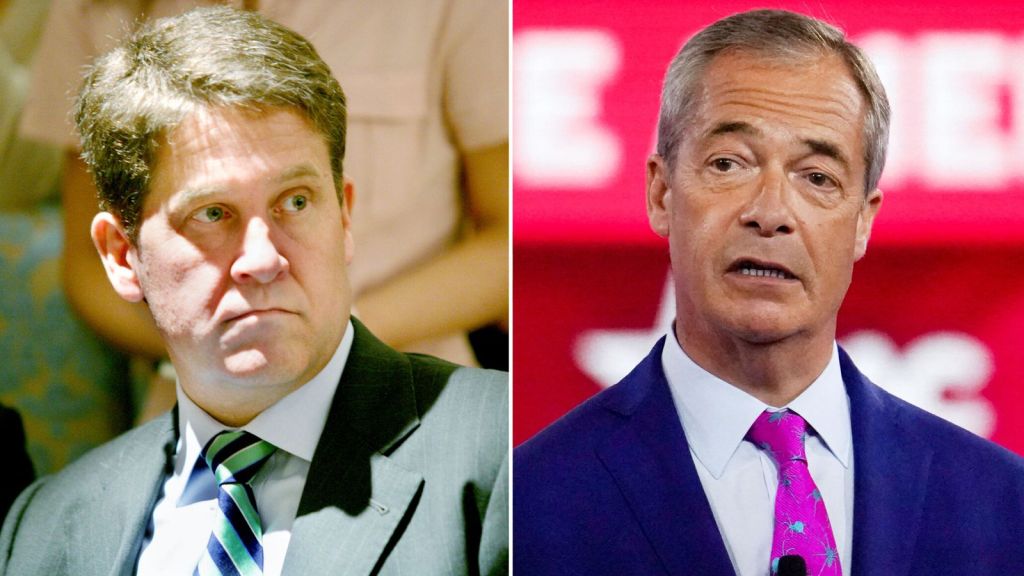
Peter Flavel – former Coutts Bank Chief Executive. Nigel Farage – former Ukip leader

NatWest Bank and its subsidiary for the rich, Coutts, have managed to get themselves into major difficulties over the past couple of weeks.  The Chief Executive of NatWest, Dame Alison Rose, was forced to give up her £5m per annum post for blabbing to the BBC about the closure of former Ukip leader, Nigel Farage’s Coutts account.  She was swiftly followed by Coutts Chief Executive, Peter Flavel, who claimed that the handling of the case “fell below Coutts high standards.”

All of which begs the question, what are these high standards which Coutts and NatWest are keen to defend?

For starters, you need to be rich enough to have an account and that means holding at least £3m in savings or borrow or invest at least £1m.  Established in 1692 Coutts has been the bank of choice for every unelected head of state in Britain since George IV and prides itself on catering to the ultra-wealthy.

Edwin Smith, editor in chief of Spears wealth management magazine is clear that “Coutts is not a regular bank” and sums up its role in saying that,

“It is not unusual to have a high net worth individual come to the UK, open an account with a private bank, and their banker will help secure them expertise across other elements of their life. They will find them a property agent to help find a house, another to help with private schools.”

Nigel Farage, described by Coutts in internal documents as “xenophobic and racist” and a “grifter” was clearly deemed to be a stain on the bank’s reputation.  Given that many would argue xenophobia and racism have been Farage’s stock in trade for many years, the question may be asked as to how he measured up to Coutts “high standards” in the first place.

There has been no suggestion from Coutts that it is seeking to flush out other xenophobes or racists in its ranks.  Nor is there any likelihood that it will feel itself tarnished by the wealth of the unelected Royal Family, who continue to enjoy privilege at the expense of working class taxpayers while providing nothing in return.

Details of the Coutts client base are not freely available but the NatWest Group, Coutts’ parent company, is still owned 39% by the taxpayer, a consequence of the government having to bail out the banks gambling debts, following the financial crash of 2008, so you might expect there to be some level of accountability to the people who saved their shirts.

Not so of course.  The banking sector is part of the closed circle of capitalism’s financial, military and industrial networks, designed to ensure that so called “high net worth individuals” are looked after as part of the ruling class strategy of ensuring that power, influence and privilege remains in their hands.

In the meantime, the true high net worth individuals in Britain continue to struggle to make ends meet.  Nurses, junior doctors, rail workers, teachers, local government workers are all in various stages of pay negotiation or direct dispute, in an effort just to keep their pay in line with inflation.  The Bank of England base rate is currently 5%, the highest in 15 years.  This week the Bank is expected to put interest rates up by another one-quarter percent, piling the pressure on those with mortgages and giving landlords an excuse to increase rents further for those in the private sector.

Economic pundits, regularly wheeled out by the BBC and quoted in the media, continue to blame wage increases for inflation, pushing the pressure back upon the victims of British capitalism’s crisis to not make too many demands.

The reality however is that food prices have been rising sharply over the past year and were 17.3% higher in June 2023 compared with a year before, down from the 45-year high of 19.1% set in March 2023. Over the two years from June 2021 to June 2023 food prices rose by 28.8%. It previously took over 13 years, from March 2008 to June 2021, for average food prices to rise by the same amount.

In addition, the sharp increase in energy prices has been a key driver of inflation, with household energy tariffs and road fuel costs increasing. Gas prices increased to record levels and continued to rise during much of 2022 due to cuts in Russian supply. Electricity prices are linked to gas prices and have followed a similar trend. From June 2022 to June 2023, domestic gas prices increased by 36% and domestic electricity prices by 17%.

As a consequence, the energy giants continue to profit.  While Shell profits were down in the second quarter this year, they still amounted to a staggering $5 billion and were in line with the same quarter prior to 2022, which was a bumper profit year.  

In case anyone was deluded into thinking that with great profits comes social responsibility in June, Shell Chief Executive Officer, Wael Sawan, outlined plans to boost shareholder returns and improve performance, including by keeping oil output steady, growing natural gas output and slowing down investments in lower-return renewable energy.

BP also made a tidy $5 billion profit this quarter and, looking forward, “expects oil prices to remain elevated” due to a recent decision by OPEC+ to restrict production, combined with strengthened Chinese demand.

Once again, while those earning wages struggle and the planet suffers the consequences of global warming, the energy giants laugh all the way to the bank.  It may even be Coutts, assuming they meet their exacting “high standards.”

Until banking arrangements are subject to a planned, structured approach to investment, as part of a socialist economy, their primary function will be to service capitalism and protect the interests of the ruling class.  That planned economy will of necessity have public control of energy resources and supply at its heart, so that all profit is returned to the people in the form of lower bills or investment in cleaner energy options.

On both questions the current Labour leadership is supine.  The time is rapidly coming when it will need to both stand up and be counted.

Burning down the house

22nd July 2023

Summer Arctic sea ice extent is shrinking by 12.6% per decade as a result of global warming.

The record for the hottest day on Earth has been broken three times in just over a week.  Searing heat is sparking forest fires across Europe and North America.  Ocean temperatures are dangerously warm and arctic ice is melting at an alarming rate.  Anyone not recognising the realities of the climate emergency is either in denial or making a healthy profit from oil and fossil fuels.  

At the COP27 conference in Egypt last November developing nations succeeded, at the eleventh hour, in securing an agreement which will see them entitled to hundreds of billions of dollars a year as reparations for the “loss and damage” of climate change, which richer nations have created.

The fund, which it was widely expected would take at least a year to work out entitlements, is in addition to the promise of wealthy nations to provide $100 billion to help vulnerable areas reduce emissions and adapt to warming that is already underway.

However, this is a promise which has not been fulfilled and there is a legitimate fear amongst climate change activists that protracted negotiations over loss and damage arrangements could take a long time to bear any fruit.

The most recently published, Global Carbon Budget, an annual assessment of how much the world can afford to emit to stay within its warming targets, found that greenhouse gas pollution will hit a record high this year.  Much of the growth comes from a 1% increase in carbon dioxide from burning fossil fuels.

The report indicates that nations are likely to burn through their remaining carbon budget in less than a decade, if they do not significantly reduce greenhouse gas pollution.  This will result in the world passing the critical warming threshold of 1.5C above pre-industrial levels in a mere nine years, resulting in catastrophic climate impacts.  These impacts will disproportionately hit the poorer and developing nations, exacerbating already significant imbalances in wealth and resources across the world.

It was hoped that COP27 would have been the focal point for the call for greater investment in renewable and alternative energy sources.  However, leaders at COP27 were advocating natural gas as a transition fuel, from fossil based energy to renewables.  At least four new gas projects were announced last year, looking to plug the gap in supply, as a result of the reduction in supply from Russia.

Climate scientists have stressed that planned expansion goes beyond what is needed to replace interrupted Russian fuel supplies. The proposals also fly in the face of findings by the Intergovernmental Panel on Climate Change and the International Energy Agency that there can be no new gas, oil and coal development if humanity wants to prevent dangerous warming beyond 1.5 degrees Celsius.

While an initial group of more than 20 countries had pledged to stop public investments in overseas fossil fuel projects by the end of 2022, some are backsliding as the hunt for alternatives to Russian gas continues.  The credibility of the COP27 process was further undermined by the significant presence of representatives from fossil fuel companies.  An estimated 200 people connected to oil, gas and coal were included in country delegations, with another 236 with trade groups and other nongovernmental organisations.

It does little to inspire confidence that COP28 will be hosted by the United Arab Emirates in November, whose President has pledged to continue providing oil and gas “for as long as the world is in need.”

The reality remains that there continues to be massive profit in oil and fossil fuels.  BP reported profits of $5bn (£4bn) for the first three months of 2023, down from $6.2bn in the same period last year. For the whole of 2022 BP made $27.2bn (£21.8bn). Shell reported profits of $9.6bn for the first three months of 2023, which was higher than the same period last year, when Shell reported a record $40 billion (£32.5 billion) profit for the year.

The challenge of investment in green technology is being led by China. The highest clean energy investment levels in 2021 were in China ($380 billion), followed by the European Union ($260 billion) and the United States ($215 billion).

While the loss and damage agreement reached at COP27 is welcome, the United Nations needs to accelerate implementation and put pressure upon the worlds wealthy nations to make good existing promises to help developing countries reduce emissions and adapt to the existing challenges of global warming.

As it stands, most of the positive trends in clean energy investment are leaving developing economies behind. Virtually all of the global increase in spending on renewables, grids and storage since 2020 has taken place elsewhere.  More needs to be done to bridge the gap between emerging and developing economies’ one-fifth share of global clean energy investment, and their two-thirds share of the global population.  Without clean energy investment in emerging and developing economies, the world will face a major dividing line in efforts to address climate change and reach other sustainable development goals. 

The disparity between the richer nations of the Global North and the underdevelopment of the Global South will, as a consequence, exacerbate the migration crisis which is already resulting in an increase in right wing governments across Europe, determined to promote the fortress mentality and use migration as an excuse to cover for their own economic failings.

The drive for profit of international capitalism, still getting rich on oil and fossil fuel extraction, while under investing in alternative technologies, is one factor.  The other is the impact upon people in their localities and their perception of what is in their best interests.

The recent British by-election in Uxbridge and South Ruislip was won by the Tories with a marginal majority, not because of any national trend in their direction, but as a result of the proposals of the Mayor of London to extend the Ultra Low Emissions Zone (ULEZ) into their area.  As a result, Prime Minister, Rishi Sunak, is being pressured to roll back the limited commitments made by the Tories to invest in renewables.  At the same time, Labour leader, Kier Starmer, is under pressure to dilute Labour’s commitment to its green agenda for fear of losing votes.

Nothing better illustrates the short termism of capitalist thinking than the current response to the climate crisis, both the short term dash for profits of the international corporations and the short term dash for votes of political parties.  Only socialist planning, within an economy where resources are controlled by the people and deployed in their interests, can provide the ultimate guarantees necessary to address global warming.

The struggle to address the climate crisis is a class issue. It is objectively linked to the wider ideological differences in the world. We need system change, not just climate change. The struggle for socialism and against climate catastrophe must go hand in hand, otherwise we may all be in danger of being left fiddling, while more than Rome burns.   

Resisting the Right Wing rise

16th July 2023

Giorgia Meloni in Italy – part of the rise of the right wing across Europe

Public sector pay awards below the rate of inflation are being presented as a magnanimous gesture by the Tories, as they continue their endeavours to make the working class pay for the current economic crisis.  Public sector pay review bodies have suggested 7% for the police; 6.6% for teachers; 6% for junior doctors and consultants; between 5% and 7% for prison officers; and up to 5.5% for the armed forces and civil servants.  With headline inflation currently running at 8.7% and other NHS and local government staff still to be included, it is clear that the government are attempting little more than to offer half a loaf to head off further industrial action ahead of a General Election.

The fact that industrial action, taken by some of the public sector, has pushed the government this far is a sign that engaging in struggle does bring benefits and should give other workers hope.  However, the equivocation on the part of the Labour Party leadership in supporting workers in struggle does not inspire confidence that a change in government, when it does come, will bring any decisive advantage for the working class.  

The internal witch hunt initiated by the hardline right wing in control of Labour at present shows no signs of abating and candidates close to Starmer and his political cronies are the only ones the current leadership will tolerate. 

Post Corbyn this leaves the Left within the Labour Party in a quandary.  The project around which Corbyn was able to coalesce broad support between 2015 and 2019 was Labour’s best hope of pitching towards a government which would have seen a shift in the balance of power in Britain as an objective, however difficult to achieve.  

Starmer is not even making the pretence of such an offer, doing everything possible to stress ’fiscal responsibility’ and a more efficient management of capitalism than the Tories, in order to stabilise the ship for the political establishment.  As ever with Labour government’s, there maybe some mitigation in certain areas of social policy for workers but little else.

Reform within Labour, allied to extra Parliamentary struggle, has for long been the rallying cry of the Left and efforts to create alternative political parties outside of Labour have invariably failed.  There is however, widespread discontent with the system, even if it is not always articulated in that way.  Protests on environmental issues are currently prominent.  Opposition to the offshoring and deportation of migrants and asylum seekers grows. The issues of racism, sex discrimination and equal pay remain live ones.  A wide range of international solidarity activity continues to flourish, not least in opposition to the Israeli occupation of Palestine.

While these campaigns and initiatives remain siloed, and not linked to a strategic overview of the class based nature of the system which is at the root of them, they will continue to have limited success at best.

Being able to demonstrate that capitalism is the driver behind the climate crisis; has racism and inequality as core to its function; and will never act in solidarity with those fleeing oppression requires a strategic approach to political action and education for which Labour remains a very poor vehicle.  Whether that can be changed with a change in leadership is a moot point.  Labour has always been a reformist rather than revolutionary party.  The period under Corbyn illustrated both the possibilities and the constraints that Labour with a radical programme would face both internally and externally.

To what extent a more radical alignment of the Left in Britian is possible is open to wider debate but its necessity is becoming increasingly evident.  The political establishment in Britain remains divided post Brexit and can barely paper over the cracks in its main political outlet, the Conservative Party.  Across Europe there is a growing shift towards the simple solutions offered by the right wing parties, particularly in response to the NATO generated migration crisis and the treatment of those displaced as a result.  Shifting the debate from the actual reality of class oppression to a debate about race, skin colour and migration only serves to reinforce prejudice and block progressive change.

Such resistance as the Left has been able to mount has foundered on a combination of not being radical enough and meeting aggressive opposition from the ruling class.   One of the things that the period of the Corbyn leadership of Labour did show was that a programme which looked to challenge and change could have mass appeal and bring many into political debate and action.  A programme to reignite that spark must be found if progress is to be made.

At the core of such a programme however must be the call to unity in action that will unite the range of economic and democratic struggles which are currently underway into a wave of solidarity and mass mobilisation that poses a real challenge to the legitimacy of capitalism.

This will require linking political activity to political education in a way that illustrates the importance of linking the particular to the general, the local to the global, the theoretical to the practical and developing an understanding that socialism remains the only solution to the manifest problems endemic to capitalism.

Fight Club

10th July 2023

US President Joe Biden arrives in Britain for a brief visit

The current British media obsession is with an, as yet, unnamed BBC presenter who has allegedly paid a teenager thousands of pounds for explicit sexual images.  This could be an important issue of exploitation, grooming and the potential abuse of a position of privilege.  If so, it rightly garners news headlines and brings into question the HR practices and management culture at the state broadcaster.

In its main news bulletins last night (9th July) the BBC devoted almost 10 minutes to the issue, covering both moral and legal angles to the story.  The visit of US President, Joe Biden to Britain warranted only half of that amount of airtime and less than half of that again was given over to the issue of the US decision to provide Ukraine with cluster bombs in its war with Russia.

Across the world 123 nations have signed up to the Convention on Cluster Munitions, a treaty outlawing the use of cluster bombs due to their indiscriminate impact upon civilian populations and the potential for unexploded munitions to cause damage years down the line.  Britain is a signatory to the Convention, the US, Ukraine and Russia are not. 

In a conflict such as that between Russia and Ukraine, increasingly clearly a NATO proxy, it is impossible to calculate how many lives these weapons may destroy.  Ukraine is keen to become a NATO member and there is little doubt that NATO will welcome its membership at some future point.  Biden’s visit to Britain is a flypast on the way to the NATO summit in Lithuania where membership issues are bound to be on the agenda.

A recent report by the New York based Human Rights Watch has criticised both Ukraine and Russia for the use of cluster bombs that have killed civilians.  This drew a response from Kyiv which accused the organisation of “spinelessness” and “absolute immorality”.  The response follows on from an attack upon Amnesty International by President Zelensky last August when he described the human rights organisation as being guilty of “immoral selectivity” for being critical of Ukraine stationing combat troops in civilian areas.  

While the US and others are hesitant about Ukraine joining the NATO military fight club while the conflict with Russia is ongoing, they remain content to pour weapons into the country in order to keep the war alive.  One of Ukraine President, Volodymyr Zelensky’s senior advisers, has suggested that Ukraine requires “weapons, more weapons, and more weapons, including cluster munitions” in order to defeat Russia.  US arms manufacturers are no doubt rubbing their hands in glee at such statements.

In spite of being a signatory to the Convention outlawing cluster munitions, Britian has offered less than a mild rebuke to the US for succumbing to the demands of Ukraine’s hardline nationalists.  Rishi Sunak will no doubt frame this as being in the spirit of the so called Atlantic declaration, agreed in June, which is little more than a one way ticket for US firms to access British markets and for Britian to continue its kowtowing to US foreign policy in return.  

Arms manufacturers in Britain meanwhile are cashing in on the fact that long term purchase orders and direct subsidies are paying for more than 90% of the research and development budgets of private defence firms, resulting in companies then handing over billions to shareholders in dividends. 

A report by thinktank Common Wealth cites the example of US based General Dynamics, which has been developing Ajax armoured vehicles for the Ministry of Defence (MoD) at a cost to the public so far of £3.2 billion. The original target date for the vehicles to be operational was 2017 but a series of design errors has seen the date pushed back to 2029.  In the meantime, General Dynamics have paid out £20 billion to shareholders since first being awarded the contract in 2014.

Other examples are cited in the report which also highlights MoD spending commitments on equipment procurement over the next ten years, amounting to £242.3 billion.  As the report states, this contrasts sharply with other areas of industry where “comparative 10 year plans on public procurement are not in place.”

The BBC may be covering such issues, deep in its news pages, but they are certainly not headline news, unlike the alleged transgression of one of its employees.  How big a role does the news media play in shaping the agenda?  It is clear that all too often the real news is buried beneath an avalanche of so-called human interest reports.  The increasing emphasis upon personality not policy serves only one purpose, to keep people away from the real news and the waste on weapons of war and mass destruction, which is endemic to the capitalist system.

Sustainable, compassionate and inclusive

1st July 2023

Shadow Health Secretary, Wes Streeting – Labour also has a plan

Capitalist confidence tricks continued unabated this week with a series of measures designed to delude the public into thinking that the current systemic crises can be solved.  They can, of course, but not by using any of the methods proposed by the political establishment which, seeing no alternative to capitalism, is locked in a perpetual struggle to make it appear the be fair and democratic.  The reality that only socialism can deliver true fairness and democracy is an option which is not on the political radar of the British ruling class, as such a consideration would mean their own class losing power in favour of the working class.

The battle to drive down inflation once again hit the headlines this week.  For British Chancellor, Jeremy Hunt, this is the primary objective of economic policy.  Not industrial and manufacturing growth; not full employment and job security; not investment in crumbling road, school and NHS infrastructure; getting inflation below 2% is the mantra.

Hunt is a great believer in wage restraint as one of the mechanisms to control inflation and regularly berates trade union demands for higher pay to keep up with the economic mess his party have been instrumental in creating.  Higher pay is driving up inflation is the cry.  Wage restraint and more slack in the economy, by which is meant more people on the dole, are seen to be the solutions to the inflation crisis.

In classic Tory fashion, egged on by the right wing press, Hunt presents no evidence to back his assertions.  On the contrary, the evidence points in exactly the opposite direction.   Official data from the Office for National Statistics (ONS) shows that since January, wage increases are only becoming more generous among the top 10% of earners.  

Workers earning at least £180,000 a year were paid 7.9% more than last year according to figures for April, while those receiving £26,300 a year only saw increases of 4.7% in the same period.  Bank of England governor, Andrew Bailey, seems to be equally keen to turn a blind eye to these figures, even though they are not close to keeping pace with inflation at 8.7%.  Even though wage increases for low paid key workers in particular, remain well below the inflation rate, the government has already signalled that it will overrule recommendations from pay review bodies if their proposals are deemed to be “unsustainable.”

The Tories seem content to allow unsustainability to flourish in other areas however.  The cheapest fixed rate mortgages on offer from high street banks is now running at an average 6.37%, squeezing those already with mortgages and closing the door to those seeking to buy a home, especially for the first time.  With wages rises below inflation and mortgage rates increasing, which usually goes hand in hand with private sector rent increases, it is little wonder that trade union militancy is at its current heights.

While the Tories may feel they have been let off the hook due to the Royal College of Nursing not getting a high enough turnout in their ballot to extend strike action, they are still faced with a five day walkout by junior doctors (13th -18th July) as well as two days of action by consultants (20th-21st July), and two days of action by teachers in July.

Without any hint of irony, in the midst of the ongoing crisis, the government has announced a Long Term Workforce Plan for the NHS which claims that by 2031/32 there will be a 40% increase in dentists; a 50% increase on GPs; a 92% increase in nurses; and a 100% increase in doctors.

Such ambition is bound to garner press headlines and makes for great soundbites but does it stand up to scrutiny?  Given the intransigence of the government on NHS pay does the Plan include the investment in resources to pay staff the rate for the job in order to ensure that they are retained, let alone train and recruit in the additional numbers indicated?

NHS England recognises that,

“… the number of people aged over 85 is estimated to grow 55% by 2037, as part of a continuing trend of population growth which outstrips comparable countries. Inaction in the face of demographic change is forecast to leave us with a shortfall of between 260,000 and 360,000 staff by 2036/37.”

It claims that the Plan “builds on initiatives already happening in the NHS to boost training and improve retention by working differently in a compassionate and inclusive culture.”  Which is all very well, as long as compassion and inclusivity go alongside having enough money to pay the bills and feed the kids.  The Plan sets out its priorities as train, retain and reform, claiming to “herald the start of the biggest recruitment drive in health service history.”

Worthy words and laudable ambitions but ones which must include the revision of existing pay structures and salary levels, to ensure that the mooted investment in training makes a career in the NHS a financially viable one.

Shadow Health Secretary, Wes Streeting, has welcomed the Plan, expressing relief that it has been published, while accusing ministers of “nicking Labour’s plan”, given the commitment to a ten year plan to make the NHS “fit for the future” which Labour made in September 2022.  Labour’s plan aimed “to shift the focus of healthcare out of the hospital and into the community” while promising,

“…to deliver better pay, terms and conditions for care workers (which) will reduce the 400,000 delayed discharges every month and provide better quality care for older and disabled people: the first steps on the road to a National Care Service.”

It is clear that both major parties are now manoeuvring for position with a General Election looming and the NHS likely to be a key battleground.  However, failing to address the issue of pay and conditions, as part of the wider package of NHS and care reform will not translate into better outcomes for either staff or patients.

The real long term plan for the NHS begins with backing the workers currently taking action to improve those pay and conditions, the first step towards rebuilding an NHS free at the point of use and free from the circling hawks of the private sector.  Whatever Jeremy Hunt or Rishi Sunak may think, that would be an NHS which is sustainable, compassionate and inclusive.  It may even be a demand that Kier Starmer and Wes Streeting could be compelled to back, with enough pressure upon them to do so.

Stop Israeli state sponsored terrorism

24th June 2023

A Palestinian man avoids the outcome of another Israeli attack on Palestinian land

Religious fundamentalists have for decades been robbing Palestinians of their land with the collusion of the Israeli state and cover from the Israeli Defence Force.  Euphemistically characterised as ‘settlers’ they are nothing than more than illegal occupiers of territory over which they have no moral, political or legal right.  Their actions can only be described as state sponsored terrorism.

Palestinians are suffering under the most right wing government in Israeli history, led by Benjamin Netanyahu, which is pressing ahead with illegal settlement activity and massive infrastructure plans.  The government is determined to make the territory, illegally occupied since 1967, an integral part of Israel, flying in the face of United Nations resolutions and the rights of Palestinians.

Violence this week escalated when Israeli thugs attacked a Palestinian town in the occupied West Bank, setting fire to homes, cars and fields in a rampage that left one Palestinian dead from gunfire and 10 others injured.  Not only were many of the hundreds of thugs who raided the town of Turmus Ayya, north of Ramallah, armed but they also had the backing of the Israeli army.

Turmus Ayya resident Mohammed Awad, 26, said people had to contend with fire from the vigilante thugs and the army.

“I rescued five people with my own hands. They were shot with live ammunition,” he said. “It’s Armageddon in Turmus Ayya. Cars are on fire, villas and fields are on fire. Someone needs to stop them. No one is helping us.”

The current violence is allegedly in response to an escalation in Palestinian resistance that began early last year, with a string of Palestinian attacks on Israeli targets.   The Israeli military response has been to launch Operation Break the Wave, a series of raids that have resulted in heavy Palestinian casualties.

Further violence has been seen with an Israeli military raid in the Jenin refugee camp which resulted in an hours-long armed confrontation inside the city.

The clashes, widely seen as the fiercest in many years, began early last Monday with Israeli soldiers storming the camp, firing live ammunition, stun grenades and toxic gas. Combat helicopters were used for the first time in decades after the ensuing hours-long fighting.  On the ground reports suggest that medical teams were initially denied access by the Israelis and eventually arrived very late to treat those who were injured at the scene. Some were described as being “in a very severe condition” needing urgent medical assistance.

The use of helicopter gunships was a 20-year first in the West Bank.  Mohammed Kamanji, a lawyer and field researcher with the Independent Commission for Human Rights, said the latest raid was accompanied by “drones and Apache helicopters”, adding that it was the “largest” raid in many years.  Israeli forces are “perpetrating gross violations against not only the paramedics, but also the journalists”, he said.

The storming of Jenin saw seven Palestinians killed, with more than 100 others wounded, in a year during which, so far, more than 160 Palestinians have been killed, including 26 children.  This compares unfavourably to 2022, a year in which Israeli forces killed more than 170 Palestinians, including at least 30 children, in occupied East Jerusalem and the West Bank.  This was described as the deadliest year for Palestinians living in those areas since 2006; this year is shaping up to be even worse.

In March this year Israel’s Finance Minister Bezalel Smotrich, revealed the true colours of the present Israeli administration after saying the Palestinian people are “an invention” of the past century, adding that there was “no such thing as a Palestinian” because “there is no such thing as the Palestinian people”.

The British government, in true neo-colonial style is looking to divert attention away from the crimes of the Israeli state by focussing upon the action of those opposed to the ongoing illegal occupation in Palestine, in the form of the Economic Activity of Public Bodies (Overseas Matters) bill.

While the bill will affect many campaigns for justice, the government has made clear that its primary target is the Palestinian led campaign for Boycott Divestment and Sanctions, of which the Palestine Solidarity Campaign (PSC) is a key partner. The government seeks to advance the familiar tropes and fallacious arguments that the campaign is inherently antisemitic or fosters antisemitism.  The current bill echoes measures introduced in the 1980s by the Tories under Margaret Thatcher, which sought to prevent public bodies from divesting from and boycotting companies complicit in apartheid in South Africa. 

The bill contains an extraordinary double standard including a clause which outlines a special exception for Israel, granting it an immunity from accountability. The bill allows a government minister to grant permission to public bodies to divest from companies involved in rights abuses by some states. However, this special clause says that no government can give permission to divest from a company because of actions in support of Israel’s rights violations, including within the Occupied Palestinian Territory. 

The bill flies in the face of United Nations resolutions including UN Security Council Resolution 2334, which directly calls on member states to distinguish in their dealings between Israel itself and its activities in the Occupied Palestinian Territory.  The bill in effect seeks to grant Israel a unique protected ability to violate Palestinian rights with impunity.

Opposition to the bill includes Unite the Union, PSC and Amnesty international.  Pressure for the Labour Party to actively oppose the bill inside Parliament must build, alongside the extra-parliamentary activity of trade unions and human rights campaigns.

It is not antisemitic to point out that the Israeli state is engaged in effectively imprisoning an entire indigenous population through its blockade of Gaza; has imposed a military system of oppression across the Occupied Territories; continues to steal land and resources from the Palestinian people; and has stopped refugees from returning over a period of more than 50 years.

Labour must not be afraid to say so and, not only stop this bill, but actively demand the upholding of the rights of the Palestinian people in the face of state sponsored terrorism by Israel.

Naked profiteering

17th June 2023

British Chancellor Jeremy Hunt – hands more to corporate profiteers.

The prospects for the Tories at the next General Election took a further dip this week as interest rates head toward 6% and the pressure upon mortgage repayments for homeowners, as well as rents for those in the private sector, look set to soar.  The Bank of England, flying in the face of the actual evidence, continues to increase base rates as part of its misguided strategy to combat inflation.  Bank of England Governor, Andrew Bailey, has admitted that the fall in inflation was “taking a lot longer than we expected.”

The economic path being driven by the Tories, in cahoots with the Bank of England, is to increase the cost of credit, forcing businesses to cut back on staff, increasing unemployment, with the aim of reducing the ability of workers to win higher wages.

While the fact that inflation remains stubbornly high is blamed by the Bank and capitalist economists on wage increases, the reality is that wage settlements remain below the rate of inflation.  Many are still in dispute as workers struggle to make ends meet due to the ongoing price of food and consumer essentials.  Pay has been failing to keep up with inflation for more than a decade in Britain.

According to the International Monetary Fund (IMF) Britain is set to become the worst performing economy in the G20 in 2023, which includes sanction hit Russia.  Significantly, the only economy in which the IMF anticipates growth of over 5% is that of China, with even the United States languishing far behind at a predicted rate of just under 2% growth.

The Organisation for Economic Co-operation and Development (OECD) predicts a slightly better outlook for Britain but not by much.  The OECD said that it expects a 0.2% fall in British gross domestic product this year, followed by a rise of 0.9% next year.  This is worse than all countries but Russia, whose GDP is forecast to dip 2.5% this year followed by a 0.5% drop in 2024, the organisation’s economists said.  This means that Britain is the only country apart from Russia to see its economy shrink this year.

According to these measures the British economy is struggling to hold its own even with its capitalist peers, who are also struggling with issues of inflation and low growth, although on a smaller scale than Britain.

While the British press make much of the impact upon mortgage repayments there is little analysis of what brought Britain to this situation and what can be done to address it.  It is convenient for the banks to push the blame towards workers struggling for pay rises as being the driver of inflation but this is mere deflection on their part. 

A key driver of inflation and soaring mortgage costs is the greed of the banks themselves, who have been complicit in driving house price inflation.  This means that while 6% mortgage rates are nowhere near the 13% seen in the 1980’s, the impact is broadly similar.  Home buyers in the 1980’s could expect to be borrowing just twice their income, for many at the present time borrowing to secure a mortgage can be higher than four times their income.

It is estimated that 2.6 million households will come off fixed rate mortgage deals in the next year resulting in massive monthly repayment increases.

Meanwhile profits at the Lloyds Banking Group alone jumped 46% in the first three months of this year, to a tidy £2.3 billion.  Lloyds was not the only bank to bask in good results as a strong earnings season for the big four high street banks saw them all report better-than-expected profits on the back of higher interest rates.

The big five banks – Barclays, HSBC, Lloyds TSB, NatWest and Standard Chartered – posted profits of £37.4bn for 2022. These are the highest since the 2008 crash and come straight from households and small businesses in the form of higher mortgage payments, and increased rates on loans. There is little indication that such naked profiteering will not continue for the banks and their shareholders into 2023.

Meanwhile British Chancellor, Jeremy Hunt, is said to be prepared to back “whatever it takes” to reduce inflation, though he has ruled out a mortgage relief scheme to give subsidies for households struggling to make ends meet.  In typically disingenuous fashion Hunt stated,

“We will always try to do everything we can to support families going through difficult periods and support families facing additional mortgage pressures.  But we know the best help we can give them in the long run is to bring down inflation.  That’s the cause of people’s worries.  So, we will support the Bank of England to do what it takes to bring down inflation.”

Alongside backing the Bank of England’s interest rate rises Hunt has also pledged to limit public sector pay rises as part of his strategy to prioritise fighting inflation.  So, it is clear that NHS staff, teachers, local government workers and civil servants can expect little help from the Tories in tackling rising bills.

Underinvestment in the economic infrastructure, too much reliance of the financial services sector to give the illusion of economic activity, along with corporate greed and profiteering, are at the root of the capitalist crisis in Britain.  The idea that workers fighting to keep up with inflation generated by corporate profiteering, by demanding increased pay, is the usual Tory sleight of hand.

It will be little surprise to note that between 2020 and 2021, the Tories received £11.5m in donations from the finance sector.  Almost one in three meetings with Treasury ministers were with big finance and its lobbyists, making it by far the most powerful lobbying force in the UK.  This year reforms, known as big bang 2.0, will rip up the post-crash regulation aimed at constraining banks’ worst excesses.

British capitalism may not yet be naked in tooth and claw but unless there is decisive intervention by the working class and its organisations, it may well get there.

Johnson rekindles bonfire of vanities

10th June 2023

Partygate – the beginning of the end for Johnson

The resignation of disgraced former British Prime Minister, Boris Johnson, from Parliament last night is the latest twist in a career characterised by conniving, deceit and mendacity.  Having received the report of the House of Commons Privileges Committee into whether he misled Parliament, Johnson had two weeks to respond.  Clearly Johnson realised that the report’s findings were sufficiently damning for him to jump before he was pushed and made up his own mind within twenty four hours.

In typically bombastic fashion Johnson has not admitted responsibility for his deceit, characterising the committee as a kangaroo court, vilifying its Chair, Harriet Harman MP, and claiming that he is innocent of all charges laid against him.  A classic tactic of getting his retaliation in first.

Johnson’s resignation coincides with his Honour’s List nominations having been agreed, a British ruling class convention which allows former Prime Ministers to reward their cronies for services rendered.   Gung ho former Home Secretary, Priti Patel is made a Dame, while diehard Johnson loyalist Jacob Rees-Mogg is conferred a knighthood.  Other gongs go to a range of fans and supporters though lickspittle in chief, Nadine Dorries, misses out.   She too has settled for resigning as an MP, giving beleaguered Prime Minister, Rishi Sunak, the headache of two by-elections to fight.

Johnson is of course not at all the innocent victim he makes himself out to be.  He presided over the highest loss of life of any Western European country during the Covid 19 pandemic, with the death toll still rising and heading towards quarter of a million.  Contracts to cronies and Tory party donors for poor quality or non existent PPE, the debacle of the £37 billion track and trace system and his final departure from No.10, following the Partygate scandal, all add up to a pattern of behaviour which is at best narcissistic, at worst plain criminal.

Somewhere down the line there may be an historical reckoning if the Covid Inquiry can get itself out of the starting blocks but Johnson will be way beyond caring by that point.  Having already trousered millions on the after dinner speech circuit since leaving Downing Street, he can no doubt look forward to a slew of lucrative invitations from the redneck tendency across the globe, to give his own distorted view on the reasons for his demise and the current state of the world.

For the ruling class Johnson was always a disposable commodity.  His main purpose was to shift the emphasis of political debate away from actual policy and onto personality.  Aided by a compliant media keen to play up his so called ‘boosterism’, offset against the character assassination of the less media friendly and, for the ruling class, politically dubious, Jeremy Corbyn, it was always going to be an unlikely scenario that Labour would escape disaster at the 2019 General Election.

While the Tories have continued to tear themselves apart over how far to the right they want the country to be dragged, the ruling class have been stealthily making Labour safe again for capitalism.  The unacceptable face of Jeremy Corbyn has been replaced by Kier Starmer.  The front bench has been hollowed out of any dissenting voices.  Corbyn has been excluded from standing for parliament on a Labour platform and even sitting North of Tyne Combined Authority Mayor, Jamie Driscoll, a relatively minor figure in the scheme of things, has been excluded from standing as a candidate to run for the top job in the forthcoming North East Mayoral Combined Authority.

Johnson’s resignation announcement was news enough to bump former US President, Donald Trump, from the BBC headlines.  Having been indicted on 37 counts, including endangering national security for keeping classified White House documents in his bathroom, Trump was making all of the headlines till Johnson stepped in.

It is an irony that the two most narcissistic and politically belligerent representatives of their respective ruling elites should be in the headlines for their political misdemeanours at the same time.  While Johnson has left the door open for a political return, saying that he is sad to be leaving Parliament “for now”, Trump remains the front runner in the Republican nomination to be the next Presidential candidate.

That the prospect of another Trump presidency is a further threat to world peace and the lives of working class Americans would be an understatement, though his rivals for the Republican nomination appear to be equally blinkered and the world can hardly be said to have been a safer place for many in the hands of Joe Biden.  However, the erratic nature of Trump’s approach increases uncertainties and the social media driven approach to international diplomacy, which characterised his term in office, does not inspire confidence.

It is bad enough that US imperialism is doing its utmost to tear the world apart.  It would be an even greater disaster should that happen due to a moment of personal rage or a fit of pique on the part of an individual who, by any reasonable count, should not be in any position of political responsibility.  The charges against Trump carry sentences of up to 10 years in prison.  It may be unlikely that things get to that stage but it would be a result.

Back in Britain Johnson will no doubt continue to garner the headlines, the by-elections triggered by his and Nadine Dorries’ resignations will begin to move centre stage and Rishi Sunak will continue to look increasingly exasperated with very public appearance.  A General Election will finally put the Tories out of their misery and, with a safe Labour administration in No.10, they will be able to use their time in Opposition to regroup.

The challenge for the Left in Britain is to rebuild an alternative to both Starmer’s version of Labour and whatever emerges from the Tory bonfire of vanities, in order to demonstrate that capitalism is a system that serves the interests of the ruling class and that socialism is the only way forward for a future of peace, social justice and democracy.