Blog

Shadow and substance – Labour’s six point plan

19th May 2024

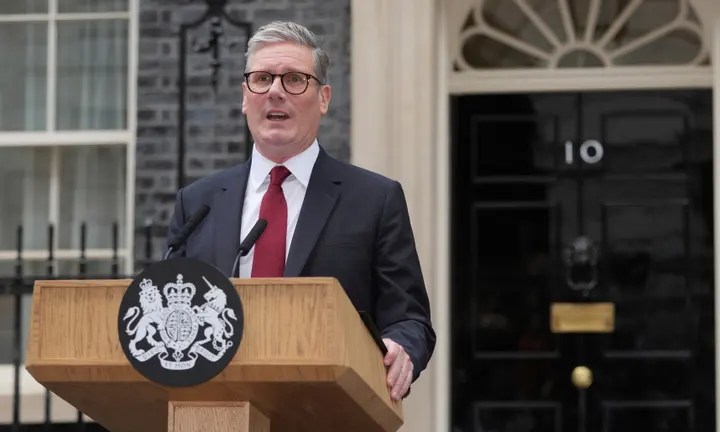
Starmer drama but where is the plot?

Much of the presentation of political debate in Britain, by political parties and the news media, is couched as theatre.  Clashes at Prime Minister’s Questions in the House of Commons are regularly reported in dramatic terms.  Head to head television debates at election times pit candidates against one another with billings worthy of heavyweight boxing title fights. Personalities, rather than policies become the stuff of tabloid headlines as the popularity of TV soap opera is translated into political drama.

Presentation has become as important as content for those seeking the keys to 10, Downing St.  With a General Election just months away the respective teams of Kier Starmer and Rishi Sunak are developing their communications plans and public relations strategies with a vengeance, in the hope of getting their man more media time, more positive coverage and more votes when it comes to the crunch of an actual election.

This week’s set piece from Kier Starmer was the presentation of Labour’s six point plan, an event which could not have been more theatrical.  With a team of Shadow Cabinet colleagues behind him and an audience in front Starmer, in rolled up shirt sleeves, no jacket or tie, was presenting as a man who just wanted to get on with the job and get things done.  TV cameras and news media were there of course to capture the key moments and translate them into the headlines such dramatic presentation was deemed to warrant.

The six points were emblazoned above Starmer,

  • Crackdown on anti-social behaviour
  • Launch a new Border Security Command
  • Deliver economic stability
  • Set up Great British Energy
  • Cut NHS waiting times
  • Recruit 6,500 new teachers

All very rehearsed and choreographed, no doubt tested through focus groups and with a certain type of Labour activist, but does this list represent the concerns of working class communities, where parents may be working two jobs to pay the bills, where the cost of childcare may mean the difference between taking a job or not, where Carer’s Allowance is being clawed back if earnings creep a penny over the princely sum of £151 per week?

Apparently, Kier Starmer does not mind being compared to former Labour Prime Minister, Tony Blair, because Blair was a three times General Election winner, and who would not want that comparison?  Which gives away Starmer’s philosophy entirely.  Winning elections only matters if changes are made as a result of election victories, the winning in itself is unimportant otherwise.

Blair’s three election victories did not result in reversing the anti trade union laws of the Thatcher years.  They did not abolish the right to buy which has seen the run down of Council housing stock and the decline of affordable homes.  They did not reverse the privatisation of water and energy companies and prevent private shareholders from reaping vast dividend payouts while bills soared.  They did not reverse the break up of the comprehensive education system, abolish university fees or impose greater regulation upon the City of London, to prevent the gambling, greed and speculation which led to the 2008 financial crash.

The Blair/Brown years of Labour government did not see a reversal of the damage done by the Thatcher/Major Tory governments but a consolidation of the errors, an acceptance of neoliberal economics and the cult of the individual as being of key importance, rather than the collective wellbeing of the community.

There is nothing in the six points outlined by Starmer that Rishi Sunak would not sign up to or disagree with.  There is nothing which suggests a challenge to the status quo or any shift in the balance of power from the entitled few to the downtrodden many.  Starmer describes the plan as Labour’s first steps on a mission towards change but after 15 years of Tory imposed austerity working class communities are crying out for giant strides not baby steps.

Is it possible to be a mere shadow of something which does not have substance?  If so, Starmer fits the bill as being a mere shadow of Tony Blair who, in spite of his election victories, did nothing to improve the lives of working class communities.  Starmer is set on the same course, in danger of taking working class votes for granted, an election victory for granted and hoping that a programme which does nothing to scare the King’s horses will be enough to get him there.

It is said that history may at first play out as tragedy but repeats itself as farce.  The Blair/Brown Labour governments tragically let down the working class, keeping capitalism safe for the ruling class and the return of the Tories in 2010.  While voting Labour at the General Election will be necessary, after so many years of Tory austerity, we must resist the danger of a Keir Starmer government keeping the seats at the Cabinet table warm for the return of the Tories in five years time.

Mass extra Parliamentary action to compel a Labour government to act in the interests of the working class and to develop a manifesto for real change is vital in the run up to the General Election and beyond.  Without it we will have a Tory-lite, Blair-lite episode from Labour and it may matter little who wins an election in five years time.

Right to a home, not the right to buy

12th May 2024

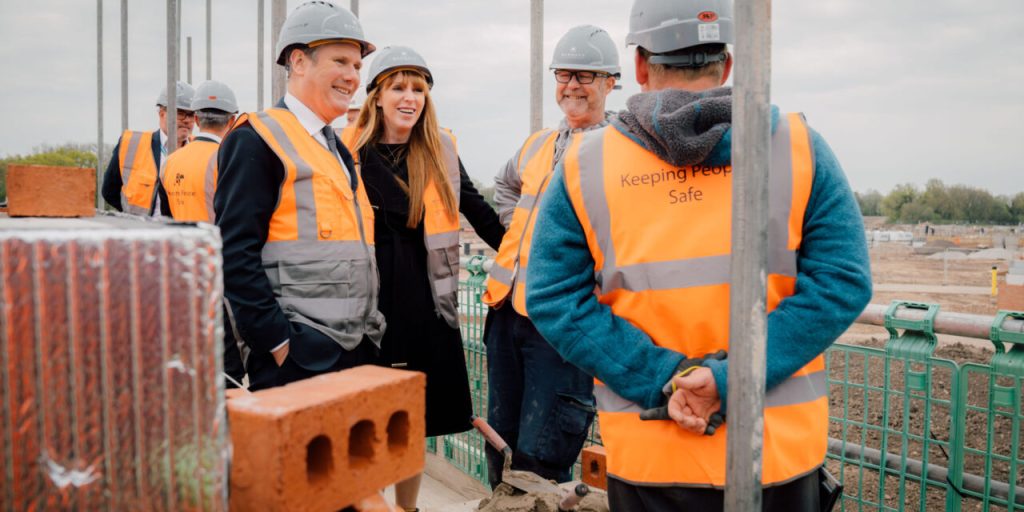
Labour leaders Kier Starmer and Angela Rayner – is housing policy radical enough?

The insidious ‘right to buy’ policy was one of the mainstays of the Thatcher government in the 1980’s.  The policy was not sold as the privatisation of Council housing as a means to enrich private landlords or to inflate house prices, generating lifelong debt for many.  That would have been too honest, too direct for the Tories.

Instead, the policy was sold as a chance to get on the housing ladder, an opportunity for home ownership, the golden ambition promoted as part of the philosophy of the individual above all, as the Tories marched onward in their determination to dismantle any semblance of post war social provision in housing, education and health.  

The impact of the policy has been to increase uncertainty for working class families as Council stock diminishes, private rents increase and mortgages soar.  As a consequence homelessness and poverty have spiralled.

Figures published by the Department for Levelling Up, Housing and Communities (DLUHC) at the end of last month showed a sharp rise in the number of children living in temporary accommodation.

There were 145,800 children in temporary accommodation as of the end of December last year, up by a fifth on 20 years ago when records for this measure began, and up 15% on the same period in 2022.

Michael Gove, the DLUHC Secretary of State has admitted that “for years now we have not been building enough homes” and that the Government has missed the supply target of at least 300,000 new homes per year.  However, building homes only addresses part of the problem, making those homes affordable and secure for working class families is the real challenge.

Recent Freedom of Information requests, sent by the New Economics Foundation (NEF), found that 41% of all council homes sold under the right to buy scheme are now being let on the private market.

The research also found that the number of homes bought under right to buy and now in the private sector has risen by 3.2 percentage points since 2014/15.  This means that around 109,000 more former council homes are now being let privately.

The New Economics Foundation (NEF) has called for a ‘suite of powers’ over housing policy to be devolved from Westminster to local authorities, which would give councillors the “ability to make decisions regarding the future of their council housing stock and give them greater control over the tenure balance of homes in their area”.

Insecurity in the private sector is supposedly being addressed with reforms to the private rented sector.  Gove has insisted that the long-promised plan to end tenants being forced from their homes under section 21 notices will take “a matter of months”, but could not give an exact timetable.

With housing security being such a key issue for working class families and with a General Election looming it would be timely for the Labour Party to have a radical approach to housing and look to repeal the right to buy legislation in order to give Council’s more control over housing stock.

Labour does have a plan for housing, which focuses on building on brownfield sites and on poor quality and ugly areas of the Green Belt, which it has redesignated the Grey Belt.  Affordable homes are mentioned, in the context of new developments having to target at least 50% affordable housing when land is released.  Which sounds fine but a target is not an obligation and housing can quite quickly become unaffordable, when it is on the private market, or it can get sucked into the private rented sector.

As with many policy commitments the Labour leadership position on housing is kept vague in an attempt to avoid any direct criticism.  Meanwhile, Homeless Link, the national membership charity for frontline homelessness organisations, criticised the UK government for not uplifting funding to match rising inflation. The group found there were 39% fewer accommodation providers and 26% fewer bed spaces for people experiencing homelessness in England in 2021 compared to 2010 with funding cited as one of the main reasons for the decline.

Abolishing the right to buy would be a massive step towards a policy which could make housing truly affordable for working class families.  Labour need to prioritise giving working class families the right to a home, over the Tory philosophy of the right to buy.

Cultural terrorism crackdown in Iran

6th May 2024

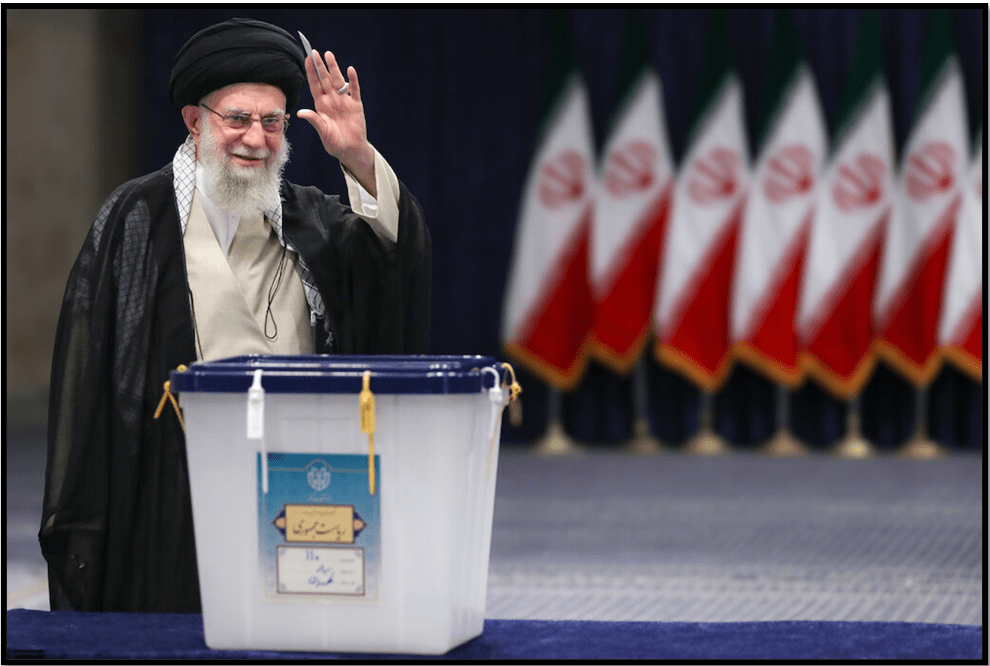
Death sentence – Iranian rapper Toomaj Salehi

Engulfed in political, social, and economic crises, as well as rampant corruption, the Iranian dictatorship has accelerated its crackdown on the women and youth of Iran.  The regime is attempting to demonstrate to its remaining loyal supporters its unwavering commitment to its outdated and medieval beliefs.  In addition, the regime is seeking to divert public attention away from its economic failures, endemic corruption, growing social ills, and the environmental destruction caused by its wasteful missile programmes, all of which have blatantly squandered hundreds of millions of dollars of public funds.

Confirmed reports from Iran tell of a calculated attempt by the regime to drive women and youth away from protests in the streets, main throughfares, and city centres.

The recent crackdown by the security forces on women is taking place against the backdrop of a failing economy and widespread public discontent. The Iranian dictatorial regime, which has failed to overcome the deep economic crisis it has created, is presiding over a relentless rise in the cost of living. The majority of the population is being crushed under the weight of meagre wages, at the same time as the price of basic goods, food items and rents is skyrocketing.

Protests by workers, teachers, pensioners, nurses, students, young people, and women across Iran reflect the dire economic situation and deep-seated opposition towards the continuing rule of the theocratic regime.

Jailed Iranian Nobel Peace Prize Winner, Narges Mohammadi urged Iranians to protest against “full-scale war against women” after authorities intensified their crackdown obliging women to obey the country’s Islamic dress code. 

The recent crackdown on women in Iran is a direct consequence of the decree by Ali Khamene’i, the regime’s Supreme Religious Leader.  Khamene’i’s aim is to return the country to how it was before the murder in custody of Mahsa Amini in September 2022 and the massive “Woman! Life! Freedom!” protests which followed. Since then, the majority of women in Iran have chosen to shed their hijab in a show of defiance against the misogynistic regime and public assertion of their rights.

As part of the regime’s current crackdown a death sentence has been passed upon underground Iranian rapper Toomaj Salehi, an act described as cultural terrorism by the Committee for the Defence of the Iranian People’s Rights (CODIR).  Calling for the unjust sentence to be quashed CODIR General Secretary, Gawain Little, voiced the organisation’s ongoing concern at the lack of freedom of expression in the Islamic Republic.

“Iran is a country with a significant youth population and popular artists like Toomaj Salehi are increasingly expressing the discontent that many young people feel about the theocratic dictatorship”, said Mr Little.  “To sentence an artist to death, charged with ‘corruption on earth’, for nothing more than speaking out against the government is nothing short of cultural terrorism.”   

Salehi, aged34, had gained widespread popularity with the youth of Iran, due to the challenging content of his lyrics, which addressed issues such as ethnic discrimination, child labour, human rights violations and protest activity.

Salehi was originally imprisoned for taking part in a peaceful protest, a verdict initially overturned by Iran’s Supreme Court before being reversed by a lower court in a bizarre manipulation of Iran’s judicial system.

The lower court, a branch of the Islamic Revolutionary Court in Isfahan, regarded the decision of the Supreme Court as ‘guidance’, before proceeding to confirm Salehi’s imprisonment and impose a death sentence upon him.  The court alleged that Salehi had aided rebellion, committed assembly and collusion against the state, propaganda against the state and incited riots. 

Salehi was originally arrested in October 2022 for participating in the countrywide Women, Life, Freedom movement protests, sparked by the murder in detention of Mahsa Amini the previous month.  In July 2023 Salehi was handed a prison sentence of 18 year and 3 months for the original ‘corruption on earth’ charge.

While his case was referred to the lower court in Isfahan he was granted bail on 18 November 2023 only to be arrested less than two weeks later, on 30 November, for speaking out against the torture he endured while imprisoned.  Salehi’s lawyers have vowed that they will appeal but without massive international pressure the regime is unlikely to change its stance.

With the regime’s actions, popular resistance has not dwindled in the least, and the solidarity demonstrated by the public, and support extended to those arrested, including efforts to secure their release, is growing markedly. All evidence points to the fact that the current resistance, together with popular support for women, is set to significantly broaden in scope.

The Committee for the Defence of Iranian People Rights (CODIR) strongly condemns the brutal assault on Iran’s brave and resilient women and calls on trade unions to protest the actions of the ruling regime in Iran.

CODIR believes that only through the concerted and widespread efforts of women’s rights organizations, human rights defenders, and the mobilization of public opinion around the world, expressing solidarity with the struggle of Iranian women and supporting their cause, can this oppressive regime be forced to retreat.

CODIR has also called for the international community to intervene, through the United Nations, to call for the release of all political prisoners and the dropping of charges against Toomaj Salehi. 

More info at www.codir.net

Water No Get Enemy*

28th April 2024

Sewage discharge into British rivers, an ongoing scandal

The scandal of water privatisation continues to outrage the public while having little impact on the policies of Britain’s major political parties.  There is no doubt that water, along with the energy industries should be in public ownership, to ensure that they meet the needs of the people rather than the profits of shareholders, but neither the Tories nor the Labour leadership are committing to it.

The Tory position is no surprise.  As the perpetrators of the deconstruction of the welfare state, comprehensive education, Council housing and much of the country’s manufacturing base, the Tories have demonstrated over many decades their commitment to the interests of the rich few rather than the working class.

Privatised in 1989 the water industries have borrowed £64 billion, paid out £78 billion to shareholders, failed to build the necessary infrastructure to meet the needs of a growing 21st century economy and been under the control of a wide range of foreign investors with no interest in the needs of the British people. 

Current foreign owners of the various regional water companies in Britain, totalling 72% of the industry, include the Chinese government, investment authorities in Qatar and Abu Dhabi, the Hong Kong based Li Ka-shing and Malaysian, Francis Yeoh.  The state of rivers in England and Northern Ireland is such that the most recent report by the Rivers Trust does not rate any of them as being of “good overall” status.

Yet water companies continue to assert that the ratio of sewage that they treat, compared to the untreated sewage that pours into rivers and the sea, is improving.  In reality, this is not the case.  The sleight of hand performed by water companies is called “flow trimming”.  This is a practice whereby sewage is diverted into rivers upstream of water treatment works.  So, less sewage is entering the works, resulting in companies claiming to treat a higher proportion of it.

While the patchwork of private investors walk off with fat dividends the price is being paid by the public, who not only suffer from the poor environmental consequences, but also foot the bill in higher costs.  The recent high profile debacle of Thames Water is a case in point.  Given the massive mismanagement and fleecing of Thames by the private sector there is even talk of temporary nationalisation by the Tories to bail the company out.  Not only will this require the government to take on board the company’s £18 billion debt but Thames continue to plan for a payout to shareholders and raise customers bills by 40% in the coming year.

The estimated water loss in the area covered by Thames Water is 600 million litres per day, almost a quarter of all the water it supplies.

Public policy elsewhere in Europe demonstrates that the British model is by no means accepted as universal, even within other capitalist economies, and a more people oriented approach can prevail.   In 2010, Paris re-municipalised its water service from the hands of private companies including Veolia and SUEZ to create the public company Eau de Paris. The performance of Eau de Paris has made a significant difference.  The price of water has been cut by 8 per cent and a new citizens’ commission was formed to enhance transparency and democratic governance. The new public utility created an active policy of water affordability for poorer households, migrants, and homeless people and increased the number of public water fountains. 

Water use in Ireland is free up to a certain quantity and funded through general taxation. When Ireland’s creditors pushed for an end to this policy amid the Eurozone crisis and the introduction of water charges in 2014, the move was met with strong resistance, including large demonstrations, a non-payment campaign, and civil disobedience in the active blocking of the installation of water meters. These tactics eventually led to the suspension of water charges in 2016.

The fact that most Italian water remains in public ownership is largely due to the 2011 referendum at which more than 55 per cent of voters opposed the attempts at water privatisation that were also part of the larger austerity agenda that followed the financial crisis.

The consequences of the failure to address water quality go far and wide.  Apart from the increase in direct bills there is the increased risk of disease from polluted water ways, potentially putting more pressure upon the NHS to deal with water borne infections.  The accumulation of sewage into the sea has an impact upon marine life, while land based flora and fauna are threatened by the pollution of rivers upstream, to “flow trim” the regulation of sewage treatment.

That all of this is easily preventable, with the element of private profit eliminated and public good as the priority, should be a gift to a campaigning Labour Party leadership as the General Election looms.  However, the fear of being accused of being ’woke’ is immobilising the Starmer leadership on this issue, in the same way that it will not address the question of energy nationalisation, and has diluted its approach to investment in green technologies to develop a progressive twenty first century economy.   

Ultimately the solution to the question of how water resources are allocated and used is a socialist one, where the economy is structured upon the needs of the people, not the profits of private investors and shareholders.  However, Britain has been particularly badly served by successive governments adopting an essentially neo-liberal approach to resources which should be under public control.

Evidence from elsewhere in Europe demonstrates that mass public pressure can bring about change.  As the Tories look towards meltdown in local elections this week, and Labour look set to win a General Election later in the year, it is time to seize the moment and compel the Labour leadership to take a clear stand on this, amongst many other questions, which impact directly upon the lives of working class voters.

*with credit to Nigerian musician and activist Fela Kuti for the title.  Check out more here https://www.youtube.com/watch?v=xviLDFqMznQ

Starmer commits to weapons of mass destruction

13th April 2024

Kier Starmer at BAE Systems in Barrow

Labour leader, Kier Starmer, this week committed Labour to an additional £10 – £12 billion spend on weapons of mass destruction if elected.  Writing in the house journal of the Tory petit bourgeoisie, the Daily Mail, Starmer described his commitment to British nuclear weapons as “unshakeable” and “absolute”.  Starmer went so far as to describe the creation of the NHS and the British nuclear programme as “towering achievements” of the Labour government elected in 1945.

Starmer stated that he wants to raise military spending to 2.5% of GDP “as soon as resources allow”, echoing the commitment of Tory Chancellor, Jeremy Hunt, to raise military spending to 2.5% of GDP “as soon as economic conditions allow”.  Government spending is currently at 2.3% of GDP.

Of the 30 countries which are part of NATO Britain is currently tenth in terms of its percentage spend on its military budget by GDP.  A rise to 2.5% would take Britain to sixth position.  The other nuclear powers in NATO, the United States and France, spend 3.49% and 1.9% respectively on their military.

All NATO members have pledged to spend at least 2% of GDP on their military by 2024.

In a visit to Barrow-in-Furness where British nuclear submarines are built, Starmer said that Labour was making a “generational commitment”, stressing that this was to the,

“…Dreadnought submarines, to the continuous at sea deterrent, and to the upgrades that are needed over time.  And of course there is AUKUS in there as well.”

AUKUS is the military pact agreed by Britain with Australia and the United States to provoke China in the Indo-Pacific region, under the pretext of a Chinese military threat to US ‘interests’ in the region.

The announcement by Starmer follows hard on the heels of Labour backtracking on its investment to develop green technologies; the commitment of Shadow Chancellor, Rachel Reeves, not to bail out bankrupt local councils; and the claim that there is no money to introduce universal free school meals, a measure which would benefit working class families and those facing the sharp end of the capitalist economic crisis.

Commenting on the plans, CND general secretary Kate Hudson said: “Putting billions of pounds into the pockets of arms companies and their investors will not reinvigorate the economy in any meaningful way.

“Instead, it takes vital funds and skills away from what could be spent on the just transition: like energy-efficient homes, better public transport and a public health service that saves lives and heals people.

“By committing to the modernisation and expansion of Britain’s nuclear arsenal Labour is contributing to the global arms race and tensions that we are currently seeing.”

She added that if Labour wanted to offer a positive option to the electorate, “it would commit to scrapping Trident and its replacement, and put nuclear disarmament at the forefront of its foreign policy agenda.”

The idea that the possession of nuclear weapons makes Britian safer, or sustains a world power status, is an illusion fed by the military-industrial establishment; the Tory Party and its backers; and the right wing press.  The basis of the nuclear programme is that, if Britain was under nuclear attack, it could launch a retaliatory strike, based upon the concept of mutually assured destruction, appropriately given the acronym MAD.  Destruction of any kind is hardly a guarantee of safety, destruction that is mutually assured is clearly mad in every sense.

Starmer has shifted Labour so far into Tory territory that the distinction between what each would deliver, following a General Election, is becoming almost impossible to distinguish.  Given the abysmal record of the past 14 years it is almost inconceivable that the Tories could be returned to office.  The character of any Labour administration however remains very much in doubt.

Unless mass extra Parliamentary pressure can persuade the current leadership to change course the dangers of Labour being little more than Tory-lite when in government remain real.    

More Casualties in a Series of Israeli Attacks Across Gaza

(report from the Communist Party of Israel)

Israeli occupation forces continued their airstrikes and artillery shelling across the Gaza Strip on Friday, April 5, resulting in numerous casualties among Palestinian its 182nd day in a row. In a preliminary toll, the ongoing Israeli onslaught on Gaza since October 7 of last year has resulted in 33,037 documented Palestinian fatalities, mostly children and women, while the number of injuries has reached 75,668. 

Grieving Palestinian father Ashraf Abu Daraa bids a farewell for his two kids and pregnant wife who were killed last night in an Israeli airstrike targeting their home in Rafah (Photo: WAFA)

WAFA correspondents reported that Israeli artillery shelling targeted the central and western parts of Khan Yunis province, as well as the eastern part of Rafah city in southern Gaza.  Additionally, a fierce airstrike hit the vicinity of Sheikh Zayed City in northern Gaza, while several areas in the central governorate of the Strip were subjected to Israeli artillery fire.

Simultaneously, local sources reported that Israeli warplanes targeted Tal al-Hawa west of Gaza before midnight, while artillery and aerial bombardments hit the southwestern and southeastern neighborhoods of Khan Yunis city, and the eastern part of Al-Maghazi refugee camp in central Gaza. Earlier, Israeli artillery fire targeted the Qleibo and Sheikh Zayed areas in Beit Hanoun in the northern Gaza Strip, coinciding with the ongoing destruction of residential homes in central and western Khan Yunis by the occupation forces.

According UN reports, since October 7 and as of April 1, 428 Palestinians, including 110 children, have been killed by Israeli forces across the occupied West Bank, including occupied East Jerusalem, of whom 131 were killed since the start of 2024. In addition, nine were killed by Israeli settlers and three by either Israeli forces or settlers. Four additional Palestinians from the West Bank have been killed while perpetrating attacks in Israel. During the same period, some 4,760 Palestinians have been injured, including at least 739 children, the majority by Israeli forces. According to the Palestinian Prisoners Club, 11 Palestinians have additionally died in Israeli prisons since 7 October 2023, mainly due to reported medical negligence or abuse.  

Related: https://maki.org.il/en/?p=31724

Poverty and pyrrhic victories

1st April 2024

Poor families with children suffer more than most

In Britain, one of the world’s richest countries, one in six children in 2023 lived in families deemed to be suffering food insecurity, in plain terms, they did not have enough to eat.  One in 40 children lived in a family that had accessed a food bank in the previous thirty days.

Relative poverty is defined as households with incomes of less than 60% of the median.  Almost one in three children live in relative poverty in Britain.  Absolute poverty is defined as households with less than 60% of the median income in 2011.  One in four children live in such households in Britain.  This represents the fastest rise in child poverty in almost 30 years.

Figure published by UNICEF show that last year child poverty in Britian rose fastest between 2012 and 2021 out of 39 OECD and EU counties, many of which actually succeeded in reducing child poverty over the same period.

At the same time the Sunday Times Rich List for 2023 identified 171 billionaires in Britain, their wealth having grown by £31 billion.  For the Tories and the British ruling class this is no doubt something to herald as a success.  That ‘success’ however is built at the expense of working class families who suffer disproportionately under capitalism.  Not only is their labour exploited in order to extract the surplus value which results in the obscenity of billionaires, the tax and benefit systems designed by successive governments plunge them further into poverty and debt.

Tory tax and benefit reforms between 2010 and 2019 saw the poorest 10% of households lose 10% of their income, the biggest impact being felt by children with families, losing £4,000 per year over the period, or 20% of their income.

While local government services are starved of resources, and Councils around the country face draconian cuts or bankruptcy, the rich continue to rake it in.  In the recent budget Chancellor, Jeremy Hunt, announced further tax cuts which will benefit middle and high income earners the most, taking the amount forecast to be spent on tax cuts over the next five years to £65 billion.  This is hardly surprising coming from a man who has recently stated that a salary of £100,000 a year is not such a high income.  Tell that to the families in poverty losing £4,000 a year!

While inflation may now be at 3.4%, which only means that prices are going up by slightly less than they were before, a wide range of basic services are set to see price rises this month.  The increase in Council tax, forced upon local authorities by cuts from central government, will be 5% on average.  Broadband and phone contracts, now essential for most people, are set to rise by an average 8% while car tax and TV licence fees are also set to rise.  Dental charges, for those lucky enough to be registered with a dentist, are also set to go up.

In spite of the scandalous profits and management failings of the water companies, bills are set to go up, in order to cover their losses and lack of investment.  Instead of spending on renewed infrastructure and modernising ageing systems, shareholders have leeched billions in dividends out of the water companies over the years, while ordinary consumers are left to pay the bill. Added to the scandalous rise in the cost of other utilities, while the energy giants continue to make eye watering profits, it is easy to see how working class families are struggling to survive.

This is the true face of capitalism, where the many suffer and pay, while the few get richer and make hay.  Previous Labour governments have attempted to mitigate the worst excesses of capitalism by introducing social programmes, improving access to education and having a less punitive benefit regime, while not presenting any fundamental challenge to capitalism as a system. 

An incoming Labour government, led by Kier Starmer, is not even likely to go this far.  There will certainly be no challenge to capitalism, that is guaranteed, but there will be little by way of mitigation either.  Shadow Chancellor, Rachel Reeves, has made it clear that she will not help Councils facing bankruptcy, for example.  The commitment to investment in green infrastructure to create jobs and boost the economy has been diluted to virtual insignificance.  There is no commitment to take back control of the key utilities, to prevent profiteering in essential services and exploitative bill rises.  

With a General Election looming, getting rid of the corrupt Tory government must always be a priority.  More than ever, that goal needs to be allied to mass extra Parliamentary action to pressurise the Labour leadership into actively pursuing policies, which will not just bolster the position of Britain’s billionaires, but address the needs of those accessing food banks, struggling to feed their families and being forced in the winter months to choose between heating and eating.  Anything less and a Labour victory will be nothing more than pyrrhic.

New definition, old habits

24th March 2024

Just Stop Oil protests – extremist activity?

The British government’s New definition of extremism (2024) published in mid March may not establish a House Committee on un-British Activities but is certainly a step in the direction of the anti-communist witch hunts which were a feature of life in the post war United States.  Michael Gove is unlikely to be in office as long as US witch finder general, Senator Joseph McCarthy, but his ‘new definition’ is certainly a step in the direction of McCarthyism, smuggling in a number of constraints under the umbrella of tackling Islamist or neo-Nazi extremism.

In defining behaviour that could constitute extremism the new definition includes,

“Attempts to undermine, overturn, or replace the UK’s system of liberal parliamentary democracy and democratic rights.” 

This definition of necessity presumes acceptance of the implied interpretation of ‘liberal parliamentary democracy’ as well as a shared understanding of what constitute ‘democratic rights’.

The terminology is typical of the smokescreen used under capitalism to shroud its illiberal and anti-democratic core in language designed to make the system appear fair and just.

The capitalist system will allow liberalism up to the point at which it sees the danger of exposure or any threat to the status quo.  The various tools at its disposal, including the press and social media, smear campaigns, use of the security services, and ultimately the threat or use of force, can be deployed in varying ways to head off any perceived danger.

The recent period of Jeremy Corbyn’s leadership of the Labour Party from 2015 -19 is a case in point.  Although representing a relatively mild threat to the established order the popularity of Corbyn’s message, highlighting glaring disparities between rich and poor; inequalities across class, race and gender; and the concentration of power and influence in the hands of a few corporations and bankers in the City of London, was deemed to be too close to the truth to be allowed to take root.

The systematic character assassination of Corbyn, and the subsequent eradication of any radical dimension to Labour policy under Kier Starmer, illustrates the establishment response to even a mild threat. 

The presentation of politics as a choice of who governs, between the Tories and Labour, with perennial pro-capitalist Liberal Democrats occasionally called upon to prop up the system, makes a mockery of the idea of ‘liberal democracy’ as there is essentially no choice to be made.  Capitalism, which is the system of the ruling class, run by the ruling class, for the ruling class, will always win on these terms!

Labour administrations have provided nuance, at least in domestic policy.  However, even the most democratic achievement of Labour, the National Health Service, is under threat from the intrusion of the private sector and the danger of healthcare not being free at the point of use, or at least more difficult to access.  In foreign policy there has been universal consensus between the leadership of the main political parties on all major issues from the invasion of Iraq to the deployment of Trident nuclear submarines.

When it comes to ‘democratic rights’ there is an equivalent sleight of hand in defining terms and emphasis.  Democratic rights under capitalism are usually reduced to being able to vote for the political party of your choice with some degree of freedom of expression and assembly permitted.  There is no right to employment however, or housing, as the jobless and homeless will testify.  The NHS may be the pride of social policy in Britain but access to healthcare in the United States for example, self styled leaders of the ‘free world’, is very much dependent upon ability to pay.  Democratic rights are defined in terms which suit the ruling class and do not challenge its endemic failings, to be able to feed, house and employ its citizens.

The ‘new definition’ claims that the first duty of government is “to keep our citizens safe and our country secure”.  Citizens sleeping on the streets, going hungry for lack of food, or struggling to find work are hardly ‘safe’.    Nor is a country secure that makes itself a potential target by cravenly supporting the militarist adventures of the United States and NATO, or positioning itself as the enemy of progress by supporting the ongoing massacre of Palestinians in Gaza by the Israeli Defence Force.

The Tories and the main architect of the ‘new definition’, Michael Gove, will no doubt claim that the intention of the guidance is not to target those with strong opposition views but only those seeking to promote “violence, hatred or intolerance”.  The Left, it is claimed, should have no fear for they are not the objects of the guidance, being neither Islamist nor neo-Nazi extremists.

However, little more than a few strokes of the proverbial pen could see that position change.  Given the more draconian powers the police have under the Public Order Act 2023, which bans any act “which interferes with the use or operation of any key national infrastructure in England and Wales”, which could include protest on the public highway, taking the ‘new definition’ at face value would appear to be naïve at best.

Not surprisingly the Labour leadership have made no commitment to repeal the legislation, being afraid that they will be characterised as not being tough enough on crime if they commit to do so. With a General Election looming the issues of tackling extremism and public order are likely to be played up by the Tories, who see these as issues on which they can win votes.  Labour simply aping the Tories will convince no-one but is likely to alienate many.    

Pressure upon Labour when in opposition or in office, from mass extra Parliamentary action and from the wider labour movement, will be vital if there is to be any prospect of changing the legislative landscape for political activity in Britain.  That such action could be deemed ‘extremist’ may deter the fainthearted but without such action there is every prospect that worse will follow.  There may be a ‘new definition’ but for the British ruling class, old habits die hard.

Iranian elections – regime legitimacy rocked

17th March 2024

Protests continue across Iran

Parliamentary elections in Iran, earlier this month, have rocked the regime due to the obvious level of disaffection amongst the general population reflected in the all time low turnout. Even before the elections themselves the government had gerrymandered the process through the rigorous vetting of candidates in order to make sure the outcome was safe for the regime.

The extent of disqualification of candidates was such that even former President, Hassan Rouhani, a former beneficiary of such back room manoeuvres, was moved to protest.  The fact that such a loyal servant of the regime saw fit to raise objections on this occasion is significant.

Other key personalities such as Mostafa Tajzadeh, a former Deputy Minister of Interior Affairs, imprisoned in Evin prison for criticising the leadership and holding them responsible for political, social and economic crises in the country, confirmed that he would not vote in the election.  

 “I will not vote to endorse corruption,” said Tajzadeh in a letter he wrote from Evin Prison.  Tajzadeh, had previously applied to run for president, but his candidacy was rejected. He was jailed in October 2022 and sentenced to five years in prison on charges of “conspiring against security and spreading lies and propaganda against the regime.”

Tajzadeh criticised current Supreme Leader, Ali Khamenei, for ignoring Iran’s dire realities and the people’s protests, urging Iranians to boycott the elections.  He stressed Iran’s need for comprehensive development, accusing Khamenei of hindering reforms while lacking the wisdom to lead effectively.

“The majority of Iranians have decided to ignore the Supreme Leader and his propaganda machine, refusing to participate in the elections as a protest against the dire situation in the country,” wrote Tajzadeh.  He also condemned the parliament’s ineffectiveness, citing its diminished powers and exclusion of independent voices.

The elections were regarded as invalid by all progressive forces, pro-reform forces generally and even certain groups of the fundamentalist forces were not happy to support the election. Significant calls by trade unions and pensioners groups, civic society advocates and supporters of human rights reform were routinely ignored by the regime. 

While the regime in Iran did its utmost to urge voters to go to the polls, surveys showing that most voters did not intend to take part were proven correct.  A recent poll conducted by Iran’s state television found that more than half of respondents were indifferent to the elections. The elections were the first since protest swept the nation following the death of Iranian Kurd, Mahsa Amini, after her arrest for allegedly violating the strict dress code for women.

The Women, Life, Freedom protests, which surged throughout the country following the state murder of Amini has undoubtedly been a key factor in undermining what little legitimacy the regime may have possessed, especially in the eyes of women voters.

Turnout was clearly low due to voter apathy and the desire to send a message to Iran’s theocracy.  Amongst prominent Iranians pushing for a boycott, were imprisoned Nobel Peace Prize laureate Narges Mohammadi.

Official figures put the election turnout at 41% but this is widely regarded as being an exaggeration by independent observers.  However, even this official figure makes the turnout the lowest since the 1979 revolution in Iran. In Tehran province, voter turnout was about 24%, another record low, underlining declining public interest in legitimising the Iranian state.  The number of invalid or blank ballots is estimated to have been as high as 400,000 in Tehran alone, showing the extent of deliberate protest.

The reality for many in Iran is that economic hardship is an overriding factor as the Islamic Republic suffers under punishing international sanctions and rapid inflation. At Tehran’s storied Grand Bazaar, many shoppers simply wander the warren of aisles without buying anything, as prices have skyrocketed in recent years.   In an oil rich country of over 85 million people, annual inflation is close to 50 percent, consumer prices remain high and Iranian currency is in virtual freefall.

Iran has suffered under crippling US sanctions since Washington’s unilateral withdrawal in 2018 from a landmark deal that had promised sanctions relief in return for curbs on Iran’s nuclear programme. The sanctions have sharply reduced Iran’s oil revenues and further restricted trade, helping to harden the decades-old enmity with the United States and Israel. 

The regime’s manipulation of the process, and the inability of any candidates from opposition or reform groups in Iran to stand, means that conservative politicians will dominate Iran’s parliament, maintaining their hold on the Islamic Consultative Assembly.

With Presidential elections scheduled for 2025 in Iran the regime will clearly be concerned by the level of disaffection and dissent shown in the Parliamentary election results.  Previous presidential elections have been carefully manipulated to ensure the safest outcome for the regime and have resulted in widespread protest as a consequence. 

Given the growing scale of protest activity in Iran since September 2022, with the death of Mahsa Amini, there is every likelihood that the presidential contest next year will spark further dissent.  The traditional response of the regime has been to crack down hard on such displays of opposition.  Whether it will be able to sustain such tactics in 2025, as the Iranian people continue to question the legitimacy of the regime, remains to be seen. 

Cracked Actors

10th March 2024

Smug Chancellor, Jeremy Hunt, prepares to reveal a pointless budget

A Tory budget could never be expected to deliver anything of significance for the working class or families living in areas of the highest deprivation across Britain.   In that respect alone Tory Chancellor, Jeremy Hunt, deserves top marks for consistency, as the heavily trailed pre-election budget revealed on Wednesday (6th March) gave no hope of any alleviation of pain from 14 years of Tory rule for those most in need.

The Institute for Fiscal Studies (IFS) has calculated that while Hunt’s budget contained an estimated £9 billion in tax reductions, previous budgets have increased the tax burden by £27 billion, scheduled to kick in from next year.

Not that there is anything inherently wrong with raising taxes, if the revenue collected is spent correctly.  A commitment to investment in research, development and production of green technologies to reduce the amount of carbon pouring into the atmosphere would be a start.  Greater investment in the training, retention and pay of NHS staff with a boost in emphasis upon Creative Health to reduce the burden at the acute end of the medical spectrum would be welcomed by most.  

Abolishing the ‘right to buy’ for council housing, which sees any investment made by local authorities to increase the stock of affordable housing effectively privatised after a short period, would be welcome.  The Chancellor could have considered the proper funding of local government as an area worthy of investment, given the growing number of local Councils posting section 114 notices, effectively declaring bankruptcy and having to limp along with under resourced statutory services only.  

While Councils like Birmingham are cutting £300 million and Nottingham £53 million from their budgets the government are heralding Mayoral Combined Authority deals, creating a new tier of regional government with economic development, transport and housing powers but little to directly offer local communities.  The North East Mayoral Combined Authority (NEMCA) is the latest recipient of this form of government largesse, covering an area from Berwick upon Tweed to Bishop Auckland, and able to access £4.2 billion in spend over 30 years.

The fact that the NEMCA budget is a drop in the ocean compared with the cuts endured by local authorities in the North East over the past 30 years is largely overlooked by local politicians desperate to sell the deal as good news.  Local authorities overall  have faced a 40% cut since the Tories lit the austerity bonfire in 2010, cheered on by their Liberal Democrat partners for the first five years.

Meanwhile local leisure, library, arts and museum provision continue to face significant reductions, or even closure, not being high on the government’s agenda.  It is no surprise that they are services mainly accessed by communities in areas of high deprivation who are less likely to vote Tory or, increasingly, to vote at all.

The Daily Mail meanwhile sidesteps these concerns and bemoans the lack of any further money for the military in the budget, citing a report by the Public Accounts Committee that suggests the military is £29 billion short due to overspends, mismanagement and inflation.  The Mail’s response to this has been to launch a campaign, Don’t Leave Britain Defenceless, calling on ministers to increase funding for the Armed Forces “in response to the growing threats around the world.” 

The Ministry of Defence has always been famous for its poor budget management but to pour good money after bad to prop it up and to waste millions on more weapons of mass destruction when people are homeless and starving beggars’ belief. 

Hunt’s big ‘rabbit out of the hat’ moment was a 2p reduction in the rate of National Insurance, in an attempt to grab the headlines of the Tory press.  The reality is that the NI cut will be fine if you earn over £50,000 a year; you will save £1310 per annum. This is five times more than a worker on £20,000 and 15 times more than someone on £15,000 a year.  So, the Tory position remains as ever, the well off do well, while the poor get punished!

Hunt was also keen to try and steal what few clothes Labour have by announcing the abolition of non-dom tax relief for those in Britian whose permanent address is elsewhere.  However, there is the caveat of a five year transition period, so no doubt the tax dodgers at the top of the tree will, as usual, find new ways to avoid paying their fair share before this measure hits.  

Whatever the Tories, the Daily Mail or its readers may think, the threat to Britian does not come from Russia or China, or even maverick international terrorism.  The enemy, to coin a phrase, is within.  The Tory Party, the billionaires and corporations which fuel and fund them, the military industrial complex which feeds off the belligerent pro-US foreign policy, are all the enemies of progress, enemies of the working class and enemies of change.

A budget by Jeremy Hunt or any other Chancellor, Tory or Labour, will not change this reality.  Only mass extra parliamentary pressure for socialist change can begin the process of really transforming Britain in the interests of the working class.  As Canadian poet and songwriter, Leonard Cohen, famously wrote “there is a crack in everything/it’s where the light gets in”.  There is certainly a crack in capitalism and it is the light of socialism which needs to pour in.