Blog

Labour reduces its Corbyn footprint

29th September 2021

Kier Starmer – seeking the road ahead

The right wing in the Labour Party have an obsession with keeping out the Left.  Nothing is worse for them than the party having a left wing leader.  They have staunch allies in the political establishment, print media and the BBC, who will always conspire to undermine a leader whose ideas even remotely threaten the status quo. 

Such leaders that Labour have had of this ilk, Michael Foot and Jeremy Corbyn being the entire subset in the modern era, have been activists.  Michael Foot was renowned as a left wing firebrand, anti-nuclear activist and internationalist.  Jeremy Corbyn has spent a lifetime on the backbenches and championed a range of international causes, not least that of Palestine, worker’s rights, pensioners rights and has been a lifelong opponent of racism in any form.

Idealogues of the Right are acceptable to the British political establishment but never idealogues of the Left.  Those modern Labour leaders who have made it to No.10, Harold Wilson, Jim Callaghan, Tony Blair and Gordon Brown, have been safe pairs of hands, safe in their management of capitalism, while the real party of the ruling class, the Conservative Party, prepare for their next assault on working class jobs and living conditions.

There are no prizes for guessing which camp current Labour leader, Kier Starmer, falls into.  His first live Labour conference this week, at a time when the Tories lurch from one crisis to another, has seen Starmer stagger from one controversy to another.  The rot started even before the conference, with the publication of his 35 page tract, The Road Ahead, in which Starmer essentially makes the case for Labour as a safe pair of hands for capitalism and pleads to be seen as electable.

This is not leadership, this is merely surrender to perceived popular opinion.

The motion agreed by a small margin at conference, to change the way in which the leader is elected, is a classic example of the Labour leadership manipulating the rule book in an attempt to keep out the Left.  The one member one vote position was originally introduced in 1993 for exactly the same reason. Introduced under Labour leader, John Smith, one member one vote was seen as the guarantee that the so-called union barons would never be in a position to foist a Left wing leader upon the Labour Party again.

Jeremy Corbyn’s election as leader, and subsequent challenge to the establishment at the 2017 General Election, changed all of that.  A radical had slipped through the net and the loophole had to be closed.  Starmer has effectively done the bidding of the establishment.

 It is little wonder that Jeremy Corbyn has written this week that,

“So far this week, Labour’s leaders have shown they want to prop up, not challenge…wealth and power.”

In his conference speech this afternoon (29th September) Kier Starmer made a lot of the right noises about the NHS, education policy, investment in skills and increasing spend on new research and technologies to 3% of national income.  Starmer also warned that public finances “will need serious repair work” and stressed that Labour will run a strong economy.  That would be a strong capitalist economy, not one moving toward socialism.

The Green New Deal which would cut “the substantial majority of emissions this decade” to tackle the “existential threat” of climate change, is perhaps the one clear commitment which parallels policy under Jeremy Corbyn, although the press continue to insist it is a cut and paste from Joe Biden.

However, there was nothing in Starmer’s speech to indicate an independent foreign policy for Britain, dependence on the US Trident missile system and NATO appears to be a given. There was nothing to hint at solidarity with those in struggle or suffering through the migrant crisis.  There was no hint of repealing the right to buy policy, to stem the crisis in council housing.  There was no commitment to reverse anti-union legislation and improve worker’s rights.  There was no hint of a wealth tax or a commitment to tackle tax dodging and offshore money laundering.

In short, Starmer’s speech was not a call to challenge the underlying assumptions and values of a society which functions to maintain status and privilege for the few.  It was a plea to be elected, a signal to the political establishment that the stewardship of capital will remain safe in Labour’s hands.

The road ahead however may have more twists, turns bumps and potholes than Starmer appreciates.

Gunboat diplomacy back in vogue

19th September 2021

Nuclear powered submarines for Australia up the stakes

The priorities of the British ruling class and its Tory government have been reinforced in several ways this week, from the international stage to the very local impact of their attacks upon the working class.   

With characteristic bombast and bluster Prime Minister, Boris Johnson, along with his US and Australian partners in crime, Joe Biden and Scott Morrison, announced the formation of the AUKUS, (Australia, UK, US) alliance aimed at containing the perceived Chinese threat in the Indo-Pacific.

Not that China was mentioned as any part of the reasoning for the so called ‘defence pact’ but given the desire of the US in particular to thwart the drive of the Chinese towards becoming the world’s biggest economy, China was very much the elephant in the virtual room.

It is easy to imagine the furore which would break out in the British press if the Chinese were to enter into a defence pact with the French and Germans in order to police the North Sea to counter the threat posed by Trident nuclear submarines.  Yet the North Sea is as close to China as the Indo-Pacific is to Britain.

The difference is of course that the Chinese do not play an imperialist role or see themselves as being the enforcers of order in parts of the globe way outside of their land or territorial waters. While the frontiers of the former British Empire have shrunk significantly in geographical terms over the past century the influence of British corporations, banks and military industrial complex remain significant.  The Tories’ articulation of Global Britain, in their recent defence review, gave expression to the ongoing desire of the British ruling class to retain the capability to intervene whenever and wherever it saw these ‘interests’ threatened.

The Australians will get a fleet of nuclear powered submarines from the deal fuelled by enriched uranium, largely awarding more contracts to US military suppliers, and opening the door to Australia being able to develop nuclear weapons capability.  The fact that the submarines will be nuclear powered is a breach of existing international non-proliferation treaties.  The intervention also subverts a £35 billion deal which was as good as signed by France with the Australians to supply upgraded, although not nuclear powered, submarine capability.

This latest setback in the inter-imperialist rivalry dance has resulted in the French recalling their US and Australian ambassadors for ’talks’.

There can be little doubt that the US element of AUKUS will be calling the shots, with the AUK as junior partners in what is clearly a US power grab to extend its regional influence and undermine continued Chinese economic expansion.

In Britain the Tories, as ever, are content to tag along deluding themselves that if any shooting starts, they will have some influence.  However, like the illusory deterrent capability of the Trident nuclear fleet, it will be American, not British, fingers on the buttons.   

On the domestic front the Tories remain shameless in their anti-working class actions by insisting that the £20 per week uplift in Universal Credit, brought in to see the poorest families cope with the impact of the pandemic, will be terminated on the 6th October.  With energy prices escalating, infections rising and deaths from Covid still being a reality of life in many working class communities, the £20 cut is classic Tory penny pinching in the extreme.  The cost of continuation would certainly be less than maintaining aircraft carriers in the Indo-Pacific and be of more benefit to working class communities.

The Tories press on though with their latest attempt to cover up their failings in the handling of the pandemic by promising vaccines to 12 – 15 year olds as well as offering booster jabs to the over 50’s and those with underlying vulnerable conditions.   On both counts, other than for the most vulnerable, the added protection afforded by these jabs will be negligible, according to most scientific evidence, compared to the impact of getting vaccines to parts of the world where vast swathes of the population have not been vaccinated at all.

A policy which prioritised vaccines to the Indo-Pacific, rather than warships and nuclear powered submarines, would give the concept of Global Britain an altogether different spin.  Unfortunately, it is not one consistent with Tory thinking.

As if all of that were not enough Boris Johnson’s Cabinet re-shuffle consolidated the Tories’ rightward shift, with the appointment of Liz Truss as Foreign Secretary being the most obvious example, closely followed by the elevation of Nadine Dorries to Culture Secretary.

It would be good to think that any Tory re-shuffle would merely be a case of re-arranging deck chairs on the Titanic, as the obvious failings of the government are ruthlessly exposed by the Opposition.  Sadly, the extent of the magic worked by Kier Starmer upon the Labour Party is to shroud it in a cloak of invisibility.  There is no indication that Starmer will come up with any new tricks as Labour Party Conference approaches.  We will see what is revealed….

The leopard learns no lessons

11th September 2021

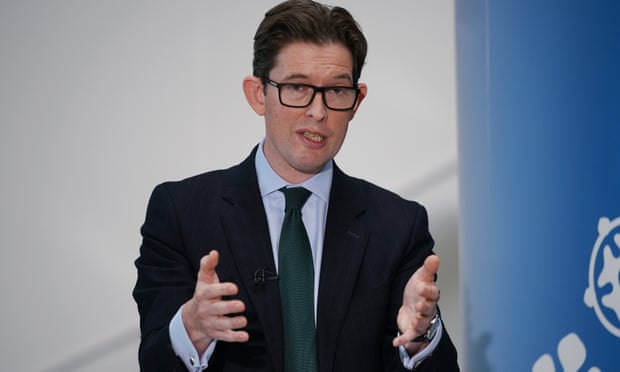
MI5 Director General, Ken McCallum

Ken McCallum, bespectacled Director General of MI5, looks like a man more likely to advise first time buyers to increase their deposit if they want to secure a mortgage, than a man who heads up Britain’s spook network.  It may be that the old adage, ‘don’t judge a book by its cover’ is apt here.  Presumably McCallum has done whatever it takes to qualify as the country’s chief spook and his banker’s demeanour is just a user friendly façade.  Either that or running the nation’s spy network and managing the overwhelming housing debt of young people have more in common than we realise.

McCallum has emerged from MI5 HQ, on the banks of the Thames, to grace the news channels with his two pennyworth on the likely consequences of the retreat from Afghanistan.  The chief spook claims that Islamic extremists had been “hardened and emboldened” by the fall of Kabul, adding that,

“Overnight, you can have a psychological boost, a morale boost, to extremists already here, or in other countries.” 

McCallum also claimed that 31 “late-stage attack” plots had been disrupted in Britain over the last four years. Although he did not explicitly link these actions to the position in Afghanistan, the fact of the UK’s overseas interference across the Middle East has clearly made Britain a target for Islamic extremists.

McCallum went on to warn that,

“Even if the Taliban is absolutely in good faith about wanting to prevent terrorism being exported from Afghanistan, that will be a difficult task to accomplish. Afghanistan is not an easy country to govern and within which to ensure perfect security.”

The US led Western retreat is certainly evidence of that being the case and McCallum took the opportunity to suggest that intelligence agencies needed to plan for an increase in the Islamist threat. 

Typically, what McCallum failed to offer was any suggestion as to how the threat could be averted or any analysis as to why the British state is in the front line of threats from Islamic terrorists.  The same lack of insight is true of the political establishment in the United States, where much of the debate and emphasis around the 20th anniversary of 9/11 is focussed upon the response to those events, rather than any analysis as to why they happened in the first place.

Such an analysis does not play to the 9/11 narrative of outrage that the United States ‘homeland’ could be threatened in any way, or that US imperialist aggression could be culpable for such an outcome.  The targeting and killing of innocent civilians is never justifiable and 9/11 is clearly a heinous act on that basis. 

However, the many and varied massacres carried out in the name of ‘freedom’, as defined by Western imperialism, account for millions slaughtered in order to enrich a few, through slave trading, the exploitation of mineral resources, the struggle to control supplies of oil, to name but a few instances.  The CIA backed coup d’etat in Chile, took place on 11th September 1973, an anniversary imperialism is not so quick to remember.

Having failed miserably in Afghanistan, and more widely in the Middle East, with a boots on the ground approach, it would be sensible for the NATO nations to re-evaluate their approach.  So far their strategy has done little to win friends or influence anyone, other than the few who have stood to gain by being the handmaiden’s of imperialism, and apologists for the rape of their country’s resources.

Initial indications from British Defence Secretary, Ben Wallace, suggest that the wrong conclusions may already have been drawn.  The Global Britain posture outlined by Boris Johnson earlier in the year does not allow for a reduction in Britain’s nuclear weapons capability.  It does not allow for a reduction in the overseas deployment of British troops.  It does not allow for an end to the financing of proxy insurgents to undermine governments deemed ‘unsuitable’ by the West, as happened in Afghanistan 40 years ago and more recently in Syria.  It does not allow for withdrawal from NATO and a non-aligned foreign policy, based upon non-interference and the right of nations to self determination.  

None of these things are on the radar of the Tories.  Instead, Ben Wallace spent part of this week overseeing one of the first flights of the remotely piloted Protector large drone, capable of bearing missiles.  When Wallace was asked if he was prepared to consider drone strikes in Afghanistan, he responded,

“I’ll do whatever I have to do to protect citizens’ lives and our interests and allies when we’re called upon to do so.”

On the presumption that Wallace does not apply this philosophy exclusively to Afghanistan he is essentially giving British imperialism carte blanche to launch armed drone strikes wherever “our interest and allies” are deemed to be under threat.  Wallace in fact underlined this position by stating that,

“One of the options is to deploy anywhere in the world where there is an imminent threat to life, British life or our allies, where international law enables us to take action.”

Wallace has ordered 16 Protector drones at a cost of £260m, with a view to them being operational by 2023.  The drones are capable of being loaded with up to 16 missiles with an operating range of 1,250 miles when armed.

Boots on the ground and service personnel in bodybags may no longer be seen to be acceptable but the imperialist leopard is not changing its spots.  The lessons of 9/11 and the retreat from the unwinnable war in Afghanistan need to be re-assessed in the interests of the people, not the few who stand to profit from continued occupation and exploitation.

Care – the age old issue

5th September 2021

Care for the elderly – underpaid and undervalued

One of the few things British governments have been adept at over the past two decades is finding ways to dodge addressing the crisis in social care.  The issues in the social care system are hardly sudden or unpredictable.  Modelling for an ageing population and the consequences that follow has been going on for some time. 

The median age of a population is an index that divides the population into two equal groups: half of the population is older than the median age and the other half younger.   In 1950 the median age in the United Kingdom stood at 34.9 years.  In 2015, the median age of the United Kingdom’s population was 40 years.  The median age of the population is expected to reach 44.5 years by 2050.

By this projection, over 50% of the UK population will be middle aged or elderly be the middle of the century.  While advances in medical science have contributed significantly to the increase in average life expectancy across the population, the numbers who are able to live well into advanced old age, without any care intervention, remains limited.  

While the case for investment has been staring politicians in the face for some time, the realities for the care sector have been ones of outsourced services, underpaid staff and squeezed local authority budgets. 

In their report, Health and Care of Older People in England (2019), Age UK indicated that,

“Most people experience the majority of years spent living with poor health after the age of 65, and can, on average, expect to spend around half of their later years living with a life-limiting health condition or disability. There is significant regional disparity between areas with the highest and lowest levels of disability-free life expectancy at 65, with over 2 year’s difference for men and 2 and a half years for women.”

Figures from the Office for National Statistics (ONS) show a huge drop in expenditure on adult social care between 2010 and 2015, with spend virtually flatlining since then. Local authority spending on care per person for people aged 65 and over in England is estimated to have fallen by 24 per cent between 2010/11 and 2017/18.

It is no coincidence that the politics of austerity has coincided so neatly with the rapid decline in social care spending.  The Tories consciously shifted the burden of paying off the bankers gambling debts, following the 2008 financial crash, onto local authorities resulting in massive service cuts.  For most Councils social care constitutes around two thirds of the annual budget, so inevitably this sector was hit hard.

In many areas care homes have fallen victim to the Tory penchant for privatising key areas of the public sector, making care provision subject to the vagaries of the market and the need for providers to make a profit.  The pandemic has exposed the dangers of caring as a choice of work, given the proximity of contact with many who are the most clinically vulnerable, and the paucity of pay in the sector, as private companies seek to maximise their profits.

The fact is that care homes are facing a recruitment crisis which could result in 170,000 vacancies by the end of the year.  Part of the reason for this is that work is better paid elsewhere.  Amazon’s new warehouse in Nottinghamshire for example is paying £13.50 an hour, 30% higher than the going rate locally for care home staff, as well as a £1,000 joining bonus.  That is quite a leap from £9.30 an hour when calculating the cost of food, rent and school uniforms. 

There is a sad irony in the fact that a transnational corporation, which has benefitted by billions from the pandemic while paying little in taxes back into the public purse, can effectively be undermining those who have had to risk so much to provide essential care to the most vulnerable.

The long awaited Tory social care plan may be revealed this week.  It is unlikely that the government will turn its sights upon the rich, the tax dodgers and the profiteers from the pandemic, to dig deep in order to fund the ongoing need for better quality social care.  Rumours of a 2% increase in national insurance contributions have been leaked, hitting those on low incomes with an effective tax increase.

This is likely to be followed by Chancellor, Rishi Sunak, announcing a break in the pledge to maintain the so called ‘triple lock’ for the rise in the state pension; an annual uprate of 2.5%, annual inflation or earnings, whichever is the highest.  The first policy is likely to hit the youngest wage earners, the second will hit the most vulnerable pensioners.  A classic divide and rule tactic by the Tories, aimed at diverting both young and old members of the community away from the fact that they are both victims of a system which looks after the rich, at the expense of the poor.

Social care, like access to NHS treatment, should be free at the point of use.  It should not be a lottery according to the level of local funding, it should not be a source of profit for the private sector.  The only way to really address the crisis in social care is to address the underlying ethos of society; is it driven by the need to make profit, or is it driven by the needs of its people?

The answer under capitalism is quite clear, competition and the profit motive rule above all else, with the needs of people coming a poor second.   Under socialism the need to make profit is not eradicated, incentives remain necessary, but any surplus does not go into the pockets of billionaires to fund vanity projects of space exploration, it goes to meet people’s needs.  

The difference in emphasis is quite fundamental and is the difference between a future which values people and one which continues to put profit above all else.

More war, more terror

30th August 2021

Afghan refugees await evacuation

The 9/11 attacks which shook the United States in 2001 were swiftly followed by President George W Bush’s announcement of a ‘war on terror’ in response to those attacks.  In his speech to Congress on 20th September 2001 Bush stated,

“Our war on terror begins with al-Qaeda, but it does not end there.  It will not end until every terrorist group of global reach has been found, stopped and defeated.”

Five days later Defence Secretary, Donald Rumsfeld, announced that the anti-terror campaign would be Operation Enduring Freedom, claiming that it would take years to fight.  

The US response was clearly designed to reinforce the imperialist superpower’s assumption that it had carte blanche to pursue action across the globe, wherever its ‘interests’ were deemed to be under threat.  Air strikes in October 2001 in Afghanistan were quickly followed by the deployment of ground forces by the US and its NATO allies.  By December the final Taliban stronghold of Kandahar had fallen and the twenty year long occupation by the US led coalition was underway.

NATO leaders are keen to stress that the occupation was worth it, that getting rid of the Taliban in 2001 put an end to terrorist attacks being launched from Afghan soil and gave breathing space for the development of democracy in Afghanistan.  Much noise is generated about the extent to which the US occupation allowed for the development of freedom for women in Afghanistan, allowing them to access education, training and employment.

As British troops finally departed Kabul over the weekend British Prime Minister, Boris Johnson, said it was,

“…a moment to reflect on everything we have sacrificed and everything we have achieved in the last two decades.  Twenty years ago, in the wake of the 9/11 attacks, the first British soldier set foot on Afghan soil aiming to create a brighter future for the country and all its people.  The nature of our engagement in Afghanistan may have changed, but our goals for the country have not.”

Nearly 500 British service personnel have sacrificed their lives to maintain an imperialist grip on Afghanistan.  After twenty years in defence of a puppet regime, outside intervention has achieved the return of the Taliban.

The brighter future for Afghanistan was already being developed by the People’s Democratic Party of Afghanistan (PDPA), in power from 1978 until 1992, when the country was plunged into civil war because the West, through the CIA, Saudi Arabia and Pakistan, armed Islamic insurgents to do everything in their power to prevent the Afghan people embarking on a road to socialism.   

That road emphasised equality for women, including the right to education, training and employment, all of which were snatched away when the Taliban assumed power in 1996.  Quite how the nature of the West’s engagement will change from 2021 onwards is not yet clear but in the past 40 years it has moved from arming insurgents, to undermining a popular government, watching the country descend into civil war, occupation to sustain a puppet administration, troop withdrawal, chaos and the return of fundamentalist Islam.

To suggest that Western intervention has been a disaster for the Afghan people would be an understatement.

The imperialist ‘war on terror’ did not end with Afghanistan.   In March 2003 the US and NATO allies invaded Iraq, on the dodgy intelligence pretext that Saddam Hussein had weapons of mass destruction.  Presumably these alleged weapons would be targeted against the West, hence the pretext for invasion.  The fact that the West had encouraged and armed Saddam in his eight year long war with Iran from 1980-1988, resulting in the deaths of hundreds of thousands, appears to have been a mere footnote for Western hawks, keen to re-establish control over the oil rich Iraqi economy.

In 2011 NATO coalition air strikes against Libya precipitated the fall of the Qaddafi government and accelerated the civil war in that country.  Protests against the government of Bashar al-Assad in Syria in 2011 escalated into a full scale war of intervention as the US and UK provided logistical support and weaponry to opposition groups. US and UK missiles have been instrumental in supporting the Saudi led coalition against Houthi rebels in Yemen resulting in over 100,000 dead since 2015.

Western destabilisation of the region facilitated the Islamic State group to gain control of large areas of Iraq and Syria for a period from 2015 – 2019, effectively brought to an end when the Syrians invited Russian support to repel those intervening in Syria.

The ongoing encroachment of the Israeli state upon land recognised by the international community as being part of Palestine, along with the ongoing suppression of the rights of the Palestinian people, the blockade of Gaza and a regime of daily terror, are actions facilitated or not actively opposed by the West.

To suggest that Western intervention has been a disaster for the people of Iraq, Libya, Syria, Yemen and Palestine, would be an understatement.

As the West extricates its forces from the disaster of Afghanistan the question being asked by NATO apologists is, did intervention make any difference?  The answer to that question must be decisively in the affirmative.  Western intervention in Afghanistan over the past forty years has definitely undermined progressive regimes, it has definitely destabilised the Middle East, definitely fuelled the rise of al-Qaeda, Taliban and the Islamic State.

As the Taliban struggle to reassert control in the face of the imperialist retreat, the ongoing battle for Afghanistan will be joined with Islamic State in Khorasan, already responsible for the murder of civilians at Kabul airport as well as the killing of US troops.  In effect the Western withdrawal from Afghanistan has every chance of leaving behind a bloodbath.  

Imperialist intervention has made its mark on the region; the so called ‘war on terror’ has in effect resulted in more war, more terror.  Boris Johnson may speak glibly about a ‘brighter future’ for the Afghan people but imperialist action over the past forty years has been explicitly designed to snuff that out, as it has for people’s across the Middle East.

For those looking to support the cause of peace and progress across the region opposition to war, foreign intervention and the right of nations to self determination must be the guiding principles.  The humanitarian disaster of Afghanistan must be addressed, the rights of the Palestinian people must be addressed, the ongoing refugee crisis as a result of intervention in Syria must be addressed and mass united action must be built to demand an end to imperialist wars of intervention.

People’s vaccine, not a profit vaccine

21st August 2021

Premier League football managers have this week been bemoaning the fact that not enough of their players are getting COVID 19 vaccinations.  This could be seen by cynics as getting their excuses in early ahead of a bad run of results but it is symptomatic of a deeper issue.

Premier League footballers are generally in the under 30 years old age group, the very cohort which appear to be more prone to vaccine hesitancy due to the social media perpetuation of a variety of conspiracy theories.  This is by no means a phenomenon confined to Britain or, for that matter, overpaid millionaires on the sports field.  Anti-vaccination and anti-lockdown protests have been an ongoing feature of French weekends for some time now.  Australia is the latest nation to report protests in the major cities of Sydney and Melbourne.

Such protests are a luxury only afforded to the richer nations of the West who, in their drive for maximum vaccination, have effectively been hoarding vaccines and denying access to developing nations.

Over the coming weeks 10 million vaccines manufactured by Johnson & Johnson, originating from the Aspen factory in South Africa, will be exported to Europe.  The European Union, with a population of 440 million people has administered nearly 500 million vaccines.  Roughly 50% of European adult populations have been fully vaccinated.   

Compare this to the situation across Africa.  With a population of 1.3 billion across the continent only an estimated 1.8% of the population have been fully vaccinated.  No prizes for guessing at which end of the social spectrum that level of vaccination has been concentrated.

The World Health Organisation (WHO) has a target for September that 10% of citizens should be vaccinated.  Of the 54 countries in Africa, it is estimated that 47 will miss even that modest goal.  Through the international Covax programme, set up by the WHO to minimise inequities in vaccine distribution, the West promised funding to deliver 700 million vaccines to Africa by the end of the year.  So far only 60 million have been secured.

Political intervention by African leaders is beginning to shift the balance slightly.  South African President, Cyril Ramaphosa, threatened to ban all exports of vaccines from South Africa until the EU agreed that all Johnson & Johnson vaccines produced in Africa, stay in Africa.  Having come through the realities of political apartheid in South Africa, Ramaphosa is now in the forefront of the struggle against vaccine apartheid.

Vaccine hoarding in the West means that African leaders, through the African Union, are now turning to China for supplies, a deal for 200 million vaccines being imminent.  The West will no doubt cry foul and claim that this is further evidence of the Chinese trying to extend their influence in the developing world.  Any spare capacity in the vaccination programme in Cuba will no doubt be offered to those countries who are most in need, again likely to invite the vitriol of the West.  Support provided across the developing world by the Cuban Henry Reeves Medical Brigades is already demonised by the West as a form of infiltration.

It is no coincidence that, in both instances, the countries most likely to share the benefits of their research and development programmes are coming from a different economic and ethical base to the countries in the West.   To further put that contrast in context the United States has 1.96 billion additional vaccine doses, the EU 1bn extra shots and Canada a surplus 191 million.

The People’s Vaccine Alliance is campaigning for pharmaceutical companies to share their knowledge free from patents, in order for vaccines to be more widely produced.  Under the slogan “We need a people’s vaccine, not a profit vaccine”, the campaign is aiming to transform how vaccines are produced and distributed.  More information is available here https://peoplesvaccine.org/

That this campaign runs directly counter to the profit generating ethos of the Big Pharma companies is self evident.  The reality remains however that the biggest danger to defeating COVID is the potential for rapid spread amongst unvaccinated populations and new mutations arising.  COVID 19 is no respecter of corporate profits and the campaign to break the grip of Big Pharma, in this area in particular, is a matter of urgency.

As WHO Director General, Tedros Adhanom Ghebreyesus, has said on many occasions, no one is safe anywhere, until everyone is safe everywhere.  US President Joe Biden’s Chief medical adviser, Dr Anthony Fauci, made clear this month that,

“If you allow the virus to freely circulate and not try to stop it, sooner or later, there is a likelihood that you’ll get another (worse) variant that could…be more problematic than the Delta.”

Four billion COVID 19 vaccine doses have been administered worldwide of which 90% have gone to those in the wealthy West, while less than 1% of people in the Global South are vaccinated. 

Meanwhile the debate in Britain and the rest of the capitalist world remains focussed upon which younger age groups can be vaccinated and which older age groups should receive booster vaccines.  This can only be described as fiddling while Rome burns, on an epic scale.

It is no great leap to see that the failure of capitalism to address the needs of the people with regard to their health and wellbeing is equally true when it comes to their need for peace, jobs and decent housing for much of the world’s population.  More and more people are beginning to join the dots and recognise that the failures exposed by the COVID pandemic are systemic failures of capitalism and require a radical, revolutionary response. 

The future depends upon even greater numbers coming to that same realisation.

Afghanistan – darkness falling

14th August 2021

The Western media are not using the words defeat or retreat when reporting on the withdrawal of US and British troops from Afghanistan but it is hard to characterise the present situation in any other way.

Nowhere in the NATO objectives will the return of the Taliban have been on the list of desirable outcomes after 20 years of occupation.  The British media wheels out US generals and pundits by the hour to wax lyrical about the amount of time, effort and training NATO forces have expended on supporting the Afghan armed forces over this period. 

Yet, when it comes to the crunch, the Afghan army appears to be walking off the job.  Like the Afghan government itself, the army is fragile and reliant on the West to such a degree that it has little or no independent identity.

The Afghan crisis is yet another international humanitarian disaster of the West’s making going back, not to the intervention following 9/11 in 2001, but to the late 1970’s when the will of the Afghan people to choose a new road, a socialist road was thwarted by the machinations of the West and the foundations for what became the Taliban and al-Qaeda were laid.

Geo-politically Afghanistan has for centuries been an important trade route, linking China, India (the long border which is now Pakistan) and Iran as well as the former Soviet Republics of Turkmenistan, Uzbekistan and Tajikistan on its Northern border.   Landlocked and mountainous it has always relied on neighbours for overland trade routes and itself been a conduit for trade between its more prosperous neighbours.

That role has historically meant that, given the tribal nature of Afghan society, key routes were controlled by local leaders, looking to benefit from granting safe passage for goods and travellers passing thorough their territory.  Inevitably this resulted in the enrichment of a few tribal warlords but was of little benefit to the mass of the impoverished population. 

As British imperialism expanded its grip across the Middle East and beyond it was not hard to see that whoever controlled the warlords controlled key strategic trade routes.  One of the key trades through Afghanistan, has been opium, making it a centre for the international drugs trade and into the 20th century a major supplier for the heroin trade.  Much of the enrichment of tribal leaders has historically relied upon access to the opium crop and links to the criminal underworld which has benefitted across the West.

Tensions between the impoverished many and the enriched few came to a head in Afghanistan in 1978 when the People’s Democratic Party of Afghanistan (PDPA) came to power, on a programme of stamping out the heroin trade, lifting the population out of poverty and backing education and equality for women, bringing light to the Islamic darkness of the largely feudal structure of the country.

This challenge to the entrenched orthodoxy and the prospect of further socialist expansion into the Middle East was not a prospect the West could tolerate.  Moves were quickly made to strangle any revolutionary momentum at birth with the CIA funding mujahadeen opposition operating out of Pakistan in order to undermine efforts of the Afghan government. 

The decision of the Afghan government under the PDPA to call upon support from the Soviet Union, widely reported in the West as a ‘Soviet invasion’, was precisely to defend against the return to feudalism which the CIA backed mujahadeen represented.  The ten year presence of Soviet troops, until their withdrawal in 1989, provided a bulwark against the worst excesses of the reactionary forces backed by the West.  The defeat of the Soviet Union in 1991 however turned the tide internationally and precipitated a degeneration into civil war in Afghanistan from which the Taliban emerged as victors in 1996.

The five year reign of terror by the Taliban was effectively ended by Western intervention in 2001 following the 9/11 attack in the United States, widely believed to have originated with Islamist militant groups based in Afghanistan, ironically previously funded by the US to fight the Soviet forces stationed there.

For Western politicians and the Western media it is convenient to talk about the past twenty years in relation to Afghanistan, the point at which the West was forced to overtly intervene to defeat the Taliban.  It is less comfortable to focus on the preceding twenty years when Western arms and training effectively built the forces which went on to perpetrate terror attacks upon Western targets.

Taliban forces have captured much of the country again at present and are on the brink of mobilising their forces for an assault on the capital Kabul.  The US are planning to employ 3,000 troops to ensure the safe passage of American diplomats and aid workers from Kabul, the British army is deploying 600 troops to do the same for British nationals.  

Billions of dollars spent, thousands of working class lives lost, in an unwinnable war, and another foreign policy calamity for the West.  The real losers over the past forty years have been the Afghan people who have seen their hopes of progress to a democratic future thwarted at every turn. 

If a Taliban led Afghanistan once again becomes a training ground for Islamist militant attacks on the West the bloodletting may not yet be over. The West halted the possibility of social progress in Afghanistan with its initial interference in the 1970’s.  There can be no doubt though that achieving that objective has come at a heavy price.

Individual choice vs social responsibility

7th August 2021

Vaccination roll out – Britain begins to lose ground

At a community centre in North East England earlier this week a group of masked men with bodycams entered the building.  They proceeded to film noticeboards, question staff about the times of the vaccination clinic and, when challenged, claimed they could do what they liked as they were in a public building.  Police were called but arrived too late to make any arrests.  Staff were shaken by the incident but unharmed.

Similar scenes have taken place across the country as the intimidation tactics of the anti-vaccination lobby underline the governments failure to take a hard enough line on vaccination resistance.  Those opposed to the vaccination programme either hail from the right wing libertarian position of individual choice above all else or, the equally reactionary anarchist view that anything the government suggests must be bad, therefore must be opposed.

There are of course many reasons to oppose governments, not least the British government and its overall inept handling off the pandemic.  However, that should not blind anyone to the necessity of behaving in a socially responsible way in the face of an international public health emergency.  There is rarely, if ever, a good case for putting individual choice over social responsibility.  A pandemic is certainly not the time.

The British vaccination programme has been hailed as the one great success of the government’s pandemic strategy, if it can be described that coherently, but latest data shows that the Britain is starting to lag behind European countries in vaccine take up.

According to figures collated by OurWorldInData there are six EU states now ahead of the UK in having a larger share of their populations with two shots of a Covid vaccine.  Malta, Belgium, Spain, Portugal, Denmark and Ireland are all ahead of Britain in terms of the percentages of their populations who are double jabbed.

Among 18 – 30 year olds in Britain an estimated 33% are yet to get their first shot, yet 20% of those in hospital with Covid symptoms are in this age group.  This gives the lie to the perception, not challenged strongly enough by the government, that young people are not at risk.

Elsewhere in Europe vaccine incentives are becoming the norm with France, Denmark, Italy and Greece all adopting various proof of vaccination measures before permitting access to public events and indoor activities such as cinemas and museums.  Britain has deferred introducing similar measures till the end of September.  In the meantime social mixing proliferates and infection rates amongst younger people continue to be high. The right to infect others, by refusing vaccination, is not a right which should be encouraged.

The anti-vaccination lobby are tacitly encouraged by the right wing of the Conservative Party and, in particular, the so called Covid Recovery Group (CRG) of Tory MPs, who have been pursuing a herd immunity strategy, effectively holding Prime Minister, Boris Johnson, hostage if the economy is not opened up further.

Johnson’s libertarian tendencies are only slightly tempered by the rising death count, still the hghest in Europe, but as that slows the temptation to be sucked further into the orbit of the CRG may prove too much for a politician not known for sticking to any fixed position.

The propensity to elevate individual choice over social responsibility is a function of capitalism itself and finds its most heightened expression in the USA around the ‘right’ to bear arms.  It is no surprise that the anti-vaccination lobby in the US is not only vociferous but aligned to the most reactionary elements in the political spectrum.

Even where ‘health pass’ plans have been implemented in the EU there is no guarantee that the population will comply, as recent protests in Paris have illustrated.  Persuasion is still necessary. The push within the British political establishment, away from notions of social responsibility and towards a greater emphasis upon individual choice, has been marked in the past forty years.  The deconstruction of Council housing, comprehensive education, local government, trade union rights and attempts to privatise sections of the NHS are all examples of this.

The idea expressed by the masked men in the North East, that they could do what they liked because they were in a public building, flows from the same mentality.  However, public space is about sharing, co-operating and managing for the collective good.  It is not there for any individual to do as they please, just because it is public.

Sometimes lost in the practicalities of the pandemic is the ideological battle that is necessary to shift people’s thinking away from an exclusive focus upon personal circumstances to the challenge of addressing the collective need.  This banner was raised briefly during the period of Jeremy Corbyn’s leadership of the Labour Party and the establishment moved quickly to tear it down.  In part because they were opposed to it but more significantly because of the resonance they saw it was having with many people.

The idea that things should be done ‘for the many, not the few’ was in danger of becoming more than a political slogan.  It needs to be rediscovered, applied to the present circumstances of the pandemic and carried well beyond if the battle of ideas is to be won. 

Beating Crime – more hollow rhetoric

31st July 2021

Dogged by controversy – Patel watches on as Johnson blusters

Having failed to convince even his own cheerleaders in the right wing press with his big set piece ‘levelling up’ speech, British Prime Minister, Boris Johnson, this week fell back on a tried and trusted Tory reliable; law and order.

Flagging in the opinion polls, the vaccination bounce having deflated and ‘Freedom Day’ having flopped, amongst a myriad of caveats, Johnson was desperate to be seen to be setting the agenda.  Flanked by his Home Secretary, Priti Patel, who had one eye on the media and the other on Johnson’s job, a package of measures amounting to little more than window dressing to placate the Tory faithful was revealed.

Johnson unveiled his plans to relax stop and search powers, allegedly in order to tackle knife crime; increase electronic tagging for released thieves; and make offenders clean the streets in hi-viz, so that they could be seen to suffer.

Writing in the Daily Mail this week Patel asserted that,

“Our Beating Crime Plan contains a range of measures to reduce crime and level up the country so that everyone has the security and confidence that comes from having a safe street and a safe home.

From day one as Home Secretary, I’ve made it clear that I will back the police. We have already recruited nearly 9,000 extra police officers as part of our unprecedented recruitment drive to bring in 20,000.”

With a passing nod to the ‘levelling up’ mantra, Patel then fails to acknowledge that the only reason the Tories have committed to recruiting 20,000 police officers is that this is the precise number cut due to Tory austerity measures since 2010.  Having restored 9,000 is hardly a great achievement.

Patel demonstrates further sleight of hand by failing to recognise the fact that the same austerity agenda is the very reason that for many “having a safe street and a safe home”, or even any home at all, may be little more than a pipe dream.  Best estimates suggest that for the last five years core homelessness has been rising year on year in England, reaching a peak just before the pandemic when the numbers of homeless households jumped from 207,600 in 2018 to over 219,000 at the end of 2019.

Those who are not actually homeless often live with housing uncertainty in the private rented sector.  Others struggle to maintain a foothold in Council housing as the Tory Right to Buy policy continues to be a constraint on the ability of local authorities to retain quality housing in the public sector.

Security of health, housing, employment and the opportunities provided by education, are undoubtedly key factors in tackling the desperation, poverty and hopelessness which can be the breeding ground for criminals to exploit working class communities.  That these social gains have been systematically undermined by Tory policy since the 1980’s and exacerbated by the past ten years of austerity is not a reality recognised by Johnson or Patel.

There was some recognition of this by Shadow Justice Secretary, David Lammy, who was critical of the government’s proposals stating,

“Delays in the courts are at a record high, while convictions for the most serious crimes including rape are at a record low. The government’s tinkering proposals do little to reverse the effects of the closure of 295 courts in England and Wales, or to deal with the massive cuts to drug treatment services, the police, the CPS and the whole justice system his government has made since 2010.”

Even police chiefs, usually bastions of support for Tory law and order measures have variously described the proposals as “weird…and a bit gimmicky”, that the proposals do “not address the big issues” and that “Its like there has been an explosion in a strategy factory.”  Hardly ringing endorsements.

Patel had not endeared herself to the Police Federation a week earlier by announcing a pay freeze which the 130,000 strong federation saw as evidence that the government “could not be trusted” and warned “warm words are no longer enough”.  The federation went on to support a vote of no confidence in the Home Secretary.

The realities ignored by Johnson and Patel include a 73% reduction in services for young people across England and Wales since 2010-11, with reductions in budgets for youth provision of up to 85% in some areas of greatest need such as Haringey in London.

The same areas are those where police stop and search powers are disproportionately used to target black working class youths.  The monitoring organisation Stop Watch estimates that police stopped and searched 115 out of every 1,000 black people compared to 17 per 1,000 white people.  That was in 2010-11 making black people 6.7 times more likely to be searched than whites.  By 2019-20 black people were 8.9 time more likely to be searched.

It is hard to avoid the conclusion that policing in capitalist Britain is institutionally racist, that government policy encourages this tendency and that policy on crime is only seen by the Tories as a means of containing the legitimate frustrations of working class communities.   

The so called Beating Crime plan provides no comfort for those victims of ruling class crimes of negligence, under investment, cronyism or tax evasion.  It is no more likely to ‘level up’ the chances of working class communities than the Tory handling of the pandemic, which has seen working class lives lost in their thousands due to government ineptitude.

In practical terms the government’s new initiatives, like it’s so called ‘levelling up’ agenda, have no value but even fail as a PR exercise to get their own side on board.  It is simply more hollow rhetoric. Recovery from the pandemic must include recovery from the illusion that the Tories will ever act in the interests of the working class.  That is a message which needs to be hit home hard by the Labour leadership linked to policies which will give Labour’s working class base hope for real change.

Tories follow the herd

24th July 2021

Herd immunity at the heart of Tory strategy?

How much of the British government’s approach to the pandemic is ruling class bias and how much sheer incompetence can be hard to disentangle.  There is no doubt that decision making has been driven more by economic considerations than public health outcomes, at least until the public health question becomes too overwhelming to ignore.

The three lockdowns to date have all followed this pattern.  Clear advice from scientists and public heath experts has indicated that at each stage lockdowns should have happened two to three weeks earlier but the government, in thrall to the private sector, has allowed infection rates to escalate to the point where intervention and lockdown was unavoidable.

The sense throughout the pandemic has been of a government claiming to be led by the science but not really being prepared to keep up with it, especially if it contradicted the desires of the private sector to open up and get back to profit making.

The latest dogmatic adherence to Step 4 of the government roadmap reflects the same thinking.  Warwick University and Imperial College London have been predicting for weeks that, based upon the government’s plans, a spike in infections would occur in mid-August to early September.  The two universities have only diverged on how high the spike might be but a daily infection rate of 100,000 a day is even accepted by Health Secretary, Sajid Javid, and some indicators suggest that could get as high as 250,000 infections per day.

It does not require the skills of a SAGE scientist to figure out that this level of infection will increase pressure upon the health service, due to higher levels of hospitalisation, and that it will result in more deaths, in spite of the relative success of the vaccination programme.

The Tory government have released all mandatory requirements to work from home, wear face coverings or to socially distance.  Nightclubs, theatres, restaurants, bars and events can all function without any legal requirement to impose controls or check vaccination status.  In effect the government has given the virus carte blanche to run riot through the younger population, many of whom are unvaccinated or have only had a single dose.

Young people are more resilient and less likely to die from the COVID virus.  They are less likely to end up in hospital.  However, something being less likely to happen does not mean that it will not.  The scientific understanding of how the virus behaves is still in its infancy.  There is preliminary evidence to suggest that young people are more at risk of the condition being termed long COVID, where symptoms of fatigue and lethargy can persist for months.

It is increasingly being seen that even double vaccination is not an absolute defence against the virus, although severity of symptoms and likelihood of death are significantly reduced.

The Tory government has been keen to present its strategy as the only course of action, that the roadmap is irreversible, although now tempered with some words of caution.  The reality however is that the government has had choices at every stage of the pandemic and has made political judgments to inform the actions it has chosen.

Delaying the widely misnamed Freedom Day from the 19th July to the end of the summer for example, combined with a concerted drive to increase double vaccination levels, would have given greater protection to individuals as well as reducing community transmission.  The argument against this has been that it would simply delay a spike in infection till the autumn.  A spike in a population with higher levels of vaccination would surely be less of a spike in the long term though?

Meanwhile those who thought that the relaxing of controls on 19th July would mean a rush back to normal trading are finding that the streets are not paved with as much gold as they anticipated. 

Greater social mixing increases the scope for community transmission and the so called ‘pingdemic’, where individuals are advised to isolate by the NHS test and trace app, is impacting upon businesses across the country.  More than 600,000 people in England and Wales were advised to isolate by the app last week.

The economic impact upon those workers on low wages, insecure contracts and unable to access financial support remains significant.

The government are now scrambling to set up 200 testing sites across the country with a view to introducing a system of daily testing, rather than isolating, for workers in key sectors of the economy, including food distribution, NHS and care workers.  However, claims from the police, fire service and transport staff are now being made to be included as essential workers, not required to isolate but to engage in the daily testing regime instead.

Capitalism is characterised by anarchy in production, uncertainty and job insecurity for many and decision making which prioritises private greed over public need.  That would be in any normal year.  The pandemic has exacerbated these aspects of the system itself and they have been further compounded by a Tory government which has lacked any coherent strategic decision making focus.

Insofar as the Tories can be said to have had any consistent strategy during the pandemic it has been to fall back on the concept of herd immunity.  That certainly seems to be the strategy for this summer.  It is still less than a week since the government released all mandatory controls on 19th July.  The full impact of that particular political decision is yet to be felt.