Blog

No nuclear proliferation in the Middle East!

3rd September 2022

Iranian President Ebrahim Raisi – under pressure to make a deal

Earlier in June, the UK, Germany and France released a joint statement saying that they were ready to conclude a deal with Iran.  That would have restored the joint comprehensive plan of action (JCPOA), the basis of the Iran nuclear deal which held until May 2018, when the United States unilaterally walked away from the agreement.  Following the statement by the European powers it was revealed that indirect talks between the United States and Iran had resumed in Doha.

By mid-August reports were circulating that a final text had been agreed.  Tehran had indicated that, from its perspective, progress has been made but there are still outstanding details to be finalised.  There is a sticking point for Tehran on the status of the Islamic Revolutionary Guards Corps (IRGC), which the US regards as a terrorist organisation.  Tehran also wants guarantees that any agreement will be binding on future US administrations, so the deal cannot be reneged on as it was in 2018 by President Trump.

It is unlikely that either of these positions will be palatable to Washington.  Some observers also see a final agreement as being unlikely given Iran’s increasingly close co-operation with both Russia and China.  Recent co-operation with Russia in particular, on satellite and weapons technology has been frowned upon in the West.

The need to reach a deal is widely recognised however as a prerequisite for any chance that Iran may be engaged more positively with the international community.   The lifting of sanctions could not only reduce Iran’s uranium enrichment programme, confining it for purely civilian purposes, but also be used as leverage to address the regime’s appalling human rights record.  Both issues would send positive messages across the Middle East by reducing the likelihood of conflict and bringing the issue of human rights to the forefront of the debate.

In the context of the geo-political situation in the Middle East, and the increased international uncertainty due to the war in Ukraine, an agreement which could be the beginnings of a more stable region would be worth aiming for.

The situation inside Iran remains finely balanced.  The punitive sanctions imposed following the unilateral withdrawal from the 2015 deal by the United States has seen the Iranian economy contract by 6% year on year according to the IMF.  Social unrest has been gathering momentum as a result of the impact of sanctions upon the economy.  Widespread job losses have plunged many into poverty with inflation running at over 40% according to the World Bank.

The imperative for the regime remains to secure a deal.  It is believed if US sanctions are lifted, this will bring some economic relief for the government.  Tehran would be able to access tens of billions of petrodollars trapped in foreign central banks and rapidly ramp up oil exports.  For recently elected President, Ebrahim Raisi, a nuclear deal is seen to be the opportunity to deliver on economic promises and hopefully keep the country calm.

Some hardliners within the Iranian regime however are willing to risk a no deal situation arguing that, what they term a “resistance economy” has prevailed, in spite of the severity of the sanctions regime to date, and that they could continue with this while maintaining social stability.  

The extent of social discontent in evidence across the country may contradict such an assessment but the fact that some inside the regime see toughing it out as an option will be of concern to much of the Iranian population.  Tehran has been forced to freeze many longer-term development plans to tackle issues such as water shortages, and the number of protests over the past four and a half years suggests a clear correlation between economic pressure and social unrest.

The situation in Ukraine has already had an impact upon the likelihood of a deal being agreed.  The talks in Vienna which started in April 2021, aimed at reviving the Iran Nuclear Deal, were suspended recently when Russia insisted that the US sanctions should not be an impediment to its trade with Iran.  The Islamic Republic relies on the import of grain, fertilisers, cooking oil, and meat from Russia, which have been abruptly halted.  Ironically, the US and its European allies are attempting to leverage pressure on Iran to step-in and provide oil and gas to the West to fill the void in supply from Russia.

There is little doubt that the regime in Iran is under pressure due to the deteriorating economic situation.  At the same time the West is under pressure to find some accommodation as a result of its issues with Russia.  A revival of some form of the JCPOA may well be expedient for both, while at the same time alleviating some of the pressures of poverty from the people of Iran.  

Certainly, any deal should be linked to the wider issue of nuclear non-proliferation in the Middle East, as that really would be a major step forward for peace in the region.

The full text of this article was first published by Liberation and can be found here

Workers joining the dots

31st August 2022

Postal workers – part of the growing numbers of workers demanding action on pay

The war in Ukraine has become a convenient shorthand for the cause of the economic crisis currently engulfing the capitalist world.  The script suggests that the conflict has seen oil and gas prices soar, putting pressure upon Western economies.  Sanctions imposed upon Russia, with Western European nations inviting pressure upon themselves by refusing to take Russian energy, has exacerbated the situation.

The reality however is somewhat different.  The surge in oil prices actually began well ahead of the conflict in Ukraine, which started in February 2022.  Oil prices however began their surge in April 2020 and have in fact dropped from $130 per barrel in May to $95 per barrel in July.  The oil price surge over the past two years has inevitably been paralleled by a commensurate rise in commodity prices, resulting in an increased cost for goods and services.  The current cost of living crisis certainly did not begin in February.   

The real source of the current economic instability is the United States, where a massive increase in money supply into the economy, coupled with a lack of investment has combined to increase commodity prices.  As the Socialist Economic Bulletin (12th August 2022) notes,

“Furthermore, because of the weight of the US in the global economy and especially because most globally traded commodities are denominated in US dollars, then this inevitable surge in prices was bound to have a global impact.  This is the source of the current global surge in prices, the period we are still in.”

It is to this extent that the current economic crisis and rampant inflation in Britain can be put down to international factors.  The war in Ukraine has certainly exacerbated the situation but it is by no means the root cause.  If anything, the US has taken advantage of the reduction in Russian gas supplies to coax European consumers into purchasing liquefied natural gas (LNG), from the United States.  This is having a particular impact in Germany, the biggest EU economy, and will tie Western economies even more tightly into the dollar dominated international trade system.

Sanctions against Russia and an increasingly belligerent attitude towards China from the US are increasing the chances of further military conflict, of which Ukraine may just be the precursor, but also of an economic showdown.  The Chinese and Russians are already exploring alternatives to the dollar dominated international banking and payments system and it may not be long before dual financial structures are in place.  

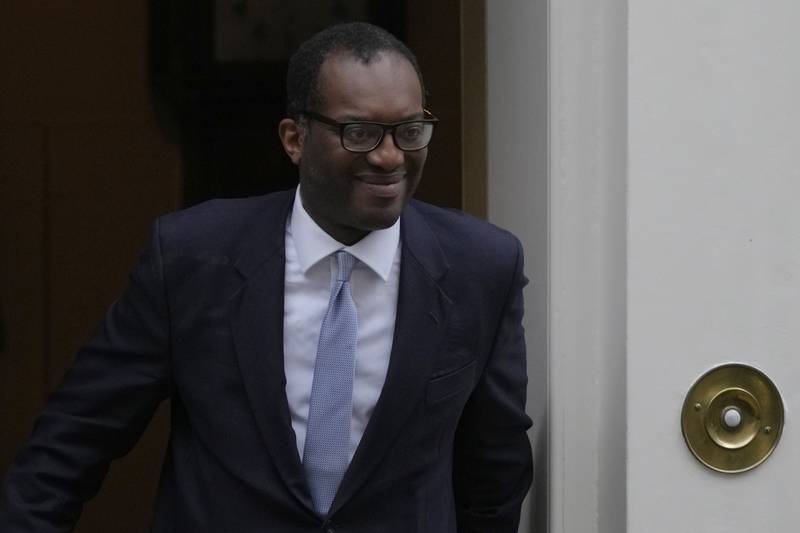
In Britain the Tory leadership candidates, Rishi Sunak and Liz Truss, give every appearance of equivocating over how to address the issues as they affect the economies of the UK.  However, their main concerns are focussed upon cushioning the profits of the energy suppliers and producers, the real purpose of the so called energy cap, rather than reducing the cost of energy to the consumer. To the extent that the Tory leadership hopefuls worry about the impact on working class people it is confined to the threat of losing votes and seats, with a General Election no more than two years away.

The rising tide of working class action in response to the crisis is however helping many join the dots between the super profits of the energy companies, the excessive salaries of Chief Executives in the corporations which dominate the economy, and the mendacious line pedalled by the Bank of England and Tory Ministers that it is the demands of workers for increased wages that fuels inflation.

Given the real life experience of the working class, there is an opportunity for the Labour Party to show decisive leadership and back workers wage demands, articulate a vision for a society not based upon profit and greed, and push the new Prime Minister, from the moment they take office, to drop any plans for tax cuts to the rich in favour of addressing the needs of the poorest in society. 

The momentum in the trade union movement is certainly heading this way and is even reflected in positions adopted by the TUC.  The Labour leadership has at least come out and backed a freeze on the energy price cap, which is a step in the right direction.

However, while this is one small step for the Labour Party it is not a giant step towards socialism.  Across the G7 economies Britain is the only one with predicted negative growth in 2023, has by far the highest rate of inflation in 2022 and is predicted to have the highest inflation rate across the G7 in 2023.  Only radical action can change this.

Whatever ‘differences’ the Tory leadership hopefuls profess they remain committed, as does their party, to a low wage economy, reduced public service funding, constrained trade union activity and tax cuts for the rich.  The past twelve years of Tory government has seen exactly that and follows the pattern set down by every Tory government in history.

In addition to the price cap freeze Labour needs to reassert its call for the nationalisation of water, energy, mail and transport services, in order to address the needs of communities rather than profiteering shareholders.  Pay demands must at least keep pace with inflation, a realistic minimum wage should be established and demands for investment in green infrastructure must be accelerated.     

Labour should not be afraid to call for the scrapping of the Trident nuclear programme as unaffordable and unnecessary. An end to weapons supplies to Ukraine and the call for a negotiated end to the conflict must also be a priority if an escalation of the war is not to continue.  

As the world is configured international factors will always play a part in determining the economic landscape.  That is not to say that national governments have no control, even within a capitalist economy, or that they cannot lay the groundwork towards the transition to a socialist economic model.    Whatever the difficulties or obstacles faced, it is at least imperative that the vision of an alternative society is both outlined and fought for.  If the current Labour leadership does not have the stomach for such a fight mass pressure from the grass roots must push them in that direction.

Cap the price cap

12th August 2022

A dog’s life? More children will face poverty as the economic crisis deepens

Energy prices are soaring.  Gas in particular has increased in price by 400% in the past year and 1000% since 2019.  As well as direct gas supply, gas accounts for around 45% of electricity supply, through gas fired power stations.  In 2019 the energy price cap set by regulator Ofgem stood at £1,254; latest estimates suggest that this may hit £4,200 in the New Year, rising to £5,000 according to some calculations.

The energy cap was introduced by Ofgem in 2019 to help those on standard variable tariff dual fuel energy bills, meaning the price paid is subject to changes beyond the consumer’s control.  The price cap sets a level beyond which consumers under its protection cannot be charged.  At present it covers around 23 million households in Britain.

The debate in the media and between Prime Ministerial hopefuls, Rishi Sunak and Liz Truss, has focussed upon the illusory notion of putting more money into people’s pockets, the better for them to decide how to spend it.  If that is a choice between heating and eating, which for many it will be, an extra few bob to feed the gas meter is hardly likely to win out.

Quite apart from the fact that Truss’s tax cutting mantra will not assist the poorest anyway, there is always the option of not taking the money out of people’s pockets in the first place!  This of course is not very Conservative, as robbing the poor to give to the rich is part of Tory DNA.  Rishi Sunak may put more of a clever spin on his proposals than Truss but they still amount to the energy producers getting rich while the most vulnerable in society pay.

So, what can be done in the world of neo-liberal capitalist market economics, where the market dictates and we all have to live with the consequences?  Well, if you are a bank which has run up over its credit rating in gambling debts, as happened to many in 2008, the State can step in to save you.  ‘Too big to fail’, was the phrase commonly bandied around then. 

If you are a Tory Party supporter with no experience of public health, pandemic protocol or quality control over PPE equipment, you can get lucrative government contracts and walk away rubbing your hands in glee at your lucky payday.

Under capitalism the myth that the State does not play is a con trick, pedalled by pro-capitalist politicians who want to ensure they retain control, or to circumscribe the activities of those bits of the State which might show signs of resistance, local government historically being a case in point.    

The reality of course is that the State always plays.  The State is run by the ruling class in the interests of that class and can manipulate markets and make adjustments to its advantage at certain times, should it choose to do so.

The government could choose to fix the price cap so that energy bills in households affected did not increase massively and plunge more families into poverty.  This would put the pressure back onto energy suppliers, even the energy producers, who may have to reduce their profits and cut the dividend to shareholders; but it could be done.  With half of the current inflation rate being down to rising energy costs there would even be the benefit of prices across the economy not rising so quickly.

Energy companies would weep and demand a bail out, as the banks did in 2008, but taking them into State control would settle that issue.  The French government owns energy supplier EDF, is keeping prices capped and has an inflation rate of less than half that of Britain at 5.8%.  The French economy is no less capitalist than Britain, so there are options.

In the short term a windfall tax is another option.  When he was Chancellor, Rishi Sunak raised a levy on the industry’s windfall profits that raised £5 billion.  Less widely publicised was the fact that Sunak softened the blow by allowing firms to offset 80% of their new investment costs against tax.  The outcome of this was that, combined with existing tax breaks, oil and gas firms get 91p off their corporation tax for every pound spent on investment.

However, there is no evidence that windfall profits are actually being invested.  On the contrary higher dividends to shareholders is the reality, while energy bills soar.  Another windfall tax, levied to put that money into the pockets of consumers, is an option.  Estimates suggest that raising £15 billion would be a reasonable outcome.

Without any significant action it is estimated that those in fuel poverty could rise to 39 million people by next January, over half of the population of the UK.  After a visit to Britain in 2018, the United Nations Special Rapporteur on extreme poverty and human rights, Philip Alston, expressed great concern that “14 million people, a fifth of the population, live in poverty. Four million of these are more than 50% below the poverty line, and 1.5 million are destitute, unable to afford basic essentials.”

Those figures will not have improved since the pandemic and will only worsen as the economic crisis deepens. To suggest that this is a scandal in the world’s fifth richest nation does not even come close.

The scandal is compounded by the absence of any real fightback from Labour on the issue of energy costs.  Kier Starmer is on holiday, which could be the Labour Party’s strapline on this, as on so my other issues.  His last set piece speech on anything significant saw him resurrecting the Theresa May mantra that there is no magic money tree, as he tried desperately to assure the banks and corporations that capitalism will be safe in Labour’s hands.

The fact is that there is a money tree.  Working class families water its roots throughout their working lives in the payment of taxes. The problem is that its fruits are not fairly distributed. 

The energy crisis, the cost of living crisis, are just euphemisms for the capitalist crisis, which is the real long term issue that must be dealt with.  That will only be resolved with a socialist economy, planned and organised around people’s needs, not the desire for profit of a minority.  

Until then measures which ameliorate the suffering of the poorest and prevent millions more being plunged into poverty are the least we need to achieve.  That will require pressure from the trade unions, community organisations and the Labour Party.  That means Labour getting off the fence, and into action to force the government, once there is one, to act swiftly.

Arrivederci per ora

Avanti Populo will be taking a short summer break.  Back soon!  

Pelosi provocation pours fuel on the fire

6th August 2022

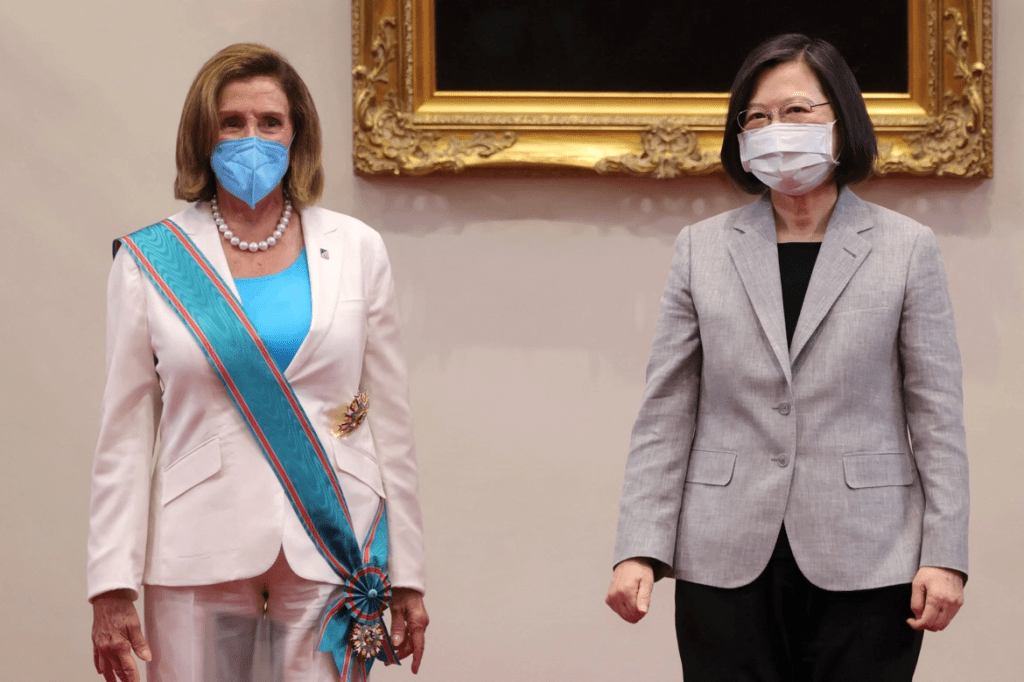
Nancy Pelosi (left) – a willing tool of US imperial ambition

In one sense the question of Taiwan is complicated. Part of China for over two hundred years it was captured by the Japanese in the nineteenth century before being returned to China as part of the Japanese surrender at the end of World War 2.  The return was to the nationalists then ruling China, shortly to be overthrown in the 1949 revolution, which established the People’s Republic of China with the leadership of the Communist Party of China.

The defeated Chinese nationalists, who were opposed to the march of the People’s Liberation Army, retreated to Taiwan and proclaimed it to be the Republic of China, claiming sovereignty over the whole of mainland China, as well as the outlying islands of Taiwan.  This nonsense was perpetrated internationally until 1971 when the People’s Republic was finally recognised by the international community as legitimately being China. 

The policy of the Chinese government has therefore always been that the returned province of Taiwan is part of China and the self proclaimed government of the province has no standing in international law.  In this sense the question of Taiwan is not complicated at all, it is part of China, albeit run by an anti-communist clique proclaiming it a democracy.  Echoes of Hong Kong.

Only a handful of countries across the world, 14 at last count, recognise the so called ‘government’ of Taiwan; the United States is not one of them.  However, this is a classic case of US imperialist smoke and mirrors. 

More than 400 American diplomats and staff are based in recently built American Institute of Taiwan offices in Taipei, a $250 million compound built into a lush hill with security provided by marines. Employees offer American citizens in Taiwan consular services and help Taiwanese obtain visas to visit the United States, just as they would anywhere else in the world.   In effect this is an embassy in all but name.

Although not officially recognised by the US it is the case that Taiwan is the 11th biggest trading partner of the United States and plays a crucial role in the supply of semi-conductors for Silicon Valley.

The US interest in Taiwan is not about its claims to be supporting or promoting democracy, it is entirely about maintaining its economic interests, restricting China’s role in the Pacific, maintaining a foothold in the region close to the Chinese mainland, backed by its regional allies in South Korea and Japan.  Direct Chinese control over Taiwan would, in the view of the US, threaten their economic supply chain for key components as well as potentially diminishing the military leverage the US has in the region.

The US position towards Taiwan is enshrined in the Taiwan Relations Act 1979 (TRA), just over forty years old now, and described by right wing Senator, Marco Rubio, as “the cornerstone of U.S.-Taiwan relations”.  Rubio has gone further, effectively articulating the US position towards Taiwan and its geo-political importance, stating,

“We must continue to strengthen our alliance with Taiwan, a fellow democracy, in the face of China’s rising aggression in the region.  Taiwan is a critical security partner in achieving our shared goal of a free and open Indo-Pacific.”

The TRA commits the US to acknowledge but not recognise, Beijing’s claim to Taiwan; to consider Taiwan’s status as ‘undetermined’, but something that must be resolved peacefully; to view any attempt by China to coerce Taiwan into unification as a grave threat to American security; to authorise the sale of military equipment of a defensive nature to Taiwan in order to keep China at bay; and to establish the de facto embassy under the front name the American Institute in Taiwan.

In July the Biden administration agreed arms sales to Taiwan worth $108m, the fifth of the Biden administration so far, following six separate deals under previous president, Donald Trump.  When asked by a reporter in May whether he would be willing to get involved militarily to defend Taiwan, Biden answered with a clear ’yes’.

China has made its position clear on numerous occasions, with General Li Zuocheng, chief of the Central Military Commission’s joint staff department, advising his U.S. counterpart, General Mark Milley, recently that Washington should end military relations with Taiwan, and “avoid shocks to Sino-U.S. relations and the stability of the Taiwan Strait,” warning that “if anyone provokes arbitrarily, it will inevitably be met with a firm counterstrike by the Chinese people.”

Against this background it is hard to see the visit of the US House Speaker, Nancy Pelosi, as anything but a provocative piece of sabre rattling by the US.  Pelosi occupies a position second in line to the US Presidency, behind Vice President Kamala Harris and, in spite of protestations to the contrary from the White House, could hardly undertake such a visit without official sanction.

Against the background of the US role in provoking and helping sustain war in Ukraine, the Pelosi visit adds a dangerous new twist in the threat to world peace, which the imperialist political and military ambitions of the United States represents.

As Andrew Murray has warned, writing for the Stop the War Coalition, a US – China clash is not a scenario to contemplate as,

“This would be a still more momentous clash than the one over Ukraine.  The “proxy” element of the latter war would be missing.  It would constitute a direct clash between two great powers, both armed with nuclear weapons.”

The Western media inevitably promotes only the US position and continues its embedded anti-China rhetoric.  The anti-war movement must call out Washington’s provocation and win the wider public to the recognition that the status of Taiwan is an issue for China to resolve.  Pouring more weapons into Taiwan will simply continue to add fuel to an already raging fire.

Protest wave continues to engulf Iran

29th July 2022

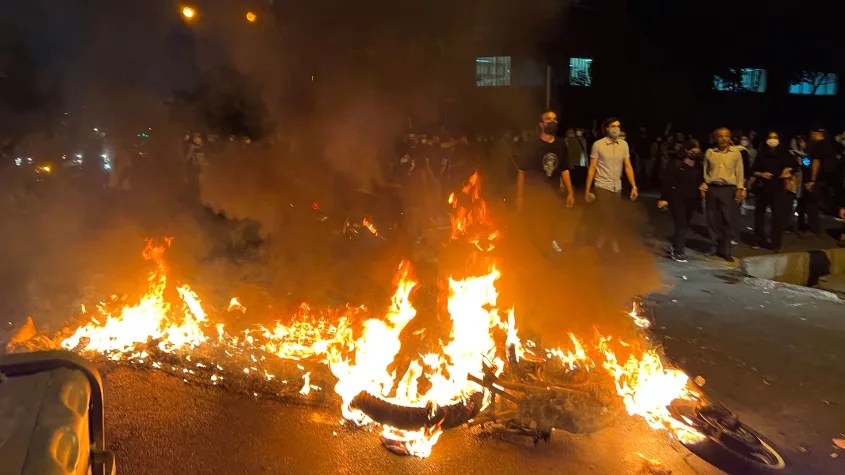
Growing unrest in Iran has been spilling over into open street protest against the regime as Western sanctions continue to bite and the economy struggles.  Jane Green assesses how the struggle against the theocratic dictatorship in Iran is unfolding.

Protest met with violence on the streets of Iran

Very often Iran makes international headlines as part of the debate regarding the Iran nuclear deal talks, the agreement reneged on by Donald Trump in 2018, a form of which US President Joe Biden is seeking to resurrect.  The situation facing ordinary workers inside the country rarely breaks into the headlines of the international media.

However, the extent of violence this year has even prompted the United Nations to comment.  Recently, UN human rights experts issued a statement condemning the “violent crackdown against civil society in Iran,” urging “those responsible for using excessive force to be held to account through comprehensive and independent investigations.” The UN went on to condemn the “excessive use of force against protestors, with what appears to be an active policy to shield perpetrators and prevent accountability.”

The UN has been compelled to comment as since May, hundreds of workers, teachers, and other activists have been arrested for peaceful protest.   At least five protesters have been killed and the Iranian government has imposed internet shutdowns, as the protests have rocked Iran.

While workers in many sectors across Iran have participated in growing protests, teachers have been at the forefront of the current wave rocking the country. Since late May, more than 230 teachers have been arrested by security forces throughout the country, including 23 who were summoned before the judiciary to face charges. Protesters’ grievances have included sub-poverty-line wages as well as the arrest and imprisonment of their leaders, among other basic labour rights issues.

Prominent teachers’ rights advocates Rasoul Bodaghi and Jafar Ebrahimi have not been heard of for several weeks, after their arrests by Intelligence Ministry agents. They are being held in solitary confinement in Tehran’s Evin Prison where their families have been denied permission to visit them.

In spite of the obvious injustices being perpetrated by the Iranian regime resistance continues inside the Islamic Republic’s prisons.  Ten teachers have been on hunger strike since June 18 in Saqqez, western Iran, to protest their unlawful detention.

The Syndicate of Workers of Tehran and Suburbs Bus Company (SWTSBC) has issued a statement demanding an end to the harassment of the families of its imprisoned activists, Reza Shahabi and Hassan Saeedi.  The statement condemns the pressure on the families of teachers, workers and other detainees to make false confessions.  It goes on to demand “an immediate medical examination of Reza Shahabi and Hassan Saeedi and the unconditional release of all workers, teachers and other detainees in this case.”

The current wave of protests and imprisonments is part of a pattern which has been consistently growing within Iran over the past five years.  Over that period the theocratic dictatorship ruling Iran has been experiencing arguably the most acute and multidimensional crisis in its forty-year-plus reign, a crisis that shows no sign of abating anytime soon.

It is estimated that around 45% of Iran’s population are under 35-years-old and who comprise the system’s most ardent opponents. This demographic group, having never known anything other than the Islamic Republic, demand a functioning and viable economy. 

Those demands include real jobs, decent wages and prospects, alongside human and democratic rights and political freedoms. The fact that youth unemployment is currently estimated to be running at 30% to 60% in Iran, depending on the particular age group and locale concerned, only adds fuel to an already raging fire.

The simmering widespread discontent has continuously manifested itself from summer 2020, with the country reeling from a collapsing economy and the disastrous handling of the COVID-19 pandemic. The hugely popular and effective teachers’ protests are the latest example of this and are regarded as particularly significant in that they pertain to a youth-facing sector.  Essentially, the teacher’s demands and objectives are as much for the good of Iran’s students and future generations, as they are for the teaching and educating sector itself.

Global unions and teachers’ organisations, including Education International and the ITUC, have also expressed solidarity with the teachers in Iran and have written to the authorities there demanding that they respect the rights of the teachers and release all imprisoned teacher and union activists.

Independent trade unions remain unrecognised in the Islamic Republic in spite of the fact that Iran is a signatory to a number of key international treaties.

The Committee for the Defence of Iranian People’s Rights (CODIR) has called upon the trade union and labour movement internationally to rally around, and stand in solidarity with, the detained Iranian trade unionists and teachers. CODIR is calling upon all those standing for human and democratic rights to write letters of protest to the Iranian authorities, via the diplomatic missions of the Islamic Republic of Iran, demanding the unconditional release of their innocent counterparts currently languishing in the theocratic regime’s prisons and detention centres.

For more information visit www.codir.net

The hollow sound of crisis

23rd July 2022

Hollow sounds – Sunak and Truss seek to further their political ambitions

The war between factions in the Conservative Party, fronted by leadership contenders Rishi Sunak and Liz Truss, continues on in its avoidance of addressing any of the issues which will improve the lives of working class people.

Debates around income tax, corporation tax, even national insurance levels, important though they are, will not tackle the structural issues which face many suffering at the sharp end of the capitalist system.  The Tories, whoever is leader, have no strategy for tackling the housing crisis, driven by escalating prices and the ongoing desire for profit from house sales.

The de-population of many rural areas, is an increasing concern, as houses bought for holiday homes puts them beyond the reach of young people, who might otherwise want to stay in the area in which they were born.   High rents make saving for a deposit challenging, especially with house prices artificially high, and with the Air B&B market for staycations expanding.

The urban alternative is often houses in multiple occupation and restricted disposable income, with salaries eaten by rent and transport costs.  This situation often prevails in London but is becoming true of many other metropolitan centres.  With job insecurity, temporary contracts and the gig economy on the increase the danger of homelessness is often just around the corner for many young people.

The new Tory leader may or may not stick with the ‘levelling up’ concept, beloved of Boris Johnson as a means to keep so-called ‘red wall’ seats, mainly made up of working class voters, onside with false promises before the next General Election.  It is quite possible that Sunak and Truss would find it expedient to do so.  History shows however that Tory promises are not only cheap but easily broken, sacrificed in the name of some other, more pressing crisis.

The housing charity, Shelter, is clear on the needs any new Prime Minister should address, stating,

“There has to be a plan to make sure local people benefit from the growth that comes from levelling up. And that means investing in good quality, energy-efficient social homes. Social homes with rents pegged to local incomes that stay affordable over time.”

Setting to one side the assumption that growth will come from levelling up, the rest of the Shelter statement makes perfect sense.  Good quality local homes for local people at rents they can afford.  It would not be a bad start.  Add to that the repeal of the government’s right to buy legislation, which obliges local authorities to sell off Council housing stock, and a significant start to tackling the housing crisis would be underway.

The right to a home should be a guaranteed human right and in the world’s fifth largest economy it is a scandal that anyone should be homeless.

This situation is consistent with the privatisation of social provision, which has been key to the Tory agenda since the 1970’s.  Comprehensive education has been replaced by the private sector driven academy system.  Care for children and the elderly is run by private companies, primarily interested in profit rather than the people they are supposed to look after. There is no indication that either Sunak or Truss would seek to reverse any of that.  On the contrary they are falling over themselves to prove who is the most consistent Thatcherite.

The BBC reported only this week on the scandal of children in care being housed in temporary accommodation, including boats and caravans, exploiting a legislative loophole that permits the use of such locations as ‘holiday accommodation’.

Carolyne Willow, director of the children’s charity, Article 39, stated in response,

 “A young child moving from caravan to caravan defies understanding of what a holiday is.  The government needs to amend the legislation to make it absolutely clear what constitutes holiday accommodation for children in care.”

Sunak and Truss have made no attempt to out compete each other in promises to more effectively support social care provision, through the proper funding of local authorities, or tackle the crisis in hospital waiting lists through making social care free at the point of use and NHS staffing levels realistic.

Both will bleat that this is all unaffordable, as they do when it comes to decent pay rises for rail, postal and public sector workers.  That this will fuel inflation and worsen the economic crisis.  It is convenient in many ways that the pandemic over the past two years allows the Tories to reference only recent history when it comes to the reasons for the looming recession.  The fact is that the crisis runs far deeper and is a consequence of Tory economic mismanagement over the past decade.

Liz Truss did appear to break with convention this week when she stated that,

“We have had a consensus of the Treasury, of economists, with the Financial Times, with other outlets, peddling a particular type of economic policy for 20 years. It hasn’t delivered growth.”

However, her recipe to tackle this was an entirely conventional Tory play; cut personal taxes, cut corporation tax, reverse the increase in national insurance, suspend green levies on energy bills.  All of which may put some money in the pockets of some individuals but will not address the structural problems born of the capitalist system, that the drive for personal wealth and corporate profit is always at the expense of the public good.

The leadership contest gives the Tories a chance to spread disinformation about the economy and dodge the hard measures required to address social need.  The reality is that neither candidate has the answers because they remain beholden to maintain the system, which only ever operates in the interests of the ruling class and their cronies.  For the working class, promises from the Tories will only ever have a hollow ring.

Labour has a great opportunity to expose the Tories lies, exploit their divisions and put forward a real alternative in favour of the working class.  An agenda for the many, not the few perhaps?

Biden on the offensive

17th July 2022

US President Joe Biden and Saudi Crown Prince Mohamed bin Salman – who is the pariah?

To suggest that US President Joe Biden is speaking with a forked tongue on his current propaganda tour of the Middle East is an understatement.  The fist bump, with Saudi Crown Prince, Mohamed bin Salman, who even the famously mendacious CIA regard as having given the order for the execution of journalist Jamal Khashoggi, made a lie of Biden’s promise to treat bin Salman as a pariah following the journalist’s murder.

Clearly, such considerations cannot be allowed to obstruct the desire to persuade the Saudis to free more oil onto the world market, to compensate for the shortfall in Russian supplies, or to continue to build rapprochement between Saudi Arabia and the region’s other US client state, Israel, in opposition to the perceived threat from Iran.

Leaders of six countries of the Gulf Cooperation Council (GCC) – Saudi Arabia, Qatar, Bahrain, Kuwait, Oman and the United Arab Emirates – plus Jordan, Egypt, and Iraq held talks on regional security and bilateral relations with the US at a summit in Jeddah over the weekend. Biden pledged that the US “will not walk away” from the Middle East and leave a vacuum to be filled by Russia, China or Iran.   Biden also told the summit that the US is committed to ensuring Iran never gets a nuclear weapon.

Biden is in the region to sell the repackaging of US Middle East policy which has been outlined by National Security Advisor Jake Sullivan, who emphasised Washington’s desire to promote “regional stability” through diplomacy.  Top White House official on the Middle East, Brett McGurk, has talked of a desire for “returning to basics” through the “3D approach” of deterrence, diplomacy and de-escalation.

Considering the extent to which the US has destabilised the region, through promoting Islamic fundamentalists in Afghanistan, to invading Iraq, Syria and Libya, while arming the Saudi state to bombard Yemen, many in the region would welcome the US walking away.

However, the right of nations to self determination and the principles of non-interference in the affairs of sovereign states, are not values that the US has even deigned to pay lip service to over the years and are certainly not ones which fit into the US imperialist unipolar world view.

It is in the strategic interests of the US to see an expansion and strengthening of the Abraham Accords, agreements between Arab countries and Israel, initiated under former President, Donald Trump, which seek to deepen Israeli influence over the Arab world.   Biden is using his visit to press this agenda through promises of security and technology investments.

Biden will use all of his political charisma to make these promises sound magnanimous but, in effect, they are about consolidating the role of the US as the main arms supplier to the region and clearing a path for US technology companies to be the region’s main supplier of communications infrastructure.

On the question of Palestine, Biden is paying lip service to a two state solution while at the same time bolstering Israel’s military capability and effectively turning a blind eye to the atrocities committed against the Palestinian population on a daily basis.  In the effort to airbrush the question of Palestine from the international agenda the Saudis are complicit.  They are keen to ensure both Israel and the US remain on board with their virulent anti—Iran position, born out of the Sunni/Shia schism in the Muslim world, but increasingly hardening into a classic nationalist power struggle.

While the Saudis and Israelis in many ways appear to be unlikely allies, their mutual perception of Iran as an existential threat brings them together.  The US desire for regime change in Tehran means that they are happy to both encourage and arm any Israeli/Saudi alliance.  While Biden professes to want to win over the Iranian theocracy by diplomacy, some state of the art weaponry under US control in the region is seen as a minimum backstop.

While the Iranian dictatorship struggles to free itself from US sanctions imposed when Donald Trump reneged on the Iran nuclear deal in 2018, resulting in more trade with Russia and China, Saudi Arabia enjoys the largesse of the US and its allies on a number of fronts.  The recent Saudi backed LIV Golf tour, which has generated such controversy in the sports world, continues the Saudi sportswashing agenda, following the recent bankrolling of Newcastle United.

The Saudi Public Investment Fund (PIF), chaired by Crown Prince Mohamed bin Salman, has bought shares worth £78m in Aston Martin, adding to its investment in other blue chip companies and car makers including Lucid electric start up and McLaren.

Western arms manufacturers continue to see the Saudi dictatorship as a lucrative customer and weapons continue to pour into the kingdom.   Campaign Against the Arms Trade (CAAT) noted that the published value of UK arms licensed for export to the Saudi-led coalition since the bombing of Yemen began in March 2015 is £8.6 billion (including £7.1 billion to Saudi Arabia alone); however, CAAT estimates that the real value of arms to Saudi Arabia is over £23 billion, while the value of sales to the Coalition as a whole (including UAE and others) is nearly £25 billion.

As staggering as those figures are Britain is, as ever, a junior partner when it comes to any relationship with the US.  A total of 73% of Saudi Arabia’s arms imports come from the US and 13% from Britain.  The Saudis annual spend on weapons is close to $50bn.  Lucrative business indeed.

Biden’s visit will do little to assuage the fears of many people in the region that the US has its own military and economic interests to the forefront, while the interests of the people of the Middle East are not a significant concern.  US military interventions and backing for unelected dictatorships has often been at the root cause and, at the very least, fuelled conflict in the Middle East.

Biden may see his four day tour of the region as part of a charm offensive but for the people of the Middle East, until the US allows them to determine their own futures, free from domestic dictators or foreign intervention, the presence of a US President in the region will simply be offensive.

Into the revolving door

11th July 2022

The rogue’s gallery line up for the keys to No.10

It should come as no surprise that the leadership of the Conservative Party is a revolving door. Since the knives were sharpened for the hapless William Hague, in 2001, the Tories have had a further five leaders since the turn of the millennium.  Whoever succeeds Boris Johnson as Tory leader will be the seventh this century.   Not so much no win, no fee with the Tories as no win, no job. 

Not that any of the former leaders have had to sign on for Job Seekers Allowance or Universal Credit.  A cushy number in the House of Lords is the worst that happens, or a lightly taxing round of after dinner speeches to feather the retirement nest egg if they are lucky.  Johnson’s particular Tory form of backslapping bonhomie and camaraderie will probably see him earn a fortune with the latter.

The current rogue’s gallery, lining up for the keys to No.10 as it currently stands, does raise one or two questions.  Like, who is Rehman Chishti?  Is Jeremy Hunt seriously running again?  Would Liz Truss just be the continuation of Boris Johnson by other means?  Will any of them improve the lives of working class people?  That one is rhetorical, and finally, where is Defence Secretary, Ben Wallace?

The last question is intriguing as Wallace has all of the key credentials to be a Tory leader.  An anti working class, jingoist, militarist and ex-soldier, popular with the Tory rank and file, you would expect him to at least be in the running.  That he is not could suggest a lack of ambition.  It could equally suggest that Wallace is playing a political long game.  Whoever takes over now will not only have to clear up the mess created by Johnson, and the previous ten yars of austerity, but turn the Tories into an election winning prospect in the space of two years.

Given the wooden nature of the opposition they are facing with Kier Starmer’s leadership of Labour, that is not impossible, but it is still a challenge.  Johnson’s successor may get the keys to No.10 for a mere two years, hardly time to change the wallpaper, before they are out on their ear.  Not a great look for the political CV, and Tories are not known for hanging on to election losers, so the party leadership would soon be up for grabs again.

It may simply be that Wallace does not have the ambition, it may be that there are skeletons in his closet that he does not want a leadership context to expose.  It may also be calculated that a Labour government under Kier Starmer would simply keep the seat warm for an incoming Tory leader, while not breaking anything as far as the ruling class were concerned. 

Quite a lot of Tories could live with the breathing space Starmer would bring while they reorganise.  It may not be Johnson’s successor who is key for the Tories longer term, but their successor, as the leadership door revolves once more.

NATO’s strategic con trick

2nd July 2022

The NATO military alliance last week published its Strategic Concept 2022 document, outlining the objectives and priorities of the alliance over the coming decade.  The document was agreed at a meeting of NATO leaders in Madrid on 29th June.  The Strategic Concept is reviewed and updated regularly. Since the end of the Cold War, it has been updated approximately every 10 years to take account of changes to the global security environment and, in NATO’s own words, “to make sure the Alliance is prepared for the future.”  The previous Strategic Concept was adopted at the NATO Lisbon Summit in 2010.

NATO sees the document as one which describes the security environment facing the Alliance, reaffirms values, and spells out NATO’s self proclaimed key purpose of ensuring collective defence. It further sets out what NATO sees as its three core tasks, those being, deterrence and defence; crisis prevention and management; and cooperative security.

In terms of where NATO sees the major threat to “collective defence” over the next decade the Strategic Concept is categorical,

“The Russian Federation is the most significant and direct threat to Allies’ security and to peace and stability in the Euro-Atlantic area. It seeks to establish spheres of influence and direct control through coercion, subversion, aggression and annexation.”

This assessment is based on the recent Russian action in Ukraine, an action NATO fails to acknowledge as one in response to increasingly provocative acts on the part of NATO itself.  The quid pro quo between NATO and the Russian Federation at the end of the Cold War was that NATO would not seek to extend its influence into the former Socialist states bordering upon Russia.  The Russians saw such expansion as potentially posing a threat to their own security and, in a world supposedly free from mutual enmity, argued that NATO had no need to extend its sphere of influence.

However, the period since 1995, when NATO published a Study on NATO Enlargement, has seen significant expansion of the military alliance’s membership and sphere of influence.  In fact, since its inception in 1949 NATO has expanded from 12 to 30 countries, with 5 others on the waiting list, including Ukraine.

In 1999 NATO saw the accession of the Czech Republic, Hungary and Poland.  Five years later Bulgaria, Estonia, Latvia, Lithuania, Romania, Slovakia and Slovenia joined NATO’s ranks.  Five years after that, Albania and Croatia.  None of this was in response to any Russian “coercion, subversion, aggression and annexation”, it was purely about ensuring military dominance on the European continent and making sure NATO had key strategic bases for its operations beyond Europe’s borders.

NATO has certainly taken every opportunity to flex its muscles in that regard, from the dismemberment of Yugoslavia, the invasions of Iraq, Afghanistan and Libya, followed by the fuelling of opposition and direct intervention in undermining the government of Syria.

As threats “to peace and stability in the Euro-Atlantic area” go, the Russians certainly have a lot to do to catch up with NATO’s record!  This is in spite of the unsupported statement in the Strategic Concept that,

“Moscow’s behaviour reflects a pattern of Russian aggressive actions against its neighbours and the wider transatlantic community.”

From a Russian perspective it is not hard to see how the scale of NATO’s interventions, combined with its creeping presence up to the borders of Russia itself, may be seen as threatening.

The dismemberment of the Soviet Union, following the Cold War, inevitably resulted in anomalies across the former Soviet states, with historically Russian speaking areas finding themselves in post Soviet arrangements which did not necessarily accord with their history or their future desires.  The so called annexation of Crimea in 2014, following a referendum vote to cede from Ukraine and become part of Russia, of which Crimea had been a part for 300 years prior to a Soviet administrative change in the 1950’s, is one such example.

The mainly Russian speaking Donbas region of Ukraine, the area which is the focus of much of the current fighting, is another. The Minsk agreement of 2015 saw all sides agree to a ceasefire in Donbas but in reality, Ukrainian forces have continued with their offensive in the area, resulting in over 14,000 deaths over the seven year period.  The desire of the governments of the Donbas to resist this ongoing aggression precipitated the current Russian intervention. 

NATO however is not only concerned about Russia, it also has China in its sights, stating that,

“The People’s Republic of China’s (PRC) stated ambitions and coercive policies challenge our interests, security and values. The PRC employs a broad range of political, economic and military tools to increase its global footprint and project power, while remaining opaque about its strategy, intentions and military build-up. The PRC’s malicious hybrid and cyber operations and its confrontational rhetoric and disinformation target Allies and harm Alliance security.”

It is not hard to see where this is going and true to form NATO pitch straight into the international conspiracy playbook with,

“The deepening strategic partnership between the People’s Republic of China and the Russian Federation and their mutually reinforcing attempts to undercut the rules-based international order run counter to our values and interests.”

It is without any hint of irony that NATO makes reference to the “rules-based international order”, which they have transgressed on multiple occasions, yet still want the world to believe that they regard it as the touchstone of how to behave in the international arena.

It would be too much to expect NATO to come straight out and say that their Strategic Concept is in fact world domination for the “values and interests” it seeks to defend; the banks, corporations and military industrial complex of Western imperialism.  Yet that is clearly the objective.  A unipolar world in which US military might, backed by the economic strength of the dollar, dominates is clearly at the heart of where NATO wants to be.

An impoverished Russia and an economically and militarily constrained China would certainly be at the top of NATO’s wish list for the next ten years and beyond.  The encirclement of Russia, the weapons being poured into Ukraine and the warning signals sent out to China, over that country’s legitimate claim to Taiwan, are all indications of NATO’s aggressive posture.

Strategic Concept 2022 can put the gloss on portraying NATO as “a defensive Alliance” but the realities of its actions give the lie to that claim.  Far from being a force for peace, NATO remains a major threat to world peace and a drain on resources, which could be used for the benefit of the people of Europe, rather than lining the pockets of the arms industry and escalating the arms trade.

Reversing the right to choose

25th June 2022

Protests against the Supreme Court ruling will not end in the US

Few works of fiction truly deserve the epithet ‘prophetic’ but yesterday’s Supreme Court ruling in the United States is in danger of tipping Margaret Atwood’s The Handmaid’s Tale into that category.  The decision to overturn the Roe vs Wade ruling in 1973, which guaranteed a woman’s constitutional right to abortion, means that abortion rights will be determined by individual states in the US.  Thirteen of the 50 US states already have so called ‘trigger laws’ in place in anticipation of the Supreme Court ruling, making abortion instantly illegal.  A further thirteen are expected to follow soon.

The medievalist Bible belt in the United States, opposing a woman’s right to choose at all costs, have vowed to continue the fight until abortion is outlawed in all states in the US.  The ruling provides no mitigation in cases of rape or incest.  The fight is already on to ensure that women in need of treatment can travel to states where abortion is not banned.  It is estimated that at least 36 million women will find themselves in states where they have no right to abortion.

As those defending the right to choose have pointed out, the ruling will not prevent abortion happening, it will simply increase the likelihood of illegal abortions and women dying as a result of having to resort to back street medical interventions. 

The new abortion bans will make the US one of just four nations to roll back abortion rights since 1994, by far the wealthiest and most influential nation to do so, with Poland, El Salvador and Nicaragua being the others.

The ruling flies in the face of public opinion in the US where it is estimated that 85% of Americans believe abortion should be legal.  State abortion bans can be overturned at a national level if there is majority support of the House of Representatives, a 60-vote majority in the Senate, and endorsement from US President, Joe Biden.

However, Republicans will block abortion rights laws in the Senate, which is evenly split with Democrats. One Democratic senator, Joe Manchin of West Virginia, has crossed party lines to vote against abortion rights. That would leave just 49 Democrats, far short of the support needed to pass such a measure.

Joe Biden has stated categorically that he is not in favour of the Supreme Court decision and urged the US public to make their votes count in the up and coming mid term elections in November.  However, this would require Democrats to win landslide victories, including taking conservative states, an outcome which is not regarded as being very likely.

The reactionary forces in the United States, which coalesced around the election of Donald Trump in 2016, will scent a further victory with this Supreme Court ruling.  Joe Biden’s selection for the Democratic candidacy was only ever going to be a stopgap and was successful insofar as it stopped a second Trump term. 

Biden has attempted to shore up his position with more conservative voters by showing himself to be as reactionary as most of his predecessors in foreign policy, failing to address the crime of Guantanamo Bay or the 60 year long illegal blockade of Cuba; failing to address the issue of Palestinian rights for fear of antagonising the Israeli lobby in the US; and pouring fuel on the fire of the conflict in Ukraine, by promising increasing supplies of US weapons, rather than working towards a negotiated settlement.

Ultimately though, this is the default position expected of any US President, and is unlikely to cut any ice with the base who supported Trump, or those on the conservative margins.  Biden’s position on social issues and his strong position on Roe vs Wade will certainly galvanise some Democrat support but it will equally harden the position of many Republicans.  A second Democrat term, whoever the candidate may be, is by no means guaranteed.

It is ironic that so many so called pro-life Republican Senators are the very people who are opposed to gun control, blocking measures to stop the highest source of child deaths in the US.  The right to bear arms, as enshrined in the Second Amendment, is regarded as an inalienable right, whereas a woman’s right to choose is denied.

The illusion of democracy in the US has for decades been that of choice with the same outcomes.  The differences have been of nuance between Democrat and Republican presidential candidates.  The difference being that a Democrat president would at least be expected to be a little more progressive on social issues.  The Supreme Court ruling has however made those fault lines sharper and put the already uneasy consensus around some social issues in the US, in danger of fracturing entirely.  Ongoing protests overnight across the US, against the Supreme Court decision, are the latest manifestation of that division.

Trump’s election in 2016 exposed the polarisation of much of the United States.  The presidential election in 2024, whatever happens in the mid terms, is likely to see that polarisation exacerbated even further.  In the meantime the poor, the hungry, the dispossessed and those women who cannot afford to travel for abortion treatment will be the ones who suffer.