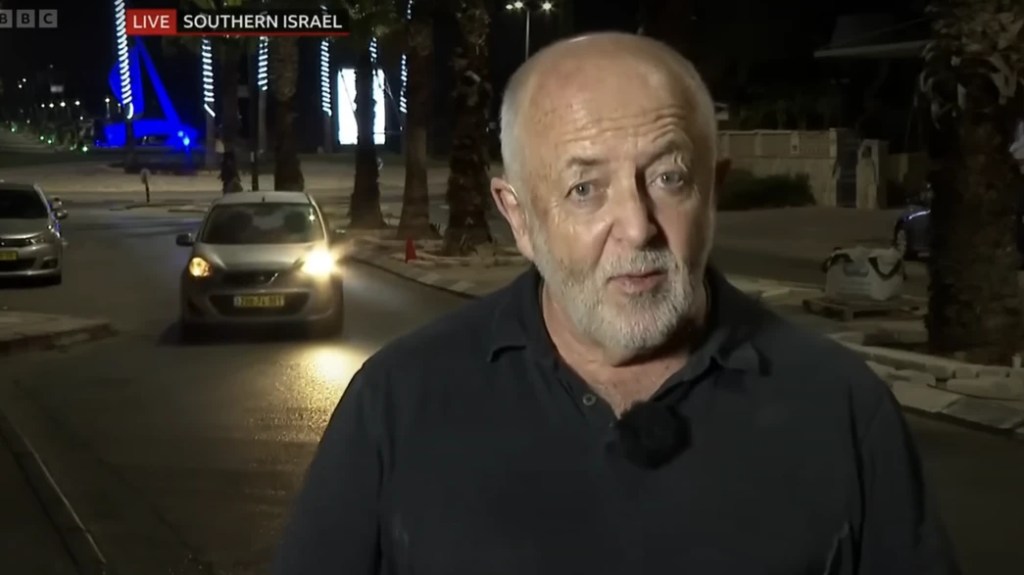
Reporting by the BBC on current conflicts demonstrates the bias of the corporation and the extent to which, in spite of its regular emphasis upon impartiality, the BBC is anything but when it comes to its international coverage.
The Russian incursion into Ukraine in February 2022 was undertaken in order to protect communities who had expressed a wish to become part of Russia, but had suffered at the hands of Ukrainian forces since 2014, resulting in 14,000 deaths. The Minsk Accords, signed in 2015 to halt the fighting, were later admitted by Western governments to be a mere ploy to give Ukraine time to re-arm.
The Russian intervention is nevertheless unfailingly referred to by the BBC as a full scale invasion and the wider context, including the CIA backed coup in Ukraine in 2014, conveniently overlooked.
Even after the intervention by Russia, a peace agreement mediated by Turkey in March 2022 was on the brink of being signed by Ukraine, until the United States persuaded then British Prime Minister, Boris Johnson, to deliver the message to President Zelensky that the “collective West” would not support the agreement.
In an item given widespread coverage by the BBC in the last couple of days, Khalil al-Hayya, the deputy leader of Hamas, was interviewed by BBC international editor Jeremy Bowen. On each occasion al-Hayya was introduced as someone whose views may be abhorrent to many. Bowen was asked to justify why the interview had taken place and why al-Hayya should be given air time.
Bowen dutifully trotted out the BBC line on impartiality and the need to hear all sides in a crisis situation. All very well, but the briefings by Israeli Defence Force (IDF) representatives, committing genocide in Gaza, killing medical teams in the West Bank and currently invading neighbouring Lebanon are not given the same caveat, even though many will find both their views and their actions abhorrent.
It is also noteworthy that the invasion of Lebanon by the IDF is described by the BBC as an ‘incursion’, a characterisation they may struggle to hold onto as the death toll inevitably mounts.
The BBC attempts to protect the illusion of impartiality in other ways too. John Simpson is regularly given his own half hour, titled Unspun World, in which Simpson interviews various BBC correspondents who invariably give a particular spin on events in the part of the world that are covering. The title is not meant to be ironic.
Then there is the BBC Verified branding. Presumably it is the BBC themselves who are undertaking the verification, which is a bit like the police investigating themselves or students marking their own homework. Are they really trying to kid us that a new logo is a guarantee of impartiality and objectivity?
How the Tories can continue to bleat on about the BBC being run by ‘Lefties’ and not toeing the line on issues is laughable. Apart from the odd moment of mild criticism the BBC knows quite clearly on which side its bread is buttered. Sadly it is not the side of investigative journalism, truth and objectivity.
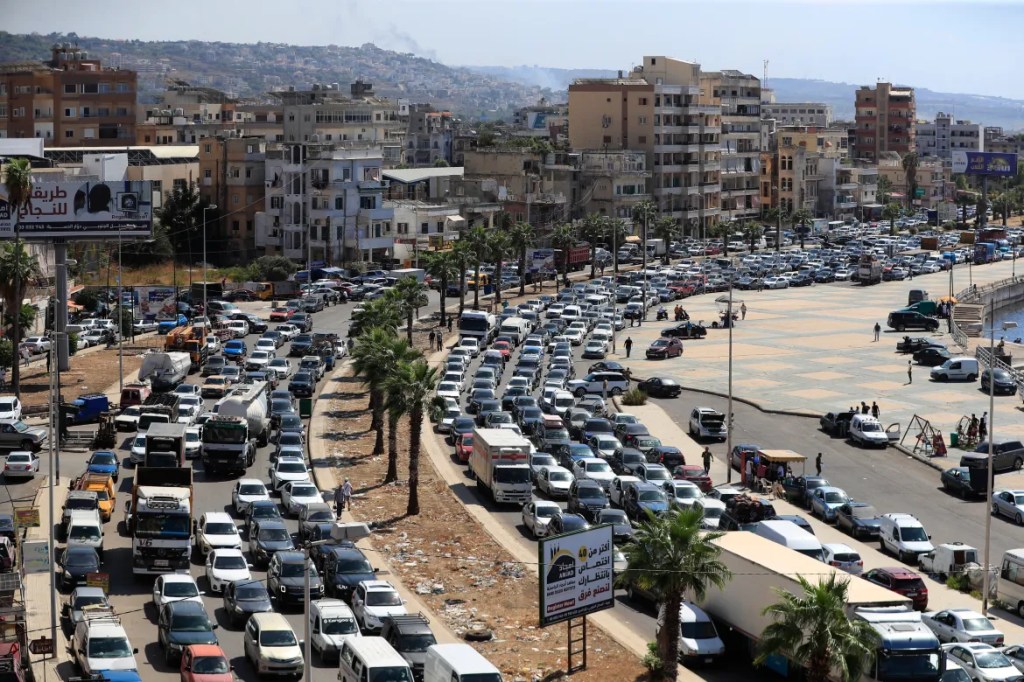
Thousands flee Lebanon to escape Israeli air strikes
The assassination of Hezbollah leader, Hassan Nasrallah, has been described by Israeli Prime Minister, Benjamin Netanyahu, as a ’turning point’, describing Nasrallah as “the axis of the axis, the central engine of Iran’s axis of evil”.
The killing and the ongoing bombing of civilian areas of Beirut may well prove to be a turning point but not necessarily in the way that Netanyahu means. Iran’s leader, Ayatollah Ali Khamenei has called for five days of mourning following Nasrallah’s death and vowed that his ”blood will not go unavenged.”
Lebanon’s Health Ministry has estimated that 800 are dead so far as a result of the actions of the Israeli Defence Force (IDF), while 50,000 people are estimated to have fled to Syria and an estimate 1 million are displaced, many having to sleep on the streets.
The bombings follow on from the indiscriminate attacks, not denied by the Israelis, upon Lebanese citizens by planting explosives in electronic communication devices, which killed 37 and injured thousands. This action has been widely condemned as a war crime precisely due to its indiscriminate nature.
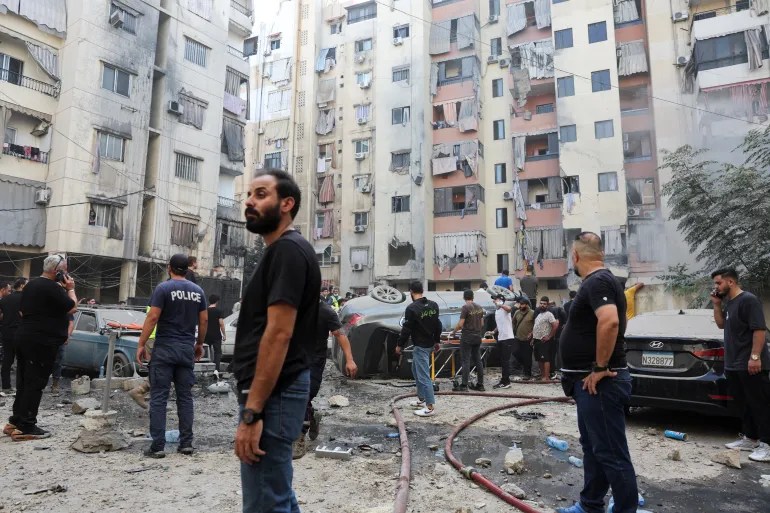
While the IDF claim that the current bombing campaign consists of precision strikes, the reduction to rubble of buildings in clearly civilian areas gives the lie to this claim, costing the lives of non-combatant women and children in the process.
The latest strikes have even seen surprise expressed by the United States, Israel’s staunchest ally, with President Joe Biden claiming that the US had no prior knowledge of the attacks. Efforts by US Secretary of State, Antony Blinken, to engage Israel in the search for a diplomatic solution have so far abjectly failed.
It is becoming increasingly clear that the Israeli government, under the leadership of Benjamin Netanyahu, is out of control and driven by its own religious fundamentalist agenda. Devastating strikes on Beirut followed on almost immediately from Netanyahu’s widely boycotted speech at the UN General Assembly in New York and flew in the face of widespread calls for a negotiated settlement and ceasefire to be discussed.
Israel’s contempt for the will of the international community, as articulated by the UN, has been evident for decades in its illegal treatment of the Palestinian people and their just demand for national self determination and a fully sovereign state of their own. It is evident in its recent action in Gaza and the West Bank and is becoming more flagrant in its attacks upon the Lebanese capital.
Such actions increase the threat of widening the conflagration in the region, with escalation beyond the Middle East into a global war within the realms of possibility.
With the presidential election in the United States looming Netanyahu is clearly taking advantage of the hiatus this represents to press home his fundamentalist agenda, to the detriment of the people of the region and in spite of the opposition from many of his own citizens. Parliamentary elections in Israel are not scheduled until October 2026 and Netanyahu is gambling that he can hold together his right wing fundamentalist coalition at least that long, to present himself as a victor in the fight against both Hamas and Hezbollah.
The fate of the Palestinian people and the people of the Middle East generally should not rest upon the political survival and opportunism of one man.
Pressure upon Israel to come to the negotiating table must be increased through concrete actions. The British government must immediately cease all arms sales to Israel. Trade union and cultural organisations should support the Boycott, Disinvestment and Sanctions (BDS) campaign to isolate Israel internationally, until it is prepared to negotiate meaningfully on a way forward.
The US, as Israel’s major ally, must take a stronger line in bringing the IDF to heel and opening the way for negotiations. The turning point in the current conflict has to be to turn back. The coming days could well be crucial in determining the future of the Middle East and whether or not the world is plunged into a wider conflict.
Residential Beirut, bombed by Israeli forces on Friday
The prospects of all out war in the Middle East accelerated this week as Israel swept aside calls for a ceasefire and stepped up its military action in Lebanon. The detonation of explosives in pagers and walkie talkies used by Hezbollah is estimated to have resulted in 37 deaths and over 3,000 casualties. Israel has not commented on the action but the operation clearly has the fingerprints of the Israeli secret service, Mossad, all over it.
The attack, in which several children were the victims, follows a week in which Israel announced a new phase in the war, moving the centre of gravity from Gaza to the northern border with Lebanon. Having reduced much of Gaza to rubble, the Israelis have created a humanitarian crisis due to restricted food supplies and medical aid. Medicins Sans Frontiers (MSF) have stated that,
“Infectious diseases including diarrhoea, acute respiratory infections, skin infections, and hepatitis are on the rise due to overcrowding and poor hygienic conditions in camps where displaced people are sheltering, and shortages of medicines and medical supplies.”
MSF and United Nations teams on the ground are tackling acute food shortages with latest figures suggesting that starvation is inevitable under the Israeli government’s policy of deliberate deprivation. According to the Integrated Food Security Classification (IPC), almost half a million people (22% of the population of Gaza) are facing catastrophic levels of acute food insecurity.
Israeli fighters bombing a residential suburb of Beirut yesterday killed at least 12 people, including 5 children, with a further 66 wounded according to the Lebanese Health Ministry. The strike hit the Dahiya district during rush hour as people were leaving work and children were heading home from school.
Local networks broadcast footage that showed a high-rise building flattened just kilometres from downtown Beirut. First responders combed through the rubble of at least two collapsed apartment buildings to search for missing people. Israel claims that it has killed top Hezbollah commanders in the strikes.
A further wave of strikes across southern Lebanon have seen some of the most intense bombing of recent months with the Israeli Defence Force (IDF) claiming that it was aiming “to degrade Hezbollah’s terrorist capabilities and infrastructure.” The prospect of a ground based incursion into Lebanon has not been ruled out.
For nearly a year, Hezbollah has engaged in near-daily exchanges of fire with Israeli forces along the Lebanon-Israel border in support of Hamas. Hezbollah has fired rockets regularly into Israel but with little impact, either falling in barren areas or being intercepted by the Israeli Iron Dome system. Tens of thousands of people on both sides of the border have been forced to flee their homes due to the fighting.
The current escalation of action by Israel brings closer the likelihood of a more concerted response from Hezbollah and the prospect of Iranian intervention, in support of their partners in the so-called axis of resistance. While Lebanese Prime Minister Najib Mikati blamed Israel for the explosions, saying that they represented a “serious violation of Lebanese sovereignty and a crime by all standards”, Iranian Foreign Minister Abbas Araghchi said he told his Lebanese counterpart that he “strongly condemned Israeli terrorism”.
While Britain has implemented a limited arms embargo against Israel, by suspending some weapons licences, the IDF are still largely bankrolled by the United States, who have confined their response to recent events to Secretary of State, Antony Blinken, “calling for restraint and urging de-escalation.” The UN has said it is “very concerned” following the strike on Beirut.
Palestine Solidarity Campaign (PSC) will be lobbying Labour Party Conference in Liverpool this weekend “to demand the government ceases its complicity in Israel’s genocide and apartheid against Palestinians, and ends all arms trade with Israel.”
The collusion of the imperialist powers in the oppression of the Palestinian people, through the arming of Israel and the failure to enforce UN resolutions, has emboldened successive Israeli governments to undermine Palestinian rights and the prospect of an independent Palestinian state. While many Israelis remain committed to live in peace with Palestinian and other Arab neighbours, the religious fundamentalists in Israel have increasing gained ground, to the extent that they are effectively dictating current government strategy.
The state of Israel has the right to exist, within internationally agreed borders, but so too does the state of Palestine, on the same basis. The British government acknowledging this and stating it explicitly would be a step in the right direction. Kier Starmer claims to be leading a government which will ‘listen’. In which case the message from the streets of cities across Britain is quite clear – End the genocide in Gaza, Stop arming Israel!
UNITE General Secretary, Sharon Graham, calling for a tax on the wealthy
The Labour Party leadership, backed by a majority of MPs in the House of Commons, this week agreed to the axing of winter fuel payments to all but the poorest pensioners, in order to save an estimated £1.2 billion as part of a £22 billion package of financial measures, which will effectively mean a continuation of austerity for many working class families.
The day after the Commons vote, Foreign Secretary, David Lammy, in Ukraine with United States Secretary of State, Anthony Blinken, announced a further £600 million package of support to Ukraine, to sustain the current NATO proxy war, increasingly in danger of becoming an all out NATO confrontation with Russia. While pensioners in Britain will struggle to keep the home fires burning, British money will be paying for weapons to keep the flames of war alight in Ukraine.
Labour leader, Kier Starmer, and Chancellor, Rachel Reeves, constantly talk about “tough choices” they will have to make on the economy. Starmer almost wears as a badge of honour his assertion that Labour will have to carry out measures which are unpopular. However, it is hard to credit that even the current leadership cannot see that the winter fuel payments measure is a clear political own goal, which will come back to haunt them for many years.
Such a measure was not a manifesto pledge and while Reeves promises to keep the pension ‘triple lock’ in place and provide, as yet unspecified, other means to support pensioners, the current furore could so easily have been avoided.
The UNITE trade union have been campaigning for a wealth tax, as have a number of independent MPs in the House of Commons, including Jeremy Corbyn. UNITE estimate that a 1% levy on those with wealth estimated at over £4m could raise up to £25 billion which, if accurate, is more than enough to fill the £22bn budget gap Reeves is concerned with and maintain winter fuel payments.
While the world of economics does not always work out as simply as this, it is still an indication that Labour have choices. If Starmer is so unconcerned about being unpopular why not choose to be unpopular with the super rich, rather than the pensioners at the other end of the spectrum?
The fact is that Starmer and Reeves are running scared of the City of London and the banks and corporations which have the real clout in the economy. Reeves’ caution even extends to claiming that without austerity measures there could be a run on the pound, which would weaken the economy, a claim not backed up by any evidence.
While austerity is the name of the game at one end of the Cabinet table the prospect of more cash for weapons is the reality at the other end. Quite apart from the ongoing and apparently open ended commitment to fuel the war in Ukraine, the government is committed to increasing military spending to 2.5% of gross domestic product (GDP). As one of NATO’s biggest spenders at the moment this commitment will only add to the pressure upon vital day to day services which local communities need. If an old slogan needed to be dusted down and resurrected the classic Welfare not Warfare may well be ready for a comeback.
In addition to which, apart from the obvious material and human cost of war and weapons of mass destruction production, the arms industry is a massive carbon emitter, thus contributing to the acceleration of the climate emergency. It would seem that for weapons manufacturers and their backers, that if the planet cannot be destroyed by one means, it will be destroyed by another.
It has taken very little time for the gloss of the Tories being ousted in July to be taken off the prospect of a shiny new Labour government. The proverbial Ming vase which Labour leaders carried across the General Election weeks still seems to be passing between them with no-one wanting to be the one to drop it. Caution, far beyond what even conservative capitalist economists would expect, is being exercised by Labour in order to show the ruling class and its media that they are ‘worthy’ of office.
However, these are vacillating and unstable allies at best and, at worst, an active fifth column. Once the smoke clears on the Tory leadership campaign, and if anyone deemed to be a credible candidate emerges, the right wing press and media will rally to their side and Labour will find themselves in the usual dogfight with the press.
If that is the case then why not take the fight to them and give them something they can really worry about, like abolishing the ‘right to buy’; resurrecting the NHS; massive public investment in green technology; cutting the military budget, including stopping arms sales to Israel; withdrawing from NATO; cancelling the renewal of Trident nuclear submarines? Not in the manifesto? The precedent for that has already been set!
The war in Sudan has now been raging since 15 April 2023. This devastating conflict, the military coup of October 2021, as well as other acts of brutal repression, have been cruelly inflicted upon the people of Sudan in an attempt to defeat the popular Sudanese Revolution and its objectives. Little if anything meaningful has been done to rein in the belligerents of this war or redress the gross injustices perpetrated against a people for daring to dream of democratic change and progression. The result is the worst and most pressing humanitarian crisis unfolding in the world today…
by Fathi El-Fadl
Sudanese civilians displaced from the fighting in their country seek sanctuary in a refugee camp across the border in neighbouring Chad.
The catastrophic war in Sudan continues on unabated. It intensifies with ever-worsening cruelty, resulting in thousands of innocent victims and the unprecedented movement of people desperately fleeing to save their lives. Over eleven million people have been displaced, seeking refuge in areas away from the military conflict raging in the country. Over two million of them have crossed the borders into neighbouring countries, mainly Egypt and Chad.
This gigantic exodus of the people is taking place with no sight of an end to the military disaster on the horizon. Peace talks at a resort near Geneva in Switzerland concluded with an agreement on famine relief, but an actual ceasefire was not even discussed due to the refusal of the Sudanese Armed Forces (SAF) generals to attend.
The US-led initiatives to reach a ceasefire, open safe corridors for humanitarian assistance to reach those most in need, and to protect civilians, failed to reach its objectives. With a ceasefire off the agenda, mediators concentrated on humanitarian issues to deliver food and medicine to the millions of starving Sudanese languishing in camps, schools, and makeshift shelters. Despite the agreement to open entry points at the Sudanese borders, there is still no clear agreement in place apportioning responsibility for the taking receipt of aid and its proper distribution thereafter.
Failure of the talks to reach a ceasefire means the continuation of the misery and suffering of the Sudanese people. The people are enduring what is now regarded to be the worst humanitarian crisis in the world. According to experts and international organisations, the war has led to the fragmentation of the country. A number of provinces remain under the control of the SAF, while others are controlled by the Rapid Support Forces (RSF) militia.
Hunger and the spread of diseases like cholera represent an additional cruel infliction upon the Sudanese population. According to the United Nations’ Food and Agriculture Organisation (UNFAO), around 25 million Sudanese are in need of urgent humanitarian assistance to prevent them dying of hunger. Furthermore, 80% of functioning clinics and hospitals have been destroyed in the fighting.
In a statement issued by the Sudan Doctors Union, it has accused international humanitarian organisations and their donors of failing to provide basic aid to alleviate the dangers Sudanese children are facing. At the same, it accused both the SAF and the RSF of wilfully obstructing the entry, delivery, and distribution of vital food aid and medicines.
A report by Tuna Turkmen, the Emergency Coordinator for Médecins Sans Frontières (MSF) in Darfur, states that there are children dying every day across all Sudanese provinces. In addition, Claire San Filippo, the MSF Emergency Coordinator for Sudan, has declared that her organisation has been prevented from bringing more medical staff and supplies to provide much needed medical care in the country – a need made even more acute considering the outbreak and spread of malaria as well as other diseases transmitted through contaminated drinking water. These restrictions have led to the spread of cholera in five provinces.
While regional and international powers pay lip service to the notion of a ceasefire at minor and limited gatherings, such as the one which just ended in Switzerland, they continue to malignly meddle in the sovereign affairs of Sudan, siding with either of the war’s belligerents, allowing them to further escalate, to the detriment and suffering of the Sudanese people.
Calling for a ceasefire without any clear vision to effect it and restore the peaceful democratic transition to civilian rule in Sudan, is not an option and represents a failure. This is further underlined when US-led talks exclude and ignore input from the bona fide popular forces that struggled against and brought down the Muslim Brotherhood military regime of Omar al-Bashir in the December Revolution [the Sudanese Revolution 2018-2019]. The forced absence of the Resistance Committees, the Forces for Radical Change (FRC) alliance, and the newly formed trade union front from the talks pertaining to Sudan’s future will only result in repeating the old mistakes that led to the present catastrophe.
The Sudanese radical forces, including the Sudanese Communist Party (SCP) and the Resistance Committees, have both consistently emphasised that the main conflict in our country is both national and international.
In response and opposition to the war, the revolutionary forces, especially the SCP, have adopted the slogan “Stop the war and reclaim the revolution through the broadest grassroots mass front!”, aiming to stop the war, defeat its political and social objectives, hold those responsible accountable, and bring them to trial, thus opening the road towards achieving the main goals of the revolution – Freedom, Peace, and Justice – which the masses have embraced as their path to radical change.
This declaration by the radical forces in Sudan of their political stance is coupled with a practical struggle towards the realisation of their objectives. Our fight is to stop the war, secure the right to live in safety, as well as compel responsible state organs to provide essential services and livelihoods to the people of Sudan.
In condemning both warring sides, we refuse to legitimise the war, while rejecting any compromise that would see the externally supervised restoration of the partnership between the remnants of the deposed Muslim Brotherhood regime and the Taqadom civilian alliance to form a government that would essentially serve foreign interests.
The Sudanese revolutionary forces are committed to mobilising a peaceful mass struggle that would bring about the defeat of reactionary groups and unmask their long-running conspiracies against Sudan and its people as well as reclaim the December Revolution. We will not tire!
Fathi El-Fadl is a member of the Forces for Radical Change (FRC) alliance in Sudan, opponents of the current civil war, and a vice-president of the International Centre for Trade Union Rights (ICTUR). He was previously, in the 1970s and ’80s, a student leader in Sudan and leading member of the International Union of Students. He is based in Khartoum and thus a witness to the ongoing conflict.
Striking healthcare workers demand better pay and conditions in Iran
The election of Masoud Pezeshkian to the Iranian Presidency in July has encouraged false hopes amongst some in the West that Iran is on a path for reform and that the president will be able to influence the policy positions of the regime. Nothing could be further from the truth.
Masoud Pezeshkian has never expressed any views in opposition to Iran’s so called Supreme Leader, Ali Khamenei, and would not have been on the presidential ballot had he done so. The new president has so far done little more than make vague statements and quote from religious sermons. In August he jokingly said in a speech at the inauguration ceremony of the new head of the Planning Organisation: “We have no motivation at all. They don’t even give us a chance to do this job.”
The list of Cabinet members proposed by Pezeshkian in August and presented to the parliament for approval reflects the reality of his position. The retention of the Minister of Intelligence from former president Raisi’s repressive government, indicates that the new administration will simply continue the general policies of the regime.
While the Cabinet list presented to Parliament contained 14 new ministers indications are that the new ministers have been carefully vetted and selected by the fundamentalist camp and that former ministers been approved by the regime.
Even with this level of scrutiny there is likely to be more screening when the list comes to verifying qualifications in committees or on the floor of the House. Certainly, it is expected that in the next stages, some prominent ministers in the Cabinet will be targeted for attack and, after the necessary revelations and accusations, they will be disqualified. The final Cabinet will inevitably be weaker and less efficient at each stage and in the end more submissive.
Less than two weeks into his presidency Pezeshkian was faced with the resignation of former Iranian chief diplomat Mohammad Javad Zarif, who had been appointed as his deputy and minister in charge of strategic affairs. Conflicting reports suggest that on the one hand Zarif was unimpressed with the Cabinet selection and the constraints placed upon the new administration, while others suggest that behind the scenes, there has been a hardliner attempt to push Zarif out of office through a law barring officials with ties to the West.
The process not only reflects the iron grip which the clergy impose upon any so called democratic processes in Iran but also the weakness of Pezeshkian’s position. In the election first round, only 39% of those eligible cast their vote, a historic low for the Islamic Republic’s presidential elections. In the second round, when only Pezeshkian and hardliner Saeed Jalili were left in the race, about 49.8% participated, still one of the lowest turnouts in Iran’s presidential elections.
Given that the proportion of those voting directly for Pezeshkian will be even less than these figures, it is clear that the new President has no popular support, at best being seen as the lesser of several evils, and that the widespread boycott of the elections shows that the support base for the regime overall continues to dwindle.
The election campaign of Pezeshkian did contain some appeal to reform, including pushing for the end of internet restrictions and promoting some social freedoms, including on women and minorities rights. Whether the hardline clergy allow such changes remains to be seen.
Already the new presidency has been faced with striking healthcare workers who have been grappling with increasing economic pressures for the past two decades.
In some hospitals, that have been the site of protests over recent weeks, nurses have gone on strike. This is a dangerous development for public health but shows that nurses are deeply dissatisfied with their employment conditions. The indifference of officials and senior hospital management has caused nurses to suspend their professional and ethical duties and take to the streets to voice their grievances.
In relation to human rights issues recent news indicated that the Nobel Peace Prize laureate and Iranian human rights activist, Narges Mohammadi, was violently beaten by prison guards after leading a protest against the death penalty. Her requests for hospital care and a meeting with her lawyer were denied.
The lawyer, Mostafa Nili, told Iranian news media about the violence against Ms. Mohammadi, stating,
“My client says that she was beaten and has bruises on her body. Despite the prison doctor’s orders, and considering my client’s heart condition,” he said, “she has not been sent to the hospital.”
On foreign policy, Pezeshkian’s campaign focused on the need to engage with the West, including on the nuclear issue, to get sanctions relief and improve the economic conditions of the country, as well as to move away from the brink of regional war.
However, he also praised former president Raisi’s rapprochement with Arab countries, signalling that, on issues other than ties with the West, he is likely broadly to continue the policy of the previous administration. The question of retaliation against Israel for the assassination of Hamas and Hezbollah leaders also remains on the agenda with the potential to further increase the tensions in the region. Pezeshkian will be in no position to reverse the calls for retribution made by Khamenei and the clergy.
It is clear that the election of Masoud Pezeshkian is no indication that the Iranian leopard has changed its spots. The theocratic dictatorship remains in place and, while challenges are still there from mass popular movements such as Women, Life, Freedom and the industrial action gripping the country, the presidency is little more than a sideshow. Real change in Iran will only happen when it comes from the people and is driven by the people. A change in stooge presidents will not alter that.
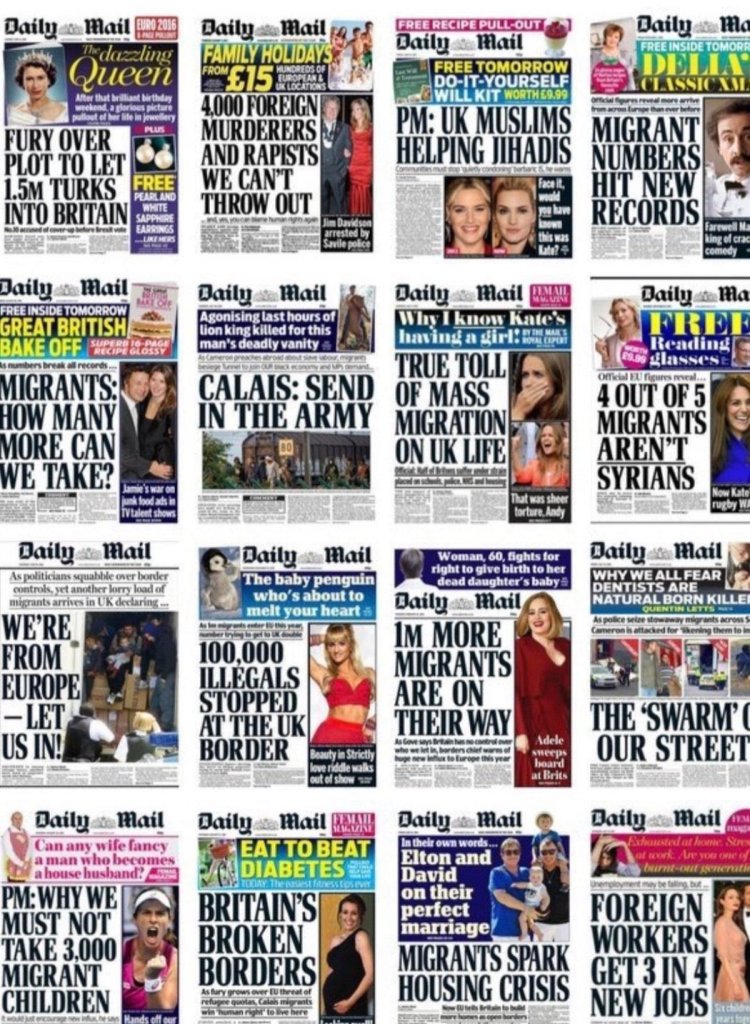
Daily Mail headlines fuel the anti asylum seeker narrative
Demonstrations across Britain this week, deemed anti-immigration protests by the media but actually pro-racism mob violence, have been met with stalwart resistance from local communities determined to resist fascist attacks. This has ranged from a 3,000 strong turnout in Newcastle upon Tyne’s West End to defend a centre for asylum seekers, to the City Centre clean up in Sunderland following a night of vandalism and looting. Similar actions have been reported from across the country.
Such shows of working class community solidarity are vital to quashing the misinformation spread by the far Right that Britain has an ‘immigration problem’. Such language and provocations are the natural territory of the far Right but the collusion of much of the mainstream media, including the BBC, in regarding immigration as a problem to be solved gives the claims of extremists more credibility in the eyes of the most gullible.
Coventry South MP, Zarah Sultana, recently posted on X a montage of Daily Mail headlines which fuelled the anti-asylum seeker narrative. Sultana also suffered hostile questioning on ITV’s Good Morning Britain this week, from presenters Ed Balls and Kate Garraway, for suggesting that the violence over the past week should be called out as Islamophobic.
Balls in particular was quick to defend Home Secretary, Yvette Cooper (his wife), and Labour leader Kier Starmer for acknowledging that the violence was fuelled by racism but refused to accept that they should call it out as Islamophobic. To her credit Sultana stood her ground and has come out of the encounter with more credit than either Balls or Garraway.
While the Labour government has been quick to point the finger at social media and mobilise the state apparatus of the police and the courts there has not been any recognition, from the Front Bench at least, that these measures are only dealing with the symptoms and not the cause. There is no argument about jailing fascist thugs or addressing any of the shortcomings of the Online Safety Bill. However, at root the issues of poverty, disaffection, and a sense of disconnection from a hugely unequal society are the causes which need to be tackled.
Those at the sharp end of the impact of capitalism and its endemic crises are the most likely to fall prey to the easy solutions presented by the demagogues of the far Right and the so-called populist rhetoric of the likes of Reform MP, Nigel Farage. It is no coincidence that the worst violence has been seen in areas of the greatest poverty, or that the previous Tory government placed asylum seekers in hotels in these areas.
Preventing a repeat of the scenes which have taken place over the past week will require robust action to tackle poverty, low wages and exploitation. It will require massive attention to the housing issues faced by many working class communities. It will require greater investment in the local government services which many working class communities rely upon. It will require a stronger approach to tackling wealth inequality and how resources are distributed across society.
It will require Labour politicians to be seen on the frontline with threatened communities showing their active support. It will also require Labour to reject the narrative that immigration is a problem to be solved and turn that round to make it clear that a major problem to be solved in Britain today is racism.
Divide and rule has always been a key tool of ruling class strategy and the recent activity across Britain has shown how some sections of working class communities can be persuaded by the far Right, while others will stand firm in the face of fascist violence.
Any strategy which is to ultimately succeed however has to be based upon a recognition of the class interests of those communities most threatened and that solidarity between black and white working class communities is the only way forward. In short it will require a strategy which not only deals with the symptoms but begins to tackle the causes of racist violence in Britan today.
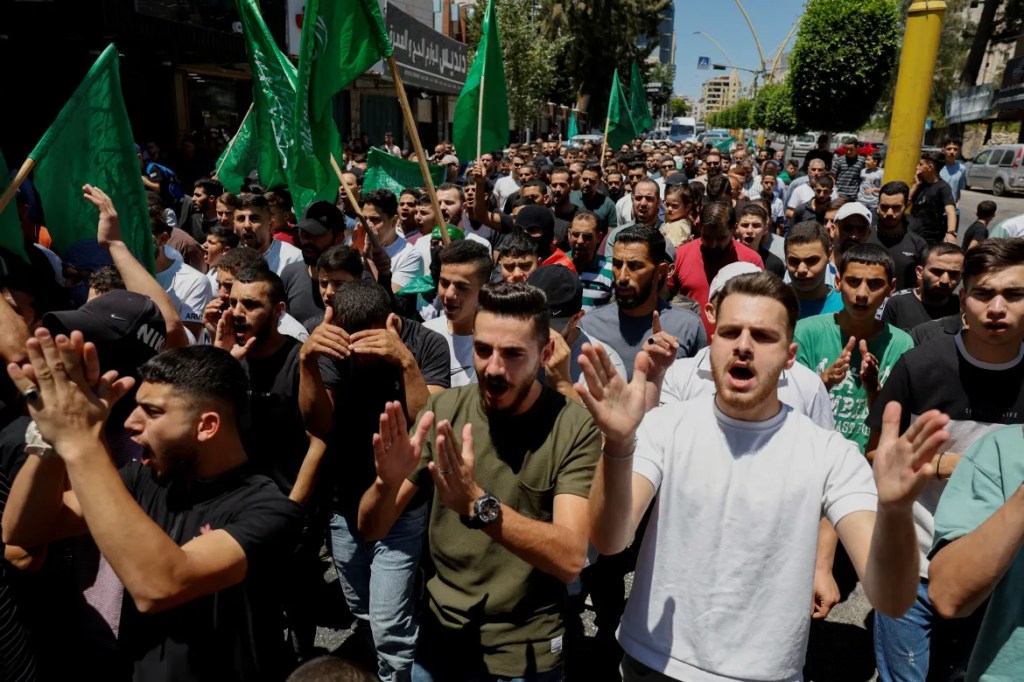
Palestinians in Hebron in the occupied West Bank protest against the assassination of Hamas political leader Ismail Haniyeh.
The assassination of Hamas leader Ismail Haniyeh, in Tehran two days ago, is a major escalation in the growing conflict in the Middle East. While Israel has not claimed responsibility for the killing there can be little doubt that the nature and precision of the operation has the fingerprints of Mossad all over it. That the killing took place just after the inauguration of a new Iranian president, Massoud Pezeshkian, and in the heart of Tehran itself will have been designed to cause maximum embarrassment to the Iranian regime.
The assassination also appears to be designed to torpedo the peace talks in relation to Gaza, as Haniyeh was the leading Hamas negotiator. As the Qatari Prime Minister, a key player in the peace mediation process pointed out, “Political assassinations and continued targeting of civilians in Gaza while talks continue leads us to ask, how can mediation succeed when one party assassinates the negotiator on the other side? Peace needs serious partners.”
Israel is the most well armed and efficient military state in the Middle East, massively supported by the United States and to a lesser extent by Britain. It has a clandestine nuclear weapons capability, rarely mentioned in the media but real all the same. It has a government propped up by right wing religious fundamentalists, every bit as zealous in their mistaken belief in their own supremacy as the theocrats who have been murdering their way across Iran for over forty years. That the response of the international community to assassination in a foreign capital has been little more than mild rebuke is nothing short of a scandal.
The killing of Haniyeh comes shortly after Israel claimed to have killed a senior military commander of Hezbollah in Beirut. There can be no doubt that this has exacerbated the crisis in the region, bringing it to the brink of an extremely dangerous and widespread military conflict.
The response from the theocratic dictatorship in Iran was predictable. Supreme Leader, Ayatollah Ali Khamenei, stated that Israel “by assassinating Ismail Haniyeh, has paved the way for a severe punishment” adding that “we consider it our duty to avenge his blood, shed in the territory of the Islamic Republic of Iran.”
The world awaits the consequences of the adventurist action of the Israelis. There can be little doubt however that Iran will galvanise it’s so called Axis of Resistance, through Hamas, Hezbollah and Houthis to strike back in some way shape or form. This is unlikely to be a mere symbolic action, as with the pre-warned missile strikes on Israel in April, responding to another Israeli act of international terror, when sixteen people were killed in the Iranian embassy in Damascus in Syria.
While hitting an embassy is technically still a strike on domestic territory it does not carry the symbolism of a strike in the heart of Tehran.
The US government has taken its usual line in defence of Israel expressing “ignorance” about the assassination and “not being involved” in it, yet at the same time warning that it would defend Israel if it were attacked. Suspicions have been raised that the attack, coming so close to the recent visit of Israeli Prime Minister Netanyahu to the United States, will have been given the green light by the US. Any evidence to suggest that would certainly put the US back in the dock in the eyes of the international community as being complicit in acts of terror and actively escalating conflict in the region.
The corruption at the heart of the Iranian regime was further exposed recently in the report of the United Nations Special Rapporteur on atrocity crimes committed in Iran in the 1980’s, following the hijacking of the national democratic revolution by the Islamic theocracy.
In his analysis of the first decade of the Islamic Republic, following the 1979 revolution Special Rapporteur, Javaid Rehman, details the summary, arbitrary and extra-judicial executions of thousands of political opponents of the regime, amounting to the crimes against humanity of murder and extermination. Significantly for the current regime and its apologists Rehman concludes that,
“…those with criminal responsibility for these grave and most serious violations of human rights and crimes under international law remain in power and control; the international community has been unable or unwilling to hold these individuals accountable.”
The assassination of Ismail Haniyeh in Tehran has raised serious questions about the state of Iran’s security apparatus, this not being the first time that Israeli security forces have been able to easily carry out terrorist operations on Iranian soil. This assassination highlights the extensive infiltration of imperialist intelligence agencies into Iran’s security apparatus.
The corruption at the heart of the Iranian regime is only matched by the religious fundamentalist cabal currently running the Israeli government. Opposition in both countries is either actively suppressed or given little media exposure, though under both regimes there is significant internal opposition to their respective government’s actions.
For there to be any prospect of heading off the imperialist drive to war in the Middle East the peace movements in both Iran and Israel, as well as in the imperialist centres of the US, Britain and the EU need to grow stronger and voice their opposition to the growing conflict. The Labour government in Britain needs to be pressured to adopt an independent foreign policy, not dependent upon the diktats of the US, or the pressures of its military proxy NATO.
Labour needs to take a stand which puts peace before conflict escalation and the interests of the people of the Middle East before those of imperialism. That will only be possible through mass extra parliamentary action and through the peace and labour movements making those demands. Labour should not be allowed to settle for carrying on the foreign policy positions of the Tories, as has happened in the past. Given current developments the need for an independent peace oriented stand is greater than ever.
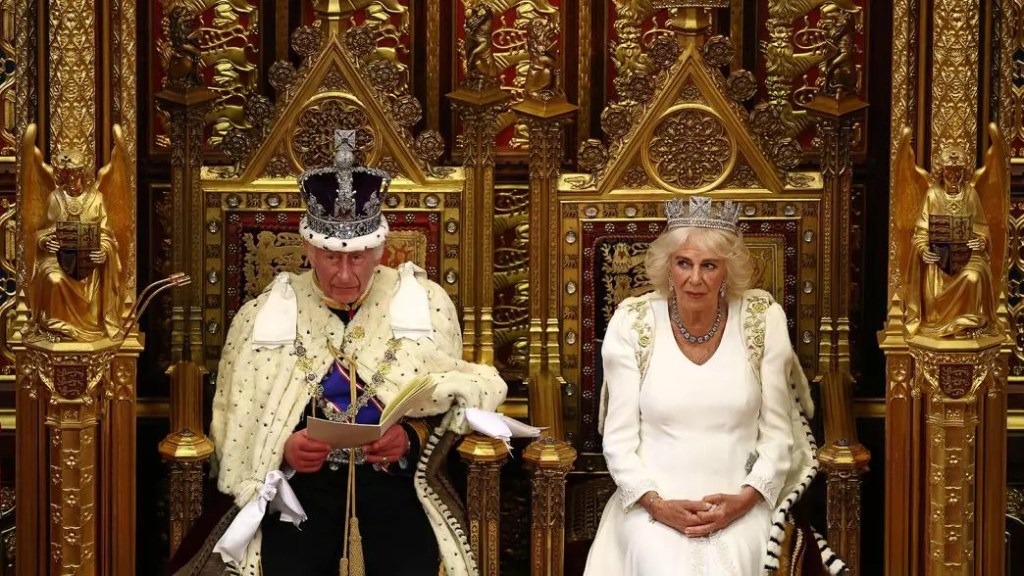
King Charles III reads the programme for the coming Parliament at the State Opening
The first King’s Speech under Kier Starmer’s Labour Party set out plans for what Starmer has described as a ‘mission driven’ approach to government which will focus upon the five key missions identified by Labour in its election campaign.
On the first of these, economic stability and growth, Labour is proposing a raft of bills from an Employment Rights Bill to ban zero-hour contracts, end fire and rehire, as well as strengthening sick pay and protections for new mothers, to a Railways Bill to reform rail including establishing GBR and allow rail contracts to be taken into public ownership at the end of contracts or if providers fail to deliver.
On the question of energy Labour is proposing to establish Great British Energy, a public body that will own and operate clean power projects across the Britain. In addition, a bill to regulate water companies to clean up rivers lakes and seas will be introduced.
Secure borders are another mission for Labour, with a bill to strengthen border security, crack down on organised immigration crime, and reform the asylum system in the pipeline. A Crime and Policing Bill is proposed to crack down on anti-social behaviour, tackle knife and retail crime, and provide a stronger response to violence against women and girls. There is no proposal to repeal the draconian powers afforded the police by the Tories under the Policing Act 2022 and the Public Order Act 2023.
The jailing this week of five Just Stop Oil protesters, getting a collective sentence of 21 years between them, is an outrage which Labour needs to address.
Health, although supposedly a major priority for Labour gets a light touch with only two bills proposed, to ban smoking for those born after 2008 and to improve mental health services. Rumours that Kier Starmer will bring in former Health Secretary, Alan Milburn, to ‘drive change in the NHS’, have yet to be confirmed but have to be a concern given Milburn’s record in the Blair governments.
Finally, in Labour’s mission list is breaking down barriers to opportunity, with bills proposed to improve children’s wellbeing, including a requirement for free breakfast clubs in every primary school and a bill to reform the rental market, including abolishing ‘no-fault’ evictions.
Other proposals include an Armed Forces Commissioner Bill,to strengthen support for members of the armed forces and their families, and a House of Lords (Hereditary Peers) Bill to remove the right of hereditary peers to sit in the House of Lords.
As ever Labour in government will tweak social provision and attempt to regulate capitalism more efficiently, clearing up the mess that the Tories have made of the system. This will be welcome news for British banks, businesses and corporations but is unlikely to do very much to change the lives of those most in need in Britain today.
While building more affordable homes is on the government agenda the affordability of public housing is undermined by the right to buy, which there are no plans to repeal. There is no indication so far that local government, often at the sharp end of dealing with communities in crisis will get any further support, other than through the extension of devolution deals, which are predominantly economic development programmes and rarely reach into local communities effectively.
Reform of Health and Social Care should be an absolute priority for any incoming government but does not appear to have yet hit the radar of Cabinet, in spite of having had many years in Opposition to formulate plans.
On the question of foreign policy the Labour Cabinet has moved quickly to consolidate the errors of the Tories by putting the question of continued arms sales to Ukraine at the top of the agenda. Right wing nationalist President Zelensky attended a Labour Cabinet on Friday and by all accounts was greeted with stormy applause. The commitment to tie Britain into the ongoing NATO proxy war with Russia is a tragedy in the making. Zelensky is doing the rounds seeking permission to use European made weapons to be fired into Russian territory. This level of escalation must be opposed and the reality of the implications of continually fuelling the war in Ukraine exposed.
Labour’s manifesto emphasised the need for a ceasefire in Gaza. On the question of Palestinian statehood, however, the party retreated from its 2019 pledge to offer immediate, unilateral recognition. Instead, Starmer has argued that statehood recognition should be part of a British contribution to a renewed peace process, in view of achieving a two-state solution.
It is likely that Starmer will seek to ensure that Britain stays in step with the US under President Biden. While this might mean targeted sanctions against Israeli extremists, up to and including those in government, it may be balanced by actions against Israel’s regional enemies, including designating Iran’s Islamic Revolutionary Guard Corps as a terrorist organisation.
However, with US policy in flux, with the prospect of the return of Donald Trump to the Presidency, there are still uncertainties ahead in being tied to the coattails of the US.
Electing a Labour government is a step forward from the Tories continuing to be in office but getting a Labour government to do the right thing, and act in its class interests, will continue to be a challenge. Hopefully it will not prove to be mission impossible. Concerted mass action from the Left and the wider Labour Movement will need to remain on the agenda.
The keys to the door – Kier Starmer about to enter 10, Downing St
Having smuggled the metaphorical Ming vase across the threshold of 10, Downing St, Kier Starmer and his team need to decide whether its fragility is worth preserving or whether they just smash it and take advantage of their massive 170 seat majority to effect real change. Given the character of Starmer and his team the prospect is that the vase will sit quietly on the mantelpiece ready to be dusted off in 2029.
The scale of the Labour majority may give the illusion that the politics of Starmer and the Labour leadership have swept the country and that they expect to be hoist aloft on the shoulders of the people. The reality is not so clear cut.
Interviewed on Radio Four today architect of New Labour, right wing Labour henchman Peter (now Lord) Mandelson, described the Labour victory as ‘efficient’. Mandelson pointed out that Labour did not just stack up votes in safe constituencies but managed to gain seats in more marginal areas too. However, much of this was as a result of Reform splitting the Tory vote in some areas with the Lib Dems taking votes from the Tories in others. The collapse of the fractured and fractious SNP in Scotland was also a contributory factor.
The national turnout was low at 60% with Labour only gaining 35% of the votes across the country, slightly up on the 33% achieved under Jeremy Corbyn’s leadership in 2019 but well down on the 40% share Corbyn achieved in the 2017 General Election. Jeremy Corbyn retaining his seat as an Independent in Islington North was a small victory for the Left and the election of four other Independents on the back of Labour’s weak position on Israeli genocide in Gaza signalled to Starmer that there will be more progressive voices of dissent in the House of Commons.
The single word which characterised Labour’s campaign and was the title of its manifesto was Change. Starmer spent much of the campaign not just emphasising the word change in the context of change for the country but change in the context of the Labour Party itself. The purge of many on the Left, over recent years, is certainly testament to Starmer’s efforts at internal change. This was characterised by the imposition of Starmer friendly candidates in many constituencies, ensuring a House of Commons that will be largely compliant and reliant on the largesse of the leader.
The reality of the next five years is going to be one in which the adjective ‘superficial’ could precede the change mantra which is Starmer’s watchword. The pledge of Starmer to ‘unite the country’, in his first speech outside Downing Street, presupposes that the country can be united, Irish Republicans and Scottish Nationalists will disagree, or that the interests of conflicting classes can be harmonised. There is no evidence that Labour will do anything to stop the rich getting richer or that they will fundamentally challenge the causes of poverty which are endemic to capitalism as a system.
For the working class however, there is no doubt that getting the Tories out of government is a step forward. A Labour government at least gives the possibility of more progressive policies with the prospect of influence from the Left, from the trade union movement and from mass extra parliamentary action, potentially shifting Labour in a more positive direction.
Once the flurry of excitement about the Tory meltdown subsides the job of ensuring Labour is more focused on the issues in towns and backstreets, rather than the City of London, must be a priority. The rise of so-called populism, in the form of the Reform vote, offering the illusion of easy answers to complex problems, will need to be tackled in working class communities.
The importance of the need for real change, socialist change, as the only answer to really address the needs of working class communities will need to be articulated. There is certainly no sense that the Labour leadership under Starmer will do this but until it is part of Labour campaigning, simply repeating the mantra ‘change’ will not be enough to make it happen.