Popular policy to put people first

5th January 2025

Cuban medical workers – under pressure but an example to the world

The year begins with much media speculation about the collapse in popularity of the Labour government and its leader, Keir Starmer.  The economy is not showing signs of recovery. The winter fuel allowance issue is returning to haunt Starmer and Chancellor Rachel Reeves, as the cold weather kicks in.  The much trumpeted review of the NHS does not report until the Spring and the reform of social care will take until 2028.  Business leaders continue to use the increase in employers national insurance as an excuse not to recruit, or to resist wage increases, in spite of hefty profits going to shareholders.

Public services are struggling with the need for investment to function efficiently or, in the case of the energy sector, with the obscene profits made by companies failing to deliver an effective service to communities.  The water industry is the biggest offender  but others in the sector are equally guilty of milking profits from hard pressed working class families while not addressing the need for investment in modernisation.

The crisis in the NHS is a major case in point.  Recent reports suggest that every acute hospital trust in England is failing to hit the target to treat 92% of patients within 18 weeks.  There are 7.5 million people on the waiting list for treatment.  The government did promise a £22.6 billion increase for the NHS in the last budget plus an additional £3.1 billion for capital investment.  This is welcome and, with the hard work and dedication of staff in the NHS, may result in some short term improvement.

However, even these figures are a sticking plaster over a gaping wound.  Britain currently spends £64.6 billion per annum on weapons of mass destruction and the military.  Labour is committed to increasing that figure to £87.1 billion to meet its commitment to spending 2.5% of GDP on the military.  The equipment plan alone for the Ministry of Defence over the period 2021-31equates to £238 billion plus, according to official forecasts, £117.8 billion on nuclear weapons.  CND estimate that the latter figure will in fact be nearer £205 billion. (see The Fight for Peace and Disarmament by Gary Lefley – Socialist Correspondent Issue 53 Winter 2024)

The obscene spend on the military is argued for by the ruling class, with Labour support, as being necessary for defence but in fact just makes Britain a potential target.  Given the craven support of the British ruling class for US wars of intervention across the world, including the Ukraine and Israeli genocide in the Middle East, and the backing given to US sabre rattling over China, this danger is likely to increase.

Meanwhile, ambulances are queued outside of hospitals waiting to register patients, who cannot be admitted because beds are occupied by people without any social care arrangements, and emergency calls suffer as a consequence.  It is a vicious circle and one which will undoubtedly impact disproportionately upon working class communities.

If Starmer and the Labour government want to increase their popularity, shifting the balance of resources from weapons of mass destruction to investment in health, social care and education would be a progressive step. Shifting the emphasis in both foreign and domestic policy onto improving the lives of working class communities, rather than put them under threat would be a huge leap forward.

At present the health service, in spite of the emphasis upon community health, aimed at preventing hospital admissions and promoting healthier lifestyles, cannot cope with the needs it has to address at the acute end of the healthcare spectrum.  Any additional resources inevitably go into trying to prop up the needs of the most vulnerable and little is left for prevention work.

In a socialist system this would be different.  This is not theory, there is a practical example in the form of Cuba.   In spite of the 60 year long illegal economic blockade, imposed by the United States, the Cuban healthcare system is an example to the world in terms of its approach.    Community based care and access to local medical centres are key  but struggle because of the lack of resources due to the US blockade.  The Cuba Vive Medical Aid Appeal is currently crying out for sutures, syringes, catheters, antibiotics, butterfly needles and paracetamol. These are just a few of the items on the list of needs for Cuban hospitals and polyclinics.  https://www.cubavive.org.uk/donate/

The resources available in Britain however means that there is no excuse not to invest and properly resource the NHS, as well as the social care system.  It is an act of state negligence not to do so.  Labour would do well to look less towards supporting the imperial ambitions of the United States and more towards the needs of working class communities in Britain.   That would be popular in every sense.

Silence the drums of war

13th December 2024

Mark Rutte, Secretary General of NATO, beating the drums of war

Mark Rutte, recently appointed Secretary General of NATO, is saying today that the military alliance should shift to a “wartime mindset”, as Russia “is trying to crush our freedom and way of life” and could be in a position by 2029 to invade NATO countries.  In order to combat this so called ‘threat’ spending on weapons of destruction should be increased to at least 3% of GDP, the current target for NATO members being 2%, which many struggle to achieve.

Britain currently spends 2.3% of GDP on the military and is committed to increase that to 2.5% ‘when economic conditions allow’.  Military spending is not, however, primarily about economic conditions, it is about the political vision, assessment and understanding of where threats come from and how they are countered.  The outcomes of such political assessments certainly have economic consequences.  The more that is spent on tanks, guns and nuclear submarines, the less there is for roads, schools, hospitals and local government services.

Successive governments, Tory and Labour, have tried to mask their excessive spending on weapons by arguing that the first duty of government is to keep its citizens safe, to defend the nation.  This argument is as bogus as that of the National Rifle Association (NRA) in the United States who insist that the constitutional right to bear arms is about keeping citizens safe.  The death toll in US schools over recent years should be enough to counter that argument but gun control is shied away from by Republicans and Democrats afraid to lose the gun lobby vote.

Manufacturers of military weapons hate a vacuum, they want to see their goods tested in real battlefield scenarios.    The people of Iraq, Afghanistan, Yemen, Libya, Gaza, Lebanon and Syria can testify to the impact of this approach over the recent years.  The supply of weapons to Ukraine, fuelling a conflict which could be settled by peaceful means, continues this strategy.

The reality is that the more arms there are in circulation the more likely someone is to use them.   That is true at the individual level and is equally true at an international level, either by design or by accident.  The Cold War doctrine of Mutually Assured Destruction (MAD) may have held a precarious post war balance between the Soviet Union and United States but the real drive from a US perspective was to keep the pressure upon the Soviet economy, diverting resources from socially useful production, till it reached breaking point.

That goal having been achieved, with the active support of counter revolutionary elements inside the Soviet Union, the United States was left with a highly armed gangster capitalist economy in the form of post Soviet Russia which, given the nature of capitalism, soon developed ambitions of its own and did not just fit neatly into the concept of unipolar world dominance the US desired.  

The European Union proved a useful tool with which to absorb Eastern European nations into the orbit of the West, as both new markets and sources of cheap labour. For most, NATO membership followed quickly on, tying them economically and militarily to the Western ‘alliance’ in every way.   

That Russia should perceive this encirclement as a threat is no surprise and the belligerent tone of much of the rhetoric from Western leaders has only reinforced such perceptions.  The anti-Soviet rhetoric of the post war years quickly translated into anti Russian rhetoric, when it became clear that the post Cold War scenario was not one of Russian resources being absorbed into the coffers of Western corporations but one of inter-imperialist rivalry. The current conflict in Ukraine is a direct result of over 30 years of Western belligerence and provocation, in an effort to bring Russia to its knees and ensure Western access to its vast market and resources.

The warmongering comments of Mark Rutte are a continuation of this process.  His appeal to NATO members to provide the arms industry with “the big orders and long term contracts they need to rapidly produce more and better capabilities” is a clear signal that as far as NATO is concerned any form of détente is off the agenda. 

Rutte’s comments should be a clarion call to the peace movement to redouble efforts to demand that Western governments do the exact opposite of what Rutte is urging.  In Britain Labour should be pursuing policies based upon the peaceful co-existence of states, with mutual co-operation between them to address the climate emergency and ensure the long term safety of the planet.

Building more weapons, being part of the ‘nuclear club’, is not going to achieve anything other than Britian being a target, if NATO’s provocations do lead to a wider conflagration in Europe. There is evidence enough in the Middle East alone in recent years, that a policy of trying to resolve issues through military means only leads to the destruction of states and societies, along with the exacerbation of the international refugee crisis.  

Mass extra Parliamentary action, along with the mobilisation of progressive MPs and opinion in the Labour and peace movements, must be mobilised if those beating the drums of war are to be silenced  and the voice of the people, desperate for peace, is to prevail.

Developments in Syria

5th December 2024

A statement from Liberation

Islamist forces in Aleppo

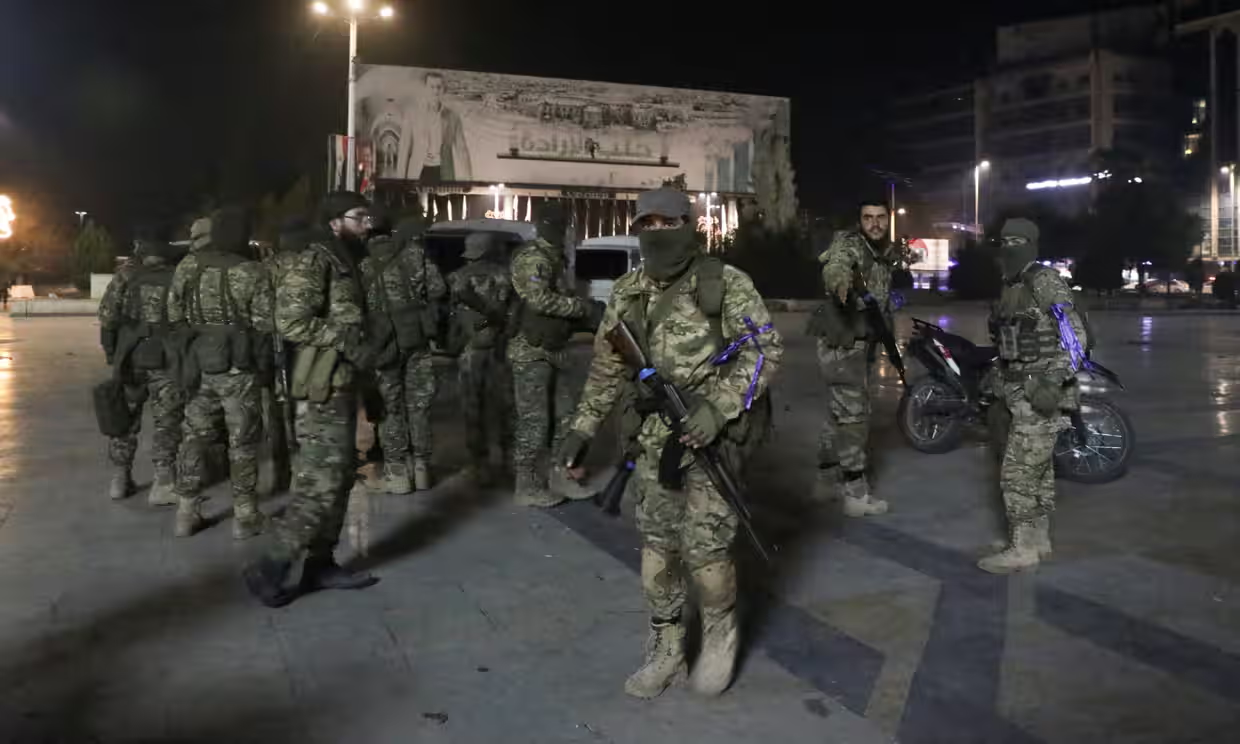
The capture of Aleppo by Islamist paramilitary forces has taken many across the Middle East and around the world by surprise and signifies once more the destabilisation of Syria as well as the rapidly deteriorating situation in the wider region, opening the door to further external intervention and a catastrophic war.

Liberation has received information from progressive forces inside Syria, critical of the Assad regime, but also opposed to outside intervention and the fragmentation of the country.

The progressive opposition in Syria have articulated a number of key points regarding the present situation with a call for negotiation on the basis of UN Security Council resolutions being central to their position.

Firstly, they have made clear that the currently in place “de-escalation” zones, despite their importance in stemming further bloodshed from the Syrian civil war, are not a sustainable solution over the longer term. Their function was to stop the bloodshed in order to move towards dialogue and negotiations to reach a real political solution that would reunite the Syrian people and the entire sovereign territory of Syria through the implementation of UN Security Council Resolution 2254. A real politically driven transition towards a new political, economic, and social system ultimately determined by the Syrian people is the desired outcome.

Secondly, the progressive opposition recognise that, over the past 13 years, Syria has endured cycles of extreme violence and destruction throughout the country, which the implementation of de-escalation agreements and zones brought to a halt. This led to a state of near-complete ceasefire by mid-2019, essentially a freezing of the conflict. After that, the economic phase of attrition began, both from at home as well as abroad. Thus, international sanctions served to deepen and exacerbate the brutal neoliberal economic policies overseen by the Syrian government. This led to a worsening of the Syrian tragedy and laid the foundations for the fall of Aleppo and the events currently being witnessed in the country.

The progressive opposition in Syria states: “The renewal of the cycle of violence and battles means that a political solution is more necessary today than ever before, and more possible than ever before. None of the sides concerned with sitting at the negotiating table can claim the ability to achieve a crushing victory that will destroy the other side, and this has been tried for many years at the expense of the blood and suffering of the Syrian people.”

Liberation is also very concerned regarding the implications of the events of the past week in Syria for the further destabilisation of the wider Middle East, including the prospects for what would be a catastrophic regional war – with global implications – were it to break out. We believe the developments in Syria have not taken place in a void removed from the events since last October, not least the apparent drastic weakening, if not dismantling, of the so-called “axis of resistance” forces’ capabilities – and, by extension, those of the Islamic Republic regime in Iran in the region – over more recent months. The cynical exploitation of, if not outright malign interference in, these developments by governments such as Israel and Türkiye, serve only to make a desperate and deteriorating security situation in the region as well as wider fallout much worse. Indeed, we note the comment made earlier today by Iraqi prime minister, Mohammed Shia’ Al Sudani in which he stated that his country will not remain just a “spectator” to the events unfolding in neighbouring Syria.

Liberation supports the calls for a comprehensive and binding political solution to the crisis in Syria, and one free of any kind of military intervention from outside forces or other infringement upon the country’s sovereignty. Thus, we add our voice to the growing call for the urgent implementation of UN Security Council resolution 2254 and a resolution to the crisis in Syria firmly grounded and based upon the will of the Syrian people, not the forces of outside intervention.

War Shadows Darken

21st November 2024

British PM, Kier Starmer, grandstands at the G20 Summit in Brazil

NATO’s undeclared war on Russia, fought through its proxy in Ukraine, took further steps towards escalation this week.  In the final desperate weeks of his presidency Joe Biden has upped the ante in the conflict in Ukraine by giving the go ahead for US missiles, with a range of up to 300 km, to be fired into Russian territory. Biden has also sanctioned the use of anti-personnel mines, widely discredited and subject to international agreements to prohibit their use, through the Anti-Personnel Mine Ban Convention, though neither the US or Russia are signatories.

Reports also suggest that British supplied Storm Shadow missiles have been used in recent days to hit targets inside Russia, increasing the danger of Britain becoming a target for retaliatory action.  The West continues to ignore peace proposals put forward by China and persists in pouring more fuel onto the fire of the conflict, through the continued supply of arms and aid to Ukraine. 

Britain alone has committed £12.8 billion to Ukraine since 2022 of which £5bn is financial support and £7.8bn is for military purposes.  Britain is the third largest donor of military equipment after the US and Germany.

Speaking at the recent G20 Summit in Brazil Prime Minister, Keir Starmer, said that there had already been “1,000 days of sacrifice” but that Britain would continue to ensure Ukraine has what it needs to fight the war “for as long as it needs”.

Without any apparent hint of irony Starmer went on to say,

“In this moment when global challenges are affecting us at home, I take the view that British leadership matters.”

The character of that “leadership” would appear to be little more that to kowtow to the diktats of US foreign policy, by supporting the war against Russia, rather than addressing the real needs of working class communities in Britain.  The billions that are going to pay for weapons of destruction in Ukraine could  more usefully be spent on winter fuel payments for the elderly, investing in support for the health and care services, or supporting the crumbling schools infrastructure across the country.

As priorities go the idea of  “British leadership” on the global scale is merely empty rhetoric as the Western military alliance, NATO, dances to the tune dictated by who pays the piper.  By far and away NATO’s biggest paymaster is the US and there is no way that the British tail will be allowed to wag that dog!

What Starmer really needs to address are the challenges “affecting us at home”, with the emphasis on the “us” being working class families and communities, who inevitably shoulder the burden of imperialist wars and the waste of public money on weapons of mass destruction, rather than socially useful programmes which will support well paid jobs and help communities thrive.  That however would require a true socialist perspective with planning for people at the forefront and the needs of the many put before the greed of the profit hungry few.

Instead the lobby for more money to be spent on the military is already underway with British chief of defence staff, Sir Tony Radakin, stating when interviewed by the BBC’s Laura Kuenssberg that the government should provide more money for defence.

Interviewed on the same programme Treasury minister, Darren Jones, said the government wanted to increase defence spending from 2.3% to 2.5% of the national income but that the government would not commit to a deadline until it had completed its strategic defence review.

The review, led by former Labour minister and NATO head George Robertson, is examining the current state of the armed forces, the supposed threats that Britain faces and the capabilities needed to address them. It is due to be completed in the spring of 2025.  It is unlikely that Robertson’s review will conclude that threats could be minimised by not spending billions on fuelling conflicts, or by not renewing the Trident nuclear submarine programme, which will waste billions in public funds.

In a classic piece of government euphemism Jones in his interview went on to warn that increasing defence spending would mean “trade offs” with other areas of public spending.  It hardly needs spelling out that trade offs will mean cuts in those other areas of public spending which will impact upon the services that people really need, such as health and social care, housing, education and transport.  Having a few overpriced and essentially useless nuclear submarines at sea will not help any of that.

Starmer may feel his ego is boosted by puffing out his chest and grandstanding about supporting Ukraine at the G20 Summit.  He may think that is “leadership” but the reality is that such a position is one of supine surrender to the drive of US imperialism, to escalate the conflict with Russia and ultimately to turn its sights towards China. 

Working class communities in Britain will pay a heavy price if Starmer continues down that road.  The work of Stop the War, CND and those sections of the Labour Movement committed to peace and social justice is more vital than ever in mobilising opposition to the growing threat of increased military activity in Ukraine, the Middle East and the Far East.  The pro-war lobby must be stopped and it must be stopped now before the current conflicts truly do become worldwide.

US election – Resistance is vital

7th November 2024

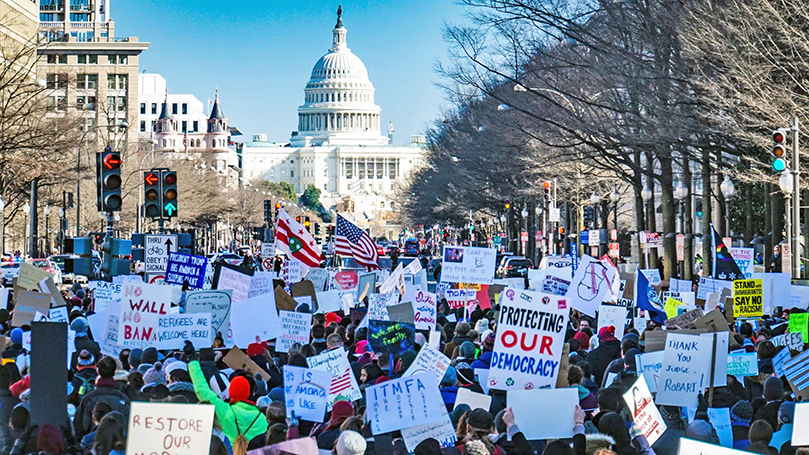
Demonstrations will continue to oppose the reactionary policies of President Trump

The election of a new President in the United States is always a moment of international significance, given the role the US plays in world politics.  The Presidential election of 2024 has been described as the most consequential in a generation and there is no doubt that the re-election of Donald Trump will have profound repercussions both in the US and internationally.

Trump’s first term appointments of reactionary judges to the Supreme Court has already led to the reversal of Roe v Wade and the attack on reproductive rights in the US.  While each State can at the moment determine its own position there is no guarantee that Trump will not introduce nationwide anti-abortion legislation, under pressure from the hardline Christian evangelist lobby.

The belligerent stand taken by Trump in relation to the Black Lives Matter Movement also does not augur well for progress in the discrimination and treatment of the Black and Latino communities in the US.  While the media are making much out of the increase in Trump’s vote share amongst these communities, over the more socially liberal Kamala Harris, work is still needed to analyse the pattern of voting and the impact of many who stayed at home.

As a long standing advocate of gun laws being as relaxed as possible, US citizens cannot look forward to any action to restrain the gun lobby in the US, led by the fanatical National Rifle Association (NRA).  The consequence of lack of control over gun law in the US  saw nearly 43,000 people die from gun related violence in 2023 and any hope for that number to drop significantly under Trump is slim.

Trump has the backing of a shady grouping around the Make America Great Again (MAGA) campaign, called Project 2025: The Presidential Transition Project.

The blurb on their website states it’s mission:

“ It is not enough for conservatives to win elections. If we are going to rescue the country from the grip of the radical Left, we need both a governing agenda and the right people in place, ready to carry this agenda out on Day One of the next conservative Administration.

This is the goal of the 2025 Presidential Transition Project. The project will build on four pillars that will, collectively, pave the way for an effective conservative Administration.”

Trump has also called for thousands of federal employees to be fired and to be replaced by workers who are appropriately vetted on the basis of their ideological belief in the limited role of federal government and personal loyalty to him, stating,

“I will require every federal employee to pass a new civil service test, demonstrating an understanding of our constitutional limited government.”

Tax cuts for the rich and cuts in public services for the rest are likely to be the reality of Trump’s policies.

On the world stage the US military industrial complex will be looking forward to continued profits as Trump will undoubtedly continue promoting the sales of US weapons and technology worldwide.

In relation to the ongoing Israeli action in the Middle East, in Gaza, the West Bank, Lebanon and Iran, Trump has made clear his unswerving support for Benjamin Netanyahu and the ongoing incursions by the Israel Defence Force (IDF), resulting in thousands of deaths over the past year.  Trump’s election victory was greeted enthusiastically by Netanyahu and his supporters in Tel Aviv.

In his first term as President, Trump tore up the Joint Comprehensive Plan of Action (JCPOA) in relation to Iran, which constrained Iran’s nuclear programme in exchange for a relaxation of sanctions.  Given Trump’s belligerent tone towards Iran, allied with his support for Israel, there is a clear danger of escalation of the conflict in the Middle East.  

In relation to Ukraine Trump has been more ambivalent but the strategic objectives of the US and NATO, in encircling Russia in order to contain its influence, remain real.  However any settlement regarding Ukraine is arrived at in the short term, this wider objective will remain.

In the Indo-Pacific the military built up to counter the so called ‘threat’ of China continues, with ongoing economic and military support for Taiwan being key, along with the threat to peace in the region posed by the AUKUS alliance of the US, UK and Australia.

Any moves towards rapprochement with Cuba, mild as they were under the Obama administration, were ditched during Trump’s first term.  Cuba was added to the US state sponsors of terrorism list.  To the shame of the Biden administration this position was not reversed and the ongoing illegal blockade against Cuba, imposed by the US, will continue under a new Trump Presidency.

The ongoing CIA campaign to undermine progress in Venezuela, a long running effort to install a US friendly regime in that country, is unlikely to change under Trump,  while a clampdown upon migration from Latin America in general will reinforce the jingoism which has been a hallmark of Trump’s policies.  Trump has vowed to oversee the largest mass deportation in US history for example and has repeatedly stated that immigrants are “poisoning the blood” of the country.

The Trump administration may not be characterised as fascist yet but Trump does have form.   According to John Kelly, former White House Chief of Staff, during a 2018 trip to Paris to commemorate the end of World War I, Trump told him that Hitler “did a lot of good things.”

Much of the United States will be waking up to the hangover of a second Trump administration.  The broad anti-MAGA coalition will continue to mobilise against the reactionary legislation Trump is bound to introduce. The Communist Party USA is calling for a renewed resistance movement to build the anti-fascist front that has been developing over recent years.  Resistance is not only possible but vital, for the people of the US and the world.

Creative Health – Wake up the nation

23rd October 2024

Health Secretary, Wes Streeting – big plans for the NHS but will they be big enough?

With only one week to go until the first budget from Labour Chancellor, Rachel Reeves, there has been much speculation about what it will include, in relation to both spending cuts and investment to allegedly boost the economy, usually a euphemism for increasing coprorate profits.  As part of the pre-budget media management Health Secretary, Wes Streeting, has shared a vision for the NHS, or at least initiated a “national conversation”, with a 10 year plan for the NHS to be published next year.

As well as digitisation of patient records, controversial with many, the government is proposing neighbourhood health centres where patients will be able to see family doctors, district nurses, care workers, physiotherapists, health visitors and mental health specialists, all locally and under the same roof.

There will also be shift in focus, from sickness to prevention, with the aim of shortening the amount of time people spend chronically unwell and preventing ill-health. There are also plans to provide  smart watches for people with diabetes or high blood pressure, so they can monitor their own health at home.

Some of these measures may have benefits but while smart watches to monitor conditions could address the symptoms it will not get to the root causes of economic disadvantage and poverty, which result in poor diet and cheap food choices, which many working class families are forced into. 

At the same time, in a contradictory move, the government has approved the trial of an anti-obesity drug aimed at getting “those who are most likely to return to the labour market” back into work.  The trial, based in Manchester, will involve 3,000 people in a five year study of the “non-clinical outcomes” of treatment to see if it encourages a return to the workplace.

The trial effectively treats people according to “their economic value, rather than primarily based on their needs and their health needs”, according to obesity researcher at Cambridge University, Dr Dolly van Tulleken.  The emphasis of this approach is once again to blame the individual, rather than to highlight failures in the system which, due to lack of financial resources, limits options for many working class families and exacerbates health inequalities.

Quite apart from the ethics of such an approach it is nothing more than a sop to Big Pharma, always keen to explore drug based solutions, when a huge evidence base for the benefits of alternative approaches to preventative health care already exists.  

The National Centre for Creative Health (NCCH) was established following the All Party Parliamentary Group on Arts and Health report, Creative Health, published in 2017.  A subsequent commission, established by the NCCH and chaired by Baroness Lola Young, published its Creative Health Review in 2023 to update the findings of the original APPG report, in the light of the Covid-19 pandemic.

While a commission made up of the great and the good from the worlds of health and culture was never going to come up with a set of revolutionary demands, it has nevertheless highlighted flaws in the existing health and social care arrangements, which could be addressed to benefit working class communities if resources are made available.

The review set out a number of recommendations to government, primarily,

  • the development of a cross-departmental Creative Health Strategy, driven by the Prime Minister, co-ordinated by the Cabinet Office and supported through ministerial commitment to ensure the integration of creative health across all relevant policies. Such an approach will facilitate the establishment of sustainable cross-sectoral partnerships across regions and systems, modelled by national policy.
  • The long-term value of investing in creative health must be recognised and appropriate resources should be allocated by HM Treasury to support the Creative Health Strategy.
  • Lived experience experts should be integral to the development of the Creative Health Strategy.

While these demands in themselves are relatively limited they are still a challenge to the conservative approach to health and social care taken by both the Tories and Labour in government.

Creative Health is defined as creative approaches and activities which have benefits for health and wellbeing. Activities include visual and performing arts, crafts, film, literature, cooking and creative activities in nature, such as gardening; approaches may involve creative and innovative ways to approach health and care services, co-production, education and workforce development.

Creative Health can be applied in homes, communities, cultural institutions, heritage sites and healthcare settings. Creative Health can contribute to the prevention of ill-health, promotion of healthy behaviours, management of long-term conditions, and treatment and recovery across the life course.

The Creative Health agenda is not just about tinkering with the NHS system and social care at the edges, it is about a wholesale reform of the approach to healthcare, which emphasises active community engagement in a range of creative activities.  In study after study, both nationally and internationally, these have been proven to have positive impacts.  The key to success however is that activity must be effectively funded at a community level and this has been systematically reduced by successive governments.

The squeezing out of arts activities in state schools, as part of the national education curriculum, will have a long term impact upon the ability of those other than the wealthiest to access creative resources.  Grassroots arts activity is under threat across the country as venues and community facilities close due to the rising costs of stock  and utilities.  Local government arts budgets have been cut to the bone with arts, museum and library facilities continually under threat.  Yet these very services are integral to the physical and mental health and wellbeing of local communities and should be at the core of any proposals which have prevention at their heart.

The Tories cut funding to the Arts Council England by 30% when elected in 2010 as part of the austerity agenda, claiming that support could be found by unlocking the potential in philanthropy. That ship has yet to come in to dock.  The Office for National Statistics in a report in 2022 showed that while more than 16% of creative workers born between 1953 and 1962 were from working class backgrounds, that figure had fallen to 8% four decades later.

The number of students taking arts GCSEs has fallen by 40% since 2010 and the number of drama teachers in English secondary schools is down by 22% since 2011.

Such figures demonstrate the lack of value placed upon the creative sector, in spite of it being a huge income generator for the economy, over £108 billion in 2021, but also the failure to recognise the essential role creativity can play in reducing the burden upon the NHS as part of an integrated Creative Health approach.

The “national conversation” Wes Streeting has initiated needs to highlight these facts and the next 10 Year Plan for the NHS needs to have Creative Health and the real needs of working class communities at its heart.  In addition, investment in the cultural sector, both through Arts Council England and the local government sector needs to be restored as a priority and the basis of arts education in the national curriculum reviewed.

Creative Health is unlikely to get much airtime in Rachel Reeves’ budget next week but if it is not taken seriously, as part of a wider package of investment in and reform of health and social care, the long term health of the nation, and the government, will be in doubt.

https://ncch.org.uk/creative-health-review

Peace the Middle East priority

12th October 2024

A Palestinian girl carries a child through the rubble of houses destroyed by Israeli bombardment in Gaza City 

The extent to which Israel is prepared to go it alone in a threatened strike against Iran was made clear this week in reported discussions between the Israelis and the United States.  US President, Joe Biden, and Israeli Prime Minister, Benjamin Netanyahu, discussed issues relating to Israel’s expected provocation against Iran in their first call in over a month last week.  The White House has said that Biden emphasised the need for “a diplomatic arrangement” to allow Israeli and Lebanese civilians displaced by fighting to return to their homes; urged Israel to minimise civilian casualties in airstrikes against Beirut; and discussed “the urgent need to renew diplomacy” on achieving a cease-fire in Gaza.

Clearly Biden’s words have had little impact with the Israeli Defence Force (IDF) carrying out its heaviest bombing raids so far on Thursday night, just over 24 hours after the Biden/Netanyahu conversation.  The strikes included attacks upon United Nations peacekeeping positions, reinforcing the rogue status of Israel in the Middle East.

It is apparent that the US is frustrated by being repeatedly caught off guard by Israel’s military actions in Gaza and Lebanon, but appears incapable of summoning the political will to head off further escalation.  There was some hope that the US would learn more about what Israel was contemplating when Israeli Defence Minister, Yoav Gallant, and US Defence Secretary, Lloyd Austin, were scheduled to meet at the Pentagon last week.  However, Netanyahu blocked Gallant from going to the US as Israel continued planning its Iran operation.  As it stands the US claims not to know either the timing of the strike or what Israel might target.

It is known that Army Gen. Erik Kurilla, who heads US Central Command, with responsibility for US military operations in the Middle East, has met with Gallant and top Israeli military commanders, to warn against striking Iran’s nuclear sites or oil facilities.

Gallant is widely seen in the West as the Israeli leader most responsive to the US concerns about Israel’s prosecution of the war in Gaza, especially regarding increasing humanitarian aid and creating a plan for postwar governance.   However, it is evident that Netanyahu’s desire to cling to office, and take advantage of the hiatus which the pre-election period in the US represents, outweighs any wider strategic concerns for him and the religious fundamentalist backers in his government.

US failure to act decisively is frustrating the international community as it is clearly the major supplier of arms to the IDF.   Israel, can only continue to prosecute the wars it has initiated on multiple fronts, because of its dependence on the US military. Over the past year, it has not only relied on supplies of American munitions, but benefited from US help in shooting down missiles and drones, as well as the rapid deployment of American naval and air forces to deter more substantial Iranian attacks.

In turn the US has had to modify its strategic priorities, which were focussed on ramping up conflicts with China and Russia, to adapt. Struggling to head off an all-out Middle East war, the Pentagon has deployed two aircraft carrier battle groups to the region for much of the year.

Against this background the threat of further escalation once the IDF attack Iran is significant, for the region, for world peace and for the people of Iran themselves.

Inside Iran the theocratic leadership of the Islamic Republic is walking a political tightrope having seen its adventurist foreign policy in the region at least temporarily crushed, following the overkill of the Israeli response to the Hamas attack of the 7th October last year.  Leaders of Hamas and Hezbollah have been assassinated, key targets have been hit, disrupting operations, and the Israelis have even reached into Tehran itself to undermine the Islamic dictatorship’s reliability on its own security apparatus.

Evidence in both Gaza and Lebanon would suggest that the Israelis are not inclined towards acting with restraint, as the death toll on both fronts mounts, along with the increasing unrest in the occupied West Bank.  Iran’s response to the strikes against Hezbollah in Lebanon have so far not inflicted significant damage upon the IDF but have been sufficient to give the Israelis justification, in their eyes, to strike back.

It is clear from the evidence of the past year, the years of illegal Israeli occupation of Gaza and the West Bank and the repeated incursions into Lebanon by the IDF over the years, that there is not a military solution to the issues in the Middle East.  The only solution can be a diplomatic one, starting with the right of the Palestinian people to self determination and a state of their own.

The failure of the international community, primarily the United States and Britain, to enforce United Nations resolutions, which would compel Israel to negotiate, and to continue to supply weapons to sustain the IDF, are the key drivers of the current situation.  Until peace is at the top of the strategic objectives of all players the people of Gaza, Lebanon and Iran, will continue to suffer.

Blatant Biased Content (BBC)

4th October 2024

BBC International Editor, Jeremy Bowen

Reporting by the BBC on current conflicts demonstrates the bias of the corporation and the extent to which, in spite of its regular emphasis upon impartiality, the BBC is anything but  when it comes to its international coverage.

The Russian incursion into Ukraine in February 2022 was undertaken in order to protect communities who had expressed a wish to become part of Russia, but had suffered at the hands of Ukrainian forces since 2014, resulting in 14,000 deaths.  The Minsk Accords, signed in 2015 to  halt the fighting, were later admitted by Western governments to be a mere ploy to give Ukraine time to re-arm.

The Russian intervention is nevertheless unfailingly referred to by the BBC as a full scale invasion and the wider context, including the CIA backed coup in Ukraine in 2014, conveniently overlooked.

Even after the intervention by Russia, a peace agreement mediated by Turkey in March 2022 was on the brink of being signed by Ukraine, until the United States persuaded then British Prime Minister, Boris Johnson, to deliver the message to President Zelensky that the “collective West” would not support the agreement.

In an item given widespread coverage by the BBC in the last couple of days, Khalil al-Hayya, the deputy leader of Hamas, was interviewed by BBC international editor Jeremy Bowen.  On each occasion al-Hayya was introduced as someone whose views may be abhorrent to many.  Bowen was asked to justify why the interview had taken place and why al-Hayya should be given air time.

Bowen dutifully trotted out the BBC line on impartiality and the need to hear all sides in a crisis situation.  All very well, but the briefings by Israeli Defence Force (IDF) representatives, committing genocide in Gaza, killing medical teams in the West Bank and currently invading neighbouring Lebanon are not given the same caveat, even though many will find both their views and their actions abhorrent.

It is also noteworthy that the invasion of Lebanon by the IDF is described by the BBC as an ‘incursion’, a characterisation they may struggle to hold onto as the death toll inevitably mounts.

The BBC attempts to protect the illusion of impartiality in other ways too.  John Simpson is regularly given his own half hour, titled Unspun World, in which Simpson interviews various BBC correspondents who invariably give a particular spin on events in the part of the world that are covering.  The title is not meant to be ironic.

Then there is the BBC Verified branding.  Presumably it is the BBC themselves who are undertaking the verification, which is a bit like the police investigating themselves or students marking their own homework.  Are they really trying to kid us that a new logo is a guarantee of impartiality and objectivity?

How the Tories can continue to bleat on about the BBC being run by ‘Lefties’ and not toeing the line on issues is laughable.  Apart from the odd moment of mild criticism the BBC knows quite clearly on which side its bread is buttered.  Sadly it is not the side of investigative journalism, truth and objectivity.

Turning Points

29th September 2024

Thousands flee Lebanon to escape Israeli air strikes

The assassination of Hezbollah leader, Hassan Nasrallah, has been described by Israeli Prime Minister, Benjamin Netanyahu, as a ’turning point’, describing Nasrallah as “the axis of the axis, the central engine of Iran’s axis of evil”.

The killing and the ongoing bombing of civilian areas of Beirut may well prove to be a turning point but not necessarily in the way that Netanyahu means.  Iran’s leader, Ayatollah Ali Khamenei has called for five days of mourning following Nasrallah’s death and vowed that his ”blood will not go unavenged.”

Lebanon’s Health Ministry has estimated that 800 are dead so far as a result of the actions of the Israeli Defence Force (IDF), while 50,000 people are estimated to have fled to Syria and an estimate 1 million are displaced, many having to sleep on the streets.

The bombings follow on from the indiscriminate attacks, not denied by the Israelis, upon Lebanese citizens by planting explosives in electronic communication devices, which killed 37 and injured thousands.  This action has been widely condemned as a war crime precisely due to its indiscriminate nature. 

While the IDF claim that the current bombing campaign consists of precision strikes, the reduction to rubble of buildings in clearly civilian areas gives the lie to this claim, costing the lives of non-combatant women and children  in the process.

The latest strikes have even seen surprise expressed by the United States, Israel’s staunchest ally, with President Joe Biden claiming that the US had no prior knowledge of the attacks.  Efforts by US Secretary of State, Antony Blinken, to engage Israel in the search for a diplomatic solution have so far abjectly failed.

It is becoming increasingly clear that the Israeli government, under the leadership of Benjamin Netanyahu, is out of control and driven by its own religious fundamentalist agenda.  Devastating strikes on Beirut followed on almost immediately from Netanyahu’s widely boycotted speech at the UN General Assembly in New York and flew in the face of widespread calls for a negotiated settlement and ceasefire to be discussed.

Israel’s contempt for the will of the international community, as articulated by the UN, has been evident for decades in its illegal treatment of the Palestinian people and their just demand for national self determination  and a fully sovereign state of their own.  It is evident in its recent action in Gaza and the West Bank and is becoming  more flagrant in its attacks upon the Lebanese capital.

Such actions increase the threat of widening the conflagration in the region, with escalation beyond the Middle East into a global war within the realms of possibility.

With the presidential election in the United States looming Netanyahu is clearly taking advantage of the hiatus this represents to press home his fundamentalist agenda, to the detriment of the people of the region and in spite of the opposition from many of his own citizens.   Parliamentary elections in Israel are not scheduled until October 2026 and Netanyahu is gambling that he can hold together his right wing fundamentalist coalition at least that long, to present himself as a victor in the fight against both Hamas and Hezbollah.

The fate of the Palestinian people and the people of the Middle East generally should not rest upon the political survival and opportunism of one man.

Pressure upon Israel to come to the negotiating table must be increased through concrete actions.  The British government must immediately cease all arms sales to Israel.   Trade union and cultural organisations should support the Boycott, Disinvestment and Sanctions (BDS) campaign to isolate Israel internationally, until it is prepared to negotiate meaningfully on a way forward.  

The US, as Israel’s major ally, must take a stronger line in bringing the IDF to heel and opening the way for negotiations.  The turning point in the current conflict has to be to turn back.  The coming days could well be crucial in determining the future of the Middle East  and whether or not the world is plunged into a wider conflict.

End the genocide in Gaza, Stop arming Israel!

21st September 2024

Residential Beirut, bombed by Israeli forces on Friday

The prospects of all out war in the Middle East accelerated this week as Israel swept aside calls for a ceasefire and stepped up its military action in Lebanon.  The detonation of explosives in pagers and walkie talkies used by Hezbollah is estimated to have resulted in 37 deaths and over 3,000 casualties.  Israel has not commented on the action but the operation clearly has the fingerprints of the Israeli secret service, Mossad, all over it.

The attack, in which several children were the victims, follows a week in which Israel announced a new phase in the war, moving the centre of gravity from Gaza to the northern border with Lebanon.  Having reduced much of Gaza to rubble, the Israelis have created a humanitarian crisis due to restricted food supplies and medical aid.  Medicins Sans Frontiers (MSF) have stated that,

“Infectious diseases including diarrhoea, acute respiratory infections, skin infections, and hepatitis are on the rise due to overcrowding and poor hygienic conditions in camps where displaced people are sheltering, and shortages of medicines and medical supplies.”   

MSF and United Nations teams on the ground are tackling acute food shortages with latest figures suggesting that starvation is inevitable under the Israeli government’s policy of deliberate deprivation.  According to the Integrated Food Security Classification (IPC), almost half a million people (22% of the population of Gaza) are facing catastrophic levels of acute food insecurity.

Israeli fighters bombing a residential suburb of Beirut yesterday killed at least 12 people, including 5 children, with a further 66 wounded according to the Lebanese Health Ministry.  The strike hit the Dahiya district during rush hour as people were leaving work and children were heading home from school.

Local networks broadcast footage that showed a high-rise building flattened just kilometres from downtown Beirut. First responders combed through the rubble of at least two collapsed apartment buildings to search for missing people.  Israel claims that it has killed top Hezbollah commanders in the strikes.

A further wave of strikes across southern Lebanon have seen some of the most intense bombing of recent months with the Israeli Defence Force (IDF) claiming that it was aiming “to degrade Hezbollah’s terrorist capabilities and infrastructure.”  The prospect of a ground based incursion into Lebanon has not been ruled out.

For nearly a year, Hezbollah has engaged in near-daily exchanges of fire with Israeli forces along the Lebanon-Israel border in support of Hamas. Hezbollah has fired rockets regularly into Israel but with little impact, either falling in barren areas or being intercepted by the Israeli Iron Dome system.  Tens of thousands of people on both sides of the border have been forced to flee their homes due to the fighting.

The current escalation of action by Israel brings closer the likelihood of a more concerted response from Hezbollah and the prospect of Iranian intervention, in support of their partners in the so-called axis of resistance.  While Lebanese Prime Minister Najib Mikati blamed Israel for the explosions, saying that they represented a “serious violation of Lebanese sovereignty and a crime by all standards”, Iranian Foreign Minister Abbas Araghchi said he told his Lebanese counterpart that he “strongly condemned Israeli terrorism”.

While Britain has implemented a limited arms embargo against Israel, by suspending some weapons licences, the IDF are still largely bankrolled by the United States, who have confined their response to recent events to Secretary of State, Antony Blinken, “calling for restraint and urging de-escalation.”  The UN has said it is “very concerned” following the strike on Beirut.

Palestine Solidarity Campaign (PSC) will be lobbying Labour Party Conference in Liverpool this weekend “to demand the government ceases its complicity in Israel’s genocide and apartheid against Palestinians, and ends all arms trade with Israel.”

The collusion of the imperialist powers in the oppression of the Palestinian people, through the arming of Israel and the failure to enforce UN resolutions, has emboldened successive Israeli governments to undermine Palestinian rights and the prospect of an independent Palestinian state.   While many Israelis remain committed to live in peace with Palestinian and other Arab neighbours, the religious fundamentalists in Israel have increasing gained ground, to the extent that they are effectively dictating current government strategy.

The state of Israel has the right to exist, within internationally agreed borders, but so too does the state of Palestine, on the same basis.  The British government acknowledging this and stating it explicitly would be a step in the right direction.  Kier Starmer claims to be leading a government which will ‘listen’.   In which case the message from the streets of cities across Britain is quite clear – End the genocide in Gaza, Stop arming Israel!