Nationwide lockdown in England to tackle second wave

31st October 2020

Who is that masked man? Boris Johnson announces national lockdown for England

England is now into a second national lockdown, for one month initially from Thursday 5th November, following an announcement this evening by Prime Minister, Boris Johnson.  Schools and universities will remain open, non-essential shops and the hospitality sector will close. The National Education Union are calling for schools to be included in any lockdown, as infection rates are increasing significantly in secondary schools.

This situation has come about through a combination of factors but is predominantly due to the blatantly class biased handling of the pandemic by the Tory government. This has resulted in a loss of public trust in the government’s strategy, leading many to make their own decisions about how best to navigate a route through the crisis.

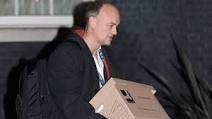
There has always been a lumpen hard core for whom, as far as they are concerned, the rules do not apply.   This group can be as diverse as organisers of house parties on working class estates, dinner party hosts in the suburbs, to the Prime Minister’s chief political adviser.  The real unravelling of trust came with Dominic Cummings’ ill fated trip to Barnard Castle, after which it was clear that there was one rule for some and one for others.

Confidence in the government was certainly not universal before the Cummings debacle but there was a greater degree of latitude given by most people, prepared to believe the line that the government was ‘following the science’ and that what was tough today, would result in a brighter tomorrow.

The Tories initially fuelled the illusion of a quick fix by dangling a series of carrots at the daily government propaganda briefings into the summer.  Discussion about air corridors made it sound as though holiday plans could actually be delivered.  The ‘Eat Out to Help Out’ scheme fostered the idea that some degree of economic normality was around the corner, with gyms, shops and libraries also opening across the summer.

A vaccine before Christmas has been talked up time and again by the Tories and the right wing press, although the medical and scientific community are noticeably cooler about the prospect.    The much vaunted Operation Moonshot, the Tories’ post summer big idea has gone quiet.  Test and trace is widely regarded as a farrago, which has succeeded in doing little more than putting £12bn into the pockets of Tory supporters Serco, while doing little or nothing to save lives.  In mid October Serco announced it expects bumper profits after securing an extension to its Test and Trace contract.

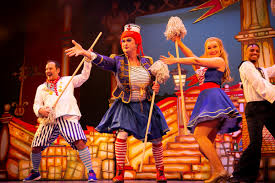
Funding Christmas panto in ten cities across England, from the National Lottery, was a further desperate attempt to garner some popularity as the government’s credibility with the general public guttered into the autumn.  While schools opened and students returned to university in September it was clear that a second wave was well underway.  The need to break chains of transmission, by introducing a national lockdown period, was the clear scientific advice being pressed upon the government in late September.

This advice was deemed too unpopular so was ignored.  Any illusion that the government was following the science, was stripped away.  The big players in the hospitality sector were clearly worried about their profits, the small individual businesses were not promised enough in the way of government support to give them a chance to survive.  Meanwhile, many companies in the arts and cultural sectors remain in danger of going to the wall, while individual freelancers are having to take any job they can to make ends meet.

It is only two weeks into the three tier system announced by the government, aimed at managing the pandemic at a local level, and that appears to be failing, with infection rates soaring and predictions that a second wave could see twice as many deaths as the first. 

The government has always tried to sell the line that it is backing both public health needs and those of the economy.  The reality remains however that private wealth has always edged ahead of public health in the government’s planning.  The poor, the elderly and those from ethnic minorities in working class communities have never been the natural constituency of the Tories.  The fact that the death count is highest amongst these communities is clearly a factor in the gamble the government is taking with the lives of ordinary people.

A national lockdown is here.  The carrot this time is to ‘save Christmas’.  Exactly what will be saved and for whom is almost too macabre to predict.  A four week lockdown, followed by a frenzy of household mixing and a breakdown of social distancing, can only end up with one result come January.  

It is probable that the Tories’ big business backers will not tolerate measures much more stringent than this over their honeypot period in December.  Is it likely that the government will be believed by the public if they take a harder line anyway?  Nevertheless, measures to manage Christmas need to be thought through and agreed well in advance, in order to allow plans for the holiday period to be made with some degree of confidence well in advance.

The irony is that, along with endangering so many lives by not taking a stronger public health line, the economy is on the brink of crashing anyway and threatening the livelihoods of millions. 

Priorities need to change as a matter of urgency.  Test and trace needs to be taken out of the hands of the money grabbing private sector and put into the hands of local Directors of Public Health.  The companies such as Amazon, Google and Facebook, profiting from the pandemic, need to be made to pay their way.  The opposition needs to build outside Parliament to make sure that Tory class interests are exposed. 

The Labour opposition inside Parliament, uninspiring so far, needs to challenge the government more effectively.  Kier Starmer has not shown himself capable of that to date.  A question mark must hang over his future if Labour is to be a force for working class people once more.  

Never mind the cake, let’s take the bakery!

24th October 2020

Fine dining – not for eveyryone during school holidays

The appeal by Manchester United footballer, Marcus Rashford, that those children on free school meals may have no bread during school holidays, has met with a resounding “let them eat cake” response by UK Prime Minister, Boris Johnson, backed by his thumping House of Commons majority.  As with most aspects of the current crisis, Labour were once again late to the oppose the government, but did put down a motion in the House of Commons on Wednesday, inspired by Rashford’s campaign, which was defeated by 322 votes to 261.

Over the school summer holiday period Rashford was able to force a concession from the government, to provide meal vouchers of £15 per week for those families with children on free schools meals, in order to provide support for the lowest paid, most vulnerable and those most likely to be working in sectors where the pandemic would have the most impact.

The Commons vote has triggered a wave of opposition from Councils across England, there are schemes to support children during school holidays elsewhere in the UK, who are preparing to make local interventions if the government is not prepared to back down.  They have been joined by cafes and businesses pledging to help, while Rashford’s petition to implement a national food strategy has gathered over 500,000 signatures.  Official figures are showing that 1.4 million children in England are eligible for free school meals, with unofficial estimates suggesting that this may now be closer to 2 million.

That there is the prospect of any child going hungry in the world’s fifth richest nation, never mind 2 million, is a damning indictment of the priorities within a capitalist economy.  Even Nick Forbes, Leader of Newcastle City Council and Leader of the Local Government Association Labour Group, but hardly a left wing firebrand, commented,

“Children should never be left to go hungry – the fact that this Conservative government can’t see that shows it has completely lost its moral compass. They have wasted millions on high-paid consultants and have given billions to Serco to run a test and trace system that doesn’t work, but they draw the line at using a tiny fraction of that to prevent children going hungry this half term.  It is sickening.”

At the other end of the social spectrum things are, as ever, not so stark.  An exemption included in the tier 2 rules allows freelancers to work over lunch, a caveat which has meant some high end London restaurants interpreting this to mean up to 30 can dine at a time, as long as “the topic is business.”  These restaurants are relying on “exception 3” in the government’s regulations which states,

 “Exception 3 is that the gathering is reasonably necessary – (a) for work purposes or for the provision of voluntary or charitable services.”

At the Sexy Fish restaurant in Mayfair diners could select king crab and caviar sushi at £42 a piece (or nearly 3 free school meal vouchers) and this was only one of a number of high end restaurants doing a roaring trade this week.  It is unlikely that any of the ‘freelance’ diners were amongst the thousands of workers in the cultural sector struggling to survive the closure of arts and music venues across the country, many of whom have slipped through the net of government support.

Current estimates suggest that on average a self-employed worker in the arts or hospitality sector will get a mere £450 a month from the Treasury’s self employment income support scheme, just half the level during the first lockdown.  Not much king crab and caviar sushi likely to be bought on those wages.  It is estimated that 500,000 self employed people work in sectors of the economy which are either shut or struggling under the weight of COVID-19 restrictions.  A record 250,000 self employed people have fallen out of work since the start of 2020.

The extent to which the government have mishandled the pandemic is disgraceful in every aspect. Increasingly, the eyes of many are being opened to the calamitous choice made at the last election and the iniquities which are endemic to capitalism.  A system which allows some to dine on caviar while others scrape together the money to feed the kids during school holidays will never ‘level up’, however much Boris Johnson chooses to repeat his most hollow mantra.

The real flaw in the system is in fact the system itself.  No amount of tinkering will ultimately change the capitalist leopard’s spots.  The realisation is growing that real change has to come.  It is not the need to eat cake, or even grasp a bigger slice that is required, it is time to take over the entire bakery and put production in the hands of those who will ensure the cake is fairly distributed, so no-one goes hungry during school holidays, or at any other time of the year.

Different politics, different priorities

17th October 2020

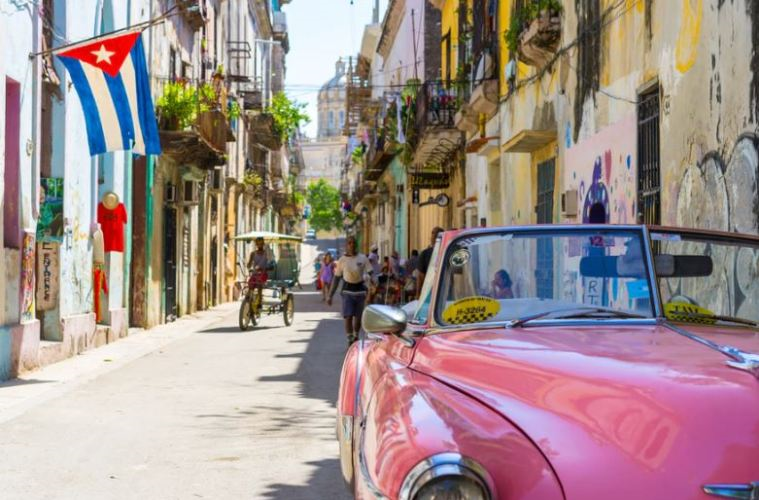
Cuba – reopening the door for tourism

Chaotic, uncoordinated, directionless – all terms which have at various times been used to describe the Tory government’s handling of the current COVID-19 pandemic.  Ostensibly it is hard to deny such accusations, given the debacle which emerges following each set of policy announcements in relation to dealing with the crisis.  Johnson’s government may well be inept but it is not entirely without purpose.  The guiding principles of the handling of the pandemic to date have been to protect private wealth over public health and this continues to be the case.

How can this be, when the strategy of the government appears to threaten the livelihoods of many small businesses and entrepreneurs, previously just making enough to get by but now in danger of going under, as the furlough scheme ends and the government support on offer is barely enough to cover the bills, never mind pay the wages of staff?

In reality, not only is the government not in control of the virus, it is not in control of the basic laws of capitalism.  One basic tendency of capital is that towards monopoly, the swallowing up of smaller competition by bigger providers, thus creating ever larger conglomerates which dominate particular fields of industry, retail or communications.

Dealing with competition by takeover has long been a key feature of capitalism and is no different in the modern world of digital and virtual technologies.  Facebook dealt with the threat from WhatsApp and Instagram by buying them up for example.

The demise of the high street shop may not be on quite such a scale but the opportunity is there for the bigger retailers to step into the void left by independent retailers, no longer able to make their way.  This may take the form of more ‘local’ Tesco or Sainsbury’s outlets, or a high street Starbucks, but nonetheless increases the reach of the corporate pyramids.

Capitalism also functions according to basic laws governing the supply and demand of labour.  In times of crisis, when jobs are going and labour is being shed, pay becomes a buyers market.  In spite of minimum wage legislation and working time rights, employers have managed to get round much of this by the simple trick of not being employers.  Nowadays many companies will contract ‘self employed’ individuals, paid on piece rates to deliver goods or produce product.

Apart from driving down the hourly rate of pay such an approach divests employers of the responsibility for national insurance or pension payments.   In the short term this may sustain profits but crises of job insecurity, a low skills low wage economy and a future pensions crisis are undoubtedly in store.

Large sections of the population effectively living hand to mouth, in areas of work where it is difficult to co-operate or unionise, will continue to increase as the pandemic progresses.  This reserve army of labour, either unemployed or in unstable employment, will continue to be a resource for the suppression of wage rates and will continue to be a threat to those in low paid work, in danger of falling into the twilight world of semi-employment.

In any crisis there are also winners.  There are no signs of Apple, Amazon, Google, Facebook or Netflix going under.  Nor are there any signs of any of the major profiteers from the pandemic coming under pressure to pay their share of taxes, to support those suffering at the sharp end.  It is not in their interest to offer, nor in the interests of the Tories to ask.

The day to day practicalities of what it means to be in Tier 2 and what cannot be done in Tier 3 are in danger of consuming many, as the pandemic moves into the winter flu season and the trajectory of infections increase.    To a certain extent that is inevitable as people attempt to make sense of a system almost designed to obfuscate and confuse.

However, many are also increasingly seeing that, beyond the present crisis there are questions to be answered about how society is organised and managed; how the means of production are distributed and controlled; why over 40,000 have died in the world’s fifth richest economy while the death toll in China, with a billion strong population, has not yet hit five figures; how a struggling  developing economy like Cuba is re-opening its doors for tourism.

Different politics, a different view of the world, means different priorities. When the profits of the international corporations are not your number one concern it is possible to do things differently and genuinely do things in the interests of people, not private profit.

Panto is back but can it save the show?

11th October 2020

Panto – enough to save the cultural sector?

With anticipated new measures to further lockdown huge areas of England expected this week and much of Scotland already under significant lockdown, there has been a glimmer of good news.  There may be some pantomime this Christmas.  This would be more welcome if the government’s handling of the pandemic so far had not been such a performance.  However, the joy with which the news of National Lottery funded pantomime in ten cities was greeted is symptomatic of a nation desperate for something to do, somewhere to go and some distraction from the grim realities of COVID-19.

Music venues are tentatively testing out the possibility of socially distanced performance to the same rapturous response.  A modest, socially distanced, autumn music programme announced by the Sage Gateshead for example sold out within hours.  Theatres and venues across the country are tentatively dipping their toes in the water of performance, on a limited scale.  Most local authorities have opened up library services, albeit on a reduced basis, providing many local communities with a lifeline both to literature and the possibility of human contact beyond their immediate family.  Local museums have similarly seen a gradual return of visitors, although most report that this is at little more than 30% of usual levels.

While the gradual return of some cultural life is to be welcomed the context of rising infection rates, growing hospitalisations, and the creeping up of the death rate does raise the question as to how sustainable any cultural revival will be.   

The cultural sector more widely has been one of the hardest hit by the pandemic, with theatre and live music venues closed, the summer festival programme cancelled and cinemas operating on a restricted basis with little new film product.

The sector relies more that most on freelance workers, both in the creative and technical sides of the industry, while many organisations necessarily rely upon significant grant aid, sponsorship and, critically, ticket sales to survive; the so-called three legged stool of cultural funding.

The shift in emphasis over many years in the cultural sector has been away from state aid, as Arts Council budgets are regularly slashed, and has moved increasingly towards philanthropy and income generated through ticket sales.  While this has resulted in some creative responses to funding and income generation in the cultural sector, with a sharpened approach to product differentiation and merchandising, these still rely upon significant footfall and spend at the venue.  Only so much marketing is successful online if you have not seen the show!

As a business model in relatively good times, when there is enough disposable income in the economy, this has allowed the sector to survive, if not always to flourish.  Community theatre, grass roots music venues and local authority support for seedcorn arts projects, have continued to struggle against the tsunami of austerity over the past ten years.  The pipeline of new talent from working class and black and minority ethnic communities, trying to find a foothold in the cultural sector, has suffered accordingly.  Local museums and libraries, often the lifeblood of engagement at a community level, have increasingly fallen victim to austerity as council budgets are squeezed.

The various packages so far offered by Chancellor Rishi Sunak have done little to help cultural workers at the sharp end survive.  Self employed artists and local theatre companies, reliant on commissions from local government, the education sector and the private sector have found the well running dry. Many freelancers did not qualify for individual support while business loans were little compensation to arts organisations uncertain of their future prospects and their ability to meet repayments.  Little in the current packages on offer from the government indicate a significant change.

Whatever largesse the private sector may have found for arts sponsorship is unlikely to be forthcoming for some time, as most retrench and restructure as a result of the pandemic.  Ticket sales will be affected by whatever social distancing measures venues have to observe as well as some degree of audience reluctance, if infection levels are not brought under control.

There will no doubt be protection for the national institutions in the cultural sector.  Will the government allow the British Museum, V&A, Royal Opera, the RSC, Tate Modern and other national cultural icons to disappear?  It is unlikely.

However, while the pandemic has dramatically exposed the fragility of an NHS which has been under resourced for over a decade and has been overwhelmed by a surge in demand, it has also exposed the fault lines in the funding structures for the cultural sector.  The £1.57bn Cultural Recovery Fund administered through Arts Council England, currently dispersing this fund, may address some short term issues but even there demand has very much outstripped supply.

At some point sponsorship will return to the big names and, with greater confidence, so too will audiences.  How much of the sector is left at a local level though may well depend upon the extent to which funding through local authorities can be increased to target cultural activity and support community arts and education. It will take more than a few high profile pantomime announcements to address these issues.

Trump – stand by to stand down

2nd October 2020

Protests continue to grow in the US as the election approaches

There are many ironies to the news this morning that Donald and Melania Trump have tested positive for COVID-19.  There is the fact that Trump spent months in denial that the virus existed.  He moved on to suggest that an injection of bleach may be a suitable cure.  Trump has subsequently done all in his power to weaponise the pandemic, as part of his anti-China campaign and his attempt to maintain the global economic and military power balance in favour of the United States.

It is an irony that the greatest perpetrator of fake news, a term regularly used by Trump in order to deflect criticism from the liberal media, has fallen prey to many being prepared to believe that his positive diagnosis is just the latest in a long line of pre-election stunts to bolster his faltering campaign for re-election.

Whatever the reality, for the military industrial complex and the alt-right social conservatives in the US, Trump may be reaching the point of being expendable.  In four years Trump has effectively eradicated any hint of liberal social policy, limited though it was, that Barack Obama was able to introduce in his two terms in office.

The ‘Make America Great Again’ mantra was always a tilt at the perceived failings under Obama, even though foreign aggression and wars of intervention were a feature of Obama’s watch. The persistent condemnation of the New York Times and what passes for liberal media in the United States has helped undermine what little trust many Americans had in their government and given succour to the bully boys of white supremacy, from the Ku Klux Klan to the Proud Boys.

For the conservative alt-right a key achievement of the Trump presidency is undoubtedly the shift in power balance on the US Supreme Court.  With the likely appointment of dedicated Catholic and anti-abortionist, Amy Coney Barrett, Trump will have succeeded in shifting the balance of the court 6-3 in favour of conservative judges.

Access to abortion in the US relies upon a landmark 1973 ruling, Roe vs Wade, which legalised abortion nationwide.  It has long been a target of the alt-right in the US to have the ruling overturned and the shifting power balance in the Supreme Court is seen as a key means to achieving the reversal.

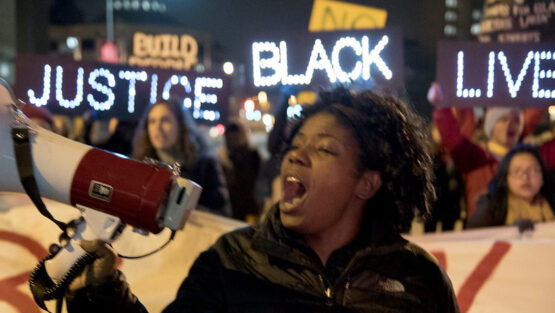
The shift reflects the pattern of white supremacist organisations being allowed to gain ground as a result of the upsurge in the Black Lives Matter movement, following a string of deaths at the hands of law enforcement officers in the US.

Trump has actively encouraged this trend. During Tuesday’s presidential debate with Democratic nominee Joe Biden, Trump was asked if he was willing to denounce “white supremacists and militia groups” and tell them to stand down amid violence that has marred anti-racism protests in some US cities.

Trump requested a specific name, and Biden mentioned the Proud Boys, an organisation that describes itself as a club of “Western chauvinists”.

“Proud Boys, stand back and stand by,” Trump said. The comment drew widespread criticism and was viewed by many to be a sign of encouragement for the group.  Trump has subsequently back pedalled, claiming that his comments were misinterpreted, but given his history of inflammatory comments on the subject of racism the ‘climb down’ appears to be little more than a PR exercise.

The terms of political debate in the US have shifted so far in the past four years that Trump can routinely characterise Joe Biden as a socialist.  In reality Biden, like Obama before him and every US President of modern times, is a representative of the super rich elite which are central to US politics.  An American presidency is never won without being bankrolled by the vested interests which are at the heart of the US finance and military industrial complex.

The Obama presidency, with its emphasis upon increased healthcare for the poor and a limited thawing of relations with Cuba, was about as liberal as the US bankers and corporations were prepared to allow.  Even that was too much for the neo-cons, who have channelled their agenda through Trump, turning his phoney ‘man of the people’ rhetoric to advantage while deepening poverty, increasing unemployment and killing thousands during the course of the pandemic.

More endless carping

23rd September 2020

Rees-Mogg wants a stop to “endless carping”

Less than a week after local authorities in the North East of England requested local restrictions, which were subsequently approved by the Secretary of State, Matt Hancock, the rest of England is now facing similar restrictions in the face of an exponential rise in the COVID-19 virus.  

Having spent the summer encouraging everyone to ‘eat out to help out’; go to the pub; go to the beach; return to town centre shopping; get back to work where they can; and take overseas holidays along so called air corridors, the government strategy of prioritising private wealth over public health is once again exposed.

The second wave of COVID-19, which is now officially acknowledged, was predicted by everyone except the government.  The exhortation to ‘control the virus’ was always doomed to failure.  The virus cannot be controlled.  It’s spread can be suppressed, through effective test, trace and isolate or its impact neutralised through the development of an effective vaccine.

While the vaccine option is not yet within reach, more effective test and trace has been demonstrated in various parts of the world, including China, Cuba, Vietnam and New Zealand.  It is little surprise that ideological bigotry will prevent the UK government taking any lessons from the first three of those countries but even the example of New Zealand, or for that matter South Korea or Germany, seems to be a step beyond the government’s capability.

As ever, the Johnson government has been too quick to listen to the interests of the breweries and alcohol manufacturers, euphemistically branded as the hospitality sector, rather than those of its own public health professionals.  The former saw the summer as an opportunity to cash in on fine weather, the easing of lockdown restrictions and the general desire of many sections of the population to get out of the house.

Public health professionals saw the summer as an opportunity to put in place an effective test and trace system, engage with local environmental health teams to gather intelligence, and prepare for the inevitable rise in COVID-19 cases over the autumn and winter period.  Not surprisingly, this did not happen on a wide enough scale.

It is widely held that the test and trace operation headed up by failed mobile phone company Chief Executive, Dido Harding, is a debacle.  Stories of people having to drive hundreds of miles for tests, only to find that sites are at capacity, are legion.  It is no use Tory millionaire Jacob Rees-Mogg suggesting that people should stop ‘endless carping’ about the failures of the test and trace system.  Unlike Rees-Mogg, most of those relying on tests are having to travel for miles, take time off work and then, if they need to isolate, potentially losing income they can ill afford.

There is the rub.  Apart from any systemic failures with test and trace there are the personal calculations families are making about whether or not they can afford to isolate.  Poverty is lurking and unemployment is just around the corner for many already on the breadline.  These are the realities for millions of working class families.  They have every right to ‘carp’ at a system which is failing to give them protection and is set to see thousands more die over the winter.

The government has once again implemented a series of measures which are too half hearted to have an impact.  Closing pubs and restaurants at 10pm is not enough, unless it is followed up with strict and well resourced enforcement action against businesses which continue to abuse the rules.  Failing that, closure altogether.  Visiting between households is no longer permitted in Scotland or the North East of England.  This needs to be a national position if chains of transmission are to be broken.

All of which needs to be implemented with a properly resourced and managed test and trace operation in place.  It is no good Johnson proclaiming that we are a ‘freedom loving people’ therefore it makes it difficult to enforce the rules.  That is simply baloney.  Keep the rules clear, simple, enforceable and applicable to all, even Prime Ministerial advisers, and they may begin to have an impact.

In the meantime, if the government are calculating that the current situation is to be with us for up to six months, a review of the furlough and other compensation schemes for businesses and individuals is essential.  Those hit hardest by the virus are those least likely to have the cushion of savings, multiple income streams or inherited wealth. A further tranche of short term support is vital. 

In the longer term it is not just systemic failures of test and trace but those of capitalism which need to be addressed.  For most people getting through their day to day lives and trying to keep up with the stream of obfuscation from the government is as much as they can manage.  However, people are increasingly seeing the realities of a system in crisis and once again, who is being made to pay.  Jacob Rees-Mogg and his ilk may not like the ‘carping’ but it is only going to get louder and, with the right leadership, more organised.

Shooting for the Moon

12th September 2020

COVID-19 – is the message hitting home?

Just when it seemed that the bungling incompetence of the Boris Johnson led UK government could not find new depths to explore, this week we were proved wrong.  As the infection rate for COVID-19 soars, doubling every seven days, ahead of a likely upturn in deaths in hospitals, communities and care homes, the UK Prime Minister announced Operation Moonshot.

In a Downing Street propaganda stunt, dressed up as a press briefing on Wednesday, Johnson announced new measures to tackle the pandemic, the most immediate being the so-called ‘rule of six’, whereby from Monday, 14th September in England gatherings, indoors or outdoors, will be illegal if they involve more than six people.  There are some exclusions relating to outdoor sporting events, the overall numbers allowed in restaurants and organised public gatherings, such as weddings and funerals, but the core principle for the public is, no more than six.

In addition, eventually catching up with Scotland, test and trace arrangements will be mandatory in England from the 18th September.  This is aimed at the widespread flouting of the voluntary test and trace arrangements, which have effectively been a case of take no test and leave no trace, as people pack out bars and cafes with little heed to social distancing thus generating an exponential spread of the virus.

None of this should be any cause for concern however.  Why? Because the government which brought us herd immunity; inadequate test and trace at the start of the pandemic; the scramble for sufficient and appropriate PPE for health workers; the failure to lock down soon enough; the easing of lockdown restrictions too soon; and the exam result and return to schools debacle; that very same government has now promised Operation Moonshot.

Moonshot will allegedly accelerate testing from the current 200,000 a day to 10 million a day by 2021 at the cost of a mere £100 billion.  The plan is for at least two to four million tests by December before full roll out in 2021.  Moonshot will allow those testing negative to go to mass events such as football matches without spreading the virus.  The government scientific advisory body Sage does acknowledge however that this will require “superb organisation and logistics with rapid, highly sensitive tests”, not qualities on display so far during the present crisis.

Sage also point out, though the government do not seem keen to publicise the fact, that mass testing “can only lead to decreased transmission if individuals with a positive test rapidly undertake effective isolation.”  Evidence to date suggests that this may be a big ask.

Still, why be sceptical?  As ever with this government we will be cradled safely in the arms of the private sector.  Deloitte, a major partner in the government’s current hugely successful test and trace programme, in which you can drive hundreds of miles to a test site, will be there!  Better still, at least sixteen other companies and university partners will be along to play.  Big pharma gets a look in with GSK, Smith and Nephew, as well as Astra Zeneca.   Sainsbury’s and Boots are in the mix from the retail sector, all of this with the aim of “buying their large scale capabilities to build a large scale testing organisation.”  Private sector snouts in the public finance trough.

Johnson is said to have compared the programme to the Manhatttan Project, the US drive to develop an atomic bomb, in a typical moment of bombastic self aggrandisement.  It is revealing that a project to save lives should in any way bear comparison to one to develop weapons of mass destruction.   

While the basis of Moonshot is the development of tests which do not need to be processed in a laboratory but, like a pregnancy test, can give a result in minutes there is as yet no reliable science to suggest this is achievable in the timescale outlined by the government.  In fact, Chief Scientific Adviser, Sir Patrick Vallance, said on Thursday,

“There are prototypes which look as though they have some effect, but they’ve got to be tested properly.  We would be completely wrong to assume this is a slam dunk that can definitely happen.”

A word in the Prime Minister’s ear perhaps?

The private sector continues to profit from the pandemic with sales of possible vaccines generating billions in revenue.  The UK alone has ordered 340m million doses of possible vaccine from six manufacturers.  The EU is alleged to have done a deal worth £2.2bn with one company.  The US programme, Operation Warp Speed, already has orders with six companies for 800m doses with options on another 1.6bn.  Currently 321 vaccines are being developed globally, of which 32 are at the clinical trials stage.

While the Western economies do their best to corner the possible vaccine market there are some mitigations for poorer countries.  The World Health Organisation (WHO) has set up the Covax programme, established to allow countries to share in the benefits of vaccine development, once working vaccines emerge.  There is also the ongoing vaccine development work in China and Cuba, where economies not driven by the interests of private sector profit will take a more supportive approach to the needs of developing nations.

Meanwhile in the UK, as the infection level climbs, the population are tied to a failed government, which has failed in its response to the pandemic so far, shooting for the moon. It would be funny if so many lives did not depend upon it.

Johnson has proved beyond doubt that he is a clown, but no-one is laughing.

Seismic change required

6th September 2020

Sell by date

Boris Johnson – past his sell by date even for the Tories?

Boris Johnson has carved out the unlikeliest of political careers based on bluster, bigotry and blagging his way out of a tight spot, like the class clown at a public school.  As the class clown, Johnson has been able to get by on a whim and a smirk, poking fun, getting the odd laugh and finding a way to scrape through when any tests come up.

Only in the English class system, with a private education, a privileged university and the right connections, could such a combination of attributes land you the top job in 10, Downing Street.

There was always the minor matter of becoming leader of the Tory Party and winning an election but Johnson has had the remarkable knack of being in the right place at the right time and the eye of opportunists throughout the ages of being able to adjust his politics to suit the moment. 

The right wing press and the BBC, now under fire for having too many left wing comedians, have been complicit in his rise.  A four year long assault on the politics of the Labour Party under Jeremy Corbyn, and the robotic performance of the Tories under Theresa May, helped many Tory MPs and party members buy into the illusion that Johnson was fit for leadership.

To suggest that the joke is wearing thin is to put it mildly.  Over 40,000 deaths from COVID-19 by the official count, inept handling of everything to do with the pandemic from late lockdown to lack of PPE, inadequate test and trace arrangements and confusion over the exams and return to school process, have left even Tory MPs wondering at Johnson’s incompetence.

The chattering classes are already talking up Chancellor Rishi Sunak as a successor, as Johnson is regularly out manoeuvred by Kier Starmer at Prime Minister’s Questions.  Resorting to accusing Starmer of being an IRA supporter this week, because he had served in Jeremy Corbyn’s Shadow Cabinet, even caused some blushes on the Tory benches.  Press outrage seems to have been confined to the accusation against Starmer rather than the slur against Corbyn.

Johnson was always a compromise for the British ruling class, a populist figure who could temporarily unite the Tories and be a focal point for opposition to Labour under Corbyn.  Having served his purpose UK ruling circles face a quandary.  Do they stick with Johnson through to the next General Election, by which time his character fault lines and political charlatanism will have been completely exposed, or do they change horses early to allow another leader to establish themselves?

The question is widely discussed in the columns of political commentary at the moment but for much of the nation the outcome will be academic.  Whoever leads the Tory Party will preside over another round of austerity in order to pay for the costs of the pandemic.  Rishi Sunak will soon be presenting a budget which will take the first steps down that road.  Unemployment over the 3 million mark already looks likely by Christmas, as the furlough scheme comes to an end.

As it stands, a Labour Government under Kier Starmer is unlikely to change that trajectory.  The desire to live up to some right wing media, Bank of England and City of London definition of economic competence will freeze out any radical thinking from a Labour manifesto, effectively taking us back to a choice over who can manage capitalist austerity most competently.  Competence being defined as the least threatening path for existing ruling class interests.

That can all change.  Pressure from within the Labour Party and mass extra parliamentary action to resist an austerity programme which makes the poor pay, more than they do already, for the pandemic is possible and is certainly desirable.

As the party conference season looms the first formal signs of how the Tories and Labour are looking to set out their stalls will become evident.  Popular pressure must build to make those who can afford to, pay their share.  Redefining economic competence, as running an economy by, for and in the interests of the working class must also be a battle cry going forward. 

Mealy mouthed words about ‘heroic’ health workers will no longer cut it.  For any change to be meaningful it needs to be seismic.  Labour need to grasp that reality.

Black Lives Matter, not just black votes

29th August 2020

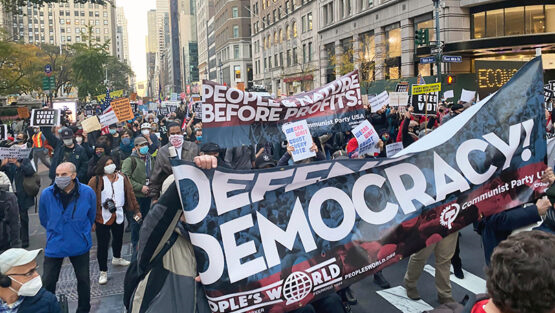
Protesters in Washington, 28th August 2020

No one thinks Joe Biden is a radical.  He certainly does not.  His address to the Democratic Convention last week was all Mr Middle America.  Mr Don’t Rock the Boat.  Mr Mainstream American Dream.  Nowhere did he suggest, or even hint, that he was Mr Radical.  He got the Democratic nomination precisely because of his lack of radical credentials.  In short, he was not Bernie Sanders.

The Republicans for their part are doing their best to portray Biden as a radical.  A vote for Biden, they claim, is a vote to open the floodgates to a socialist America, an America of conflict, an America in which opportunity is trashed and the State steps in to make every decision for you.

Any reasonable person will of course see this as arrant nonsense but that is not the audience to whom the Trump team are playing.  Trump is playing to an audience he expects to believe when he says,

“I say very modestly that I have done more for the African-American community than any president since Abraham Lincoln.”

To be fair, that is not a very high bar, given the record of successive US Presidents on the race question but it is still a bold claim, especially in the context of recent events and the growing momentum behind the Black Lives Matter protests.

Trump is also bold enough to claim that he took “swift action” to control COVID-19, in spite of the US death toll now being at 181,000 with more than 1,000 people dying every day.  However, in a world where your target vote gets its news diet from Fox News and Breitbart any relationship with reality is at best tangential.

The campaign to mobilise against  racism and for reform of policing in the United States continued yesterday with the Get Your Knee Off Our Necks March, timed to coincide with the 57th anniversary of the March for Jobs and Freedom in 1963, which culminated with Martin Luther King’s famous, ‘I have a dream…’ speech.

Organised through the National Action Network under the slogan ‘No justice, no peace’ the march mobilised a powerful lobby of speakers from the families of those who have most recently been victims of racist policing methods in the US.  Many moving declarations and expressions of solidarity followed but little in the way of political analysis or any explanation that systematic racism is endemic to capitalism in the US, as it is elsewhere in the world.

The suffocation of George Floyd on 25th May brought the Black Lives Matter movement front and centre into America’s homes. However, black people are dying quite unnecessarily in the United States in other ways.

Life expectancy is far shorter and infant mortality far greater for U.S. blacks, for example, than for white people.  The COVID-19 pandemic is having a disproportionate impact upon the black community as more people from ethnic minority backgrounds play key roles in frontline health and care services.

W.T Whitney, writing recently in the US People’s World observed that,

“Racism serves as an adjunct to classed-based oppression. Causing pain, racism works for maintaining social-class boundaries. The combination of the two has resulted in Black people being relegated to a generally precarious role within U.S. society and remaining vulnerable to lethal violence.”

This is the reality which the Black Lives Matter movement ultimately has to come to terms with if it is to make progress and really make an impact upon the shape of society in the United States. 

In the short term the exhortation is to get the black community to register and then to vote on 3rd November to get Donald Trump out.  The Trump camp are already preparing their response.  Wheeling out conservative blacks who applaud the United States as the land of opportunity, while condemning violence in black communities, thus portraying victims as perpetrators, is one tactic.  Portraying a Joe Biden presidency as the gateway for an unleashing of all the evils of the world is another.

Getting Trump out would undoubtedly be a step forward.  Whether Biden can make any great strides in terms of tackling racism and inequality in the United States, even if he really has the inclination, will depend upon the momentum the Black Lives Matter movement can continue to build.

The extent of change that Black Lives Matter can affect will in turn be dependant upon the extent to which that movement becomes class conscious, recognising the need for the unity of the black and white working class if progress is to be made.

The Democrats will embrace Black Lives Matter to the extent that it serves their purpose, to get rid of Trump.  History shows however that it is not so much black lives as black votes that matter in US elections.  It will certainly take a movement more radical than anything Joe Biden is likely to acknowledge to move on from that position.     

Privilege is the priority

18th August 2020

students

Students opposing the A level results debacle

The failings of the Boris Johnson government become more evident daily, as one debacle follows another and control remains just out of reach at every turn.  The handling of the COVID-19 pandemic has been a calamity at every level for the working class, ethnic minorities and the elderly in care homes.  The death toll includes very few from the leafy suburbs and gated properties of the rich, while thousands who started out in poor health and poverty have paid the ultimate price.

There is little, if any, indication that the government cares about this.  The welfare of the poor has never been high on the agenda of any Tory government, even the most benign, and Johnson and his cronies will not be winning any accolades in that regard.  While not quite at the level of the systematic destruction of working class communities in the Thatcher years, Johnson is clearly more closely aligned with that brand of Conservatism than any so called One Nation approach.

Talk of ‘levelling up’ is purely that, talk to keep the newly elected Tories in Northern seats onside, in the hope that a few crumbs from the Westminster table will fall their way and they might scrape through into a second term in Parliament.   There is not, and never will be, any levelling up with the Tories for the simple reason that their whole raison d’etre is to ensure that the playing field is not level, that their class interests are defended and their privileges are protected.

None of this will every appear in any manifesto.  Just as their racist immigration policies, antipathy to local government and craven adherence to weapons of mass destruction over social investment and hospitals, will never appear in black and white in those terms.  Credit where it is due, the Tories have always been smarter than that.  Their core strategy of keeping enough of the people fooled, enough of the time, with a helping hand from a compliant BBC and right wing press has generally paid off.

Home ownership, share ownership, a stake in the country’s wealth, private health schemes, more private cars than ever, get rich, win the lottery; all holding out the hope to people of jam tomorrow. A flurry of Royal Family sagas and more war anniversaries and commemorations than anyone thought possible in recent years have also reinforced a national narrative that plays into the narrow jingoism of the Tory nationalists.

When did VJ Day ever merit two minutes silence?  Certainly, no discussions have featured the US war crimes in Hiroshima and Nagasaki, as part of the ending of the Second World War narrative, over the past weekend.

The government is now embroiled in a debacle over A level exam results, with what can only be seen as a class based algorithm handing out lower grades in underprivileged areas, while reinforcing top grades for the private school sector.   It is being presented as a problem with regulator Ofqual but is part of a wider picture of reinforcing the privilege of those who ‘expect’ university places, rather than those who deserve them on merit.

In a further move to reinforce its support base part of the function of Public Health England will be hived off to be merged with the NHS Test and Trace organisation, to be led by Tory peer Baroness Harding.  Test and trace is currently being run by private sector sharks Serco and Sitel, yet another example of profit from public health being put ahead of public health itself.  How much the private sector has made from government contracts throughout the pandemic will be a revealing calculation.

There is no levelling up, there is no people’s government, there is pocket lining and reinforcement of privilege.  The Tory leopard cannot and will not change its spots.  A less compliant Labour leadership would be landing blow after blow, exposing the scandal of the government’s handling of the entire pandemic, calling for investment in public health rather than shoring up opportunities for more private wealth.  The Opposition needs to find some bite to its strategy to oppose.