China on their minds

11th June 2021

Bonhomie and bluster – Biden and Johnson meet ahead of the G7 in Cornwall

The notional leaders of the so-called free world gather this weekend at the G7 summit in Cornwall to discuss the big issues of the day.  Climate change, the COVID-19 pandemic and security threats, real or perceived, are all likely to feature as part of the agenda.

In foreign policy terms US President Joe Biden has made the promise, regarded by many as a threat, that ‘America is back’.   The phrase certainly rang hollow in the streets of Gaza recently, as US manufactured missiles rained down upon a largely defenceless population, courtesy of the Israeli Defence Force. 

It certainly plays no better in the ongoing humanitarian catastrophe in Yemen, fuelled by US and UK weaponry, with the Saudi dictatorship this time pulling the trigger.

The UK press has already been effusive about the initial meeting between Biden and British Prime Minster, Boris Johnson, with Johnson himself describing the meeting with Biden as being like a “breath of fresh air.”  The Trump presidency did not set the bar too high in that respect so Biden is going to score initially for simply not being Trump.

The new President’s easy manner and natural bonhomie will no doubt endear him to the liberal press, always desperate to find a glimmer of hope that the leaders of the so called free world can co-operate, can come up with equitable solutions to global problems, can put aside the cut-throat competition which is the basis of capitalism and deliver something new.

It is a hope which can occasionally find its moment.  In World War 2 the forces of capitalism had allowed their usually caged attack dog, fascism, to get out of control and present an existential threat to the world order.  Only through co-operation with the Soviet Union, pragmatically regarded by the West as the lesser of two evils, could the fascist threat be put back in its cage.  It did not take the West long to revert to type however, initiating the Cold War against the Soviet Union and forming the aggressive NATO military alliance as its spearhead.

Following the defeat of the Soviet Union in 1991 however, having supported the forces which turned back the clock on socialist development, initially through the drunkard Yeltsin and subsequently the autocrat Putin, the re-establishment of capitalism in Eastern Europe was not something the West could easily argue against.  The transformation of anti-Sovietism into the routine anti-Russian sentiment which is the common currency of Western politics took a little more time.

The manoeuvrings of Vladimir Putin to retain political control at all costs has made the task of demonising Russia that much easier.  Accusations of interference in elections and of the political assassination of enemies abroad have contributed to the picture being painted of a Russian threat.  Russian actions in the Ukraine, Crimea and intervening at the request of the Assad government in Syria have, for many in the West, sealed the deal, if indeed the deal was ever in doubt.

The extent to which the G7 may agree to co-operate is, of necessity, predicated upon the concept of there being an external threat, against which the economic might of the G7 and the military power of NATO must be in a state of readiness to repel.  The Cold War narrative, subscribed to across the political spectrum, was to hold back the tide of communism, embodied by the Soviet Union.

There is certainly no dissent in the G7 that Russia is anything other than a threat to Western interests.  Capitalism is nothing if not competitive and even a relatively weak capitalist state such as Russia represents a potential threat.  Added to this is the new dimension of the growing economic and technological threat which China poses.

Free from the pressures of monopoly capitalism, China was for many years a source of low cost consumer goods for Western markets. This could be tolerated as being no threat to the market dominance of Western corporations.  That is all changing.

The challenge which Chinese technology represents to the US hi-tech sector has resulted in the pressure to squeeze Huawei out of the 5G market and increase reliance upon US manufactured components.  Chinese investment in South America and Africa is seen by the West as a threat to the interests of Western corporations, while the Chinese Belt and Road programme is seen as a direct challenge to the stranglehold of the West, and its proxy fronts the IMF and World Bank, upon developing economies.

Amid the backslapping, sun bathing and beer swilling of the G7 summit some warm words about tackling the pandemic and addressing the climate crisis will no doubt emerge.  Commitments on both will no doubt find their way onto the summit’s final communique. By all accounts any reference to China will be missing.

There is little doubt however, that on the return flight home on Airforce One, it is China that will be on President Joe Biden’s mind.

Global tax and worker’s fightbacks

6th June 2021

Amazon – what price prime delivery?

The G7 Finance Ministers of the world’s richest nations, meeting in London this weekend, have agreed to a Global Tax Reform programme which will see more revenue being raised from corporations which operate across national boundaries.  

Finance Ministers have agreed the principles of a two Pillar global solution to tackle the tax challenges arising from an increasingly globalised and digital global economy.

Under Pillar One of the agreement, the largest and most profitable multinationals will be required to pay tax in the countries where they operate, not just where they have their headquarters.

The rules would apply to global firms with at least a 10% profit margin and would see 20% of any profit above the 10% margin reallocated and then subjected to tax in the countries they operate.

Under Pillar Two, the G7 also agreed to the principle of at least 15% global minimum corporation tax operated on a country by country basis, with the aim of cracking down on tax avoidance.  The agreement will now be discussed in further detail at the G20 Financial Ministers & Central Bank Governors meeting in July.

The new system is being touted by the UK government as one which will raise more tax revenue from large multinationals and help pay for public services in the UK.

The principle of taxing international corporations more fairly is one which cannot be opposed though whether that means that such corporations will in reality be paying their fair share remains to be seen.  The scope for clever accountants finding loopholes in the declaration of profit margins has yet to be tested.

The basis upon which the profits of these corporations are generated is also open to question, with minimum wages and poor working conditions often being key to maintaining profit margins.  Recent evidence of Amazon workers using bottles and bags, for fear of not meeting targets if they took toilet breaks, are just one example.

Amazon has been the particular focus for debate about unionisation recently.  No Amazon warehouses in Britain for example are unionised.  The Unite trade union has said that Amazon workers should be able to join a union of their choice “without fear”.  The comments follow a case in Alabama in the United States where workers at an Amazon warehouse voted against unionisation.

However, the RWDSU union, which organised the Alabama effort, accused Amazon of illegally interfering in the vote and lying about the implications of unionisation in mandatory staff meetings.

While Amazon denies the claims, it did hire anti-trade union consultants before the ballot.  In September 2020, Amazon had posted two job adverts for intelligence analysts to track labour “organising threats” in the US.  Spanish media reports have also claimed that Amazon had used private detectives to spy on a strike at a warehouse near Barcelona in 2019.

While Amazon had its most lucrative year ever in 2020, helped by a surge in online shopping during the pandemic, it also faced allegations over poor working conditions, as well strikes at warehouses in the US, Italy and Germany.

The Amazon UK workforce reached 40,000 last year and while there are individual trade union members amongst them, there are no recognised union collective bargaining rights at any Amazon workplaces.

Unite executive officer Sharon Graham has written to Amazon boss, billionaire Jeff Bezos, urging him to sign up to a declaration allowing workers the freedom to join a trade union, she wrote,

“Although we do have members in Amazon, workers in your company are not currently free to join a union without fear and without obstruction and propaganda being deployed against them.  So I am asking you to sign up to and abide by the declaration attached, which guarantees British and Irish workers the freedom to talk with and join unions without fear of retribution.”

There is no indication to date that Bezos has responded.

Amazon’s global profits have increased almost 200 per cent from 2019, and CEO Jeff Bezos added £51 billion to his personal wealth during the pandemic. A fulfilment centre employee at Bad Hersfeld, one of Amazon’s German sites, earning €10.40 per hour (£8.95), would have to have worked since around the beginning of the last ice age, approximately 2.5 million years ago, to make as much.

This particular plant does offer some hope however. In 2013 Bad Hersfeld became the first Amazon fulfilment centre in Germany to unionise. Two years later, it was the founding place of Amazon Workers International (AWI), an organisation that has members in 175 fulfilment centres worldwide.

The G7 global tax reform may be the issue which will grab the headlines this weekend but the struggle on the ground, in Amazon and a whole range of other corporations, for better pay, terms and conditions for the workers generating those profits continues.

The blame game

30th May 2021

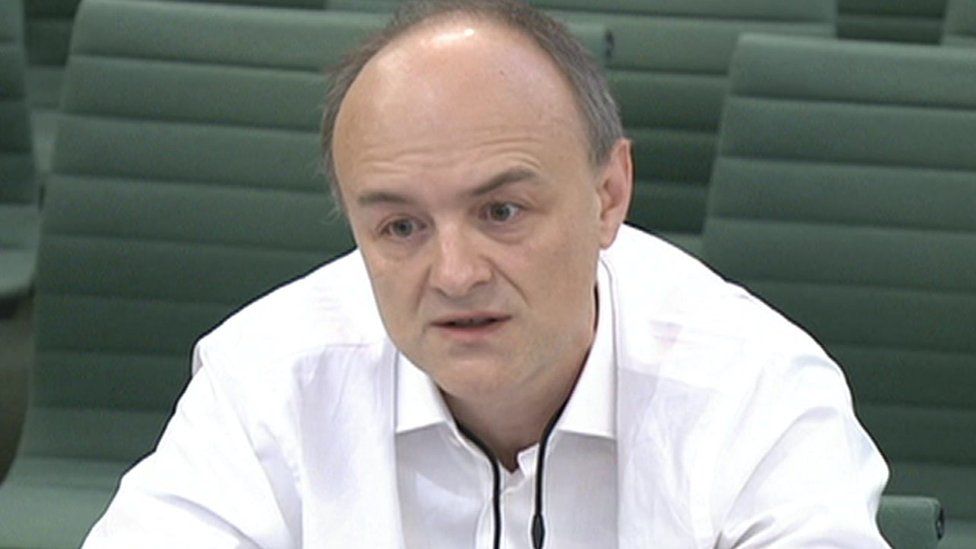
Dominic Cummings – keen to point the finger

With 128,000 dead, the highest of any country in Europe, and a third wave bubbling up as the Indian variant of the COVID-19 virus becomes the dominant strain, the British political class is indulging in an undignified display of finger pointing in order to pass the blame.  The appearance of former Prime Ministerial adviser, Dominic Cummings, before a Commons Select Committee this week has been the source of most of the domestic news generated.  More will no doubt emerge as the Inquiry continues.

Cummings has been working hard to lay the blame for the inept handling of the pandemic in the UK at the door of anyone but himself.  Boris Johnson is, according to Cummings, unfit for office, hardly a news headline. Health Secretary, Matt Hancock, is a serial liar who should have been sacked on at least 15 or 20 occasions, takes one to know one, is the phrase which springs to mind here.  

Cummings’ change of heart is disingenuous to say the least.  He was right at the heart of the decision making, at the start of the pandemic and for crucial months into it, before he became the scapegoat Johnson needed to try and cover his own ineptitude.

The joint inquiry of the Health and Social Care Committee and Science and Technology Committee has been established to consider what lessons can be drawn from the Government’s handling of the pandemic that could be applied now and in the future.

MPs are expected to focus on decision-making in the early months of the pandemic; the level of scientific evidence available to the Government; its border policy; and the effectiveness of its public health messaging and communications. The timing of lockdowns and other restrictions, procurement processes, and decisions about community testing and contact tracing are among other issues expected to be addressed.

Cummings’ responses to the Select Committee merely confirm what has been known for some time but the BBC and right wing media are at pains to cover up; that the government’s initial strategy was one of herd immunity, that there was not a functioning system to monitor infection in the early days of the pandemic, that indecision mean the lockdown came too late, that the test and trace arrangements once established were too little, too late.

That Johnson and his cohorts have blood on their hands for the handling of the pandemic is not in doubt but Cummings, in spite of being at the centre of decision making for key periods, is keen to distance himself from any culpability.

There is one point where Cummings touches upon the truth, when he states,

“There is no doubt that the prime minister made some very bad misjudgements and got some very serious things wrong. It’s also the case, there’s no doubt, that he was extremely badly let down by the whole system. And it was a system failure, of which I include myself in that as well. I also failed.”

The system to which Cummings refers is the decision making system within Whitehall, where the realities of the scale of the pandemic were not taken seriously until it was too late.  The real systemic failure is however, far greater.  The failure is a failure of capitalism itself.  The corruption and cronyism, which has characterised much of the handling of the pandemic, is endemic in a system which puts profit before people, which puts the needs of the economy before the interests of public health.   

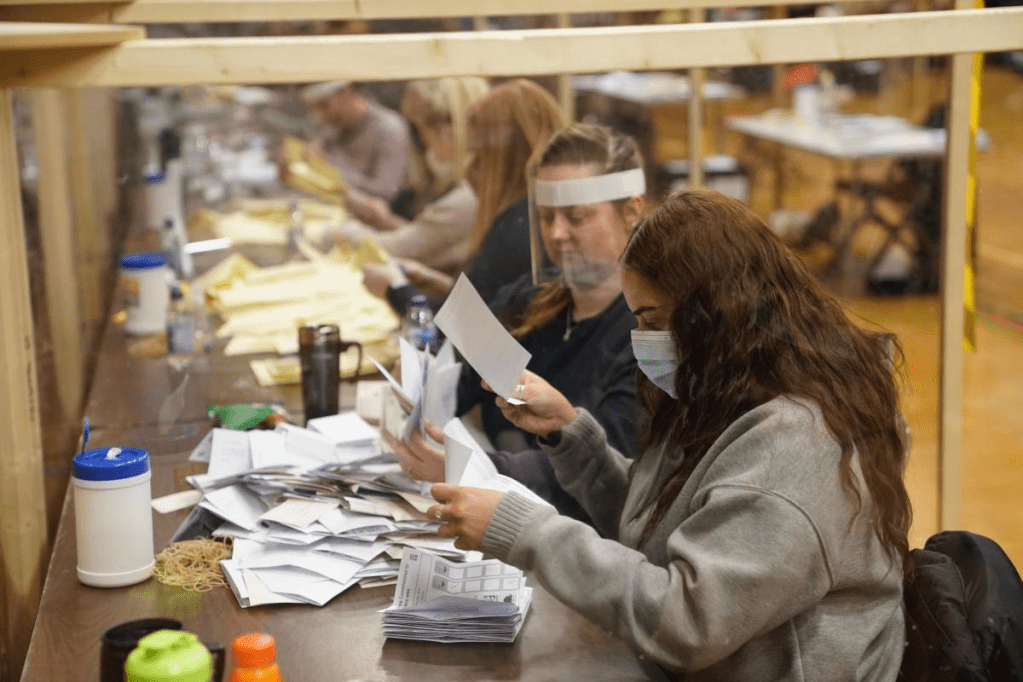
The great tragedy in all of this, apart from the thousands of unnecessary deaths, is that large sections of the public see no alternative.  A midweek opinion poll saw the Tories lead rise six points to 44%, over a Labour Party whose performance throughout the pandemic was reflected in its abject showing in the local elections earlier in the month.

The irony is that it is the community driven vaccination programme which may save Johnson and his cronies, as the public seek to put the misery of lockdowns behind them and look to the future.   The Select Committee will do its work but how damning its will be of the government’s action remains to be seen.

The Official Opposition on the other hand remains largely supine, pleading that it cannot be too harsh on the government at a time of pandemic, as that may go against the spirit of national unity.  The fact is that Kier Starmer and the Labour Front Bench are being taken to the cleaners while Johnson and his cronies are, quite literally, getting away with murder.   

Stick with the data not the dates

23rd May 2021

Surge testing – increased across the UK

The race to extend vaccination to younger age groups across the UK, to stop the spread of the so called Indian variant of the COVID 19 virus, has stepped up a gear in the past week.  Six local authority areas are part of a surge testing programme, with mobile testing units and vaccination buses being provided, to increase take up of the vaccines.  More could follow as infection rates associated with the variant continue to increase.

Latest scientific evidence appears to suggest that both Astra Zeneca and Pfizer vaccines are almost as effective against the Indian variant as against the currently more prevalent Kent variant.  This has led Health Secretary, Matt Hancock, to pronounce that the government is still on target for its roadmap date of 21st June for lifting restrictions on work, travel and social distancing.

While the more widespread availability of vaccination is clearly necessary, the official optimism displayed by Hancock regarding the roadmap appears to fly in the face of the governments own mantra to follow the data, not the dates.

The Sunday Times estimated recently that the UK government’s failure to close the borders with India soon enough, because Boris Johnson did not want to offend Indian Prime Minister, Narendra Modi, while negotiating a trade deal, allowed in at least 20,000 passengers from India to the UK.  This was at a time when other countries such as New Zealand and Hong Kong were completely stopping all flights from India.

The World Health Organization has identified the virus which originated in India, B.1.617, as a “variant of concern” because it is at least as transmissible as the Kent variant, potentially even more so.  This means it can spread through the unvaccinated population in particular more quickly and potentially accelerate out of control, hence the current race for vaccination.

With indoor social mixing having increased since the 17th May, with the doors to pubs, restaurants and performance venues being open, the conditions for viral spread are far greater than the recent lockdown period.  The potential for a significant third wave of the pandemic is a real possibility.

While public health issues should be front and centre in the midst of a pandemic the Tories, as ever, have one eye on their voter popularity and the wishes of their industry backers.  For many in the Tory camp opening up the economy, almost at any cost, is still the number one priority.  Popular pressure to allow foreign travel, fuelled by intense lobbying from the airline industry, is also pushing the government to be less rigorous than it should in relation to international travel.

The traffic light system currently in place makes little sense and appears to have little logic to it.  A much clearer position would be to ensure that international travel, both into and from the UK, is conditional upon proof of full vaccination and a negative PCR test.  In the short term the emphasis must be on travelling only for essential family or business reasons, rather than encouraging the mass take up of beach holidays.  

At the end of the day, the virus moves when infectious people move, and unless it is possible to be sure that those on the move are not infectious, the clear position should be that people stay put.  Avoiding a third wave and another national lockdown is in everyone’s interest, for economic reasons, but also to protect the mental health of many who have suffered social isolation and loneliness during the lockdown periods.

More important still however is the need to prevent further unnecessary pressure upon the NHS through hospitalisation and to reduce unnecessary deaths. This is especially the case as the vaccination programme is offering hope and, through the efforts of locally co-ordinated NHS, public health and community volunteering, is making a difference.  With the prospect of the finish line in sight the need to stay focussed on the data, not the dates, is more important than ever.  Otherwise, the perceived short term gain will not be worth the long term pain.

Existential threat to Palestine

15th May 2021

Palestinian youths contemplate the consequences of Israeli bombardment of Gaza

There is not an equivalence of blame, firepower or destruction in the current conflict in Gaza.  One of the world’s most powerful armed forces, the Israeli Defence Force, is bombarding Gaza City.  The city is the main centre, with a population of about 500,000 on a strip of land of 140 square miles which is home to 2m people.  Israel has been illegally occupying Gaza since 1967 and effectively blockading since 2008, controlling airspace and access by sea to prevent legitimate supplies of food, medicine and machinery.

Gaza City has been described as an open air prison.  While notionally governed by Hamas, as part of the Palestinian Authority, the extent to which Israel controls the lives of those in Gaza and the occupied West Bank amounts to the behaviour of an occupying force.

The outbreak of violence this week erupted when the Israelis implemented the further forced removal of Palestinians from East Jerusalem and effectively attacked the al-Aqsa mosque, which has been the centre of Islamic worship in Jerusalem for hundreds of years.

The Palestinian death toll has risen to 137, including eight killed and fifteen injured in an Israeli attack upon the al-Shati refugee camp, early on Saturday morning.

The Israeli regime continues to be deaf to calls for a ceasefire or any mediation.  With the Egyptians being prepared to broker a deal, the response of the Israeli Defence Minister, Benny Gantz, was trenchant, stating,

“Israel is not prepared for a ceasefire.  There is currently no end date for the operation.  Only when we can talk about complete quiet can we talk about calm.”

Response in the West has been typically biased, seeking to express concern over the scale of the Israeli ‘response’ while condemning Hamas rocket attacks into Israel.  Foreign Office Minister, James Cleverly, has described the Hamas rockets targeting Israel as “acts of terrorism”, suggesting that Israel has an absolute legitimate right of self defence.  Quite whether the UK government sees the same absolute legitimate right extending to the Palestinian population remains unstated.

The response of the United States has been to use its veto to block a unified United Nations Security Council statement on the situation, in spite of the warning from Tor Wennesland, the UN’s Middle East envoy that,

“The cost of war in Gaza is devastating and is being paid by ordinary people.  Stop the fire immediately.  We’re escalating towards a full scale war.”  

Attacks upon Arab-Israeli communities across Israel are escalating as right wing Jewish groups destroy Arab homes and businesses.  This represents a new dimension to the conflict.  While the Israeli regime has effectively operated a system of apartheid in relation to Arab-Israeli’s, an estimated 20% of the population, a degree of peaceful co-existence has prevailed, as long as Arabs do not challenge their status as second class citizens.   

This weekend marks the anniversary of the nakba, the Arab word for catastrophe, marking the day in 1948 when the birth of the Israeli state meant the dispossession of Palestinian land and 700,000 Palestinians had to flee into exile, in the surrounding states of Jordan, Lebanon and Syria.

Benjamin Netanyahu, Israeli Prime Minister, is not known for backing down.  He is also in the middle of coalition negotiations following recent elections in Israel, seeking to form his fourth administration.  Fanning the flames of conflict and playing the ‘strongman’ card in the face of what he characterises as Palestinian violence may be, in Netanyahu’s view, his best chance of hanging onto power.

Netanyahu claims that the Israelis are targeting Hamas commanders and is trying to pass off the operation as a purely military exercise to combat ‘terrorism’.  The increasing death toll of innocent civilians, women and children, clearly non-combatants by any stretch, gives the lie to Netanyahu’s claims.

The Israeli regime regularly drums up both domestic and international support by demonising those who question its policies and flagrant disregard for international law and UN resolutions, as presenting an existential threat to Israel.  The real existential threat however, is not to the Western backed and massively armed state of Israel, it is to the largely defenceless Palestinian people themselves and their hopes for a state of their own.

Hartlepool makes a monkey out of Starmer

8th May 2021

Votes stack up for the Tories in Hartlepool

The town of Hartlepool has, up until now, mainly been famous for the story about the locals hanging a monkey during the Napoleonic wars, thinking it was a Frenchman.  The tale has become symbolic of Hartlepool’s insularity and relative isolation on the North East coast. 

The resounding by-election victory for the Tories this week did not come about because the people of Hartlepool thought local Labour candidate, Paul Williams, was a Frenchman, though his pro-EU views in a staunchly Brexit leaning town will not have helped.  They are part of a long term decline in allegiance to Labour in its heartland areas, a tide briefly stemmed in the 2015 – 2017 period of Jeremy Corbyn’s leadership, but one which appears to be accelerating under Kier Starmer.

Ironically Starmer is largely the architect of his own downfall in this respect.  When the political establishment took fright at Labour building a mass membership base from 2015 onwards, shattering Theresa May’s majority at the 2017 General Election, Starmer was quick to fall in behind the establishment view that the groundswell for change, which took Jeremy Corbyn as its figurehead, must be stopped.

Corbyn’s rapid rise had been built upon a recognition by many that the leadership of Labour had become politically synonymous with the Tories, offered little different by way of policy and even less difference for many in practice.  As a long standing back bencher, often defiant of the leadership and trenchant in his views, Corbyn did offer a genuine alternative.  The policies and programme which Corbyn and the team around him built reflected a genuine shift to the Left and the possibility of beginning to challenge some of the long held shibboleths of the political establishment.

Crucially, Labour under Corbyn was committed to honouring the outcome of the Brexit referendum, a position central to many in Labour’s working class base, who saw the EU much in the same way as they saw the respective Party leaderships, the privately educated classes booking the best seats on the gravy train.

By 2017 Labour was effectively being led by a Left wing populist committed to leaving the EU based upon the referendum outcome.  The fact that the establishment had failed to manipulate the Brexit outcome in its favour was bad enough, leaving the EU was never really part of the plan.  The prospect of Corbyn and his team being in charge of those negotiations was even more frightening.  Something had to be done, so the campaign to vilify Corbyn, question his patriotism, accuse him of links with terrorists, ramp up the anti-Semitism smear campaign, shifted through the gears with remarkable speed.

Targeting what were clearly a set of popular policies for change was not going to cut it.  Corbyn had to be attacked at his ethical base and to be subject to a barrage of character assassination.  If it was not called Operation No Smoke Without Fire, it could have been.

Starmer joined the fray by becoming a leading light in the so-called People’s Vote campaign, seeking to overturn the referendum result, pushing Labour into an indefensible position by the time of the 2019 General Election and, along with the widespread vilification of Corbyn in the establishment press and inside sections of the Labour Party, effectively brought about the cataclysmic result in that election.

The Tories on the other hand had learned some different lessons.  Seeking to ride the wave of popular desire for change, placing a demagogue with election success behind him in London Mayoral elections and as the figurehead of the Leave campaign, saw Boris Johnson’s rise to the leadership of the Tories.

Although a dyed in the wool Old Etonian and establishment figure, Johnson has enough nous to recognise that playing to the gallery is likely to garner as much support as forensically worked out policy positions.  Being a journalist by trade and media personality by default Johnson is also adept at working a crowd and projecting persona as the key election issue.  Like the fake ‘bloke down the pub’ populism that was the basis of stockbroker Nigel Farage’s appeal to sections of middle England, Johnson covers his privileged roots in talk of levelling up, praising the great people of the North East and looking forward to a pint when the pubs open.

Sidestepping the fact that his government has presided over thousands of unnecessary deaths from the COVID pandemic, Johnson points to the success of the vaccination programme and asks us to look towards a sunny future.  He deludes the people of Hartlepool and elsewhere that his government is committed to a vague notion termed ‘levelling up’, when it will do no such thing.  For Johnson that does not matter, if it wins him the next vote.

Meanwhile Starmer’s anonymity is resounding.  He makes no policy impact, projects no personality, offers nothing but a return to the politics of business as usual, rejected as failed by Labour supporters since 2015 but beloved of the political establishment, as presenting no threat to the status quo.

To get a measure of the depth of the abyss into which Labour is staring it need to look no further than Scotland.  The abandonment of the politics of supporting working class communities and challenging the Tories in Westminster has opened a fissure within which the mould of the Scottish National Party has been allowed to grow.  The blind alley politics of leaving the UK only to join the EU has gathered momentum as the only feasible alternative to Tory diktat for many Scottish voters.

The SNP have only been able to gain so much ground because Labour has presented little in the way of an alternative for Scottish working class voters.

Following Labour’s defeat in Hartlepool the hapless Shadow Communities Secretary, Steve Reed, was fed to Radio Four’s Today programme to account for Labour’s defeat.  Interviewer Nick Robinson’s Tory roots are well known but he barely had to break sweat to have Reed running in circles.  His only answer to what Labour had to do to turn things round was to quicken the pace of change, a euphemism for continuing to purge the Left and pursue the failed policies of the Labour right wing of old.

Kier Starmer has subsequently said Labour needs to move its HQ from London to show that it will be a Party for all of the people.  Really?  Will that make a difference?  Starmer has also said that Labour must listen to people and respond to their views.  Up to a point.  Labour needs to be in touch with its roots but as a political party cannot go forward being only committed to abdicating responsibility to the views of the moment, subject as they may be to change and manipulation.

Labour needs to set out a political programme based upon its assessment of the needs of the working class and then set out to argue the case for that programme.  It needs to be more rooted in local communities and be seen as the natural ally of those in need at all times, not just when an election is around the corner. 

Labour needs to recapture the territory it has surrendered since 2019 and project itself as the party of real change, the real alternative to sleaze, corruption and cronyism, the real option for the many, not the few.  Starmer may move the HQ and reshuffle his front bench but that will not be enough.

The charge sheet continues to grow

1st May 2021

The charge sheet continues to grow

Boris Johnson – will bluster and windbagging be enough?

Did Boris Johnson really exclaim late last year, “no more fucking lockdowns – let the bodies pile high in their thousands”?  Unnamed ‘sources’ claim they were in the room when he did.  Even the usually Boris backing Daily Mail has been repeating the claims.  The BBC has been unable to avoid the story. 

Johnson’s outburst has vied for media coverage with his latest faux pas, the redecoration of his Downing Street residence, at a cost of £58,000, subsidised initially it is alleged, by Conservative Party donor Lord Brownlow.  Johnson now claims to have covered the cost from his own pocket.  When asked in the House of Commons whether he made the now famous bodies piled high quote Johnson responded with an emphatic “no”.

Twisting, turning and openly lying his way out of a tight spot comes so naturally to Johnson that monumental levels of mendacity at the highest level in British government, while still warranting headlines, do not yet appear to ignite into a scandal.

Sleaze, cronyism and lying are nothing new to the political establishment as the history of slave trading, Empire and exploitation upon which Britain’s wealth is based can testify.  Even more recently the dodgy weapons of mass destruction dossier, the occasion for which Tony Blair sent thousands to unnecessary early deaths in Iraq, was a clear fabrication for which no one has been held directly responsible.

Johnson’s home decorating travails have an underlying significance in getting to the bottom of who pays for what and in whose pocket the Prime Minister of the day may be when it comes to critical decisions.  Yet at times the story appears merely as the sub plot to a soap opera which casts Johnson as the beleaguered man, haplessly manipulated by his scheming girlfriend insisting on £800 a roll wallpaper.

Various inquiries are underway.  Johnson’s characteristic bluff, bluster and windbagging may not be enough to see him thorough.  Whatever influence Carrie Symonds may exert in Downing Street it can only be predicated upon a government which is weak, lacking direction and cares little about the people it is meant to serve.  Typical Tory self serving moral vacuity is nothing new.  It is just that it has seldom been so blatantly on display.

The British media meanwhile, in its universal eagerness to applaud the success to date of the vaccination programme, appear to have missed the point that, whatever Johnson may have said, the bodies have piled high in their thousands.   While the appalling situation in India occupies the news bulletin headlines the official body count per 100,000 population still remains far higher in the UK.

Some attempt to halt the collective amnesia the media are attempting to generate about the pandemic is being made by those calling for a public inquiry into its handling.  The healthcare thinktank the King’s Fund and the Institute for Government (IfG) have both called for an immediate statutory inquiry starting as early as September.

The IfG has stated that,

“Decisions made by the Johnson government have led to more deaths, more economic harm and cost more livelihoods than we might have seen otherwise.  This and future UK governments need to learn from what happened and change as a result in preparation for future crises.”

Those demanding an inquiry include the British Medical Association, the TUC, the Archbishop of Canterbury, Labour leader Kier Starmer and the COVID-19 Bereaved Families for Justice group.  Johnson insists that now is not the right time for an inquiry, as he continues to try and maximise the PR value of the successful vaccination roll out.

Political memories can be notoriously short and without an inquiry it may be lost that Johnson skipped five Cobra meetings as the pandemic gripped; gave the go ahead for the Cheltenham Festival and the Liverpool v Atletico Madrid game, leading to significant spikes in infections; spent £849m on the infection spreading “eat out to help out” scheme; and has blown £37bn on a test and trace system which has turned out to be anything but “world beating.”

The charge sheet will ultimately be longer but as a start it is bad enough.  For the moment the nation is being steered down the path of official optimism with the prospect of outdoor festivals, holidays in the sun and relative normality by the end of June being dangled.

Let’s hope it works out that way. Even if it does, the reasons for the path being such a tortuous one need to be accounted for.  At some point Johnson, along with his Tory government and cronies, will need to be in the dock.

Capitalism – failing on all fronts

24th April 2021

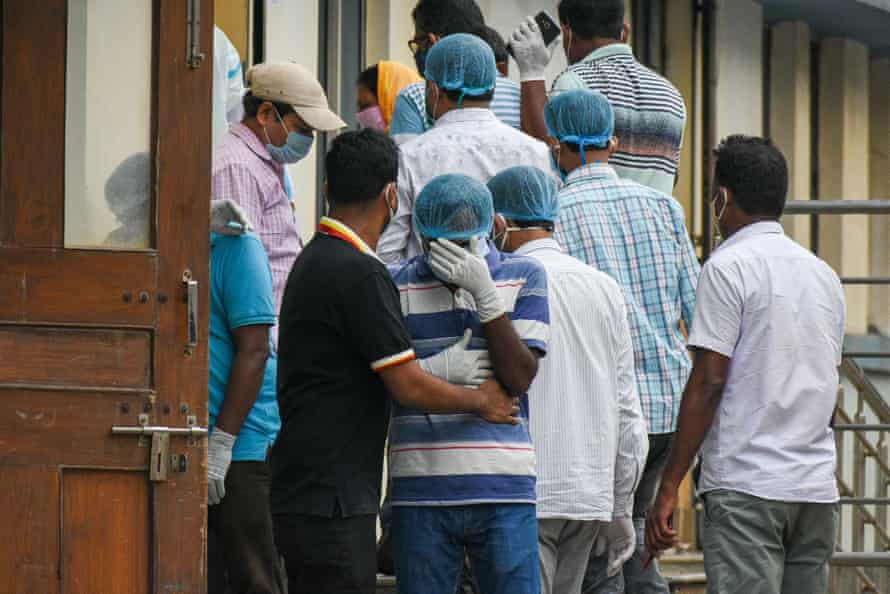
A man becomes emotional on listening to his fathers demise due to COVID-19 in front of a government run COVID-19 hospital in Kolkata, 22 April

India – covid deaths increase due to market failings

There are moments when examples of the moribund nature of capitalism as a system conspire to dominate the news headlines in a short space of time. The past week has been just such a period, with international, national and local examples of the prejudices and failings of the system jostling for position on the front pages.

The conviction of former police officer, Derek Chauvin, for the murder of George Floyd in the United States has rightly been proclaimed as a victory for the Black Lives Matters Movement in particular but for the wider cause of civil rights and equality in the US in general.

There can be no doubt that Chauvin’s conviction is a victory but the history of the civil rights movement in the United States is littered with false dawns.  Each step forward can just as quickly be followed by two steps back, as the weight of corporate America re-asserts itself and the tactics that keep black and white working class divided are perpetuated.

The United States may be the world’s most advanced nation economically but socially vast swathes of the country remain politically backward.  There is no doubt that there will be reactionary backwaters that see the conviction of Chauvin as a defeat.  However, the real power at the heart of the military industrial complex in the United States relies on divide and rule to maintain its position. Any progress towards unity in opposition to the de facto apartheid system in the US will be seen as a threat.

Building unity around a working class programme to challenge power and privilege in the US will be vital if the step forward Chauvin’s conviction represents is to be sustained.

The systemic failings of capitalism are in evidence elsewhere in the Americas, specifically in Brazil, where an incompetent, pandemic denying government is effectively perpetrating a genocide against its own population.  The so-called B1 covid variant in Brazil has not only pushed covid related deaths in the country close to the world’s biggest pandemic failure, the United States, but is now exporting the variant across South America, with surrounding nations such as Peru recording increases in hospitalisations and death.  

The same is true in India where a country rich in natural and human resources suffers from both a reactionary government and massive social divisions, condemning the poorest to live in conditions of poverty and overcrowding in which the virus thrives.

The Indian government has introduced a policy to liberalise vaccine sales and deregulate prices, without augmenting supply. The central government has failed for a year to do anything to increase vital vaccine supplies. This is a recipe for the exclusion of scores of people who will find it unaffordable to procure the life-saving vaccine. 

Vaccines so far have been free to the states in India. Now, states have to ‘procure’ vaccine from the ‘open market’ without any price regulation. The vaccine providers according to this latest policy, will declare their ‘self-set vaccine price’. This again, is bound to exclude an overwhelming majority of people. 

The idiocy of the market being introduced into dealing with a pandemic can only lead to more unnecessary deaths.  The exponential increase in the death rate in India this week is evidence already of the policy’s failure.

Once beacons of a new wave of developing countries dubbed BRICS (Brazil, Russia, India, China, South Africa) both Brazil and India are demonstrating the failings of capitalism and the inability of the system to deliver for their people.

In Europe the remarkable rise and fall of the European Super League (ESL) has allowed British Prime Minister, Boris Johnson, to divert attention away from the appalling covid death rate to leap on a popular bandwagon and condemn this outrageous monopolisation of the country’s most popular sport.

Monopoly is of course a function of capitalist expansion and the ESL proposal is the logical outcome of the commodification of sport, of which the English Premier League is a prime example.  Fan power and general outrage at the proposal has resulted in the putative ESL backing down but, as the corporations which own football at present look to minimise risk and stifle competition, in every sense, a return in some form is always possible.

Even the ESL debacle however has not allowed Johnson to deflect from the sleaze swamp into which his government continues to sink.  Text exchanges with industrial patriot James Dyson, a Brexit supporter who has moved production offshore to Singapore, reveal Dyson’s concern that his employees may be taxed too much if they redeployed back to the UK to help the national pandemic effort. 

It turns out Dyson could not make the ventilators anyway but the exchange says a lot about his priorities.  It also reinforces what we already know about Johnson and his government, that cronyism, corruption and sleaze are the driving forces behind their every move.  Quite how the Labour leadership is not pressing home this advantage is a scandal.  Should Hartlepool fall to the Tories in the 6th May by-election Kier Starmer should seriously consider standing aside.  His lack of political clout, experience and leadership are becoming an increasing hindrance.

A further failing of capitalism highlighted this week has been the case of the hundreds of post office workers convicted of theft, fraud and false accounting due to the failings of a computer system in local post offices, which suggested they were embezzling funds, when they were not.

To compound the error the Post Office went to great lengths to cover up the error, resulting in many innocent people being imprisoned in a monumental miscarriage of justice.  Campaigners estimate that there may have been 900 prosecutions between 2000 and 2014.  Not surprisingly, in spite of a government enquiry having been launched last year, no-one has ever been held accountable.  The fact that the enquiry is non-statutory, so cannot compel witnesses or evidence is unlikely to help.

The Court of Appeal this week cleared 39 subpostmasters.  Many more still await both justice and compensation.

Justice and compensation are not great mainstays of capitalism and, like the people of the United States, Brazil and India, those suffering injustice and discrimination in Britain will continue to have a fight on their hands.  Working class unity, mobilised around a programme for real progress, in all of these examples is the only guarantee that change can be sustained.

Sleaze and cronyism, time to make it stick

17th April 2021

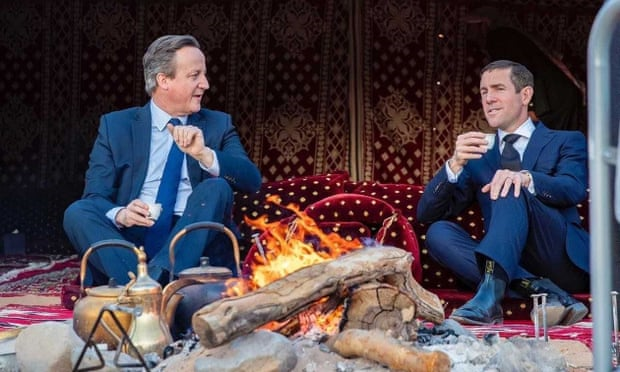
Cameron and Greensill – happy days in Saudi Arabia

Tory sleaze is back in the news.  It never actually went away but a leading Tory has been caught out, former Prime Minister, David Cameron, no less.  When at No.10 Cameron appointed Lex Greensill, the founder of financial firm Greensill Capital, as an unpaid advisor.  At a loose end after his failed Prime Ministerial stint Cameron then became an adviser at Greensill Capital in 2018.  Using his government connections Cameron arranged for Greensill to meet Health Secretary, Matt Hancock, to discuss a new payment scheme for NHS trusts.  In April 2020 Cameron then took to texting Chancellor Rishi Sunak in order to persuade Sunak to allow Greensill to access government financial support.  

The Advisory Committee on Business Appointments (Acoba) has also revealed that the head of Whitehall procurement, Bill Crothers, salary £149,000 per annum, became an adviser to Greensill Capital while still working as a civil servant in 2015.  Crothers accrued a shareholding estimated to be worth $8m in 2019.

Cameron also brought in former Morgan Stanley banker, David Brierwood, as an adviser in 2014, around the same time as Lex Greensill and then, no surprises here, two months later Brierwood was magically recruited to Greensill Capital’s board as a director.

Acoba itself is hardly free from scandal, having appointed former Tory candidate and erstwhile leader of Reading Borough Council, Andrew Cumpsty, to the committee.  Cumpsty runs lobbying firm, Cumpsty Communications which on its web site boasts that it “acts as a link between the leaders of UK industry and the Conservative Party Cabinet.”

In spite of having established a network of cronies at the heart of the Tory Party and UK government Greensill Capital has collapsed. This has resulted in the extent of its lobbying network being revealed. Questions are being raised about undue influence being brought to bear upon ministers and whether government decisions have been shaped by those with a financial interest in the outcome..

A number of official enquiries have been ordered as a result.  Always keen to get one over on his one time mate David Cameron, current Prime Minister, Boris Johnson, has appointed corporate lawyer, Nigel Boardman, to launch an inquiry into the Greensill scandal, to explore the role of Lex Greensill as a government adviser; the lobbying activities of Cameron and others; and the financial arrangements with Greensill.  While purporting to be ‘independent’ the Boardman Inquiry is widely seen to be an inside job with a remit to only rock the boat gently, if at all.

Other inquiries underway include the Treasury Select Committee, the Public Administration and Constitutional Affairs Committee,  the Public Accounts Committee, a Cabinet Office review and an inquiry by the Committee on Standards in Public Life.

All of which looks like a lot of concern is being addressed with a lot of activity underway but in reality is likely to generate so much smoke and mirrors.  The raison d’etre of the Conservative Party is to serve the interests of big business and finance capital.  The fact that one bear got caught with his paws in the honey pot is unlikely to result in the lid being screwed on much tighter. 

Some rules on lobbying and access to ministers will change but the bureaucracy will rumble on.  The complexity of some of the accusations will make it difficult to sustain public interest, unless the accusations of sleaze can be made to stick. Rachel Reeves is leading the charge from the Labour Front Bench on this front. In the short term the revolving door between Whitehall and the private sector may be slowed temporarily but it is unlikely to stop.

The latest revelations follow hard on the heels of a string of accusations of cronyism in the awarding of contracts for PPE during the current pandemic and the appointment of unskilled political appointees, such as Dido Harding, to run significant programmes such as Test and Trace, without any public health knowledge or expertise.   

The government has also, not too subtly, been reshaping key positions in the media.  Tory donor, Richard Sharp, was appointed Chair of the BBC while former Daily Mail editor, Paul Dacre, is Boris Johnson’s choice to become chair of media regulator Ofcom.   More recently the government has vetoed the re-appointment of two women, film producer Uzma Hasan and broadcasting executive, Fru Hazlitt, to the Channel 4 board of directors.  Some doors revolve, others are simply slammed shut.

No Tory government is ever free from financial scandal. It is part of the DNA of the Conservative Party that it cultivates and sustains links with the private sector in order to oil the wheels of capitalism.  A Tory government led by Boris Johnson, not noted for his acquaintance with the truth or any sense of aversion to cronyism, is likely to be worse than most.  Before the window of opportunity closes, Labour need to press home the advantage and make sure that the reality of Tory sleaze and cronyism sticks firmly in the minds of the British public.

Ruling class chicanery

11th April 2021

British Royals – how long can the show go on?

For the past 70 years the British ruling class has managed its public relations with remarkable efficiency.  Central to that success has been the constant refinement of the aristocracy’s shop window product, the Royal Family.

The Royal Family product did not come ready made by any means.  The post war successes for socialism across much of Europe and the desire for greater policy change and equality in Britain, following the Second World War, squeezed the Monarchy into a space where it was associated with the anachronism of colonial Empire, doomed to be crushed in the onward march of history.

However, the ruthlessness of the British ruling class is only matched by its resilience and its capacity to defend it privileges at all costs.  The transition from the direct colonial rule of Empire to post colonial influence was confirmed with the creation of the British Commonwealth in 1949, the Head of which is Queen Elizabeth II, the role previously having been that of her father King George VI.  The Queen’s designated successor, not surprisingly is Prince Charles.  

The Commonwealth is notionally a “free association of independent member nations” and currently comprises 54 sovereign states, of which sixteen, including Australia and New Zealand, still retain the British Queen as their Head of State.  To have a monarchy at all in the 21st century is anachronistic to say the least, to have a Head of State based half a world away is a political miscalculation on a grand scale.

For the British ruling class however the Monarch as Head of State in far flung territories is a means of keeping former fragments of Empire alive for British influence and economic investment.  This has certainly been a large part of the international role of the British Monarchy for over half a century.  If the nuclear arsenal has been the hardware which has kept Britain’s permanent seat at the UN Security Council, the Queen has provided the ‘soft power’ which has helped sustain a network of power and influence.  

There have been blips of course, the Suez crisis, the often bloody struggles for independence, the struggle to hang on to territory and influence, including the Falklands War.  The craven following of the United States into wars in Iraq, Afghanistan, Libya and Syria.  There have been internal challenges too.  The Miner’s Strike 1984/85 which threw into sharp relief the class divide in Britain, the struggle for a united Ireland, the relatively mild challenge of Jeremy Corbyn’s period as leader of the Labour Party.

While notionally being ‘above the fray’ in all of these instances the Monarchy has nevertheless been wheeled out when necessary as the symbol of national unity, being above politics, not to be challenged or questioned.

The glass has cracked on occasions.  The Queen’s sister, Princess Margaret, was no stranger to controversy.  The heir to the throne, Prince Charles, was only freed from a dysfunctional marriage by the untimely and suspicious death of his wife Princess Diana.  The current royal rebel Prince Harry, having married an American woman of colour then defecting to the United States, is proving the latest thorn in the side.  In the family praise for the Duke of Edinburgh since his death, Prince Andrew has been conspicuous by his absence.

Even these aberrations however become incorporated into what is portrayed as a great national soap opera. The significance of the Royal Family in constitutional terms, the Queen is both Head of State and the Church of England, is masked by the right wing press rendering every nuance as popular drama.

In this ruling class shop window the Duke of Edinburgh has played the part of showroom dummy for much of the time, although the wall to wall BBC coverage of his ‘life and achievements’ over the past two days would have the casual observer think that beatification was imminent.  Normal programming suspended, including the entire output of BBC Four, anodyne programming across BBC music stations, news coverage reduced exclusively to tributes to the Duke of Edinburgh.

It is unlikely that any working class pensioners, had they lived off the state for 70 years, would attract quite the same glowing tributes in the Mail, Telegraph and Express. A similar suspension of normal activity, along with sycophantic outpourings, is likely to accompany the Duke’s funeral next Saturday.

It is hard to see the State’s response to the death of the Duke of Edinburgh as much more than a dress rehearsal for the day the Queen dies.  For the ruling class that may be the moment when the shop window cracks and a new strategy needs to be deployed.  Charles can neither be sold as popular or the coming man.  While William and Kate are clearly being groomed as the modern face of the Monarchy, constitutional hoops will need to be jumped through.

The Duke’s death has certainly overshadowed the UK pandemic death rate hitting the 127,000 mark this weekend.  However much of a distraction the death of an elderly aristocrat may be there are still millions struggling to feed the kids, pay the rent and hang on to their jobs.  The ruling class have played the Royal Family card to their advantage for many decades now but it is a sleight of hand trick.  Chicanery will ultimately be exposed and the charlatans will be found out.