Light in the darkness

1st January 2022

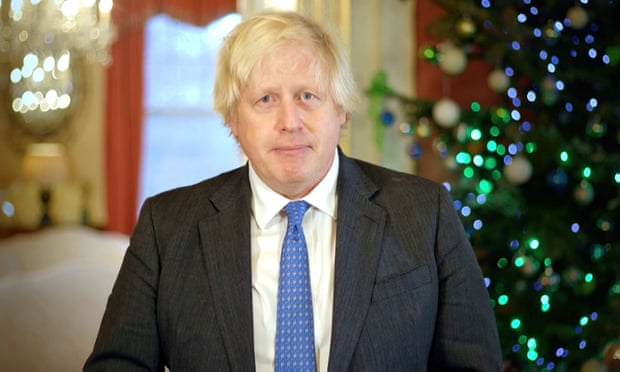
Brexit – getting Johnson done?

Historically, capitalism has so far found ways to reinvent itself, intensify its exploitation of human, animal and material resources across the world and still exert control over large swathes of the planet.  The heroic efforts of the Soviet Union and its allies, to take human history in a more progressive direction, lasted little more than seventy years.  The defeat of that effort has undoubtedly set the clock back and, despite the growing economic power of China as a counter weight to US imperialism, the momentum of the Soviet alliance through the world communist movement has clearly been diminished.

That is not to say that all is lost.  Capitalism is inherently a cutthroat business made up of shifting and unstable alliances, with each player out to gain the upper hand.  The banks falling over themselves to lend more and generate more profit led to the 2008 financial crash and the subsequent austerity drive to make the working class pay off the banks’ gambling debts.  That scramble saw some banks go to the wall while others had to rely on state bail outs.  The free market is ultimately only as free as the capitalist system wants it to be.

Similarly, the British exit from the neoliberal strait jacket of the European Union has not only exposed the faux internationalism of the bloc but also illustrated that international relations must be based upon mutual respect if they are to work.  The British position in recent negotiations has been to get one over on the EU while, likewise, the EU cannot be seen to let Brexit work.  The impasse means that the British people end up with the worst of both worlds, unable to be fully free of the EU, while equally failing to carve out an independent position in the world, based on mutual respect and a true socialist internationalism.

The British political establishment has been divided over Brexit for a long time.  Up and coming challenger to Boris Johnson, the recently appointed Foreign Secretary, Liz Truss, was a pre-referendum Remainer but has since reinvented herself as a darling of the Tory right wing with growing support amongst grass roots membership.  Far from ‘Getting Brexit Done’ as Johnson proclaimed at the 2019 General Election, it may yet be that Brexit gets Johnson done, sooner than he would have liked.

The assertion of foreign policy independence by the Johnson government, through proclaiming its Global Britain policy, would be laughable if it were not so tragic.  The only sense in which Britain is remotely global is in tying itself to US foreign policy objectives and tagging along as a junior partner.  This has been the case for many years, with Britain functioning as little more than a US airbase and a forward base for US nuclear weapons, through the Trident nuclear submarine programme.

The lunacy of the so called independent nuclear deterrent is only surpassed by the billions it is proposed to spend to replace Trident.  More money in the pockets of the US military industrial complex, less in the Treasury pot for schools, housing and the NHS, surely all more pressing priorities for the British people.

Just as the Tories do not speak with one voice on EU membership, the military establishment is similarly divided over Trident.  Not that the Chiefs of Staff are arguing for more hospitals, they would much rather see increased spend on conventional weapons, but there are divisions there which a skilled Opposition could exploit.

Sadly, the major skill the Opposition appear to possess at the moment is that of supporting the Tory line on most major questions.  Certainly, there is no dissent on the Labour Front Bench regarding spending billions on Trident.  There is no departure from the Tory line on NATO membership and kowtowing to the United States in foreign policy priorities.

Having conspired to lose the 2019 General Election, through ditching Labour policy to honour the referendum outcome, as well as playing a leading role in the so-called People’s Vote campaign, Kier Starmer is looking increasingly well placed to play a caretaker role as Prime Minister, should the Tories not sort out their leadership issues in time for the next General Election.

The Labour Front Bench does not however reflect wider opinion in the Labour Party, with a range of more progressive policies being adopted at Labour Conference providing the basis for a continued push from the Left, for policies which will serve the interests of the people and challenge the vested interests at the heart of the political system in Britain.

The broader international picture also holds out some hope.  China continues to travel an anti-imperialist path of development, as does Vietnam and, in spite of the ongoing illegal US blockade, so too does Cuba.  The wider picture in Latin America remains encouraging with progressive governments continuing to hold sway in Venezuela, Bolivia, Nicaragua and more recently Chile.

The surge in Labour membership in the 2015-17 period in particular, with progressive policies being articulated during Jeremy Corbyn’s leadership, also shows that policies in favour of the many, not the few can gain traction beyond the confines of Party conference, even in reactionary Conservative Britain.

The year ahead will certainly hold challenges for those arguing for a shift in the balance of power in Britain in favour of the working class.  In spite of the positions taken by the Labour Front Bench there remain key allies in Parliament among progressive Labour MPs.  Their voices, combined with mass extra Parliamentary action, will be vital in shifting the debate towards the real needs of the British people, rather than continuing to defend the interests of the banks and corporations which the Tories represent.

Now is no time to dwell in darkness, it is time to shine a light into the murky corners the Tories wish to hide and flush them out!

Avanti in 2022!

A Year Without Sundays

23rd December 2021

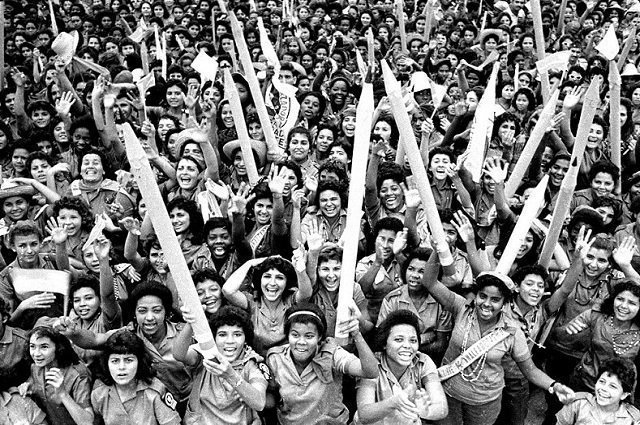
Literacy brigades celebrate in the Plaza de la Revolucion, Havana, 22nd December 1961

On the 22nd December 2021, Cuba marked the 60th anniversary of the literacy campaign initiated following the 1959 revolution which rid the island of the US backed dictator, Batista.  Very early on in the revolution the Cuban leaders realised that without literacy there could be no progress, that the defence of the revolution and the possibilities for social and economic progress depended upon a literate and educated population.

The Year of Literacy was declared in 1961 and an army of young people and students, mainly from Cuba’s cities who had some literacy skills, were transformed into an army of volunteers deployed across Cuba.  Organised into four brigades, to target both urban and rural areas in Cuba, the volunteers were up against more obstacles than just the endemic illiteracy which years of dictatorship had caused.

The defence of the country was a major concern, with counter-revolutionary groups active in the mountains of Las Villas and Oriente, in what turned out to be preparation for the US led Bay of Pigs invasion of Cuba in April 1961.  Not all of the literacy teachers and students survived the counter-revolutionary activity with a number being murdered by the reactionaries, determined to turn back the clock in Cuba.

Nevertheless, a teaching force of 268,420 people were organised across the four brigades with a mission to tackle the 14% illiteracy rate, consisting of almost 1 million people, throughout 1961.  By the end of that year the brigadistas had brought that rate down to just 3.9%, teaching over 700,000 Cubans to read and write during the course of the campaign.

One student pronounced that,

“It was a year without Sundays or parties: it was a year for the literacy campaign.”

It was a year which transformed the lives of many of Cuba’s young people and laid the basis for the survival of the revolution, in spite of the 60 year long illegal economic blockade by the United States, which has slowed Cuba’s development.

Cuba’s leaders recognised that without a literate population it was not possible to train people as teachers, scientists, doctors or engineers.  It was not possible to generate great art, music or literature.  The Year of Literacy was one of the key building blocks which has led to Cuba’s healthcare provision being famed across the world, for its infant mortality rate being lower than that of the United States, for the international campaign to award the Henry Reeves Medical Brigades the Nobel Peace Prize, for their work in supporting other developing countries at times of epidemic or catastrophe.

The emphasis which Cuba has placed upon the development of the biotech sector, at the encouragement of the late Fidel Castro in the 1980’s, has resulted in Cuba being the only developing nation to have produced its own vaccines against the Covid-19 virus, vaccines that it is prepared to share, without profit, with other under resourced and developing nations.

Cuba has vaccinated more of its citizens against Covid-19 than most of the world’s largest and richest nations.  Over 90% of the population have received at least one dose and 83% are now fully inoculated.  Infections and deaths have reduced significantly in recent weeks, falling to just 1% of their peak in August.        

“It is a truly remarkable accomplishment, given the size of Cuba and also the US embargo that restricts their ability to import”, said William Moss, Director of the John Hopkins International Vaccine Access Center, a US based university group that works to ensure equitable access for low-income countries.

Like elsewhere, the Omicron variant means that Cuba faces a new challenge.  The ongoing embargo by the US does not help, as access to vital resources remain limited and costly, through having to trade through third parties.  The battle may not be over, but the struggle continues.

There can be no doubt that Cuba’s current struggles will take heart and inspiration from the Year of Literacy in 1961 and the campaign which helped shaped modern Cuba.

On 5th November 1961 Melena del Sur was proclaimed the first town free of illiteracy, followed by municipalities and provinces across the nation.  On 16th December the literacy teachers began arriving in Havana from across Cuba.  On the 22nd December, at a massive rally in the Plaza de la Revolucion, Cuba was proclaimed a territory free of illiteracy.

Gambling with the health of the nation

Lies, damned lies and parties – another bad week for Johnson

The only thing as certain as the inexorable spread of the Omicron variant of Covid 19 is the lengths to which the Tories will go to cover up their lying and deceit, which has characterised every stage of the pandemic.  It is getting difficult to keep track of the number of parties which occurred in government departments or Downing Street itself, either last Christmas or during lockdown in May last year.

The latest revelation, that the government’s most senior civil servant, Simon Case, allowed a gathering to go ahead in his office, is the icing on the cake.  Case is meant to be investigating the allegations of goings on at 10, Downing St, a brief which is now fatally compromised.

If it was possible to be charged with reckless endangerment when in charge of pandemic, the Tories would be bang to rights.  Apart from the obvious dangers of virus spread from the plethora of office parties and gatherings, which are making the news headlines daily, there is the shattering of public confidence in vital public health messages, which could keep the death count down and reduce pressure on the NHS by controlling hospitalisations.

The Tories one rule for the rich and another for the rest approach however is leading many to forget that two wrongs do not make a right.  Just because the Tories adopt a cavalier attitude towards the health of the nation does not mean that we should all fall into the same trap.  The temptation for many to adopt an attitude that ‘they don’t obey the rules so why should we?’ is great but it is ultimately a self defeating one.

The UK Health Security Agency (UKHSA) estimate that in most regions Omicron infections are doubling in less than every two days, suggesting that cases could reach a million a day by the end of the month.

Dr Susan Hopkins, Chief Medical Advisor at UKHSA said last week,

“The biggest worry is that if we have very high numbers of people getting infected at the same time, with the doubling rate that we are seeing at the moment.  Then it will find all those people who had less immune responses or those people who have yet to get their booster dose or have not been vaccinated yet, remembering that there are still significant numbers in the population – more than 5 million in England – who have not yet received a single dose of vaccine.”

The Tories are doing all that they can to avoid bringing in any restrictions they would regard as unpopular before Christmas.  At the same time they know that, as scientific advisers on SAGE point out, failing to impose any additional measures will undoubtedly lead to a spike in infections in the New Year, resulting in further disease, hospitalisation and death.  The NHS is already creaking, as the unvaccinated take up bed space across the country, and Covid cases displace the health service from giving attention to vital operations and long term conditions such as cancer.

Giving in to the Tories’ relaxed approach to public health will ultimately backfire this time, as it has at every stage of the pandemic so far.  Covid 19 is not a phenomenon which the Tories can simply bluster their way out of, try as they might.  Each stage of the pandemic is just another roll of the dice for the Tories, as they gamble with the health of the nation. The UK’s position as the Covid sick man of Europe, such that the French have now closed borders to British tourists, is the latest testament to this.

It is already clear from the Tories’ catastrophic showing in the North Shropshire by-election, losing a seat they had held for 200 years, that the double standards are hitting home, even with voters who would historically never vote anything but Conservative.

In response, knives are being sharpened inside the Tory Party for Boris Johnson, now being seen as more of an electoral liability than electoral asset.  The focus upon Johnson, bumbling and incompetent as he may be, is nevertheless a diversion.  The Tories will always elect a leader they see as best fitted to serving the interests of the ruling class at any given time and just as quickly dispense with them when they have served their purpose.

Johnson’s mission was simply to ensure the defeat of Jeremy Corbyn at the 2019 General Election and get a Tory shaped Brexit deal across the line, whatever the cost.  He has served that purpose and the pandemic has exposed his failings as a Party leader and Prime Minister.

Johnson’s departure, whenever that may come, will not change the fundamental mission of the Tories or signal any departure from their core modus operandi; to defend the interests of the rich and privileged and use any subterfuge necessary to defend capitalism.    

Getting Johnson out may give the appearance of being a step forward but getting rid of the Tories and the whole rotten system which supports them has to remain the ultimate goal, for the good of the nation’s health.

Action for human rights in Iran

11th December 2021

On the occasion of United Nations Human Rights Day (10th December) the human rights situation in the Islamic Republic of Iran continues to be a desperate one for anyone opposed to the regime.  Jane Green reports on the current situation.

Protests in Iran – regularly met with force

Human rights abuse in Iran continues to be an issue for young people, women, trade unionists and the political opposition. The regime does not see the judiciary as being independent from the ruling theocracy in the country.  The Islamic Republic’s judicial system criminalises dissent and even imprisons lawyers for doing their job. Few lawyers will continue to take on human rights cases due to the level of intimidation by the regime and its security services.

Anyone remotely critical of the regime is usually tried under trumped-up “national security” charges.  Cases often involve individuals who have been targeted by the state’s sprawling security establishment for publicly criticising the government and it is the state security agencies, not the rule of law, that dictates the outcome of the cases.

In effect, in the Islamic Republic, those detained under trumped-up national security charges are guilty until proven innocent.  Intelligence agents carry out the arrests and fabricate the charges. The judicial process becomes a means to settle political scores.

The targeting of lawyers in order to weaken the chances of effective legal representation is underlined by the fact that, as of November 2021, at least five defence lawyers had confirmed prison sentences based on false charges

Another three human rights lawyers are awaiting trial on trumped-up charges because they tried to sue the government for its failed COVID-19 response.

The case of Iranian-British dual national, Nazanin Zaghari-Ratcliffe, is a further example of the Iranian government’s use of imprisonment for political purposes.  Ms. Zaghari-Ratcliffe is effectively being held hostage as part of negotiations for money owed to Iran by the British government for a weapons deal in the 1970s.  

A recent report from Amnesty International has highlighted the ongoing issue of the unlawful killing of at least 324 members of the public in mass protests which swept Iran in November 2019.  There is no evidence that those engaged in the protests possessed firearms or posed any threat to life, yet the security forces still engaged in the unwarranted use of lethal force.

Two years on from the protests, the families of victims continue their campaign for truth and justice in the face of ongoing harassment and intimidation from the authorities.  The regime has undertaken a ruthless campaign to intimidate families and prevent them from speaking out.  The regime persists in its refusal to reveal the truth about the death toll; conduct thorough, independent and impartial criminal investigations; and bring to justice those responsible for ordering and carrying out these killings.

Given the gravity of the human rights violations in Iran, Amnesty International has reiterated its call to member states of the UN Human Rights Council to mandate an inquiry into the killings, and identify pathways for truth, justice and reparations.

The assault on human rights also extends into the cultural sector with Baktash Abtin a poet, documentary filmmaker and a member of the Iranian Writers’ Association, being imprisoned on charges of “gathering and colluding with the intention of committing acts against national security” and “propaganda against the state.  Abtin, along with two other members of the Iranian Writers’ Association’s board of directors, Reza Khandan Mahabadi and Keyvan Bajan, were sentenced to 6 years each in prison.

The evidence to support the accusations were the books published by the Iranian Writers’ Association, including the commemorative work “Fifty Years of the Writers’ Association of Iran,” statements by the Writers’ Association and articles and content published on Abtin’s personal social media accounts.

The rise of labour strikes, including in the automobile maker Iran Khodro, mines, and manufacturing industries, along with popular protests across the country, reflects the deepening crisis in Iran.  The regime is increasingly seen by the vast majority of the people in Iran as a major barrier to progress and the establishment of freedom, democracy, and social justice.

The experience of recent years in Iran is that the macro-economic policies of the Islamic regime have resulted in the destruction of the infrastructure of manufacturing and driven millions of people below the poverty line and into deprivation. This situation is further exacerbated by widespread corruption within the regime, which sees millions of dollars syphoned out of the economy into private hands.

The necessity of expressing solidarity and continuing to publicly challenge and defy the government, is increasingly seen by many as the only means to move away from a regime whose continuation is synonymous with that of disaster, poverty, deprivation, and misery in the country.

In the UK major trade unions unions have added their voices to expressions of support for the Iranian people and in condemnation of the human rights record of the Iranian government.  It is vital that such support continues to build and extends across the labour and peace movement. 

Such solidarity, especially articulated on UN Human Rights Day, will send a clear message to the Iranian people that they continue to have international support in their struggle for peace, human rights and democracy.

For the full version of this article visit www.codir.net

Party on with Omicron

4th December 2021

Keep calm and carry on says the British government

As the Omicron variant of the Covid-19 virus begins its inexorable journey around the globe the British government insists upon taking up its usual pandemic position of being just behind the curve.  While public health and World Health Organisation (WHO) advice at every stage of the pandemic has been to take hard measures quickly and early, to contain infection spread, the British government continues to adopt an attitude of ‘let’s see how much longer we can spend down the pub’.

Such an approach is fuelled by a beleaguered hospitality sector, less concerned with getting jabs in arms than getting arms pulling pints, and the usual trio of Tory cheerleaders in the right wing press, the Mail, the Express and the Telegraph. 

Keen to undermine the evidence that Omicron is highly transmissible and socially mixing will only accelerate the spread, the Tory press trio are more concerned to demonise the so called ‘cancel Christmas’ brigade.  The message is wrapped in the usual phoney rhetoric of plucky Brits seeing it through, with a liberal draping of Union Jack iconography, just in case the message is not clear that the ‘cancel Christmas’ crowd are not real patriots and are simply out to undermine British tradition.

As more cases of the Omicron variant are identified, the government is pinning its hopes on an acceleration of the vaccine booster programme which it hopes will “buy the time” needed to further assess the impact of the Omicron variant.

British Prime Minister, Boris Johnson, has said everyone who is eligible will be offered a booster jab by the end of January.  The government is hoping this, coupled with new mask measures and restrictions on travel from countries in southern Africa, will be enough to contain the variant.

Minutes from the Sage Advisory Group have suggested that there is a danger of the government “putting all its eggs in one basket” by relying on the booster programme without taking any measures to reduce social mixing.  In particular it has been suggested that working from home would be a minimum measure that could enhance infection control with one adviser stating,

“Working from home is substantially less intrusive as an intervention.  If you can easily do your job from home until Christmas, to me that seems a very proportionate thing to do right now.”  

The government position however remains to sideline such advice and adopt a “keep calm and carry on” approach, a phrase actually used by Conservative Party Chairman, Oliver Dowden, when asked about private parties at No 10 Downing St this year.  Dowden insisted that people should,

“…keep calm and carry on with your Christmas plans.  We’ve put the necessary restrictions in place but beyond that keep calm and carry on.”

Downing St is already on the defensive, having been found to be the venue for parties during lockdown last November, once again exposing the government’s one rule for them and another for the rest, approach to the pandemic.

The Tories’ position is at odds with that of Jenny Harries, Chief Executive of the UK Health Security Agency who made clear on BBC Radio 4 that,

“Of course our behaviours in winter – and particularly around Christmas – we tend to socialise more, so I think all of those will need to be taken into account.  So I think we need to be careful, not socialising when we don’t particularly need to, and particularly going and getting those booster jabs.”

Concerns about the capacity of GPs and the NHS to step up the rate of vaccination to deliver the booster programme are also very real with services already struggling to cope due to reduced capacity.  The NHS has announced it would need an army of 10,000 volunteers and 1,500 new sites to help offer the required 25m vaccines over the next two months.

Prof Andrew Hayward, co-director of the UCL Institute of Epidemiology and Health Care, said,

“I am concerned that the intensification of mixing at Christmas social events will provide a boost to transmission at just the time when the Omicron variant will probably be picking up speed, potentially leading to an earlier peak in the new year before we have an opportunity to counteract this through boosters. Such a peak could seriously affect the ability of an already struggling NHS to provide adequate care.”

The determination to put private wealth ahead of public health has been the only consistent position taken by the British government throughout the pandemic, allied with the desire not to take any decisions which may prove unpopular.   

With the UK death rate now past the 145,000 mark and daily infections in their thousands, the government is once again taking a massive gamble with the lives of those who are most vulnerable and have least capacity to fight off infection, in spite of the vaccination programme.  

The government may not be brave enough to take any decisions which could be characterised as ‘cancelling Christmas’, leaving most to have to take the decision themselves when deciding just what level of celebration is safe.

Hoarders hold back vaccine equity

27th November 2021

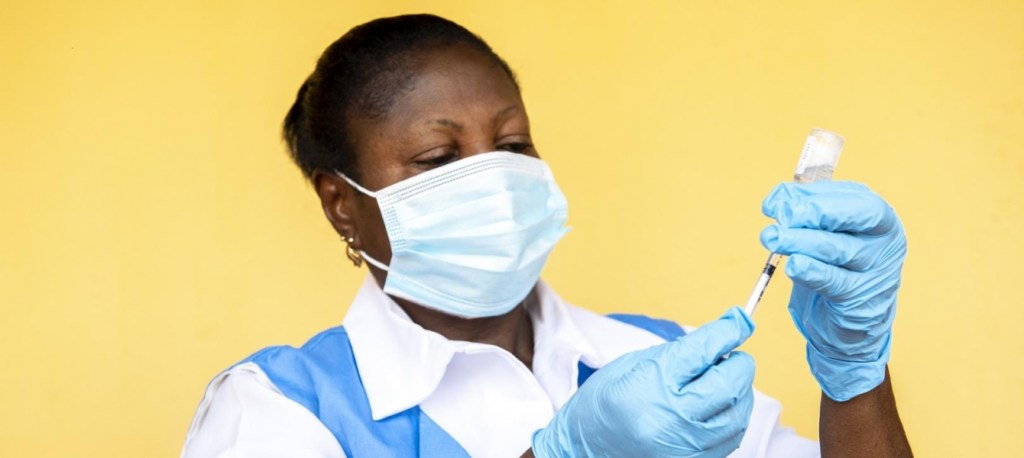
Vaccines are desperately needed in developing countries

The emergence of a new Covid ‘variant of concern’ in Southern Africa, designated Omicron by the World Health Organisation (WHO), is a direct consequence of vaccine hoarding by the rich capitalist nations, more concerned with addressing the economic consequences of the pandemic rather than the public health impact.  

The Omicron variant is regarded as the most complex seen so far and has emerged in countries with vaccination levels of under 30%, with Namibia at a low of only 12% being fully vaccinated.  South Africa itself has 27% vaccination rates but this is unevenly spread across the country, with some rural areas at levels in single figures.

Worldwide there is no shortage of vaccines but distribution remains massively uneven.  The G20 richest countries currently hold 89% of existing vaccines with 71% of future deliveries scheduled for these countries.  The storage time for many of these vaccines is not infinite.  COVAX calculate that around 100 million of these vaccines will pass their use by dates in December.  The prospect of the world’s richest countries pouring vaccine down the drain while infection rates, hospitalisation and deaths continue to escalate in the developing world, is very real.

As ever, the leaders of the ‘free world’ can talk the talk but they cannot walk the walk.  Promises of vaccine distribution to the developing world are routinely made but are rarely delivered upon.  At a summit chaired by US President, Joe Biden, in September a target of 40% vaccination by December was set for the 92 poorest countries.  In the majority of those countries that target will not be met.

The vaccine hoarding nations of the world are directly to blame for this.  The United States has only delivered 25% of the vaccines promised.   The European Union has delivered 19% of its promise, the UK just 11% and Canada merely 3% of its commitment.  The net effect of this is that only 3% of people in low income countries are fully vaccinated, compared to over 60% in higher income countries.

The early identification of Omicron has meant that quick action is being taken to sequence the variant and test the efficiency of existing vaccines in combatting it.  However, should further vaccine development be required that will take some time to test, produce and disseminate.

The British government was quick to ban flights from Southern Africa and started a domino effect across the world, as steps are taken to contain the spread.  Calls to introduce Plan B in Britain, which would require mask wearing in public, working from home and a Covid passport system, restricting access to public spaces for those without a double vaccination, have already been raised and may yet be part of the response to the new variant.

So far British Prime Minister, Boris Johnson, has only been prepared to go with a Plan B-lite, introducing mask wearing as compulsory in retail and on public transport; re-introducing PCR tests for anyone entering the country; and enforcing 10 day isolation for any contacts of someone who has tested positive with suspected Omicron variant.

Measures will be reviewed after three weeks, giving the scientists time to see how the new variant behaves and politicians to hedge their bets in the run up to Christmas.

The WHO is meeting next week to consider the current situation but only has the power to exhort and persuade rather than enforce.

It is clear from the international response to the pandemic so far that the world’s richer nations cannot be relied upon to support those at the sharp end of the pandemic.   The current upsurge in cases of the dominant Delta variant across Europe, with Germany already considering a national lockdown, is likely to distract attention from vaccine equity, as the G20 continue to prioritise their own economic salvation above all else.

COVAX, which is led by the World Health Organization, GAVI and the Coalition for Epidemic Preparedness Innovations (CEPI), and in partnership with UNICEF, has 190 participating countries. It needs more than US$2 billion to fully meet its goal to vaccinate those most in need by the end of the year.

The United Nations campaign, Only Together, launched in March continues to press for the scaling up of vaccine access by sharing excess vaccines, transferring technology, offering voluntary licensing or waiving intellectual property rights.  There will no doubt be a majority of UN members who support the goal of vaccine equity but the disproportionate balance of power means that only with the promises of the minority rich capitalist world coming good can the goal be achieved.

The pandemic has clearly exposed the capitalist system as one which is moribund and incapable of meeting the basic needs of its people.  If a pandemic which has claimed 2.5 million lives worldwide, and is set to claim as many again, cannot compel co-operation to support the most deprived it is a damning indictment of the system.

The ultimate solution is that the people themselves take control.  Through socialist planning and co-ordination of resources for the needs of the people first, rather than the profits of the banks and corporations, a different way is possible.  It may be too late for the victims of the current pandemic but it is the only way the same mistakes will not be repeated, when the world finds itself in this position again.

Bluff, bungling and bluster

23rd November 2021

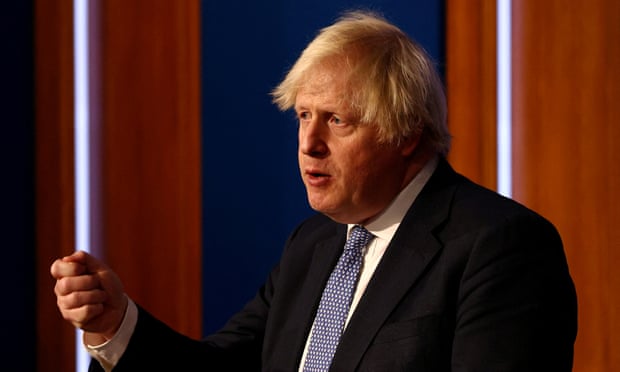
Boris Johnson, bluffing hs way through a speech to the CBI

The bumbling of British Prime Minister, Boris Johnson, through a speech to the CBI this week, was characteristic of Johnson’s lack of attention to detail and inability to judge his audience.  Johnson’s political rise to date has often been ascribed to his ability to connect with ordinary people, speak plainly and shake free from established political platitudes.

That such an assessment has gained any credence is only due to the activity of Johnson’s spin doctors and the determination of the political establishment and media to build any alternative to Jeremy Corbyn, after Labour’s showing in the 2017 General Election.

No one has ever suggested that Johnson has a clear ideological stance, other than the default Tory position of hanging onto power and defending the capitalist system, but recent events suggest that the powers that be may be preparing to cut Johnson loose.

As well as the CBI debacle, Johnson also faced a minor rebellion in the House of Commons as 19 Tory MPs opposed government plans for changes to the social care system.  With abstentions a reduction in the Tory majority to 26 was the outcome.  This in itself may not be a sufficient harbinger of Johnson’s departure, governments with large majorities can absorb a certain amount of rebellion, but Johnson does not appear to have strong core support. 

The coalition of disparate Tories which propelled Johnson into No.10 is beginning to unravel as hard core Brexiteers are frustrated by the pace of change; low tax Tories are frustrated by the level of public spending; and the new intake of so called red wall Tories begin to see through the smoke and mirrors of the illusory ‘levelling up’ agenda.  The failure of the governments recently announced rail plan to reach, never mind reinvigorate the North, being just the latest example of policy car crash.

Prime Ministers have survived bouts of bungling, backbench muttering and Commons revolts but they rarely survive indefinitely.  As Johnson blusters his way through his catastrophic handling of the pandemic his credibility with those previously fooled by the blather drains daily.

The political establishment also have other concerns, not least the health of the Head of State, currently being kept from public view as both spin doctors and medical doctors work to keep the Monarchy from slipping into crisis.  Planning for the Platinum Jubilee in 2022 continues apace but sources suggest than a Plan B is being taken off the shelf should the magic 70 year mark not be achieved.

While the media establishment continue to perpetuate the myth of a popular Monarchy, that would soon dissipate should the septuagenarian Prince and his consort get the keys to Buckingham Palace.  An unpopular Prime Minister and an unpopular Monarch may be more than the political establishment could tolerate and one or both could come under pressure to clear the way for a more media friendly alternative.

In political terms that would not rule out a Labour government.  Kier Starmer has made a clear pitch that capitalism will be safe in his hands and any difference in policy with the Tories at present is largely one of nuance. A spell of tame Labour government, while the Tories sort out their differences and find a leader they can unite behind should not be ruled out.

By the same token the easing out of the jaded Charles and Camilla, in favour of the family and media friendly William and Kate, is not hard to imagine.  The notion of the Royal Family as being the embodiment of the nation has always been a conjuring trick designed to divert attention from the real class interest the Monarchy defends and represents.

The British ruling class has survived for so long, in spite of periods of pressure and challenge, because it has been able to change just enough to keep ahead of any demands for a real transfer of power from the ruling class to the working class.    

 There is little sense of pressure for real change coming from within Parliament.  A vote for Labour, when the time comes, will be the lesser of two evils but reliance on Parliamentary action has never been enough for change.  Mass extra Parliamentary action will be necessary to truly shift the balance of power, challenging not only the illusion of democracy under capitalism but the historical anachronism of the Monarchy in the twenty first century.

The short term is no solution

13th November 2021

Over 100,000 gathered in Glasgow to protest against climate change

The famous revolutionary and Marxist philosopher, Vladimir Lenin, in 1913 characterised a revolutionary situation as one in which the lower classes do not want to live in the old way and the ruling class are unable to rule in the old way.  There has been little Leninist analysis applied to COP26 but Lenin’s thinking, while not immediately applicable to the present circumstances, certainly indicates the direction of travel.

There are certainly a significant number of the poorer and developing nations of the world who do not want to live according to the international economic order as it is currently constituted.  The climate crisis for many presents a literal existential threat, as rising sea levels threaten the very existence of their nations.  For others, already impoverished by imperialist plunder of their natural resources over centuries, including enslavement of their people, the hollow rhetoric of the rich nations continues to sound like an exchange of glass beads for gold.

In the current situation, for many of these nations, the climate emergency adds to a triple hit they are already having to deal with.  On top of their historical impoverishment there is the added inequity in vaccine distribution to tackle the Covid 19 pandemic, as the West continues to hang onto and hoard supplies.  For many developing nations Western intervention, either economically or militarily, has resulted in the migrant crisis, which drains many of their resources.  The climate crisis adds another layer to these struggles to survive.

COP26 appears to have done little to move forward the commitments of the rich nations of the Global North to take the climate emergency as seriously as they should.  Their default position remains one of giving as little ground as they can, while appearing to give concessions to the nations of the developing world and Global South.

This tactic becomes more transparent as the crisis deepens and the impact is felt in the richer nations too.  Recent floods in Germany, forest fires in the United States and the loss of coral reef in Australia have seen sections of the population waking up to the fact that real action, real commitment and real change is necessary if the impact of climate changed is to be addressed and reversed.

The demand to ‘keep 1.5C alive’ has gained increasing resonance as the COP26 process has unfolded but commitments so far, if they are actually delivered upon, amount to global warming reaching at least up to 2.0C above pre industrial levels.  Some models predict this may be higher still, which would not only be catastrophic, but potentially irreversible.

Capitalism as an economic system, especially in its imperialist globalised phase, is predicated upon competition and gambling.  The bankers gambling debts were the source of the 2008 financial crisis, debts we have all had to pay back over ten years of austerity.  Capitalist corporations routinely hedge their investments, buying commodities into the future to protect themselves against price fluctuations in the market.  Gaining a competitive edge is the driving force of capitalist philosophy and that edge has been gained, over the past 150 years, through the development and more efficient deployment of fossil fuels to drive economic growth.

Recognition that this phase of human development and exploitation of the Earth’s resources has gone is dawning slowly.  Unfortunately, it is dawning too slowly for those who predominantly control such resources, even where they are prepared to admit it. Like the Covid 19 vaccination deniers of the world, there remain those wedded to the reactionary notion that climate change is all part of a wider conspiracy, which will get sorted without human intervention.

Such ivory tower thinking may be the preserve of a hard core but it is often an influential hard core.  However, the next decade will undoubtedly see the glass fronts of such ivory towers breeched as the real life experience of those at the sharp end of the climate emergency draws more people into the struggle for change.

COP26 was never going to come up with all of the answers in one go.  It was always optimistic to expect a seismic shift in thinking on the part of those in entrenched positions of power.  However, the conference and the waves of protest which have surrounded it have ensured that world leaders cannot keep their heads forever in the sand when it comes to the climate emergency.

The ruling classes are beginning to struggle to rule in the old way and the lower classes are increasingly expressing their dissatisfaction at having to live in the old way.  A revolutionary situation may not be quite at hand but the makings of one are there.  However, Lenin was astute enough to also observe that not every revolutionary situation leads to a revolution. 

Capitalism is ruthless in defence of ruling class interests and, as history shows, will stop at nothing to defend its privileges.  Co-ordination, clarity of purpose and unified leadership are all pre-requisites of transforming a revolutionary situation into actual revolutionary change.  The challenge for those intent on not only saving the planet, but transforming it into one in which resources are equitably distributed for people not profit, is to forge that unity and force change.  

Protest at climate change, raising awareness of the climate emergency, is a vital first step towards drawing many into struggle.  It must be allied however to an understanding that the problems of the climate emergency are rooted in capitalism itself.  Until the means of production are in the hands of those who produce the wealth and society is planned according to the needs of its people, on a socialist basis, there will only be short term solutions on offer.

In an emergency situation short term solutions are never going to be good enough.

Sleaze, corruption and COP26

7th November 2021

Commentary on climate change progress in Glasgow

Former Tory Prime Minister, Sir John Major, has criticised the government of present British Prime Minister, Boris Johnson, for being “un-Conservative” and “politically corrupt” due to its recent attempts to change the rules governing standards for MPs in the House of Commons.  Major’s comments have been given prominence across all BBC News bulletins and been elevated to the status of insightful comment on this aberration within the Conservative Party.

The reality however is that Johnson and his cronies are not an aberration at all but are simply behaving, albeit a little more flagrantly, in the same way as all representatives of the ruling class Tory Party before them, and no doubt more after, should they be allowed to continue.

As a Prime Minister who presided over a period of significant sleaze, from 1992 – 1997, having inherited the Tory Party leadership from the politically corrupt Margaret Thatcher, Major is in no position to assume the moral high ground.

The current subject of the row, former MP Owen Paterson, was found by the House of Commons Standards Committee to have broken the rules by accepting over £100,000 a year from two companies who were paying him to lobby on their behalf.  In total Patterson is estimated to have netted £500,000 from the two companies, Lynn’s Country Foods and Randox Laboratories.

Nice work if you can get it for sure.  A care worker, nurse, or low paid worker claiming Universal Credit, would take 20 years to earn £500,000 if they managed to scrape together £25,000 a year.  Paterson was rightly taken to task by the standards committee for having his snout in the trough.  The response of the Johnson gang was to try and get him off by proposing to change the rules and lift the 30 day suspension imposed upon him.

That this decision was reversed in a screeching government u-turn, followed by Paterson resigning as an MP, was some justice but is hardly the whole story.  The Parliamentary Commissioner for Standards is yet to investigate the refurbishment of 10, Downing St, including the now infamous £850 per roll gold wallpaper, and how that was paid for.  Paterson is also implicated in his £8,000 per month retainer with Randox Laboratories, who went on to ‘win’ two Covid testing contracts, worth £480m, without any competitive tendering process.  

With the Tories it is never a case of one bad apple but the whole barrel being rotten.

Johnson’s arrogance was further underlined when preaching that the planet was at one minute to midnight in relation to the climate emergency at COP26, before taking a private jet from Glasgow to London to meet his former boss at the Daily Telegraph, Charles Moore, at the men’s only Garrick Club.

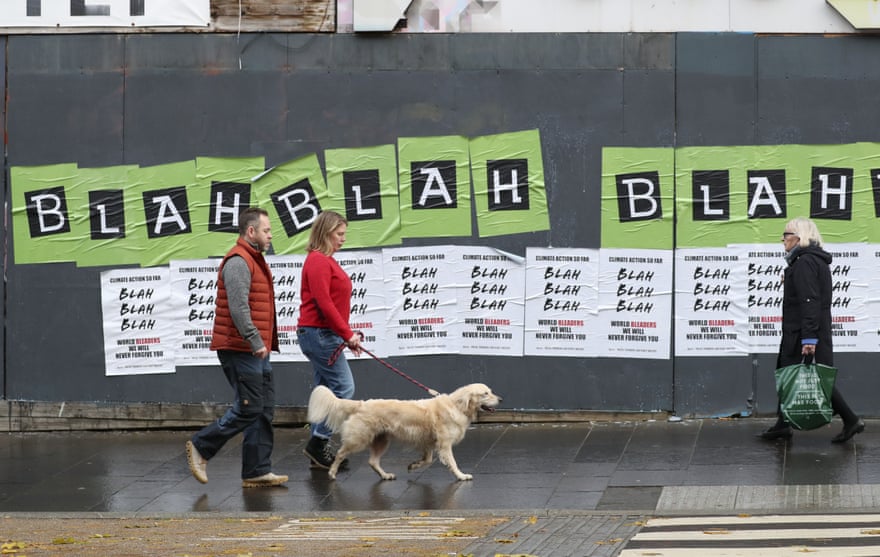
The protests in Glasgow and across the world this weekend, at the lack of meaningful action from world leaders on the climate crisis, was the most hopeful sign that pressure will continue beyond COP26 to deliver on easily made promises.

At present the rich countries of the capitalist West are still keen to equalise the requirement to take action, rather than recognising that they have benefitted from the burning of fossil fuels and need to do more to support those countries who they have exploited and had their development suppressed as a result.

The position of China, routinely characterised as the bad guy in relation to emissions, is a case in point. At present China is responsible for 28% of new global emissions as it embarks upon its programme of development and poverty eradication.  Looked at historically though Europe has contributed nearly 35% and the United States 25% to the stock of greenhouse gases, in order to build the wealth of a relatively small number of individuals, families and corporations.

It is little wonder that the world’s developing nations are calling upon those who have built their abundant wealth upon burning fossil fuels to shoulder more of the responsibility for tackling the crisis.  Imperialist exploitation and the destruction of resources in the developing world has left many nations ill equipped and under resourced to tackle the consequences of climate change.

Real change will come through a revolutionary shift in the ownership and control of those resources in the developing world, combined with the reversal of the grip of capitalism worldwide.  In the short term some immediate demands still need to be made. The financial obligations promised by Western nations at Paris in 2015 have yet to be met.  They could do so sooner rather than later.  The West could provide debt relief for countries struggling to adjust to the impact of climate change.  Trade deals could be structured to help benefit those nations striving to adapt to climate change.

As COP26 moves into week two the issue of adaptation will be high up the agenda.  United Nations General Secretary, Antonio Guterres, has pointed out that 4 billion people have suffered climate related disasters in the past decade alone.  Guterres has called for greater investment in adaptation measures to prevent vital infrastructure in developing countries from collapse, resulting in irreversible damage.

The hollow rhetoric of Boris Johnson and other leaders, keen to talk up their commitment but slow to take action, will not be enough address the realities of the climate emergency.  Mass popular action, street protests and boycotts of firms not committed to addressing the climate emergency, will need to be stepped up.  That is the only way that the current world leaders can be made to take meaningful action.  It may also be the first steps towards their removal, making way for real commitment to real and lasting change.

Budget not adding up for the many

30th October 2021

Sunak’s budget will not pay the bills for many families

The extent of Tory spin in relation to Chancellor Rishi Sunak’s budget this week would be regarded as breathtaking if coming from any government other than one led by Boris Johnson.  After ten years of Tory driven austerity which has seen a financial squeeze upon local government, education, the NHS and accelerated the low skills, zero hours contract economy, we are now expected to believe that another Tory government will reverse this.

Sunak proclaimed, in true headline grabbing style, that the budget was one to herald “An economy fit for a new age of optimism”.  The impact of the pandemic upon the economy was judged by the Office for Budget Responsibility (OBR) to be a long-term hit to the UK of 2 per cent, rather than the 3 per cent it forecast in March.  This gave Sunak latitude to increase spending on public services and offer tax cuts in areas such as business rates.

Sunak based his budget on OBR assumptions that UK economic growth would be 6.5% this year and reach pre pandemic levels by the end of the year.  Sunak failed to mention that the rate of growth only appeared greater because the British economy had tanked further and faster than other G7 economies in the first place.  Still, the Tories have never been ones to allow the facts to get in the way of a good soundbite.

While Sunak made some adjustments to the tapered reduction of universal credit, the budget will still hit the poorest the hardest as they faced a serious cost of living crisis.  While the Tories have been spinning the impact of changes to Universal Credit as benefitting over 2 million low income families, the Joseph Rowntree Foundation offer a different assessment.

Katie Schmuecker, the deputy director of policy at the Joseph Rowntree Foundation, said,

“The reality is that millions of people who are unable to work or looking for work will not benefit from these changes. The chancellor’s decision to ignore them today as the cost of living rises risks deepening poverty among this group, who now have the lowest main rate of out-of-work support in real terms since around 1990.”

Even those set to benefit from the £1,000 a year increase Sunak claims his changes represent will see much of that wiped out in rising national insurance contributions, increased rent and energy bills, as well as escalating food costs.  Quite how much of the “new age of optimism” families in these circumstances will see is hardly even open to debate.  The reduced duty on sparkling wine and short haul domestic flights may also be of little benefit to those families struggling on the breadline.

In reality Sunak’s budget will barely go towards shoring up the damage caused to local communities, and the services upon which they depend, by the decade long Tory austerity drive.

A recent report by the Joseph Rowntree Foundation found that nearly 4 million low-income households are behind on rent, bills or debt payments, up threefold since the pandemic hit.  A third of the 11.6 million working-age households in the UK earning £25,000 or less were found to be in arrears on their rent or mortgage, utility bills, council tax bills or personal debt repayments.

Even Tory Councils are warning of a surge in homelessness this winter as a result of the end to government support measures such as furlough and the eviction ban.  Just under three-quarters of Councils have reported an increase in homelessness acceptances over the past four months, while nearly two-thirds said people they had housed during the pandemic had recently slipped “back in the homelessness cycle”.

No matter how Sunak or any other Chancellor chooses to spin the figures or cook the books the reality remains that the problems are systemic.  Capitalism is predicated upon competition, exploitation and aggressive individualism.  The problems faced by those in poverty in 21st century Britain cannot be fixed by adjustments and tinkering with the system, they are as a result of the system itself.

Once the dust and the post Budget media spin settles the realities of life under the Tories will continue to come home to people.  Sustained and organised opposition is sadly lacking on the Opposition benches in Parliament.  Increased extra-Parliamentary action will be key to shifting the parameters of the debate and moving the Labour leadership to action.

The Budget has made it clear that the Tories are preparing themselves for an early General Election, with 2023 being the likely date, before the economy takes another nosedive.  Labour need to get themselves into shape well ahead of then.