Liberation Statement – May Day 2023

International solidarity is not an act of charity: It is an act of unity between allies fighting on different terrains toward the same objective. The foremost of these objectives is to aid the development of humanity to the highest level possible” (Samora Machel)

As the world continues to struggle through a period of heightened tension and conflict, Liberation once again reasserts our key values of peace, democracy and internationalism on May Day 2023. May Day reminds us that it is only solidarity between the people’s of all countries which will overcome conflict. 

As ever, the common interests of working people across the world underline that there is more that unites the international working class than divides them.  The struggle for core rights to peace, health, homes and jobs is a common struggle of working people internationally. Without these basic securities many are condemned to lives of uncertainty, poverty and oppression.

The economic and military inequity which the United States is making every effort to maintain, by insisting upon its role as global policeman, is however being challenged.

The growing economic strength of China presents a challenge to the unipolar hegemony the United States has enjoyed for over 30 years and is keen to maintain.  The provocations of the US against China, through overtly supporting the arming of Taiwan and establishing the AUKUS military alliance with the UK and Australia, are clearly dangers to both regional stability in the Indo-Pacific area, as well as being a threat to world peace.

US dominance in the economic sphere is also challenged by the latest developments by the BRICS nations (Brazil, Russia, India, China and South Africa) to challenge the dominance of the dollar and, through the BRICS New Development Bank (NDB), provide 30% of loans to member states in the period to 2026 in local currencies.

The racist nature of the Illegal Migration Bill, currently going through Parliament in the UK will further undermine the ability of many to seek  asylum and push the blame for the migrant crisis upon the victims rather than the perpetrators.

Those fleeing violence and war are not those initiating conflicts, which have largely occurred as a result of Western policy in the Middle East and Africa, resulting in the huge displacement of those affected.  The current crisis in the Sudan has its roots in the colonial history of UK domination of the country and the struggle to establish democratic structures in the post colonial environment.

The European Union continues with its policy of attempting to reduce migrants and refugees from North Africa by paying millions of Euros to a range of dubious warlords and militias, contracted to stem the flow of potential migrants to Europe.

The fragile situation remains in Ukraine with the continuing supply of arms from the NATO Alliance being an impediment to peace negotiations, although efforts on the part of both China and Brazil to break the deadlock are to be welcomed.  In any event, the objective should be to find a peaceful solution in the interests of the people of both Russia and Ukraine, with diplomacy being prioritised over weapons sales. 

Campaigns worldwide for peace, democracy and human rights are central to the struggle for equality and against injustice. 

Wars of intervention continue to the detriment of the peoples of many countries in the world. Self-determination remains an issue in the struggle for justice for the Palestinian people and is likely to be made worse by the policy and actions of the new Israeli administration. 

Not only does Palestinian land continue to be occupied in contravention of United Nations resolutions by Israeli forces, the religious fundamentalists in the current government openly fail to recognise any Palestinian claim to territory. Daily life becomes more difficult for the working people of Palestine as the Israeli land, air and sea blockade imposed upon Gaza, continues to restrict access to basic goods and health care provision.

The reality of poverty, injustice and uncertainty in the daily lives of working people across the world is exacerbated by war, occupation and the ensuing migrant crises.  It is exacerbated by the climate crisis and increasing environmental degradation.   

On the occasion of May Day 2023 Liberation repeats its determination to back the call for a new international economic order; supports the cancellation of the debt burden imposed upon already impoverished nations; seeks the re-establishment of a movement towards non-alignment; and calls for the settlement of international disputes in line with UN resolutions.

These demands should be central to a progressive foreign policy for the UK, one based upon the principles of peace and co-operation, not weapons sales and wars of foreign intervention.

Peace, democracy and social justice are core to the ethos of May Day and central to the campaigning priorities of Liberation. These goals will only be achieved through solidarity action and unity amongst the workers of all nations. Neo-colonialism and imperialism have shown that they do not have the answers to the problems faced by the majority of the world’s citizens. 

It is time to make way for a truly new world order based upon the needs of the people not just the desire for profit for the few.

Find out more at https://liberationorg.co.uk/

Sudan – reactionary infighting prevents progress

29th April 2023

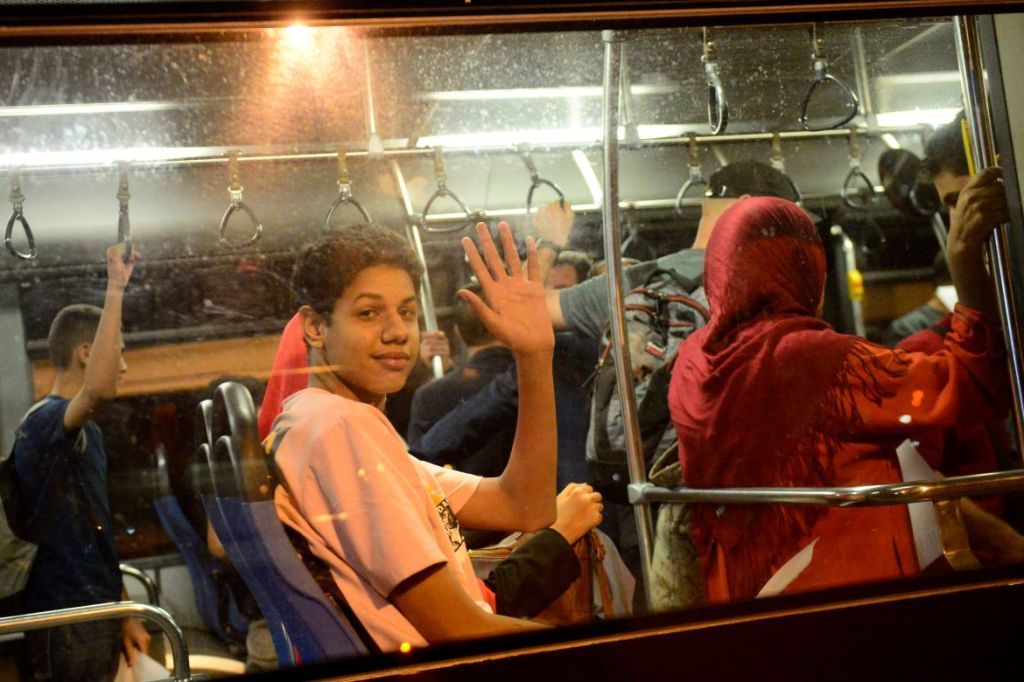
Passengers being bussed from war torn Khartoum – not all are so lucky

As the crisis develops in Sudan reporting from the BBC takes on its usual character of obfuscation rather than illumination.  The only concern of the BBC appears to be the fate of British nationals and the scramble to evacuate British passport holders from Khartoum as quickly as possible. 

The roots of the current situation in Sudan however inevitably have their origins in the neo-colonial grip of transnational corporations, which exercised control over Sudanese resources and were happy to prop up the corrupt government of Omer Al-Bashir from 1989 until his popular overthrow in 2019.  

The forces behind the revolution which overthrew Al-Bashir in April 2019 included the Professional Alliance, the Civil Society forces and the Sudanese Communist Party, part of an alliance of 80 organisations which signed a Minimum Programme for democratic change.

Any progress towards shifting the balance of power in Sudan was thwarted however with the civilian led government being ousted in a military coup in October 2021.  While the pro-democracy movement responded with a civil disobedience campaign the military responded with live gunfire resulting in hundreds of deaths.

The pro-democracy movement was demanding the transfer to state ownership those companies controlled by the army and security forces, which have a monopoly over the export of Arabic gum, cattle, gold and various agricultural products.  Demands for a new labour law, democratic liberties including the right to peaceful protest and the handing over of Al-Bashir and other war criminals to the International Criminal Court were not implemented.

These progressive measures were stymied by the reactionary elements of the civilian government, even before the October 2021 coup, but have had no chance of being progressed under the generals. Many of these elements were members of Al-Bashir’s security forces and some reactionary Islamic groups.  The military in Sudan has very much reflected the position of the former regime’s National Congress Party, the Islamic Brotherhood in all but name.  The chance for democratic or progressive change under the revolutionary forces’ slogan, freedom, peace and justice, have been severely setback by the present infighting.

The recent phase of conflict, which began on 8th April is effectively one between Sudan’s military and the country’s main paramilitary force. It is a proxy war led by the Rapid Support Force (RSF) and its leader General Mohamed Hamdan Daglo, or Hemeti as he is known, on the one hand, and the Security committee “of the National Islamic Front” in the Sudanese military headed by Al-Burhan on the other. Both sides are supported by their foreign allies.

The RSF was able to build its resources under the previous regime through an arrangement with the EU implemented in October 2014, known as the ‘Khartoum Process’.  The funding under the agreement was given to various African countries to halt the flow of African migrants reaching the European Union.  Sudan alone had received €215 million from this fund by 2017, much siphoned off by the RSF to fund its activities.

In effect the war, in which the main victims are the Sudanese people, is a power struggle between two reactionary military and political factions, who were previously united to prevent civilian rule through initiating the October 2021 coup.  However, the lure of control over Sudan’s significant resources, not least its gold deposits, has proven too difficult for the reactionary factions to resist.  The progressive Sudanese resistance committees have evidence, in the form of videos and documents, that shows both the Russian mercenary Wagner group and the Egyptians involved in smuggling gold.

The resistance committees are calling for the formation of an alliance against the war, and the restoration of civilian government, for the army to return to barracks and the militia to be dissolved.  Further than this the resistance is calling for the Sudanese revolution to continue, demanding the people’s control of their wealth, progressive economic development, and the building of a strong public sector that serves the people.

While the United Nations has previously been involved in some attempt at negotiations, key sections of the progressive forces have refused to negotiate with the military, who they regard as having no legitimate role, having seized power from the elected government in the October 2021 coup.

The progressive forces in Sudan have made calls for support and international solidarity to back the goals of the revolution and demand a return to civilian rule.  The Sudanese Communist Party, as part of the progressive alliance has issued a statement which includes the following,

“We condemn the military escalation between the two counter-revolutionary military forces. This is certainly an expected outcome of these factions’ leaders’ power struggle aimed at controlling the country’s resources at a time when their four years alliance in power has proven to have failed in running the country…”

The statement goes on to request support from politicians and trade unions in Britain in order to halt the current crisis, refuse to arm or train either of the forces involved and press the UN to initiate discussions towards a meaningful transition to civilian government.

The situation on the ground in Sudan is clearly complex and Western companies along with regional powers such as Saudi Arabia, Egypt and the United Arab Emirates will undoubtedly feel that their own positions are threatened if there is a successful popular revolution in the region.  The idea may spread! 

For that reason it is vital that the demands of the Sudanese people are made known, reported and supported.  Any attempts to thwart the progressive demands of the revolution will only reinforce the reactionary armed forces engaged in fighting at present, as well as the reactionary regimes supporting them.  For the sake of the people of Sudan and those of the wider region the current slaughter must stop.

Building BRICS of new development

22nd April 2023

President of Brazil, Lula de Silva, with New Development Bank President, Dilma Rousseff

The establishment of the BRICS New Development Bank (NDB) in 2015 was a major step forward in opening up the possibility for developing countries, and those of the Global South, to take a step towards controlling their own development programmes and reduce reliance on international finance institutions dominated by the US dollar.

The BRICS nations (Brazil, Russia, India, China and South Africa) not only represent a huge percentage of the world’s population but some of the world’s key areas of economic growth. The group has recently added Bangladesh, the United Arab Emirates and Egypt to its cohort, while Uruguay is in the process of joining, and many other countries have expressed interest.  For example, Argentina, Iran, and Algeria have formally applied to join the extended BRICS+ bloc.

In January this year South Africa’s Foreign Minister, Naledi Pandor, indicated the group’s intention to  “develop a fairer system of monetary exchange”, with a view to weakening the dominance of the US dollar.

“The systems currently in place tend to privilege very wealthy countries and tend to be really a challenge for countries, such as ourselves, which have to make payments in dollars, which costs much more in terms of our various currencies”, she said.

In a recent visit to NDB Headquarters in Shanghai, Brazilian President, Lula de Silva, said the NDB’s goal is “creating a world with less poverty, less inequality, and more sustainability”, adding that the bank should play a “leading role in achieving a better world, without poverty or hunger”.

Lula was in Shanghai to witness the swearing in of a former Brazilian President, Dilma Rousseff, as the new President of the NDB.  In an interview following her inauguration Ms. Rousseff stressed the role of the NDB in supporting countries with regards to climate change and sustainable development goals; promoting social inclusion at every opportunity; and financing the most critical and strategic infrastructure projects. 

Ms. Rousseff also stressed the need to tackle the higher inflation and restrictive monetary policies which are a feature of developed countries and are often passed on, in the form of high interest repayments, to those developing countries struggling to build their own infrastructure.

“It is necessary to find ways to avoid foreign exchange risk and other issues, such as being dependent on a single currency, such as the US dollar,” she stated.  Critically, Ms. Rousseff went on to state that,

“At the NDB, we have committed to it in our strategy.  For the period from 2022 to 2026, the NDB has to lend 30% in local currencies, so 30% of our loan book will be financed in the currencies of our member countries.  That will be extremely important to help our countries avoid exchange rate risks and shortages in finance that hinder long-term investments.”

To date NDB has invested in 96 projects, approving $32.8 billion worth of finance to support programmes which are climate-smart, disaster-resilient, technology-integrated and socially-inclusive.

While the BRICS countries, and those looking to gain membership of the NDB, are by no means a homogeneous group in terms of their political outlook the initiative remains an important one.  The stranglehold of imperialist designed institutions such as the International Monetary Fund (IMF) and World Bank, both of which are US dominated and controlled, has tied developing nations to Western economies in ways which have thwarted, rather than encouraged, their economic independence.

In reality, the tools of the imperialist banking sector are there precisely to generate dependence and keep former colonial nations within a neo-colonial orbit.  The deployment of Western corporations, infrastructure and technology only serves to reinforce those dependencies over the long term.  Inevitably there is usually a military pay off too, with arms contracts being tied into economic support and the stationing of military bases and US hardware often being part of the deal.

The NDB cannot break such entrenched relationships all in one go and is itself still dependent upon the existing international banking arrangements in order to function.  However, the fact that the concept of “de-dollarisation” is even on the agenda of developing nations, and that there is an emerging investment network which it does not control, will be of concern to the US.

No doubt much of the current US provocation towards China stems from the fear that the unipolarity it has enjoyed since the defeat of the Soviet Union is not only being questioned but is being actively challenged.  The extent of the NDB’s success may well be measured by the increasing belligerence of the US towards those countries which are part of its network.

Urgent action to free women journalists demanded  

12th April 2023


The Committee for the Defence of the Iranian People’s Rights (CODIR) has called for the immediate release of journalists, Niloofar Hamedi and Elahe Mohammadi.  The two women have been imprisoned by the regime in Iran since September 2022 on alleged charges of espionage. 

The only ‘crime’ committed by the two journalists however was to report on the death in custody of Mahsa Amini, who was killed by the so called ‘morality police’, for allegedly not adhering to Iran’s stringent hijab laws.

Hamedi wrote for the reformist newspaper Shargh and was the first journalist to report on the death of Amini, doing so from the hospital in Tehran where Amini had been on life support. Mohammadi had reported on the protests at Amini’s funeral in her hometown of Saqez in northwest Kurdistan province.

These imprisonments are part of an increasing pattern of persecution of journalists in Iran since the emergence of the Women, Life, Freedom movement which emerged after Amini’s murder.  More than seventy journalists have been imprisoned in Iran since the protests began last September, almost half of whom are women.

While the Constitution of the Islamic Republic of Iran formally recognises freedom of expression and freedom of the press, these provisions are more routinely honoured in their breech rather than their observance.  They are often overlooked or subjected to severe restrictions.

This recent upsurge in arrests may go beyond the regime’s usual harassment of journalists but the phenomenon is not limited to Iranian journalists covering the ongoing protests. The Islamic Republic has a long history of jailing journalists as well as subjecting them to extreme censorship and political pressure.

CODIR is calling for the release of the imprisoned women journalists, Niloofar Hamedi and Elahe Mohammadi, who have committed no crime.  They have done nothing more than report on the criminal activity of the Iranian state itself in highlighting the circumstances surrounding the death of Mahsa Amini.

Since the death of Ms Amini last September, Iranian people, with women and youth often at the forefront, have been taking to the streets across the country, despite the growing threats and brutal suppression carried out by the security forces, acting on the commands of the regime’s leaders.

CODIR Assistant General Secretary, Jamshid Ahmadi, has expressed condemnation of the incarceration of the two women and the lack of due judicial process in Iran.

“These imprisonments are a further example of the Iranian regime having no interest in justice and no commitment to press freedom,” he said.  “CODIR will continue to highlight the actions of the theocratic dictatorship in Iran in gagging those who have a legitimate right to freedom of expression.  The regime in Iran is clearly feeling under threat from the emergence of regular protests.  We reassert our ongoing commitment to support the popular struggles of the Iranian people towards the establishment of a modern, secular and democratic government.”   

CODIR has called for all forces supporting the struggle for human and democratic rights in Iran, to condemn the imprisonment of the women journalists, through issuing statements in solidarity with those campaigning for their release.  

CODIR requests that trade union affiliates write to the embassy of the Islamic Republic of Iran to make clear their opposition to these imprisonments and the restrictions placed upon freedom of expression in Iran. 

CODIR is also asking for individuals to write to their local MP, drawing their attention to the worsening situation inside Iran and requesting that they write to the embassy of the Islamic Republic of Iran on similar grounds, as well as using their platform in Parliament, to draw attention to the plight of the people of Iran.

Further info at http://www.codir.net

Opposing the China crisis

8th April 2023

Taiwan’s Tsai Ing-wen (left) meets with US House Speaker Kevin McCarthy

The trip to Central and North America of self styled Taiwanese ‘President’, Tsai Ing-wen, is the latest step in the propaganda war the West is playing against China.  Tsai is touring to shore up flagging support for recognition of the renegade island, withdrawn recently by Honduras, leaving Belize and Guatemala as the only regional states with formal ties with Taiwan.

While the United States does not formally recognise Taiwan, consistent with the position of the United Nations, every opportunity is taken to use Taiwan as leverage against the legitimate Chinese government.   The visit of then House Speaker, Nancy Pelosi, to Taiwan last year, was clearly a deliberate provocation to China, designed to ramp up tensions and push China towards action in relation to Taiwan. 

This week Tsai met the current US House Speaker, Kevin McCarthy, at the Ronald Reagan Presidential Library, where McCarthy stressed the urgency of arms deliveries to Taiwan and Tsai praised the “strong and unique partnership” with the US.  Unique is certainly the word, as the US position would be akin to China supplying arms to Scotland, should it prepare to declare itself free of the so called United Kingdom!

It comes as little surprise that Beijing has reacted angrily to the meeting between Taiwan’s leader and McCarthy.  After the Vice President, McCarthy is next in line to the President, so the meeting carries clear significance as a statement of US policy towards Taiwan and, by implication, China.

McCarthy, the most senior figure to meet a Taiwanese leader on American soil in decades, was joined by a bipartisan group of US politicians showing support for dialogue with Taiwan.

“We must continue the arms sales to Taiwan and make sure such sales reach Taiwan on a very timely basis,” McCarthy said at a news conference after the meeting, adding that he believed there was bipartisan agreement on this. “Second, we must strengthen our economic cooperation, particularly with trade and technology.”

In denouncing the meeting Beijing’s foreign ministry said in a statement that China will take “resolute and effective measures to safeguard national sovereignty and territorial integrity.”

While the formal US position is recognition of the People’s Republic of China as “the sole legitimate government of China”, with Taiwan as “part of China”, moves are clearly being made to overturn this position and the historical One China policy which has held since 1979.

Wrapped in talk of democracy and shared values however is what the US regards as its rightful economic interests in the Indo-Pacific area.  Taiwan is strategically placed on key trade routes and helps sustain US dominance over markets in Japan, the Philippines and South Korea.  The danger, as seen through US eyes, is that loss of control over Taiwan could allow the area to be controlled economically by China, as well as threatening the network of military bases which the US has in the region.

From the perspective of the US the economic rise of China poses a far greater threat than a maverick capitalist Russia, in spite of the recent intervention in Ukraine.   With Russia, the US and NATO were able to play a long game of encirclement, gradually enticing former allies of the Soviet Union into the NATO military alliance and boxing in Russia’s options and alliances.  The strategy is not without risk, not least as Russia still has significant military capability, and absorption into the NATO command structure is not universally accepted across Eastern Europe.

However, while major parts of the world do not accept the US narrative in relation to Ukraine, the West has been able to sustain an unparalleled propaganda assault over the past 18 months, to persuade significant sections of its population that the war in Ukraine is purely down to an act of Russian aggression.  

The current provocations against China are from the same playbook but the stakes are higher.  The Russian economy is relatively weak and Russia’s international reach limited.  The same cannot be said of China, clearly an economic power house which is increasingly challenging the US in key economic areas and in areas of international influence.

In addition, Taiwan itself is a world leader in the production of semi-conductors, vital to computers, mobile phones and cars.  In the US, Silicon Valley relies on Taiwan’s supply of semi-conductors, necessary to maintain US dominance over all high-tech fields.  China is yet to catch up in this area and the US clearly does not want to see that happen.

The AUKUS military pact, signed by the US, Britain and Australia in 2021, is another key element of the attempt to either contain China militarily or provoke it into action over Taiwan.

China is clear that it wants to reunite with Taiwan peacefully.  China does acknowledge a conflict scenario if Taiwan develops nuclear weapons or fully secedes. Either of these developments would pose an existential threat to China because they would mark the removal of all constraints on the US using Taiwan as its main forward base against the mainland.

The pace of economic growth driven by technological change, coupled with the clearly anti-imperialist stance of the Chinese government, means that the West cannot secure its goals by utilising the long game it was able to play against Russia.  The US is keen to sustain its position as the world’s only superpower, in both economic and military terms, and is struggling to do so.

As Frieda Park has noted recently in The Socialist Correspondent (Spring 2023),

“The US world order is the biggest threat to peace and the greatest constraint on progressive forces on a global scale as evidenced by the numerous illegal wars it has fought, and its military interventions and coups against leftist governments.”

Unless the forces of peace and progress are able to unite internationally the ongoing US provocations against China are only heading in one direction.  Opposing the escalation of military spending across NATO and demanding an end to the drive to war, particularly with China, are now urgent tasks.

Survival, struggle and Starmer

1st April 2023

Oil and gas companies, still not paying their share

It may be 1st April but no one is being fooled that the current crisis, which is driving up the cost of survival for many working class families, is anything other than capitalism ensuring that wealth and profit goes in one direction, while penury and poverty goes in another.   From today Council Tax rises kick in; water rates go up; mobile and broadband costs rise; and the government’s energy support scheme ends, meaning higher bills for many families.

The water companies will not make any losses.  Foreign investment firms, private equity, pension funds and businesses lodged in tax havens own more than 70% of the water industry in England, according to research published last year by The Guardian.

At a time when calls for more control over the dumping of sewage and the run off into rivers from farming activities are increasingly being made, overseas owners are making profits from a key utility which should be publicly owned.

Mobile and broadband providers can increase prices mid contract by inflation plus an extra amount on top, resulting in some companies putting prices up by over 17%, citing their underlying operating costs going up substantially as a result of regulatory requirements, higher energy prices and increased network costs.  The worst offenders are O2 and Virgin Mobile but all are hiking prices to some extent.

While warmer weather may reduce energy consumption the ending of the government’s energy support scheme will still hit working class families hard, as energy costs for most are still two or three times higher than they were just over a year ago.

In 2022 Shell increased its profits by 211% and over the same period the increase for BP was 215%, while the taxes these companies pay in Britain are extremely small, compared to the overall amount they pay globally.  This is due primarily to tax breaks which the British government allows for investment in oil and gas extraction.  This not only helps line the pockets of the energy company shareholders but gives the energy giants little incentive to invest in renewables and other alternatives to carbon based energy sources.

For the consumer that means being robbed today, in the form of higher prices, and the future being hijacked due to the lack of investment in alternative energy sources.

The rises in Council Tax are the inevitable consequence of central government cuts to local government services, which have been ongoing for over 30 years and were accelerated by the Tories under their austerity programmes since 2010.  A tax system which tackled obscene wealth, offshore havens and super profits could put more in the Treasury coffers to support much needed local government services.  However, these are not priorities within the capitalist system, which puts the drive for profit above all else and seeks to mutually support those few who make the profits from the labour of the many.

The headline rate of inflation last month, instead of falling as widely predicted, actually increased from 10.1% to 10.4% meaning that prices are going up even faster than anticipated.  For those on the lowest incomes it is estimated that the real impact of inflation is much harder, as food price inflation is running at over 17% and this is where poorer families spend a higher proportion of their income. 

The Bank of England continue to make optimistic noises to the effect that the rate of inflation should fall over the coming year but that will still mean price increases for struggling families, just at a reduced rate of increase, and then only if the Bank’s predictions come to pass!

Still, the Tories claim there is some light in the darkness, the minimum wage has increased by 92p per hour to £10.42 per hour!   However, even this 9.7% rise is not in step with inflation so, to all intents and purposes, those on the lowest wages will still be out of pocket.

Meanwhile discussions continue with some sections of the workforce over settlements to recent disputes, which were fuelled by the accumulated impact of successive austerity drives and the Tories’ continued emphasis upon lining the pockets of their friends in the City of London.  The offer to both nurses and rail workers is below their initial demands but an improvement on the original offers, demonstrating that direct action can result in concessions being won from employers.

However, junior doctors still await a realistic offer and management at Royal Mail continue to hold out against a reasonable settlement for postal workers.  The desire of the Tories to put any disputes to bed before local elections in May and a forthcoming General Election still looks shaky.

The reality is that any agreements reached in the short term will have a limited shelf life as the capitalist system, based upon class antagonism, is always going to see conflict emerge in one sector or another.  No amount of firefighting by the Tories will stop the working class and its organisations from making demands for better wages, terms and conditions.

Unfortunately, another step away from giving any leadership in that struggle was taken by the Labour Party this week, when the National Executive Committee (NEC) supported a motion to ban former leader, Jeremy Corbyn, from standing as a Labour candidate in his constituency of Islington North.

Labour may well be on course to win a General Election but the abandonment of the principles of working class solidarity, peace and international solidarity, all to the fore under Corbyn’s leadership, are casting a shadow over what difference a Starmer government will make to the working class.

Until it is evident that the ruling class are truly trembling at the prospect of a government which is not the Tories, the benefits for the working class of a change of furniture at 10, Downing St may be little or none at all.  

If Starmer’s intention is merely the continuation of capitalism by other means, as it has been for previous Labour government’s, he is likely to find his position very precarious, very quickly.  After over a decade of Tory austerity a further dose of the same medicine will not go down well and the patient, not wishing to be fooled again, may well resort to a second opinion.     

Sunak shakes hands with apartheid

25th March 2023

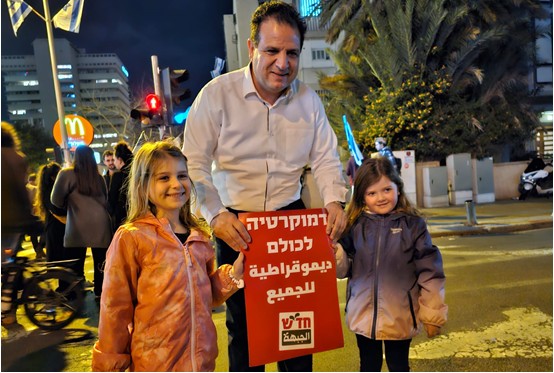
“Democracy for All” – demand protesters in Israel

The protests which have been swelling the streets of Israeli cities against the machinations of Benjamin Netanyahu’s right wing coalition government, spilled onto the streets of London yesterday as the Israeli anti-democrat was welcomed by the Tories.  While Netanyahu shook hands with British Prime Minister, Rishi Sunak, on the steps of Downing Street, nearby protesters held up Israeli flags and shouted “Netanyahu go to jail, you can’t speak for Israel”.

Mass protests have been a feature of Israeli life for weeks as Netanyahu’s religious-nationalist coalition proposed changes to the judiciary that would give the government more power to choose judges and limit the Supreme Court’s power to challenge laws.

Without a trace of irony Downing St has stated that in his meeting with Netanyahu the British Prime Minister, “stressed the importance of upholding the democratic values that underpin our relationship, including the proposed judicial reforms in Israel.”  Although the pair shook hands on the steps of 10, Downing St, a planned photo opportunity was cancelled due to the vehemence of protests.

The proposals by the right wing coalition appear to have sparked the conscience of the liberal intelligentsia in Israel, who fear the erosion of their democratic rights.  Those on the Left in Israel, who have been actively supporting democratic rights, including those of the Palestinians, long before the proposed reforms, fear that things could go further.   They see a danger that the elements in Netanyahu’s government, who are religious fundamentalists even further to the right than him, will see this as just the first step towards institutionalising much of the apartheid practice for which Israel has become notorious.

Amnesty International, in a report compiled over more than four years and published in 2022, analysed decades of legislation and policy which it said proved Palestinians were treated as an inferior racial group, stating,

 “Israel has established and maintained an institutionalised regime of oppression and domination of the Palestinian population for the benefit of Jewish Israelis — a system of apartheid — wherever it has exercised control over Palestinians’ lives since 1948.”

The Netanyahu visit comes hard on the heels of a policy paper signed by the Foreign Secretaries of Britain and Israel setting out a Roadmap for future relations between the two states.  The paper does nothing to address the failure of successive British Governments to address Israel’s systematic violations of international law.  There is not a single reference in the paper to Israel’s ongoing military occupation of Palestinian territory and planned formal annexation of the West Bank. 

Reference to Palestinians in the policy paper is limited to one sentence in which Britain promises to cooperate with Israel “in improving Palestinian livelihoods and Palestinian economic development”.  There is no mention of addressing Israel’s ongoing denial of Palestinians right of self-determination and right of return.  As agreed through the United Nations, under international law.

The Palestine Solidarity Campaign (PSC) has expressed alarm at the actions of the British government, especially when the government of Israel is widely seen as the most ultra nationalist, racist, misogynistic and homophobic in Israel’s history.  The PSC has also expressed concerns regarding the strengthening of cyber security relations outlined in the paper.  As PSC note,

“The cybersecurity sector in Israel is interwoven with the military – with Israel being central to the development and export of military grade spyware. This poses a danger to human rights across the world.”

Netanyahu’s government presides over a situation where it has been killing Palestinians at the rate of more than one a day since the beginning of 2023, at the same time accelerating plans for settlement expansion, and confirming plans to move forward with the annexation of the West Bank.

Right wing Minister, Bezalel Smotrich, last month openly called for a Palestinian village to be wiped out.  He recently made a speech in France denying the existence of the Palestinian people, from a podium depicting a map of Israel covering not just the illegally occupied West Bank but the state of Jordan. 

PSC have also expressed concern that the new paper “gives credence to the Israeli Government’s narrative that to accurately describe this system of oppression and call for action to address it, is a form of antisemitism”.

The policy paper can only serve to further undermine any credibility Britain may have left, as a state committed to upholding rights and international law. For the British ruling class and their representatives in the Tory Party, this is of little consequence, as long as their political and economic interests are served.  

However, there is no doubt that both Netanyahu’s visit and the policy paper will be rightly condemned by all of those who realise there is no way to bring peace to the Middle East that does not address the root cause of conflict, the ongoing denial of rights to the Palestinian people.

Being above the law

19th March 2023

Anti-war protests in London, February 2003

The International Criminal Court (ICC) in The Hague this week issued an arrest warrant for Russian President, Vladimir Putin, for allegedly overseeing the abduction of Ukrainian children.  The pressure upon the ICC, from the governments of Ukraine and the United States, to point the finger at Putin for war crimes has been building and their position has finally been made public.

Ukrainian President, Volodymyr Zelensky was quick to applaud the ICC saying that the issuing of the warrant was “an historic decision which will lead to historic accountability.” The US based Yale Humanitarian Research Lab alleges that 6,000 Ukrainian children have been sent to Russian “re-education” camps while Zelensky claims that the number is 16,000 or more.   

It is little surprise that US President Joe Biden, also welcomed the issuing of the warrant.

 “He’s clearly committed war crimes,” Biden told reporters on Friday. “I think it’s justified,” he said, referring to the arrest warrant.

German leader, Olaf Scholz, has also chimed in claiming that the issuing of the warrant shows that “nobody is above the law.”

The court also issued an arrested warrant to Maria Lvova-Belova, Russia’s commissioner for children’s rights, on the same charges.  Lvova-Belova has an altogether different take on the alleged deportations stating,

 “It’s great that the international community has appreciated this work to help the children of our country: that we don’t leave them in war zones, that we take them out, that we create good conditions for them, that we surround them with loving, caring people.”  

The Russian intervention in Ukraine has undoubtedly been a disaster for the peoples of both nations.  Given the right wing nationalist leanings of both governments in the conflict, it is no surprise that the issue of children is one which could be weaponised by either side.  What is equally noteworthy about the ICC announcement however is the timing.

On the 20th March it is the 20th anniversary of the illegal US invasion of Iraq in 2003, without United Nations support, but with backing from Britain.  The now infamous “dodgy dossier” which claimed that Iraq had weapons of mass destruction, along with the desire of the US to avenge the 9/11 bombings of 2001, in which Iraq played no part,  were the excuses for the US led regime change operation.

Getting rid of the dictatorship of Saddam Hussein, whom both the US and Britain had previously backed in a prolonged conflict with Iran, was deemed sufficient reason to inflict widespread destruction upon Iraqi cities, its health, education and service infrastructure and its people.

By May 2003 US President George W Bush had declared “mission accomplished”.  For Bush this meant that Saddam was removed and the Ba’ath Party infrastructure destroyed.  It did not mean that the US had any plan to rebuild the ruined nation, which quickly degenerated into chaos, conflict and instability.

The right wing opposition to Saddam have since established a corrupt political structure that protects their power through a system of patronage and corruption.  It is a widely held view in Iraq that, “Saddam has gone but 1,000 more Saddams have replaced him”.

Demonstrations against the corrupt regime have been met with brutality and repression.  In one protest alone in 2019, where young people demanded fundamental political rights, over 600 were killed and many more injured or arrested.

An estimated 500,000 Iraqi citizens are likely to have died from direct war related violence, with over 4.2 million people being displaced by 2007, according to the UN Refugee Agency.  US troops occupied the country until the official withdrawal in 2011, although 2,500 remain in order to address the threat of Islamic State, another consequence of the destruction of Iraq.

No-one involved in the illegal initiation or perpetration of the war in Iraq have had warrants for war crimes issued against them by the ICC. 

In the build up to the invasion demonstrations, notably on 15th February 2003, had attracted an estimated 30 million people to protest in opposition to the war in 600 cities across the world, notably one million people on the streets of London alone, with thousands more on the streets of Glasgow.

While these protests did not stop the war the momentum behind them left a strong legacy of anti-war sentiment which the British ruling class have been working to dilute ever since.  Much of the support for Jeremy Corbyn as Labour Party leader was built around his anti-war views and emphasis upon international solidarity.  The smear campaign against Corbyn was consciously targeting his internationalism, especially in relation to the cause of Palestine, to undermine his ‘patriotic’ credentials and associate support for peace movements as a sign of weakness.

The carefully orchestrated media campaign around the war in Ukraine is also part of this process, justifying the massive spend upon weapons to prop up the Ukrainian government, as opposed to stressing the need for diplomatic solutions to the crisis, which will recognise the claims of all parties involved.   

A peace narrative would not fit with the anti-Russian objectives of NATO and its allies, nor would it support the demonisation of the Russian President which appears to be central to the Western game plan.   The ICC warrant appears to be the latest part of that strategy.  The profile which the media have given the issue is designed to drown out any parallels with the position of leaders such as Tony Blair and George W Bush, who do not have the ICC on their backs for their war crimes.

The fact that 20 years on the people of Iraq, not to mention those of Afghanistan, Libya and Palestine, find themselves in a worse position than before US and NATO interventions is not the story the West wants to tell.  The ICC warrant against Putin may be an attempt by the West to suggest that no one is above the law but it also serves to highlight the fact that not all leaders are subject to it.    

Impartiality and illusion

11th March 2023

Gary Lineker – gagged by the BBC for speaking out on the Illegal Migration Bill

To suggest that state broadcaster the BBC have scored an own goal by suspending Match of the Day (MOTD) presenter, Gary Lineker, would be a worthy tabloid headline if the Tory supporting tabloids were not lined up to criticise Lineker rather than the BBC.   

For tweeting that the language used by Home Secretary, Suella Braverman, in describing the proposed policy to return asylum seeking migrants to their country of origin, whatever the consequences, as being akin to the language used in 1930’s Nazi Germany, Lineker has been asked to ‘step back’ from MOTD until an agreement is reached.  In plain terms the BBC is being asked to gag Lineker from making any comments the government find controversial.

What the BBC could not have foreseen is that key pundits, including Ian Wright and Alan Shearer, have refused to appear on MOTD in solidarity with Lineker, or that match commentators will refuse to work on MOTD today.  By kowtowing to the fulminating Tory right wingers, who are holding Rishi Sunak and his Cabinet as political hostages, the BBC has embroiled itself in an even bigger mess.

BBC Director General, Tim Davie, claims that the position on Lineker is in defence of the BBC’s supposed impartiality.  However, there has been no impartiality in the reporting of the so called migrant crisis. The government line that the country is being overrun by illegal immigrants appears to be generally accepted, in spite of the evidence to the contrary.  The real crisis is that people are forced to be migrants at all, very often as a consequence of military interventions in which Britain has colluded, such as Afghanistan, Libya and Iraq, from where people have been forced to flee for fear of their lives.

The fact that the government’s proposals, contained on the Illegal Migration Bill, have been questioned, with several legal commentators expressing reservations over whether or not the law is compatible with Britain’s commitments under international treaties, including the European Convention on Human Rights (ECHR), should be the real story.  The fact that a sports commentator has an opinion about the proposals is simply diverting attention form the real issue.

With the Home Office facing a backlog of more than 160,000 immigration cases and only a small number of countries available to which the government can send failed asylum seekers, many have branded the bill “unworkable”.

In other vital but less headline grabbing news, the Local Government Information Unit (LGIU) has this week published a report which finds that more than half of local councils plan to raise Council tax by the maximum permissible 5%, while at the same time reducing the services they have on offer.

In order to balance budgets 93% of councils plan to increase charges in areas such as parking and waste collection, while over two thirds plan to utilise reserves or sell off land and assets to balance the books.  The LGIU suggest that at least 12 councils are on the edge of “effective bankruptcy” as they struggle to meet the core statutory services, such as social care, which they are obliged to deliver.  As the LGIU report states,

“This is an unsustainable situation. Eventually, there will be no more cuts that councils can make without endangering their essential services. Our evidence suggests that for just under 10% of councils, this is the situation they find themselves in now.”

Those services which are non-statutory and which councils are not obliged to deliver, have taken a hammering over the years.  Cultural activity such as arts centres, theatres and museums have seen massive reductions.  Swimming pools have either been closed or farmed out to the private sector but are in any case struggling to meet rising energy costs.

Over a decade of Tory inflicted austerity, followed by the profit crisis for capitalism, which is forcing living costs up for working class people, is pushing many councils to the brink of financial ruin.  In order to try and mask their responsibility for this growing crisis the Tories have created a series of regional Elected Mayors, handing them control over budgets which run to billions of pounds over a 30-year period.  The proposed North East Mayoral Combined Authority (NEMCA) is the latest creation to emerge, with an Elected Mayor likely to be in place by May 2024.

However, as ever with any Tory scheme which is supposed to devolve power and contribute to ‘levelling up’, it is merely smoke and mirrors.   The money taken out of local government over decades is not compensated for by the regional Mayoral deals.  The fanfare and publicity over the deals grabs the headlines but there is often little analysis of how much real impact they can have and how little they will redress the damage done to local communities.

There is no indication from Labour that they are likely to end this masquerade and put real power back into the hands and local communities and local councils, properly funded and resourced to meet local needs.

One of the areas under pressure due to the attacks upon local government is support for the homeless, including refuges and migrants, clearly not a concern for a government whose main policy drive is to “stop the boats”, as it attempts to ramp up its jingoistic pre-General Election rhetoric.

The very use of the slogan “stop the boats” in itself is an echo of the approach taken in 1930’s Germany to Jews.  Described as ‘vermin’ by the Nazis, the dehumanisation of a people laid the groundwork for tolerance of their persecution.  In the same way, “stop the boats” is a step down the same path and echoes more recent repatriation policies advocated by Tory racist Enoch Powell and the National Front in the 1970’s.

While the BBC will fill its news coverage with scenes from Ukraine, in line with government support for the right wing nationalist government there, it avoids facts about the reality of life for many in Tory Britain and the consequences of government policy for working class communities.  This is not impartiality, it is partisanship of the highest order. 

News reporting is by its nature a selective process, but what a broadcaster chooses to select tells a story in itself.  The BBC can try to cover up its failure to report objectively on the Illegal Migration Bill by suspending Gary Lineker.  It can fail to report on the realities of day to day life for working class communities under the Tories.  It cannot make these choices and at the same time claim to be impartial.  The BBC is and always has been, the voice of the British state.  The BBC’s claim to impartiality is an illusion.  Whatever it may claim, the BBC’s actions always speak louder than its words.    

Greasing the palms and oiling the wheels

4th March 2023

The Patriarch of Jerusalem – oiling the wheels of British aristocracy

Mendacity and infighting are never far from the surface in the Conservative Party but this week has been something of a jamboree for those taking delight in seeing the party of the British ruling class turn itself inside out.

Headlines have been dominated by the farrago of the WhatsApp messages between former Health Secretary, Matt Hancock, and his various cohorts around decision making during the Covid 19 pandemic.  Hancock shared the messages, which amounted to 100,000 in total, with journalist, Isabel Oakeshott, whom he loaned a pen in order to script his memoirs, Pandemic Diaries, aimed at getting him off the hook for the thousands of unnecessary Covid deaths on his watch.

As a Daily Telegraph journalist, it is fairly safe to assume where Oakeshott’s political sympathies will lie.  She was presumably chosen by Hancock as someone who would give his version of events the best spin.  However, a mere two months after publication, hardly time for Hancock’s book to hit the remaindered bins, Oakeshott, who probably has not donated her fee to any NHS Strike Fund, has decided to release the messages and tell all to a national newspaper.  No surprises, that would be the Daily Telegraph

Whether Oakeshott has received a further fee for spilling the beans, and giving the Telegraph an exclusive, may come out in due course but suffice to say she is unlikely to be winning any awards for journalistic integrity.

In the scheme of things Oakeshott’s actions are mere misdemeanours compared to the crimes of Matt Hancock who, quite apart from presiding over the highest Covid death rate in Western Europe, has continued to pocket cash since he left office.  For his television stint on I’m A Celebrity, Get Me Out of Here Hancock is said to have added £320,000 to his bank balance, while at the same time claiming his salary as an MP, even though he was not there to do the job!  Presumably his memoirs came with a healthy advance too, so it is unlikely that Hancock will be visiting his local food bank any time soon.

Hancock has made the headlines because of his high profile role during the pandemic and the disastrous consequence of poor decision making on his watch.  The fact is however, that Hancock is not an exception but the rule when it comes to money grabbing amongst Tory MPs.  Boris Johnson is estimated to have made in the region of £5m since being forced from office, the latest payment being a £2.49m advance from one agency alone.

Johnson has resurfaced in the news this week as the Partygate inquiry prepares to get underway.  The interim report from the House of Commons Privileges Committee has already cast doubt on Johnson’s defence, indicating that his own communications chief admitted that there was a “great gaping hole”  in Johnson’s account of Partygate; that a colleague was “worried about leaks of PM having a piss-up and to be fair I don’t think it’s unwarranted”; and that there was reluctance from the government to provide the committee with unredacted evidence when Johnson was still prime minister, which held up its inquiry.

In spite of his recent earnings bonanza, the government has signed off tax payer funded legal support worth £222,000 to Johnson during the privileges committee investigation.  For his part Johnson regards the committee’s report as a vindication of his position and has instead suggested that it was,

 “…surreal to discover that the committee proposes to rely on evidence culled and orchestrated by Sue Gray, who has just been appointed chief of staff to the leader of the Labour Party.”

Johnson has been joined by the usual suspects in the European Research Group, Jacob Rees-Mogg et al, in condemning Gray’s original report as a left wing whitewash, given the post that she has been offered by Starmer.

The timing of Starmer’s announcement will not be helpful to the work of the privileges committee in the short term, as Johnson and his cronies will use every lever they can to cast doubt on Gray’s original report on the breeching of Covid regulations on Johnson’s watch. Whether it will be enough in itself to shift the weight of evidence against Johnson is unlikely.

The appointment of Gray is perhaps more important for what it says about Starmer’s intentions, should he be elected Prime Minister, namely that British capitalism is safe in his hands.  As a career civil servant and dyed in the wool establishment figure, the appointment of Gray is Starmer saying loudly and clearly that the boat will not be rocked.  Apologists for the Labour right have called the move astute, others see it as yet another sign of Starmer’s efforts to engineer a rightward shift in Labour policy.

In a further effort to normalise the absurdities of the British class system one of the lead stories on the BBC this weekend has concerned the consecration of the oil to be used in the coronation of King Charles III.  The oil has been created using olives from two groves on the Mount of Olives, using a formula dating back centuries.  Ruling class lackey, the Archbishop of Canterbury, Justin Welby, enthused that,

“This demonstrates the deep historic link between the coronation, the Bible and the Holy Land.  From ancient kings through to the present day, monarchs have been anointed with oil from this sacred place. As we prepare to anoint the king and the queen consort, I pray that they would be guided and strengthened by the Holy Spirit.”

That anyone in full possession of their faculties in the twenty first century would give any credence to the notion of the divine right of kings is hard to believe.  That the BBC should report it as credible rather than credulous, sadly is not.

It is certainly true that the realities of the temporal world are such that what the government plans to spend on the coronation could be better spent on the wage demands of rail workers, posties, nurses, teachers and junior doctors, all desperate to make ends meet.  Such are the priorities of the British ruling class.  Yet another indication that they have more than outstayed their welcome.