

10th December 2023
Gaza at breaking point

Israel’s relentless bombardment of Gaza has levelled entire neighbourhoods and displaced hundreds of thousands.
The third vote calling for a ceasefire in Gaza was vetoed at the United Nations Security Council on Friday (8th December) night by the United States, the only vote against the resolution. To its continued shame the British government abstained without speaking. In spite of the massive ongoing humanitarian need, with UN General Secretary, Antonio Guterres, asserting that, “We are at a breaking point. There is a high risk of a total collapse of the humanitarian system”, NATO powers continue to defer to the line of the Israeli regime that any ceasefire would allow Hamas to regroup.
The advent of Israeli ground forces into southern Gaza last week marked a new escalation in the war on the Palestinian people declared by the Israeli Defence Force (IDF). While the stated war aims of the Israeli government are to destroy Hamas the sheer scale of civilian casualties, now over 16,000, along with the displacement of over 1.2 million people means that this is effectively a war against the whole population in Gaza.
Contrary to its vote at the UN even the United States last week called for a more restrained military campaign, following the seven day truce and release of hostages. However, it is clear that the religious fundamentalists in the Israeli government are off message with their US military paymasters. Israeli Prime Minister, Benjamin Netanyahu, has been categorical in what he sees as the mission of the IDF stating,
“We continue to fight with all our strength until we achieve all our goals; the return of all of our abductees, the elimination of Hamas and the promise that Gaza will never be a threat to Israel again.”
Gaza would never be a ‘threat’ to Israel if the legitimate rights of the Palestinian people were acknowledged and a peaceful solution found, rather than one based upon occupation, intimidation and military force. The peace option is clearly not on Netanyahu’s agenda.
The coalition which was assembled, following last year’s elections in Israel, saw Netanyahu pledging to expand illegal Israeli settlements in Palestinian territories and to eventually annex the West Bank. His religious fundamentalist allies in the coalition reject the establishment of any Palestinian state.
The IDF are now looking to divide Gaza into dozens of numbered blocks then direct civilians into areas that will allegedly not be attacked. Given the civilian death toll so far the Palestinian population could be forgiven for not following leafletted QR code directions “to track and follow the instructions of the IDF.”
The stark reality for the people of Gaza is that there is nowhere to run and nowhere to hide from the IDF threat. While the US may cry crocodile tears over its Middle East proxy running out of control it cannot hide the fact that Israel, as the world’s fourth largest military force, is largely bankrolled by Washington. The US has contributed $3.3 billion to Israel’s military budget this year alone.
The British government is also complicit in the supply of arms to Israel. British industry provides 15% of the components in the F35 stealth combat aircraft that are currently being used in the bombardment of Gaza. The contract for the components is estimated by Campaign Against Arms Trade to be worth £336m since 2016.
While the IDF can deploy state of the art missile technology courtesy of the world’s major arms manufacturers, the Palestinians are largely confined to the use of inaccurate home made missiles when they can be smuggled past the Israeli blockade of Gaza and ongoing occupation of the West Bank.
It is worth remembering that 80% of the inhabitants of Gaza are refugees. This is hardly the basis of a threat to the military might of Israel or the existence of the Israeli state.
The scale of the Israeli bombardment has reduced large parts of Gaza to rubble and reduced the health service to being barely able to cope with even the most severe emergencies. World Health Organisation senior emergency officer, Rob Holden, commenting on healthcare in Gaza recently said,
“There is no standing room. The floor is awash with blood and patients lying waiting to receive life saving care.”
The mass displacement of people from the north to the south of Gaza, enforced by the IDF, now means that the population of the south has doubled to over 2 million people. Save the Children, visiting a shelter in the southern city of Khan Younis, observed that,
“It was designed for 1,000 people but has 35,000 in it. There are 600 people for every toilet.”
This is the actual reality of the mantra of Western leaders that Israel has ‘the right to defend itself’. The operations of the IDF in Gaza are not about self defence they are an exercise in extermination, of Hamas it is claimed, but in reality an attempt to extinguish the will of the Palestinian people to assert their right to defend themselves, a right to resist occupation and to uphold the norms of international law.
Demonstrations worldwide continue to make the case for Palestinian rights against the disproportionate response of the Israeli state and to assert, defend and promote the legitimate rights of the Palestinian people under international law. The call for a ceasefire and the need for a negotiated two state solution to the occupation of Palestine must be addressed by the international community and the crimes of the current Israeli leadership exposed.
3rd December 2023
Tories taxing the poor

Prime Minister Rishi Sunak – vicious cuts behind the smile
Now that the dust has settled on Jeremy Hunt’s Autumn Statement the realities on the ground are becoming clearer and it is no surprise that it is the poor who will be hit the hardest. In what is widely regarded as a package which will herald a new wave of austerity, the proposals are likely to see a massive sale of Council assets, Councils being reduced to little more than the delivery of emergency services, Nottingham being the latest to succumb, and the vulnerable being put at greater risk.
While the headlines in the BBC state media and the Tory press have emphasised reductions in tax and national insurance, the reality is that local government, being part of a non-protected government department, will face an annual cut of 3.4% a year for five years. Even Tory Council leaders are talking of an “existential threat” to local services with one Tory Council leader warning.
“We need to have a recognition that if we aren’t properly funded the rest of the country will fall over.”
Shaun Telford, chair of the Local Government Association, painted a bleak picture of the number of local councils facing financial crisis stating,
“Any suggestion of any further cuts on top of the current deficit and we will see the number of Councils set to go bankrupt rise from one in ten to a significantly higher number. They’ve done the restructures. They’ve done the asset sales, they’ve done the staff reduction, they’ve done the service redesign, they’ve done the transformation. They’ve used the reserves already. Once those things are gone, they’re gone.”
There is a clear danger that as further austerity bites many local councils will simply not be financially viable, with all of the implications that means for local services upon which many working class communities rely. While austerity driven cuts have already forced many Councils to cut back or close a wide range of universal services such as arts centres, libraries and sports facilities, current areas under consideration include school meals and adult social care provision.
The care sector is also likely to suffer as a result of government proposals to restrict the health worker visa scheme to exclude care workers, who have been part of the scheme since 2022. That has seen 123,500 care workers recruited from overseas since the scheme was opened and its demise could force the closure of care facilities, putting even more pressure upon under funded local authorities.
The government are currently considering restrictions on the number of relatives care workers may bring into the country; a cap on the number of care workers who can be hired from abroad; and changes to the minimum salary overseas workers must be paid, effectively resulting in the exclusion of care workers.
The reality remains that in spite of the Tory dash for votes, with national insurance cuts and the promise of more tax cuts in the pipeline, the Office for Budget Responsibility (OBR) is still predicting that the overall tax burden will rise each year to a postwar high of 37.7% of GDP by 2028-29. The freeze on income tax thresholds alone, including the personal allowance, is expected to drag four million workers into paying income tax in the next five years.
The HMRC estimate that an additional four million people have already started paying tax since 2020, with 1.6 million hitting the higher 40% tax band.
The other side of the tax coin however is the issue of what the government is spending the money on. While services for the vulnerable in working class communities are in danger of going to the wall the Tories are happy to send weapons to the right wing nationalist government of Ukraine; support Israeli genocide against the Palestinian population in Gaza; and commit to the purchase of weapons of mass destruction, by agreeing to the renewal of the US controlled Trident nuclear submarine programme.
Tory government of the rich, by the rich, for the rich should come as no surprise. The compliance of the Labour leadership however, must be challenged and voters given a real choice at the General Election next year. While a Labour government in itself is no guarantee of progressive policies, pressure from trades union affiliates and mass extra parliamentary action can be influential in pushing Labour towards acting in the interests of working class communities.
A progressive programme for change which includes sufficient funding for local government; a green investment plan to address the climate emergency; abolition of Trident, withdrawal from NATO and a non-aligned foreign policy; a programme of Council house building with no right to buy; a fully funded NHS free at the point of use; and a return to comprehensive education would be a starting point for demands of an incoming Labour government. It may not quite amount to socialism, the only real answer to address working class needs, but it would be a step in the right direction.
18th November 2023
Pointless shuffling of the pack

Cameron and Sunak – failed Prime Ministers unite
Not content with having a failed lame duck Prime Minister, Rishi Sunak, in 10, Downing St; and two failed Prime Ministers (Theresa May, Liz Truss) on the backbenches; the Tories have now wheeled out failed former Prime Minister, David Cameron, to take on the role of Foreign Secretary.
Cameron, suddenly elevated to the House of Lords to overnight become Lord Cameron was, alongside his Chancellor George Osborne, the architect of austerity. In cahoots with the opportunist Liberal Democrats, who propped up the Tory government from 2010-15, Cameron and Osborne launched a vicious attack upon the public sector, slashing services essential to working class communities, piling the pressure upon local government and denying access to university and many further education opportunities to working class children.
Cameron’s was a government of the rich, by the rich, for the rich, typical of all Tory administrations, but one which made sure that the gambling debts, run up in the 2008 financial crash by the City of London speculators, were covered by squeezing the working class while the banks and the corporations got away scot free.
It is ironic to say the least that Sunak’s ploy in reshuffling his Cabinet, sacking right wing xenophobe Suella Braverman and bringing in Cameron, is intended to give it a more liberal hue, an attempt to woo back centrist Tories away from the lure of the Liberal Democrats.
The reality is that, however the Tory pack is shuffled, the working class will never be dealt a winning hand because the table is rigged and the Tories are being bankrolled by those who own the casino!
Cameron, May, Johnson, Truss and Sunak have all had the keys to 10, Downing St since 2010 and the lot of the working class has only gone from bad to worse, while the City of London rakes it in and the number of British billionaires increases. There were 177 billionaires in Britain in 2022, up from 53 in 2010, with a combined wealth of £653bn.
Using inflation-adjusted wealth data from archive copies of the Rich List, the combined wealth of Britain’s billionaires is calculated to have risen from £53.9bn in 1990 to the £653bn level in 2022. This represents an increase in billionaire wealth of over 1,000% over the past 32 years.
By way of contrast recent research by the Joseph Rowntree Foundation has found that 3.8 million people experienced the most extreme form of poverty, destitution, in 2022. That is a 61% increase since 2019. More than 1 million of those affected were children. Many people are struggling to afford the basics to live and rely on charities and food banks to survive.
With an Autumn Statement next week, Chancellor Jeremy Hunt is already trailing the prospect of squeezing the way in which welfare benefit increases are calculated, in order to create room for some pre-election tax cuts, in a desperate attempt to buy votes. Meanwhile, many local authorities are facing the prospect of Section 114 notices, meaning that they do not have the cash to fund their statutory obligations and are, in effect, declaring themselves bankrupt and unable to run essential services.
In the world’s sixth richest country the scale of poverty and the slashing of support should be a national scandal. Instead, the Tories simply engage in sleight of hand politics, creating more complex Mayoral authorities, and giving them back a fraction of the funds robbed from local government in the past fifteen years, under the guise of expanding local control of resources. Both at a local and national level Labour politicians are complicit in this confidence trick, arguing that having control over some resources is better than none at all.
Meanwhile, queues at food banks continue to get longer, more people are making the ‘lifestyle choice’ to sleep on the streets and working class young people are priced out of the property market, as well as having to expend a huge proportion of their income on renting often substandard accommodation.
The wave of strikes across a range of sectors from rail workers, postal workers, teachers, junior doctors and others over the past year points the way forward for resistance to Tory attacks. The massive marches across Britain in support of the rights of the Palestinian people in recent weeks are a further indication that the Tory narrative, domestically and internationally, is rejected by huge sections of the population.
The 56 MPs voting for a ceasefire in Gaza this week, in spite of the united front against that view from the Tory and Labour leaderships, not only demonstrates a recognition that the struggle of the working class is an international struggle but that there are still representatives within Parliament who can add their voices to the extra-Parliamentary activity which will be essential for lasting change.
However Rishi Sunak reshuffles his Cabinet, whatever tricks Jeremy Hunt tries to deploy in his Autumn Statement, nothing can disguise the political bankruptcy of the Tories. The challenge for the Left is to move the Labour leadership away from its current Tory-lite position and build upon the genuine desire for real change which is evident across the country.
Labour leader Kier Starmer continues to ignore the warning signs and persists in his strategy of hoping that being acceptable to ‘middle England’ will also keep the working class on board. As the militant mood in the country continues to grow however, Starmer may yet find himself in for a shock.
12th November 2023
Labour still spineless on ceasefire in Gaza

The people united…thousands marching across Westminster Bridge calling for a ceasefire in Gaza
As thousands once more take to the streets of London to march for peace and call for a ceasefire in Gaza, British Home Secretary, Suella Braverman, continues to fuel the fires of conflict by condemning the protests as ‘hate marches.’ Braverman has further suggested that the Metropolitan Police actively favour left wing marches over those of right wing organisations. Coming from the woman who claims that homeless people living in tents are making a ‘lifestyle choice’ there should be little left to surprise anyone. Yet Braverman has a habit of pulling something that little bit more mind boggling out of the bag.
The phoney war about the Armistice Day commemoration and the National March for Palestine being on the same day, 11th November, has rumbled across the TV and print media all week. The fact that the respective events were some distance and hours apart has not stopped the press and politicians from insisting that the police ensure that there was no disruption to the Armistice Day events, even though there was no threat or likelihood of any disruption taking place.
On the day the only source of aggravation, including 105 arrests, were counter demonstrators from the far right English Defence League and their ilk, the very people Braverman was seeking to protect.
All of this posturing serves two purposes. The first, in the undeclared war within the Tory party to succeed lame duck Prime Minister, Rishi Sunak, being seen to be tough on ‘radicals’ and left wing protesters plays well to the Tory base. Throw in the inference that such protesters are likely to be anti-semitic and supporters of Hamas and you are half way to a place on the leadership ballot.
The second is to undermine the just cause and legitimate claim to statehood of the Palestinian people themselves. It is a familiar trope of the right wing to caricature anyone supporting freedom and democracy as a terrorist. Nelson Mandela was infamously characterised in this way by the Tories when imprisoned in South Africa. Many other liberation leaders across the former British Empire have suffered similar demonisation.
The BBC cannot report any atrocity committed by the Israeli Defence Force (IDF) in Gaza without the qualification that the action is in response to “the killing of 1400 people on 7th October by Hamas, designated a terrorist organisation by the UK government.” Rarely, if ever, does the media qualify Palestinian resistance with a phrase indicating it is in response to “nearly 60 years of illegal occupation under international law and countless massacres in the West Bank and Gaza as well as the ongoing illegal blockade by land, sea and air of Gaza, which has been implemented by Israel since 2007.”
The famous ‘balance’ of the BBC does not stretch quite this far.
Meanwhile the IDF continue to bomb hospitals in Gaza with impunity, massacre men, women and children in refugee camps and carpet bomb the northern half of Gaza into rubble. The death toll is currently at an estimated 11,000 people, and rising. Last Friday alone Israel launched air strikes on four hospitals and a school. It is little wonder that half of the death toll so far are children.
The only ‘concession’ the Israeli state has made is to institute four hour long so called ‘humanitarian pauses’, to encourage people to be herded to the south of Gaza, while the IDF takes the time to re-arm and refuel, ready for the next wave of bombardment. Terms such as ethnic cleansing and genocide rarely, if ever, pass the lips of the media’s political pundits but how else to describe the actions of the IDF?
Western leaders’ claims that IDF action is justified because Israel has ‘the right to defend itself’ were paper thin to start with. They can only be seen now as a completely transparent attempt to dodge the hard work of getting down to holding the Israeli regime to account for decades of systematic oppression and the implementation of apartheid laws against the Palestinian people.
However, cracks in the Western edifice are beginning to show under the pressure of public protest. French President Emmanuel Macron has now joined the call for a ceasefire, saying that Israel must stop bombing Gaza and killing civilians, adding that there was “no legitimacy” for the bombing.
Unsurprisingly, in a statement responding to Macron’s comments, Israeli Prime Minister Benjamin Netanyahu said that world leaders should be condemning Hamas, and not Israel.
That the Labour Party leadership in Britain, at the instigation of Kier Starmer, should find itself in a less progressive position than a right wing French President on such a key issue of peace and international solidarity is shameful.
Labour have recently unveiled a PR campaign characterising Prime Minister, Rishi Sunak, as spineless. Hard to argue with that. Yet when it comes to the question of Palestinian rights it is the Labour leadership in general, and Kier Starmer in particular, lacking a backbone.
28th October 2023
Stop Israeli violence – ceasefire now!

Worldwide demonstrations against Israeli violence continue
The Israeli massacre of Palestinian civilians continues to gather pace with the relentless bombarding of the Gaza Strip and increasing land based military activity in preparation for a full scale invasion. The death toll on the Palestinian side is currently nearly 8,000 people, with 3,000 of those dead being children. While the Israeli Defence Force (IDF) claim not to be targeting civilians, focussing upon their stated objective of rooting out and immobilising Hamas, they are not doing this with any precision, given the unacceptable level of civilian casualties.
As the world’s fourth largest military force, armed with state of the art precision guided missiles supplied by the United States, the IDF are either poorly trained in the use of such technology or they are lying. Given the level of investment the US has made into ensuring that Israel is fully equipped to be the US proxy in the Middle East, it is hard to believe that training in weapons use would be overlooked.
IDF spokesmen are now seeking to justify targeting hospitals, on the spurious argument that Hamas have weapons and facilities based beneath medical locations, and that this is justifiable under international law.
The discovery of international law is a recent one for the Israelis, who have been ignoring it for decades when it comes to the robbery of land from Palestinians in order to ‘settle’ religious fundamentalists; illegally occupying territory which should form part of a Palestinian state; and undertaking regular killings of Palestinians on the streets and in refugee camps. The current massacre in Gaza is just the latest in a long line of breeches of international law which the Israelis routinely flout.
When United Nations General Secretary, Antonio Guterres, this week suggested that it was “important to also recognise the attacks by Hamas did not happen in a vacuum”, going on to add that “The Palestinian people have been subjected to 56 years of suffocating occupation”, the Israelis expressed outrage and called for his resignation.
When Guterres suggested that Palestinians had “seen their land steadily devoured by settlements and plagued by violence; their economy stifled; their people displaced and their homes demolished”, Israeli outrage turned to apoplexy. Yet every word of Guterres’ statement is true.
In response, Israeli Foreign Minister, Eli Cohen, suggested that “Hamas are the new Nazis,” adding that, “Just as the civilised world united to defeat the Nazis, just as the civilised world united to defeat Islamic State, the civilised world has to stand united behind Israel to defeat Hamas.”
Cohen did not outline how the ongoing massacre of civilians, the rejection of a ceasefire, the refusal to supply fuel to hospitals and other public facilities in Gaza, or the order for all civilians in the north of Gaza to move south, were reasons for the so called “civilised world” to stand united behind Israel.
The United Nations General Assembly on Friday adopted a major resolution on the Gaza crisis, calling for an “immediate, durable and sustained humanitarian truce leading to a cessation of hostilities.” The breakdown of the recorded vote, included 120 members in favour and 14 against, with 45 abstentions. To the shame of Britain, the position adopted by the Tories was to abstain, while not surprisingly the United States and Israel were amongst the 14 voting against.
While General Assembly votes are not binding upon member states the vote nevertheless shows that the balance of international opinion is not in favour of the Israeli action. Within the EU it was notable that while Germany, Italy and Netherlands abstained, France and Ireland voted in favour of the resolution.
The UN resolution called for rescinding of the order by Israel, “the occupying Power”, for Palestinian civilians, UN staff and humanitarian workers to evacuate all areas in the Gaza Strip north of Wadi Gaza and relocate to the south.
The General Assembly also called for the “immediate and unconditional release” of all civilians being illegally held captive, demanding their safety, well-being and humane treatment in compliance with international law.
It also reaffirmed that a “just and lasting solution” to the Israeli-Palestinian conflict can only be achieved by peaceful means, based on the relevant UN resolutions and in accordance with international law, and on the basis of the two-State solution.
Given the growing international consensus in favour of a ceasefire in the present conflict, and the need for a two-State solution to the crisis longer term, the supine position of the Labour leadership in Britain, toeing the Tory line that “Israel has the right to defend itself”, is becoming more untenable by the day.
While the majority supporting Palestinian rights do not endorse the Hamas action of 7th October, the almost 60 year long abuse of the human rights of Palestinians by the apartheid Israeli state must be weighed in the balance when the wider picture is considered. Labour must come down more firmly in defence of Palestinian rights and assert the rights of the Palestinian people, suffering under Israeli occupation, to defend themselves.
From the beginning of 2023 up to 6th October, the day before the offensive from Gaza began, Israeli forces had killed 240 Palestinians including 45 children, the highest level of killing since the UN began to keep accurate records in 2005.
As Palestine Solidarity Campaign point out,
“Gaza, with a population of over 2 million – of whom 50% are children – has been subjected to an Israeli-imposed blockade for the last 16 years. This collective punishment of an entire population is in absolute defiance of international law. It is worth remembering that 80% of the inhabitants of Gaza are refugees. “
Demonstrations in London and other major cities in Britain and worldwide continue to make the case for Palestinian rights and against the disproportionate response of the Israeli state to the Hamas action. Further action as endorsed and encouraged by Palestine Solidarity Campaign can be found here https://palestinecampaign.org/emergency-response-2023/
22nd October 2023
Biden fans the flames of war

US President Joe Biden – pledging unwavering support for Israel
The foreign policy of the United States in the Middle East was further exposed as unashamedly partisan this week with the visit of President Joe Biden to Israel. The outcome of Biden’s visit was twofold. Widely proclaimed across Western press and media was the negotiated agreement to allow a convoy of twenty aid trucks into Gaza from Egypt. The fact that this represented a mere 5% of the needs of Palestinians in Gaza was conveniently unreported.
Also flying under the media radar was the deal struck with the Israelis to further weaponise the world’s fourth largest military, by providing even more arms to Israel. Wrapped in a request to Congress to approve a further $105 billion in weaponry for Israel and Ukraine, is an allocation of $40 billion to Israel alone.
Biden’s national security adviser, Jake Sullivan, told reporters that,
“..these conflicts can seem far away, but the outcome of these fights for democracy against terrorism and tyranny are vital to the safety and security of the American people.”
With 4,000 Palestinians already killed in the Israeli response to attacks by Hamas last week, and an imminent Israeli ground offensive, which is likely to see that number increase significantly, it is difficult to see how the ongoing massacre can be justified in the name of the American people. Maybe Sullivan meant, in the interests of US political and economic control in the region or in the interests of re-asserting US military superiority?
The US has form in this regard, with disastrous consequences in Afghanistan, Iraq, Libya and Syria so it can come as no surprise that the Palestinian people are not likely to greet US declarations with open arms. Israeli ambassador to Britain, Tzipi Hotovely, provided an even more cavalier response this week in relation to the question of civilian casualties, pointed to the bombing of Dresden in WW2 to justify the fact that civilian casualties were inevitable in wars. The comparison was more apt than Hotovely may have realised, as the bombing of Dresden is widely regarded by many as a war crime.
The dangers of escalation are underlined by the warning from Iran that it may be compelled to intervene if Israel launches a ground offensive against Gaza. While the positioning of US naval assets in recent days is a clear signal to Iran to back off, the struggling Islamic dictatorship may have its own reasons for being seen to engage against Israel.
Facing a wave of protests at home, and clinging on to a diminishing support base, the Iranian theocracy may well see a foreign adventure as a means by which it can unite the population in a common cause. The extent to which the dictatorship has alienated large sections of the population however, make this a high risk strategy, and any Iranian intervention in Gaza may only precipitate foreign intervention in Iran itself, with a view to installing a more US friendly regime in Tehran.
In any event such an escalation risks the stakes being raised to an alarming level as the increasing co-operation that Iran is building with both Russia and China is unlikely see those powers sitting idly by, thus drawing more players into a potential downward spiral of Middle East conflict.
In Britain the House of Commons, at least on its front benches, has been unified in the mantra that “Israel has the right to defend itself”, with both Prime Minister, Rishi Sunak, and Labour leader, Kier Starmer, putting this above the rights of the Palestinian people, as enshrined in international law and UN resolutions, or indeed the rights of occupied people to resist the aggression of their occupiers.
Voices of reason, such as that of Richard Burgon MP, who echoed the call of the United Nations for a ceasefire and a negotiated process to de-escalate the conflict, were met with mutterings of ‘disgraceful’ from the Tory benches.
However, mass demonstrations in London, other European capitals, Washington and across the Arab world, in defence of Palestinian rights, have shown that the Israeli position does not enjoy universal support. Inside Israel even members of the Israeli Parliament, the Knesset, are being sanctioned for speaking out against the polices of the religious fundamentalist government of Benjamin Netanyahu.
Ofer Cassif, an Israeli parliamentarian who warned last week that an “ethnic cleansing” of Palestinians was underway at the hands of the Israeli Defence Forces (IDF), has been expelled from the Knesset.
That body’s Ethics Committee expelled Cassif from all sessions and meetings of the legislature for 45 days. The expulsion came in response to a series of critical interviews with the media in which Cassif criticised the government of Prime Minister Benjamin Netanyahu for its war against the Palestinian people in Gaza.
Cassif is a leading member of the Communist Party of Israel and has represented the Democratic Front for Peace and Equality (Hadash) coalition in the Knesset since 2019. He is Jewish but has long been an opponent of Zionism, calling it a “racist ideology and practice which espouses Jewish supremacy.” In April 2021, he was beaten by Israeli police when protesting illegal evictions of Palestinians in East Jerusalem.
The coalition which was assembled, following last year’s elections in Israel, saw Netanyahu pledging to expand illegal Israeli settlements in Palestinian territories and to eventually annex the West Bank. His religious fundamentalist allies in the coalition reject the establishment of any Palestinian state.
With the possibility of a pre-emptive Israeli strike against Iran-backed Hezbollah in Lebanon by no means off the table, the possibility of significant escalation still looms. Pressure upon Western governments and the Israelis to agree a ceasefire must be increased if further slaughter is to be avoided.
It will also be necessary for the international community to stop pussyfooting and take a stronger line with Israel, regarding its international responsibilities and the need for a two state solution if progress is to be made. As well as external pressure, support for opposition voices in Israel, not aligned with the current fundamentalist regime, will be vital to move toward a genuine solution which recognises the rights of both the Palestinian and the Israeli people, based upon mutual respect and peaceful co-existence.
14th October 2023
Free Palestine

Thousands protest in London against Israeli atrocities in Gaza
Last weekend’s assault and killing of civilians in the Gaza Strip by Hamas was a response to the pent up anger of many Palestinians, frustrated by the illegal Israeli air, land and sea blockade, imposed in 2007, and the 57 year long illegal occupation by Israeli forces. The tactics deployed by Hamas by no means have the backing of all Palestinians but the events of last weekend were triggered following a week in which Israeli ‘settlers’ ran amok throughout the occupied territories under the auspices of their government, desecrated the Al-Aqsa Mosque and carried out another pogrom in Huwara.
The Communist Party of Israel and Hadash (Democratic Front for Peace and Equality) have made clear their condemnation of the Israeli government and the ongoing provocations against the Palestinian people expressing,
“…deep concern about the use of recent developments by the Netanyahu government to carry out a vengeful attack on the Gaza Strip and call on the international community and the countries of the region to intervene immediately to silence the drums of war and initiate moves that will lead to the promotion of a political solution.”
Israel’s Defence Minister, Yoav Gallant, ordered “a complete siege of the Gaza Strip” last Monday in response to the Hamas action. Gallant went on to say that,
“There will be no electricity, no food, no fuel, everything is closed. We are fighting human animals and we act accordingly.”
The Gaza Strip is home to 2.2 million Palestinians and has regularly been described as the world’s largest open air prison. The collective punishment of the civilian population, as ordered by the Israelis is a war crime under international law. The massive bombing campaign which has been ongoing throughout this week has not only flattened residential areas but has hit a densely populated refugee camp.
Hospitals are reported to have used a month’s worth of supplies in one day and are overwhelmed by the number of casualties.
The Israeli army is the fourth most powerful in the world. As the Community Party of the USA has pointed out,
“The U.S. government is the main contributor to Israel’s military budget to the tune of $3.3 billion this year alone and also bears responsibility for the escalation. Adding to the danger and the region’s instability, the U.S. continues to broker unprincipled alliances and economic agreements between Israel’s reactionary anti-democratic apartheid-like state on one side, and the right-wing Arab monarchies on the other. The repressive political regimes of these two sets of states mirror one another. Their machinations undercut the Palestinian struggle for human rights and political sovereignty while bolstering U.S. political, economic and military supremacy in the region.”
The United States is reported to have moved naval assets into the Mediterranean to support the Israeli military. British Prime Minister, Rishi Sunak, spoke with Israeli leader, Benjamin Netanyahu, earlier in the week while Foreign Secretary, James Cleverley, visited Israel to confirm British government support for the right wing, religious fundamentalist, Israeli regime.
The outcome of the Sunak/Netanyahu call was a pledge from the British government to send a significant military package to the Israeli regime, including RAF surveillance aircraft, two Royal Navy ships to patrol in the Eastern Mediterranean, three Merlin helicopters and a detachment of Royal Marines.
US Secretary of State, Antony Blinken has pledged an “unwavering focus on halting the attacks by Hamas” while saying nothing about Israel’s ongoing flouting of international law and its declared intention to commit further war crimes. Likewise, the British government has made no comment on the ongoing atrocities committed against the Palestinian people by the Israeli government, its illegal occupation or its ongoing contempt for United Nations resolutions and international law.
Israel’s military on Friday ordered the evacuation of northern Gaza, a region that is home to 1.1 million people, about half of the territory’s population, within 24 hours. Many fear that this could signal an impending ground offensive. While the Israeli military has not yet confirmed a decision on this, raids have been undertaken by the Israeli Defence Force within Gaza.
The evacuation order, delivered to the United Nations was regarded by UN spokesman Stéphane Dujarric as “impossible” without “devastating humanitarian consequences.” The order for all of the north of Gaza also applies to all UN staff and to the hundreds of thousands of people who have taken shelter in UN schools and other facilities since Israel launched round-the-clock air strikes last Saturday.
The UN is already reporting nearly 3,000 homes destroyed and nearly 1 million people, almost half of the population of the Gaza strip, displaced. These people have nowhere safe to go if Israel continues with its bombardment and launches a ground invasion.
Israel claims to have dropped 6,000 bombs on Gaza, an area roughly the size of the Isle of Wight, in the initial six days of its campaign. So far over 2,200 Palestinians have been killed in Gaza with over 8,700 wounded. That figure includes those fleeing to the south of Gaza following the Israeli announcement to ethnically cleanse the north.
Labour leader, Kier Starmer, has defended the ‘right’ of the Israeli regime to cut off water and electricity supplies to the population under perpetual bombardment in Gaza stating,
“I think that Israel does have that right, it is an ongoing situation, obviously everything should be done within international law but I don’t want to step away from the core principles that Israel has the right to defend herself.”
As a former human rights lawyer Starmer failed to elaborate on how collective punishment methods, such as the withdrawal of water supplies to a large urban area, could be done within international law.
A number of local councils in Britain have taken to flying the flag of Israel over civic buildings in misplaced demonstrations of ‘solidarity’, though none appear to be flying the flag of Palestine, as the right of Israel to defend itself appears not to extend in the same way to the Palestinians.
The mainstream media coverage is overwhelmingly pro-Israeli, with coverage of the Palestinian position reduced to exhortations to condemn Hamas, or the growing humanitarian crisis. There is no attempt to analyse the underlying causes of Israeli occupation and failure to adhere to international law and UN resolutions.
A national demonstration in London on 14th October, organised by Palestine Solidarity Campaign and Stop the War amongst others, has attracted thousands in opposition to the immediate violence and the ongoing apartheid practices of the Israeli regime. Responses are being organised across Britian in support of the Palestinian cause and must be supported in order to support the legitimate rights of the Palestinian people and condemn the Israeli regime.
The often heard diversion that opposition to the religious fundamentalists running the Israeli government is anti-semitic or a trope for anti-semitism must be rejected. A political solution to the situation in Israel/Palestine is the only way forward and that must see both communities being able to live together without one being occupied or terrorised by another.
7th October 2023
Labour – still not a General Election shoo in

Labour leader Keir Starmer has said he will honour the oil and gas licences granted by the Tories
Labour activists will gather in Liverpool this weekend with the boost of a victory in the Rutherglen and Hamilton by election, doubling Labour’s parliamentary representation in Scotland from one to two seats. While this has certainly generated buoyancy in the Labour leadership the result does not necessarily mean a groundswell in Labour votes amongst the Scottish working class. If anything, the 37.2% turnout, down from over 65% in 2019, suggests that there is still a huge undecided cohort of voters to play for. In spite of this result Labour is still far from a shoo in at the next General Election.
Labour’s retreat from championing the needs of Scotland’s working class has been a key feature of its dwindling support for decades, pushing many voters into the arms of the nationalist Scottish National Party (SNP), always ready with the illusion of the lure of independence as the promised land of prosperity.
Labour’s chances in Scotland have been enhanced, not so much by the leadership taking a stand in favour of workers’ rights, but on the recent implosion of the SNP. This followed the resignation of erstwhile leader, Nicola Sturgeon; the police investigation into finances, under the control of Sturgeon and her SNP Chief Executive husband, Peter Murrell; and the less than enthusiastic reception accorded new SNP leader, Humza Yousaf, from sections of the party.
Like the opportunity created by the implosion of the Tories across Britain, Labour is staring into an open goal in Scotland and a tap in should ensure it a substantial increase in the number of seats in the House of Commons in 2024, potentially making a decisive contribution to the election of a Labour government.
Speeches on the conference floor and on the fringes in Liverpool will no doubt reflect this mood of optimism but Labour’s retreat from key position in recent weeks will give many cause for concern that an already weak programme will be diluted further in the election manifesto.
On the question of private schools for example, Shadow Chancellor, Rachel Reeves was quite emphatic in 2021, stating,
“Here’s the truth: private schools are not charities. And so we will end that exemption and put that money straight into our state schools. That is what a Labour government will do.”
However, only two weeks ago, in the face of outcry from the private school sector, the Labour leadership said it no longer needed to end the charitable status of private schools to achieve its policy of charging 20% VAT on fees and ending business rates relief in England.
The Labour leadership had previously shown little backbone following Tory leader Rishi Sunak’s revision of green policies, by pushing back the ban on the production of new petrol and diesel car production from 2030 to 2035. While Labour has supported the original position, consistent with achieving net zero carbon targets by 2050, it wobbled following Sunak’s announcements and claimed it would not reverse it if elected.
At the same time, the announcement of the development of the Rosebank oilfield, one of the biggest new oil and gas projects in years, saw further Labour equivocation. Earlier in the year Labour shadow energy secretary, Ed Miliband, attacked the Rosebank oil field proposal as a “colossal waste of taxpayer money and climate vandalism.”
Immediately following the announcement however Labour leader, Kier Starmer, was on the airwaves stating that “…as a matter of principle we will accept the baseline that we inherit from the government if we win that election … in order to ensure we have the stability that we desperately need in our economy.”
All of which casts some doubt on the firmness of Angela Rayner’s “cast iron commitment”, as articulated in a speech at the TUC conference in Liverpool in September, to push through an employment rights bill within 100 days of entering office if the General Election is won by Labour.
Rayner also promised the repeal of Tory anti-trade union minimum service levels legislation, which requires minimum levels of service during a strike, characterising it as a “spiteful and bitter attack that threatens nurses with the sack”. Labour’s New Deal for Working People would include protections against unfair dismissal, a ban on zero-hour contracts, more flexible working and ending fire and rehire.
Labour still effectively takes the Tory whip on key foreign policy issues, such as Trident nuclear submarine replacement; fuelling the war in Ukraine; demonising China; and defending foreign interventions in general, as part of the NATO military alliance.
Left leaning delegates will have their work cut out over the weekend to make any headway on getting more progressive policy positions passed, let alone have any chance of them making a Labour manifesto. The current right wing grip on candidate selection and policy development will ensure that, if the outcome of a General Election is a Labour victory, it will be led by a Cabinet shaped in Kier Starmer’s image.
Should that come about the honeymoon will no doubt be short lived, as workers realise that Labour is not delivering for them, that the profits crisis that threatens workers cost of living is not resolved, and that the climate emergency is not being tackled with sufficient vigour.
The challenge to keep the Red Flag flying, “while cowards flinch and traitors sneer” will continue to be real and require both pressure upon representatives in Parliament, and mass extra parliamentary action, if any semblance of benefit for the working class is to emerge from a Labour government.
30th September 2023
Pushing back on the hostile environment
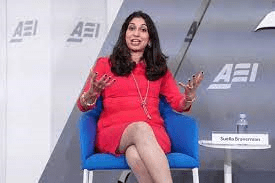
Suella Braverman – keen to maintain a hostile environment for migrants
The Tories head into their annual conference in a worse state than usual this weekend. After 13 years in power, with nothing to show but the impact of austerity, an ongoing wave of strike action, an NHS close to tipping over, schools collapsing and a poor Brexit deal to haunt them, it is no wonder that the fissures which have been evident for years are becoming fully fledged cracks.
Rishi Sunak is attempting to stake out ground on policies he thinks will be popular, being a ‘friend to the motorist’, rolling back on green commitments and generally fanning the flames of culture wars over any subject he thinks will win him votes. At least 30 Tory MPs, including Priti Patel and even Liz Truss, have come out to say that they will not support any policies which mean an increase in taxes.
Pretender to Sunak’s position, Home Secretary, Suella Braverman, has already set out her stall on the issue of refugees and migration policy. In a speech this week she challenged the basis of the 1951 UN Refugee Convention, suggesting that the criteria for asylum are no longer fit for purpose and ought to be revised. Braverman is essentially dodging the failure of the governments “stop the boats” policy by suggesting that it is the international rules that are wrong not the government policy.
Both Sunak and Braverman are keen to weaponise the issue of asylum seekers and refugees, playing upon the perceived prejudices and fears of sections of the population with whom they think a hard line on migration will win votes. This is both the voters in the South East, in areas where asylum seekers are more likely to enter the country, and in so-called former Labour red wall seats where the assumption is that the anti-migration thrust of right wing Brexiteers delivered the anti-EU vote.
The possibility that the anti-EU vote in working class areas was as a consequence of the fact that EU membership for 40 years had done little for working class communities, while enriching the City of London and the big corporations, is one that both Labour and the Tories dodge. The lazy view that working class voters are all anti-migrant, and therefore bound to sign up to hardline policies such as “stop the boats”, shows a high degree of condescension in the leadership of both political parties.
The narrative around asylum seekers and refugees is certainly more in line with the editorial position of the Daily Mail than it is on the facts. The reality is that, according to the Refugee Council, at the end of 2021 around 89.3 million people were forcibly displaced across the world. Of these, 27.1 million were refugees, while 53.2 million were internally displaced within their country of origin.
Far from the Britain being swamped as a consequence the Refugee Council calculate that Britain is home to around 1% of the 27.1 million refugees who were forcibly displaced across the world.
Under international law, anyone has the right to apply for asylum in any country that has signed the 1951 Convention and to remain there until the authorities have assessed their claim. The convention also recognises that people fleeing persecution may have to use irregular means in order to escape and claim asylum in another country.
That this is exploited by criminal gangs looking to take advantage of those seeking asylum, through the use of overcrowded boats for example, is clearly a scandal which has to be stopped. However, given that the vast majority of refugees are from areas of conflict, where NATO military intervention has been a key factor in causing displacement, Syria and Afghanistan being the key examples, stopping displacement at source will mean a decisive shift in the Western foreign policy of military intervention.
Part of the pushback in Britain, from the Tories and their right wing supporters, is that asylum seekers should be returned to the country they first entered in order to seek asylum. However, there is nothing in international law to say that refugees must claim asylum in the first country they reach, although a European regulation allows countries in the EU to return an adult asylum applicant to the first European country they reached.
Of the 12 countries that take in the most refugees, Germany (with a population of 1.2 million refugees) is the only high-income country, and the only one not neighbouring the countries most represented within the refugee community. Over 605,000 Syrian refugees, 147,000 Afghan refugees, and 146,000 Iraqi refugees are currently hosted in Germany. Britain does not even make the list.
The Tories are set to make issues of taxation, the environment and migration key battlegrounds at their conference in order to perpetuate a culture wars narrative which they think will appeal to voters. The Daily Express certainly reinforces the line taken by Suella Braverman, suggesting in a recent editorial that,
“The division between seeking asylum and economic migration has been muddied and the net result of this loose system, believes the Centre for Policy Studies think tank, is that the right to move to another country can potentially be extended to an astonishing 780 million people.”
This is scaremongering of the highest order and needs to be exposed.
While the Tories default to their standard position of blaming ‘foreigners’ for the country’s problems, the Labour leadership continues to run scared, rather than tackling the issues of the positive impact of migration, exposing Britain’s historical colonial role and present neo-colonial foreign policy positions, as being key issues to address.
These issues will continue to sharpen as the General Election approaches. Unless Labour is prepared to take the fight to the Tories the right wing will continue to offer easy answers to complex problems, in an effort to fuel prejudice, sustain a hostile environment for migrants and instil division in working class communities.
Mass mobilisation outside Parliament, as well as continued pressure upon Labour MPs, in particular, will be vital if the perception of asylum seekers and refugees is to change and an environment of welcome, rather than hostility, created.
24th September 2023
Pale Green

Rishi Sunak – pale green policies for a dimmer future
Tory efforts to capture the headlines with popular policies took a further nosedive this week when Prime Minister, Rishi Sunak, reneged on the previous policy of halting the production of petrol and diesel cars by 2030 and pushed the date back to 2035. Sunak’s justification was characteristic of the Tories when they attempt to present themselves as being on the side of the working class; disingenuous and mendacious.
Sunak claims that he does not want to pass additional costs onto hard pressed families, already having to deal with a cost of living crisis and struggling to meet increased energy bills. Sunak conveniently sidesteps the fact that his rise to the dizzy heights of 10, Downing St has come during a period of 13 years of Tory led austerity, which has squeezed the working class, the services many of them rely on and the wages they earn. Britain’s ruling class may boast of an increase in billionaires but for the working class it has been a period of seeing more people homeless and sleeping rough.
Sunak’s army of Public Relations advisors are desperate to present their man as a nice guy in a sharp suit, who only has the people’s interests at heart. His own very comfortable millionaire status is airbrushed, as being of little or no consequence, and not a barrier to him understanding the needs of working class people.
Having to sell the third Prime Minister in less than the lifetime of a Parliament, to a population watching corporate profits rise along with prices at the till, will undoubtedly take some creative PR thinking. Quite which bright spark pitched back pedalling on the green agenda as an idea may only be revealed in Sunak’s memoirs. However, if the Tory ship was not holed below the waterline before this week, it has been listing significantly since Sunak’s speech.
As well as pushing back the ban on new petrol and diesel cars to 2035 Sunak’s announcement also ditches the plan to phase out gas boilers from 2035. Even the government’s own Climate Change Commission said that the announcement, ”is likely to take the UK further away from being able to meet its legal commitments”, which are to achieve net zero by 2050.
The British government commitments to date have been key elements of the British submissions under the 2015 Paris agreement on climate change, known as nationally determined contributions (NDCs). Alok Sharma, Chair of the Cop26 summit in Glasgow in 2021, has criticised Sunak’s u-turn stating,
“rolling back on certain policies will mean we need to find emissions reductions elsewhere if we are to meet our legally binding near-term carbon budgets and our internationally committed 2030 emissions reductions targets.”
Sunak has not indicated how emission reductions will be met by other means and is characteristically more concerned with saving his job in the next twelve months, rather than any contribution towards saving the planet.
Shadow Energy Secretary for Labour, Ed Miliband, said in response to Sunak’s announcement that Labour would stick with the 2030 phase-out for petrol and diesel cars but that the party would look at the other ones. He suggested the boiler targets could be revisited by Labour but wanted to stick to the previous plan on energy efficiency.
The fear of being accused of putting people’s bills up means that Labour are pussyfooting around the issues rather than coming up with a comprehensive plan to support the transition to greener travel and energy. Such an approach is in danger of playing into Sunak’s hands as he seeks to weaponise climate issues ahead of a General Election next year.
A bold plan to meet the cost of heat pumps from a windfall tax on oil companies or have a more generous scheme for scrappage and replacement of non-electric vehicles would be a starting point. Tackling the issues head on may also help to generate greater understanding of the risks of inaction.
Across Europe only 2% of people live in areas deemed safe by the World Health Organisation, measured by the presence of tiny particles (known as PM2.5s) that cause significant diseases. This applies equally to rural areas as well as urban centres, with a major source of dangerous particles coming from ammonia from farms. Farm ammonia contributes 25% of these particles in London, 32% in Birmingham and 38% in Leicester.
The farming and food lobby, like those of oil and fossils fuels, has significant sway with politicians so these realities and swept under the carpet, while the Tory press focus on the impact of Ultra Low Emission Zones on the few individuals who may feel a negative financial impact.
Such divide and rule tactics are fundamental to capitalism, the drive to prioritise profit over the needs of the people, to allow the dictates of the market to rule over a socialist planned approach to issues of the environment.
Sunak’s pale green choices now will not win him a General Election but there is every chance that they will cow the Labour Party into shying away from any pronouncements deemed to be too radical. The need for extra parliamentary action over issues of the environment and the future of the planet has never been greater.
A clear programme which puts people before profit and articulates the political need to change the pollution driven capitalist system is vital. The next General Election in Britain may be the short term focal point but the impact of choices made now have repercussions far beyond that.
17th September 2023
Labour – keeping the front bench warm for the Tories?
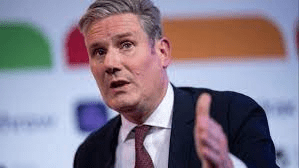
Labour leader Kier Starmer – Tory policies in a Labour wrapper?
With the looming political party conference season likely to be the last before a General Election in 2024 there will be a strong pre-manifesto air as the main contenders set out their stalls.
Not exactly contenders but the Liberal Democrats, in Bournemouth from 23rd September, will still be hopeful of increasing their vote share and MP representation by pedalling their usual bland Tory-lite fare, in an effort to take seats from the Tories in the South. With no hope of actually forming a government, the Lib Dems will be hoping to swing enough votes to be part of a balance of power negotiation, should neither of the two main contenders manage a clear majority. Given how well that went for them, getting into bed with the Tories in 2010, expect some grass roots scepticism about the prospect.
The Tories stray into Northern territory, holding their conference in Manchester on 1st – 4th October. Already bookended by rail strikes on 30th September and 5th October the symbolism of the Tories being hemmed in by working class discontent is not difficult to read. With disputes having rumbled across the rail network, the NHS, schools, the postal service and others over the past year the fact that the Tories are not delivering for working people could hardly be clearer.
Led by a multi-millionaire, bankrolled by big business and with a Cabinet straight out of the public school sector, the sense of the Tories being the party of the ruling class, seeking to protect the privileges of the ruling class could hardly be stronger. Nevertheless, Tory divisions continue to reflect the tug of war within the capitalist class in Britain as to whether their best interests lie in an alignment with the European Union or in forging an independent path outside of the constraints of the EU, while still being governed by the economic strictures which twenty first capitalism implies.
It is an irony that it may be Labour who save the Tories’ bacon, by settling some of these issues, should Kier Starmer end up with the keys to number 10, Downing St. For the Labour leadership there is no dispute about membership of NATO; fuelling the ongoing NATO inspired war in Ukraine; wasting public money on weapons of mass destruction, such as Trident nuclear submarines; or ramping up anti-China rhetoric which could ultimately lead to a war in South East Asia.
On the issue of Europe Starmer is currently making conciliatory noises about greater cross border co-operation and having a closer ongoing relationship with the EU. Shadow Foreign Secretary, David Lammy, has also been very clear, stating,
“We want to approach the review of our trade arrangements in a very constructive manner, and we want to build on the partnership that we have seen on Ukraine. That is why we are proposing a new security pact.”
While some of the more rabid right wing Tories, locked in their Eurosceptic world may balk at such talk, there is nothing here to scare off many Tories. If such arrangements were in place by the time a 2029/30 General Election came around the Tories would be unlikely to want to unpick them, should they end up back in Downing St.
With Starmer and his cohorts already having form for doing the Tories dirty work, by torpedoing the prospects for change which Jeremy Corbyn’s leadership held out, it would be a small step for them to continue down that road should they find themselves in government.
The Labour Party conference, in Liverpool from 8th – 11th October, will be the most significant of those coming up in 2023. Having nailed their colours to the Tory mast in the field of foreign policy the hope is, as ever, that Labour’s domestic agenda will at least make some difference to the working class after what will have been 14 years of Tory austerity.
The investment in green infrastructure, borrowed from but not credited to the Corbyn manifestos of 2017 and 2019, offers some hope of industrial modernisation and new jobs as a consequence. Angela Rayner has made much rhetorical play of the workers’ rights agenda that Labour propose, without any concrete promise to reverse the avalanche of anti-union laws the Tories have enacted over the past forty years.
The need to invest in local government, on the brink of bankruptcy; rebuild local services, including crumbling schools and social housing; and properly fund the NHS, through investment in fair wages and a long term training infrastructure; are all shrouded in talk of fiscal rules and finances being tight, though not too tight to spend on weapons of mass destruction or the war in Ukraine, both of which remain Labour commitments.
Unless Labour’s conference does see a dramatic shift in policy direction the coming General Election is going to offer little difference of substance for working class voters. The pressures upon the working class will remain and the development of mass parliamentary action, to force change within the system but ultimately to change the system itself, will only grow.
If Labour continue to see themselves as merely keeping front bench seats warm for the return of the Tories that will not be enough to move towards real transformational change .
Trade union action over the past year has shown that action on the economic level can force concessions but in itself this will not be enough, important as victories in the wages struggle may be. A wider political agenda for change is required and a further Labour term in office, which fails to deliver for the working class, will only sharpen the urgent need for revolutionary change and organisational structures fit for purpose in the twenty first century to fulfil this role.
9th September 2023
Chile – 50 years on from ‘the eleventh’

Salvador Allende gives his inaugural address as President of Chile in 1970
Long before 9/11 became the widely accepted shorthand for the events of 11th September 2001 in the United States, “the eleventh” (el once) had for many years been the phrase used by the people of Chile, to refer to the CIA backed coup d’etat on 11th September 1973, the 50th anniversary of which falls this week.
The Popular Unity (Unidad Popular) government, led by Salvador Allende, had been elected in September 1970 on a programme of agrarian, industrial and educational reform aimed at moving the Chilean economy away from its reliance upon the international finance capital of the United States and towards a more self sufficient socialist economic model.
The electoral arithmetic was finely balanced from the first days of the new government with none of the three contesting parties having an overall majority. However, as head of the biggest coalition Allende was confirmed as President by Congress. This did not stop an immediate fall in share prices on the Santiago stock exchange, a run on the banks and an increase in the purchase of gold by those who could afford it.
The entrenched wealthy elite in Chile clearly feared the prospect of increased social spending, higher wages for the poor and new initiatives in health and nutrition, to improve the lives of those whose labour they previously exploited with impunity. Which is not to say that opposition to inequality in Chile only appeared on the day of Allende’s election. On the contrary, active trade unions, supported by a strong Communist Party and socialist activists, had made gains for Chilean workers and were part of the groundswell that provided the basis for Allende’s electoral success.
Copper was Chile’s most valuable resource, providing more that 70% of the country’s foreign exchange and was thus at the top of the new government’s list for nationalisation. The ownership of copper was in the hands of two corporations, Kennecott and Anaconda, who were asked to pay nearly $400 million between them to compensate the Chilean people for the excess profits they had made.
The two companies, having no recourse in the Chilean courts, resorted to suing the Chilean government in France, Germany, Sweden, Italy and in New York. The law suits undermined Chilean copper on the world market and the credit squeeze initiated by the US government, through discouraging international institutions and American banks from lending funds to Chile, put further pressure on the Chilean government. The fall in the world copper price by 35 cents per pound between 1970 and 1973 was a further disadvantage to the Allende government’s ability to raise revenue.
Agrarian reform proved a challenge for the new government, not least due to resistance organised through the opposition Christian Democrats, resulting in a variety of different levels of agrarian infrastructure. However, the feudal hacienda of old was deconstructed remarkably quickly by the new government. Farms of 80 hectares or more accounted for 55% of the land in 1965 and this was reduced to a figure of 3% by 1972, indicating a significant redistribution of land and power in rural areas.
Alongside the nationalisation of copper, the government was also committed to bringing major companies in key economic sectors under government control. By 1973 the state controlled 80% of the country’s industrial output, over 400 enterprises, and around 60% of Gross National Product. This was achieved in spite of the nationalisation programme being the most strongly resisted aspect of the government programme, particularly by the powerful financial conglomerates with entrenched interests in exploiting the Chilean economy.
Although the credit squeeze by the US was countered by bank credits from Western Europe, and loans and credits from China, the Soviet Union and Latin America, internal resistance to Allende’s programme continued to undermine efforts to stabilise the economy and move it more decisively in a socialist direction.
Pressure from the right wing, the Catholic church and the military mounted in 1973, particularly in opposition to education reforms, which aimed to provide education towards development in a non-capitalist society recognising, “the proletarian struggle for sovereignty and independence which have been virtually ignored in traditional teaching, which serves the class interests of the oligarchy.” For the church in particular this was seen as a departure from “Christian values”, while military officers denounced the measure as an attempt to indoctrinate their children.
The political climate was further destabilised by the covert actions of the CIA, bankrolled to the tune of $8 million by the US government, to support its operations and fund the opposition. By August 1973 this had resulted in a shift in personnel at the top of the armed forces, with General Augusto Pinochet being installed as Commander in Chief by the end of the month. By early September, with the green light they required from the United States, the generals had agreed to overthrow the democratically elected government of Salvador Allende.
The tone of the Pinochet regime was set early on by the regime’s first Interior Minister, General Oscar Bonilla, who told trade unionists “Stop using the word ‘demand’; don’t forget that this is a dictatorship.”
The dictatorship quickly moved to round up the members of the socialist and communist parties which had formed Popular Unity. Thousands were herded into the national stadium in Santiago, many were summarily murdered by the regime, detention camps were opened, up and down the country, and many were forced to flee the terror into exile. By the end of the decade hundreds of thousands of Chileans had left the country.
By the end of 1973 Pinochet had instituted a new secret police force, the Directorate of National Intelligence (DINA), under his direct command, targeting communists in particular and setting up torture centres across the country. Although disbanded in 1977, to be replaced by the scaled down National Information Centre (CNI), the DINA had done its job in stamping terror as a key feature of the new regime. Not that the CNI let up on the work of the DINA entirely as murder, torture and disappearances continued to be a feature of life in Chile until the end of the military regime.
The physical brutality of the Pinochet regime was quickly matched by its economic brutality. Drawing upon the new monetarist orthodoxy emerging from the economics department of the University of Chicago, led by Prof Milton Friedman, Pinochet instituted a programme of neo-liberal austerity which resulted in rising prices and rampant unemployment, in an attempt to apply “shock treatment” to eliminate inflation. Public spending was reduced by more than a quarter, interest rates more than trebled and real wages crashed to 60% of their 1970 levels. The same economic model was adopted in Britain by the Thatcher government from 1979 onwards with devastating consequences.
Chile returned to democratic elections free of military involvement in 1990. The heroic efforts of the Chilean people to free themselves from the control of the US financial institutions and international corporations from 1970-73 ultimately ended in defeat, due to the strength of the forces ranged against them. Their efforts should not be forgotten however.
The experience of Chile demonstrates both the possibility of mounting a challenge to capitalism as a system of economic organisation but also the extent to which imperialism will marshal its forces in order to resist such a challenge.
The Chilean experience contains many lessons but key are the need to combine electoral activity with mass extra-parliamentary action and, crucially, to either neutralise or maintain control of the military if sustained change is to be effective. The struggle to overcome the economic difficulties and even mobilise the population to resist external interference may have been possible in Chile. In the final analysis however, the armed forces backing for the opposition to the government proved decisive, heralding the tragedy of the 17 year long Pinochet dictatorship.
12th August 2023
South America – finding the people’s voice

Venezuela’s President Nicolas Maduro (left) and Brazilian President Lula da Silva held talks in May
Brazilian President, Lula da Silva, this week took a huge step towards positioning his nation at the forefront of the climate emergency by setting out an ambitious programme to fight environmental crime in the Amazon. Lula pledged to restore Brazil’s environmental and international reputation after four years under his predecessor, Jair Bolsonaro, had seen the rainforest and Indigenous communities come under increasing attack.
In an address to South American leaders of the Amazon Cooperation Treaty Organisation (Acto,) in the Brazilian city of Belém, Lula committed to a “new Amazon dream”, stating,
“The Amazon can be whatever we want it to be: an Amazon with greener cities, with cleaner air, with mercury-free rivers and forests that are left standing; an Amazon with food on the table, dignified jobs and public services that are available to all; an Amazon with healthier children, well-received migrants [and] Indigenous people who are respected … This is our Amazon dream.”
The vision was part of a pledge to achieve zero deforestation by 2030.
The Acto meeting was the first in 14 years and highlighted the fight against illegal mining and organised crime, which is gripping the rainforest region by operating across national borders to evade detection.
While the 113 point Belém Declaration, which emerged from the meeting, has been criticised by some environmental groups for not being strong enough, the fact that eight South American presidents spent two days discussing issues relating to the environment was a huge step forward from the recent past.
The Amazon is home to an estimated 400bn trees belonging to 16,000 different species, more than 1,300 species of birds, tens of thousands of species of plant,and 20% of the world’s freshwater resources. It is also estimated to contain more than 120bn tonnes of carbon, making it a vital carbon sink. In short, its significance for the planet and the climate change agenda cannot be overstated.
President Lula acknowledged the necessity of international support and stressed the need for regional unity ahead of the Cop28 summit in Dubai in November, “so that rich countries which have already destroyed their forests take responsibility for funding our development”.
The Amazon summit is the latest step in helping turn the tide towards progressive politics in South America, since Lula took office in January. In May, Lula held talks with his Venezuelan counterpart, when Nicolas Maduro made his first visit to Brazil in eight years, as a first step towards increasing ties between the two nations. Lula’s right-wing predecessor, Jair Bolsonaro, had banned Maduro from entering Brazil in 2019. Under Bolsonaro, Brazil recognised CIA puppet Juan Guaido as the legitimate president of Venezuela.
At the end of May a meeting of the Union of South American Nations (UNASUR) took place in Brazil’s capital, Brasilia, where leaders from 12 South American nations agreed to revive regional integration mechanisms. The body was originally created in 2008 and successfully implemented cooperation initiatives in areas such as healthcare, infrastructure, defence and trade, reducing historical inequalities.
As President Lula stressed,
“Unfortunately, these advances have been interrupted in recent years. If today we take the first steps to resume dialogue as a region, the context we face is even more challenging.”
Lula cited the current climate crisis and the human suffering and economic hardships left by the Covid-19 pandemic as key challenges but added that a new roadmap for regional integration will be created by the countries’ foreign affairs ministers and presented in 120 days for approval.
The summit concluded with the Brasilia Consensus a document gathering nine agreements to advance the region’s efforts for unity. This includes maintaining regular dialogue among countries and promoting cooperation initiatives that prioritise health, food security, the environment, trade, migration, border security and integration.
As the people of Cuba know too well, having suffered for over 60 years under an illegal blockade by the United States, any progress in Latin America is always under the shadow of US imperialism to the North.
However much they may wish to disguise it, US foreign policy is still governed by the nefarious nineteenth century Monroe doctrine, which effectively means the United States regards anything south of the Mexican border as its ‘backyard’ and a legitimate area for political interference. The people of Chile, Nicaragua, Venezuela and many others have been victims of the dead hand of US imperialism as a result.
Unity between nations in South America is a vital first step. The strength of that unity however must be underpinned by unity of the peoples of the whole of Latin America, to ensure that the progressive goals which are achieved are not subsequently reversed.
Ultimately the road to progress will be through socialist development across the continent and collective solidarity in the face of pressure from the US. International solidarity with the initial steps outlined by the nations of South America will be vital too, as US regional hegemony is challenged, and the peoples of the region, once again, strive to find their voice.
5th August 2023
Niger and Imperialism in Africa
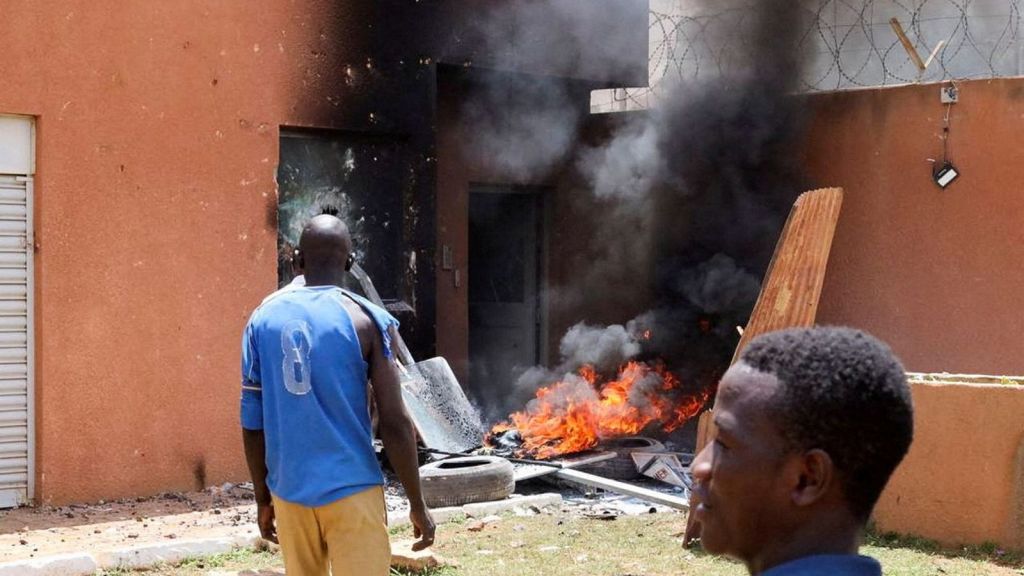
Protests in Niger have already targeted the French Embassy
The state of Niger garners little in the way of international headlines and for many is not likely to be on the political radar. The recent coup d’etat has changed that and Niger now finds itself the focus of international attention, not least in the context of the intentions of imperialism to redivide the African continent and extend its spheres of influence.
In terms of natural resources, political and economic control of Africa is a huge prize. The continent has 30% of the world’s mineral reserves, crucial components in the manufacture of electronic goods and armaments. Africa also has 8% of the world’s natural gas and 12% of the world’s oil. In a period where energy costs are soaring and control over energy resources is at a premium, reserves on such a scale are significant.
Not surprisingly the United States has been at the head of the Western charge to gain or retain control of African resources. While neo-colonial pressure has consistently undermined the efforts of African nations to fully assert their independence, in the past the presence of the former Soviet Union was a significant counter weight to the machinations of imperialism to fully dominate the continent.
The political and material support of the Soviet Union to many national liberation movements, struggling to free themselves from colonial domination, was often a crucial factor in many African nations gaining and sustaining their independence.
While the demise of the Soviet Union has by no means meant African allegiance has transferred to the nationalist oligarchy in Russia, it nevertheless ensured a strong anti-imperialist legacy in many African states, determined to be free of the neo-liberal diktats of the International Monetary Fund and World Bank. For example, trade between Africa and China rose to a record high in 2021. The jump was massive: 35% between 2020 and 2021, reaching a total of $254 billion. China is by far Africa’s biggest trade partner.
It is increasingly clear that, given the West’s colonial past, and Russia’s historic association with various liberation movements on the continent, in many African states, intelligentsia and ordinary people are eager to break free from the grip of western hegemony.
However, Western interference in the affairs of African nations continues to hamper development in many parts of the continent. There is growing evidence that the United States is attempting to increase its hegemony in Africa, with a significant presence of the US Africa Command (AFRICOM), with 29 bases across the continent, and military drills, often in cooperation with the EU and NATO. France also continues to have a military presence in about ten countries on the continent.
The US has two military bases in Niger, with an estimated 1,100 soldiers, while the French presence in the country is estimated at 1,500 military personnel.
According to the latest report from the World Bank, Niger has a poorly diversified economy, with agriculture accounting for 40% of its GDP. More than 10 million persons (41.8% of the population) were living in extreme poverty in 2021. Niger is one of the poorest countries in the world, receiving close to $2 billion a year in official development assistance.
Niger is also grappling with an influx of refugees fleeing conflicts in Nigeria and Mali. As of 31 August 2022, the United Nations High Commissioner for Refugees (UNHCR) had identified 294,467 refugees and almost 350,000 displaced persons in the country.
While President Mohamed Bazoum, was successful in elections held in December 2020 and February 2021, marking the first democratic transfer of power in the country’s history, Niger remains at the mercy of former colonial power France and the United States, which have sought to use the country as a regional base, supposedly for the purposes of safeguarding the area from and countering the threat of Islamist insurgent groups, in West and Central Africa’s wider Sahel region.
Niger also struggles with a security crisis in the areas bordering Nigeria, Burkina Faso, and Mali, where armed groups carry out repeated attacks against the security forces and civilians.
The coup d’etat initiated by the military on 26 July has resulted in the arrest of Mohamed Bazoum and the declaration of Colonel Major Abdourahmane Tiani as the country’s new leader, the closure of all land and air borders and the establishment of a curfew.
The United States has called for the release of President Bazoum, describing Niger as “a crucial partner” for the United States. Former colonial power France, which relies upon Niger as the main source of uranium for its nuclear power plants, has condemned the coup and demanded the release of President Bazoum.
There is the clear danger that destabilisation in Niger could extend to further uncertainty in the wider Sahel region. While the coup or the suspension of constitutional processes is not a solution to Niger’s desperate situation, nor is the continuation of the situation in Niger before the coup, as one of the most destitute and impoverished sovereign nations in the world, remotely tenable.
The people of Niger, already facing a desperate situation, are now further threatened due to the withdrawal of vital humanitarian aid from the country in response to the latest developments. France has cut financial support, and the European Union has suspended security aid. This is clearly a case of exploiting the aid as leverage, even though such considerations should be entirely independent of the political developments in the country.
This undermines the very notion that the provision of such aid should only be conditional on whether there exists a humanitarian need for it and it can be provided safely, as opposed to being used as a tool of punishment by Western powers. However the political situation in Niger unfolds, the humanitarian needs of the people must be addressed independently of any geo-political considerations.
There is also danger of an armed intervention, which must be rejected, as must any foreign interference in the sovereign affairs of Niger, whether by former colonial power France, the US, EU or NATO. The main regional bloc, the Economic Community of West African States, gave Tiani a week to restore Bazoum, or it would consider using force.
The governance of Niger and the course of its future development are the sole remit of the long-suffering people of Niger. In the short term a political resolution of the current crisis, brokered by the United Nations, is paramount. This must put front and centre the needs of the Nigerien people as well as urgently addressing the dire humanitarian situation which has been allowed to go on unchecked in Niger for far too long.
30th July 2023
Laughing all the way to the bank?
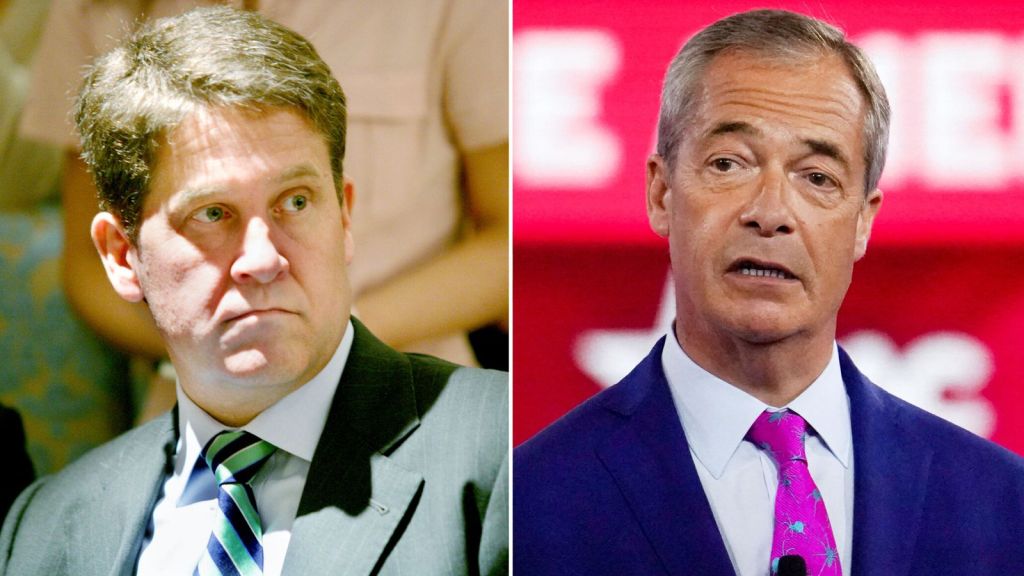
Peter Flavel – former Coutts Bank Chief Executive. Nigel Farage – former Ukip leader
NatWest Bank and its subsidiary for the rich, Coutts, have managed to get themselves into major difficulties over the past couple of weeks. The Chief Executive of NatWest, Dame Alison Rose, was forced to give up her £5m per annum post for blabbing to the BBC about the closure of former Ukip leader, Nigel Farage’s Coutts account. She was swiftly followed by Coutts Chief Executive, Peter Flavel, who claimed that the handling of the case “fell below Coutts high standards.”
All of which begs the question, what are these high standards which Coutts and NatWest are keen to defend?
For starters, you need to be rich enough to have an account and that means holding at least £3m in savings or borrow or invest at least £1m. Established in 1692 Coutts has been the bank of choice for every unelected head of state in Britain since George IV and prides itself on catering to the ultra-wealthy.
Edwin Smith, editor in chief of Spears wealth management magazine is clear that “Coutts is not a regular bank” and sums up its role in saying that,
“It is not unusual to have a high net worth individual come to the UK, open an account with a private bank, and their banker will help secure them expertise across other elements of their life. They will find them a property agent to help find a house, another to help with private schools.”
Nigel Farage, described by Coutts in internal documents as “xenophobic and racist” and a “grifter” was clearly deemed to be a stain on the bank’s reputation. Given that many would argue xenophobia and racism have been Farage’s stock in trade for many years, the question may be asked as to how he measured up to Coutts “high standards” in the first place.
There has been no suggestion from Coutts that it is seeking to flush out other xenophobes or racists in its ranks. Nor is there any likelihood that it will feel itself tarnished by the wealth of the unelected Royal Family, who continue to enjoy privilege at the expense of working class taxpayers while providing nothing in return.
Details of the Coutts client base are not freely available but the NatWest Group, Coutts’ parent company, is still owned 39% by the taxpayer, a consequence of the government having to bail out the banks gambling debts, following the financial crash of 2008, so you might expect there to be some level of accountability to the people who saved their shirts.
Not so of course. The banking sector is part of the closed circle of capitalism’s financial, military and industrial networks, designed to ensure that so called “high net worth individuals” are looked after as part of the ruling class strategy of ensuring that power, influence and privilege remains in their hands.
In the meantime, the true high net worth individuals in Britain continue to struggle to make ends meet. Nurses, junior doctors, rail workers, teachers, local government workers are all in various stages of pay negotiation or direct dispute, in an effort just to keep their pay in line with inflation. The Bank of England base rate is currently 5%, the highest in 15 years. This week the Bank is expected to put interest rates up by another one-quarter percent, piling the pressure on those with mortgages and giving landlords an excuse to increase rents further for those in the private sector.
Economic pundits, regularly wheeled out by the BBC and quoted in the media, continue to blame wage increases for inflation, pushing the pressure back upon the victims of British capitalism’s crisis to not make too many demands.
The reality however is that food prices have been rising sharply over the past year and were 17.3% higher in June 2023 compared with a year before, down from the 45-year high of 19.1% set in March 2023. Over the two years from June 2021 to June 2023 food prices rose by 28.8%. It previously took over 13 years, from March 2008 to June 2021, for average food prices to rise by the same amount.
In addition, the sharp increase in energy prices has been a key driver of inflation, with household energy tariffs and road fuel costs increasing. Gas prices increased to record levels and continued to rise during much of 2022 due to cuts in Russian supply. Electricity prices are linked to gas prices and have followed a similar trend. From June 2022 to June 2023, domestic gas prices increased by 36% and domestic electricity prices by 17%.
As a consequence, the energy giants continue to profit. While Shell profits were down in the second quarter this year, they still amounted to a staggering $5 billion and were in line with the same quarter prior to 2022, which was a bumper profit year.
In case anyone was deluded into thinking that with great profits comes social responsibility in June, Shell Chief Executive Officer, Wael Sawan, outlined plans to boost shareholder returns and improve performance, including by keeping oil output steady, growing natural gas output and slowing down investments in lower-return renewable energy.
BP also made a tidy $5 billion profit this quarter and, looking forward, “expects oil prices to remain elevated” due to a recent decision by OPEC+ to restrict production, combined with strengthened Chinese demand.
Once again, while those earning wages struggle and the planet suffers the consequences of global warming, the energy giants laugh all the way to the bank. It may even be Coutts, assuming they meet their exacting “high standards.”
Until banking arrangements are subject to a planned, structured approach to investment, as part of a socialist economy, their primary function will be to service capitalism and protect the interests of the ruling class. That planned economy will of necessity have public control of energy resources and supply at its heart, so that all profit is returned to the people in the form of lower bills or investment in cleaner energy options.
On both questions the current Labour leadership is supine. The time is rapidly coming when it will need to both stand up and be counted.
22nd July 2023
Burning down the house

Summer Arctic sea ice extent is shrinking by 12.6% per decade as a result of global warming.
The record for the hottest day on Earth has been broken three times in just over a week. Searing heat is sparking forest fires across Europe and North America. Ocean temperatures are dangerously warm and arctic ice is melting at an alarming rate. Anyone not recognising the realities of the climate emergency is either in denial or making a healthy profit from oil and fossil fuels.
At the COP27 conference in Egypt last November developing nations succeeded, at the eleventh hour, in securing an agreement which will see them entitled to hundreds of billions of dollars a year as reparations for the “loss and damage” of climate change, which richer nations have created.
The fund, which it was widely expected would take at least a year to work out entitlements, is in addition to the promise of wealthy nations to provide $100 billion to help vulnerable areas reduce emissions and adapt to warming that is already underway.
However, this is a promise which has not been fulfilled and there is a legitimate fear amongst climate change activists that protracted negotiations over loss and damage arrangements could take a long time to bear any fruit.
The most recently published, Global Carbon Budget, an annual assessment of how much the world can afford to emit to stay within its warming targets, found that greenhouse gas pollution will hit a record high this year. Much of the growth comes from a 1% increase in carbon dioxide from burning fossil fuels.
The report indicates that nations are likely to burn through their remaining carbon budget in less than a decade, if they do not significantly reduce greenhouse gas pollution. This will result in the world passing the critical warming threshold of 1.5C above pre-industrial levels in a mere nine years, resulting in catastrophic climate impacts. These impacts will disproportionately hit the poorer and developing nations, exacerbating already significant imbalances in wealth and resources across the world.
It was hoped that COP27 would have been the focal point for the call for greater investment in renewable and alternative energy sources. However, leaders at COP27 were advocating natural gas as a transition fuel, from fossil based energy to renewables. At least four new gas projects were announced last year, looking to plug the gap in supply, as a result of the reduction in supply from Russia.
Climate scientists have stressed that planned expansion goes beyond what is needed to replace interrupted Russian fuel supplies. The proposals also fly in the face of findings by the Intergovernmental Panel on Climate Change and the International Energy Agency that there can be no new gas, oil and coal development if humanity wants to prevent dangerous warming beyond 1.5 degrees Celsius.
While an initial group of more than 20 countries had pledged to stop public investments in overseas fossil fuel projects by the end of 2022, some are backsliding as the hunt for alternatives to Russian gas continues. The credibility of the COP27 process was further undermined by the significant presence of representatives from fossil fuel companies. An estimated 200 people connected to oil, gas and coal were included in country delegations, with another 236 with trade groups and other nongovernmental organisations.
It does little to inspire confidence that COP28 will be hosted by the United Arab Emirates in November, whose President has pledged to continue providing oil and gas “for as long as the world is in need.”
The reality remains that there continues to be massive profit in oil and fossil fuels. BP reported profits of $5bn (£4bn) for the first three months of 2023, down from $6.2bn in the same period last year. For the whole of 2022 BP made $27.2bn (£21.8bn). Shell reported profits of $9.6bn for the first three months of 2023, which was higher than the same period last year, when Shell reported a record $40 billion (£32.5 billion) profit for the year.
The challenge of investment in green technology is being led by China. The highest clean energy investment levels in 2021 were in China ($380 billion), followed by the European Union ($260 billion) and the United States ($215 billion).
While the loss and damage agreement reached at COP27 is welcome, the United Nations needs to accelerate implementation and put pressure upon the worlds wealthy nations to make good existing promises to help developing countries reduce emissions and adapt to the existing challenges of global warming.
As it stands, most of the positive trends in clean energy investment are leaving developing economies behind. Virtually all of the global increase in spending on renewables, grids and storage since 2020 has taken place elsewhere. More needs to be done to bridge the gap between emerging and developing economies’ one-fifth share of global clean energy investment, and their two-thirds share of the global population. Without clean energy investment in emerging and developing economies, the world will face a major dividing line in efforts to address climate change and reach other sustainable development goals.
The disparity between the richer nations of the Global North and the underdevelopment of the Global South will, as a consequence, exacerbate the migration crisis which is already resulting in an increase in right wing governments across Europe, determined to promote the fortress mentality and use migration as an excuse to cover for their own economic failings.
The drive for profit of international capitalism, still getting rich on oil and fossil fuel extraction, while under investing in alternative technologies, is one factor. The other is the impact upon people in their localities and their perception of what is in their best interests.
The recent British by-election in Uxbridge and South Ruislip was won by the Tories with a marginal majority, not because of any national trend in their direction, but as a result of the proposals of the Mayor of London to extend the Ultra Low Emissions Zone (ULEZ) into their area. As a result, Prime Minister, Rishi Sunak, is being pressured to roll back the limited commitments made by the Tories to invest in renewables. At the same time, Labour leader, Kier Starmer, is under pressure to dilute Labour’s commitment to its green agenda for fear of losing votes.
Nothing better illustrates the short termism of capitalist thinking than the current response to the climate crisis, both the short term dash for profits of the international corporations and the short term dash for votes of political parties. Only socialist planning, within an economy where resources are controlled by the people and deployed in their interests, can provide the ultimate guarantees necessary to address global warming.
The struggle to address the climate crisis is a class issue. It is objectively linked to the wider ideological differences in the world. We need system change, not just climate change. The struggle for socialism and against climate catastrophe must go hand in hand, otherwise we may all be in danger of being left fiddling, while more than Rome burns.
16th July 2023
Resisting the Right Wing rise

Giorgia Meloni in Italy – part of the rise of the right wing across Europe
Public sector pay awards below the rate of inflation are being presented as a magnanimous gesture by the Tories, as they continue their endeavours to make the working class pay for the current economic crisis. Public sector pay review bodies have suggested 7% for the police; 6.6% for teachers; 6% for junior doctors and consultants; between 5% and 7% for prison officers; and up to 5.5% for the armed forces and civil servants. With headline inflation currently running at 8.7% and other NHS and local government staff still to be included, it is clear that the government are attempting little more than to offer half a loaf to head off further industrial action ahead of a General Election.
The fact that industrial action, taken by some of the public sector, has pushed the government this far is a sign that engaging in struggle does bring benefits and should give other workers hope. However, the equivocation on the part of the Labour Party leadership in supporting workers in struggle does not inspire confidence that a change in government, when it does come, will bring any decisive advantage for the working class.
The internal witch hunt initiated by the hardline right wing in control of Labour at present shows no signs of abating and candidates close to Starmer and his political cronies are the only ones the current leadership will tolerate.
Post Corbyn this leaves the Left within the Labour Party in a quandary. The project around which Corbyn was able to coalesce broad support between 2015 and 2019 was Labour’s best hope of pitching towards a government which would have seen a shift in the balance of power in Britain as an objective, however difficult to achieve.
Starmer is not even making the pretence of such an offer, doing everything possible to stress ’fiscal responsibility’ and a more efficient management of capitalism than the Tories, in order to stabilise the ship for the political establishment. As ever with Labour government’s, there maybe some mitigation in certain areas of social policy for workers but little else.
Reform within Labour, allied to extra Parliamentary struggle, has for long been the rallying cry of the Left and efforts to create alternative political parties outside of Labour have invariably failed. There is however, widespread discontent with the system, even if it is not always articulated in that way. Protests on environmental issues are currently prominent. Opposition to the offshoring and deportation of migrants and asylum seekers grows. The issues of racism, sex discrimination and equal pay remain live ones. A wide range of international solidarity activity continues to flourish, not least in opposition to the Israeli occupation of Palestine.
While these campaigns and initiatives remain siloed, and not linked to a strategic overview of the class based nature of the system which is at the root of them, they will continue to have limited success at best.
Being able to demonstrate that capitalism is the driver behind the climate crisis; has racism and inequality as core to its function; and will never act in solidarity with those fleeing oppression requires a strategic approach to political action and education for which Labour remains a very poor vehicle. Whether that can be changed with a change in leadership is a moot point. Labour has always been a reformist rather than revolutionary party. The period under Corbyn illustrated both the possibilities and the constraints that Labour with a radical programme would face both internally and externally.
To what extent a more radical alignment of the Left in Britian is possible is open to wider debate but its necessity is becoming increasingly evident. The political establishment in Britain remains divided post Brexit and can barely paper over the cracks in its main political outlet, the Conservative Party. Across Europe there is a growing shift towards the simple solutions offered by the right wing parties, particularly in response to the NATO generated migration crisis and the treatment of those displaced as a result. Shifting the debate from the actual reality of class oppression to a debate about race, skin colour and migration only serves to reinforce prejudice and block progressive change.
Such resistance as the Left has been able to mount has foundered on a combination of not being radical enough and meeting aggressive opposition from the ruling class. One of the things that the period of the Corbyn leadership of Labour did show was that a programme which looked to challenge and change could have mass appeal and bring many into political debate and action. A programme to reignite that spark must be found if progress is to be made.
At the core of such a programme however must be the call to unity in action that will unite the range of economic and democratic struggles which are currently underway into a wave of solidarity and mass mobilisation that poses a real challenge to the legitimacy of capitalism.
This will require linking political activity to political education in a way that illustrates the importance of linking the particular to the general, the local to the global, the theoretical to the practical and developing an understanding that socialism remains the only solution to the manifest problems endemic to capitalism.
10th July 2023
Fight Club

US President Joe Biden arrives in Britain for a brief visit
The current British media obsession is with an, as yet, unnamed BBC presenter who has allegedly paid a teenager thousands of pounds for explicit sexual images. This could be an important issue of exploitation, grooming and the potential abuse of a position of privilege. If so, it rightly garners news headlines and brings into question the HR practices and management culture at the state broadcaster.
In its main news bulletins last night (9th July) the BBC devoted almost 10 minutes to the issue, covering both moral and legal angles to the story. The visit of US President, Joe Biden to Britain warranted only half of that amount of airtime and less than half of that again was given over to the issue of the US decision to provide Ukraine with cluster bombs in its war with Russia.
Across the world 123 nations have signed up to the Convention on Cluster Munitions, a treaty outlawing the use of cluster bombs due to their indiscriminate impact upon civilian populations and the potential for unexploded munitions to cause damage years down the line. Britain is a signatory to the Convention, the US, Ukraine and Russia are not.
In a conflict such as that between Russia and Ukraine, increasingly clearly a NATO proxy, it is impossible to calculate how many lives these weapons may destroy. Ukraine is keen to become a NATO member and there is little doubt that NATO will welcome its membership at some future point. Biden’s visit to Britain is a flypast on the way to the NATO summit in Lithuania where membership issues are bound to be on the agenda.
A recent report by the New York based Human Rights Watch has criticised both Ukraine and Russia for the use of cluster bombs that have killed civilians. This drew a response from Kyiv which accused the organisation of “spinelessness” and “absolute immorality”. The response follows on from an attack upon Amnesty International by President Zelensky last August when he described the human rights organisation as being guilty of “immoral selectivity” for being critical of Ukraine stationing combat troops in civilian areas.
While the US and others are hesitant about Ukraine joining the NATO military fight club while the conflict with Russia is ongoing, they remain content to pour weapons into the country in order to keep the war alive. One of Ukraine President, Volodymyr Zelensky’s senior advisers, has suggested that Ukraine requires “weapons, more weapons, and more weapons, including cluster munitions” in order to defeat Russia. US arms manufacturers are no doubt rubbing their hands in glee at such statements.
In spite of being a signatory to the Convention outlawing cluster munitions, Britian has offered less than a mild rebuke to the US for succumbing to the demands of Ukraine’s hardline nationalists. Rishi Sunak will no doubt frame this as being in the spirit of the so called Atlantic declaration, agreed in June, which is little more than a one way ticket for US firms to access British markets and for Britian to continue its kowtowing to US foreign policy in return.
Arms manufacturers in Britain meanwhile are cashing in on the fact that long term purchase orders and direct subsidies are paying for more than 90% of the research and development budgets of private defence firms, resulting in companies then handing over billions to shareholders in dividends.
A report by thinktank Common Wealth cites the example of US based General Dynamics, which has been developing Ajax armoured vehicles for the Ministry of Defence (MoD) at a cost to the public so far of £3.2 billion. The original target date for the vehicles to be operational was 2017 but a series of design errors has seen the date pushed back to 2029. In the meantime, General Dynamics have paid out £20 billion to shareholders since first being awarded the contract in 2014.
Other examples are cited in the report which also highlights MoD spending commitments on equipment procurement over the next ten years, amounting to £242.3 billion. As the report states, this contrasts sharply with other areas of industry where “comparative 10 year plans on public procurement are not in place.”
The BBC may be covering such issues, deep in its news pages, but they are certainly not headline news, unlike the alleged transgression of one of its employees. How big a role does the news media play in shaping the agenda? It is clear that all too often the real news is buried beneath an avalanche of so-called human interest reports. The increasing emphasis upon personality not policy serves only one purpose, to keep people away from the real news and the waste on weapons of war and mass destruction, which is endemic to the capitalist system.
1st July 2023
Sustainable, compassionate and inclusive

Shadow Health Secretary, Wes Streeting – Labour also has a plan
Capitalist confidence tricks continued unabated this week with a series of measures designed to delude the public into thinking that the current systemic crises can be solved. They can, of course, but not by using any of the methods proposed by the political establishment which, seeing no alternative to capitalism, is locked in a perpetual struggle to make it appear the be fair and democratic. The reality that only socialism can deliver true fairness and democracy is an option which is not on the political radar of the British ruling class, as such a consideration would mean their own class losing power in favour of the working class.
The battle to drive down inflation once again hit the headlines this week. For British Chancellor, Jeremy Hunt, this is the primary objective of economic policy. Not industrial and manufacturing growth; not full employment and job security; not investment in crumbling road, school and NHS infrastructure; getting inflation below 2% is the mantra.
Hunt is a great believer in wage restraint as one of the mechanisms to control inflation and regularly berates trade union demands for higher pay to keep up with the economic mess his party have been instrumental in creating. Higher pay is driving up inflation is the cry. Wage restraint and more slack in the economy, by which is meant more people on the dole, are seen to be the solutions to the inflation crisis.
In classic Tory fashion, egged on by the right wing press, Hunt presents no evidence to back his assertions. On the contrary, the evidence points in exactly the opposite direction. Official data from the Office for National Statistics (ONS) shows that since January, wage increases are only becoming more generous among the top 10% of earners.
Workers earning at least £180,000 a year were paid 7.9% more than last year according to figures for April, while those receiving £26,300 a year only saw increases of 4.7% in the same period. Bank of England governor, Andrew Bailey, seems to be equally keen to turn a blind eye to these figures, even though they are not close to keeping pace with inflation at 8.7%. Even though wage increases for low paid key workers in particular, remain well below the inflation rate, the government has already signalled that it will overrule recommendations from pay review bodies if their proposals are deemed to be “unsustainable.”
The Tories seem content to allow unsustainability to flourish in other areas however. The cheapest fixed rate mortgages on offer from high street banks is now running at an average 6.37%, squeezing those already with mortgages and closing the door to those seeking to buy a home, especially for the first time. With wages rises below inflation and mortgage rates increasing, which usually goes hand in hand with private sector rent increases, it is little wonder that trade union militancy is at its current heights.
While the Tories may feel they have been let off the hook due to the Royal College of Nursing not getting a high enough turnout in their ballot to extend strike action, they are still faced with a five day walkout by junior doctors (13th -18th July) as well as two days of action by consultants (20th-21st July), and two days of action by teachers in July.
Without any hint of irony, in the midst of the ongoing crisis, the government has announced a Long Term Workforce Plan for the NHS which claims that by 2031/32 there will be a 40% increase in dentists; a 50% increase on GPs; a 92% increase in nurses; and a 100% increase in doctors.
Such ambition is bound to garner press headlines and makes for great soundbites but does it stand up to scrutiny? Given the intransigence of the government on NHS pay does the Plan include the investment in resources to pay staff the rate for the job in order to ensure that they are retained, let alone train and recruit in the additional numbers indicated?
NHS England recognises that,
“… the number of people aged over 85 is estimated to grow 55% by 2037, as part of a continuing trend of population growth which outstrips comparable countries. Inaction in the face of demographic change is forecast to leave us with a shortfall of between 260,000 and 360,000 staff by 2036/37.”
It claims that the Plan “builds on initiatives already happening in the NHS to boost training and improve retention by working differently in a compassionate and inclusive culture.” Which is all very well, as long as compassion and inclusivity go alongside having enough money to pay the bills and feed the kids. The Plan sets out its priorities as train, retain and reform, claiming to “herald the start of the biggest recruitment drive in health service history.”
Worthy words and laudable ambitions but ones which must include the revision of existing pay structures and salary levels, to ensure that the mooted investment in training makes a career in the NHS a financially viable one.
Shadow Health Secretary, Wes Streeting, has welcomed the Plan, expressing relief that it has been published, while accusing ministers of “nicking Labour’s plan”, given the commitment to a ten year plan to make the NHS “fit for the future” which Labour made in September 2022. Labour’s plan aimed “to shift the focus of healthcare out of the hospital and into the community” while promising,
“…to deliver better pay, terms and conditions for care workers (which) will reduce the 400,000 delayed discharges every month and provide better quality care for older and disabled people: the first steps on the road to a National Care Service.”
It is clear that both major parties are now manoeuvring for position with a General Election looming and the NHS likely to be a key battleground. However, failing to address the issue of pay and conditions, as part of the wider package of NHS and care reform will not translate into better outcomes for either staff or patients.
The real long term plan for the NHS begins with backing the workers currently taking action to improve those pay and conditions, the first step towards rebuilding an NHS free at the point of use and free from the circling hawks of the private sector. Whatever Jeremy Hunt or Rishi Sunak may think, that would be an NHS which is sustainable, compassionate and inclusive. It may even be a demand that Kier Starmer and Wes Streeting could be compelled to back, with enough pressure upon them to do so.
24th June 2023
Stop Israeli state sponsored terrorism

A Palestinian man avoids the outcome of another Israeli attack on Palestinian land
Religious fundamentalists have for decades been robbing Palestinians of their land with the collusion of the Israeli state and cover from the Israeli Defence Force. Euphemistically characterised as ‘settlers’ they are nothing than more than illegal occupiers of territory over which they have no moral, political or legal right. Their actions can only be described as state sponsored terrorism.
Palestinians are suffering under the most right wing government in Israeli history, led by Benjamin Netanyahu, which is pressing ahead with illegal settlement activity and massive infrastructure plans. The government is determined to make the territory, illegally occupied since 1967, an integral part of Israel, flying in the face of United Nations resolutions and the rights of Palestinians.
Violence this week escalated when Israeli thugs attacked a Palestinian town in the occupied West Bank, setting fire to homes, cars and fields in a rampage that left one Palestinian dead from gunfire and 10 others injured. Not only were many of the hundreds of thugs who raided the town of Turmus Ayya, north of Ramallah, armed but they also had the backing of the Israeli army.
Turmus Ayya resident Mohammed Awad, 26, said people had to contend with fire from the vigilante thugs and the army.
“I rescued five people with my own hands. They were shot with live ammunition,” he said. “It’s Armageddon in Turmus Ayya. Cars are on fire, villas and fields are on fire. Someone needs to stop them. No one is helping us.”
The current violence is allegedly in response to an escalation in Palestinian resistance that began early last year, with a string of Palestinian attacks on Israeli targets. The Israeli military response has been to launch Operation Break the Wave, a series of raids that have resulted in heavy Palestinian casualties.
Further violence has been seen with an Israeli military raid in the Jenin refugee camp which resulted in an hours-long armed confrontation inside the city.
The clashes, widely seen as the fiercest in many years, began early last Monday with Israeli soldiers storming the camp, firing live ammunition, stun grenades and toxic gas. Combat helicopters were used for the first time in decades after the ensuing hours-long fighting. On the ground reports suggest that medical teams were initially denied access by the Israelis and eventually arrived very late to treat those who were injured at the scene. Some were described as being “in a very severe condition” needing urgent medical assistance.
The use of helicopter gunships was a 20-year first in the West Bank. Mohammed Kamanji, a lawyer and field researcher with the Independent Commission for Human Rights, said the latest raid was accompanied by “drones and Apache helicopters”, adding that it was the “largest” raid in many years. Israeli forces are “perpetrating gross violations against not only the paramedics, but also the journalists”, he said.
The storming of Jenin saw seven Palestinians killed, with more than 100 others wounded, in a year during which, so far, more than 160 Palestinians have been killed, including 26 children. This compares unfavourably to 2022, a year in which Israeli forces killed more than 170 Palestinians, including at least 30 children, in occupied East Jerusalem and the West Bank. This was described as the deadliest year for Palestinians living in those areas since 2006; this year is shaping up to be even worse.
In March this year Israel’s Finance Minister Bezalel Smotrich, revealed the true colours of the present Israeli administration after saying the Palestinian people are “an invention” of the past century, adding that there was “no such thing as a Palestinian” because “there is no such thing as the Palestinian people”.
The British government, in true neo-colonial style is looking to divert attention away from the crimes of the Israeli state by focussing upon the action of those opposed to the ongoing illegal occupation in Palestine, in the form of the Economic Activity of Public Bodies (Overseas Matters) bill.
While the bill will affect many campaigns for justice, the government has made clear that its primary target is the Palestinian led campaign for Boycott Divestment and Sanctions, of which the Palestine Solidarity Campaign (PSC) is a key partner. The government seeks to advance the familiar tropes and fallacious arguments that the campaign is inherently antisemitic or fosters antisemitism. The current bill echoes measures introduced in the 1980s by the Tories under Margaret Thatcher, which sought to prevent public bodies from divesting from and boycotting companies complicit in apartheid in South Africa.
The bill contains an extraordinary double standard including a clause which outlines a special exception for Israel, granting it an immunity from accountability. The bill allows a government minister to grant permission to public bodies to divest from companies involved in rights abuses by some states. However, this special clause says that no government can give permission to divest from a company because of actions in support of Israel’s rights violations, including within the Occupied Palestinian Territory.
The bill flies in the face of United Nations resolutions including UN Security Council Resolution 2334, which directly calls on member states to distinguish in their dealings between Israel itself and its activities in the Occupied Palestinian Territory. The bill in effect seeks to grant Israel a unique protected ability to violate Palestinian rights with impunity.
Opposition to the bill includes Unite the Union, PSC and Amnesty international. Pressure for the Labour Party to actively oppose the bill inside Parliament must build, alongside the extra-parliamentary activity of trade unions and human rights campaigns.
It is not antisemitic to point out that the Israeli state is engaged in effectively imprisoning an entire indigenous population through its blockade of Gaza; has imposed a military system of oppression across the Occupied Territories; continues to steal land and resources from the Palestinian people; and has stopped refugees from returning over a period of more than 50 years.
Labour must not be afraid to say so and, not only stop this bill, but actively demand the upholding of the rights of the Palestinian people in the face of state sponsored terrorism by Israel.
17th June 2023
Naked Profiteering

British Chancellor Jeremy Hunt – hands more to corporate profiteers.
The prospects for the Tories at the next General Election took a further dip this week as interest rates head toward 6% and the pressure upon mortgage repayments for homeowners, as well as rents for those in the private sector, look set to soar. The Bank of England, flying in the face of the actual evidence, continues to increase base rates as part of its misguided strategy to combat inflation. Bank of England Governor, Andrew Bailey, has admitted that the fall in inflation was “taking a lot longer than we expected.”
The economic path being driven by the Tories, in cahoots with the Bank of England, is to increase the cost of credit, forcing businesses to cut back on staff, increasing unemployment, with the aim of reducing the ability of workers to win higher wages.
While the fact that inflation remains stubbornly high is blamed by the Bank and capitalist economists on wage increases, the reality is that wage settlements remain below the rate of inflation. Many are still in dispute as workers struggle to make ends meet due to the ongoing price of food and consumer essentials. Pay has been failing to keep up with inflation for more than a decade in Britain.
According to the International Monetary Fund (IMF) Britain is set to become the worst performing economy in the G20 in 2023, which includes sanction hit Russia. Significantly, the only economy in which the IMF anticipates growth of over 5% is that of China, with even the United States languishing far behind at a predicted rate of just under 2% growth.
The Organisation for Economic Co-operation and Development (OECD) predicts a slightly better outlook for Britain but not by much. The OECD said that it expects a 0.2% fall in British gross domestic product this year, followed by a rise of 0.9% next year. This is worse than all countries but Russia, whose GDP is forecast to dip 2.5% this year followed by a 0.5% drop in 2024, the organisation’s economists said. This means that Britain is the only country apart from Russia to see its economy shrink this year.
According to these measures the British economy is struggling to hold its own even with its capitalist peers, who are also struggling with issues of inflation and low growth, although on a smaller scale than Britain.
While the British press make much of the impact upon mortgage repayments there is little analysis of what brought Britain to this situation and what can be done to address it. It is convenient for the banks to push the blame towards workers struggling for pay rises as being the driver of inflation but this is mere deflection on their part.
A key driver of inflation and soaring mortgage costs is the greed of the banks themselves, who have been complicit in driving house price inflation. This means that while 6% mortgage rates are nowhere near the 13% seen in the 1980’s, the impact is broadly similar. Home buyers in the 1980’s could expect to be borrowing just twice their income, for many at the present time borrowing to secure a mortgage can be higher than four times their income.
It is estimated that 2.6 million households will come off fixed rate mortgage deals in the next year resulting in massive monthly repayment increases.
Meanwhile profits at the Lloyds Banking Group alone jumped 46% in the first three months of this year, to a tidy £2.3 billion. Lloyds was not the only bank to bask in good results as a strong earnings season for the big four high street banks saw them all report better-than-expected profits on the back of higher interest rates.
The big five banks – Barclays, HSBC, Lloyds TSB, NatWest and Standard Chartered – posted profits of £37.4bn for 2022. These are the highest since the 2008 crash and come straight from households and small businesses in the form of higher mortgage payments, and increased rates on loans. There is little indication that such naked profiteering will not continue for the banks and their shareholders into 2023.
Meanwhile British Chancellor, Jeremy Hunt, is said to be prepared to back “whatever it takes” to reduce inflation, though he has ruled out a mortgage relief scheme to give subsidies for households struggling to make ends meet. In typically disingenuous fashion Hunt stated,
“We will always try to do everything we can to support families going through difficult periods and support families facing additional mortgage pressures. But we know the best help we can give them in the long run is to bring down inflation. That’s the cause of people’s worries. So, we will support the Bank of England to do what it takes to bring down inflation.”
Alongside backing the Bank of England’s interest rate rises Hunt has also pledged to limit public sector pay rises as part of his strategy to prioritise fighting inflation. So, it is clear that NHS staff, teachers, local government workers and civil servants can expect little help from the Tories in tackling rising bills.
Underinvestment in the economic infrastructure, too much reliance of the financial services sector to give the illusion of economic activity, along with corporate greed and profiteering, are at the root of the capitalist crisis in Britain. The idea that workers fighting to keep up with inflation generated by corporate profiteering, by demanding increased pay, is the usual Tory sleight of hand.
It will be little surprise to note that between 2020 and 2021, the Tories received £11.5m in donations from the finance sector. Almost one in three meetings with Treasury ministers were with big finance and its lobbyists, making it by far the most powerful lobbying force in the UK. This year reforms, known as big bang 2.0, will rip up the post-crash regulation aimed at constraining banks’ worst excesses.
British capitalism may not yet be naked in tooth and claw but unless there is decisive intervention by the working class and its organisations, it may well get there.
10th June 2023
Johnson rekindles bonfire of the vanities

Partygate – the beginning of the end for Johnson
The resignation of disgraced former British Prime Minister, Boris Johnson, from Parliament last night is the latest twist in a career characterised by conniving, deceit and mendacity. Having received the report of the House of Commons Privileges Committee into whether he misled Parliament, Johnson had two weeks to respond. Clearly Johnson realised that the report’s findings were sufficiently damning for him to jump before he was pushed and made up his own mind within twenty four hours.
In typically bombastic fashion Johnson has not admitted responsibility for his deceit, characterising the committee as a kangaroo court, vilifying its Chair, Harriet Harman MP, and claiming that he is innocent of all charges laid against him. A classic tactic of getting his retaliation in first.
Johnson’s resignation coincides with his Honour’s List nominations having been agreed, a British ruling class convention which allows former Prime Ministers to reward their cronies for services rendered. Gung ho former Home Secretary, Priti Patel is made a Dame, while diehard Johnson loyalist Jacob Rees-Mogg is conferred a knighthood. Other gongs go to a range of fans and supporters though lickspittle in chief, Nadine Dorries, misses out. She too has settled for resigning as an MP, giving beleaguered Prime Minister, Rishi Sunak, the headache of two by-elections to fight.
Johnson is of course not at all the innocent victim he makes himself out to be. He presided over the highest loss of life of any Western European country during the Covid 19 pandemic, with the death toll still rising and heading towards quarter of a million. Contracts to cronies and Tory party donors for poor quality or non existent PPE, the debacle of the £37 billion track and trace system and his final departure from No.10, following the Partygate scandal, all add up to a pattern of behaviour which is at best narcissistic, at worst plain criminal.
Somewhere down the line there may be an historical reckoning if the Covid Inquiry can get itself out of the starting blocks but Johnson will be way beyond caring by that point. Having already trousered millions on the after dinner speech circuit since leaving Downing Street, he can no doubt look forward to a slew of lucrative invitations from the redneck tendency across the globe, to give his own distorted view on the reasons for his demise and the current state of the world.
For the ruling class Johnson was always a disposable commodity. His main purpose was to shift the emphasis of political debate away from actual policy and onto personality. Aided by a compliant media keen to play up his so called ‘boosterism’, offset against the character assassination of the less media friendly and, for the ruling class, politically dubious, Jeremy Corbyn, it was always going to be an unlikely scenario that Labour would escape disaster at the 2019 General Election.
While the Tories have continued to tear themselves apart over how far to the right they want the country to be dragged, the ruling class have been stealthily making Labour safe again for capitalism. The unacceptable face of Jeremy Corbyn has been replaced by Kier Starmer. The front bench has been hollowed out of any dissenting voices. Corbyn has been excluded from standing for parliament on a Labour platform and even sitting North of Tyne Combined Authority Mayor, Jamie Driscoll, a relatively minor figure in the scheme of things, has been excluded from standing as a candidate to run for the top job in the forthcoming North East Mayoral Combined Authority.
Johnson’s resignation announcement was news enough to bump former US President, Donald Trump, from the BBC headlines. Having been indicted on 37 counts, including endangering national security for keeping classified White House documents in his bathroom, Trump was making all of the headlines till Johnson stepped in.
It is an irony that the two most narcissistic and politically belligerent representatives of their respective ruling elites should be in the headlines for their political misdemeanours at the same time. While Johnson has left the door open for a political return, saying that he is sad to be leaving Parliament “for now”, Trump remains the front runner in the Republican nomination to be the next Presidential candidate.
That the prospect of another Trump presidency is a further threat to world peace and the lives of working class Americans would be an understatement, though his rivals for the Republican nomination appear to be equally blinkered and the world can hardly be said to have been a safer place for many in the hands of Joe Biden. However, the erratic nature of Trump’s approach increases uncertainties and the social media driven approach to international diplomacy, which characterised his term in office, does not inspire confidence.
It is bad enough that US imperialism is doing its utmost to tear the world apart. It would be an even greater disaster should that happen due to a moment of personal rage or a fit of pique on the part of an individual who, by any reasonable count, should not be in any position of political responsibility. The charges against Trump carry sentences of up to 10 years in prison. It may be unlikely that things get to that stage but it would be a result.
Back in Britain Johnson will no doubt continue to garner the headlines, the by-elections triggered by his and Nadine Dorries’ resignations will begin to move centre stage and Rishi Sunak will continue to look increasingly exasperated with very public appearance. A General Election will finally put the Tories out of their misery and, with a safe Labour administration in No.10, they will be able to use their time in Opposition to regroup.
The challenge for the Left in Britain is to rebuild an alternative to both Starmer’s version of Labour and whatever emerges from the Tory bonfire of vanities, in order to demonstrate that capitalism is a system that serves the interests of the ruling class and that socialism is the only way forward for a future of peace, social justice and democracy.
4th June 2023
Diverting attention from the debt crisis

The US – counting on the dollar to stay supreme
In a week in which the world’s biggest economy almost tanked it is telling that the British media was more concerned with the transgressions of TV presenter, Phillip Schofield. Both print and TV media in Britain have given more airtime and print space to the Schofield saga than the fact that the world economy almost came to collapse and that the prospect of such a calamity may only have been delayed, rather than averted entirely.
The issue has centred around the US economy sailing very close to its debt ceiling, the amount Congress has authorised America’s government to borrow in order to meet its basic obligations. This includes a range of commitments, from providing medical insurance to paying military salaries. The current ceiling for gross debt is $31.4trn (117% of gdp).
The US House of Representatives did eventually vote to agree a deal reached by President Joe Biden and Speaker Kevin McCarthy to raise the amount America can borrow. Failure would have meant the country would have defaulted on debt payment obligations for the first time in its history. The alternative would have seen interest rates soaring, stock and bond markets crashing and the global financial system being plunged into turmoil.
Given the trillions of dollars Congress has authorised the US government to spend over the last decade United States debt has nearly tripled since 2009. The US has been running a deficit, meaning it spends that much more money than it receives in taxes and other revenue, of over £1 trillion every year since 2001, resulting in additional borrowing to finance payments Congress has authorised.
The debate in US political circles has focussed upon President Biden and senior Republicans in the House of Representatives negotiating an increase in the debt ceiling in exchange for reductions in federal spending. Republican proposals centred upon imposing work requirements for some recipients of federal benefits, putting lasting caps on federal spending, and loosening rules for fossil fuel energy projects.
Economists Goldman Sachs estimated that a breach of the US debt ceiling would cause a reduction in about 10% of US economic activity. Centre left US think tank, Third Way, calculate that a default could lead to the loss of 3 million jobs, push up interest rates, thus increasing mortgage payments, with higher interest rates also diverting future spend away from much-needed investments in such areas as infrastructure, education, and health care.
US Treasury Secretary, Janet Yellen, summed up the situation succinctly stating,
“Failure to meet the government’s obligations would cause irreparable harm to the U.S. economy, the livelihoods of all Americans and global financial stability.”
The US dollar is the most commonly held reserve currency, making up more than 60 percent of global foreign exchange reserves, and the most widely used currency for international trade and other transactions around the world. Given the status of the US dollar as the world’s reserve currency, many countries hold their foreign currency reserves in dollars, meaning any reduction in the value of the dollar has an international impact, making debt repayments more expensive. Heavily indebted low income countries would struggle to repay their debts and therefore tip into default and political crisis.
As a consequence of US financial hegemony this is potentially disastrous. The recent move of the BRICS (Brazil, Russia, India, China, South Africa) nations, towards a process of de-dollarisation, by creating an investment bank less dependent on the dollar, is a move in the right direction and could potentially loosen the stranglehold of the US over international finance systems.
That the world’s most powerful nation and strongest economy can be in such a mess is, in any event, a cause for concern. The mantra of low taxation, free market economics and the small state, beloved of right wing neo-liberal economists is taken to its limits in the United States. Any effort to expand the role of the state in supporting healthcare, the environment or those on welfare are pushed back by Republicans in particular but not resisted with vigour by leading Democrats.
It is unlikely to be coincidence that the downward pressure on public spending is accompanied by a recent decision of the US Supreme Court to effectively outlaw strike action. The 8-1 vote, in the right-wing-dominated US Supreme Court, has curbed the right of the nation’s workers to strike by allowing companies to sue unions in state courts whenever they wish for alleged “damage” strikers cause. Full details can be found here https://peoplesworld.org/article/in-historic-step-backward-the-supreme-court-limits-the-right-to-strike/?eType=EmailBlastContent&eId=46dc7349-f34f-4076-aa74-c1cec7e0d5e2
In addition, any productive investment by the state is inevitably drained by the massive spend on weapons of mass destruction, to maintain the US military budget at the highest level in the world and sustain its role as the self styled ‘global policeman’.
The predominance of the dollar in international trade also means that it can be weaponised by the US in the form of sanctions. Almost all trade done in US dollars, even trade among other countries, can be subject to US sanctions, because they are handled by so-called correspondent banks with accounts at the US Federal Reserve.
By cutting off the ability to transact in dollars, the United States can make it difficult for those it discriminates against to do business. In 2015, the French bank BNP Paribas was given a record penalty of nearly $9 billion for violating US sanctions by processing dollar payments from Cuba, Iran, and Sudan.
For Cuba in particular, suffering under a US economic blockade which has lasted for over 60 years, this is a particular issue, as circuitous routes to make payments and trade internationally have to be constantly devised and end up being more costly for the Cuban economy.
The mantra that when the US sneezes the world catches a cold is a direct result of the economic stranglehold the US continues to exert across the globe. The current US fear of China’s economic growth, manifest in US sabre rattling over the future of Taiwan, is that the US may lose its prime economic position and thereby find its political influence diluted.
Resorting to threats, bullying and military intervention are the direct consequences of US fears. Any alternative to the US capitalist model, as presented by China or Cuba, is inevitably demonised and any achievements put down to fluke or good fortune, rather than the alternatives offered by a socialist orientated system. Demonstrating that there is an alternative to capitalism is not what the British media is paid to promote or explain. Far safer to keep everyone worried about the private life of Phillip Schofield.
27th May 2023
Turning the Tide of War

The devastating impact of NATO’s proxy war in Ukraine
The propaganda war of the Western media in relation to Ukraine is now in full swing behind the much talked about Ukrainian counter-offensive to expel Russian troops. Reporting across the BBC in particular on the prospects for the counter offensive has been confusing in many respects. While the general tenor is one of support for the ‘plucky’ Ukrainians against the ‘land grabbing’ Russians, there is also a certain amount of hedging about the prospects.
A Ukrainian government official, speaking on condition of anonymity to the BBC, said the leaders in Ukraine “understood that they needed to be successful” but that the offensive should not be seen as a “silver bullet”. The BBC has also simultaneously reported that Russian forces are demoralised but also resolute, fortifying their defences along the 900 mile long frontline. At the same time BBC correspondent in Kyiv, Hugo Bachega, reports that,
“The expected attack could be decisive in the war, redrawing frontlines that, for months have remained unchanged.”
Secretary of the National Security and Defence Council of Ukraine, Oleksiy Danilov, is currently predicting that the assault to retake territory could begin “tomorrow, the day after tomorrow or in a week.”
Given the extent of Russian defences it seems unlikely that any land offensive by the Ukrainians could make major gains without significant support from the air. In this respect the decision of the British government to supply Storm Shadow cruise missiles, with a range of over 155 miles and adapted to be compatible with Ukraine’s existing aircraft, may be designed to provide that cover.
The NATO powers and their associated military industrial complex of arms suppliers are heavily invested in the war in Ukraine. Whatever the outcome of the counter offensive it is a potential win-win for military hawks in the West. Any failure will be used as justification for pouring more weapons into sustaining the Ukrainian position. Any success will be heralded as justification of the strategy so far, the effectiveness of NATO weaponry and the need for ongoing support for Ukraine.
There can be no clearer example of the mantra that those who want war send weapons, those who seek peace send diplomats.
In a recent news conference with US Secretary of State, Anthony Blinken, the British Foreign Secretary, James Cleverly, was quite explicit about the position taken by the British government with regard to Ukraine, stating,
“We need to continue to support them, irrespective of whether this forthcoming offensive generates huge gains on the battlefield, because until this conflict is resolved and resolved properly, it is not over.”
Secretary of State Blinken, as well as meeting the British Foreign Secretary, also met with his counterpart from Spain this week to shore up commitments to military aid to Ukraine, sending a message that battlefield gains are the priority.
In spite of the resistance of the West, China continues to play its part in offering to mediate a negotiated solution to the conflict, a proposal rejected out of hand by the US on the grounds that Beijing does not publicly condemn Russia as the aggressor in the war.
However, there are even differences within US circles as the position indicated by Blinken is not echoed by Gen. Mark A. Milley, the chairman of the Joint Chiefs of Staff, who has argued for the need for Ukraine and Russia to consider negotiations, suggesting that a prolonged war would result in many more casualties.
The position of Gen. Milley is reinforced by 15 former diplomats and military figures who took out a full page advert in the New York Times on 16th May, stating,
“The immediate cause of this disastrous war in Ukraine is Russia’s invasion. Yet the plans and actions to expand NATO to Russia’s borders served to provoke Russian fears. And Russian leaders made this point for 30 years. A failure of diplomacy led to war. Now diplomacy is urgently needed to end the Russia-Ukraine war before it destroys Ukraine and endangers humanity.”
In Britain, momentum in opposition to the war continues to be mobilised at a grass roots level, with the Stop the War Coalition holding public meetings in Glasgow, Leeds and Liverpool this week to argue the case for peace talks.
However, the official Labour Movement positions need to be continually challenged. The Kier Starmer led front bench of the Labour Party has fallen into line with the Tory position of sending more weapons to Ukraine, while maintaining support for NATO. The TUC recently reversed its long standing objection to raising military budgets and passed a motion agreeing to higher military spending. Opinion at a local level is still divided and heavily influenced by the blanket pro-Ukraine positions taken by the media.
The class interests driving the war in Ukraine are not those of the working class of Russia or Ukraine, they are not those of the working class in the US, Britain or elsewhere in Europe. The US autocracy remains fixed on its desire to have a unipolar world in which it is the strongest military power and can police across the globe. Britain, with its current Global Britain policy and delusions of grandeur through its nuclear status, continues to hang onto US foreign policy coattails. The EU continues to heavily back NATO membership and EU neoliberal economic influence in countries right up to Russia’s borders.
The ruling class across the US, NATO and EU blocs are only beneficiaries of the conflict being protracted if it does not slip over the edge into nuclear conflagration. As things stand, given their belligerence, that is a possibility. The failure to address a diplomatic solution to the immediate conflict could turn out to be a failure for us all, unless war preparations in the West are turned down and steps towards peace negotiations turned up.
20th May 2023
The Shadow of Hiroshima
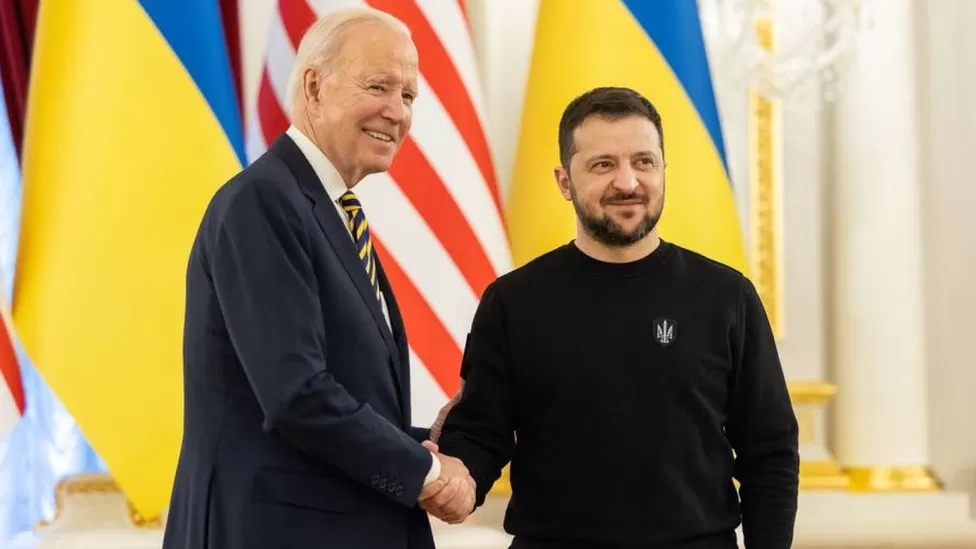
Biden and Zelensky – partners in crime
It is without any sense of shame or irony that the G7 leaders of the capitalist world are meeting this weekend in Hiroshima, Japan. The city is the scene of one of the twentieth century’s most heinous war crimes, resulting in the death of an estimated 330,000 people as a result of the atomic bombing on 6th August 1945. Add the death toll from the bombing of Nagasaki, three days later, and the combined death toll is well in excess of half a million people.
These are war crimes for which the United States has never even apologised, let alone been brought to any international body to answer for its actions. The US justification for the bombings has always been that they were necessary to end the war in the Pacific. There is evidence to suggest that the Japanese surrender was already in preparation and fighting would have concluded with Japan surrendering to the Red Army in the East. This was a scenario the West could not tolerate.
The failure of Britain and the US to open an effective Second Front in Europe, while prioritising imperialist assets in North Africa, had seen the Soviet army push the Nazis from Soviet soil and all the way back to Berlin. By the time of the much celebrated D-Day landings the German army was well on its way to becoming a beaten force in Europe. So, Japan falling into Soviet hands was not in the interests of imperialism and had to be stopped. The atomic bomb was the answer.
Given this context it is perhaps fitting that US President, Joe Biden, has taken the opportunity to further ramp up the war in Ukraine. Biden has promised to support the training of Ukrainian pilots in the use of US F16 fighter jets, along with several other NATO countries. The fighters involved also include Britain’s Eurofighter Typhoon and France’s Mirage 2000. The decision opens the door for the US to licence the sale of F16’s to Ukraine, thus promoting a dangerous escalation in the conflict with Russia.
While training will take some time, and jets are unlikely to be supplied overnight, the Ukrainians have indicated that F 16’s could be in operation within four months of the start of training. Western observers suggest the timescale may be nearer six to nine months. In any event such timescales would certainly see the possibility of a significant escalation in the conflict before the end of the year or into early 2024 at the latest.
Since the war began, the Biden administration and the U.S. Congress alone have directed more than $75 billion in assistance to Ukraine, which includes humanitarian, financial, and military support, according to the Kiel Institute for the World Economy, a German research institute.
Military aid alone from the US totals over $46 billion, far in excess of second placed Britain at $5.1 billion and the EU at $3.3 billion, although $2.5 billion each from Germany and Poland needs to be added to that total, alongside smaller contributions from Netherlands, Italy, France and Norway.
There can be little doubt that the war in Ukraine is a proxy war initiated and fought by NATO against Russia, as part of the West’s 30 year long strategy of encirclement and containment of Russia. Having initially courted capitalist Russia as a partner, during the brief G8 period, the US quickly saw the dangers for its hegemonic unipolar position in the world from a strong capitalist Russia. The US has been working to weaken Russian influence ever since.
Ironically, over the same period, the US has seen its reliance on imports from China grow from $4 billion in the 1980’s to over $500 billion at present. Loading guns and weaponry into Ukraine may yet result in a weakened Russia as the outcome but the trade lock between the US and China will be more difficult to shake, however belligerent the US continues to be against the People’s Republic.
The danger for the world is that the US fails to acknowledge that the dream of unipolar world dominance is not sustainable and continues its pattern of aggression and military intervention to try and maintain its position. Recent decades have seen the people of Afghanistan, Iraq, Libya, Palestine and Syria paying the price for this strategy. The people of Russia and Ukraine are currently paying that price as a result of US led NATO intervention.
Peace protesters have greeted G7 leaders in Hiroshima, calling for an end to the proliferation of nuclear weapons and the eradication of the world’s estimated stockpile of 12,705 nuclear warheads. It is unlikely that they will get as much news coverage as the visit of Ukrainian President, Volodymyr Zelensky, a willing partner in crime with the West, a faux man of the people in danger of colluding in leading his people, and many others, over the precipice.
Upholding ruling class law
13th May 2023

Draconian police powers protect the ruling class
Liberals may take comfort in the delusion that Britain is not, or could not become, a police state but the evidence of the past week and recent legislation ought to make them think twice.
First up as evidence is the Police, Crime, Sentencing and Courts Act 2022. Powers under the Act were liberally deployed by the police over the coronation weekend. Three arrests under the powers were of volunteers working for “Night Stars”, an organisation funded by Westminster Council to help stop the sexual harassment of women. The volunteers distribute rape alarms to women who might need them and are clearly identified by their pink tabards adorned with the logo of their Metropolitan Police partners.
Nevertheless, the arrests took place at 2am in the morning before the coronation and were ‘justified’ on the basis that ‘intelligence’ suggested that the rape alarms might be used to frighten the horses that would be part of the parade. The volunteers were held for 14 hours before being released on bail.
The 2022 Act outlaws “serious disruption” and criminalises “intentionally or recklessly causing public nuisance”, the interpretation of which is so broad that any number of relatively peaceful protests could come under its definition. Even handing out rape alarms it would seem. With penalties of up to 12 months in prison the Act is clearly designed to deter anyone thinking about public protest.
Second up as evidence is the positively draconian Public Order Act 2023. This is the old ‘sus’ laws, widely used against black working class youths in the past, dressed up and expanded. Anyone can be stopped and searched if the police “reasonably believe” that protests may be about to take place or if they think that someone may be carrying a “prohibited object”. Resisting a search can result in up to a year in prison, being found guilty of engaging in an ‘illegal’ protest can get you up to three years in jail.
A key clause of the Act is the introduction of “serious disruption prevention orders” which give the police powers to prevent certain individuals from attending protests, associating with named others and even going so far as imposing house arrest. Orders can be applied based on a “balance of probabilities” and last for up to two years, renewable for a further two if deemed necessary.
In the build up to the coronation weekend activists from the anti-Monarchy group Republic were in discussions with the police for four months, making clear that their protests would be peaceful, the nature of the action and where they would take place. Nevertheless, six activists, including Republic spokesman, Graham Smith, were arrested while unloading placards from a van at 7am on the morning of the coronation and were not released until 11pm the same night.
Whatever ‘intelligence’ the police were working on to make these arrests you would think could extend to recognising someone they had been negotiating with for four months in less than 16 hours! Apparently not.
All of which points directly towards the arrest of the Republic activists as a planned operation by the police in an attempt to either sabotage any protest or, at the very least, send out a warning message to activists for the future.
The police are the frontline enforcement arm of capitalism. Evidence over decades confirms this, the Miner’s Strike 1984/85 being the most sustained example followed by a phalanx of anti-trade union legislation aimed at constraining strike action. Subsequent protests against poll tax imposition, the protests of animal rights activists, Just Stop Oil campaigners and others campaigning to save the environment, add to the evidence that the capitalist state will do its utmost to suppress dissent.
The most recent report into the Metropolitan Police by Louise Casey, published in March, found the force to be institutionally racist, misogynistic and homophobic. This is the latest in a long list of evidence accumulated over many years, through a wide range of inquiries into police activity, that the police are a force for the upholding of ruling class laws, not defenders of local communities.
The actions of the police over the weekend of the coronation will no doubt be applauded by the right wing press as evidence that the new powers are necessary. As capitalism struggles to retain any semblance of credibility, as company profits surge while the real value of wages plummet, there is no doubt that more enforcement of working class communities and those protesting against the injustices of the state will increase.
Active opposition to such draconian measures is an essential first step and any incoming Labour government should, first and foremost, be committed to their repeal.

Mind the gap
6th May 2023
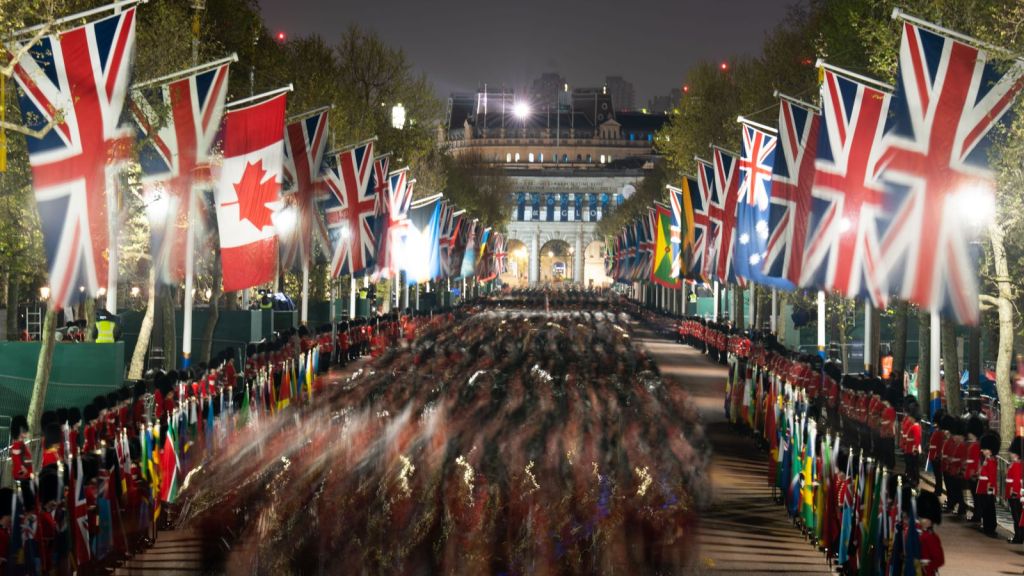
Night moves – rehearsals in Central London for the coronation of King Charles III
Travellers on British trains and the London underground from Friday to Monday this weekend will find themselves subject to a message from King Charles and Queen Camilla, wishing them a wonderful coronation weekend, a safe and pleasant journey and concluding with a final plea from Charles to “remember, please mind the gap.”
“The coronation is a rare and exciting event and we very much look forward to welcoming passengers with this special message,” said Jacqueline Starr, chief executive of the Rail Delivery Group, which represents Britain’s rail industry.
The recording will be played in all 2,570 railway stations throughout the UK, the group said.
For much of the country this example of the wit and wisdom of the newly anointed royal couple will go down like a lead balloon. Self awareness has never been a key characteristic of the British ruling class and its royal representatives, who are clearly oblivious to the fact that “the gap” will mean many different things to many people across the country.
The gap between the costs of the coronation knees up itself, an estimated £100 million, compared to the need to pay nurses, junior doctors, postal workers, rail workers, teachers and others a decent wage is one such difference. There is also the growing gap between the rich and the poor. In 2022, incomes for the poorest 14 million people fell by 7.5%, whilst incomes for the richest fifth saw a 7.8% increase. For the same year households in the bottom 20% of the population had, on average, a disposable income of £13,218, whilst the top 20% had £83,687.
Compared to other developed countries Britain has a very unequal distribution of income, with the second highest level of income inequality in Europe, although it less unequal than the United States which is the world leader in this regard.
These are gaps which we all ought to be mindful of.
When it comes to overall wealth in Britain the gap is even wider than income. In 2020, the Office for National Statistics (ONS) calculated that the richest 10% of households hold 43% of all wealth. The poorest 50%, by contrast, own just 9%.
Looking more broadly at the Commonwealth, 14 nations of which King Charles will be Head of State. Of the 56 Commonwealth countries 12 are categorised among the world’s least developed countries (LDC), an official United Nations designation, covering 46 of the world’s poorest countries.
The economic gap between LDCs and the rest of the world has been increasing. GDP per capita for the LDC group represented 15 percent of the world average in 1971, but by 2019 this had declined to less than 10 percent. In short, the rich nations are getting richer while the poor get poorer.
That 12 of the 46 nations categorised as LDC by the United Nations are part of the Commonwealth says much for the supposed magnanimity of the British ruling class amongst this ‘family of nations’. A thinly veiled cover for exploitation and expropriation if ever there was one!
This is a gap we ought to be mindful of.
Latest figures for military spending show British arms spending as the fifth highest in the world, at $52.9 billion (2020 figures), this being the highest of any European country. In April, the IMF published new forecasts for the world economy. The IMF expects inflation rates to slow and forecasts British GDP to fall by 0.3% in 2023, the lowest figure in the G7, with growth of 1.0% in 2024.
The strain of the military budget, under investment in new technologies and the role of Britain as a tax haven for the rich are clearly burdens upon economic growth. CND has calculated that replacing Trident, Britain’s nuclear weapons system, will end up costing at least £205 billion, and that is before taking into account that Ministry of Defence projects typically go well over budget. This will not only add to the strain on the British economy but will take more resources away from the real needs for schools, hospitals and investment in renewable energy sources.
A huge gap exists between the illusory need for weapons of mass destruction and the real need to invest in ways to save the planet from the certainty of global warming and its consequences.
Being a republic is not in itself a guarantee of equality however. Unelected monarchy and Parliamentary representation is the peculiar combination which capitalism has evolved in Britain to protect the rich and privileged. However, class division does take Republican forms elsewhere. Britain is pipped by Italy in the inequality in income stakes in Europe for example. France and Germany may have dispensed with Kings and Queens long ago but remain hugely unequal societies.
The self styled home of the brave and land of the free, the United States, is the world leader in inequalities in both wealth and income. At nearly $800 billion per annum the US also far outstrips allcomers in spend on weapons of mass destruction to defend the rights and privileges of its elite class.
Other gaps could be explored. The gender pay gap. The likelihood of arrest or harassment as a black youth in London and other major cities. The gap between the recently announced profits of energy giants, Shell and BP, compared to the ability of working class people to pay their bills. The list goes on.
In minding these gaps getting rid of the anachronism of an unelected monarch is merely a first step, though an important symbolic one. The real struggle remains that of overturning the system in which inequality, exploitation and injustice are embedded, capitalism itself. The people’s of the former Soviet Union and much of Eastern Europe have found that living in a state orientated towards socialist development was quite different to the cut throat world of capitalism they now inhabit.
The gap between socialism and capitalism is the biggest one we have to bridge.
Avanti Populo wishes everyone a safe journey, wherever you are going and whatever you may be doing this weekend but don’t just mind the gap, get as mad as hell about it and resolve to take action to close it sooner rather than later!
Liberation Statement – May Day 2023
1st May 2023
“International solidarity is not an act of charity: It is an act of unity between allies fighting on different terrains toward the same objective. The foremost of these objectives is to aid the development of humanity to the highest level possible” (Samora Machel)
As the world continues to struggle through a period of heightened tension and conflict, Liberation once again reasserts our key values of peace, democracy and internationalism on May Day 2023. May Day reminds us that it is only solidarity between the people’s of all countries which will overcome conflict.
As ever, the common interests of working people across the world underline that there is more that unites the international working class than divides them. The struggle for core rights to peace, health, homes and jobs is a common struggle of working people internationally. Without these basic securities many are condemned to lives of uncertainty, poverty and oppression.
The economic and military inequity which the United States is making every effort to maintain, by insisting upon its role as global policeman, is however being challenged.
The growing economic strength of China presents a challenge to the unipolar hegemony the United States has enjoyed for over 30 years and is keen to maintain. The provocations of the US against China, through overtly supporting the arming of Taiwan and establishing the AUKUS military alliance with the UK and Australia, are clearly dangers to both regional stability in the Indo-Pacific area, as well as being a threat to world peace.
US dominance in the economic sphere is also challenged by the latest developments by the BRICS nations (Brazil, Russia, India, China and South Africa) to challenge the dominance of the dollar and, through the BRICS New Development Bank (NDB), provide 30% of loans to member states in the period to 2026 in local currencies.
The racist nature of the Illegal Migration Bill, currently going through Parliament in the UK will further undermine the ability of many to seek asylum and push the blame for the migrant crisis upon the victims rather than the perpetrators.
Those fleeing violence and war are not those initiating conflicts, which have largely occurred as a result of Western policy in the Middle East and Africa, resulting in the huge displacement of those affected. The current crisis in the Sudan has its roots in the colonial history of UK domination of the country and the struggle to establish democratic structures in the post colonial environment.
The European Union continues with its policy of attempting to reduce migrants and refugees from North Africa by paying millions of Euros to a range of dubious warlords and militias, contracted to stem the flow of potential migrants to Europe.
The fragile situation remains in Ukraine with the continuing supply of arms from the NATO Alliance being an impediment to peace negotiations, although efforts on the part of both China and Brazil to break the deadlock are to be welcomed. In any event, the objective should be to find a peaceful solution in the interests of the people of both Russia and Ukraine, with diplomacy being prioritised over weapons sales.
Campaigns worldwide for peace, democracy and human rights are central to the struggle for equality and against injustice.
Wars of intervention continue to the detriment of the peoples of many countries in the world. Self-determination remains an issue in the struggle for justice for the Palestinian people and is likely to be made worse by the policy and actions of the new Israeli administration.
Not only does Palestinian land continue to be occupied in contravention of United Nations resolutions by Israeli forces, the religious fundamentalists in the current government openly fail to recognise any Palestinian claim to territory. Daily life becomes more difficult for the working people of Palestine as the Israeli land, air and sea blockade imposed upon Gaza, continues to restrict access to basic goods and health care provision.
The reality of poverty, injustice and uncertainty in the daily lives of working people across the world is exacerbated by war, occupation and the ensuing migrant crises. It is exacerbated by the climate crisis and increasing environmental degradation.
On the occasion of May Day 2023 Liberation repeats its determination to back the call for a new international economic order; supports the cancellation of the debt burden imposed upon already impoverished nations; seeks the re-establishment of a movement towards non-alignment; and calls for the settlement of international disputes in line with UN resolutions.
These demands should be central to a progressive foreign policy for the UK, one based upon the principles of peace and co-operation, not weapons sales and wars of foreign intervention.
Peace, democracy and social justice are core to the ethos of May Day and central to the campaigning priorities of Liberation. These goals will only be achieved through solidarity action and unity amongst the workers of all nations. Neo-colonialism and imperialism have shown that they do not have the answers to the problems faced by the majority of the world’s citizens.
It is time to make way for a truly new world order based upon the needs of the people not just the desire for profit for the few.
Find out more at https://liberationorg.co.uk/
Sudan – reactionary infighting prevents progress
29th April 2023
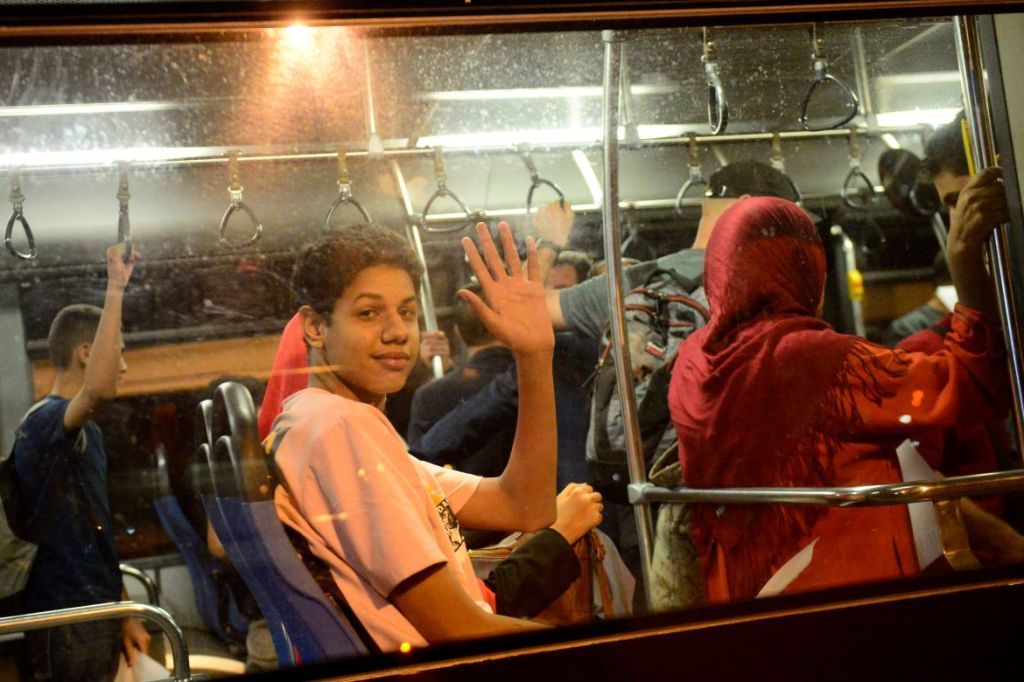
Passengers being bussed from war torn Khartoum – not all are so lucky
As the crisis develops in Sudan reporting from the BBC takes on its usual character of obfuscation rather than illumination. The only concern of the BBC appears to be the fate of British nationals and the scramble to evacuate British passport holders from Khartoum as quickly as possible.
The roots of the current situation in Sudan however inevitably have their origins in the neo-colonial grip of transnational corporations, which exercised control over Sudanese resources and were happy to prop up the corrupt government of Omer Al-Bashir from 1989 until his popular overthrow in 2019.
The forces behind the revolution which overthrew Al-Bashir in April 2019 included the Professional Alliance, the Civil Society forces and the Sudanese Communist Party, part of an alliance of 80 organisations which signed a Minimum Programme for democratic change.
Any progress towards shifting the balance of power in Sudan was thwarted however with the civilian led government being ousted in a military coup in October 2021. While the pro-democracy movement responded with a civil disobedience campaign the military responded with live gunfire resulting in hundreds of deaths.
The pro-democracy movement was demanding the transfer to state ownership those companies controlled by the army and security forces, which have a monopoly over the export of Arabic gum, cattle, gold and various agricultural products. Demands for a new labour law, democratic liberties including the right to peaceful protest and the handing over of Al-Bashir and other war criminals to the International Criminal Court were not implemented.
These progressive measures were stymied by the reactionary elements of the civilian government, even before the October 2021 coup, but have had no chance of being progressed under the generals. Many of these elements were members of Al-Bashir’s security forces and some reactionary Islamic groups. The military in Sudan has very much reflected the position of the former regime’s National Congress Party, the Islamic Brotherhood in all but name. The chance for democratic or progressive change under the revolutionary forces’ slogan, freedom, peace and justice, have been severely setback by the present infighting.
The recent phase of conflict, which began on 8th April is effectively one between Sudan’s military and the country’s main paramilitary force. It is a proxy war led by the Rapid Support Force (RSF) and its leader General Mohamed Hamdan Daglo, or Hemeti as he is known, on the one hand, and the Security committee “of the National Islamic Front” in the Sudanese military headed by Al-Burhan on the other. Both sides are supported by their foreign allies.
The RSF was able to build its resources under the previous regime through an arrangement with the EU implemented in October 2014, known as the ‘Khartoum Process’. The funding under the agreement was given to various African countries to halt the flow of African migrants reaching the European Union. Sudan alone had received €215 million from this fund by 2017, much siphoned off by the RSF to fund its activities.
In effect the war, in which the main victims are the Sudanese people, is a power struggle between two reactionary military and political factions, who were previously united to prevent civilian rule through initiating the October 2021 coup. However, the lure of control over Sudan’s significant resources, not least its gold deposits, has proven too difficult for the reactionary factions to resist. The progressive Sudanese resistance committees have evidence, in the form of videos and documents, that shows both the Russian mercenary Wagner group and the Egyptians involved in smuggling gold.
The resistance committees are calling for the formation of an alliance against the war, and the restoration of civilian government, for the army to return to barracks and the militia to be dissolved. Further than this the resistance is calling for the Sudanese revolution to continue, demanding the people’s control of their wealth, progressive economic development, and the building of a strong public sector that serves the people.
While the United Nations has previously been involved in some attempt at negotiations, key sections of the progressive forces have refused to negotiate with the military, who they regard as having no legitimate role, having seized power from the elected government in the October 2021 coup.
The progressive forces in Sudan have made calls for support and international solidarity to back the goals of the revolution and demand a return to civilian rule. The Sudanese Communist Party, as part of the progressive alliance has issued a statement which includes the following,
“We condemn the military escalation between the two counter-revolutionary military forces. This is certainly an expected outcome of these factions’ leaders’ power struggle aimed at controlling the country’s resources at a time when their four years alliance in power has proven to have failed in running the country…”
The statement goes on to request support from politicians and trade unions in Britain in order to halt the current crisis, refuse to arm or train either of the forces involved and press the UN to initiate discussions towards a meaningful transition to civilian government.
The situation on the ground in Sudan is clearly complex and Western companies along with regional powers such as Saudi Arabia, Egypt and the United Arab Emirates will undoubtedly feel that their own positions are threatened if there is a successful popular revolution in the region. The idea may spread!
For that reason it is vital that the demands of the Sudanese people are made known, reported and supported. Any attempts to thwart the progressive demands of the revolution will only reinforce the reactionary armed forces engaged in fighting at present, as well as the reactionary regimes supporting them. For the sake of the people of Sudan and those of the wider region the current slaughter must stop.
Building BRICS of new development
22nd April 2023

President of Brazil, Lula de Silva, with New Development Bank President, Dilma Rousseff
The establishment of the BRICS New Development Bank (NDB) in 2015 was a major step forward in opening up the possibility for developing countries, and those of the Global South, to take a step towards controlling their own development programmes and reduce reliance on international finance institutions dominated by the US dollar.
The BRICS nations (Brazil, Russia, India, China and South Africa) not only represent a huge percentage of the world’s population but some of the world’s key areas of economic growth. The group has recently added Bangladesh, the United Arab Emirates and Egypt to its cohort, while Uruguay is in the process of joining, and many other countries have expressed interest. For example, Argentina, Iran, and Algeria have formally applied to join the extended BRICS+ bloc.
In January this year South Africa’s Foreign Minister, Naledi Pandor, indicated the group’s intention to “develop a fairer system of monetary exchange”, with a view to weakening the dominance of the US dollar.
“The systems currently in place tend to privilege very wealthy countries and tend to be really a challenge for countries, such as ourselves, which have to make payments in dollars, which costs much more in terms of our various currencies”, she said.
In a recent visit to NDB Headquarters in Shanghai, Brazilian President, Lula de Silva, said the NDB’s goal is “creating a world with less poverty, less inequality, and more sustainability”, adding that the bank should play a “leading role in achieving a better world, without poverty or hunger”.
Lula was in Shanghai to witness the swearing in of a former Brazilian President, Dilma Rousseff, as the new President of the NDB. In an interview following her inauguration Ms. Rousseff stressed the role of the NDB in supporting countries with regards to climate change and sustainable development goals; promoting social inclusion at every opportunity; and financing the most critical and strategic infrastructure projects.
Ms. Rousseff also stressed the need to tackle the higher inflation and restrictive monetary policies which are a feature of developed countries and are often passed on, in the form of high interest repayments, to those developing countries struggling to build their own infrastructure.
“It is necessary to find ways to avoid foreign exchange risk and other issues, such as being dependent on a single currency, such as the US dollar,” she stated. Critically, Ms. Rousseff went on to state that,
“At the NDB, we have committed to it in our strategy. For the period from 2022 to 2026, the NDB has to lend 30% in local currencies, so 30% of our loan book will be financed in the currencies of our member countries. That will be extremely important to help our countries avoid exchange rate risks and shortages in finance that hinder long-term investments.”
To date NDB has invested in 96 projects, approving $32.8 billion worth of finance to support programmes which are climate-smart, disaster-resilient, technology-integrated and socially-inclusive.
While the BRICS countries, and those looking to gain membership of the NDB, are by no means a homogeneous group in terms of their political outlook the initiative remains an important one. The stranglehold of imperialist designed institutions such as the International Monetary Fund (IMF) and World Bank, both of which are US dominated and controlled, has tied developing nations to Western economies in ways which have thwarted, rather than encouraged, their economic independence.
In reality, the tools of the imperialist banking sector are there precisely to generate dependence and keep former colonial nations within a neo-colonial orbit. The deployment of Western corporations, infrastructure and technology only serves to reinforce those dependencies over the long term. Inevitably there is usually a military pay off too, with arms contracts being tied into economic support and the stationing of military bases and US hardware often being part of the deal.
The NDB cannot break such entrenched relationships all in one go and is itself still dependent upon the existing international banking arrangements in order to function. However, the fact that the concept of “de-dollarisation” is even on the agenda of developing nations, and that there is an emerging investment network which it does not control, will be of concern to the US.
No doubt much of the current US provocation towards China stems from the fear that the unipolarity it has enjoyed since the defeat of the Soviet Union is not only being questioned but is being actively challenged. The extent of the NDB’s success may well be measured by the increasing belligerence of the US towards those countries which are part of its network.
Urgent action to free women journalists demanded
12th April 2023

The Committee for the Defence of the Iranian People’s Rights (CODIR) has called for the immediate release of journalists, Niloofar Hamedi and Elahe Mohammadi. The two women have been imprisoned by the regime in Iran since September 2022 on alleged charges of espionage.
The only ‘crime’ committed by the two journalists however was to report on the death in custody of Mahsa Amini, who was killed by the so called ‘morality police’, for allegedly not adhering to Iran’s stringent hijab laws.
Hamedi wrote for the reformist newspaper Shargh and was the first journalist to report on the death of Amini, doing so from the hospital in Tehran where Amini had been on life support. Mohammadi had reported on the protests at Amini’s funeral in her hometown of Saqez in northwest Kurdistan province.
These imprisonments are part of an increasing pattern of persecution of journalists in Iran since the emergence of the Women, Life, Freedom movement which emerged after Amini’s murder. More than seventy journalists have been imprisoned in Iran since the protests began last September, almost half of whom are women.
While the Constitution of the Islamic Republic of Iran formally recognises freedom of expression and freedom of the press, these provisions are more routinely honoured in their breech rather than their observance. They are often overlooked or subjected to severe restrictions.
This recent upsurge in arrests may go beyond the regime’s usual harassment of journalists but the phenomenon is not limited to Iranian journalists covering the ongoing protests. The Islamic Republic has a long history of jailing journalists as well as subjecting them to extreme censorship and political pressure.
CODIR is calling for the release of the imprisoned women journalists, Niloofar Hamedi and Elahe Mohammadi, who have committed no crime. They have done nothing more than report on the criminal activity of the Iranian state itself in highlighting the circumstances surrounding the death of Mahsa Amini.
Since the death of Ms Amini last September, Iranian people, with women and youth often at the forefront, have been taking to the streets across the country, despite the growing threats and brutal suppression carried out by the security forces, acting on the commands of the regime’s leaders.
CODIR Assistant General Secretary, Jamshid Ahmadi, has expressed condemnation of the incarceration of the two women and the lack of due judicial process in Iran.
“These imprisonments are a further example of the Iranian regime having no interest in justice and no commitment to press freedom,” he said. “CODIR will continue to highlight the actions of the theocratic dictatorship in Iran in gagging those who have a legitimate right to freedom of expression. The regime in Iran is clearly feeling under threat from the emergence of regular protests. We reassert our ongoing commitment to support the popular struggles of the Iranian people towards the establishment of a modern, secular and democratic government.”
CODIR has called for all forces supporting the struggle for human and democratic rights in Iran, to condemn the imprisonment of the women journalists, through issuing statements in solidarity with those campaigning for their release.
CODIR requests that trade union affiliates write to the embassy of the Islamic Republic of Iran to make clear their opposition to these imprisonments and the restrictions placed upon freedom of expression in Iran.
CODIR is also asking for individuals to write to their local MP, drawing their attention to the worsening situation inside Iran and requesting that they write to the embassy of the Islamic Republic of Iran on similar grounds, as well as using their platform in Parliament, to draw attention to the plight of the people of Iran.
Further info at http://www.codir.net
Opposing the China crisis
8th April 2023

Taiwan’s Tsai Ing-wen (left) meets with US House Speaker Kevin McCarthy
The trip to Central and North America of self styled Taiwanese ‘President’, Tsai Ing-wen, is the latest step in the propaganda war the West is playing against China. Tsai is touring to shore up flagging support for recognition of the renegade island, withdrawn recently by Honduras, leaving Belize and Guatemala as the only regional states with formal ties with Taiwan.
While the United States does not formally recognise Taiwan, consistent with the position of the United Nations, every opportunity is taken to use Taiwan as leverage against the legitimate Chinese government. The visit of then House Speaker, Nancy Pelosi, to Taiwan last year, was clearly a deliberate provocation to China, designed to ramp up tensions and push China towards action in relation to Taiwan.
This week Tsai met the current US House Speaker, Kevin McCarthy, at the Ronald Reagan Presidential Library, where McCarthy stressed the urgency of arms deliveries to Taiwan and Tsai praised the “strong and unique partnership” with the US. Unique is certainly the word, as the US position would be akin to China supplying arms to Scotland, should it prepare to declare itself free of the so called United Kingdom!
It comes as little surprise that Beijing has reacted angrily to the meeting between Taiwan’s leader and McCarthy. After the Vice President, McCarthy is next in line to the President, so the meeting carries clear significance as a statement of US policy towards Taiwan and, by implication, China.
McCarthy, the most senior figure to meet a Taiwanese leader on American soil in decades, was joined by a bipartisan group of US politicians showing support for dialogue with Taiwan.
“We must continue the arms sales to Taiwan and make sure such sales reach Taiwan on a very timely basis,” McCarthy said at a news conference after the meeting, adding that he believed there was bipartisan agreement on this. “Second, we must strengthen our economic cooperation, particularly with trade and technology.”
In denouncing the meeting Beijing’s foreign ministry said in a statement that China will take “resolute and effective measures to safeguard national sovereignty and territorial integrity.”
While the formal US position is recognition of the People’s Republic of China as “the sole legitimate government of China”, with Taiwan as “part of China”, moves are clearly being made to overturn this position and the historical One China policy which has held since 1979.
Wrapped in talk of democracy and shared values however is what the US regards as its rightful economic interests in the Indo-Pacific area. Taiwan is strategically placed on key trade routes and helps sustain US dominance over markets in Japan, the Philippines and South Korea. The danger, as seen through US eyes, is that loss of control over Taiwan could allow the area to be controlled economically by China, as well as threatening the network of military bases which the US has in the region.
From the perspective of the US the economic rise of China poses a far greater threat than a maverick capitalist Russia, in spite of the recent intervention in Ukraine. With Russia, the US and NATO were able to play a long game of encirclement, gradually enticing former allies of the Soviet Union into the NATO military alliance and boxing in Russia’s options and alliances. The strategy is not without risk, not least as Russia still has significant military capability, and absorption into the NATO command structure is not universally accepted across Eastern Europe.
However, while major parts of the world do not accept the US narrative in relation to Ukraine, the West has been able to sustain an unparalleled propaganda assault over the past 18 months, to persuade significant sections of its population that the war in Ukraine is purely down to an act of Russian aggression.
The current provocations against China are from the same playbook but the stakes are higher. The Russian economy is relatively weak and Russia’s international reach limited. The same cannot be said of China, clearly an economic power house which is increasingly challenging the US in key economic areas and in areas of international influence.
In addition, Taiwan itself is a world leader in the production of semi-conductors, vital to computers, mobile phones and cars. In the US, Silicon Valley relies on Taiwan’s supply of semi-conductors, necessary to maintain US dominance over all high-tech fields. China is yet to catch up in this area and the US clearly does not want to see that happen.
The AUKUS military pact, signed by the US, Britain and Australia in 2021, is another key element of the attempt to either contain China militarily or provoke it into action over Taiwan.
China is clear that it wants to reunite with Taiwan peacefully. China does acknowledge a conflict scenario if Taiwan develops nuclear weapons or fully secedes. Either of these developments would pose an existential threat to China because they would mark the removal of all constraints on the US using Taiwan as its main forward base against the mainland.
The pace of economic growth driven by technological change, coupled with the clearly anti-imperialist stance of the Chinese government, means that the West cannot secure its goals by utilising the long game it was able to play against Russia. The US is keen to sustain its position as the world’s only superpower, in both economic and military terms, and is struggling to do so.
As Frieda Park has noted recently in The Socialist Correspondent (Spring 2023),
“The US world order is the biggest threat to peace and the greatest constraint on progressive forces on a global scale as evidenced by the numerous illegal wars it has fought, and its military interventions and coups against leftist governments.”
Unless the forces of peace and progress are able to unite internationally the ongoing US provocations against China are only heading in one direction. Opposing the escalation of military spending across NATO and demanding an end to the drive to war, particularly with China, are now urgent tasks.
Survival, struggle and Starmer
1st April 2023

Oil and gas companies, still not paying their share
It may be 1st April but no one is being fooled that the current crisis, which is driving up the cost of survival for many working class families, is anything other than capitalism ensuring that wealth and profit goes in one direction, while penury and poverty goes in another. From today Council Tax rises kick in; water rates go up; mobile and broadband costs rise; and the government’s energy support scheme ends, meaning higher bills for many families.
The water companies will not make any losses. Foreign investment firms, private equity, pension funds and businesses lodged in tax havens own more than 70% of the water industry in England, according to research published last year by The Guardian.
At a time when calls for more control over the dumping of sewage and the run off into rivers from farming activities are increasingly being made, overseas owners are making profits from a key utility which should be publicly owned.
Mobile and broadband providers can increase prices mid contract by inflation plus an extra amount on top, resulting in some companies putting prices up by over 17%, citing their underlying operating costs going up substantially as a result of regulatory requirements, higher energy prices and increased network costs. The worst offenders are O2 and Virgin Mobile but all are hiking prices to some extent.
While warmer weather may reduce energy consumption the ending of the government’s energy support scheme will still hit working class families hard, as energy costs for most are still two or three times higher than they were just over a year ago.
In 2022 Shell increased its profits by 211% and over the same period the increase for BP was 215%, while the taxes these companies pay in Britain are extremely small, compared to the overall amount they pay globally. This is due primarily to tax breaks which the British government allows for investment in oil and gas extraction. This not only helps line the pockets of the energy company shareholders but gives the energy giants little incentive to invest in renewables and other alternatives to carbon based energy sources.
For the consumer that means being robbed today, in the form of higher prices, and the future being hijacked due to the lack of investment in alternative energy sources.
The rises in Council Tax are the inevitable consequence of central government cuts to local government services, which have been ongoing for over 30 years and were accelerated by the Tories under their austerity programmes since 2010. A tax system which tackled obscene wealth, offshore havens and super profits could put more in the Treasury coffers to support much needed local government services. However, these are not priorities within the capitalist system, which puts the drive for profit above all else and seeks to mutually support those few who make the profits from the labour of the many.
The headline rate of inflation last month, instead of falling as widely predicted, actually increased from 10.1% to 10.4% meaning that prices are going up even faster than anticipated. For those on the lowest incomes it is estimated that the real impact of inflation is much harder, as food price inflation is running at over 17% and this is where poorer families spend a higher proportion of their income.
The Bank of England continue to make optimistic noises to the effect that the rate of inflation should fall over the coming year but that will still mean price increases for struggling families, just at a reduced rate of increase, and then only if the Bank’s predictions come to pass!
Still, the Tories claim there is some light in the darkness, the minimum wage has increased by 92p per hour to £10.42 per hour! However, even this 9.7% rise is not in step with inflation so, to all intents and purposes, those on the lowest wages will still be out of pocket.
Meanwhile discussions continue with some sections of the workforce over settlements to recent disputes, which were fuelled by the accumulated impact of successive austerity drives and the Tories’ continued emphasis upon lining the pockets of their friends in the City of London. The offer to both nurses and rail workers is below their initial demands but an improvement on the original offers, demonstrating that direct action can result in concessions being won from employers.
However, junior doctors still await a realistic offer and management at Royal Mail continue to hold out against a reasonable settlement for postal workers. The desire of the Tories to put any disputes to bed before local elections in May and a forthcoming General Election still looks shaky.
The reality is that any agreements reached in the short term will have a limited shelf life as the capitalist system, based upon class antagonism, is always going to see conflict emerge in one sector or another. No amount of firefighting by the Tories will stop the working class and its organisations from making demands for better wages, terms and conditions.
Unfortunately, another step away from giving any leadership in that struggle was taken by the Labour Party this week, when the National Executive Committee (NEC) supported a motion to ban former leader, Jeremy Corbyn, from standing as a Labour candidate in his constituency of Islington North.
Labour may well be on course to win a General Election but the abandonment of the principles of working class solidarity, peace and international solidarity, all to the fore under Corbyn’s leadership, are casting a shadow over what difference a Starmer government will make to the working class.
Until it is evident that the ruling class are truly trembling at the prospect of a government which is not the Tories, the benefits for the working class of a change of furniture at 10, Downing St may be little or none at all.
If Starmer’s intention is merely the continuation of capitalism by other means, as it has been for previous Labour government’s, he is likely to find his position very precarious, very quickly. After over a decade of Tory austerity a further dose of the same medicine will not go down well and the patient, not wishing to be fooled again, may well resort to a second opinion.
Sunak shakes hands with apartheid
25th March 2023

“Democracy for All” – demand protesters in Israel
The protests which have been swelling the streets of Israeli cities against the machinations of Benjamin Netanyahu’s right wing coalition government, spilled onto the streets of London yesterday as the Israeli anti-democrat was welcomed by the Tories. While Netanyahu shook hands with British Prime Minister, Rishi Sunak, on the steps of Downing Street, nearby protesters held up Israeli flags and shouted “Netanyahu go to jail, you can’t speak for Israel”.
Mass protests have been a feature of Israeli life for weeks as Netanyahu’s religious-nationalist coalition proposed changes to the judiciary that would give the government more power to choose judges and limit the Supreme Court’s power to challenge laws.
Without a trace of irony Downing St has stated that in his meeting with Netanyahu the British Prime Minister, “stressed the importance of upholding the democratic values that underpin our relationship, including the proposed judicial reforms in Israel.” Although the pair shook hands on the steps of 10, Downing St, a planned photo opportunity was cancelled due to the vehemence of protests.
The proposals by the right wing coalition appear to have sparked the conscience of the liberal intelligentsia in Israel, who fear the erosion of their democratic rights. Those on the Left in Israel, who have been actively supporting democratic rights, including those of the Palestinians, long before the proposed reforms, fear that things could go further. They see a danger that the elements in Netanyahu’s government, who are religious fundamentalists even further to the right than him, will see this as just the first step towards institutionalising much of the apartheid practice for which Israel has become notorious.
Amnesty International, in a report compiled over more than four years and published in 2022, analysed decades of legislation and policy which it said proved Palestinians were treated as an inferior racial group, stating,
“Israel has established and maintained an institutionalised regime of oppression and domination of the Palestinian population for the benefit of Jewish Israelis — a system of apartheid — wherever it has exercised control over Palestinians’ lives since 1948.”
The Netanyahu visit comes hard on the heels of a policy paper signed by the Foreign Secretaries of Britain and Israel setting out a Roadmap for future relations between the two states. The paper does nothing to address the failure of successive British Governments to address Israel’s systematic violations of international law. There is not a single reference in the paper to Israel’s ongoing military occupation of Palestinian territory and planned formal annexation of the West Bank.
Reference to Palestinians in the policy paper is limited to one sentence in which Britain promises to cooperate with Israel “in improving Palestinian livelihoods and Palestinian economic development”. There is no mention of addressing Israel’s ongoing denial of Palestinians right of self-determination and right of return. As agreed through the United Nations, under international law.
The Palestine Solidarity Campaign (PSC) has expressed alarm at the actions of the British government, especially when the government of Israel is widely seen as the most ultra nationalist, racist, misogynistic and homophobic in Israel’s history. The PSC has also expressed concerns regarding the strengthening of cyber security relations outlined in the paper. As PSC note,
“The cybersecurity sector in Israel is interwoven with the military – with Israel being central to the development and export of military grade spyware. This poses a danger to human rights across the world.”
Netanyahu’s government presides over a situation where it has been killing Palestinians at the rate of more than one a day since the beginning of 2023, at the same time accelerating plans for settlement expansion, and confirming plans to move forward with the annexation of the West Bank.
Right wing Minister, Bezalel Smotrich, last month openly called for a Palestinian village to be wiped out. He recently made a speech in France denying the existence of the Palestinian people, from a podium depicting a map of Israel covering not just the illegally occupied West Bank but the state of Jordan.
PSC have also expressed concern that the new paper “gives credence to the Israeli Government’s narrative that to accurately describe this system of oppression and call for action to address it, is a form of antisemitism”.
The policy paper can only serve to further undermine any credibility Britain may have left, as a state committed to upholding rights and international law. For the British ruling class and their representatives in the Tory Party, this is of little consequence, as long as their political and economic interests are served.
However, there is no doubt that both Netanyahu’s visit and the policy paper will be rightly condemned by all of those who realise there is no way to bring peace to the Middle East that does not address the root cause of conflict, the ongoing denial of rights to the Palestinian people.
Being above the law
19th March 2023

Anti-war protests in London, February 2003
The International Criminal Court (ICC) in The Hague this week issued an arrest warrant for Russian President, Vladimir Putin, for allegedly overseeing the abduction of Ukrainian children. The pressure upon the ICC, from the governments of Ukraine and the United States, to point the finger at Putin for war crimes has been building and their position has finally been made public.
Ukrainian President, Volodymyr Zelensky was quick to applaud the ICC saying that the issuing of the warrant was “an historic decision which will lead to historic accountability.” The US based Yale Humanitarian Research Lab alleges that 6,000 Ukrainian children have been sent to Russian “re-education” camps while Zelensky claims that the number is 16,000 or more.
It is little surprise that US President Joe Biden, also welcomed the issuing of the warrant.
“He’s clearly committed war crimes,” Biden told reporters on Friday. “I think it’s justified,” he said, referring to the arrest warrant.
German leader, Olaf Scholz, has also chimed in claiming that the issuing of the warrant shows that “nobody is above the law.”
The court also issued an arrested warrant to Maria Lvova-Belova, Russia’s commissioner for children’s rights, on the same charges. Lvova-Belova has an altogether different take on the alleged deportations stating,
“It’s great that the international community has appreciated this work to help the children of our country: that we don’t leave them in war zones, that we take them out, that we create good conditions for them, that we surround them with loving, caring people.”
The Russian intervention in Ukraine has undoubtedly been a disaster for the peoples of both nations. Given the right wing nationalist leanings of both governments in the conflict, it is no surprise that the issue of children is one which could be weaponised by either side. What is equally noteworthy about the ICC announcement however is the timing.
On the 20th March it is the 20th anniversary of the illegal US invasion of Iraq in 2003, without United Nations support, but with backing from Britain. The now infamous “dodgy dossier” which claimed that Iraq had weapons of mass destruction, along with the desire of the US to avenge the 9/11 bombings of 2001, in which Iraq played no part, were the excuses for the US led regime change operation.
Getting rid of the dictatorship of Saddam Hussein, whom both the US and Britain had previously backed in a prolonged conflict with Iran, was deemed sufficient reason to inflict widespread destruction upon Iraqi cities, its health, education and service infrastructure and its people.
By May 2003 US President George W Bush had declared “mission accomplished”. For Bush this meant that Saddam was removed and the Ba’ath Party infrastructure destroyed. It did not mean that the US had any plan to rebuild the ruined nation, which quickly degenerated into chaos, conflict and instability.
The right wing opposition to Saddam have since established a corrupt political structure that protects their power through a system of patronage and corruption. It is a widely held view in Iraq that, “Saddam has gone but 1,000 more Saddams have replaced him”.
Demonstrations against the corrupt regime have been met with brutality and repression. In one protest alone in 2019, where young people demanded fundamental political rights, over 600 were killed and many more injured or arrested.
An estimated 500,000 Iraqi citizens are likely to have died from direct war related violence, with over 4.2 million people being displaced by 2007, according to the UN Refugee Agency. US troops occupied the country until the official withdrawal in 2011, although 2,500 remain in order to address the threat of Islamic State, another consequence of the destruction of Iraq.
No-one involved in the illegal initiation or perpetration of the war in Iraq have had warrants for war crimes issued against them by the ICC.
In the build up to the invasion demonstrations, notably on 15th February 2003, had attracted an estimated 30 million people to protest in opposition to the war in 600 cities across the world, notably one million people on the streets of London alone, with thousands more on the streets of Glasgow.
While these protests did not stop the war the momentum behind them left a strong legacy of anti-war sentiment which the British ruling class have been working to dilute ever since. Much of the support for Jeremy Corbyn as Labour Party leader was built around his anti-war views and emphasis upon international solidarity. The smear campaign against Corbyn was consciously targeting his internationalism, especially in relation to the cause of Palestine, to undermine his ‘patriotic’ credentials and associate support for peace movements as a sign of weakness.
The carefully orchestrated media campaign around the war in Ukraine is also part of this process, justifying the massive spend upon weapons to prop up the Ukrainian government, as opposed to stressing the need for diplomatic solutions to the crisis, which will recognise the claims of all parties involved.
A peace narrative would not fit with the anti-Russian objectives of NATO and its allies, nor would it support the demonisation of the Russian President which appears to be central to the Western game plan. The ICC warrant appears to be the latest part of that strategy. The profile which the media have given the issue is designed to drown out any parallels with the position of leaders such as Tony Blair and George W Bush, who do not have the ICC on their backs for their war crimes.
The fact that 20 years on the people of Iraq, not to mention those of Afghanistan, Libya and Palestine, find themselves in a worse position than before US and NATO interventions is not the story the West wants to tell. The ICC warrant against Putin may be an attempt by the West to suggest that no one is above the law but it also serves to highlight the fact that not all leaders are subject to it.
Impartiality and Illusion
11th March 2023

Gary Lineker – gagged by the BBC for speaking out on the Illegal Migration Bill
To suggest that state broadcaster the BBC have scored an own goal by suspending Match of the Day (MOTD) presenter, Gary Lineker, would be a worthy tabloid headline if the Tory supporting tabloids were not lined up to criticise Lineker rather than the BBC.
For tweeting that the language used by Home Secretary, Suella Braverman, in describing the proposed policy to return asylum seeking migrants to their country of origin, whatever the consequences, as being akin to the language used in 1930’s Nazi Germany, Lineker has been asked to ‘step back’ from MOTD until an agreement is reached. In plain terms the BBC is being asked to gag Lineker from making any comments the government find controversial.
What the BBC could not have foreseen is that key pundits, including Ian Wright and Alan Shearer, have refused to appear on MOTD in solidarity with Lineker, or that match commentators will refuse to work on MOTD today. By kowtowing to the fulminating Tory right wingers, who are holding Rishi Sunak and his Cabinet as political hostages, the BBC has embroiled itself in an even bigger mess.
BBC Director General, Tim Davie, claims that the position on Lineker is in defence of the BBC’s supposed impartiality. However, there has been no impartiality in the reporting of the so called migrant crisis. The government line that the country is being overrun by illegal immigrants appears to be generally accepted, in spite of the evidence to the contrary. The real crisis is that people are forced to be migrants at all, very often as a consequence of military interventions in which Britain has colluded, such as Afghanistan, Libya and Iraq, from where people have been forced to flee for fear of their lives.
The fact that the government’s proposals, contained on the Illegal Migration Bill, have been questioned, with several legal commentators expressing reservations over whether or not the law is compatible with Britain’s commitments under international treaties, including the European Convention on Human Rights (ECHR), should be the real story. The fact that a sports commentator has an opinion about the proposals is simply diverting attention form the real issue.
With the Home Office facing a backlog of more than 160,000 immigration cases and only a small number of countries available to which the government can send failed asylum seekers, many have branded the bill “unworkable”.
In other vital but less headline grabbing news, the Local Government Information Unit (LGIU) has this week published a report which finds that more than half of local councils plan to raise Council tax by the maximum permissible 5%, while at the same time reducing the services they have on offer.
In order to balance budgets 93% of councils plan to increase charges in areas such as parking and waste collection, while over two thirds plan to utilise reserves or sell off land and assets to balance the books. The LGIU suggest that at least 12 councils are on the edge of “effective bankruptcy” as they struggle to meet the core statutory services, such as social care, which they are obliged to deliver. As the LGIU report states,
“This is an unsustainable situation. Eventually, there will be no more cuts that councils can make without endangering their essential services. Our evidence suggests that for just under 10% of councils, this is the situation they find themselves in now.”
Those services which are non-statutory and which councils are not obliged to deliver, have taken a hammering over the years. Cultural activity such as arts centres, theatres and museums have seen massive reductions. Swimming pools have either been closed or farmed out to the private sector but are in any case struggling to meet rising energy costs.
Over a decade of Tory inflicted austerity, followed by the profit crisis for capitalism, which is forcing living costs up for working class people, is pushing many councils to the brink of financial ruin. In order to try and mask their responsibility for this growing crisis the Tories have created a series of regional Elected Mayors, handing them control over budgets which run to billions of pounds over a 30-year period. The proposed North East Mayoral Combined Authority (NEMCA) is the latest creation to emerge, with an Elected Mayor likely to be in place by May 2024.
However, as ever with any Tory scheme which is supposed to devolve power and contribute to ‘levelling up’, it is merely smoke and mirrors. The money taken out of local government over decades is not compensated for by the regional Mayoral deals. The fanfare and publicity over the deals grabs the headlines but there is often little analysis of how much real impact they can have and how little they will redress the damage done to local communities.
There is no indication from Labour that they are likely to end this masquerade and put real power back into the hands and local communities and local councils, properly funded and resourced to meet local needs.
One of the areas under pressure due to the attacks upon local government is support for the homeless, including refuges and migrants, clearly not a concern for a government whose main policy drive is to “stop the boats”, as it attempts to ramp up its jingoistic pre-General Election rhetoric.
The very use of the slogan “stop the boats” in itself is an echo of the approach taken in 1930’s Germany to Jews. Described as ‘vermin’ by the Nazis, the dehumanisation of a people laid the groundwork for tolerance of their persecution. In the same way, “stop the boats” is a step down the same path and echoes more recent repatriation policies advocated by Tory racist Enoch Powell and the National Front in the 1970’s.
While the BBC will fill its news coverage with scenes from Ukraine, in line with government support for the right wing nationalist government there, it avoids facts about the reality of life for many in Tory Britain and the consequences of government policy for working class communities. This is not impartiality, it is partisanship of the highest order.
News reporting is by its nature a selective process, but what a broadcaster chooses to select tells a story in itself. The BBC can try to cover up its failure to report objectively on the Illegal Migration Bill by suspending Gary Lineker. It can fail to report on the realities of day to day life for working class communities under the Tories. It cannot make these choices and at the same time claim to be impartial. The BBC is and always has been, the voice of the British state. The BBC’s claim to impartiality is an illusion. Whatever it may claim, the BBC’s actions always speak louder than its words.
Greasing the palms and oiling the wheels
4th March 2023

The Patriarch of Jerusalem – oiling the wheels of British aristocracy
Mendacity and infighting are never far from the surface in the Conservative Party but this week has been something of a jamboree for those taking delight in seeing the party of the British ruling class turn itself inside out.
Headlines have been dominated by the farrago of the WhatsApp messages between former Health Secretary, Matt Hancock, and his various cohorts around decision making during the Covid 19 pandemic. Hancock shared the messages, which amounted to 100,000 in total, with journalist, Isabel Oakeshott, whom he loaned a pen in order to script his memoirs, Pandemic Diaries, aimed at getting him off the hook for the thousands of unnecessary Covid deaths on his watch.
As a Daily Telegraph journalist, it is fairly safe to assume where Oakeshott’s political sympathies will lie. She was presumably chosen by Hancock as someone who would give his version of events the best spin. However, a mere two months after publication, hardly time for Hancock’s book to hit the remaindered bins, Oakeshott, who probably has not donated her fee to any NHS Strike Fund, has decided to release the messages and tell all to a national newspaper. No surprises, that would be the Daily Telegraph!
Whether Oakeshott has received a further fee for spilling the beans, and giving the Telegraph an exclusive, may come out in due course but suffice to say she is unlikely to be winning any awards for journalistic integrity.
In the scheme of things Oakeshott’s actions are mere misdemeanours compared to the crimes of Matt Hancock who, quite apart from presiding over the highest Covid death rate in Western Europe, has continued to pocket cash since he left office. For his television stint on I’m A Celebrity, Get Me Out of Here Hancock is said to have added £320,000 to his bank balance, while at the same time claiming his salary as an MP, even though he was not there to do the job! Presumably his memoirs came with a healthy advance too, so it is unlikely that Hancock will be visiting his local food bank any time soon.
Hancock has made the headlines because of his high profile role during the pandemic and the disastrous consequence of poor decision making on his watch. The fact is however, that Hancock is not an exception but the rule when it comes to money grabbing amongst Tory MPs. Boris Johnson is estimated to have made in the region of £5m since being forced from office, the latest payment being a £2.49m advance from one agency alone.
Johnson has resurfaced in the news this week as the Partygate inquiry prepares to get underway. The interim report from the House of Commons Privileges Committee has already cast doubt on Johnson’s defence, indicating that his own communications chief admitted that there was a “great gaping hole” in Johnson’s account of Partygate; that a colleague was “worried about leaks of PM having a piss-up and to be fair I don’t think it’s unwarranted”; and that there was reluctance from the government to provide the committee with unredacted evidence when Johnson was still prime minister, which held up its inquiry.
In spite of his recent earnings bonanza, the government has signed off tax payer funded legal support worth £222,000 to Johnson during the privileges committee investigation. For his part Johnson regards the committee’s report as a vindication of his position and has instead suggested that it was,
“…surreal to discover that the committee proposes to rely on evidence culled and orchestrated by Sue Gray, who has just been appointed chief of staff to the leader of the Labour Party.”
Johnson has been joined by the usual suspects in the European Research Group, Jacob Rees-Mogg et al, in condemning Gray’s original report as a left wing whitewash, given the post that she has been offered by Starmer.
The timing of Starmer’s announcement will not be helpful to the work of the privileges committee in the short term, as Johnson and his cronies will use every lever they can to cast doubt on Gray’s original report on the breeching of Covid regulations on Johnson’s watch. Whether it will be enough in itself to shift the weight of evidence against Johnson is unlikely.
The appointment of Gray is perhaps more important for what it says about Starmer’s intentions, should he be elected Prime Minister, namely that British capitalism is safe in his hands. As a career civil servant and dyed in the wool establishment figure, the appointment of Gray is Starmer saying loudly and clearly that the boat will not be rocked. Apologists for the Labour right have called the move astute, others see it as yet another sign of Starmer’s efforts to engineer a rightward shift in Labour policy.
In a further effort to normalise the absurdities of the British class system one of the lead stories on the BBC this weekend has concerned the consecration of the oil to be used in the coronation of King Charles III. The oil has been created using olives from two groves on the Mount of Olives, using a formula dating back centuries. Ruling class lackey, the Archbishop of Canterbury, Justin Welby, enthused that,
“This demonstrates the deep historic link between the coronation, the Bible and the Holy Land. From ancient kings through to the present day, monarchs have been anointed with oil from this sacred place. As we prepare to anoint the king and the queen consort, I pray that they would be guided and strengthened by the Holy Spirit.”
That anyone in full possession of their faculties in the twenty first century would give any credence to the notion of the divine right of kings is hard to believe. That the BBC should report it as credible rather than credulous, sadly is not.
It is certainly true that the realities of the temporal world are such that what the government plans to spend on the coronation could be better spent on the wage demands of rail workers, posties, nurses, teachers and junior doctors, all desperate to make ends meet. Such are the priorities of the British ruling class. Yet another indication that they have more than outstayed their welcome.
Stopping the war the first priority
25th February 2023

The first anniversary of the Russian intervention in Ukraine has seen a propaganda frenzy in the British media extolling the supposed virtues of the Ukrainian government. Ukrainian President, Volodymyr Zelensky, was afforded a prime time TV interview with the BBC’s imperialist apologist, John Simpson, to mark the anniversary of the war and was given a characteristically easy ride.
While the British media coverage continued its focus upon the demonisation of Russia, and Prime Minister Rishi Sunak called for more arms to be poured into the conflict, China was proposing a 12 point peace plan as a basis for ending the war.
Earlier in the week the US Secretary of State, Anthony Blinken, had suggested, without evidence, that China was considering supplying weapons and ammunition to Russia. The assertion was repeated throughout the week in US and British media with the suggestion that such action by China would be adding fuel to the conflict. The millions of dollars worth of weapons poured into Ukraine by NATO clearly not adding any fuel in the media’s eyes!
The Chinese plan was met with characteristic scepticism by the leader of the imperialist world, with US President Joe Biden commenting,
“Putin’s applauding it, so how could it be any good? I’ve seen nothing in the plan that would indicate that there is something that would be beneficial to anyone other than Russia.”
As Left wing German MP, Sevim Dağdelen, stated at an international conference in Havana in January,“those who seek war send weapons; those who seek peace send diplomats”. It is clear on which side of that assertion, Joe Biden stands.
The history behind the war in Ukraine is given little media coverage in the West but is important to an understanding of the reasons for the present conflict. The war is the direct consequence of NATO’s eastward expansion after the end of the Cold War. The expansion of NATO, to effectively encircle Russia, positioning increasing numbers of troops and weapons close to Russia’s borders, was clearly seen as a threat by Russia to its own security. In this respect, the accession of Ukraine or Georgia to NATO were unmistakably seen as red lines. The demands for both EU and NATO membership from the current government of Ukraine are only serving to exacerbate this situation.
The failure of the Ukrainian government to adhere to the Minsk accords, agreed in 2014, effectively extended an ongoing conflict in the predominantly Russian speaking Donbas region of Ukraine, which saw 14,000 casualties in seven years.
A key factor driving the war in Ukraine is the desire of the United States to preserve its global dominance in the face of the rising economic power of China in particular. The US has endeavoured, since the end of the Cold War, to prevent the creation of a common security system in Europe that includes Russia. The resultant war is partly due to the inability of Europe and the EU to act independently of the United States and to develop a policy in line with the interests of the people of Europe as a whole, including Russia, aimed at peace, stability and prosperity.
Across Europe, the war is having profound economic consequences. The militarisation which follows from the mobilisation against Russia is creating widespread economic misery, energy price rises and increased daily living costs for working people across the continent. While the low paid, unemployed and refugees fleeing persecution are in despair, at trying to meet the rocketing cost of energy and food, the shareholders of energy companies continue to rub their hands in glee, reaping billions in windfall profits.
A compelling argument has been made that the US, with Norwegian complicity, blew up the Nord Stream pipeline, cutting off supplies of Russian natural gas to Europe and increasing European dependence upon US imported liquefied natural gas imports. https://seymourhersh.substack.com/p/how-america-took-out-the-nord-stream
The war is also having an increasing impact on the poorer countries of the Global South. Rising food and energy prices, the spread of hunger and poverty and the stifling of economic development in these already vulnerable parts of the world are the devastating consequences. Given the global impact of the war and the way in which the so-called “rules-based international order” propagated by the West has lost credibility, it is understandable that many states in Africa, Latin America and Asia have refused to take sides in the war in Ukraine.
Many nations in the Global South are clear that NATO and its allies are behaving hypocritically by asserting that the Russian attack on Ukraine marks an unparalleled violation of international law. NATO is seen as sidestepping its own history of illegal wars, involving crimes against human rights, the bombardments of civil infrastructure, extrajudicial executions and the selective application of international law.
None of this has strengthened the credibility of the West in relation to Ukraine in the Global South, as demonstrated in the recent United Nations vote, when many abstained from supporting a Western backed motion condemning the Russian intervention.
Given the impact of the war on the Ukrainian people, and those in many other parts of the world, along with the real danger of nuclear war, ending the conflict must be a priority. The forces for peace and social justice across the world are this weekend organising widespread protests, focussing their appeals for a ceasefire and a diplomatic solution that will bring an end to the war.
The Western strategy of seeking to defeat Russia militarily by providing Ukraine with increasing supplies of heavy armaments is dangerous and irresponsible. Russia is a nuclear power and is not prepared to give up its existential interests. The arms supplies are prolonging the war and creating a risk of escalation to a third world war.
Like all wars, the war in Ukraine must be ended through negotiation. It will not be possible to arrive at a peaceful solution by unilaterally blaming Russia for its actions, while not addressing the issues of ongoing NATO enlargement and the need for Ukrainian neutrality.
The first anniversary of the conflict in Ukraine should be a time, not for an escalation of the conflict but for peace to prevail, for the sake of all of the peoples of Europe and the world.
Beyond the present conflict the issue for the Left across Europe must be to raise the question of the dissolution of the aggressive military alliance, NATO, and the establishment of a new security architecture across the continent, which is not aimed at intervening to support or initiate aggressive actions. While the Russian intervention in Ukraine is difficult to justify the overwhelming response of the Western powers and their military wing NATO cannot go unchecked.
Without taking on this challenge the prospects for a negotiated settlement of the present conflict, or of preventing any future outbreaks, are greatly diminished.
Latest twist in the fight for Labour’s future
18th February 2023
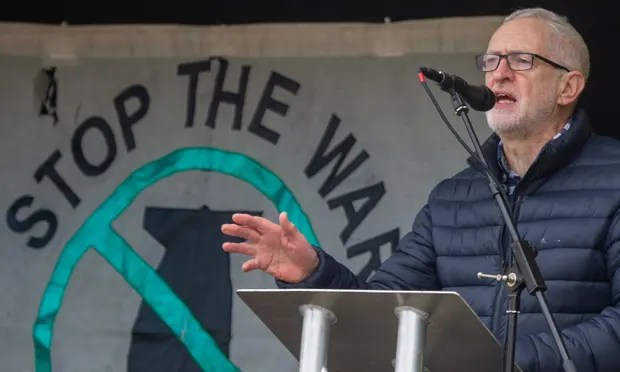
Jeremy Corbyn – victim of a witch-hunt of the Left by Kier Starmer
It may not say ‘New Labour’ on the label but Kier Starmer’s retreat from anything resembling socialism, to a European Social Democratic model for the Labour Party, took another step forward this week. Starmer made it clear that former leader, Jeremy Corbyn, would not be allowed to stand as a Labour candidate at the next General Election.
Starmer left no room for equivocation in relation to his opinion stating,
“Let me be very clear, Jeremy Corbyn will not stand at the next General Election as a Labour Party candidate. The party is unrecognisable from 2019 and it will never go back. If you don’t like that, if you don’t like the changes we’ve made, I say the door is open and you can leave.”
Quite how Starmer’s view aligns with the actual selection rules for Constituency Labour Party branches is another matter, although the right wing in Labour have historically found ways of imposing candidates on branches in the past, through a variety of arm twisting methods.
Corbyn was expelled from the Parliamentary Labour Party in 2020 for suggesting that the findings of the Equalities and Human Rights Commission (EHRC) investigation into anti-semitism in the Labour Party had been grossly exaggerated. There is little doubt that the EHRC investigation was part of the orchestrated right wing and media campaign to smear Corbyn in the run up to the 2019 General Election, paving the way for the ill fated victory of the Tories under Boris Johnson.
More important for the ruling class than putting Johnson in No10 however was ensuring that Corbyn was kept out and a programme which could begin to challenge the entrenched interests of capitalist corporations and the City of London would not see the light of day.
As a willing puppet, Starmer was complicit in the smearing of Corbyn and the subsequent backtracking on the policy agenda for change, which had been initiated under Corbyn’s leadership, and was reflected in the 2017 and 2019 election manifestos.
The prospect of a mass popular base developing, around policies which would begin to challenge the power of capital, through nationalisation of key sectors such as energy, rail and mail; investing in the development of green technology; and tackling the inequities in the tax system for wealthy individuals and companies, was a step too far for British capitalists to tolerate.
Though the proposals of Labour under Corbyn would only begin to make a dint in the power of capital in Britain, the fact that they were leading people to question the system itself, question the reasons for the scandalous rise in billionaires while others lived in poverty or on the street, was enough to worry the ruling class.
The ever willing state run media, through the BBC, enthusiastically echoed the positions adopted by those expressing concern in the ‘national interest’, about the prospect of a Corbyn led Labour government. Starmer weighed in as a vocal supporter of the so called People’s Vote campaign, pressing for a second referendum on Brexit, in contradiction to Labour’s declared policy of honouring the 2016 referendum outcome.
The anti-semitism campaign was the reactionary’s coup de grace, effectively accusing a lifelong anti-racism campaigner of racism and citing his support for the Palestinian people as evidence!
Starmer clearly wants to put the issue of Corbyn’s candidacy to bed well ahead of the next General Election and send a signal to the Left that the coup d’etat he helped engineer has been successful. However, he may find that things are not so straightforward. Quite apart from the Labour Party rule book issue there is that of natural justice. Added to that is the potential for fightback from within the Labour Party, by Left activists and trade unions, keen to see policies which will address the needs of working class communities.
Any Left wing leader behaving in as high handed a fashion as Starmer would be branded Stalinist by a baying media. Starmer will no doubt escape that fate but the inconsistency of a former Director of Public Prosecutions not being able to stick by his own party’s rules will be noted by many.
Distancing himself from Corbyn sends out a signal from Starmer to the ruling class that he has done their bidding and is making Labour safe for capital. The ruling class have certainly obliged in boosting his electoral chances by handing him a Tory Party in a state of disarray. In similar circumstances, in 1945, 1964, 1974 and 1997 the Tories have resorted to their tried and tested approach; retreat, regroup and return. In spite of their own internal difficulties there is every likelihood that they will look to do the same again, seeing Starmer and his front bench playing no more important a role than keeping their seats warm.
As things stand, Starmer is likely to get the keys to 10, Downing St in less than two years. The price paid though will have been a massive one and Labour’s commitment to real change quite possibly diluted beyond recognition, at least in the short term. Fighting for the right of Jeremy Corbyn to stand as a Labour candidate is not a case of fighting past battles. It is a fight for Labour’s future.
The mass extra parliamentary action which has developed in the current strike wave, challenging the government’s economic narrative that there is no money, or that wage rises fuel inflation, has kept the issue of challenging capitalism as a system on the agenda.
Organised working class resistance to attacks upon terms and conditions will erupt, whovever hold the keys to Downing St, but harnessing that energy into a political force for change remains the real challenge. That will require a focus upon the strengthening, not just of the Labour Party as a Parliamentary vehicle, but the whole Labour Movement as an expression of dissatisfaction with the class basis of British society.
Starmer may think that he is moving towards making Labour safe for capital but capitalism will never ensure the safety of the working class. The struggle to move beyond captalism and towards a socialist society, which can truly meet the needs of the people, rather than simply deliver profits to the billionaire few, will continue whether Starmer likes it or not.
The door is open. If he doesn’t like it, he can leave.
Iran – danger of outside intervention escalates
11th February 2023

Tehran – protests continue in the Iranian capital
Today (11th February) marks the 44th anniversary of the revolution in Iran. The developing situation in Iran at present, and the international response to it, underlines the danger of widespread war in the Middle East as the struggle for political control in the region unfolds.
The stolen 2009 election, which saw the return for a second term of populist Islamist Mahmoud Ahmadinejad, resulted in widespread protest on the streets of Iranian cities and gave birth to the so-called Green Movement, which demanded reform within the Iranian political system. Mir Hossein Mousavi, the popular candidate who on all accounts had been considered as winner refused to accept the result and the mass protest of millions overwhelmed Iran for almost 8 months. Mousavi has lived under house arrest till now.
Last week Mousavi called for a peaceful political transition from the current Islamic Republic to a democratic secular model based on the continued and legitimate demands of the people of Iran. Strikes and protests have been engulfing the country since 2017, as workers demand improvements in pay and conditions, along with meaningful trade union recognition.
There were mass uprisings in January 2018 and November 2019, and again last year, with various important economic triggers, for example, the three-fold increase in the price of fuel. There have been labour strikes, teachers’ strikes, as well as numerous protest rallies held by pensioners, nurses, and others. Therefore, the factors behind the current uprising were already present and waiting for the spark which would ignite the fire.
That spark came with the news of Mahsa Amini’s killing on 16 September 2022. Street protests were a feature of Iranian life long before the murder in custody of Mahsa Amini but have intensified since then. The momentum has the potential to pose a real existential threat to the Islamic regime.
Latest statistics from human rights organisations estimate that at least 500 people, including 70 minors, are known to have been killed. Hundreds more have been injured and maimed during the current wave of unrest. More than 20,000 people have been arrested in connection with the protests during the same period.
The Iranian government has recently announced a pardon for those involved in the protests. However, those who are deemed to qualify for a pardon are expected to admit that they were wrong to engage in protest action and commit to not engaging in such action in the future.
So far, four of the detained protesters have been executed, in December and early January. More than 100 other detainees have been sentenced to death and are at imminent risk of execution. Fortunately, in the last five weeks, none of the detained protesters are reported to have been executed. This is mainly due to the international outcry that followed the last executions, along with protests and appeals from around the world for a halt to the other death sentences being carried out. It is clear that the Islamic Republic dictatorship is feeling the heat and pressure in this respect, at least for now.
The executions follow a tragically familiar pattern in Iran where the accused have no access to lawyers or family members and are subject to horrific beatings and torture throughout their detention. “Confessions”, which are then publicly broadcasted via regime media, are routinely extracted through torture and have no real evidential value.
Instability inside Iran is attracting significant external interest as the enemies of the regime begin to mobilise in anticipation of its collapse. On the one hand there is the increasing threat of military intervention from Israel. At the end of January an Iranian military installation in Isfahan came under drone attack.
Reports of the impact of the attack are conflicting. Iranian state media claim that the drones were destroyed, with limited impact upon the complex at Isfahan. The Wall St. Journal describes the attack as “the work of Israel”, while the Jerusalem Post suggests that the drone strike had been a “tremendous success.”
Whatever the truth of these reports there is consensus that an attack took place, an indication that the scope for foreign intervention in Iran is being tested, the consequences of which could lead to wider conflagration in the region.
Just days before the drone attack, the Israeli President, Isaac Herzog, had called for NATO to confront “Iranian threats” and urged member countries to toughen their approach against the Iranian regime.
According to Euronews, after meeting with the NATO Secretary General, Jens Stoltenberg, Herzog stated: “The illusion of distance does not stand anymore. NATO should take the strongest possible stance against the Iranian regime in the form of imposing economic, legal, and political sanctions, as well as adopting a credible approach to militarily deterring this regime.”
Also circling are supporters of Monarchy, endorsing exiled Reza Pahlavi, son of Mohammad Reza Pahlavi, the last Shah of Iran, suggesting that Monarchy could be the way to “lead a transition” when the Islamic Republic falls. While there is no evidence for popular support for a return to Monarchy within Iran, there is every possibility that a dictatorship compliant with Western interests may be deemed an option, if foreign intervention is stepped up to accelerate regime change.
The demands of the current popular protests are for peace, democracy and social justice. Neither foreign intervention, Monarchy, or a combination of both, will deliver these demands for the Iranian people.
The drone attacks on the military complex in Isfahan must be condemned, as such dangerous military adventures pose a threat to the Iranian people, the Middle East, and the Persian Gulf region. All progressive and freedom-advocating forces in the region and around the world must raise their voices in protest against these policies. The genuine protests and demands of the Iranian people must be supported and the future of Iran must be entirely in their hands.
Further information at www.codir.net
Prepayments, pushback and profits
4th February 2023

Energy companies – continue to pile on the profits
The means by which the working class in Britain are persecuted are many and varied. Poor housing, increasingly limited educational opportunities, limited apprenticeships for skilled work, low pay, zero hours contracts, limited trade union rights, the list goes on. Add to this the so called cost of living crisis (in reality a crisis of profits for capitalism), in particular relating to energy bills, and life for many of the poorest in our communities is little more than miserable.
In such circumstances it is no surprise that some may fall behind on bills as they try to square the heating or eating circle, forced to make impossible choices in order to stay warm, maintain good health and survive to the end of another week.
Into this mix add the practice of energy firms forcibly installing prepayment meters, resulting in many vulnerable families being at risk of having their power cut off, if they cannot afford to top up. Prepayment meters are generally more expensive, meaning that the scam perpetrated by the energy companies does not just put vulnerable families at risk it helps ramp up their already obscene profits.
The energy watchdog, Ofgem, having finally woken up to the practice of forced installation, has asked the energy firms to review how they deal with customers who fall behind on their bills. The public furore over the practice has forced the energy firms to step back and most have now said that they will suspend all prepayment warrant activity, the polite euphemism for breaking into people’s homes, “at least until the end of winter.”
British Gas, one of the main perpetrators of the breaking and entering scam, have attempted to blag their way out of their responsibility by claiming that, “It’s not how we do business.” This may be a thinly veiled effort to shift the blame onto the bailiffs they employ to break doors on their behalf but there is certainly no indication that British Gas are returning any excess profits accrued as a result of their nefarious actions. It is very much how they have been doing business and may continue to be the case after “the end of the winter.”
Like a bankrobber counting the loot from his latest heist, ending forced entry is the least the energy firms can do, though it sounds a lot like saying, we have fleeced you enough for now but we will be back….
As robbery goes the energy firms could easily teach the average safe cracker a thing or two. Shell this week announced profits of £32.2 billion for 2022, the highest in its 115 year history! The company is valued at £168bn but lobbied hard against a windfall tax on the basis that it would hinder energy investments. The reality of how Shell spends its profits is quite different however.
The think tank Common Wealth has found that in the final quarter of last year Shell invested £871 million in exploring hydrogen and carbon capture and storage. Shareholder dividends for the same period totalled £5 billion while marketing cost the company a cool £1.6 billion. Apparently, shareholders will also benefit from a £3.2bn share buy back scheme.
This is hardly the action of a company committed to forging ahead in pursuit of renewable energy sources. On the contrary, a complaint has been filed in the US accusing Shell of including investments in gas under the label of renewables.
While the Tories did, under pressure, introduce a form of windfall tax on the profits of energy companies, calls for this to be made tougher are growing. There is no indication at present that the Tories will relent with Prime Minister, Rishi Sunak, more content to applaud Shell’s “substantive investments here in the UK.”
Nor is the government prepared to tighten the law when it comes to constraining the issuing of prepay warrants and the forced installation of meters, stating through an unnamed spokesman that,
“The independent regulator Ofgem operates the licensing regime for energy suppliers. They have the power to fine suppliers who do not comply with their licence conditions.”
In effect the government is confirming its complicity in attacks upon the most vulnerable families, while doing its utmost to protect the methods of those prepared to maximise their profits by any means, at anyone’s expense.
The current strike wave is a clear demonstration that resistance to the Tories is growing and that their actions are clearly based on protecting the interests of their own class, rather than some spurious notion of the ‘national interest’.
Linking organised trade union action to community resistance will be vital to taking the struggle against the Tories to a new level in the political arena. That will require a commitment that the energy companies must be nationalised, in order to serve the interests of the many, not the few wealthy shareholders, as at present. That would be a real commitment to the national interest. Labour need to wake up to the need to take the lead on this issue or they may well be left behind.
Empty
28th January 2023

Nothing in the tank – Chancellor Jeremy Hunt fails to enthuse even his own supporters
Britain’s Tory Chancellor, Jeremy Hunt, claims to have a plan for economic growth. As he and his political predecessors have presided over the active de-industrialisation of Britain for over 40 years this news was not greeted by thousands pouring onto the streets, to await words of wisdom from the Chancellor. Thousands have continued to swell the ranks of picket lines however, protesting the case for better pay, terms and conditions.
Undeterred by the evidence of political chaos and the sounds of the crumbling economic edifice all around him, Hunt pressed on regardless. He was at least conscious of the dangers of making any pronouncements in a public sector building, so retreated to the safety of the City of London, choosing the headquarters of the financial data and news service Bloomberg. No nasty picket lines there and no one worrying about their next meal, their wait for a hip operation or how they were going to pay the energy bills.
Scene set, what did the wisdom of Jeremy Hunt consist of? Well, in typical soundbite fashion, Hunt explained that he wanted to focus on ‘the four Es’; enterprise, education, employment and everywhere.
On the issue of enterprise Hunt was keen to see Britain as a leader in digital technology. Hunt failed to account for the fact that the tech world is united in its criticism of the scale and speed of Britain’s broadband infrastructure, which is becoming more of an impediment than an aid to progress. The failure of Britishvolt this week to establish the electric battery manufacturing plant in Blyth in Northumberland, also sent out something of a negative signal. When asked about this during the week the Prime Minister, Rishi Sunak, denied it was lack of government support which undermined the project but a failure of the private sector to cough up enough cash.
Enterprise, looked wobbly and its prospects were not enhanced by reliance on private companies, BT Openreach and the National Grid, to modernise the technology and electricity infrastructure. Hunt is clearly relying on the misplaced Tory mantra that the private sector is the engine of the economy. In reality it is public sector investment, planned and sustained, without which the private sector cannot function, that is the engine of economic growth, even in capitalist terms.
As the party which has done all in its power to dismantle the comprehensive education sector, and continues to champion tax payer subsidised public school education for the privileged few, hopes were not riding high for the second E from the Chancellor; education.
The recent autumn budget did see an injection of £2.3 billion for the schools budget but, far from this being a boost for greater educational opportunity or training pupils for jobs in a bright high tech future, it just about saved them from having to go onto the streets to busk and beg for pencils! With seven days of strike action by teachers coming up throughout February, in protest at real terms cuts in teachers’ pay, and a struggle to recruit and retain in the profession, Hunt seemed to be out of touch with the realities once again in his second E.
Third E; employment. The outcome of a confident booming economy where well educated and well trained young people get well paid jobs with prospects of promotion and advancement. Such an approach would go against the Tory economic model of the past forty years and nothing Hunt said indicated that this would change. The low pay, zero hours contract, anti trades union, gig economy does not appear to give Hunt any cause for sleepless nights. Nothing in Hunt’s plan appeared to suggest that there were any issues to address here.
With even workers at Amazon centres going on strike this week, it is obvious that the bubble is beginning to burst in a sector which has traditionally relied on poor terms and conditions being compensated for by relatively higher pay than low paid public service jobs. The derisory 50p an hour pay increase offered to Amazon staff contrasted sharply enough with the billions the company made in profits to see GMB membership soar in the past week.
Finally, Hunt moved on the E number four; everywhere. The government’s failure to give up on the redundant concept of ‘levelling up’ is abject. The last round of so called levelling up funds saw 60% land in London and the South East; £19m go to the well heeled constituency of one Rishi Sunak MP, Richmond in North Yorkshire; with a few scraps left over to try and shore up so called red wall seats for the Tories, in advance of the looming General Election. Continuing to labour under the levelling up delusion Hunt nevertheless claimed that the programme would ensure all parts of the UK would benefit from “making Britain one of the most prosperous places in Europe.”
As the world’s sixth largest economy it should not have escaped Hunt’s notice that Britain is already quite prosperous. The problem, for the majority, is the uneven and inequitable distribution of that prosperity with the number of billionaires increasing at the same time as more people end up homeless and sleeping on the streets.
In economic terms Hunt and his boss Rishi Sunak behave with the mentality of a couple of barrow boys flogging knockoff kit at a street market. Shift as much gear as you can, as quick as you can, then do a runner before the cops turn up. It is no way to run a modern economy, even a capitalist one.
A planned approach to production, investment based on the needs of the people, not the profit margins of private companies, and a socialist approach to economic planning, are the ultimate solution. These are not approaches which fit the mindset of the Tories and sadly continue to be too taxing for the limited imaginations of those running the Labour Party at present. The Tories are beyond redemption as dyed in the wool defenders of capitalism. The hope remains that with pressure and persuasion Labour can change.
The final word on Hunt’s plan for growth however goes to the Institute of Directors, a traditionally reliable true blue Tory supporting institution, who described the content of the Chancellor’s speech with a fifth E; empty.
US malign machinations fuels conflict
21st January 2023
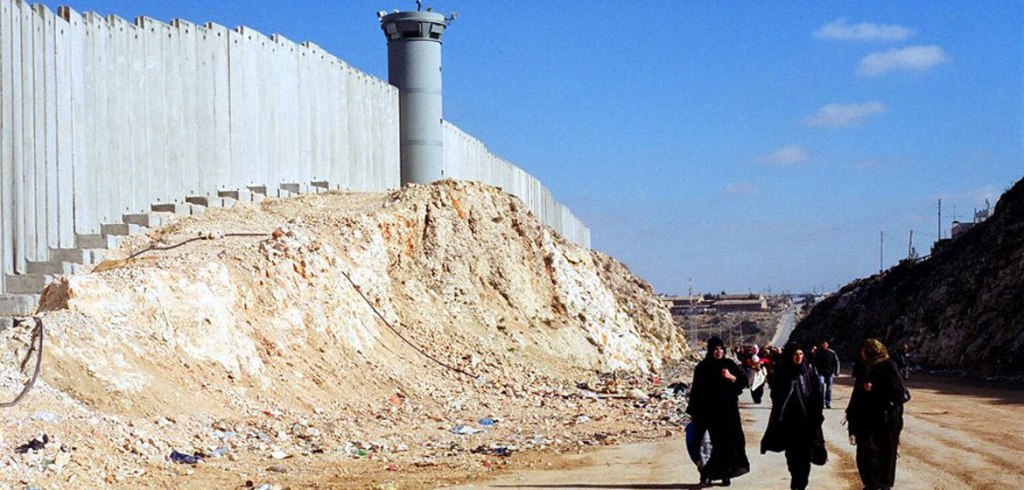
The illegal Israeli wall on the West Bank part of the land grab from Palestinians
Fifty nations, either part of or allied to the NATO military alliance, have been meeting in Germany to decide how much more weaponry they can pour in the conflict in Ukraine. High on the agenda is how many German built Leopard 2 tanks can be channelled to the right wing nationalist Ukrainian government to extend the war with Russia.
The meeting did not end in agreement, with Germany reluctant to send more tanks, or grant export licences for other countries to do so, unless the United States committed to sending more of its own tank weaponry.
As a result of NATO’s expansion over the past thirty years, extending its reach ever closer to the borders of Russia year by year, there are thousands of Leopard 2 tanks across Europe. In spite of the recent failure to reach agreement, there is every likelihood is that they will be mobilised for action in the not too distant future. With the first anniversary of the Russian intervention looming on 24th February, there can be no doubt that the Ukrainian public relations machine, fronted by President Zelensky, will shift up a gear to pressurise NATO members.
In the meantime, Leopard tanks or not, there is no shortage of weaponry pouring into Ukraine. The United States, already world leaders in fuelling the conflict, have promised a further $2.5bn in weaponry to prolong the war. In addition, Britain has committed a further 14 Challenger 2 tanks, while Poland is threatening to go against the Germans and export a similar number of Leopard 2 tanks anyway.
In spite of this firepower heading their way the Ukrainian pitch is for 300 tanks, necessary they claim, to resist a Russian Spring offensive. Any talk of peace or a negotiated settlement appears to have evaporated in the frenzy to supply more arms to Ukraine and the increasing tendency for NATO to fall behind the line, articulated by Zelensky, that nothing short of military victory over Russia will be an acceptable outcome.
The Western allies have long contested Russia’s claim to the Crimea, as well as that of the largely Russian speaking Donbas region of Ukraine. Any chance of reverting back to the Minsk agreements, negotiated with German arbitration in 2014, seems to have been torn up. While that deal appeared to have a settlement in place, around the largely Russian speaking Donbas, Ukraine never stuck to the deal and thousands have died as a consequence. This fact was not big news in the West and the Ukrainians, including the neo-Nazi Azov battalion, were given free reign to carry on with their civil conflict in the Donbas region.
The Western response to Russian intervention in Ukraine contrasts sharply with the response of the Western world to the Israeli treatment of the Palestinians. In spite of United Nations resolutions calling for a two state solution in Palestine the illegal occupation of the West Bank, Gaza and Golan Heights by the Israeli military has continued, without any significant challenge from the West, since 1967, nearly 60 years.
Following elections in November, the Israeli Parliament in December swore in what is widely acknowledged to be the country’s most far-right, religiously conservative government in history. The coalition sees the return of Benjamin Netanyahu as Prime Minister. Netanyahu, who was prime minister between 1996 and 1999, and then between 2009 and 2021, has said that an end to the “Arab-Israeli conflict” would be his top priority, as well as stopping Iran’s nuclear programme and building up Israel’s military capacity.
The new government includes far-right leaders who have been given top posts, such as Religious Zionism leader Bezalel Smotrich, and Jewish Power leader Itamar Ben-Gvir, who previously expressed support for Baruch Goldstein, a Jewish Israeli man who killed 29 Palestinians in a shooting at Hebron’s Ibrahimi Mosque in 1994. The result is a coalition that has explicitly called settlement expansion in the occupied West Bank, its top priority, in spite of such settlement being illegal under international law.
Even before the new right wing coalition takes office the United Nations estimates that Palestinians have already faced their deadliest year since 2006, after Israel’s outgoing government launched an offensive in Gaza in August, as well as near-daily raids in the West Bank that have led to dozens of killings and arrests.
UN Middle East envoy, Tor Wennesland, told the Security Council in December that more than 150 Palestinians and over 20 Israelis have been killed in the West Bank and Israel in 2022, the highest number of deaths in years.
The UN envoy also said Israeli settlement expansion in the occupied West Bank, including East Jerusalem, remains deeply concerning. The number of housing units advanced in occupied East Jerusalem more than tripled: from 900 in 2021 to 3,100 in 2022.
“I also remain deeply concerned by the continued demolitions and seizures of Palestinian structures,” said Mr. Wennesland. “I am alarmed, in particular, by the demolition of a donor-funded school in Masafer Yatta and the stated intention of Israeli authorities to demolish additional structures in the herding communities of that area, which would have a significant humanitarian toll, if implemented.”
He called on Israel to cease advancement of all settlement activities as well as the demolition of Palestinian-owned property, and to prevent possible displacement and evictions. In calling for an end to the conflict the UN envoy stressed that,
“There is no substitute for a legitimate political process that will resolve the core issues driving the conflict.”
The same message could equally be applied to the conflict in Ukraine.
Not surprisingly there is no international contact group considering how many tanks can be provided to the Palestinians to defend themselves against Israeli aggression and to uphold international law.
On the contrary, the United States is by far the biggest exporter of arms to Israel. Between 2009-2020, more than 70 percent of the arms Israel bought came from the US. Between 2013-2017, the US delivered $4.9bn (£3.3bn) in arms to Israel.
Under a security assistance agreement spanning 2019-2028, the US has agreed, subject to congressional approval, to give Israel $3.8bn annually in foreign military financing, most of which it has to spend on US-made weapons.
Conflict resolution is clearly not part of the political lexicon of US imperialism. Whether it is the right wing nationalist zealots in Ukraine, or the right wing religious zealots in Israel, US imperialism is in the thick of fuelling conflict, war and misery for thousands across the globe.
Anti-war and anti-arms trade activism must continue on all fronts, to combat the malign impact of US machinations. Exposing the role of the US and its allies in fuelling conflicts is the first step on the road to finding solutions based upon peace and mutually agreed boundaries, before escalation goes too far.
Defining ‘our culture’
14th January 2023
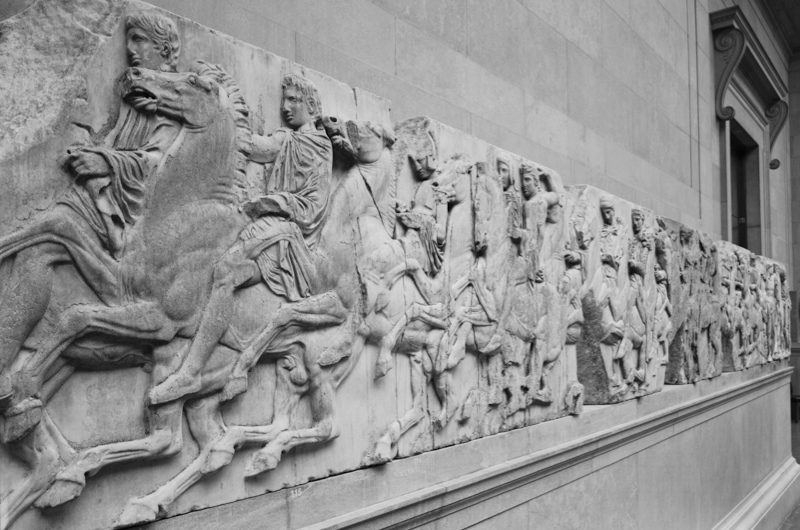
Parthenon Sculptures – not part of ‘our culture’
British Secretary’s of State for Culture rarely make the headlines and the previously unknown and largely anonymous incumbent, Michelle Donelan, has stayed true to form until this week. What has brought Ms Donelan into the spotlight is the question of the Parthenon Sculptures, known by many to date as the Elgin Marbles.
The sculptures have been in the ‘ownership’ of the British museum since 1816 having been removed between 1801 and 1812 from the Parthenon in Athens, then part of the Ottoman Empire, by British diplomat and soldier, Lord Elgin. The claim by Elgin that he had permission to take the sculptures is hotly contested. That they are historical artefacts of significance to Greece, dating back to the 5th century BC, is not disputed.
It should be no surprise that the Greeks have a long standing claim for the sculptures to be returned to Greece, where they rightly belong. Successive British governments have disputed the Greek claim, on the basis of backing Lord Elgin’s assertion that they were legitimately acquired, and are therefore legally in the ownership of the British Museum.
In an interview with the BBC Culture and Media Editor, Katie Razzall, this week Michelle Donelan went to great lengths to defend the current position. Donelan claimed that the sculptures “belong here in the UK” and that sending the sculptures to Greece would be a “dangerous road to go down”, going further to suggest that such a move would “open the gateway to the question of the entire contents of our museums.”
Perhaps most significantly Donelan claimed that “it is important that we stand up and protect our culture”. When being interviewed by news anchor, Sophie Rayworth, about her interview with the Culture Secretary, Katie Razzall picked up on this point in defence of Donelan, suggesting that she ‘mis-spoke’, as the sculptures are clearly part of Greek culture.
As a piece of challenging journalism this is poor in the extreme. Razzall did not challenge the ‘our culture’ comment in the interview but compounded the error by subsequently going out of her way to leap to Donelan’s defence.
While this underlines much of what we already know about the supine journalism of the BBC it also confirms what we know about the Tory definition of culture. The culture that Donelan refers to is clearly that of the British ruling class, who have robbed, pillaged and enslaved huge areas of the globe in order to enrich a select few, maintain a privileged aristocracy, and claim any loot they could lay their hands on for personal gain.
The Parthenon Sculptures are part of a long list of artefacts claimed by the ruling class as part of ‘our culture’ including tombs robbed in Egypt, the bronzes from Benin and jewellery from across the world. Most famous in this regard is the Koh-i-noor diamond, sitting at the centre of the British Monarch’s crown but effectively swindled from the Indian Sikh community by British Imperialism’s 19th century advanced guard, in the form of the East India Company.
The British working class have on various occasions been press ganged, dragooned or duped into engaging in ruling class wars of adventure or plunder. The frontline in the armed forces are inevitably drawn from the working class, who also bear the brunt of the casualties in any conflict, from the two World Wars of the 20th century to more recent occupations in Iraq and Afghanistan.
That does not mean that such actions are either in the interests of the working class or widely supported amongst the population, though the ruling class mouthpieces of the Mail, Express, Telegraph and The Sun do their best to persuade us otherwise.
Working class culture is founded on collective action resulting in the formation of trade unions, the Labour Party and a whole range of educational, welfare and community based organisations. Which is not to say that elements of sexism, racism and jingoism are not present in working class communities, infected by the prevailing orthodoxy within capitalism.
The difference is that progress to change society in a positive direction comes from working class struggle and collective action. Such action is always resisted by the ruling class until they are compelled to make concessions. Any concessions that are made are as quickly eroded when working class organisations are weakened or lacking militant leadership.
This is not what Donelan is referring to when she talks about ‘our culture’. On the contrary this is precisely the culture that she and her class want to suppress, in favour of a definition of culture which is distinct from the concerns of working class communities, has a rarefied boundary and is essentially the preserve of an educated elite.
Working class culture does emerge however, in the form of writers, artists and musicians who articulate the realities of lives for the underprivileged and oppressed, the victims of capitalism who can only peer in at the window of the world of culture, as defined by Donelan, but who continue to generate their own cultural space in which to survive.
The fate of the Parthenon Sculptures may not be to the forefront for those struggling in the streets of Bolton or Belfast. Whether they go back to Greece or stay in the British Museum is not going to put food on the table or pay the energy bill. In the long term however, how we interpret history has a profound effect on the present and is key to shaping the future. Reclaiming that history for those who have struggled to improve the world, rather than make a personal fortune from it, is a vital first step.
Tackling the people’s priorities
7th January 2023

Starmer and Sunak – New Year face off
In his New Year speech this week British Prime Minister, Rishi Sunak, promised to deliver on the “people’s priorities”. Needless to say he has fallen at the first hurdle by virtue of still being in office at the end of the week. The people’s number one priority is clearly to be rid of the self serving, tin eared government he leads but Sunak either missed or ignored that particular priority.
Sunak spotted that NHS waiting times are too long, not news to the rest of the population but as head of the government he is, at least in theory, in a position to do something about it. Sunak offered nothing. He did not even offer an apology for the years of failure under successive Tory governments, which has precipitated a health and social care crisis due to the austerity imposed on local government and the privatisation of the care sector, resulting in the obscenity of care for the elderly being run for profit.
In the NHS itself morale is so low that vacancies are running at 132,139 out of a workforce of 1.2 million. Vacancies amongst nurses alone is at 46,828 the highest on record. The strike action currently being undertaken by nurses and ambulance workers may soon be joined by junior doctors, who begin to ballot on Monday (9th January), with the prospect of three consecutive days of walkout in March.
It is now widely understood that a major source of pressure upon the NHS is the inability of hospitals to discharge otherwise medically healthy patients, if they need a social care package, as the pressure in that sector is so great due to funding cuts.
By 2040 it is estimated that the number of those aged 85+ years old will have doubled. Unless that age cohort are all living miraculously fit and healthy lives the pressure for social care will increase exponentially. Not only that but the surviving children of this age group will themselves be in their 50’s and 60’s, hardly in a position to easily provide informal care and in danger of having to make demands upon the care system themselves.
The situation is further exacerbated by the impact of Tory austerity cuts upon the arts, museums, libraries and sports services run by local authorities, all proven to be major contributors to maintaining physical and mental health and wellbeing, but increasingly under pressure.
Still, as one of Sunak’s big announcements was to make maths learning compulsory to the age of 18, the younger generation should be well positioned to count the cost of Tory errors.
Rather than seeking to address the source of the current wave of disputes, due to poor pay and conditions, rampant inflation and the cost of living crisis, Sunak plans new anti-strike legislation, first flagged by Liz Truss, to enforce “minimum service levels” in key public sector areas including the NHS and schools. To suggest that this has drawn a furious reaction from unions is an understatement, as pay awards for the current year continue to be off the government’s agenda for discussion with the unions.
Sharon Graham, the general secretary of the Unite union, said: “Yet again, Rishi Sunak abdicates his responsibility as a leader. Whatever the latest scheme the government comes up with to attack us, unions will continue to defend workers.”
It is clear that the “people’s priorities” that Sunak is trying to address are not the people on the frontline delivering the jobs and services on which the public depend. As is always the case with the Tories the only “people” being prioritised are the company bosses and shareholders, making a handsome profit for doing little but shelling out donations to the Tory Party in the hope of making it onto the next honours list.
Labour leader, Kier Starmer, also dipped his toes in the waters of a New Year speech this week, edging forward with characteristic caution in spite of Labour’s 20 point opinion poll lead. Starmer did at least promise to repeal any new anti-trade union legislation Sunak may bring in but did not address that already on the statute books. He continued to take the market reassuring line of “fiscal responsibility”, promising no big state cheque book and only to spend what is raised.
Quite what this will mean for the massive investment required to renew Britain’s ailing infrastructure, address the pay deficit in the public sector and tackle the inequities in the tax system remains to be seen. Starmer also promised more devolution, proclaiming “a new way of governing” which would take power out of the hands of Westminster and give it to the regions. It has a populist appeal but the realities on the ground rarely match the rhetoric.
The much discussed North East England devolution deal, recently agreed, promises £4.2 billion over 30 years. While this has got a lot of politicians in the region excited what is being promised barely repays what has been robbed from working class communities over many years in the first place. Secretary of State, Michael Gove, regards the deal as another victory for the so called levelling up programme.
The reality is however that, under capitalism, the playing field will never be level and the Tories, as the political representatives of their class, will always act in the interests of that class. Any real levelling up will only happen when the working class is represented by a political movement capable of doing the same in its interest.
New Year’s Resolution
1st January 2023

2023 – not such a party for all
However much alcohol they may have consumed the night before, the reality is that for millions of working class people the biggest hangover they will wake up to on New Year’s Day is a financial one. The fact that they are in this situation, together with millions of others, is scant compensation when the bills continue to roll in and the choice between heating and eating is a very real one.
It’s New Year’s Day why the pessimism, surely this is the time for a bit of optimism, a bit of hope, the turning of a new page as we head into 2023?
It is true that for some the prospects in 2023 do seem brighter than for others, certainly if 2022 is anything to go by. Estate agents Knight Frank have just published research looking at the sale of “super prime country houses.” In total 168 homes outside London were sold for more than £5m in the year end to October, the highest number since 2007, the year before the financial crash.
The reason for this? It would appear, according to Knight Frank, that the boom in country mansion sales was as a result of “wealth creation” during and after the Covid pandemic. This, it would seem, led to a rise in the number of “ultra high net worth” (UHNW) individuals, defined as having a fortune of more than $50 million, now at a record 218,200 level.
Investment bank Credit Suisse confirm the Knight Frank findings, stating that the world’s richest people benefitted from “almost an explosion of wealth” during the recovery from the pandemic. Credit Suisse add that the number of people in the UHNW bracket has increased by more than 50% in the past two years.
For Knight Frank and Credit Suisse the concept of wealth creation appears simply to mean that more people got richer, not that they actually did anything to create this wealth, other than to exploit the labour of others. In effect, on the back of the hard work done by millions in shops, factories, offices, schools and hospitals, to keep people safe and the economy functioning throughout the pandemic, those who were already remarkably rich, and extremely safe financially, have lined their pockets even further.
It is possible that some of those benefitting from this boom in wealth for the few work in the banking sector. According to the European Banking Authority there are 3,519 bankers working in Britain who earn more than €1 million (£880,000) a year. This is seven times higher than Germany, which has the second highest number of €1 million a year bankers in Europe.
The government appear not to be concerned about inflation when it comes to the eye watering earnings and pay increases in the banking sector or for those profiting lucratively from the pandemic. For the government inflation only appears to be a threat if wage demands are coming from postal workers, nurses, rail workers, border staff, junior doctors or local government employees.
Of course, this is the economics of setting the rules in order to make sure you win the game, although even many capitalist economists disagree with the assertion that increased wages for low paid workers fuels inflation. Given that these are the workers on whom economic demand depends, as they are the people who go out and buy goods and services, being able to afford to spend on these things is more likely to aid economic recovery than hamper it.
As it stands the headline rate of pay for all workers last year, excluding bonuses, reached 6.1% but when adjusted for inflation pay for all workers fell by 2.7%, underlining the impact of the cost of living crisis for many. According to a recent Which? survey in the run up to Xmas 1.9 million households failed to meet at least one mortgage, rent, loan, credit card or energy payment.
In these circumstances the danger of loan sharks moving in to working class communities becomes significant, as families struggle to meet basic needs and resort to ever more desperate measures to survive. Support from Citizen’s Advice, community organisations and others offering debt counselling can go so far but when there is simply not enough money to make ends meet there is only so much which good advice can achieve.
While the privileged few may enter the New Year in anticipation of turning a bigger profit or making a mansion purchase, for the majority capitalism is not a system working in their favour or in their interests. The trade union struggles for greater pay must be linked to community action to tackle poverty and the recognition that low pay, poverty and the cycle of deprivation are endemic to the capitalist system.
In the short term it is important that struggles for improved pay and conditions are won. However, the wider political struggle to make fundamental changes in the direction of socialism, to meet the needs of the many, not the few must be the most important resolution for the New Year. That is the task facing all those concerned with shaping a system which truly reflects the ideals of peace, democracy and social justice run by, and in the interests of, the working class.
 Avanti Populo