

On Palestine and Narrative
by Isabella Hammad
Book Review
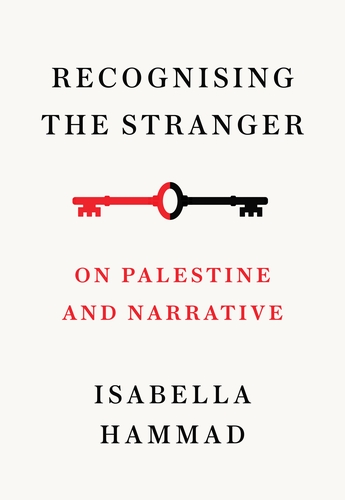
A sense of timing and an eye for synchronicity are common concepts deployed by authors in the construction of a narrative. On 28 September 2023 the British-Palestinian novelist, Isabella Hammad, gave the Edward W Said Memorial Lecture at Columbia University, now published as Recognising the Stranger: On Palestine and Narrative.
Hammad could not have foreseen that only a week later, on 7 October 2023, the Qassam Brigades of Hamas would, in response to the ongoing Israeli occupation and blockade of Gaza, launch a military attack upon Israeli military bases and kibbutzim. The attack resulted in over 1,000 deaths and the taking of over 200 hostages, to be held until the 5,000 Palestinian political prisoners held in Israeli jails were released.
Hammad’s lecture would have been relevant and a percipient insight into the situation of the Palestinian people had the events of 7 October and their aftermath, not have happened. However, given the Israeli response to the Hamas attack, Hammad’s lecture and subsequent Afterword: On Gaza, written in January 2024, take on added relevance.
In her original lecture Hammad is concerned with considering turning points, ostensibly in literature but also in the personal and political spheres. Those points in a fictional narrative when characters have moments of recognition, when an aspect of the plot, which may have been clear to the reader, is revealed to the characters and what has been, up until then, a mystery falls into place.
Hammad suggests that in the personal and political spheres the concept of a turning point is “a human construction, something we identify in retrospect” (p.2) but that the moment in which we now live “feels like one of chronic ‘crisis’” (p.2).
Hammad explores the role and function of the novel in the contemporary world, competing against the wide range of other ‘entertainments’ on offer, yet still powerful and relevant enough to find a mass audience and speak to the need for narrative, storytelling and a search for meaning.
Hammad links the concept of turning points in literature to those in real life through the example of writers visiting the Palestine Festival of Literature and experiencing for themselves the reality of life for the Palestinian people under Israeli occupation.
“They visited Hebron, and saw the soldiers patrolling, guarding settlers; they visited the destroyed town of al-Lydd; they navigated checkpoints; they travelled through Jerusalem and crossed in and out of the West Bank; they listened to statistics of killings and imprisonments and night time raids and asked careful questions.” (p.21)
Hammad goes on to analyse the wider international debate regarding the position of the Palestinian people, the incremental retreat from insistence upon a two state solution, with Palestinians having a right to their own state, while the international community in the Global North, largely accept and reinforce the state propaganda and Zionist supremacist ideology of the Israeli regime.
Hammad does recognise that there is a shift in awareness amongst many ordinary people across the world, including amongst Israelis, a recognition that Palestinians have human rights. She cites what co-founder of the Boycott, Disinvestment and Sanctions (BDS) movement, Omar Barghouti, calls an aha moment,
“…talking specifically about the moment when an Israeli realises, in a turning point of action, that a Palestinian is a human being, just like him or her.” (p.25)
While Hammad’s lecture inevitably focuses upon the work of Edward Said, as a prominent Palestinian intellectual, his literary criticism and her own practice as a writer, she does not shy away from exploring the reality of the stateless position in which Palestinians are forced to exist and the implications of this for their culture.
In her Afterword: On Gaza Hammad is clear that the action of 7 October in itself represents a turning point, comparing it to “an incredibly violent jailbreak” and asserting that,
“It also signified a paradigm shift: it showed that a system in which one population is afforded rights that the other population is denied will be safe for neither.” (p.61)
Hammad robustly condemns the Israeli response to 7 October stating starkly that,
“Ten thousand dead children is not self defence.” (p.62)
A figure which has escalated significantly in the year since her afterword was written. Hammad condemns the extent to which the Western powers, the United States in particular, have supplied Israel with weapons to continue the bombardment of Gaza and the role of the US in vetoing ceasefire arrangements. This position may have changed for the moment but there is no guarantee that Israel will maintain it.
As Hammad states, as she moves towards a conclusion,
“The possibilities faced by the Israeli state for at least twenty years have been: maintain apartheid and forfeit the claim to being a democracy; return to the pre-1967 state borders and allow for the creation of a Palestinian state; break down the system of apartheid and enfranchise the Palestinians in a one-state reality; or conduct large scale ethnic cleansing. They are choosing the last option.” (p.75)
Just over a year since that Afterword was written, it is clear that this is precisely the path that the Israeli regime has taken and that solidarity with the Palestinian people is more vital now than ever.
Isabella Hammad is the award winning author of ‘The Parisian’ and ‘Enter Ghost’. In 2023, she was included as one of Granta’s Best of Young British Novelists.
 Avanti Populo