

10th August 2024
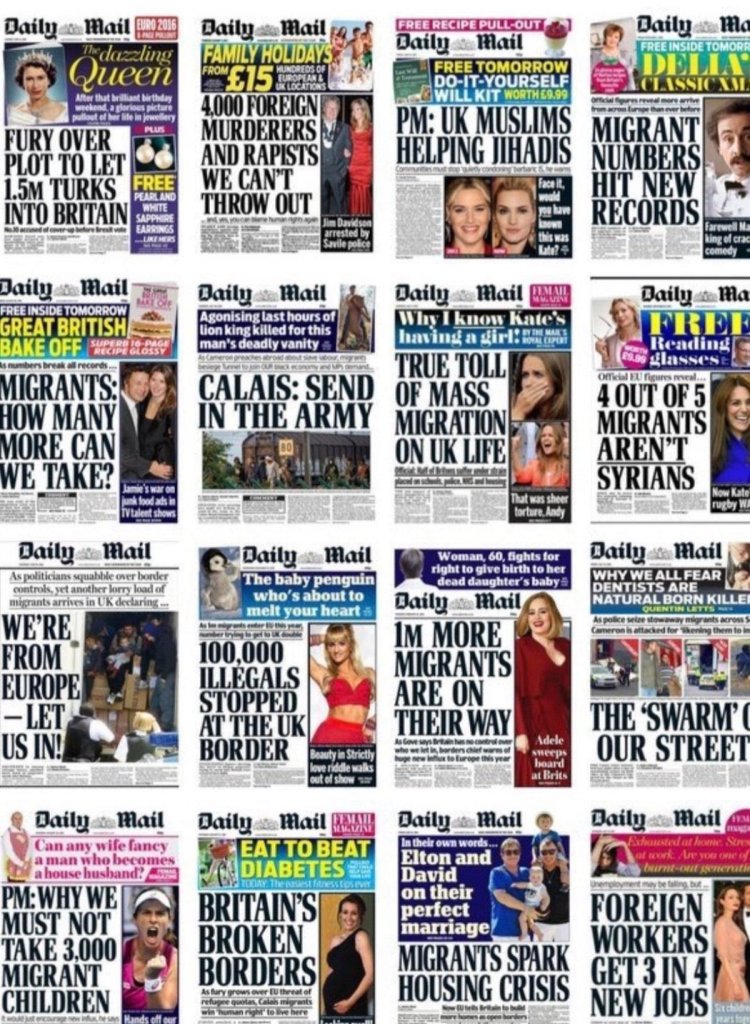
Daily Mail headlines fuel the anti asylum seeker narrative
Demonstrations across Britain this week, deemed anti-immigration protests by the media but actually pro-racism mob violence, have been met with stalwart resistance from local communities determined to resist fascist attacks. This has ranged from a 3,000 strong turnout in Newcastle upon Tyne’s West End to defend a centre for asylum seekers, to the City Centre clean up in Sunderland following a night of vandalism and looting. Similar actions have been reported from across the country.
Such shows of working class community solidarity are vital to quashing the misinformation spread by the far Right that Britain has an ‘immigration problem’. Such language and provocations are the natural territory of the far Right but the collusion of much of the mainstream media, including the BBC, in regarding immigration as a problem to be solved gives the claims of extremists more credibility in the eyes of the most gullible.
Coventry South MP, Zarah Sultana, recently posted on X a montage of Daily Mail headlines which fuelled the anti-asylum seeker narrative. Sultana also suffered hostile questioning on ITV’s Good Morning Britain this week, from presenters Ed Balls and Kate Garraway, for suggesting that the violence over the past week should be called out as Islamophobic.
Balls in particular was quick to defend Home Secretary, Yvette Cooper (his wife), and Labour leader Kier Starmer for acknowledging that the violence was fuelled by racism but refused to accept that they should call it out as Islamophobic. To her credit Sultana stood her ground and has come out of the encounter with more credit than either Balls or Garraway.
While the Labour government has been quick to point the finger at social media and mobilise the state apparatus of the police and the courts there has not been any recognition, from the Front Bench at least, that these measures are only dealing with the symptoms and not the cause. There is no argument about jailing fascist thugs or addressing any of the shortcomings of the Online Safety Bill. However, at root the issues of poverty, disaffection, and a sense of disconnection from a hugely unequal society are the causes which need to be tackled.
Those at the sharp end of the impact of capitalism and its endemic crises are the most likely to fall prey to the easy solutions presented by the demagogues of the far Right and the so-called populist rhetoric of the likes of Reform MP, Nigel Farage. It is no coincidence that the worst violence has been seen in areas of the greatest poverty, or that the previous Tory government placed asylum seekers in hotels in these areas.
Preventing a repeat of the scenes which have taken place over the past week will require robust action to tackle poverty, low wages and exploitation. It will require massive attention to the housing issues faced by many working class communities. It will require greater investment in the local government services which many working class communities rely upon. It will require a stronger approach to tackling wealth inequality and how resources are distributed across society.
It will require Labour politicians to be seen on the frontline with threatened communities showing their active support. It will also require Labour to reject the narrative that immigration is a problem to be solved and turn that round to make it clear that a major problem to be solved in Britain today is racism.
Divide and rule has always been a key tool of ruling class strategy and the recent activity across Britain has shown how some sections of working class communities can be persuaded by the far Right, while others will stand firm in the face of fascist violence.
Any strategy which is to ultimately succeed however has to be based upon a recognition of the class interests of those communities most threatened and that solidarity between black and white working class communities is the only way forward. In short it will require a strategy which not only deals with the symptoms but begins to tackle the causes of racist violence in Britan today.
 Avanti Populo