

20th July 2024
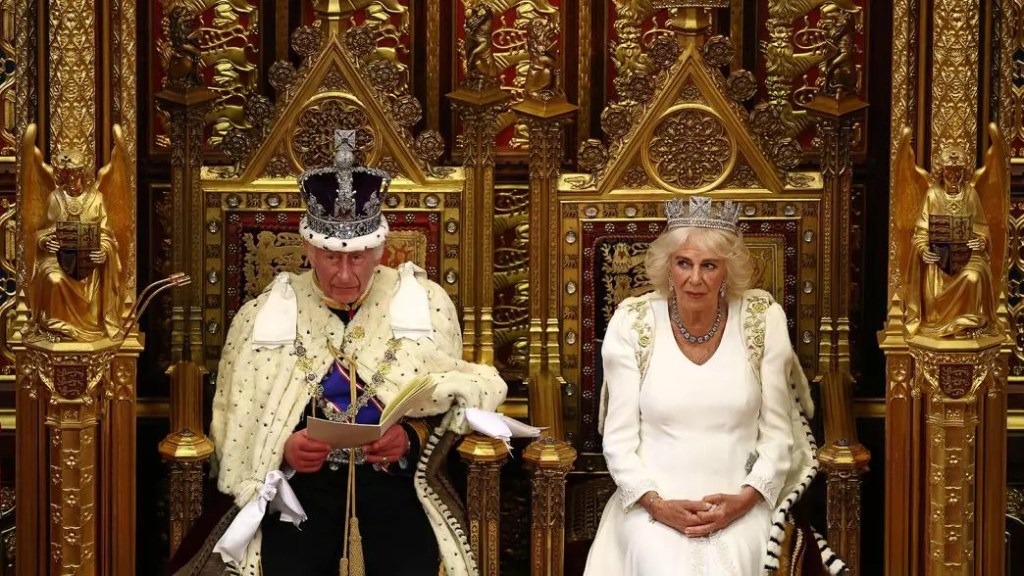
King Charles III reads the programme for the coming Parliament at the State Opening
The first King’s Speech under Kier Starmer’s Labour Party set out plans for what Starmer has described as a ‘mission driven’ approach to government which will focus upon the five key missions identified by Labour in its election campaign.
On the first of these, economic stability and growth, Labour is proposing a raft of bills from an Employment Rights Bill to ban zero-hour contracts, end fire and rehire, as well as strengthening sick pay and protections for new mothers, to a Railways Bill to reform rail including establishing GBR and allow rail contracts to be taken into public ownership at the end of contracts or if providers fail to deliver.
On the question of energy Labour is proposing to establish Great British Energy, a public body that will own and operate clean power projects across the Britain. In addition, a bill to regulate water companies to clean up rivers lakes and seas will be introduced.
Secure borders are another mission for Labour, with a bill to strengthen border security, crack down on organised immigration crime, and reform the asylum system in the pipeline. A Crime and Policing Bill is proposed to crack down on anti-social behaviour, tackle knife and retail crime, and provide a stronger response to violence against women and girls. There is no proposal to repeal the draconian powers afforded the police by the Tories under the Policing Act 2022 and the Public Order Act 2023.
The jailing this week of five Just Stop Oil protesters, getting a collective sentence of 21 years between them, is an outrage which Labour needs to address.
Health, although supposedly a major priority for Labour gets a light touch with only two bills proposed, to ban smoking for those born after 2008 and to improve mental health services. Rumours that Kier Starmer will bring in former Health Secretary, Alan Milburn, to ‘drive change in the NHS’, have yet to be confirmed but have to be a concern given Milburn’s record in the Blair governments.
Finally, in Labour’s mission list is breaking down barriers to opportunity, with bills proposed to improve children’s wellbeing, including a requirement for free breakfast clubs in every primary school and a bill to reform the rental market, including abolishing ‘no-fault’ evictions.
Other proposals include an Armed Forces Commissioner Bill,to strengthen support for members of the armed forces and their families, and a House of Lords (Hereditary Peers) Bill to remove the right of hereditary peers to sit in the House of Lords.
As ever Labour in government will tweak social provision and attempt to regulate capitalism more efficiently, clearing up the mess that the Tories have made of the system. This will be welcome news for British banks, businesses and corporations but is unlikely to do very much to change the lives of those most in need in Britain today.
While building more affordable homes is on the government agenda the affordability of public housing is undermined by the right to buy, which there are no plans to repeal. There is no indication so far that local government, often at the sharp end of dealing with communities in crisis will get any further support, other than through the extension of devolution deals, which are predominantly economic development programmes and rarely reach into local communities effectively.
Reform of Health and Social Care should be an absolute priority for any incoming government but does not appear to have yet hit the radar of Cabinet, in spite of having had many years in Opposition to formulate plans.
On the question of foreign policy the Labour Cabinet has moved quickly to consolidate the errors of the Tories by putting the question of continued arms sales to Ukraine at the top of the agenda. Right wing nationalist President Zelensky attended a Labour Cabinet on Friday and by all accounts was greeted with stormy applause. The commitment to tie Britain into the ongoing NATO proxy war with Russia is a tragedy in the making. Zelensky is doing the rounds seeking permission to use European made weapons to be fired into Russian territory. This level of escalation must be opposed and the reality of the implications of continually fuelling the war in Ukraine exposed.
Labour’s manifesto emphasised the need for a ceasefire in Gaza. On the question of Palestinian statehood, however, the party retreated from its 2019 pledge to offer immediate, unilateral recognition. Instead, Starmer has argued that statehood recognition should be part of a British contribution to a renewed peace process, in view of achieving a two-state solution.
It is likely that Starmer will seek to ensure that Britain stays in step with the US under President Biden. While this might mean targeted sanctions against Israeli extremists, up to and including those in government, it may be balanced by actions against Israel’s regional enemies, including designating Iran’s Islamic Revolutionary Guard Corps as a terrorist organisation.
However, with US policy in flux, with the prospect of the return of Donald Trump to the Presidency, there are still uncertainties ahead in being tied to the coattails of the US.
Electing a Labour government is a step forward from the Tories continuing to be in office but getting a Labour government to do the right thing, and act in its class interests, will continue to be a challenge. Hopefully it will not prove to be mission impossible. Concerted mass action from the Left and the wider Labour Movement will need to remain on the agenda.
 Avanti Populo