

7th January 2024
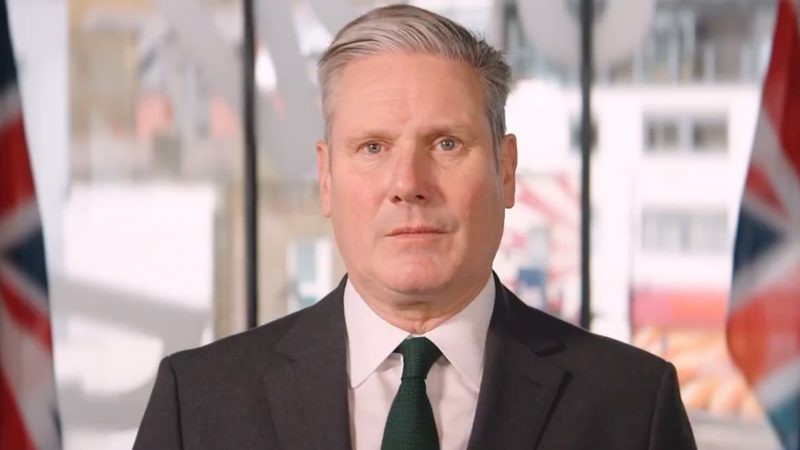
Labour leader Kier Starmer – “credible hope” his best offer to date
Elections will dominate the political narrative on both sides of the Atlantic in 2024. In the United States the Presidential election scheduled for 5 November is already being dominated by the prospect of another run by the narcissist, Donald Trump, with many predicting a victory over Joe Biden a distinct possibility if Trump wins the Republican nomination.
At present two states, Colorado and Maine, have disqualified Trump from the Republican ballot on the grounds of inciting insurrection. Whether such a judgement will pass the test with the Supreme Court, where it is currently heading, remains to be seen. However, should Trump clear these hurdles he is a racing certainty to be the Republican nominee based on current polling estimates.
That does not make a Trump second term a certainty by any means but it does raise it as a distinct possibility. Such constraints as there were during Trump’s first term would undoubtedly be swept aside as the team around Trump are already making clear. The independence of the judiciary and decisions on who does and does not get prosecuted are already in Trump’s sights. This would raise the prospect of Trump being able to pardon himself and his cronies, as well as launching investigations into his enemies.
Trump’s take on whether he planned to rule as a dictator when asked by Fox News was telling,
“Except for day one”, he said, “After that, I’m not a dictator.”
Which begs the question as to how long ‘day one’ will last.
Trump’s take on foreign policy has been famously myopic. Fears within the US political establishment centre around Trump abandoning NATO and, for some Democrats, cutting off the weapons supply to Ukraine. However, there is nothing to suggest that Trump would not remain gung ho in relation to US attitudes towards China, Iran or the wider Middle East, with support for Israel not likely to be up for discussion.
Biden has actively embraced the role of the US as the world’s policeman, ready to intervene whenever or wherever perceived US ‘interests’ are at stake. While Trump’s rhetoric may sound different, to keep on board his home crowd, the forces which shape the wider objectives of US imperialism will not be so easily persuaded to change course.
Democracy US style has always been an illusion, being based on the bankrolling of candidates by private individuals and corporations seeking to gain the most influence. A Biden/Trump face off in November will be no different. However, while a Trump return to the White House would signal a further shift to the right in the political centre of gravity in the US, would wider policy objectives for US imperialism change fundamentally?.
November is still a long way off and a lot can happen in US politics over the months till then. Writing off Trump being back in the White House in January 2025 though is not something which should be contemplated yet.
In Britain lame duck Prime Minister, Rishi Sunak, has indicated that a General Election will not take place until the second half of the year. The timing of the election is up to Sunak however, so the option of a snap May election cannot be ruled out, depending upon how Sunak and his cohorts see the political landscape as shaping. With a first draft of the Covid19 Inquiry report being promised by the summer for example, Sunak may want to cut and run before Tory failings during the pandemic become too exposed.
So far Sunak has pinned his hopes on achieving the five pledges he made last year being, halving inflation; stopping the boats; growing the economy; cutting NHS waiting lists; and reducing the national debt.
While inflation has reduced, prices remain high and continue to be a burden for many working class families. Also, a multiplicity of factors contribute to the inflation figures, of which government action is only one. Most factors are beyond immediate government control. Attacks on merchant shipping in the Red Sea, which may force trade to take longer routes and push up the price of goods, being a case in point.
Sunak’s desire to ‘stop the boats’, the Tories jingoistic excuse for a comprehensive policy on migration, continues to be mired in controversy, not least the forcible repatriation to Rwanda scheme, which has so far cost £240 million without a plane taking off.
The economy is in such a parlous state, due to years of Tory austerity and underinvestment, that growth is flatlining and Britain is on the brink of being declared officially in recession. NHS waiting lists are exacerbated by the government’s refusal to negotiate seriously with junior doctors, who have effectively been forced into further industrial action in pursuit of their pay claim. While the Tories and right wing media do their best to blame cancelled operations and waiting lists on the doctors action the government’s intransigence is widely seen as the real source.
As for reducing the national debt, this hit its highest level of 2023 in November, the latest month for which data is available, at 97.5% of gross domestic product (GDP). This is expected to rise to 97.9% by the end of the financial year in March.
All of which should leave the Labour Party shooting into an open goal and hitting the back of the net with a series of clear policies for change. So far however the Labour leadership’s position has been hedged by uncertainty and a lack of clear commitments.
The £28bn per year pledge to invest in green technologies has been diluted to a desire to hit that target in the second half of a Parliament, hardly transformational change. The promise to abolish university fees has become one to make student fees fairer and more “progressive”. Any tax cuts for working class people are dependant upon economic growth and there are no plans to increase the taxes upon the rich.
On the subject of the junior doctors action, when pressed as to whether he would make a higher offer Starmer responded with,
“I don’t want these strikes to go ahead.”
Hardly a recognition of the justified action of NHS staff in the face of government intransigence.
As the election approaches Labour’s position will have to become clearer. The fear for many on the Left and in working class communities is that the clarity will not be coupled with a sharpened attack on the underlying inequities which are endemic to capitalism and the need for transformational change in favour of working class communities. The best Kier Starmer could offer in his recent New Year speech was “credible hope”, hardly a fiery rallying cry!
On both sides of the Atlantic this year elections may bring about the appearance of change but there is little sign that they will make a huge difference.
 Avanti Populo