

14th October 2022
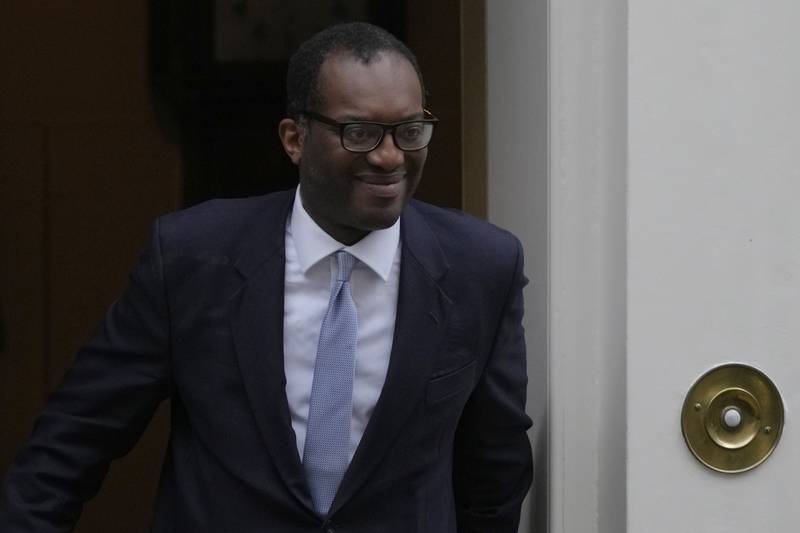
Another one bites the dust – sacked Chancellor, Kwasi Kwarteng heads for the backbenches
Political satirists will be joining the ranks of the unemployed this weekend as the Conservative Party leaps clear of the scope for parody and lands firmly in the realm of the absurd. The sacking of Chancellor Kwasi Kwarteng, less than a month after his widely derided mini-budget, was only trumped by the appointment of failed leadership candidate Jeremy Hunt to fill his position at the Treasury.
While the Daily Telegraph today went with the headline ‘Kwarteng: I’m going nowhere’ the erstwhile Chancellor was already on a plane back to London this morning, cutting short discussions with the IMF in Washington aimed at reassuring them that everything in the British economy was under control!
No episode of Yes Minister could possibly match it and even The Thick of It would probably see the script rejected. The Have I Got News for You panellists will be hard pressed to mock what is already the biggest mockery in British government for a century.
The main question in Westminster circles at present is ‘how long can Liz Truss hold onto her job?’ In a brief press conference this afternoon Truss studiously avoided actually answering any of the questions put to her by journalists, while back pedalling on her previous commitment not to increase the rate of corporation tax from 19% to 25% of company profits. In response to questions as to whether she should stay on as Prime Minister Truss stated that she is “determined to see through what I promised.”
The rationale for the latest u-turn on the mini-budget, according to Truss, is not that any of the proposals were wrong, just that they went “faster and further” than markets expected and they were therefore unable to cope. A clear signal that if Truss stays in No. 10 for any length of time the reduction in the 45p top rate of tax and the cut in the corporation tax rate will be back on the agenda.
Pressed at Prime Minister’s Questions this week as to whether her economic plans included cuts in public spending Truss stated “absolutely not”, though given the track record of the Tories in general and that of Truss and u-turns in particular, such an assurance must surely be taken with a pinch of salt. This is reinforced by the assessment of the Institute for Fiscal Studies, that the government would have to cut spending or raise taxes by £62billion in order to stabilise or reduce the national debt as they have promised.
Jeremy Hunt, having been defeated in one leadership contest by Boris Johnson, stood briefly in this year’s contest. Though he failed to make any impact, one of his key pledges was to slash the rate of corporation tax. So, if his stint as Chancellor has any longevity that policy looks like a certainty for resurrection.
Truss backers have been quick out of the blocks to lay the blame for the economic crisis anywhere but with the Prime Minister. The Bank of England has been accused of being too slow to act while Business Secretary, Jacob Rees-Mogg, turned his fire on the Office for Budget Responsibility (OBR), suggesting that “its record of forecasting accurately hasn’t been enormously good” and that gloomy forecasts of low growth and rising debt should be ignored.
This is all very well for Rees-Mogg, with a personal fortune running into millions, but there are those for whom rising debt has a real life impact upon their ability to pay the rent, feed the kids, buy fuel or pay the soaring energy bills, only partially offset by government action, whatever Liz Truss may say.
The detachment of the Tories from reality is evident now on a daily basis as the opposition to the failures endemic to capitalism continues to grow. Strike action and ballots for industrial action continue to proliferate, with even the historically moderate Royal College of Nursing joining the fray.
Kier Starmer and his Chancellor in waiting, Rachel Reeves, are sniping from the sidelines but are not offering solutions which will get to the heart of the issue, that the system itself is broken and needs to be re-established on planned socialist lines, if it is to serve the needs of the many, not the few.
Until the Labour leadership grasp this they will continue to offer little more than sticking plasters over a gaping wound. Though they will be unlikely to say so in public, many Tories could live with a Starmer government of this ilk, while they take stock and reorganise. A real shift in the balance of power will only come when pressure upon the Labour Party comes from mass extra parliamentary action and the demand for fundamental change becomes impossible to ignore.
 Avanti Populo